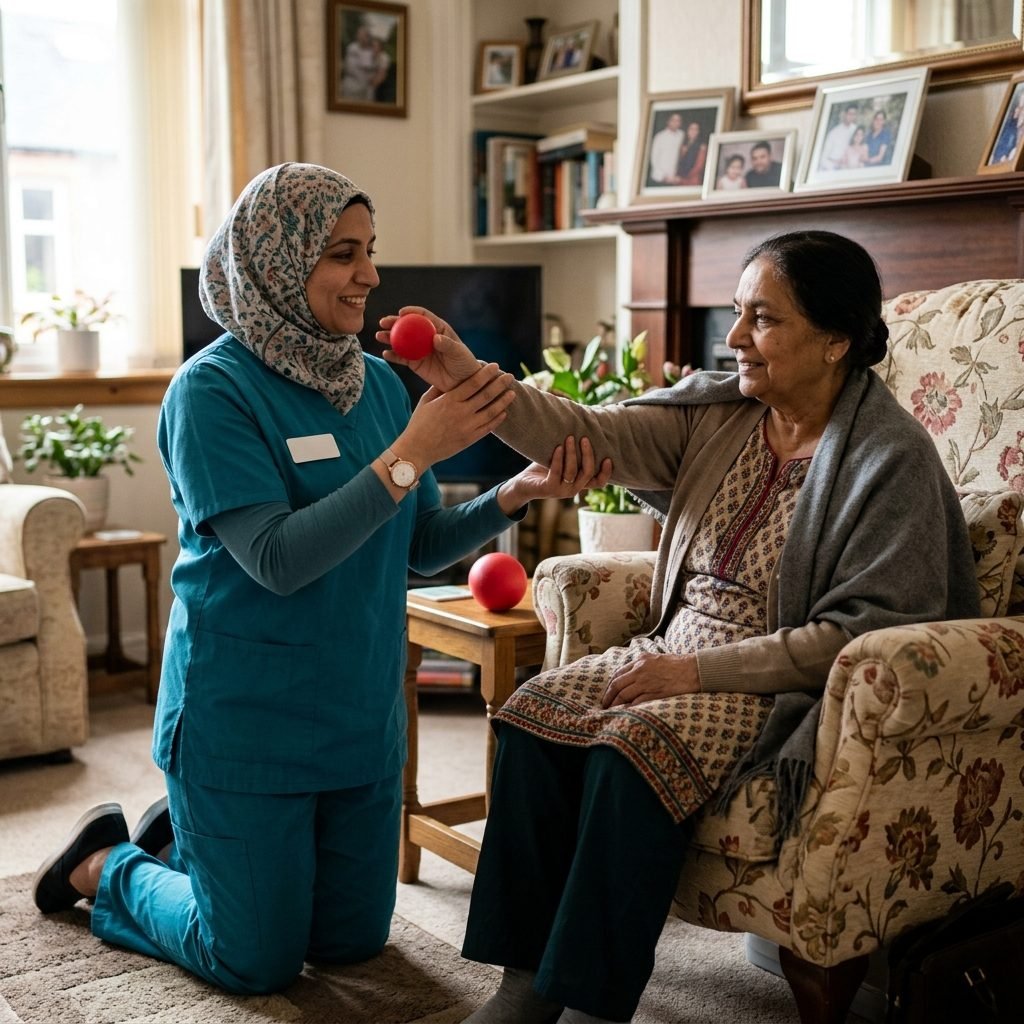
Having access to comprehensive, clinical physical therapy at home is crucial for maintaining rehabilitation progress, especially in busy neighborhoods. Al-Safa and Al Marwah districts in Jeddah present unique local mobility challenges due to high population density and traffic. At Bidaya Center, we deliver high-quality home physiotherapy and movement rehabilitation services directly to your doorstep, conforming to the clinical guidelines of the Saudi Commission for Health Specialties. We eliminate the stress of travel, traffic, and parking. We respect cultural privacy by providing certified male therapists for male patients and female therapists for female patients.
Our clinical approach in Al Marwah starts with a detailed physical and environmental safety assessment to eliminate fall hazards in the home. We bring all necessary portable, sterilized equipment to deliver a clinical standard of care comparable to external clinics. The therapist establishes a tailored milestone tracking plan to monitor muscle strength, balance, and joint range of motion (ROM) progression over time.
Why families in Al Marwah choose Bidaya for home physiotherapy
- ✅ Licensed male & female therapists — full privacy, in your own home in Al Marwah.
- ✅ Fully in-home visits across Al Marwah — no travel or traffic.
- ✅ A personalized rehab plan built after a thorough in-home assessment.
- ✅ Continuous follow-up and direct contact with your therapist throughout.
- ✅ Fast response — arrange your visit by a quick call or WhatsApp message.
We also serve nearby areas: Al Andalus · Al Basateen · Al Bawadi
* The treatment plan and expected outcomes are determined by a medical and functional assessment of each individual case.
Understanding Home Physiotherapy for Multiple Sclerosis and Why It Matters for Al Marwah Residents
Multiple sclerosis (MS) is a condition of the central nervous system in which the immune system attacks the protective sheath around nerves (myelin), causing signals between the brain and the rest of the body to slow down or scramble. The lived experience varies enormously from one person to another: one patient struggles with leg weakness, another with a trembling hand, a third with a fatigue that swallows the whole day. That is precisely why no single rehabilitation template fits everyone. Your plan is built on a careful assessment of you.
This is where home physiotherapy earns its place. Instead of enduring repeated trips to a clinic through the traffic of Al Marwah and Jeddah's humid heat, which drains an MS patient faster than most, the therapist comes to you with their tools and expertise. Heat, in particular, is central to this disease. Even a modest rise in body temperature can temporarily worsen symptoms, a phenomenon known as Uhthoff's, and a comfortable air-conditioned home is a far better environment for exercise than an exhausting round trip.
The deeper advantage is that the therapist sees your real environment: the stairs you climb daily, the width of the bathroom door, the height of your bed, the distance between kitchen and living room. These details never surface inside a clinic, yet they are exactly what determine your practical independence. In Al Marwah, close to Prince Sultan Street and its everyday amenities, we deliver a service that reaches your door quickly and with complete privacy, tailoring every exercise to your movement inside this specific space.
Because MS is chronic and fluctuating, the goal is not a magical cure that ends the disease, but intelligent rehabilitation that preserves the abilities you have, slows functional decline as far as possible, and gives you back the greatest possible control over your body and your day. Every outcome depends on a clinical and functional assessment, differs from case to case, and we speak with you honestly about what to expect in your situation.
Symptoms and Signs
MS is often called the disease of a thousand faces, because its symptoms shift according to where the damage lies in the brain or spinal cord. Some patients live for years with mild signs, others face greater challenges. Among the most common things you may notice:
- Severe fatigue: the most well-known and exhausting MS symptom, a tiredness out of all proportion to the effort spent, often striking in the middle of the day and not lifting with simple rest.
- Muscle weakness and spasticity: heaviness in the limbs or muscle stiffness (spasticity), especially in the legs, making walking or standing for long periods difficult.
- Balance problems and dizziness: a feeling of unsteadiness while walking, or drifting to one side, with a rising risk of falls.
- Numbness and tingling: pins and needles or loss of sensation in the face, hands, or feet, and sometimes a tight band-like sensation around the trunk.
- Tremor and poor coordination: difficulty with fine tasks such as writing, buttoning a shirt, or holding a glass of water steadily.
- Walking difficulties: a slowed stride, foot dragging, or a growing need to lean on walls and furniture.
- Visual disturbances: blurred or double vision, or pain on moving the eye, sometimes the very first sign to appear.
- Heat sensitivity: a temporary flare of symptoms when the weather or body temperature rises, something that demands real attention in Jeddah's climate.
An important clarification: the physiotherapist does not diagnose the disease and does not replace your neurologist. What the therapist does is read these movement-related signs and translate them into a practical plan. If we notice new symptoms or a possible relapse during assessment, we advise you to see your treating physician promptly.
Who Benefits
Home physiotherapy for MS is not aimed at a single stage of the disease. It accompanies the patient throughout the whole journey in different forms. Those who benefit most include:
- The newly diagnosed: those who want to build a strong foundation of fitness and movement awareness early, because investing in the body from the start makes a long-term difference.
- Those recovering from a recent relapse: once the medical situation stabilizes, rehabilitation helps restore the strength and balance affected during the flare.
- People with a progressive form of MS: when functional decline is slow but steady, the program focuses on preserving independence and delaying reliance on others.
- Those with poor balance and repeated falls: we work on balance training and strengthening the supporting muscles to reduce falls inside the home.
- Wheelchair or assistive-device users: to teach safe transfers, prevent pressure sores and stiffness, and maintain joint range of motion.
- Those struggling with chronic fatigue: by teaching energy-conservation principles and how to distribute effort intelligently across the day.
- Those who value privacy: women who prefer a female therapist, older patients for whom travel is hard, or anyone who needs a calm environment away from clinic pressure.
We welcome both men and women through a team of licensed male and female therapists, with full respect for the privacy of every home in Al Marwah. Before starting any program, we carry out a comprehensive assessment to confirm that home rehabilitation is the right choice for your case, and we coordinate with your treating physician when needed.
Goals of the Rehabilitation Program
We do not promise to cure MS, because honestly no one can. What we do promise is serious work toward realistic, measurable goals shaped with you according to your priorities, not a ready-made mold. Among the goals we pursue:
- Preserving muscle strength and resisting the gradual weakening of the limbs through graded, carefully planned resistance exercises.
- Managing muscle spasticity through stretching and correct positioning to reduce stiffness and its accompanying pain.
- Improving balance and steadiness and lowering fall risk with exercises that train the sensory and nervous systems to correct quickly.
- Enhancing walking ability: improving stride pattern, length, and stability, and training the correct use of assistive devices when needed.
- Combating fatigue by teaching you how to pace your energy, when to rest, and how to perform daily tasks with the least possible drain.
- Improving coordination and tremor control to support fine skills in eating, writing, and self-care.
- Maintaining joint range of motion and preventing the complications of immobility such as contractures and pressure sores in less mobile cases.
- Boosting daily independence: doing as much of your activity yourself as possible, because every task you reclaim is a piece of dignity you reclaim.
We review these goals regularly and adjust them according to your response and how your condition evolves, keeping you an aware partner at every step rather than a passive recipient of exercises.
Stages and Path of the Home Sessions
We follow an organized path that begins with understanding before exercise, so that every effort rests on a clear foundation:
- Stage one - comprehensive assessment: on the first visit, the therapist examines your muscle strength, joint range of motion, balance, walking pattern, and fatigue level. We listen to your story with the disease, your goals, and what troubles you most in your day, and we survey your home to spot its challenges and opportunities.
- Stage two - building the plan: we craft a written program with short- and long-term goals, set the suggested number of weekly sessions and the nature of the exercises, and explain them to you and your family in clear language.
- Stage three - treatment sessions: strength, balance, and stretching exercises, gait and transfer training, and coordination work, delivered in measured doses that respect your fatigue and never push you into exhaustion. We start gently and progress according to your response.
- Stage four - follow-up and adjustment: we measure your progress with tangible indicators such as standing time, walking distance, or number of falls, and adjust the plan whenever your condition changes or new priorities appear.
- Stage five - empowerment and continuity: we give you home exercises to perform between sessions, and teach you and your caregiver how to manage the disease with confidence over the long term, because successful rehabilitation makes you need us less, not more.
The length of each session and the weekly number are set according to your condition; some patients need intensive sessions after a relapse, while others do well with a lighter rhythm to maintain their gains. Flexibility is a core part of our philosophy, because MS itself is a fluctuating disease.
The Role of the Family and Caregiver
In MS, the family is not a spectator but an essential partner in the success of rehabilitation. The patient spends a few hours a week with the therapist and the rest of the time with their family, so family awareness shapes a large part of the final outcome.
We are keen to train the caregiver in practical matters: how to safely assist with stretching, how to support the patient while standing or transferring from bed to chair without hurting their own back or the patient's, and how to recognize the signs of fatigue before they turn into total exhaustion. We also explain the idea of energy conservation, so that well-meaning family members neither overload the patient beyond their capacity nor over-help them and strip away their independence.
There is also a psychological dimension we never overlook. MS wearies the spirit as much as the body, and fluctuating symptoms can breed frustration in the patient and anxiety in the family. We encourage families to be patient, to celebrate small victories, and to understand that a hard day does not mean the plan has failed, it is simply the nature of the disease. Balanced support, neither overprotective nor neglectful, is the most precious thing a family can offer.
We support this role through our presence in your home in Al Marwah; having the therapist inside the house lets the family watch and learn directly, and ask their questions in their real context, so the whole home becomes a supportive therapeutic environment throughout the week, not just during the session hour.
Home Safety and Prevention Tips
Many of an MS patient's daily challenges can be eased with simple home adjustments, and these are among our most important recommendations:
- Beware of heat: keep a moderate, air-conditioned environment, avoid very hot showers, and exercise during the coolest part of the day, because heat temporarily worsens symptoms.
- Clear walking hazards: remove slippery rugs and scattered cords, and widen pathways, because balance problems turn the simplest obstacle into a genuine danger.
- Light the space well: especially the night route between bedroom and bathroom, and place lighting that is easy to reach from the bed.
- Install grab bars: in the bathroom, beside the toilet, and along the stairs, they make a huge difference in preventing falls.
- Balance movement and rest: do not wait until fatigue collapses you; take short pre-emptive rest breaks and spread heavy tasks across the day.
- Sit during long tasks: such as chopping food or dressing, to save energy and reduce the risk of losing balance.
- Wear stable footwear: closed and non-slip, and avoid walking in socks on smooth floors.
- Stay connected with your medical team: keep up with your medication and neurologist appointments, and treat physiotherapy as a complement to your drug management, not a substitute for it.
During our first visit we carry out a kind of safety walkthrough of your home and suggest practical adjustments suited to your space and budget, because preventing a fall is far cheaper than treating its consequences.
Frequently Asked Questions (FAQ)
Can physiotherapy cure multiple sclerosis?
No, and we will not promise that. MS is a chronic condition with no complete cure to date, but physiotherapy has a proven role in improving strength, balance, and walking, managing fatigue and spasticity, and preserving your independence for as long as possible. Results differ from case to case and are built on a careful clinical and functional assessment.
Could exercise make my symptoms worse or trigger a relapse?
Well-planned, graded exercise is safe and beneficial and does not cause relapses. You may feel temporary fatigue, especially with heat, which is why we design the dose carefully, work at cooler times, and monitor your response continuously. The real danger in MS is inactivity, not organized movement.
How many sessions per week do I need?
There is no one answer for everyone. After the first assessment we suggest a plan suited to your condition; you may need intensive sessions after a recent relapse, or a lighter rhythm to maintain your gains. We review the number continuously and adjust it according to your progress and priorities.
Is a female therapist available and is privacy respected?
Yes. Our team includes licensed male and female therapists, and you can request a female therapist when booking. We commit to complete privacy inside your home in Al Marwah and treat every case with full respect and confidentiality.
Do you really reach Al Marwah and the surrounding areas?
Yes, we serve Al Marwah and the neighboring districts of Jeddah, and we come to your home at an agreed time. Contact us to confirm coverage and arrange the earliest available slot.
To book or ask about home physiotherapy for multiple sclerosis in Al Marwah, Jeddah, contact Bidaya Center by phone or WhatsApp by clicking Call Now. Our team will be glad to answer your questions and arrange your first assessment visit at a time that suits you.
Important Home Visit Details:
- ✓Setup: Please clear a 2x2m space in the room for safety.
- ✓Clothing: Wear loose, comfortable clothes for easy movement.
- ✓Therapist Parity: Male therapists for males, females for females.
- ✓Medical Reports: Keep your MRI or doctor reports ready for evaluation.
Rehabilitation & Services in Al Marwah
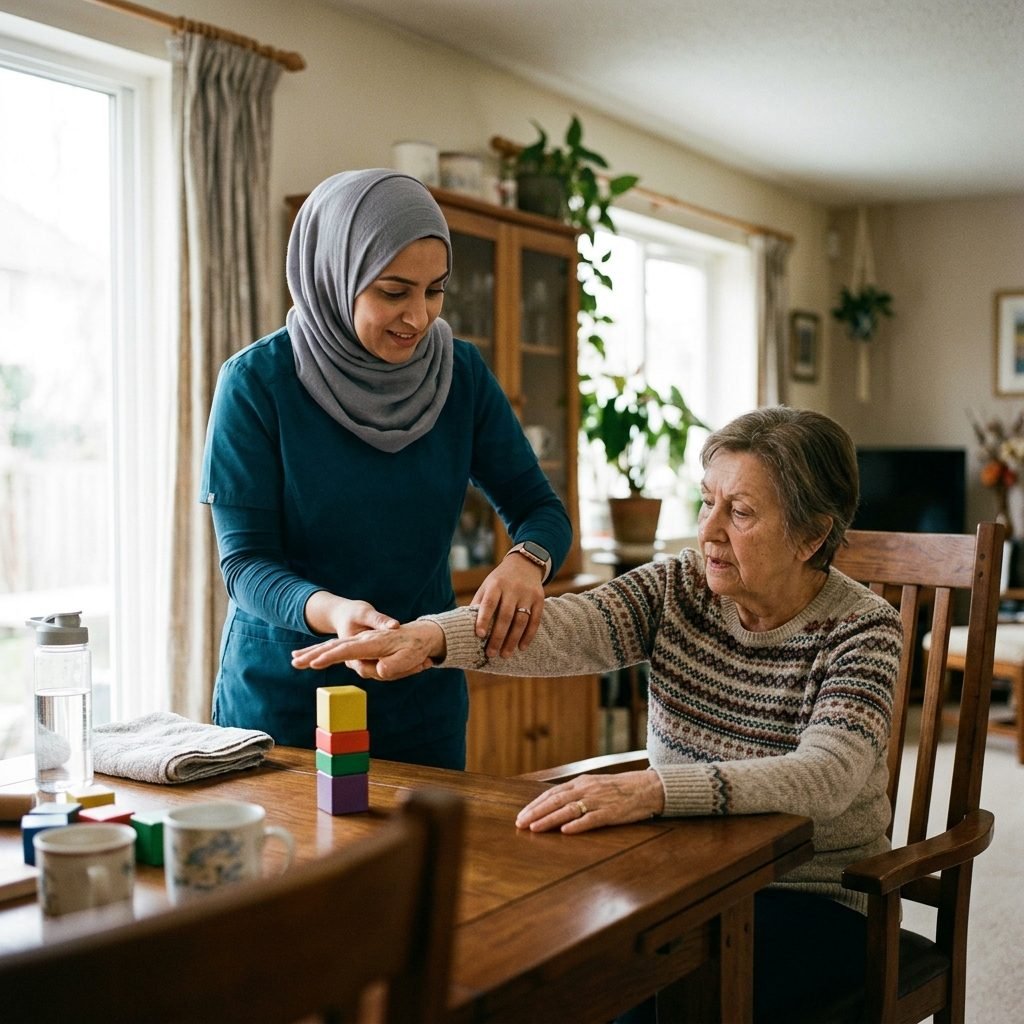
Stroke Rehabilitation
Advanced motor and neurological stroke recovery at home in Al Marwah.
Service Details ←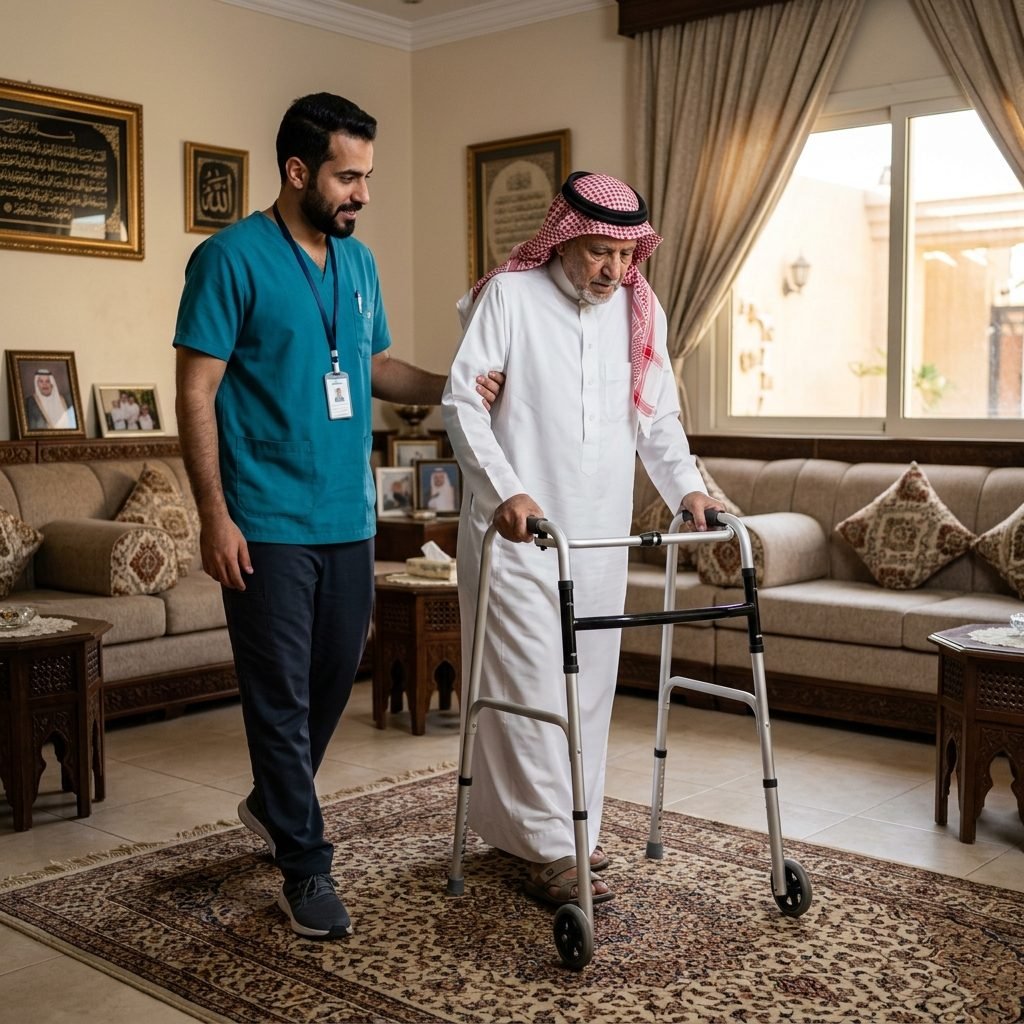
Geriatric Physical Therapy
Balance training, strengthening, and fall prevention for seniors in Al Marwah.
Service Details ←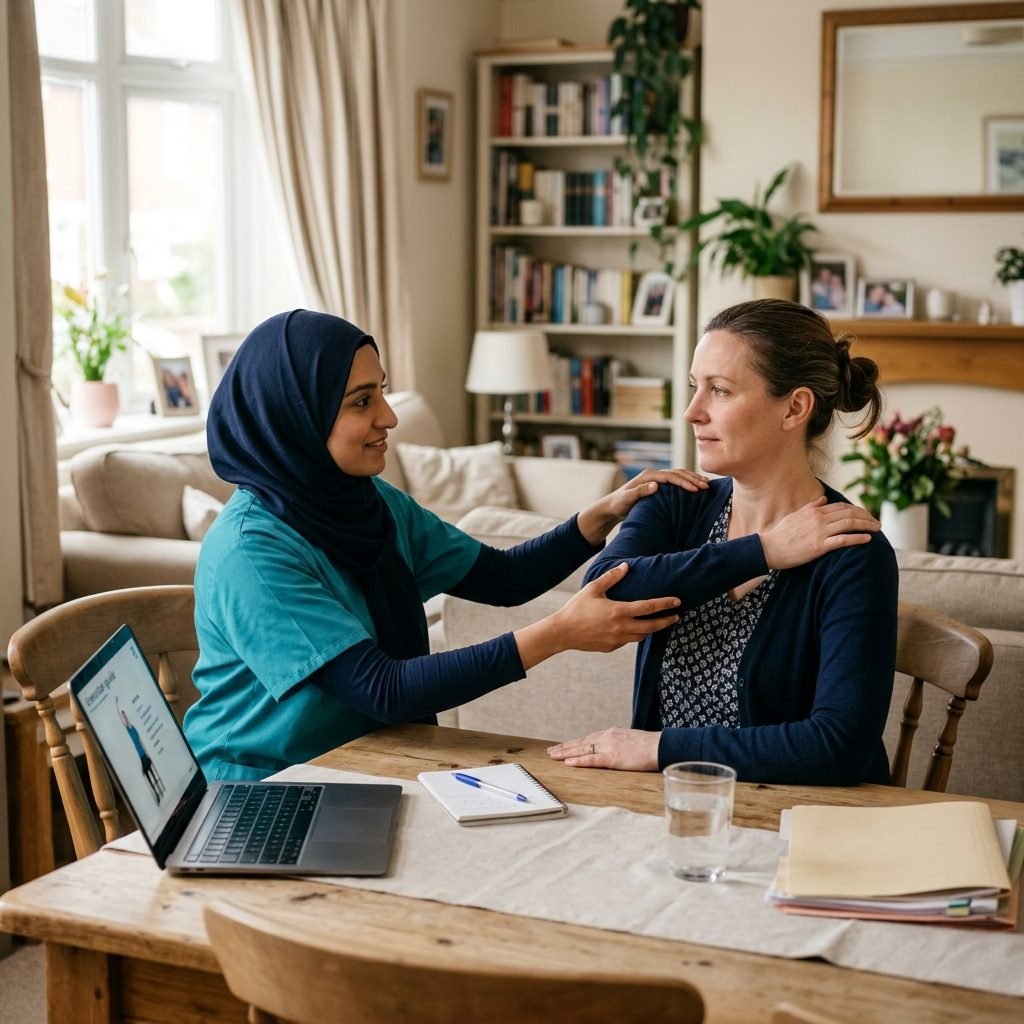
Female Physiotherapist
Licensed female therapists providing home care for women in Al Marwah.
Service Details ←