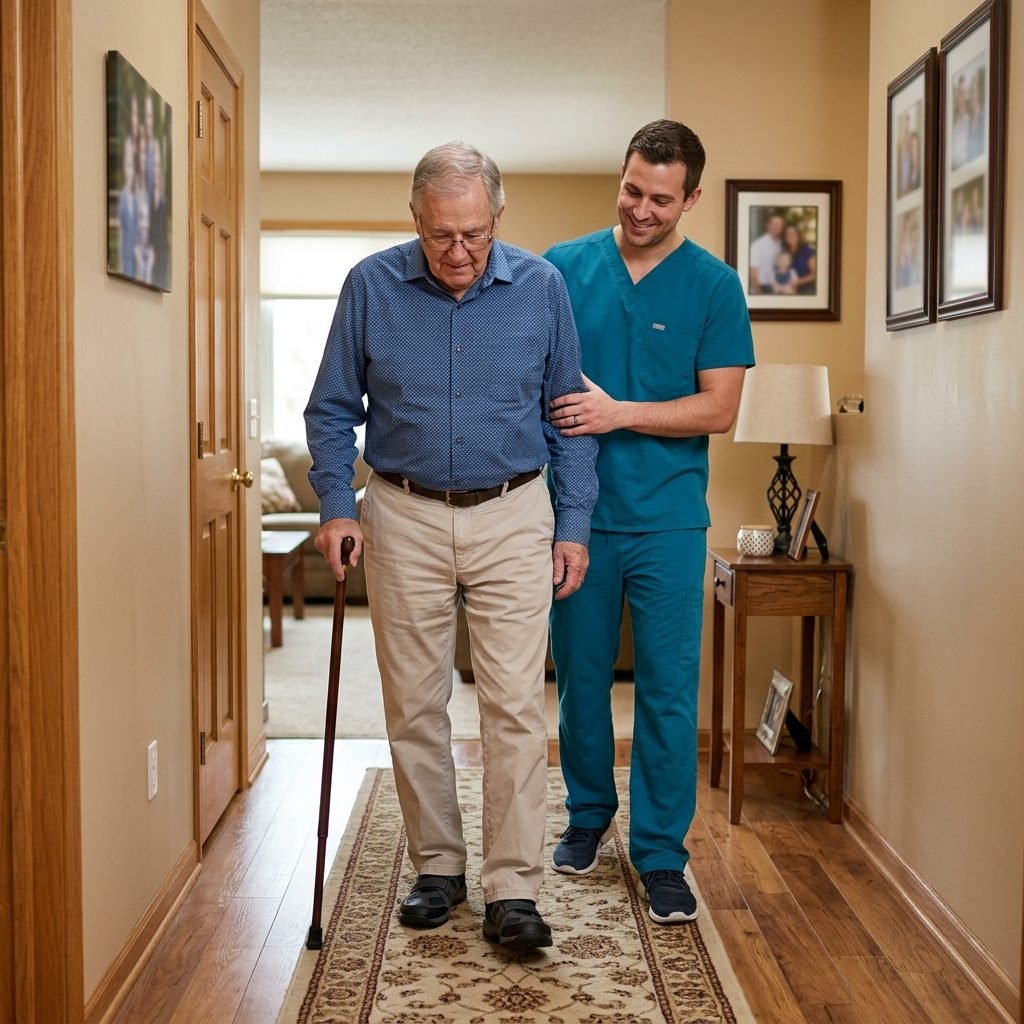
Having access to comprehensive, clinical physical therapy at home is crucial for maintaining rehabilitation progress, especially in busy neighborhoods. Al-Safa and Al Mohammadiyah districts in Jeddah present unique local mobility challenges due to high population density and traffic. At Bidaya Center, we deliver high-quality home physiotherapy and movement rehabilitation services directly to your doorstep, conforming to the clinical guidelines of the Saudi Commission for Health Specialties. We eliminate the stress of travel, traffic, and parking. We respect cultural privacy by providing certified male therapists for male patients and female therapists for female patients.
Our clinical approach in Al Mohammadiyah starts with a detailed physical and environmental safety assessment to eliminate fall hazards in the home. We bring all necessary portable, sterilized equipment to deliver a clinical standard of care comparable to external clinics. The therapist establishes a tailored milestone tracking plan to monitor muscle strength, balance, and joint range of motion (ROM) progression over time.
Why families in Al Mohammadiyah choose Bidaya for home physiotherapy
- ✅ Licensed male & female therapists — full privacy, in your own home in Al Mohammadiyah.
- ✅ Fully in-home visits across Al Mohammadiyah — no travel or traffic.
- ✅ A personalized rehab plan built after a thorough in-home assessment.
- ✅ Continuous follow-up and direct contact with your therapist throughout.
- ✅ Fast response — arrange your visit by a quick call or WhatsApp message.
We also serve nearby areas: Al Andalus · Al Basateen · Al Bawadi
* The treatment plan and expected outcomes are determined by a medical and functional assessment of each individual case.
What Gait & Balance Rehabilitation at Home Means for Al Mohammadiyah Residents
Gait and balance rehabilitation is a focused therapy pathway designed to restore safe, independent movement after an injury, a neurological condition, or the muscle weakness that often comes with age. Walking is not simply moving the legs. It is a finely tuned system in which the muscles, joints, nervous system, inner ear, and vision all work together, and a problem in any one of these elements shows up immediately as unsteadiness and a loss of confidence when standing or moving. When that coordination breaks down, every step becomes a source of worry. The person starts to move less out of fear of falling, the muscles weaken further, and the problem deepens in a vicious cycle.
In Al Mohammadiyah, a lively residential district in Jeddah with many multi-storey homes and villas full of internal staircases, delivering rehabilitation sessions inside the home carries real practical value. Instead of repeatedly enduring the strain of travelling to a centre, with all the fatigue and added risk it places on someone who is already unsteady, a licensed physiotherapist comes to the door and assesses movement in the real environment the patient lives in every day.
This point is central to gait and balance work specifically. We do not train the patient to walk down a perfect clinic corridor. We train on the floor of their own room, the threshold of their bathroom, and the staircase of their home in Al Mohammadiyah, on the exact flooring, lighting, and furniture they actually deal with. That is what makes home rehabilitation more realistic and faster at transferring the skill into daily life. At Bidaya Center we provide this service through licensed male and female therapists, with full respect for privacy inside the home, and a plan built on a careful individual assessment rather than a ready-made template.
Symptoms and Warning Signs That Call for Starting
Many families delay seeking help until a painful fall occurs, when in fact there are early signs that call for assessment and rehabilitation before things get worse. Noticing these indicators in Al Mohammadiyah may spare a patient a hip fracture or a long recovery.
- Visible swaying or a feeling of instability when standing or suddenly changing direction.
- Needing to hold on to walls or furniture to move around inside the home.
- At least one fall in recent months, or repeated near-stumbles without a full fall.
- Noticeably slow walking, a shortened stride, or dragging one foot along the floor.
- Dizziness or lightheadedness when rising from bed or a chair, or when turning the head.
- Difficulty going up and down the home stairs, with frequent stops to rest.
- Fear of walking in the dark or on shiny or wet floors.
- Weakness in the leg muscles, or numbness and loss of sensation in the feet.
- Growing reliance on a cane or walker without improvement, or using it incorrectly.
The appearance of two or more of these signs is a clear indication that a specialised assessment is needed. Their presence does not necessarily mean a serious problem, but early evaluation identifies the cause and prevents decline. Any sudden, severe change in balance accompanied by slurred speech or weakness on one side of the body calls for urgent medical care first; rehabilitation follows once the patient is stable.
Conditions and Groups That Benefit
Contrary to a common belief, gait and balance rehabilitation is not aimed only at the elderly. It serves a wide range of conditions across all ages. Among those who benefit in Al Mohammadiyah and its surroundings:
- Older adults with general weakness, unsteadiness, and a fear of falling.
- Post-stroke patients relearning to walk and control the affected side.
- People with Parkinson's, multiple sclerosis, and other neurological conditions that affect movement.
- Those recovering from hip or knee surgery, or a joint replacement, who need to restore a healthy walking pattern.
- People recovering from lower-limb fractures or long periods of bed rest.
- Patients with peripheral neuropathy or diabetes who have lost some sensation in the feet.
- Those with inner-ear disorders and vestibular dizziness affecting balance.
- People with muscle weakness after a long hospital or intensive care stay.
Each of these groups has entirely different needs. What suits a person with Parkinson's differs from the plan for someone recovering from a hip fracture or a patient with vestibular dizziness. That is why the work always begins with an individual assessment that identifies the type of impairment, its source, and its level of risk, and the plan is built on that basis for this person alone.
Goals of the Rehabilitation Program
The overarching goal is clear: walking that is as safe and independent as possible, and daily life with less fear and more capability. But that goal is translated into practical, measurable targets we track session after session:
- Strengthening the trunk, hip, leg, and foot muscles responsible for standing and pushing off during walking.
- Improving the automatic balance reactions that prevent a fall when a person trips or is pushed.
- Correcting the walking pattern: stride length, rhythm, weight distribution, and foot position at ground contact.
- Building self-confidence and shedding the fear that restricts movement inside and outside the home.
- Training the patient to stand, sit, turn, and stand on one leg safely.
- Teaching correct use of assistive devices when needed, or gradually weaning off them.
- Improving the ability to handle real obstacles: thresholds, staircases, and moving between different floor surfaces.
- Raising fitness and endurance so daily activities can be carried out without exhaustion.
We state clearly that rehabilitation outcomes depend on each patient's situation: the type of diagnosis, its severity, commitment to sessions and home exercises, and overall health. We make no promises of a cure or a guaranteed result. Instead, we commit to a well-considered plan and realistic goals that are reviewed and adjusted according to each person's progress.
Stages and Path of the Home Sessions
Rehabilitation inside your home in Al Mohammadiyah follows an organised path that starts with assessment and ends with independence, with the flexibility to adjust the pace according to response.
Stage one: comprehensive assessment. On the first visit the therapist examines muscle strength, joint range of motion, and sensation, measures balance in standing and in motion, analyses the walking pattern, and reviews the medical history and medications. The home environment itself is also inspected: the type of flooring, lighting, staircases, and any hazards. From this assessment an individual plan is drawn up with short-term and long-term goals.
Stage two: building the foundation. We focus on strengthening the weak muscles, improving range of motion, and basic postural control exercises, along with static balance work in sitting and supported standing, to prepare the body before the harder challenges.
Stage three: functional gait training. We move on to guided walking inside the home, correcting the stride, turning, stopping and starting, and more challenging dynamic balance exercises with a gradual reduction of support.
Stage four: advanced, real-world skills. We practise on the actual stairs in the home, crossing thresholds, walking while performing an added task such as carrying something or talking, and simulating the genuine daily situations the patient faces.
Stage five: independence and sustainability. We build a home program the patient and family can continue, with periodic follow-up to preserve the gains and prevent relapse. The number and frequency of sessions are set according to the case, and the plan is continually reviewed based on real progress.
The Role of the Family and Caregiver
Success in gait and balance rehabilitation is not achieved in the session hour alone, but in what happens during the rest of the day. The family and caregiver are essential partners, and their presence in the home makes their role more impactful than it would be if rehabilitation took place in a distant centre.
- Safely supervising the prescribed home exercises and encouraging the patient to perform them regularly, neither overdoing nor neglecting them.
- Learning the correct way to support the patient while rising and walking, and how to intervene when balance is lost without injuring either party.
- Noticing any change in condition, increased dizziness, or repeated falls, and reporting it to the therapist.
- Helping to prepare the home, removing obstacles, and maintaining the safe arrangements the therapist recommends.
- Providing psychological support and motivation, since fear of falling is a real barrier that eases greatly with the family's encouragement and patience.
- Keeping to the session schedule and setting up a suitable, quiet space for training inside the home.
Bidaya Center therapists are keen to train the caregiver practically during the sessions, so that they become an extension of the treatment plan throughout the week rather than merely an observer. This collaboration is what turns temporary improvement into a lasting gain.
Home Safety and Prevention Tips
A safe home environment is half the battle in balance rehabilitation. Here are practical, general guidelines suited to Al Mohammadiyah homes that reduce the risk of falling:
- Remove loose rugs and cables running across the floor from walking paths, and secure any raised edges.
- Ensure adequate lighting in hallways and at the top and bottom of the stairs, and place a night light on the route to the bathroom.
- Install fixed grab bars near the toilet and shower, and use a non-slip mat in the bathroom.
- Fit a sturdy handrail on both sides of the staircase, and place a clear strip on the edge of each step.
- Keep frequently used items within easy reach to avoid repeated bending or high reaching.
- Choose closed shoes with a non-slip sole in the right size, and avoid walking in socks alone on shiny floors.
- Rise slowly from bed or a chair in two stages to avoid dizziness from a sudden drop in blood pressure.
- Use the assistive device (cane or walker) at the height and in the manner the therapist has specified, and check it periodically.
- Review with the doctor any medications that may cause dizziness or drowsiness, as some increase the risk of falling.
These tips are general measures for a safer environment and do not replace the individual assessment that determines the adjustments most suited to your home and your condition specifically.
Frequently Asked Questions (FAQ)
Is gait and balance rehabilitation suitable for frail elderly people who are afraid to move?
Yes, and they are among those who benefit most. We begin at a very safe level matched to the patient's ability and progress gently with continuous monitoring, so that confidence is built step by step without strain or risk.
How many sessions does a patient need before noticing improvement?
This varies greatly with the cause, its severity, and commitment to the exercises. Some cases feel steadier within a few weeks, while others need longer. This is determined after the first assessment, and the plan is reviewed periodically, without any promise of a guaranteed result.
Can rehabilitation be done at home in Al Mohammadiyah as effectively as at a centre?
It is often more realistic, because we train the patient on their own floor, stairs, and real obstacles, which transfers the skill into daily life directly and more quickly.
Are female therapists available to treat female patients with respect for privacy?
Yes, licensed male and female therapists are available, and the privacy of the home and the patient is fully respected when choosing the most suitable therapist for each case.
What equipment do we need to provide at home before the sessions?
In most cases no special devices are needed; we rely on a safe space, a stable chair, and the existing stairs and hallways. If simple tools are required, the therapist explains them after inspecting the home on the first visit.
To book a home visit for gait and balance rehabilitation in Al Mohammadiyah, Jeddah, or to ask about your condition, contact Bidaya Center by phone or WhatsApp by clicking Call Now, and our team will help you arrange a suitable appointment and answer your questions.
Important Home Visit Details:
- ✓Setup: Please clear a 2x2m space in the room for safety.
- ✓Clothing: Wear loose, comfortable clothes for easy movement.
- ✓Therapist Parity: Male therapists for males, females for females.
- ✓Medical Reports: Keep your MRI or doctor reports ready for evaluation.
Rehabilitation & Services in Al Mohammadiyah
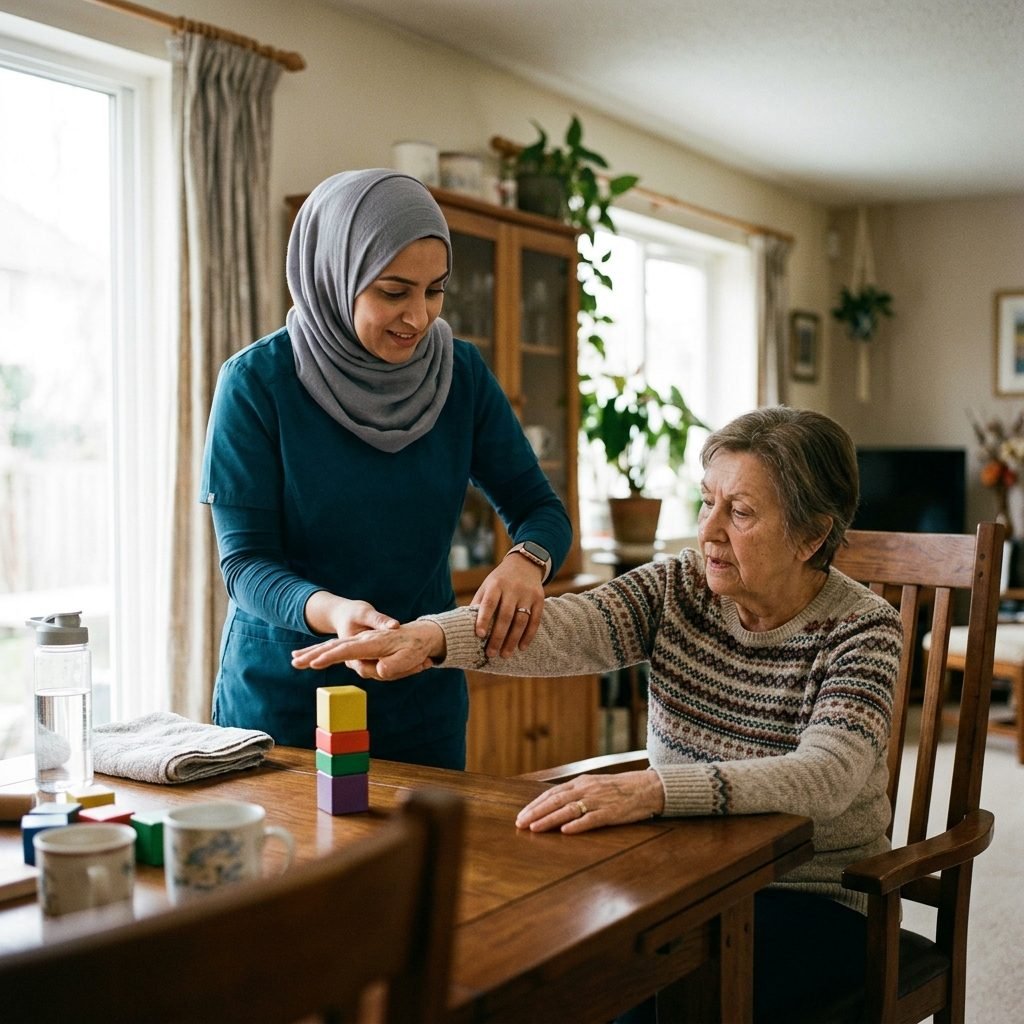
Stroke Rehabilitation
Advanced motor and neurological stroke recovery at home in Al Mohammadiyah.
Service Details ←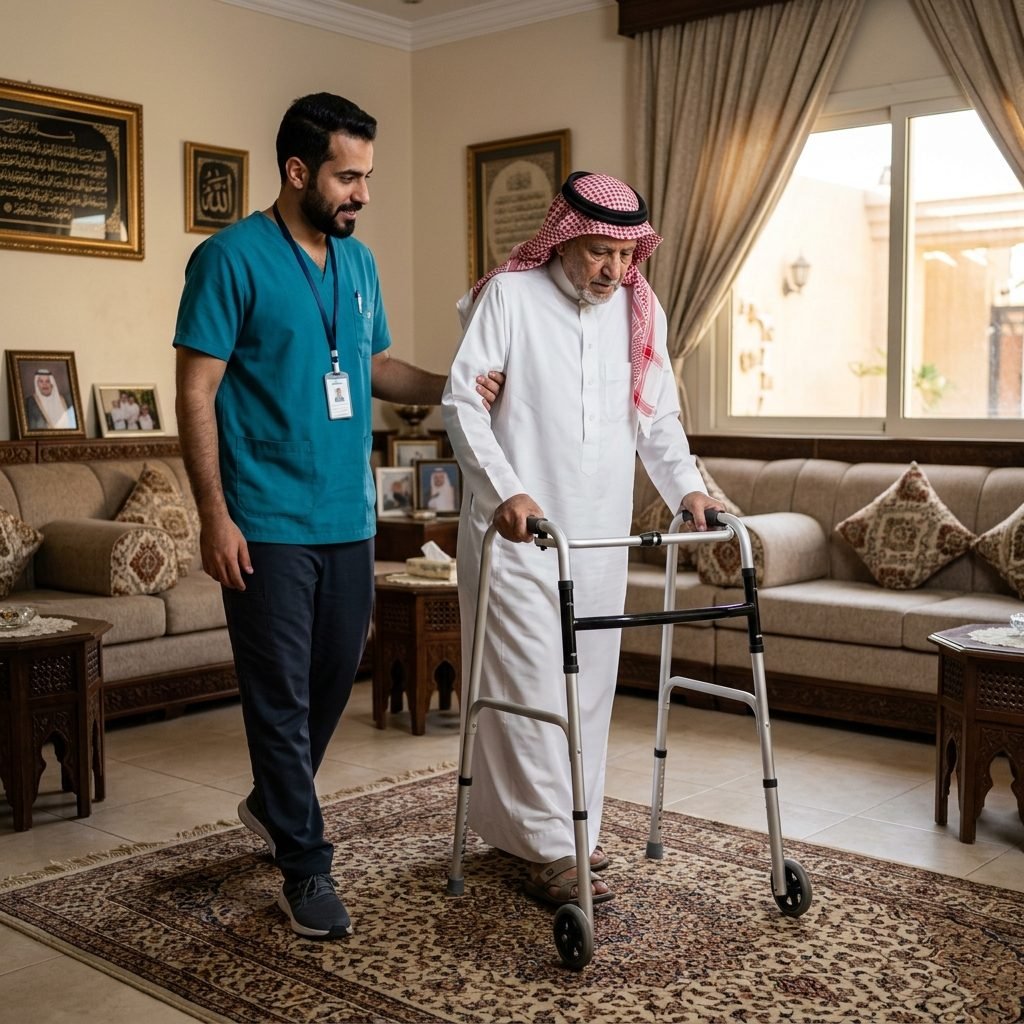
Geriatric Physical Therapy
Balance training, strengthening, and fall prevention for seniors in Al Mohammadiyah.
Service Details ←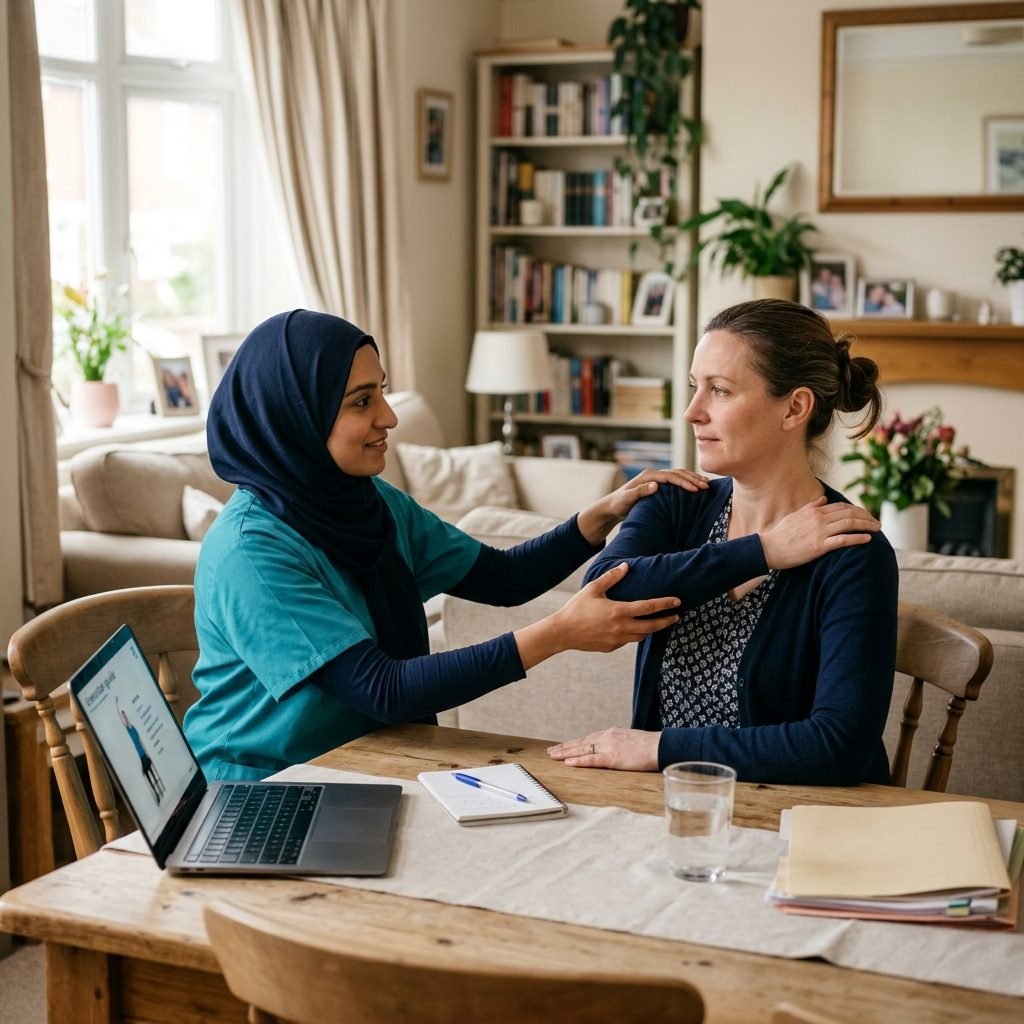
Female Physiotherapist
Licensed female therapists providing home care for women in Al Mohammadiyah.
Service Details ←