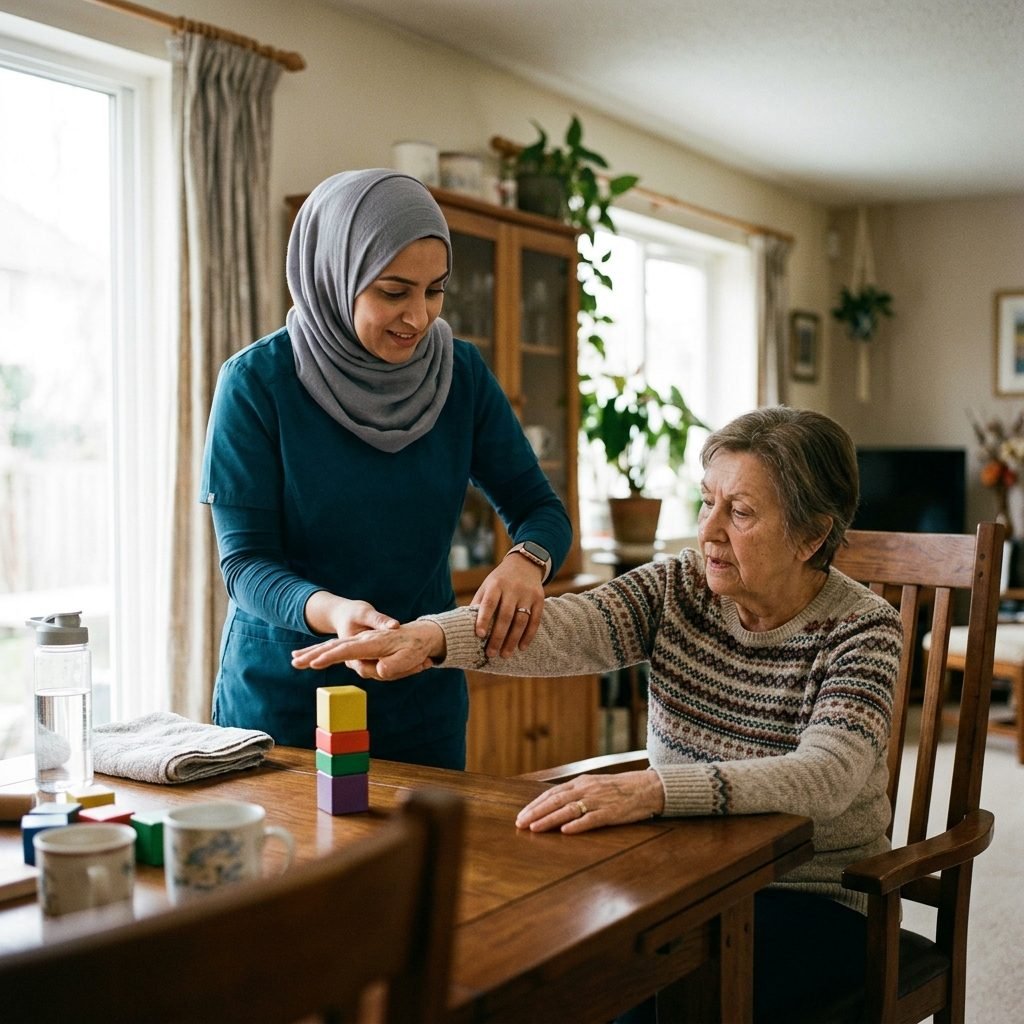
Having access to comprehensive, clinical physical therapy at home is crucial for maintaining rehabilitation progress, especially in busy neighborhoods. Al-Safa and Al Mohammadiyah districts in Jeddah present unique local mobility challenges due to high population density and traffic. At Bidaya Center, we deliver high-quality home physiotherapy and movement rehabilitation services directly to your doorstep, conforming to the clinical guidelines of the Saudi Commission for Health Specialties. We eliminate the stress of travel, traffic, and parking. We respect cultural privacy by providing certified male therapists for male patients and female therapists for female patients.
Our clinical approach in Al Mohammadiyah starts with a detailed physical and environmental safety assessment to eliminate fall hazards in the home. We bring all necessary portable, sterilized equipment to deliver a clinical standard of care comparable to external clinics. The therapist establishes a tailored milestone tracking plan to monitor muscle strength, balance, and joint range of motion (ROM) progression over time.
Why families in Al Mohammadiyah choose Bidaya for home physiotherapy
- ✅ Licensed male & female therapists — full privacy, in your own home in Al Mohammadiyah.
- ✅ Fully in-home visits across Al Mohammadiyah — no travel or traffic.
- ✅ A personalized rehab plan built after a thorough in-home assessment.
- ✅ Continuous follow-up and direct contact with your therapist throughout.
- ✅ Fast response — arrange your visit by a quick call or WhatsApp message.
We also serve nearby areas: Al Andalus · Al Basateen · Al Bawadi
* The treatment plan and expected outcomes are determined by a medical and functional assessment of each individual case.
Home-Based Post-Stroke Rehabilitation and Why It Matters for Al Mohammadiyah Residents
Post-stroke rehabilitation is a structured therapy program that helps the brain reorganize its neural pathways after blood flow is interrupted or a bleed occurs, using guided, progressive exercises that retrain the body in movement, balance, and everyday function. When we deliver this rehabilitation inside the home in Al Mohammadiyah, Jeddah, we bring the session into the very setting where the patient actually lives: the bedroom they rise from each morning, the hallway they walk to reach the bathroom, and the living room where they sit with family.
Al Mohammadiyah is a calm, largely residential district in northern Jeddah, near the seafront, and many of its homes are villas or floor units with internal stairs and corridors. These exact details are what make home rehabilitation more realistic than a session inside a generic clinic: the patient practices climbing their own steps and transferring from their own chair, not on model equipment that looks nothing like their house. Avoiding repeated trips through traffic also spares both patient and companion physical and mental fatigue, which helps keep sessions consistent, the single most important factor in neurological rehabilitation outcomes.
The value of starting early rests on the principle of neuroplasticity: the brain can build alternative connections that partly compensate for damaged cells, but this capacity peaks during the first weeks and months. Having a qualified therapist reach the family's home in Al Mohammadiyah without a long wait means investing in this precious window rather than losing it.
Symptoms and Signs That Signal It Is Time to Begin
Once the medical condition has stabilized and the patient has left hospital, several signs indicate a need for a structured rehabilitation program without delay. Among the most common:
- Weakness or paralysis on one side of the body that makes lifting the arm or moving the leg difficult, or leaves the hand's grip too weak to hold objects.
- Loss of balance and a tendency to fall when standing or walking, or a constant need to lean on a wall or another person.
- Muscle stiffness and increased tone (spasticity), especially in the hand and ankle, with difficulty straightening the joint.
- Difficulty with transfers, such as getting up from bed or a chair, or sitting and standing without help.
- A changed walking pattern, such as dragging the foot, swinging the leg outward, or a stiff knee.
- Poor trunk control, so the body leans while sitting and an upright posture is hard to maintain.
- Associated signs such as swallowing or speech difficulty, or visual neglect of one side, which call for a comprehensive assessment and coordination with other specialties when needed.
Having one or more of these signs does not predetermine any particular result, but it does mean that early assessment and a considered start will offer a better chance of regaining function. Grading the severity of each symptom and the plan to address it depends on a clinical and functional assessment of the individual case.
Conditions and Groups Who Benefit
The home-based post-stroke rehabilitation program in Al Mohammadiyah serves a broad range of cases, including:
- Patients with ischemic stroke (a blocked brain artery) once their medical status is stable.
- Patients with a brain hemorrhage who have been cleared for rehabilitation after the necessary medical follow-up.
- Those living with hemiplegia (one-sided weakness) or weakness in a single limb.
- Patients with post-stroke spasticity and stiffness who need a stretching and range-of-motion program.
- Older adults whose fitness and mobility have declined after a period of bed rest in hospital.
- Those with poor balance and a fear of falling that limit their independence at home.
- Patients who are hard to transport repeatedly to clinics because of their condition or family circumstances, and who prefer the privacy and comfort of home.
We provide licensed physiotherapists, both men and women, in a way that preserves the patient's privacy and suits the family's preference, with full respect for the sanctity of the home.
Goals of the Rehabilitation Program
The program is not built on generic aims but on functional goals the patient and family feel in daily life. Our main targets include:
- Recovering as much voluntary movement as possible on the affected side and improving muscle strength and control.
- Improving balance and stability while sitting, standing, and walking, and reducing the risk of falls at home.
- Strengthening independence in daily activities such as rising, transfers, walking safe distances, and reaching the bathroom.
- Managing spasticity and stiffness through stretching, range-of-motion work, and correct positioning to keep joints mobile.
- Preventing complications such as painful shoulder stiffness, tendon shortening, and pressure sores caused by immobility.
- Retraining the walking pattern to be safer and more efficient, with or without assistive devices as needed.
- Raising overall fitness and self-confidence and gradually reducing dependence on others.
It is important to stress that how far each goal is met varies from person to person according to the location and size of the stroke, the time elapsed, and general health. For this reason we set realistic, measurable goals and review them regularly, with no promises of a guaranteed cure.
Stages and Course of the Home Sessions
Home rehabilitation in Al Mohammadiyah follows a considered path that begins with assessment and aims for the greatest possible independence:
- Initial assessment: On the first visit we evaluate muscle strength, range of motion, balance, walking pattern, degree of spasticity, and transfer ability; we listen to the patient's and family's priorities, then survey the home environment itself.
- Building the treatment plan: We craft an individual plan with short- and long-term goals, a proposed number of sessions, and clear criteria for measuring progress.
- Activation and protection phase: Early sessions focus on correct positioning, passive and active range of motion, activating the affected side, and preventing complications.
- Strengthening and control phase: Progressive exercises to build muscle strength, improve fine control, and practice balanced sitting and standing.
- Function and gait phase: Transfer training, gait re-education, dynamic balance, and simulation of daily activities at home, such as climbing the villa's steps and moving through corridors.
- Follow-up and reassessment: We review goals regularly, adjust the exercises, and add a home program the patient performs between visits.
The number and intensity of sessions are set from the assessment and the patient's response, with flexible timing to suit the family's schedule in Al Mohammadiyah.
The Role of the Family and Caregiver
Successful stroke rehabilitation does not rest on the therapist alone; the family is an essential partner at every step. Inside the home this role becomes clearer and more influential, and we make a point of empowering the caregiver by:
- Teaching them the safe way to transfer and support the patient when rising and moving, protecting both the patient and the caregiver's own back.
- Training them in the correct sitting and sleeping positions that guard against spasticity and shoulder stiffness.
- Overseeing the home program of simple exercises repeated between sessions to consolidate gains.
- Explaining the warning signs that call for contacting the doctor or therapist.
- Offering emotional support and encouragement, because rehabilitation is a long journey that needs patience, and family motivation affects morale no less than the exercise itself.
When family members understand the reason behind each exercise, the whole home becomes a recovery-supporting environment throughout the day, not just during the hour of the session.
Home Safety and Prevention Tips
Preparing the home is a rehabilitation step in its own right, because it reduces falls and increases the patient's independence. We advise Al Mohammadiyah residents to:
- Remove floor hazards such as sliding rugs and scattered cables, and keep corridors clear and open.
- Install grab bars near the toilet and inside the bathroom, and use non-slip mats in wet areas.
- Provide good lighting at night in corridors and on stairs, with easily reachable switches.
- Use closed, firm-soled shoes instead of open slippers that raise the risk of tripping.
- Keep daily items within easy reach to reduce risky bending and stretching.
- Respect the recommended positions for the affected side and avoid pulling the weak arm during transfers.
- Keep regular medical follow-up and stay consistent with stroke-prevention medication and blood pressure and diabetes control as prescribed.
These measures are tailored to each home in Al Mohammadiyah, and whether it is a ground-floor unit or a villa with stairs, the therapist suggests the most suitable adjustments during the visit.
Frequently Asked Questions (FAQ)
When can we start home rehabilitation after a stroke?
It is best to begin as soon as the condition is stable and the treating doctor agrees, because the first weeks and months are the most responsive. Even older cases can still benefit, and the initial assessment determines the right starting point.
Does home therapy replace clinic sessions?
For many patients home rehabilitation is sufficient and effective, especially when frequent travel is difficult. In some cases the therapist may recommend combining home care with diagnostic tools or equipment available at specialized centers, coordinated within the plan.
How many sessions will the patient need?
There is no fixed number; it depends on the severity of the injury, the speed of response, and the agreed goals. An initial plan is set and reviewed periodically, and the number and intensity of sessions are adjusted according to progress.
Are female therapists available for privacy?
Yes. Licensed male and female therapists are available, and the family can choose what suits them while fully preserving the privacy of the home and the comfort of the patient.
Do you guarantee a full return to normal?
We make no promise of a guaranteed cure, because stroke rehabilitation outcomes differ from person to person for many reasons. What we commit to is an evidence-based, considered plan, realistic and measurable goals, and honest follow-up to achieve the best possible improvement.
To book or ask about home-based post-stroke rehabilitation in Al Mohammadiyah, Jeddah, contact us by phone or WhatsApp by clicking Call Now. The Bidaya Center team will be glad to arrange a home visit that suits you and set up an initial assessment of your case.
Important Home Visit Details:
- ✓Setup: Please clear a 2x2m space in the room for safety.
- ✓Clothing: Wear loose, comfortable clothes for easy movement.
- ✓Therapist Parity: Male therapists for males, females for females.
- ✓Medical Reports: Keep your MRI or doctor reports ready for evaluation.
Rehabilitation & Services in Al Mohammadiyah
Stroke Rehabilitation
Advanced motor and neurological stroke recovery at home in Al Mohammadiyah.
Service Details ←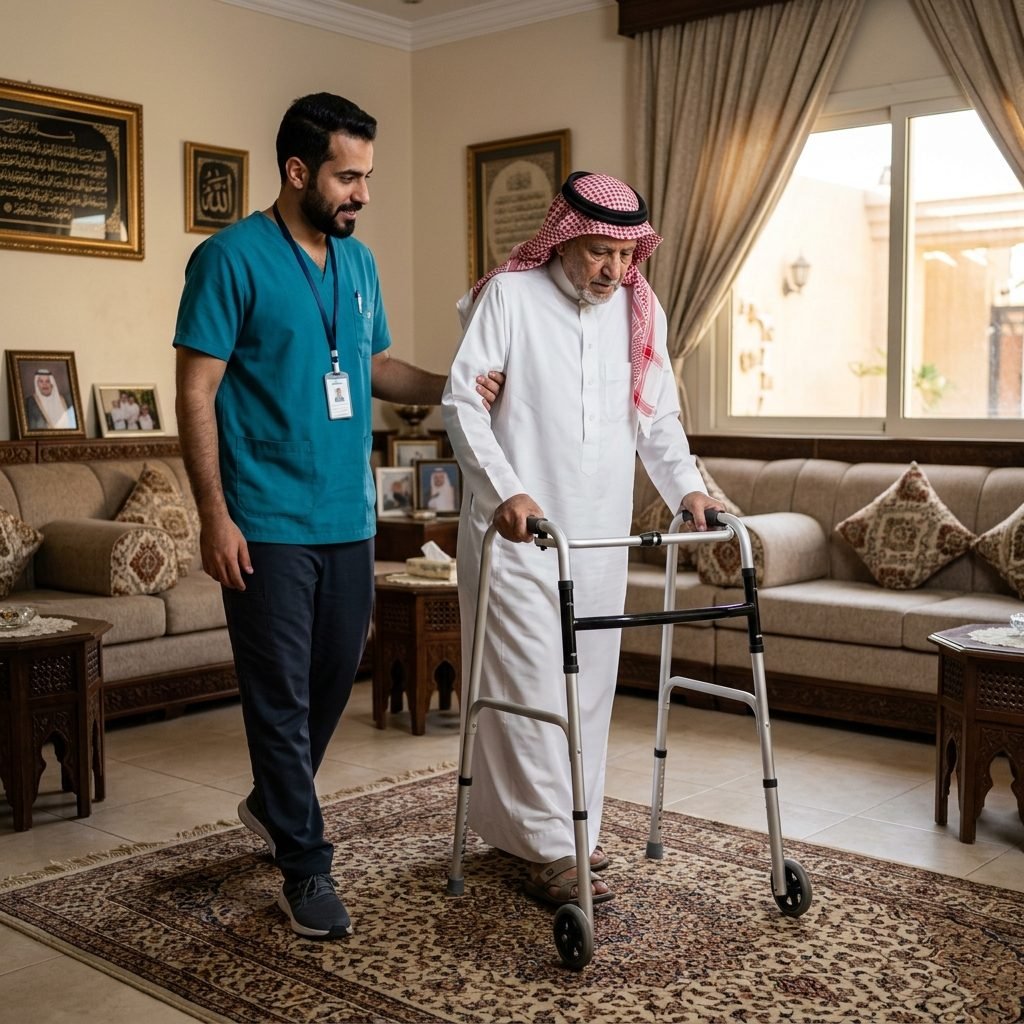
Geriatric Physical Therapy
Balance training, strengthening, and fall prevention for seniors in Al Mohammadiyah.
Service Details ←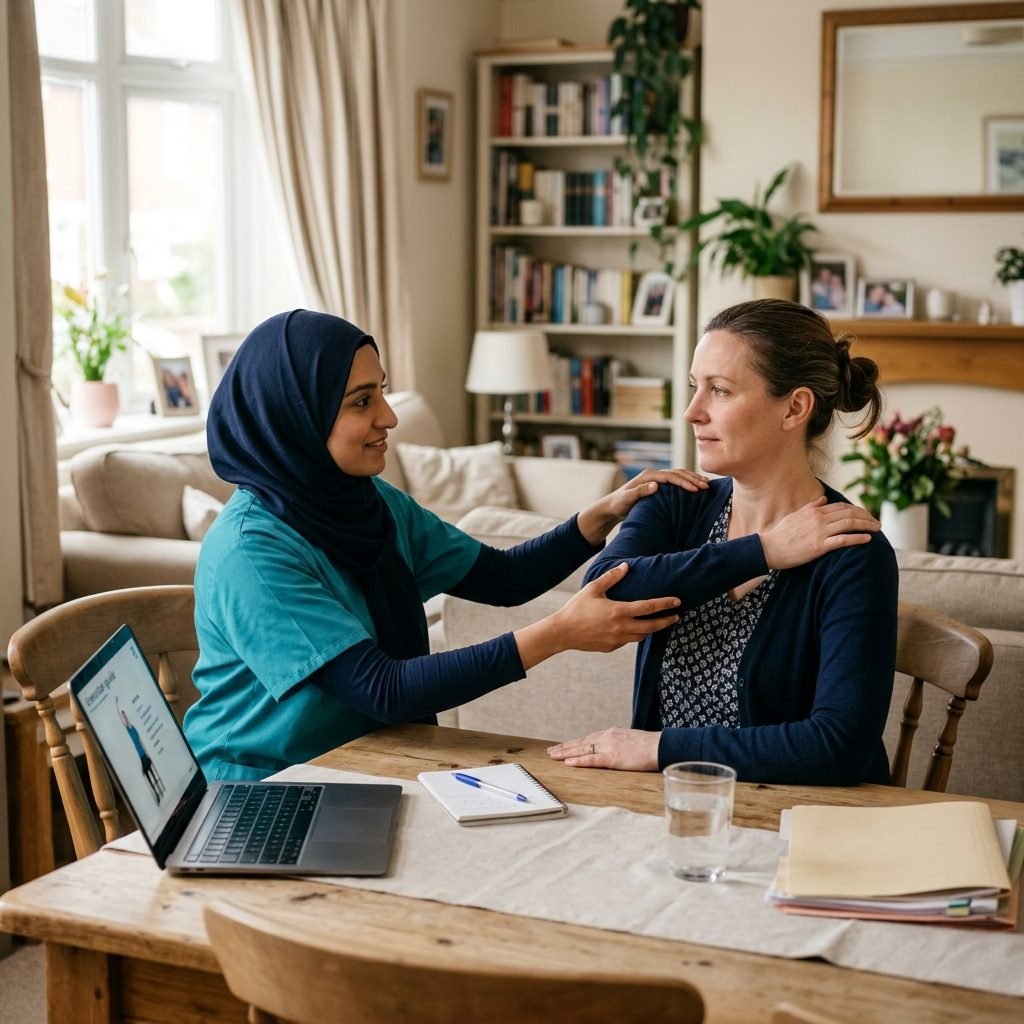
Female Physiotherapist
Licensed female therapists providing home care for women in Al Mohammadiyah.
Service Details ←