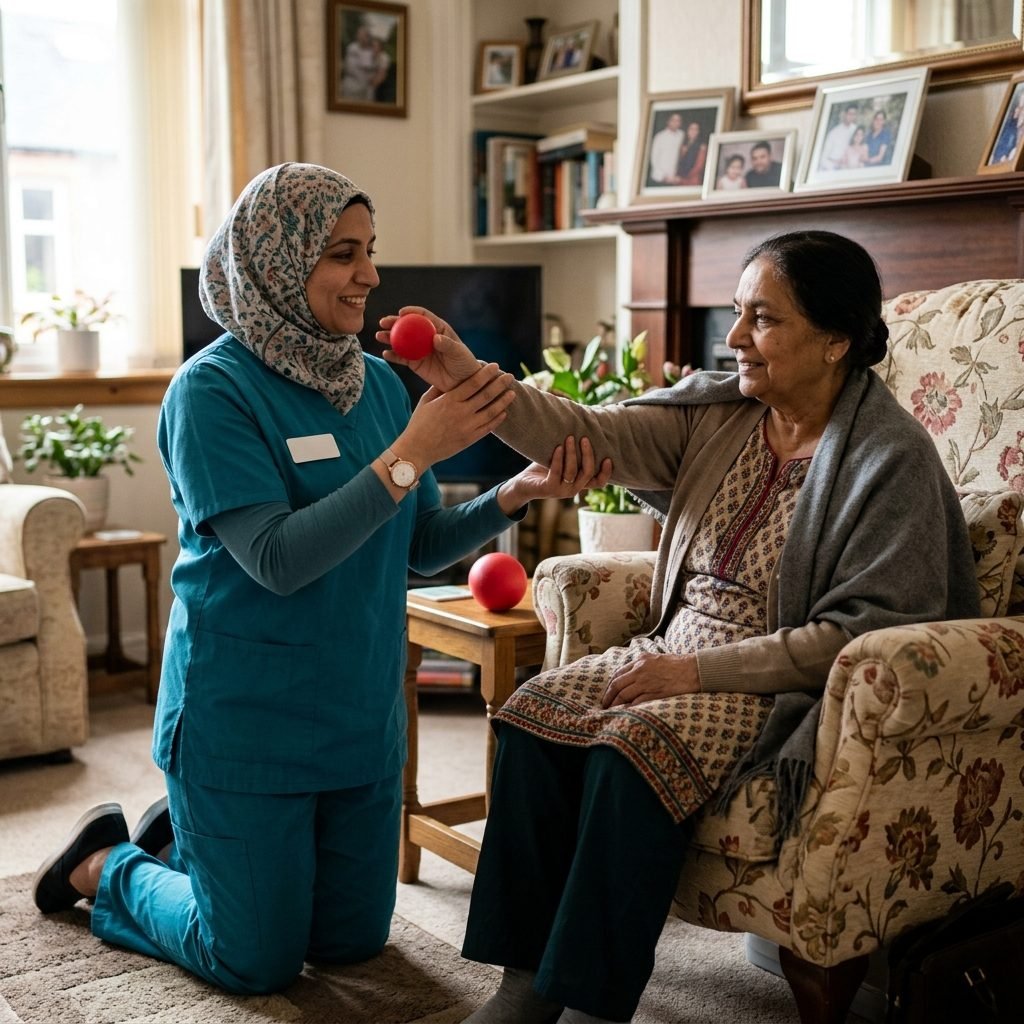
Having access to comprehensive, clinical physical therapy at home is crucial for maintaining rehabilitation progress, especially in busy neighborhoods. Al-Safa and Al Mohammadiyah districts in Jeddah present unique local mobility challenges due to high population density and traffic. At Bidaya Center, we deliver high-quality home physiotherapy and movement rehabilitation services directly to your doorstep, conforming to the clinical guidelines of the Saudi Commission for Health Specialties. We eliminate the stress of travel, traffic, and parking. We respect cultural privacy by providing certified male therapists for male patients and female therapists for female patients.
Our clinical approach in Al Mohammadiyah starts with a detailed physical and environmental safety assessment to eliminate fall hazards in the home. We bring all necessary portable, sterilized equipment to deliver a clinical standard of care comparable to external clinics. The therapist establishes a tailored milestone tracking plan to monitor muscle strength, balance, and joint range of motion (ROM) progression over time.
Why families in Al Mohammadiyah choose Bidaya for home physiotherapy
- ✅ Licensed male & female therapists — full privacy, in your own home in Al Mohammadiyah.
- ✅ Fully in-home visits across Al Mohammadiyah — no travel or traffic.
- ✅ A personalized rehab plan built after a thorough in-home assessment.
- ✅ Continuous follow-up and direct contact with your therapist throughout.
- ✅ Fast response — arrange your visit by a quick call or WhatsApp message.
We also serve nearby areas: Al Andalus · Al Basateen · Al Bawadi
* The treatment plan and expected outcomes are determined by a medical and functional assessment of each individual case.
Home Physiotherapy for Multiple Sclerosis and Why It Matters for Al Mohammadiyah Residents
Multiple sclerosis is a chronic condition of the central nervous system, and few diseases vary as widely from one person to the next. One patient may struggle mainly with weakness in the legs, while another is dominated by fatigue and unsteady balance, and a third notices numbness or vision-linked heat sensitivity. Because of this, there is no single protocol that fits everyone. What works is an individual plan built on a careful functional assessment. Home physiotherapy for multiple sclerosis brings that assessment and the sessions into the patient's own daily environment instead of a distant clinic, which suits MS in particular because its symptoms are strongly affected by exertion, heat, and the effort of getting around.
Al Mohammadiyah in Jeddah is a largely residential district of villas, apartment blocks, and family flats, and many buildings rely on stairs or small lifts. For someone with MS who may face a sudden drop in energy or heightened sensitivity to heat, simply leaving home, sitting in transport, and waiting in a reception area can drain the energy needed for the session before it even begins. A home visit in Al Mohammadiyah removes that burden entirely: the therapist reaches the patient's own room, observes how they actually move between the bed, the bathroom, the kitchen, and the entrance, and then builds the exercises around the very distances, thresholds, and furniture that exist in their home.
At Bidaya Center we treat MS as a long journey that needs companionship, not a one-off appointment. We have licensed male and female therapists, with full respect for the privacy of the home and family, so the patient can choose the gender of the therapist and the timing that suits them. We make no promise of a cure. The realistic goal is to preserve as much independence as possible, reduce the impact of symptoms on daily life, and slow the decline of motor function as far as the individual course of the disease allows.
Symptoms and Signs That Signal It Is Time to Start
Many people with MS postpone physiotherapy until their walking has clearly deteriorated, when it is far better to begin rehabilitation early, at the first functional sign. Signs that suggest you should contact us to start include:
- Weakness or heaviness in one or both legs, especially late in the day or after exertion.
- Frequent tripping or a sense of the toes catching on the floor (foot drop) when walking along hallways or over rugs.
- Poor balance and a feeling of instability when standing, or dizziness when changing position.
- Severe fatigue out of proportion to the effort made, worsening in hot weather or after a hot shower.
- Muscle spasticity and stiffness, particularly in the legs, with troublesome involuntary spasms at night.
- Numbness, tingling, or reduced sensation in the limbs that affects grip or confidence in foot placement.
- Growing difficulty with fine hand tasks such as buttons or handwriting.
- Reduced endurance, so that a distance that was once easy now feels exhausting.
A new flare of disease activity (a relapse) or a sudden, clear change in symptoms should first be reviewed by your treating neurologist; physiotherapy then rebuilds what was affected once the relapse has settled. We do not manage the acute attack itself, but we accompany the recovery phase and help protect the gains that follow.
Who Benefits From the Program
The home MS rehabilitation program in Al Mohammadiyah is designed to serve the full spectrum of the condition, because the disease does not present in a single way. Those who benefit include:
- People recently diagnosed whose mobility is still relatively good, who want a preventive program to preserve fitness, strength, and balance.
- People with a relapsing-remitting pattern who need rehabilitation after each relapse to recover the closest possible functional level.
- People in a progressive phase, where weakness increases gradually and the focus shifts to prolonging independence and limiting the complications of reduced movement.
- People who rely on a cane, walker, or wheelchair and need safe training in its use and in transfers between it, the bed, and a chair.
- People whose main problem is fatigue and balance rather than overt muscle weakness.
- Older adults with MS for whom repeated travel to clinics is difficult.
- Families caring for a patient with limited mobility who need practical guidance in safe handling and injury prevention.
In every case we begin from an individual assessment and never assume a patient's limits in advance; some who appear restricted hold real potential for functional gains, and some who look well need proactive protection for their joints and muscles.
Goals of the Rehabilitation Program
Goals in MS are realistic and tied to daily function, never framed as absolute promises. We agree on them with the patient and family after the assessment, and we reset them whenever the condition changes. They usually include:
- Maintaining muscle strength and range of motion and delaying the weakness caused by disuse.
- Improving balance and stability and lowering the risk of falls at home, one of the most serious short-term complications of the disease.
- Managing fatigue through energy conservation, spreading effort across the day rather than spending it all at once.
- Addressing spasticity and stiffness with stretching and correct positioning to reduce pain and night-time spasms.
- Improving the walking pattern and addressing foot drop as far as possible with targeted exercise and assistive devices when needed.
- Preserving independence in essential activities: standing up, transferring, using the bathroom, and dressing.
- Preventing the complications of immobility such as joint stiffness, pressure sores, and circulation problems.
- Supporting confidence in the body and encouraging the patient to stay active within safe limits.
We always stress that how far these goals are met depends on the type and severity of the disease and each body's response, and that periodic reassessment is what determines the next step.
Stages and Path of the Home Sessions
We begin the treatment journey in Al Mohammadiyah with a first assessment visit, where the therapist comes to the home to get to know both the patient and their environment:
- Assessment stage: measuring muscle strength, range of motion, and balance; observing the walking pattern and transfers; gauging the degree of fatigue and heat sensitivity; and reviewing the neurologist's reports when available. We also examine the layout of the home: the position of stairs, the width of hallways, the bathroom floor, and the height of the bed.
- Planning stage: shaping short and long-term goals with the patient, and setting the number of weekly sessions that suits their energy level without exhausting them.
- Active treatment stage: graded strengthening, balance and standing work, stretching for spasticity, and training in walking and transfers within the home's own hallways, always avoiding heat stress and allowing enough rest breaks.
- Energy management and education stage: teaching the patient how to distribute daily tasks, when to rest, and how to perform activities with the least energy cost.
- Follow-up and reassessment stage: measuring progress periodically and adjusting the plan, especially after any relapse or change in symptoms, intensifying or easing the sessions as the case requires.
The path is not a straight line; the fluctuating nature of MS means some days bring more energy than others, and we design the program to be flexible and adapt to that variability rather than clash with it.
The Role of the Family and Caregiver
In a chronic condition like MS the family is an essential partner in the success of rehabilitation, and the home session gives them a chance to learn directly inside their own house. We make a point of involving the caregiver practically:
- Teaching safe ways to assist with standing and transfers without straining the caregiver's back or hurting the patient.
- Supervising a simple set of home exercises the patient does between visits to consolidate their gains.
- Explaining that MS fatigue is not laziness but a genuine symptom that calls for smart timing of tasks.
- Recognizing the signs that warrant a doctor's review, such as a sudden change in symptoms or an increase in falls.
- Fostering a psychologically supportive atmosphere that encourages independence rather than doing everything for the patient, since over-protection weakens abilities over time.
We always balance empowering the patient against overburdening the family, offering clear guidance that makes daily care lighter and safer for both sides.
Home Safety and Prevention Tips
A safe home environment directly reduces the risk of falls and complications for a person with MS. We review it on the first visit and recommend, practically:
- Removing slippery rugs and cables from hallways, and securing any mat with adhesive edges.
- Providing adequate lighting, especially on the route between the bedroom and bathroom at night.
- Installing fixed grab bars near the toilet and inside the bathroom, and using a shower chair to reduce effort and prolonged standing.
- Avoiding high heat and very hot showers, since heat can temporarily worsen symptoms, and favoring moderate conditions with good hydration.
- Choosing stable, closed-back shoes with non-slip soles instead of open slippers.
- Distributing effort across the day and taking rest breaks before reaching full exhaustion, not after.
- Keeping frequently used items within easy reach to reduce strenuous bending and reaching.
- Never ignoring numbness or reduced sensation in the feet, to avoid wounds the patient cannot feel.
These are general preventive measures, tailored to each patient's condition and the nature of their home in Al Mohammadiyah after a direct assessment.
Frequently Asked Questions (FAQ)
Can physiotherapy cure multiple sclerosis?
No, physiotherapy does not cure the disease or halt its course. Its role is to preserve motor function, improve balance and strength, manage symptoms such as fatigue and spasticity, and reduce the risk of falls and complications, within what each patient's condition allows.
Will exercise increase my fatigue or trigger a relapse?
The program is designed specifically to avoid over-exertion; we work within your energy limits with rest breaks and monitor heat sensitivity. Carefully graded exercise improves endurance and does not cause relapses. It is complete inactivity that weakens the body further.
How many sessions will I need per week?
That is decided after the assessment, based on the severity of your symptoms, your energy level, and your goals. Some cases begin with two sessions a week, others more or fewer, and we adjust continually as your condition changes or after any relapse.
Are female therapists available for female patients?
Yes, we have licensed male and female therapists, and you can choose the gender of the therapist to suit your comfort and the privacy of your home in Al Mohammadiyah, with full respect for family preferences.
Do I need special equipment at home before the visit?
You do not need complex equipment; we mostly use the home's own furniture and a small clear space, and the therapist brings the tools required. If particular assistive devices are needed, we advise you on them after directly assessing your case.
To book a home assessment visit for multiple sclerosis physiotherapy in the Al Mohammadiyah district of Jeddah, contact Bidaya Center by phone or WhatsApp by clicking Call Now, and our team will help you choose a suitable time, your preferred therapist gender, and answer any question before you begin.
Important Home Visit Details:
- ✓Setup: Please clear a 2x2m space in the room for safety.
- ✓Clothing: Wear loose, comfortable clothes for easy movement.
- ✓Therapist Parity: Male therapists for males, females for females.
- ✓Medical Reports: Keep your MRI or doctor reports ready for evaluation.
Rehabilitation & Services in Al Mohammadiyah
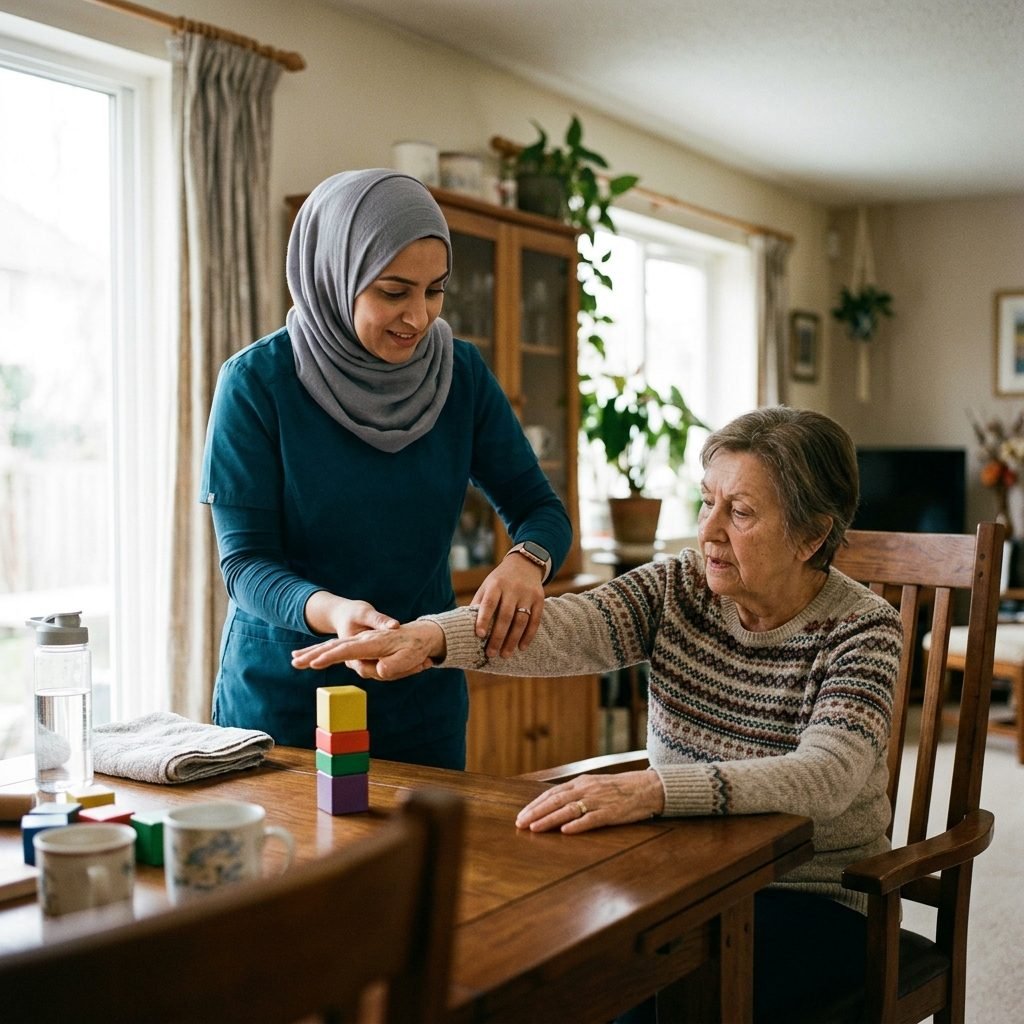
Stroke Rehabilitation
Advanced motor and neurological stroke recovery at home in Al Mohammadiyah.
Service Details ←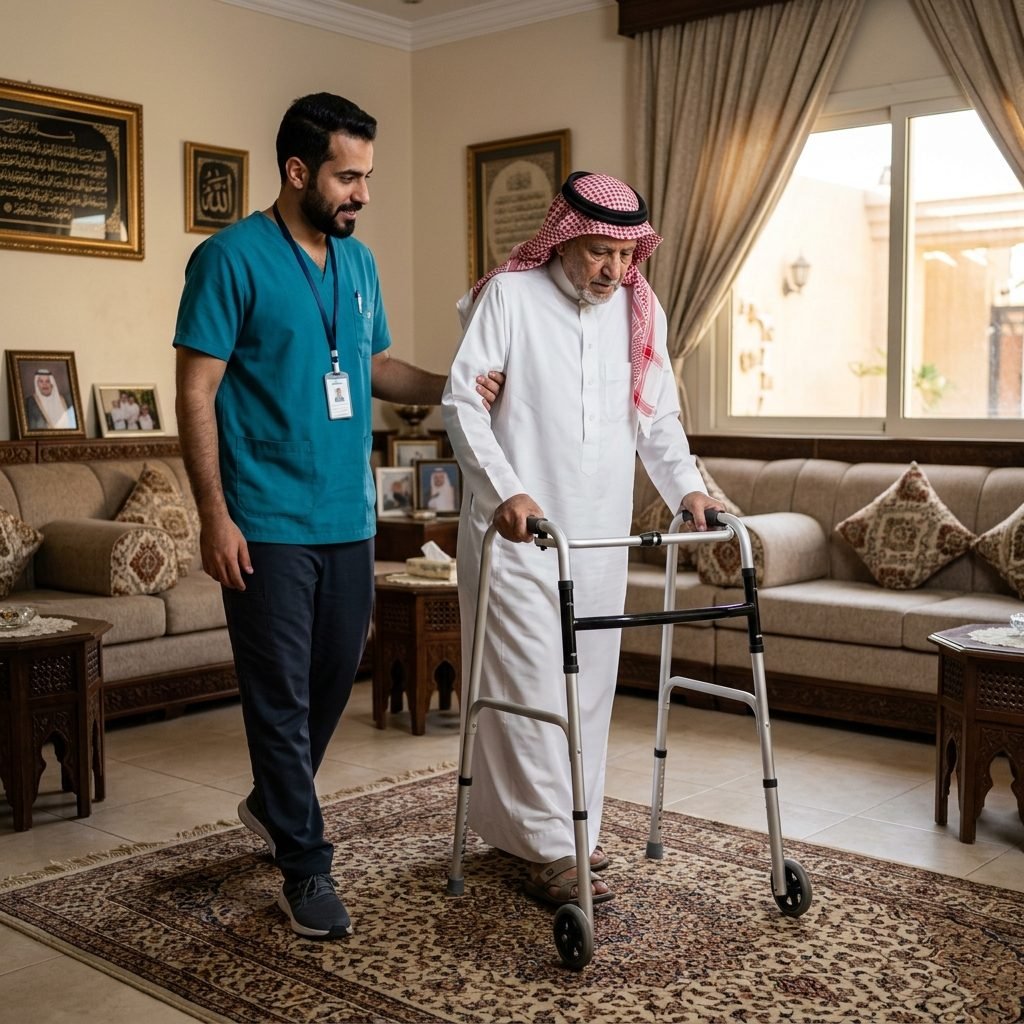
Geriatric Physical Therapy
Balance training, strengthening, and fall prevention for seniors in Al Mohammadiyah.
Service Details ←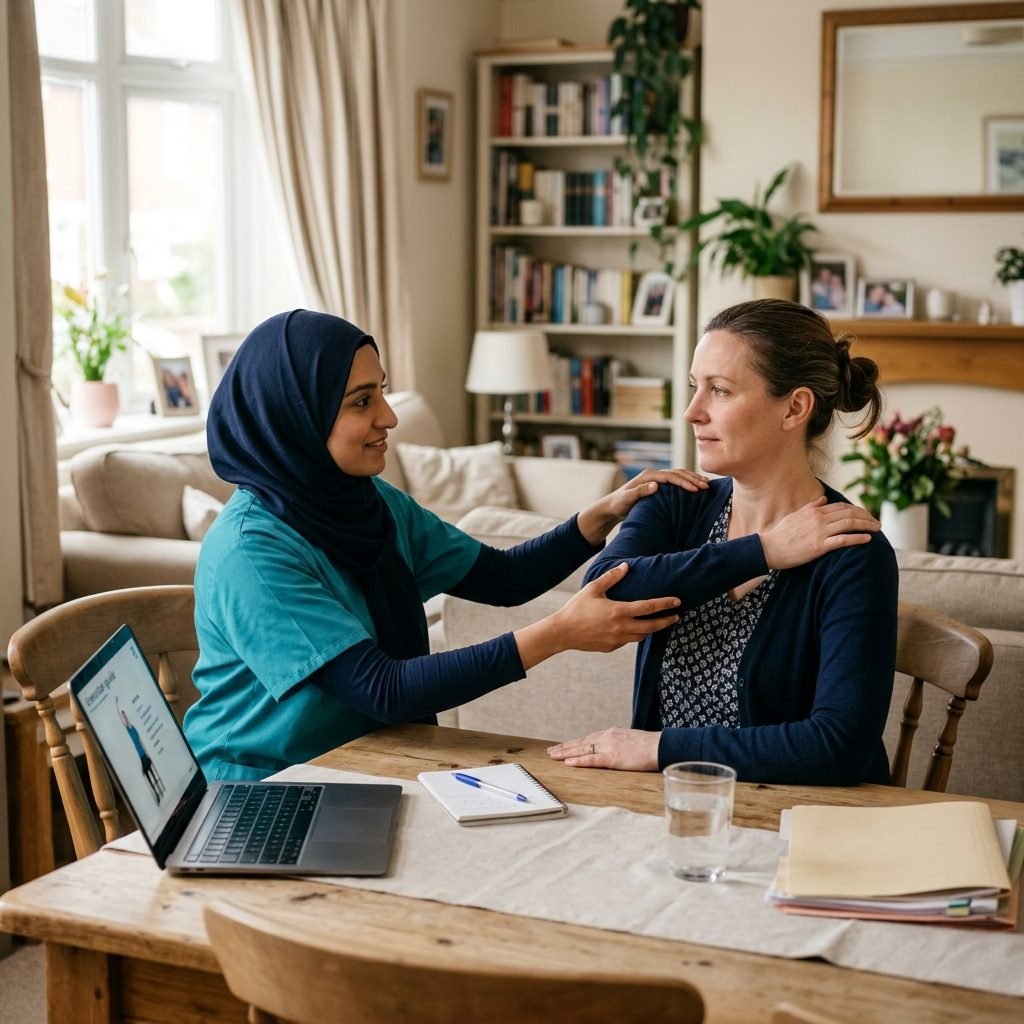
Female Physiotherapist
Licensed female therapists providing home care for women in Al Mohammadiyah.
Service Details ←