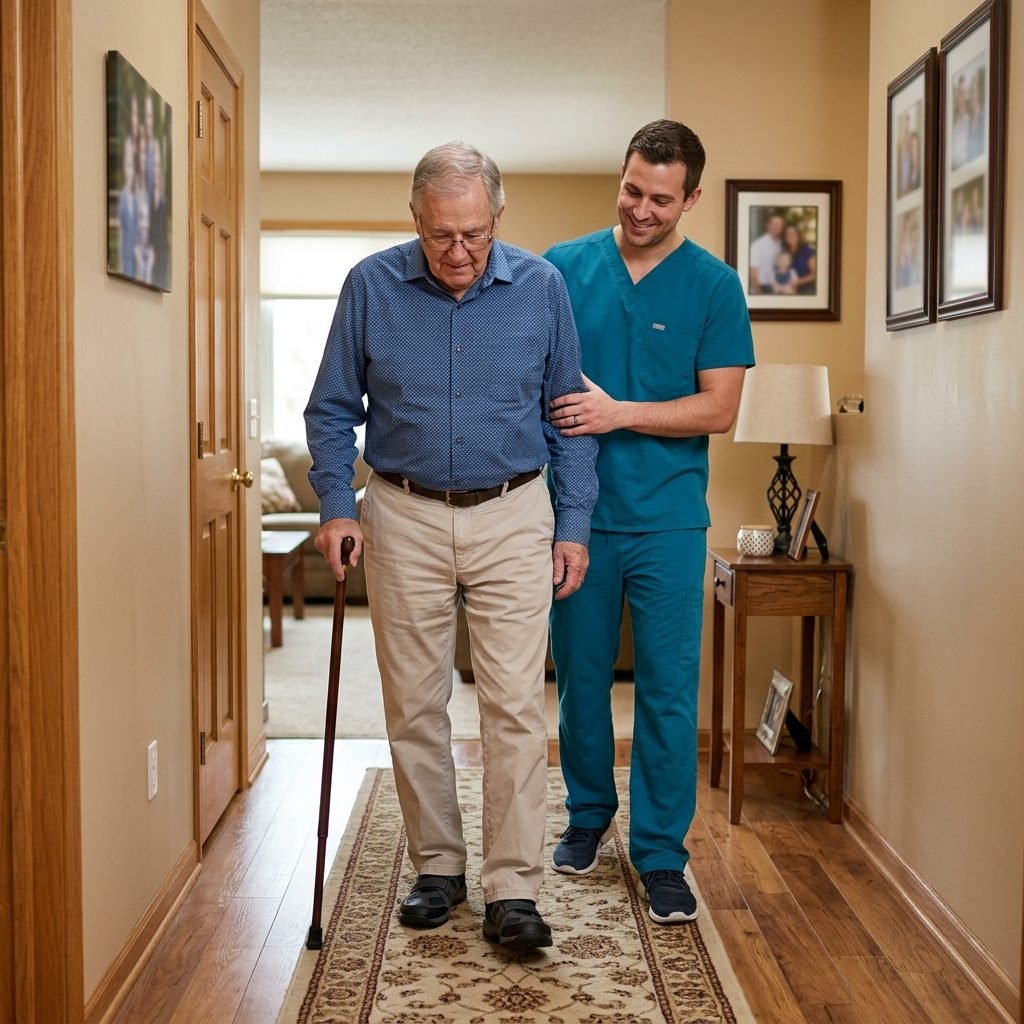
Having access to comprehensive, clinical physical therapy at home is crucial for maintaining rehabilitation progress, especially in busy neighborhoods. Al-Safa and Al Naeem districts in Jeddah present unique local mobility challenges due to high population density and traffic. At Bidaya Center, we deliver high-quality home physiotherapy and movement rehabilitation services directly to your doorstep, conforming to the clinical guidelines of the Saudi Commission for Health Specialties. We eliminate the stress of travel, traffic, and parking. We respect cultural privacy by providing certified male therapists for male patients and female therapists for female patients.
Our clinical approach in Al Naeem starts with a detailed physical and environmental safety assessment to eliminate fall hazards in the home. We bring all necessary portable, sterilized equipment to deliver a clinical standard of care comparable to external clinics. The therapist establishes a tailored milestone tracking plan to monitor muscle strength, balance, and joint range of motion (ROM) progression over time.
Why families in Al Naeem choose Bidaya for home physiotherapy
- ✅ Licensed male & female therapists — full privacy, in your own home in Al Naeem.
- ✅ Fully in-home visits across Al Naeem — no travel or traffic.
- ✅ A personalized rehab plan built after a thorough in-home assessment.
- ✅ Continuous follow-up and direct contact with your therapist throughout.
- ✅ Fast response — arrange your visit by a quick call or WhatsApp message.
We also serve nearby areas: Al Andalus · Al Basateen · Al Bawadi
* The treatment plan and expected outcomes are determined by a medical and functional assessment of each individual case.
What Home-Based Gait and Balance Rehabilitation Means for Al Naeem Residents
Gait and balance rehabilitation is a focused therapy program aimed at restoring safe, confident movement after it has been lost or weakened, whether the cause is a neurological event, an orthopedic injury, muscle weakness, or the gradual changes of ageing. It is far more than "getting the legs moving again." It retrains the nervous system to coordinate joint movement, redistribute weight correctly across both feet, and recover the split-second balance reactions that keep a person from falling. When this work is delivered at home, it is built around the real environment where the person actually lives, rather than a neutral clinic room, which tends to make the gains more durable and more directly useful in daily life.
Al Naeem, in northern Jeddah, is a calm, largely residential district of villas and homes with internal stairs, corridors, and split levels, and many of its residents move between floors several times a day. That everyday reality gives home gait and balance therapy a very practical value: instead of putting the patient and family through repeated trips to a clinic during peak traffic, a licensed therapist comes to the front door and works on the very staircase, the very doorway, and the very floor surface where the person actually loses their footing.
We want to be clear that every plan is built on a careful clinical and functional assessment of the individual case, and that the expected outcomes and program length differ from one person to another depending on the cause, the severity of the weakness, and overall health. We do not promise a cure; we offer a realistic, measurable plan. Licensed male and female therapists are available, with full respect for privacy inside the home.
Symptoms and Signs That Signal It Is Time to Begin
Many families delay asking for help, assuming that unsteadiness is "normal" or temporary, yet early intervention often shortens the rehabilitation path. The following signs are good reasons to reach out and request an assessment:
- A sense of unsteadiness or dizziness when standing or turning, and the need to hold onto walls and furniture to avoid falling.
- One or more falls in recent months, or a persistent fear of falling that has led the person to avoid moving.
- A changed walking pattern: short shuffling steps, dragging one foot, a wide stance in search of balance, or side-to-side swaying.
- Difficulty going up and down the home's stairs, or needing longer and pausing to rest on the steps.
- Weakness or numbness in the legs, or a feeling that the knee suddenly "gives way."
- Loss of balance in the dark, with eyes closed, or when walking on an uneven surface.
- A noticeable drop in walking speed compared with before, and a reduced ability to cover distances that used to feel easy.
Having one or more of these indicators does not necessarily mean a serious condition, but it is reason enough to seek a specialized assessment that identifies the source of the problem and sets an appropriate plan before it worsens.
Conditions and Groups That Benefit
Gait and balance rehabilitation is not aimed at a single group; it serves a range of people who share the goal of regaining safe movement. Among those who benefit most in Al Naeem homes:
- Older adults whose balance has gradually declined and who have become prone to falling inside the home.
- People after a stroke who have one-sided weakness affecting their walking pattern and stability.
- Those living with neurological conditions such as Parkinson's or multiple sclerosis that affect coordination and steadiness.
- Patients recovering from hip or knee surgery or joint replacement who need to relearn balance and weight-bearing.
- People recovering from lower-limb fractures or ligament and ankle injuries after a long period of reduced movement.
- Those with peripheral neuropathy (for example, diabetic complications) and reduced sensation in the feet.
- Cases of vertigo and vestibular disorders that cause loss of balance during movement.
In every case, the assessment determines whether home rehabilitation alone is sufficient or whether coordination with the treating physician is needed, taking into account general health, medications, and any accompanying conditions.
Goals of the Rehabilitation Program
We frame the program's goals in a realistic, measurable way, agreed with the patient and family, so that everyone can feel progress step by step. The general goals include:
- Strengthening the muscles of the lower limbs and the trunk (hips, abdomen, and back) as the foundation of balance.
- Improving balance reactions and the speed of recovering stability after a stumble or a sudden push.
- Correcting the walking pattern and improving step length, coordination, and safe walking speed.
- Building self-confidence and reducing the fear of falling that restricts movement.
- Increasing joint range of motion and muscle flexibility to reduce stiffness and pain.
- Training the patient to rise from sitting, to turn, and to transfer between surfaces safely.
- Gradually raising endurance to restore independence in daily activities.
These goals are reviewed regularly and adjusted according to the patient's response; the program is flexible and evolves as the condition improves or circumstances change.
Stages and Path of the Home Sessions
The program follows logical, graded stages, each with a clear aim on which the next is built:
- Stage one — comprehensive assessment: in the first visit we measure muscle strength, range of motion, and sensation, observe the walking pattern, apply functional balance tests, and examine the home itself (floors, stairs, lighting, bathroom) to identify hazard points.
- Stage two — preparation and strengthening: focused exercises to strengthen supporting muscles and increase flexibility, along with basic stability work in sitting and supported standing, preparing for greater challenges.
- Stage three — dynamic balance training: weight-shifting exercises, standing on a narrower base, moving with changes of direction, and drills on progressively harder surfaces to recalibrate balance reactions.
- Stage four — gait retraining: working on step pattern, length, and rhythm, walking along the home's corridors, and safely climbing and descending stairs, using assistive devices when needed and weaning off them gradually where possible.
- Stage five — functional integration and follow-up: transferring skills into real-life situations inside the home, setting an ongoing home exercise program, and following up periodically to measure progress and adjust the plan.
The length of each stage and the number of sessions are set according to how the case responds; there is no single schedule that suits everyone, but a personal path built on the results of ongoing reassessment.
The Role of the Family and Caregiver
Successful balance rehabilitation is not achieved by the sessions alone, but by what happens between visits, and this is where the family stands out as an essential partner. We make a point of involving the caregiver practically by:
- Teaching them how to provide safe support while the patient stands and moves, without doing all the effort for them.
- Training them to supervise the home exercises between sessions and to encourage the patient to keep to them.
- Explaining the signs of strain or pain that call for stopping or contacting the therapist.
- Coordinating medication and rest times so they do not clash with activity and exercise periods.
- Supporting the emotional side and celebrating every gain, however small, to strengthen motivation.
Having the therapist inside the home gives the family a rare chance to learn directly in the same environment, turning them from an anxious onlooker into a confident partner able to protect the patient and support their progress.
Home Safety and Prevention Tips
Preparing the home environment is an inseparable part of rehabilitation, and many falls can be avoided with simple measures. We advise Al Naeem residents to consider the following:
- Remove loose rugs and exposed cables from walking paths, and secure the edges of fixed carpets well.
- Install grab bars in the bathroom, beside the toilet, and along the stair route to provide safe support.
- Improve lighting, especially in corridors, on stairs, and on the route to the bathroom at night.
- Choose closed-heel indoor shoes with a non-slip sole, and avoid walking in socks on smooth floors.
- Keep everyday items within easy reach to avoid bending down or standing on a chair.
- Dry the bathroom and kitchen floor immediately and avoid wet patches.
- Do not rush when rising from bed or a chair; sitting for a moment before standing reduces dizziness.
- Use any prescribed assistive device (cane or walker) correctly and do not neglect it out of embarrassment.
These measures do not replace the therapy program, but they protect the gains and reduce the risk of a setback during rehabilitation and afterwards.
Frequently Asked Questions (FAQ)
Is home gait and balance rehabilitation as effective as the clinic?
Yes, and it has the advantage that training takes place in the real environment the patient moves through every day, so the skills gained are closer to their reality and more durable, while sparing the burden of travel. The final effectiveness is determined by the clinical assessment of each case.
How many sessions will I need before I notice improvement?
The number varies greatly depending on the cause and severity of the weakness and overall health, and no fixed figure can be set in advance. After the first assessment we form an initial estimate of the number of sessions and adjust it according to your response during the program.
Are the exercises safe if I have fallen before or am afraid of falling?
Yes. The program is designed primarily to reduce the risk of falling; it starts at a safe level with appropriate support and then progresses gradually. The therapist's presence in person ensures safe execution and gradually restores confidence.
Are both male and female therapists available for privacy?
Yes, we have licensed male and female therapists, and you may request whoever suits the case, with full respect for privacy inside the home.
Do I need special equipment at home before the sessions begin?
Usually not; many exercises are performed using the home's own furniture and simple items. If a particular assistive device is needed, the therapist explains its type and correct use after the assessment.
To book or ask about home gait and balance rehabilitation in the Al Naeem district of Jeddah, contact Bidaya Center by phone or WhatsApp by clicking Call Now. We would be glad to arrange a home visit and an assessment suited to your case at a time that works for you.
Important Home Visit Details:
- ✓Setup: Please clear a 2x2m space in the room for safety.
- ✓Clothing: Wear loose, comfortable clothes for easy movement.
- ✓Therapist Parity: Male therapists for males, females for females.
- ✓Medical Reports: Keep your MRI or doctor reports ready for evaluation.
Rehabilitation & Services in Al Naeem
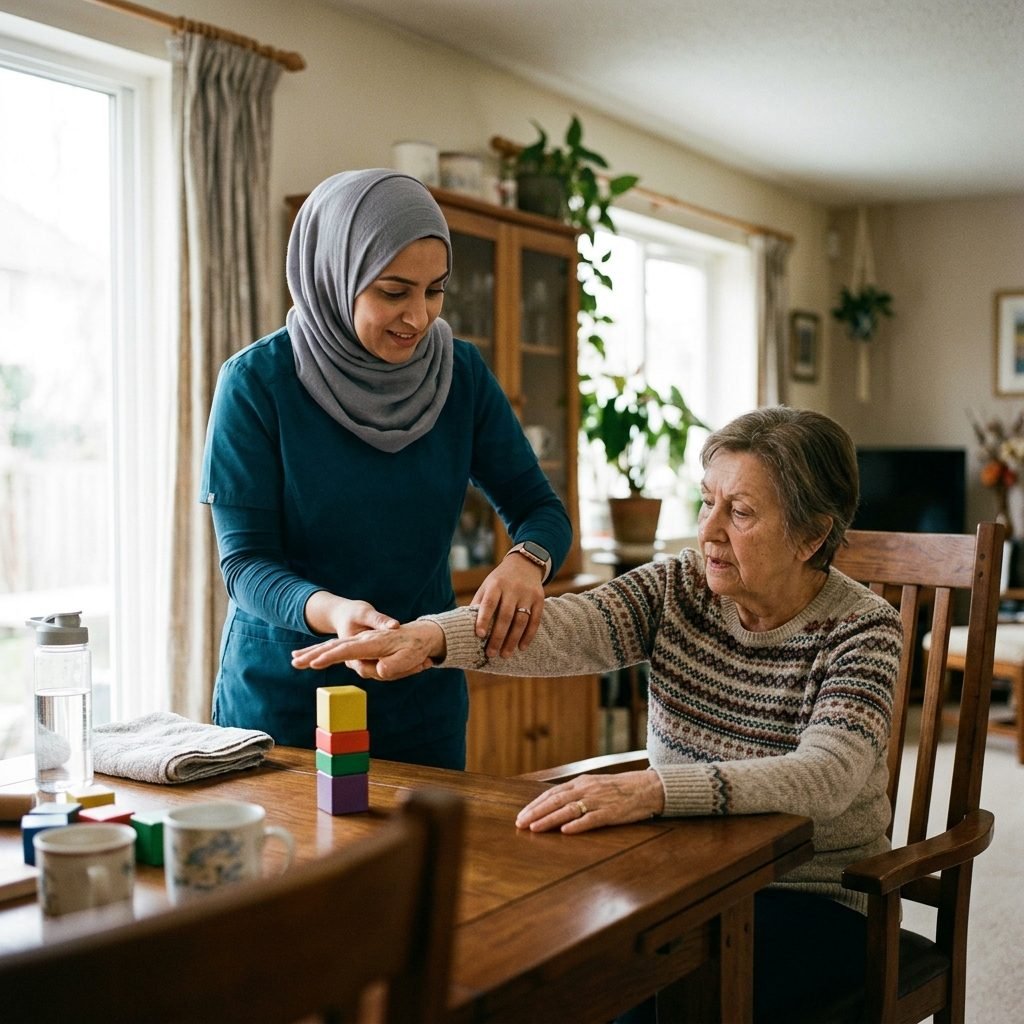
Stroke Rehabilitation
Advanced motor and neurological stroke recovery at home in Al Naeem.
Service Details ←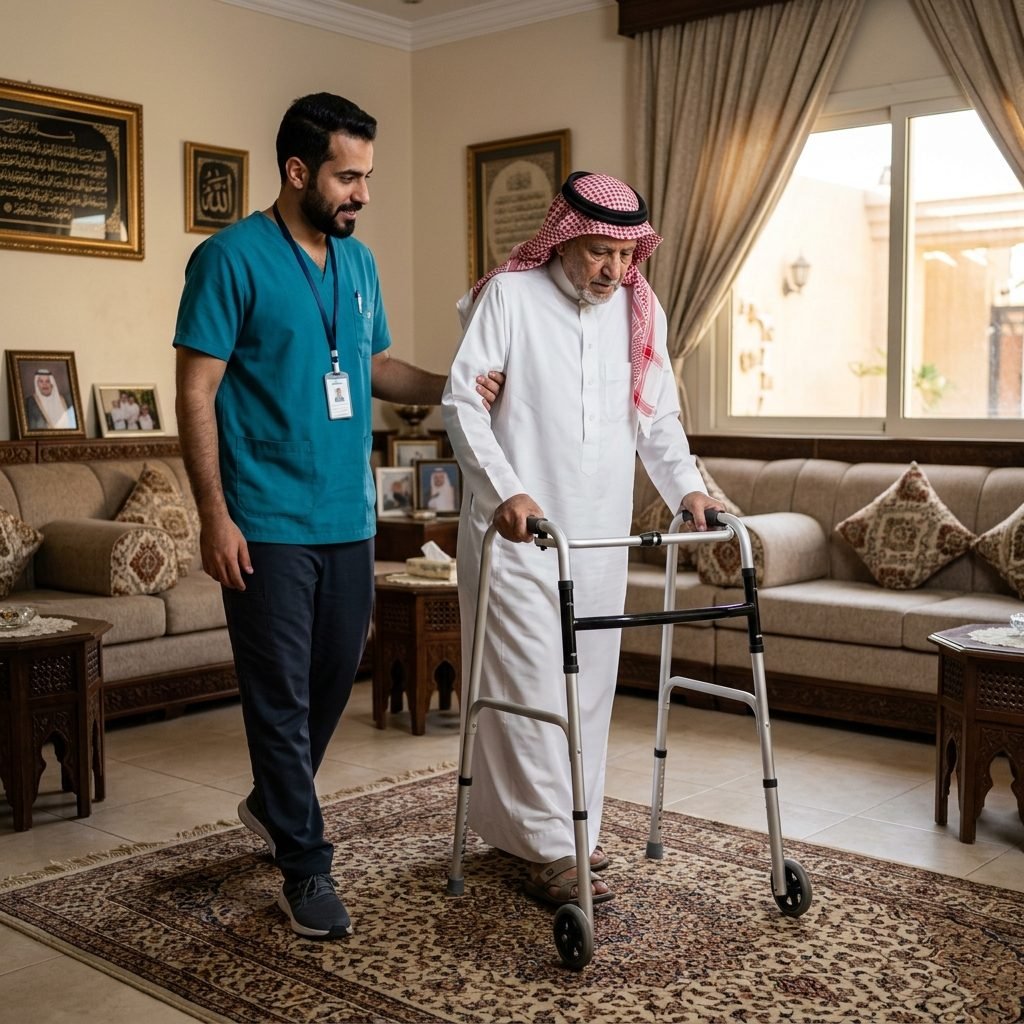
Geriatric Physical Therapy
Balance training, strengthening, and fall prevention for seniors in Al Naeem.
Service Details ←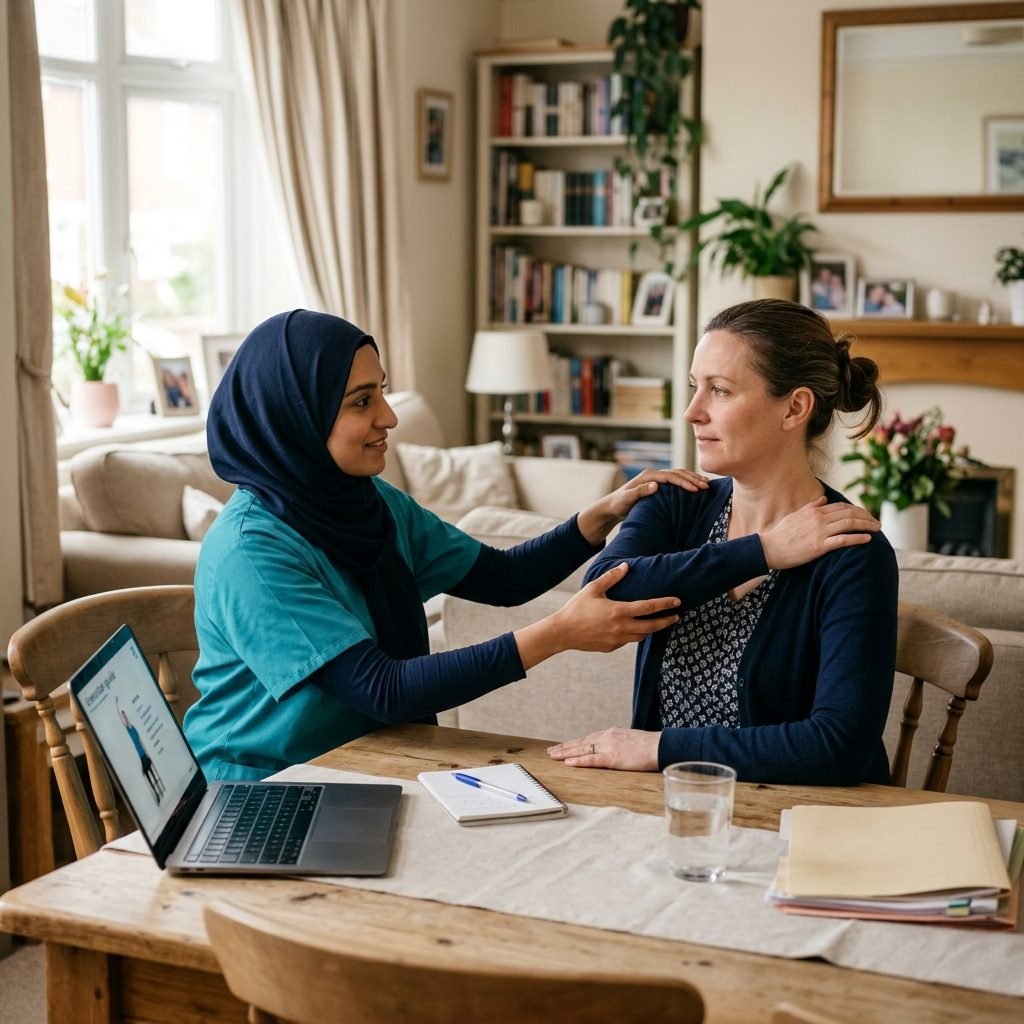
Female Physiotherapist
Licensed female therapists providing home care for women in Al Naeem.
Service Details ←