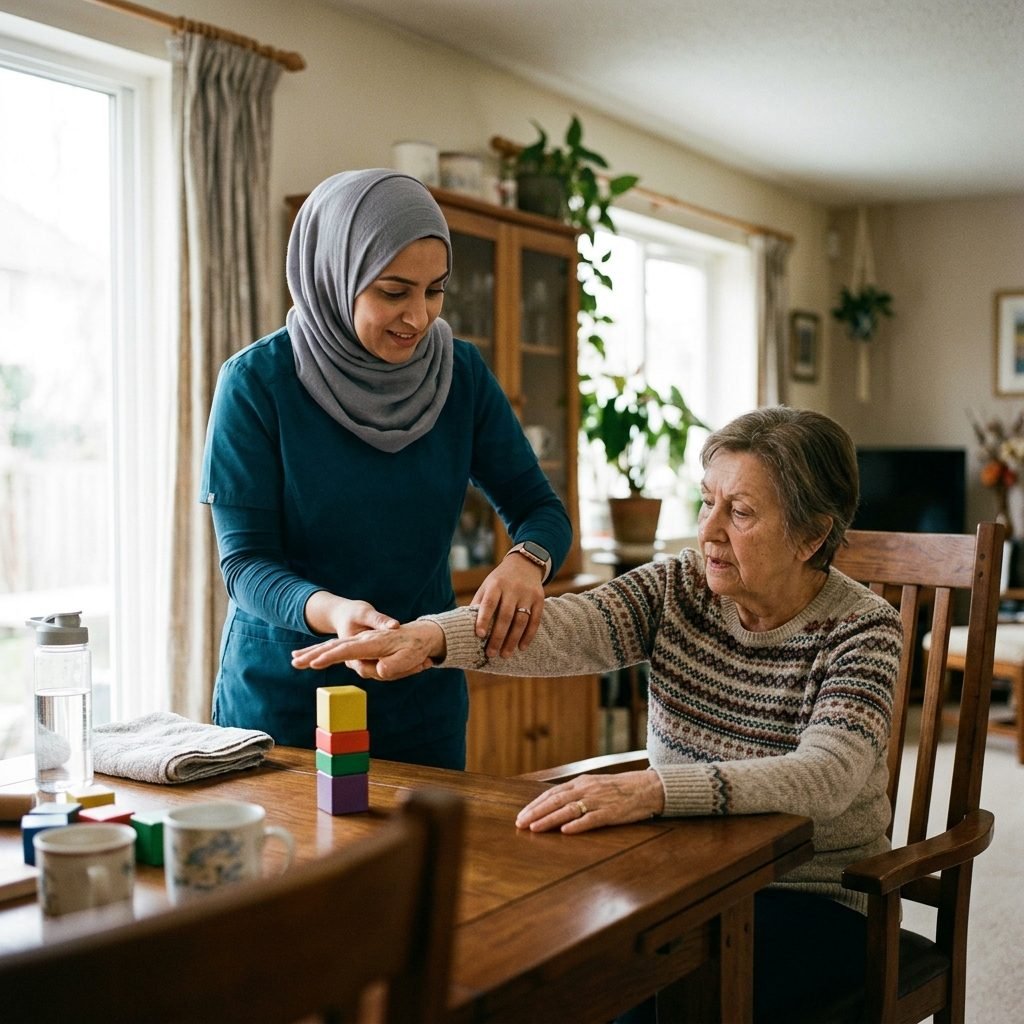
Having access to comprehensive, clinical physical therapy at home is crucial for maintaining rehabilitation progress, especially in busy neighborhoods. Al-Safa and Al Naeem districts in Jeddah present unique local mobility challenges due to high population density and traffic. At Bidaya Center, we deliver high-quality home physiotherapy and movement rehabilitation services directly to your doorstep, conforming to the clinical guidelines of the Saudi Commission for Health Specialties. We eliminate the stress of travel, traffic, and parking. We respect cultural privacy by providing certified male therapists for male patients and female therapists for female patients.
Our clinical approach in Al Naeem starts with a detailed physical and environmental safety assessment to eliminate fall hazards in the home. We bring all necessary portable, sterilized equipment to deliver a clinical standard of care comparable to external clinics. The therapist establishes a tailored milestone tracking plan to monitor muscle strength, balance, and joint range of motion (ROM) progression over time.
Why families in Al Naeem choose Bidaya for home physiotherapy
- ✅ Licensed male & female therapists — full privacy, in your own home in Al Naeem.
- ✅ Fully in-home visits across Al Naeem — no travel or traffic.
- ✅ A personalized rehab plan built after a thorough in-home assessment.
- ✅ Continuous follow-up and direct contact with your therapist throughout.
- ✅ Fast response — arrange your visit by a quick call or WhatsApp message.
We also serve nearby areas: Al Andalus · Al Basateen · Al Bawadi
* The treatment plan and expected outcomes are determined by a medical and functional assessment of each individual case.
What Home-Based Post-Stroke Rehabilitation Means for Al Naeem Residents
Post-stroke rehabilitation is a structured therapy program aimed at recovering as much movement and independence as possible after a stroke has injured part of the brain that controls motion, balance, or speech. At Bidaya Center, we deliver this rehabilitation inside the patient's own home in the Al Naeem neighborhood of Jeddah, so that recovery begins in the very environment where the person actually lives rather than in an unfamiliar clinic room. This distinction matters enormously in stroke cases specifically, because relearning how to walk, stand up, and grasp objects is far more effective when practiced on the same bed, the same chair, and the same hallway the patient uses every day.
Al Naeem is a calm, family-oriented residential district in the north of Jeddah, and many of its homes have multiple floors and internal staircases. That makes repeated trips to a rehabilitation center a genuine burden for a patient who has lost part of their mobility or is temporarily relying on a wheelchair. Here, home therapy is not a luxury but a practical solution: it spares the family the exhausting cycle of transport, reduces the risk of falls during travel, and lets the therapist see the real obstacles firsthand, such as the bathroom threshold, the height of the bed, the layout of the kitchen, and the stairs the patient must learn to climb safely.
We want to be clear from the outset that rehabilitation outcomes differ from one person to another depending on the size of the stroke, the region affected, how much time has passed since it occurred, and overall health. For that reason we make no promises of complete recovery. Instead, we build a realistic plan based on a careful clinical and functional assessment of each individual case, and we continually readjust it according to the patient's response and progress.
Symptoms and Signs That Signal It Is Time to Begin
The earlier rehabilitation starts once the medical condition is stable, the better the chances of functional improvement tend to be. A number of signs indicate that a patient needs a structured home rehabilitation program, including:
- Weakness or paralysis on one side of the body, showing as difficulty moving the arm or leg or an obvious heaviness when trying to lift it.
- Impaired balance and instability when standing or walking, with the body leaning to one side or a persistent fear of falling.
- Muscle stiffness and increased spasticity, especially in the hand, elbow, and ankle, with difficulty straightening the fingers or foot.
- Difficulty walking, dragging the foot, or needing another person's help to rise from a chair or bed.
- A weak hand grip and inability to hold a cup, a spoon, or fasten clothing buttons.
- Changes in speech or swallowing, or a marked slowness in motor response that calls for coordination with other specialties.
- Loss of confidence and withdrawal, with complete dependence on others for the simplest daily activities.
The presence of one or more of these signs after a stroke is a clear cue to begin a specialist assessment. Delaying rehabilitation can lead to complications such as joint stiffness, muscle shortening, and worsening spasticity, all of which are much harder to treat later than to prevent early.
Who Benefits From This Program
The home-based post-stroke rehabilitation program in Al Naeem is designed for a wide range of patients at different stages of recovery, including:
- Patients recently discharged from hospital whose condition has stabilized and who need regular rehabilitative follow-up without the strain of repeated travel.
- People with hemiplegia caused by the stroke, whether it affects the right or the left side of the body.
- Older adults for whom frequent outings are risky or exhausting and who prefer to receive care in familiar surroundings.
- Those with chronic spasticity and stiffness after an older stroke who did not receive sufficient rehabilitation at the time.
- Patients using a wheelchair or assistive devices who need training in safe transfers and partial independence.
- People needing functional reintegration for a gradual return to their daily and occupational activities as far as their condition allows.
We respect each family's privacy, and we have both male and female licensed therapists so the family can choose whoever suits them best while full privacy is guaranteed inside the home, something many Al Naeem families value greatly.
Goals of the Rehabilitation Program
The program is built around realistic, measurable functional goals, shaped together with the patient and family and evolving as the sessions progress. Among the most important goals are:
- Recovering as much movement as possible on the affected side and stimulating the brain to reorganize its motor pathways through deliberate repetition.
- Improving balance and stability to reduce the risk of falls while standing, walking, and moving between positions.
- Reducing spasticity and stiffness through stretching, joint mobilization, and maintaining range of motion.
- Retraining gait toward a safer, more efficient walking pattern, with or without assistive devices as needed.
- Enhancing the patient's independence in daily activities such as standing up, sitting, dressing, and moving to the bathroom.
- Preventing complications such as pressure sores, joint stiffness, and poor circulation resulting from immobility.
- Supporting the psychological side and rebuilding self-confidence through a series of small, tangible gains the patient can feel.
We stress that these goals represent a direction we work toward, and how far they are reached depends on ongoing assessment and each patient's individual response. Our commitment is to effort and sound methodology, not to absolute promises.
Stages and Pathway of the Home Sessions
Home rehabilitation for a stroke patient in Al Naeem follows a gradual, organized pathway that begins with assessment and ends with functional reintegration:
- Comprehensive initial assessment: the therapist visits the home to evaluate muscle strength, range of motion, balance, spasticity, and walking ability, while inspecting the home environment and identifying hazards.
- Building the treatment plan: an individual plan is drawn up with short- and long-term goals and a suggested number of sessions, in coordination with the patient and family.
- Activation and mobilization stage: focuses on range-of-motion exercises, positional control, and stimulating the weakened muscles on the affected side.
- Strengthening and balance stage: gradual strengthening exercises plus training in sitting, standing, and safe transfers between bed and chair.
- Gait retraining stage: working on walking pattern, step, and steadiness, using assistive devices when needed, and practicing on the home's own stairs.
- Functional independence stage: linking what the patient has learned to real daily activities inside the home to reinforce self-reliance.
- Follow-up and reassessment: measuring progress periodically and adjusting exercises and goals accordingly, with a home program the patient completes between sessions.
The number and frequency of sessions are not fixed for every case; they are set after the first assessment and continually reviewed according to how quickly the patient improves and how consistently they follow the home program.
The Role of the Family and Caregiver
In stroke rehabilitation especially, success is not confined to the hours of the session but extends into the rest of the day the patient spends with the family. That is why we treat the family as an essential partner in treatment, and we train the caregiver in:
- Assisting correctly with movement and transfers between bed, chair, and bathroom without straining the patient or the caregiver.
- Supervising simple home exercises between sessions to keep the stimulation continuous and avoid losing gains.
- Encouraging the patient to use the affected side in daily tasks rather than relying entirely on the sound side.
- Noticing warning signs such as increased spasticity, redness, or unusual pain, and reporting them to the therapist.
- Providing emotional support and patience, understanding that recovery is a gradual journey with better days and harder ones.
When the family understands its role clearly, the home in Al Naeem becomes an extension of the therapy, and every daily activity turns into an extra training opportunity that accelerates progress and protects what has already been achieved.
Home Safety and Prevention Tips
A safe home environment is no less important than the exercises themselves, especially since stroke patients are more prone to falls. We advise Al Naeem families to:
- Remove loose rugs and cables from walking paths and secure any mat that could slip underfoot.
- Install fixed grab bars near the toilet, inside the bathroom, and along the stairs to support standing and transfers.
- Provide adequate lighting in hallways and on the home's stairs, especially at night, to reduce the risk of tripping.
- Choose closed, stable, non-slip footwear instead of open slippers inside the home.
- Keep essential items within easy reach to minimize sudden movements and risky bending.
- Reposition a bedbound patient regularly to prevent pressure sores and improve circulation.
- Adhere to medications and medical follow-up to help prevent a recurrent stroke, since rehabilitation is one part of integrated care.
During visits, our therapists give practical recommendations tailored to each home based on its design and the patient's needs, because what suits one house may not suit another.
Frequently Asked Questions (FAQ)
When can rehabilitation start after a stroke?
It is best to begin once the medical condition is stable and with the treating physician's approval; the earlier it starts, the better the chance of limiting complications. We determine the right starting point after the first home assessment.
Can home therapy replace center-based sessions?
Yes. In many post-stroke cases home rehabilitation is effective because it takes place in the patient's real environment with their everyday tools, spares them the strain and risk of travel, and uses the same methodology and licensed therapists.
Will movement return to exactly how it was before the stroke?
The degree of improvement varies from patient to patient depending on the extent of the injury, when treatment began, and overall health, and we make no promises of complete recovery. Our aim is to restore as much function and independence as possible through a realistic, continually reviewed plan.
Is a female therapist available for female patients?
Yes. We have both male and female licensed therapists, and the family can choose whoever is most suitable while full privacy is guaranteed inside the home in Al Naeem.
How many sessions will the patient need?
There is no single number that fits everyone; the count and frequency are set after the first assessment and readjusted according to the patient's response, progress, and commitment to the home exercises between visits.
To book a home visit for post-stroke rehabilitation in the Al Naeem neighborhood of Jeddah, or to ask about the plan best suited to your case, contact Bidaya Center by phone or WhatsApp by clicking Call Now, and we will be glad to help you begin the recovery journey from your own home.
Important Home Visit Details:
- ✓Setup: Please clear a 2x2m space in the room for safety.
- ✓Clothing: Wear loose, comfortable clothes for easy movement.
- ✓Therapist Parity: Male therapists for males, females for females.
- ✓Medical Reports: Keep your MRI or doctor reports ready for evaluation.
Rehabilitation & Services in Al Naeem
Stroke Rehabilitation
Advanced motor and neurological stroke recovery at home in Al Naeem.
Service Details ←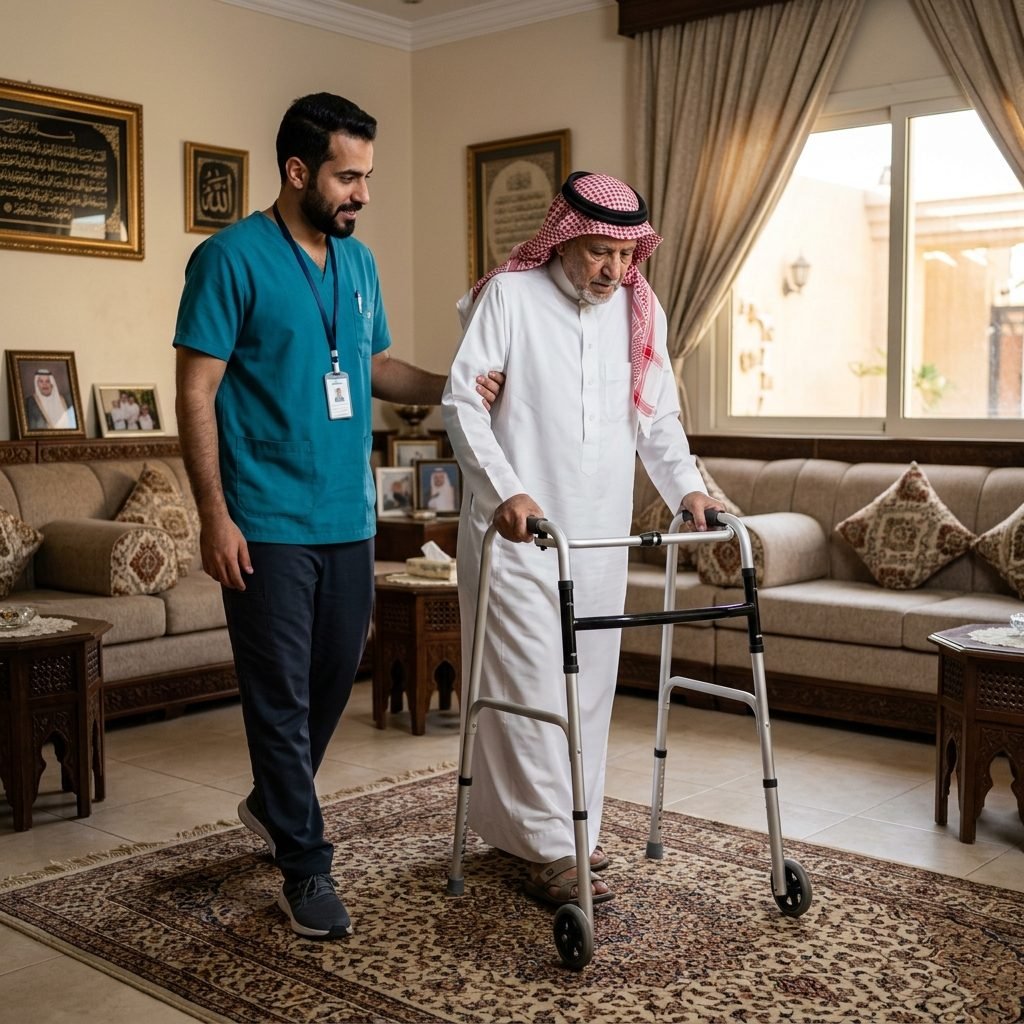
Geriatric Physical Therapy
Balance training, strengthening, and fall prevention for seniors in Al Naeem.
Service Details ←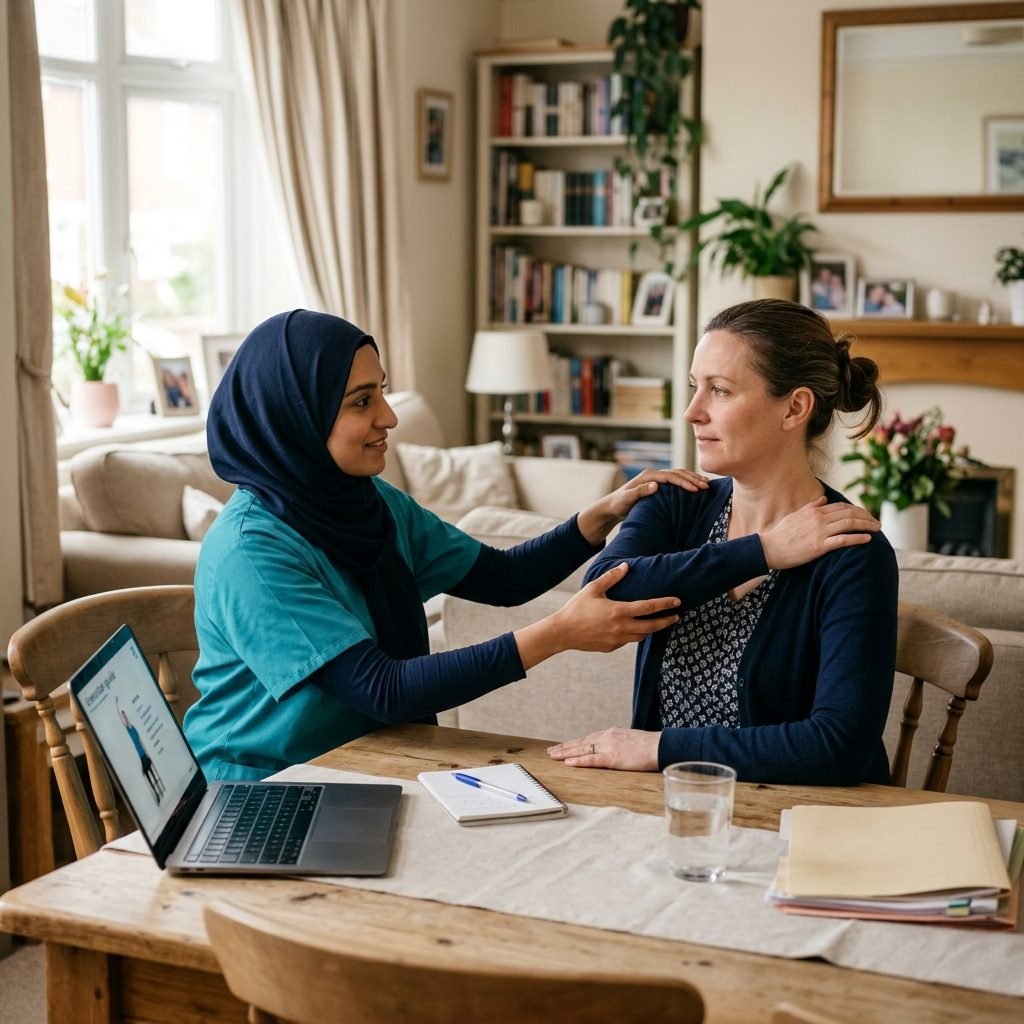
Female Physiotherapist
Licensed female therapists providing home care for women in Al Naeem.
Service Details ←