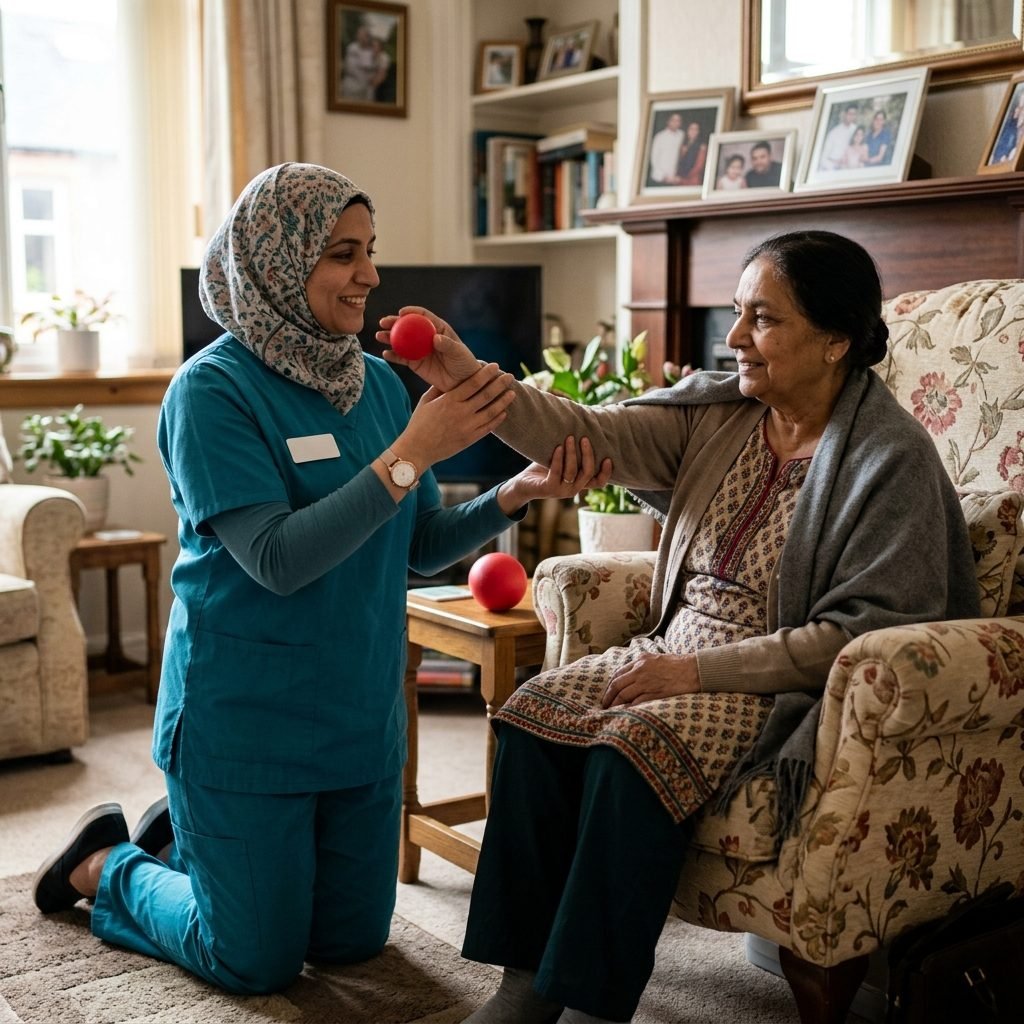
Having access to comprehensive, clinical physical therapy at home is crucial for maintaining rehabilitation progress, especially in busy neighborhoods. Al-Safa and Al Naeem districts in Jeddah present unique local mobility challenges due to high population density and traffic. At Bidaya Center, we deliver high-quality home physiotherapy and movement rehabilitation services directly to your doorstep, conforming to the clinical guidelines of the Saudi Commission for Health Specialties. We eliminate the stress of travel, traffic, and parking. We respect cultural privacy by providing certified male therapists for male patients and female therapists for female patients.
Our clinical approach in Al Naeem starts with a detailed physical and environmental safety assessment to eliminate fall hazards in the home. We bring all necessary portable, sterilized equipment to deliver a clinical standard of care comparable to external clinics. The therapist establishes a tailored milestone tracking plan to monitor muscle strength, balance, and joint range of motion (ROM) progression over time.
Why families in Al Naeem choose Bidaya for home physiotherapy
- ✅ Licensed male & female therapists — full privacy, in your own home in Al Naeem.
- ✅ Fully in-home visits across Al Naeem — no travel or traffic.
- ✅ A personalized rehab plan built after a thorough in-home assessment.
- ✅ Continuous follow-up and direct contact with your therapist throughout.
- ✅ Fast response — arrange your visit by a quick call or WhatsApp message.
We also serve nearby areas: Al Andalus · Al Basateen · Al Bawadi
* The treatment plan and expected outcomes are determined by a medical and functional assessment of each individual case.
Home Physiotherapy for Multiple Sclerosis and Why It Matters for Al Naeem Residents
Multiple sclerosis (MS) is an immune-mediated disease of the central nervous system, in which the immune system attacks the myelin sheath that protects nerve fibres in the brain and spinal cord, disrupting the signals travelling between the brain and the rest of the body. The effect differs greatly from one person to another: it may appear as weakness in a limb, muscle spasticity, poor balance, overwhelming fatigue, or numbness and tingling. Home physiotherapy for multiple sclerosis is a structured rehabilitation programme aimed at preserving as much functional independence as possible, slowing the decline of motor abilities between relapses, and managing the symptoms that linger after each flare.
What makes a home-based service particularly suited to residents of Al Naeem in northern Jeddah is the calm, residential nature of the district, with its villas, family buildings, and housing compounds where many elderly residents and families caring for an affected relative live. MS symptoms are notably sensitive to heat and humidity, which is a real factor in Jeddah's coastal climate; travelling to a clinic during the hot daytime hours can temporarily worsen fatigue and weakness (Uhthoff's phenomenon). Having a therapist come to your home in Al Naeem means you train in a cool, familiar environment, on the very stairs, hallways, and bathroom you use every day, so the exercises are realistic and directly useful.
The service is delivered by a team of licensed male and female physiotherapists, with full respect for privacy inside the home. Every plan is built on a careful clinical and functional assessment of your case. We do not promise a cure or guaranteed results; MS is a chronic and changeable condition, but consistent rehabilitation makes a genuine difference to quality of life and the ability to carry out daily tasks.
Symptoms and Signs That Signal It Is Time to Start
There is no need to wait for abilities to decline before beginning rehabilitation. It is worth contacting us when you notice any of the following in the person affected:
- Increasing weakness in a leg or arm that makes carrying objects or climbing stairs harder than usual.
- Balance problems or a feeling of unsteadiness when standing or walking, with a tendency to stumble or reach for walls.
- Muscle spasticity (stiffness) in the limbs, especially the legs, that is worse in the morning or after sitting for long periods.
- Severe fatigue out of proportion to the effort made, draining energy quickly through the day.
- Numbness or tingling affecting sensation in the feet or hands, reducing confidence during movement.
- Difficulty with fine, coordinated movement, such as a slight tremor when reaching for an object, or trouble writing and doing up buttons.
- Slower walking and a shorter distance covered before needing to stop and rest.
- Beginning to rely on a walking aid (cane or walker) or repeated falls inside the home.
These signs do not point to a specific diagnosis on their own, but they indicate the value of early assessment. Starting early helps preserve strength and range of movement before changes become entrenched, and gives the family practical tools to manage each day.
Conditions and Groups Who Benefit
A home rehabilitation programme for MS suits a wide range of situations among Al Naeem residents, including:
- Newly diagnosed individuals who want to build a preventive base of fitness and movement to protect their abilities for as long as possible.
- People with the relapsing-remitting form recovering from a recent flare and needing to regain functions affected during it.
- Progressive-form cases needing an ongoing programme that slows the loss of independence and adapts the home to changing abilities.
- Those living with muscle spasticity and stiffness who need regular stretching and joint-mobility work.
- Those with impaired balance and a fall risk who need safe balance training within the walls of their own home.
- People affected by chronic fatigue who need to learn energy management and how to pace effort across the day.
- Elderly patients for whom repeated travel to a centre is difficult and who are cared for by their family at home.
- Wheelchair users who need to maintain joint flexibility and prevent pressure sores and other complications.
Each group has different goals, so the programme is designed individually after assessment; what suits one case is not assumed to suit another.
Goals of the Rehabilitation Programme
MS rehabilitation does not aim to "cure" the disease but to manage it functionally and improve what can be improved. The broad goals we work towards include:
- Preserving muscle strength and joint range of motion, and resisting the weakness that comes from disuse.
- Reducing spasticity and stiffness through regular stretching and mobilisation to ease movement and relieve discomfort.
- Improving balance and stability and reducing the risk of falls inside the home as far as possible.
- Training a safer, more efficient walking pattern, with correct use of any walking aid when needed.
- Managing fatigue through deliberate energy pacing and organised rest periods.
- Maintaining independence in daily activities: moving between bed and chair, getting to the bathroom, dressing.
- Preventing secondary complications such as joint stiffness, poor circulation, and postural problems.
- Supporting morale and self-confidence by achieving small, measurable goals step by step.
Goals are set together with you and your family and reviewed regularly according to your response and the stability of your condition, with full honesty that the pathway and expected outcomes depend on the clinical and functional assessment of each individual case.
Stages and Course of the Home Sessions
We follow a structured path that begins with understanding your situation and ends with a sustainable programme you can keep going:
- Initial assessment: a first home visit in Al Naeem to examine strength, balance, range of movement, walking pattern, and fatigue level, while reviewing your treating doctor's reports and understanding the home environment and its risks.
- Planning: setting realistic short- and long-term goals and deciding the weekly number of sessions suited to your energy and the stability of your condition.
- Foundation stage: gentle stretching, joint mobilisation, and core strengthening, taking care to avoid overexertion that increases fatigue or raises body temperature.
- Functional progression stage: gradual training of balance, transfers, walking, and daily-life activities, adjusting intensity to your day-to-day response.
- Environmental adaptation: arranging the home to reduce fall risk and suggesting simple changes to hallways, the bathroom, and seating areas.
- Follow-up and sustainability: a daily home programme that you and the family can carry out between visits, with periodic review and adjustment of the plan when a relapse or change in ability occurs.
Sessions are usually scheduled during cooler parts of the day to limit the effect of heat on performance, and are paused or eased when signs of excessive fatigue appear.
The Role of the Family and Caregiver
Success in home-based MS rehabilitation is closely tied to family involvement. The person affected spends most of their time with their household, and the daily minutes between visits matter far more than the session itself. We therefore make a point of training the caregiver in:
- Assisting safely with transfers (bed to chair, standing up) without straining the patient or themselves.
- Supervising the daily home exercises and gently encouraging consistency without pressure.
- Noticing signs of excessive fatigue or the onset of a relapse and contacting us or the doctor early.
- Preparing the environment: removing loose rugs, securing night lighting, keeping hallways clear of obstacles.
- Attending to the emotional side; encouragement and patience ease the frustration that can accompany a changeable disease like MS.
We explain to each family the limits of the help required: when to assist and when to let the person try on their own, because independence is a core part of treatment, not just a distant goal.
Home Safety and Prevention Tips
A safe home environment reduces complications and protects against falls. We advise Al Naeem residents to:
- Avoid exposure to high heat and very hot showers, and keep the rooms where the person spends time air-conditioned, since heat temporarily worsens MS symptoms.
- Drink enough water and stay well hydrated, especially during Jeddah's hot summer months.
- Install grab bars near the toilet and shower, and use a shower chair and a non-slip mat in the bathroom.
- Wear closed, stable, non-slip footwear indoors, and avoid open slippers or socks on smooth floors.
- Arrange furniture to leave wide walkways, and remove cables and sliding rugs that could cause tripping.
- Pace effort across the day and take short rest breaks before reaching full exhaustion, rather than draining energy all at once.
- Keep up regular, moderate physical activity even on good days, without overdoing it and depleting energy reserves.
These are general guidelines; the therapist adjusts the recommendations to your condition and the layout of your home after the first visit.
Frequently Asked Questions (FAQ)
Can physiotherapy stop the progression of multiple sclerosis?
Physiotherapy does not treat the disease itself or halt its course; that is the domain of the specialist doctor and medication. What it does is help preserve strength, balance, and movement, manage symptoms such as spasticity and fatigue, and improve daily quality of life as far as the condition allows.
Could exercise make the symptoms worse?
Exercise designed at the right dose is safe and beneficial. Problems arise only with overexertion or a rise in body temperature, so we build intensity gradually, monitor fatigue, and schedule sessions during cooler hours to avoid a temporary worsening of symptoms.
How many sessions per week will I need?
That depends on the form of the disease, your level of ability, your goals, and how stable your condition is. The number is decided after the initial assessment and reviewed regularly; it may increase after a relapse and decrease when things are stable.
Are female therapists available for female patients?
Yes. Our team includes licensed male and female therapists, and a female therapist can be arranged for a female patient with full respect for privacy inside the home in Al Naeem.
Is the service available within Al Naeem if I am elderly and cannot travel?
Yes. The service is fully home-based and was designed precisely for those who find travel difficult. The therapist comes to your home in Al Naeem with the necessary equipment, so there is no need to go out in the daytime heat.
To book a home visit in Al Naeem or to ask about the multiple sclerosis rehabilitation programme, contact us by phone or WhatsApp by clicking Call Now, and we will arrange an initial assessment at a time that suits your condition.
Important Home Visit Details:
- ✓Setup: Please clear a 2x2m space in the room for safety.
- ✓Clothing: Wear loose, comfortable clothes for easy movement.
- ✓Therapist Parity: Male therapists for males, females for females.
- ✓Medical Reports: Keep your MRI or doctor reports ready for evaluation.
Rehabilitation & Services in Al Naeem
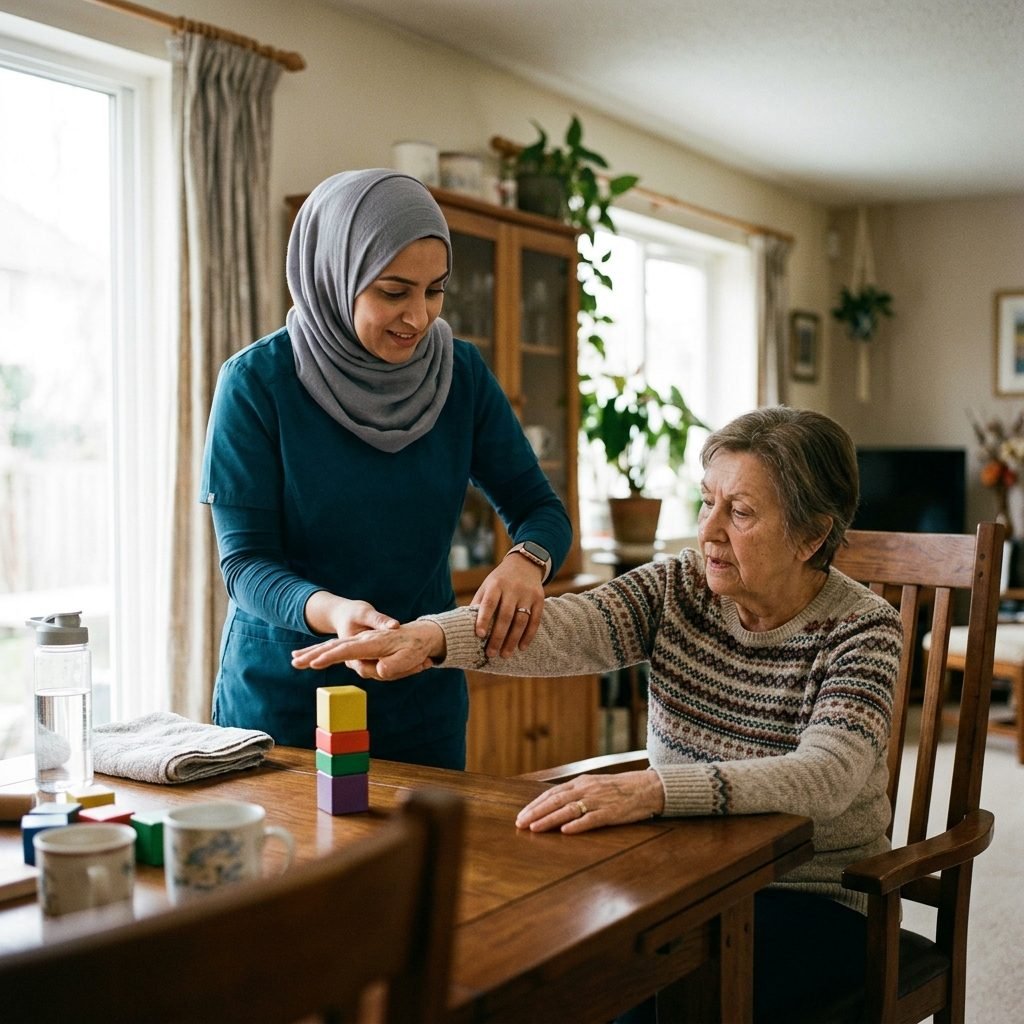
Stroke Rehabilitation
Advanced motor and neurological stroke recovery at home in Al Naeem.
Service Details ←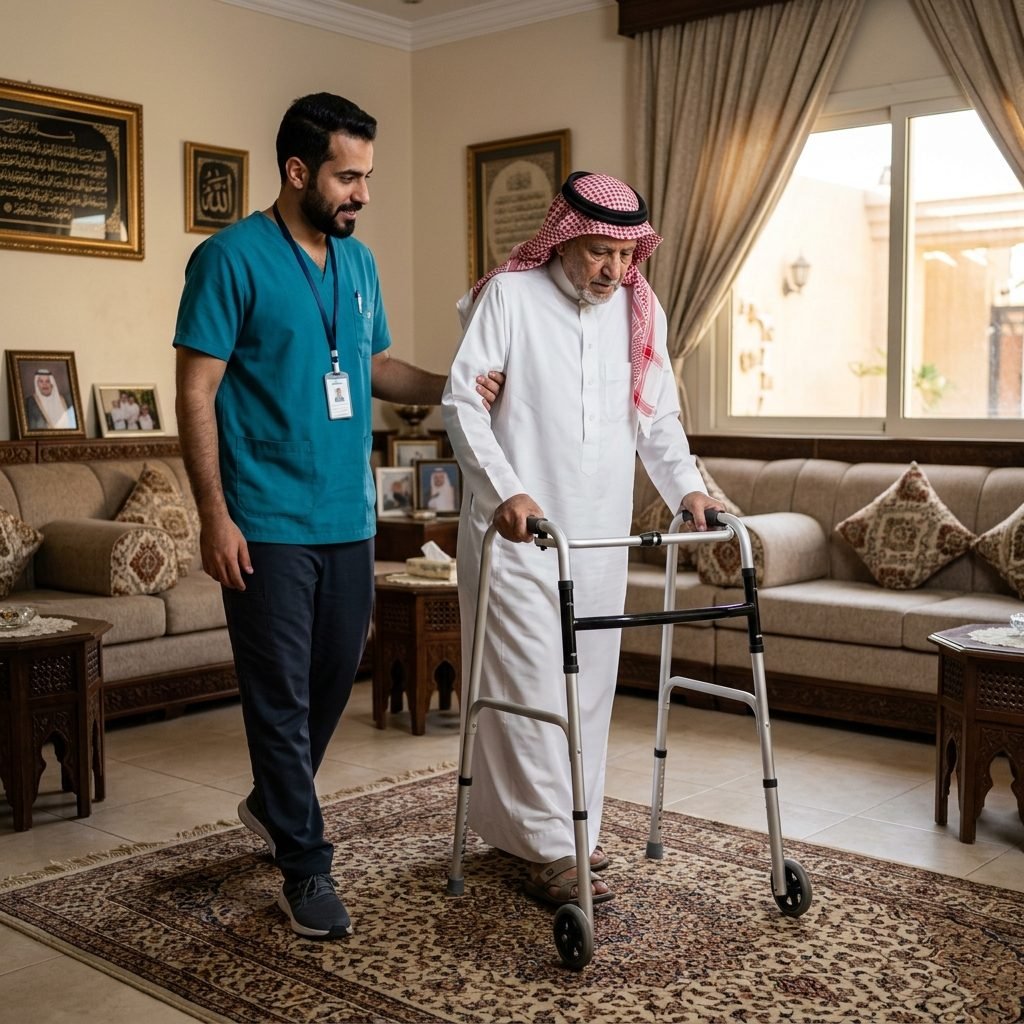
Geriatric Physical Therapy
Balance training, strengthening, and fall prevention for seniors in Al Naeem.
Service Details ←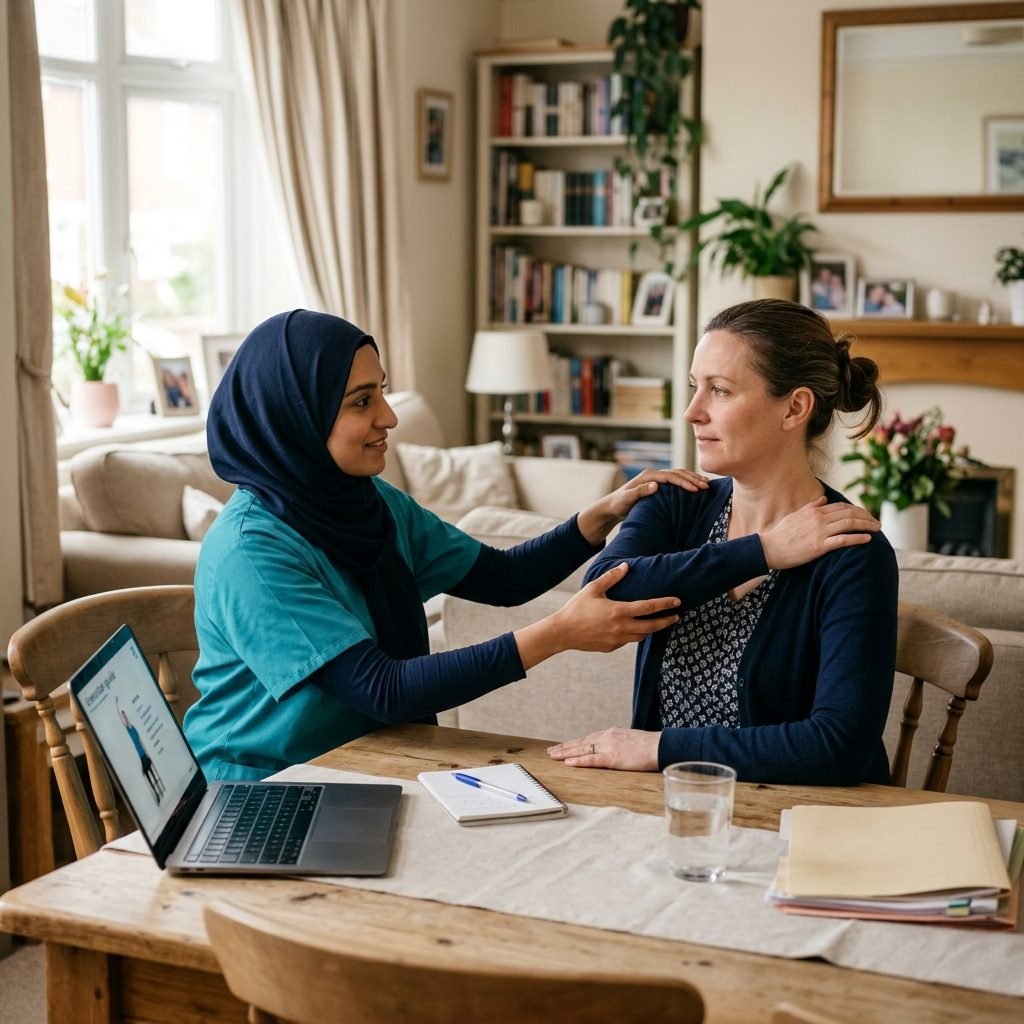
Female Physiotherapist
Licensed female therapists providing home care for women in Al Naeem.
Service Details ←