Having access to comprehensive, clinical physical therapy at home is crucial for maintaining rehabilitation progress, especially in busy neighborhoods. Al-Safa and Al Naseem districts in Jeddah present unique local mobility challenges due to high population density and traffic. At Bidaya Center, we deliver high-quality home physiotherapy and movement rehabilitation services directly to your doorstep, conforming to the clinical guidelines of the Saudi Commission for Health Specialties. We eliminate the stress of travel, traffic, and parking. We respect cultural privacy by providing certified male therapists for male patients and female therapists for female patients.
Our clinical approach in Al Naseem starts with a detailed physical and environmental safety assessment to eliminate fall hazards in the home. We bring all necessary portable, sterilized equipment to deliver a clinical standard of care comparable to external clinics. The therapist establishes a tailored milestone tracking plan to monitor muscle strength, balance, and joint range of motion (ROM) progression over time.
Why families in Al Naseem choose Bidaya for home physiotherapy
- ✅ Licensed male & female therapists — full privacy, in your own home in Al Naseem.
- ✅ Fully in-home visits across Al Naseem — no travel or traffic.
- ✅ A personalized rehab plan built after a thorough in-home assessment.
- ✅ Continuous follow-up and direct contact with your therapist throughout.
- ✅ Fast response — arrange your visit by a quick call or WhatsApp message.
We also serve nearby areas: Al Andalus · Al Basateen · Al Bawadi
* The treatment plan and expected outcomes are determined by a medical and functional assessment of each individual case.
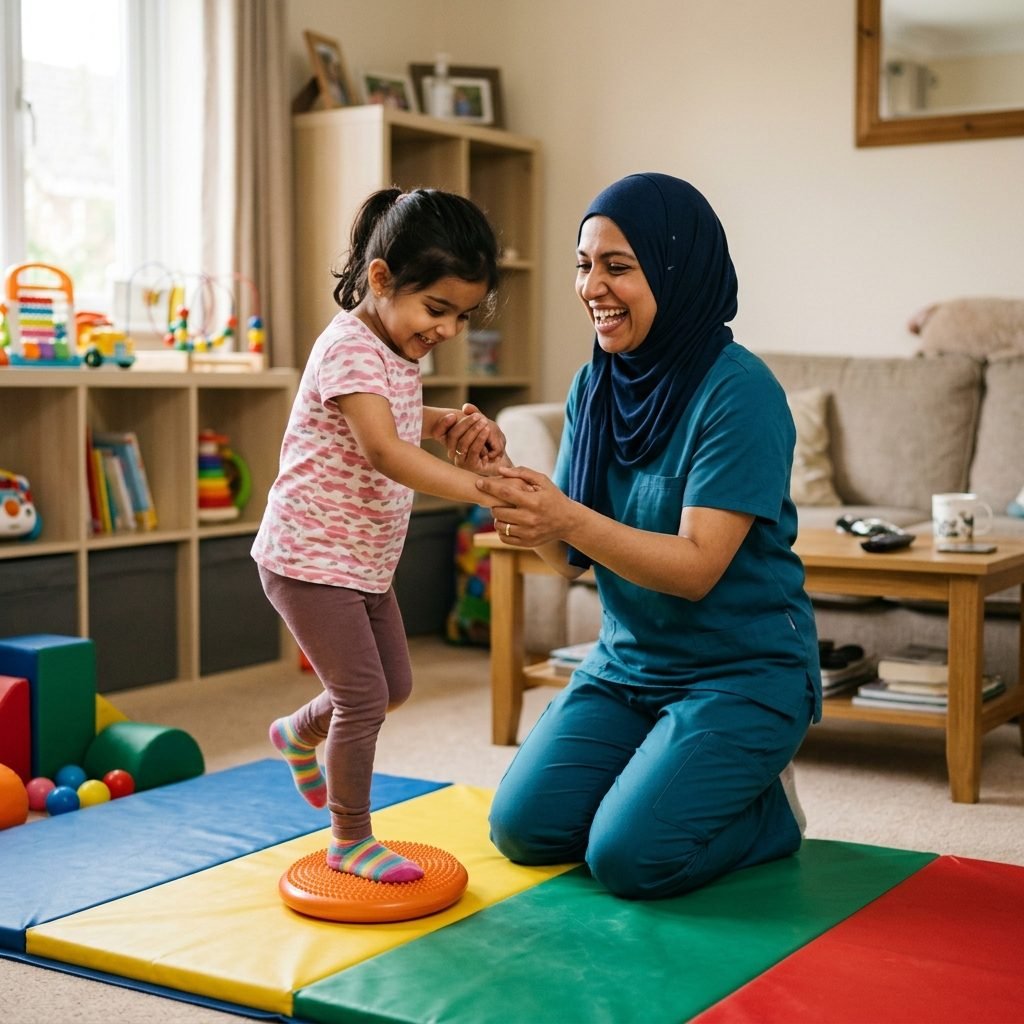
Home-Based Care for Delayed Walking in Children and Why It Matters for Al Naseem Families
When a child is slow to take those first independent steps, it does not automatically signal a serious problem, but it is a sign worth noticing and assessing early. If a child passes eighteen months without walking on their own, or walks with an unusual pattern such as toe-walking or poor balance, structured early intervention becomes a valuable opportunity to support motor development during a stage when the young brain is at its most adaptable and eager to learn.
In Al Naseem, a large family-oriented residential district in eastern Jeddah with many young families and pre-school children, home physiotherapy for delayed walking offers a practical solution that spares families the strain of repeatedly transporting a small child through traffic or midday heat. A toddler learns to walk in the very place they will actually walk: between the rooms of their own home, across the living-room floor, beside familiar furniture. This natural context makes the acquired skill far more likely to carry over into daily life rather than remaining confined to a clinic room.
At Bidaya Center, every program begins with a careful motor and functional assessment that identifies the cause and pattern of the delay, because not all cases of delayed walking are alike. Some stem from muscle weakness, others from low or high muscle tone, and others from deficits in balance, coordination, or confidence. The plan and its expected outcomes are built on this individual assessment for each child, without any advance promise of a specific result.
Symptoms and Signs That Warrant Starting
Indicators of delayed walking vary from one child to another, but certain signs justify having a specialist evaluate the child and beginning early when needed. Among the most important for Al Naseem families to watch for:
- Inability to pull up to stand using furniture after reaching ten to twelve months of age.
- No independent steps after eighteen months, or a few unsteady steps followed by stopping.
- Persistent toe-walking without the heel touching the ground.
- A clear lean to one side of the body, or favoring one hand and leg over the other.
- Frequent falls beyond what is usual for the child's age, or intense fear of letting go of supports.
- Notable weakness in sitting, crawling, or moving between positions compared with peers.
- Marked floppiness, or conversely stiffness in the legs that makes movement difficult.
- Accompanying delays in other skills such as grasping objects, responding to sounds, or speech.
The presence of one or more of these signs does not amount to a diagnosis, but it is reason enough to seek a specialist evaluation. Early intervention in the first years of childhood is often more effective because the nervous and muscular systems are at the peak of their readiness to develop.
Conditions and Groups That Benefit
The home walking-rehabilitation program in Al Naseem is aimed at a broad range of children who struggle to acquire walking or to walk well. The main groups who benefit include:
- Children with mild motor delay who need guided support to build strength and balance.
- Premature (preterm) infants who may show delays in their motor developmental milestones.
- Children with disordered muscle tone, whether low (floppy) or high (stiff).
- Children who walk persistently on their toes and need retraining toward a sound pattern.
- Cases of global developmental delay in which delayed walking is one of the features.
- Children recovering after illness or medical interventions that affected their activity.
- Children who lack confidence and fear movement despite having the muscular capacity.
Each group has different needs, which is why the program is tailored to the child after understanding their situation. We have licensed female and male therapists available, with full respect for the family's privacy and comfort within the home.
Goals of the Rehabilitation Program
The aim is not merely to get the child to take steps, but to build a complete motor foundation that supports their long-term independence. The general goals we work toward within an individual plan include:
- Strengthening the trunk, pelvis, and leg muscles that form the basis of standing and walking.
- Improving balance and stability in standing and when transitioning between sitting and standing.
- Correcting the walking pattern and reducing toe-walking or leaning to one side.
- Developing motor coordination between the upper and lower parts of the body.
- Increasing joint range of motion and addressing any stiffness that limits movement.
- Building the child's self-confidence and encouraging them to explore without excessive fear.
- Integrating the acquired skill into daily activities such as moving between rooms and play.
We emphasize that these are working goals we pursue methodically; the extent and pace of achieving them depend on each child's condition, the regularity of sessions, and family involvement, with no guarantee of a specific outcome.
Stages and Pathway of the Home Sessions
The home program in Al Naseem follows a considered pathway that begins with assessment and ends with anchoring the skill into daily routine:
- Initial assessment stage: a visit that includes a comprehensive motor and functional examination, observing the child in their environment, identifying strengths and challenges, and setting realistic goals in consultation with the family.
- Preparation and strengthening stage: exercises targeting muscular strength, range of motion, and control of basic positions such as balanced sitting and supported standing.
- Standing and transitions training stage: working on moving from sitting to standing, bearing weight through the legs, and steadiness while gradually reducing support.
- First steps stage: guided training on walking with support and then with less support, using play and motivation to make each step an enjoyable experience.
- Pattern refinement and challenge stage: refining the walking pattern, training on different surfaces and distances inside the home, and handling simple obstacles.
- Consolidation and follow-up stage: embedding the skill into daily activities, providing the family with home exercises, and periodic review to measure progress and adjust the plan.
Sessions are scheduled flexibly around the child's sleep and activity, which is a key advantage of home care in a family district like Al Naseem, where the rhythm of the child's day is the standard rather than clinic appointment slots.
The Role of the Family and Caregiver
A child spends many times more hours with their family than with the therapist, which is why the involvement of parents and caregivers is not merely complementary but essential to the program's success. We empower the family through:
- Teaching the mother and father correct ways to carry, position, and motivate the child to move.
- Providing simple exercises that can be woven into daily play without becoming a burden.
- Guiding the family to organize the home environment to encourage safe standing and movement.
- Explaining habits to avoid that can slow progress, such as over-carrying the child or using a round baby walker.
- Following the family's daily observations, as they are a valuable source for adjusting the plan between sessions.
When the home becomes a continuous, supportive training environment, the effect of every session multiplies, and the child feels the security that encourages them to try and repeat.
Home Safety and Prevention Tips
Setting up the home safely reduces the risk of falls and gives the child greater freedom to explore and practice. We recommend the following for Al Naseem families:
- Provide a level, non-slip floor in the training area, and remove loose rugs that can cause tripping.
- Keep stable furniture at a suitable height that the child can lean on to stand and move safely.
- Move furniture with sharp edges away or pad it, and secure corners in the play area.
- Let the child walk barefoot or in non-slip socks to improve their sense of the floor and balance.
- Avoid relying on the round baby walker, which can delay the development of a sound walking pattern.
- Supervise continuously during training, especially near stairs, doors, or other hazards.
- Choose times when the child is active and rested rather than hungry or sleepy for the best response.
These guidelines are general measures to enhance safety and do not replace the specialist assessment that determines what specifically suits your child's condition.
Frequently Asked Questions (FAQ)
When is delayed walking a cause for concern?
Independent steps usually begin between twelve and eighteen months. If a child passes eighteen months without walking independently, or shows signs such as toe-walking or leaning to one side, it is appropriate to seek a specialist assessment for reassurance and to start early when needed.
Can home sessions in Al Naseem be as effective as the clinic?
Yes. In fact, the home environment is often more suitable for young children because they practice in familiar surroundings and among their own things, which makes the transfer of the skill into their daily life easier and more lasting.
How many sessions will my child need?
There is no fixed number; the number and frequency of sessions are determined after the initial assessment according to the cause and severity of the delay, the child's response, and how much the family engages with the home exercises.
Are the exercises painful or distressing for the child?
Sessions are designed as guided, motivating play, and we make sure the experience is positive for the child. A child may show some resistance at first, but we work gradually in a way that respects their comfort and confidence.
Are both female and male therapists available on request?
Yes, we have licensed male and female specialists, and the family can choose what suits them, with complete privacy guaranteed inside the home.
To book a home visit or to ask about a walking-rehabilitation program for your child in Al Naseem, contact Bidaya Center by phone or WhatsApp by clicking Call Now, and our team will be glad to help you decide on the most suitable next step for your child.
Important Home Visit Details:
- ✓Setup: Please clear a 2x2m space in the room for safety.
- ✓Clothing: Wear loose, comfortable clothes for easy movement.
- ✓Therapist Parity: Male therapists for males, females for females.
- ✓Medical Reports: Keep your MRI or doctor reports ready for evaluation.
Rehabilitation & Services in Al Naseem
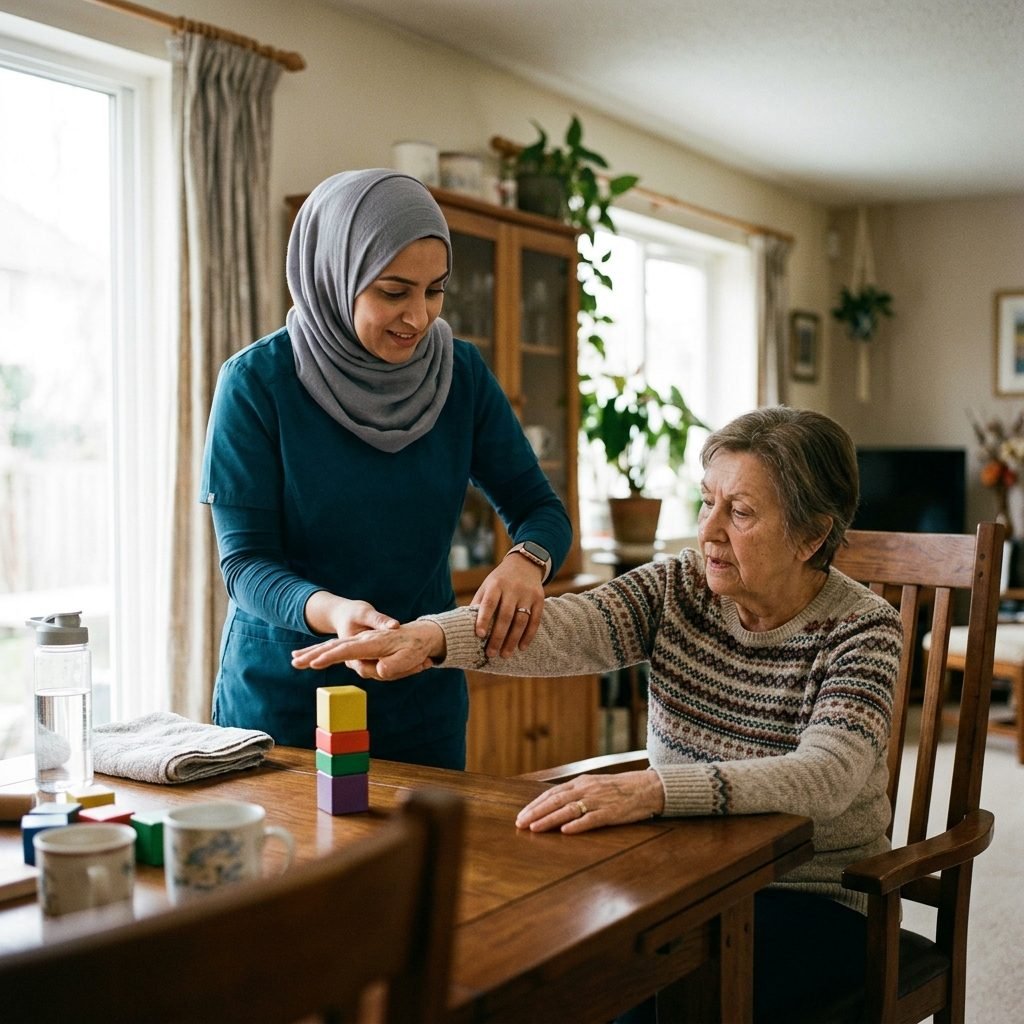
Stroke Rehabilitation
Advanced motor and neurological stroke recovery at home in Al Naseem.
Service Details ←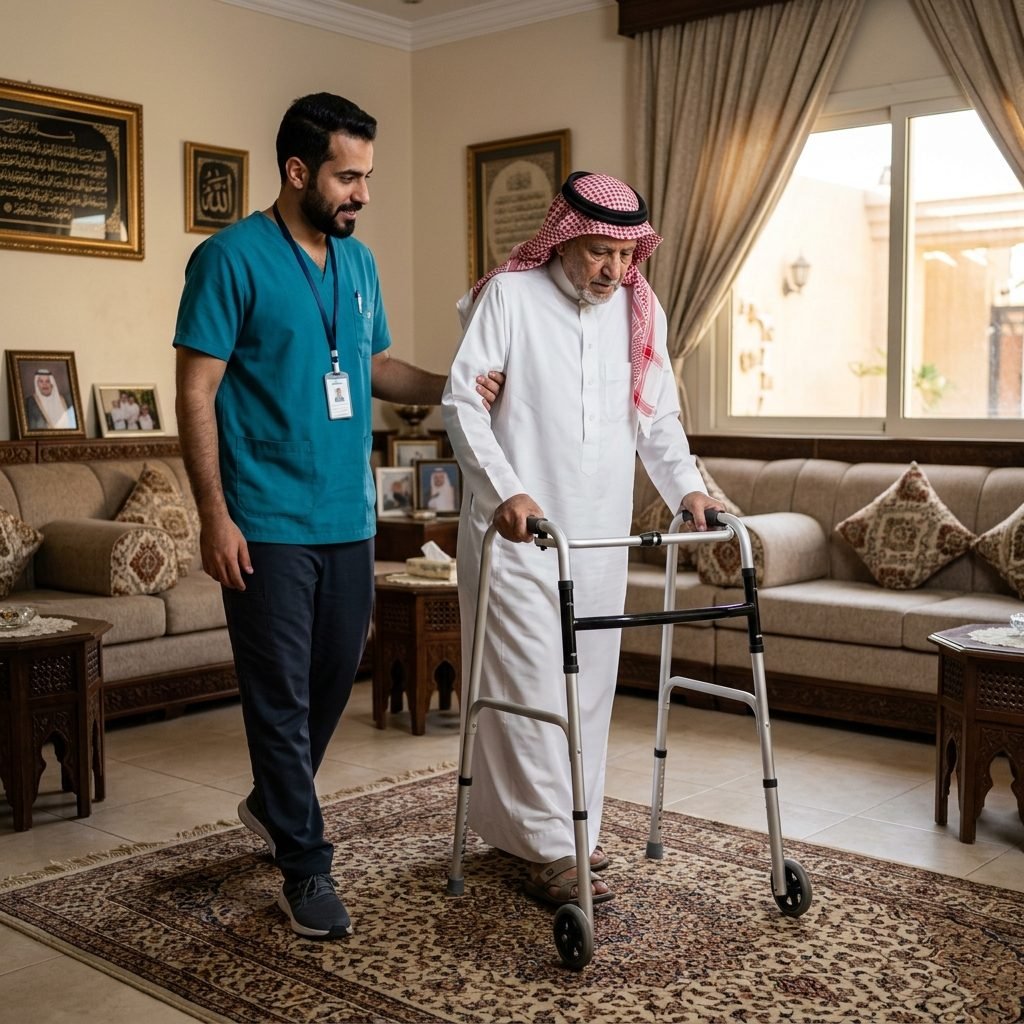
Geriatric Physical Therapy
Balance training, strengthening, and fall prevention for seniors in Al Naseem.
Service Details ←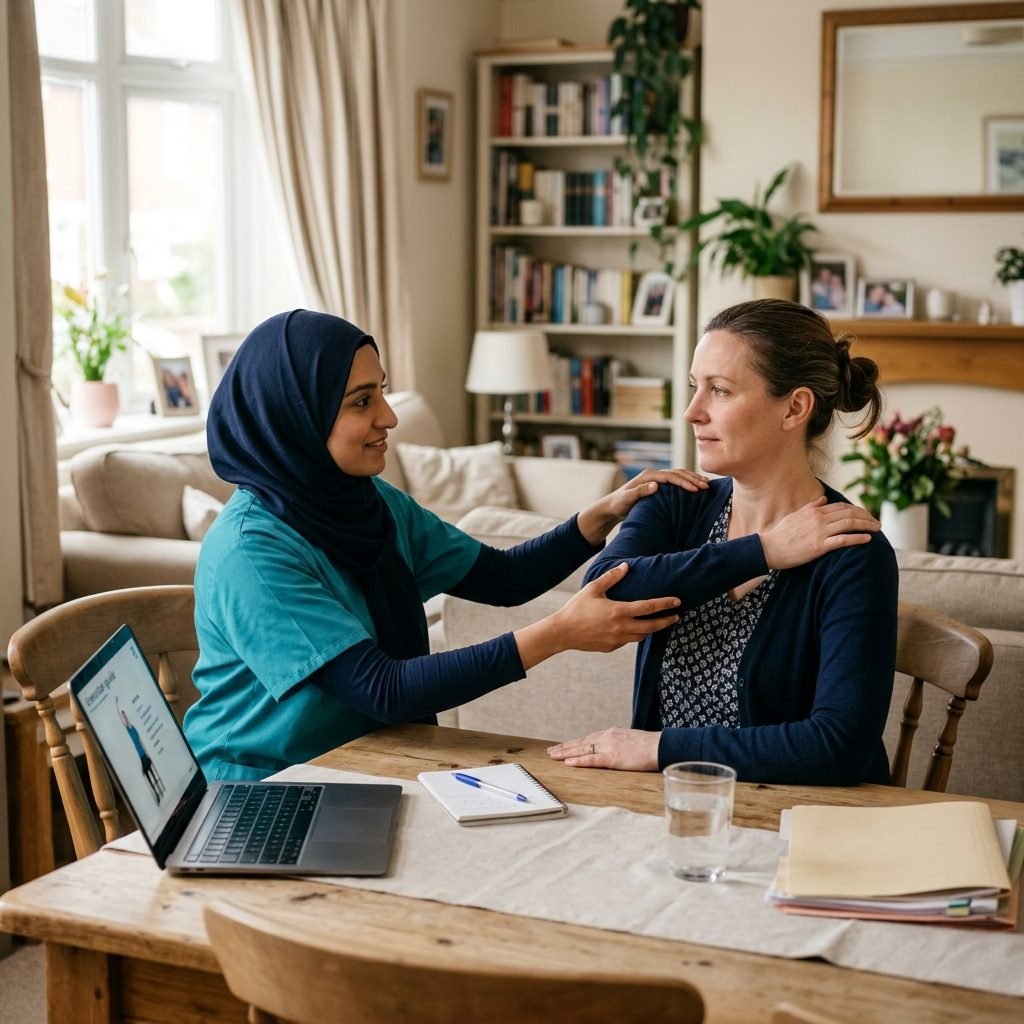
Female Physiotherapist
Licensed female therapists providing home care for women in Al Naseem.
Service Details ←