Having access to comprehensive, clinical physical therapy at home is crucial for maintaining rehabilitation progress, especially in busy neighborhoods. Al-Safa and Al Basateen districts in Jeddah present unique local mobility challenges due to high population density and traffic. At Bidaya Center, we deliver high-quality home physiotherapy and movement rehabilitation services directly to your doorstep, conforming to the clinical guidelines of the Saudi Commission for Health Specialties. We eliminate the stress of travel, traffic, and parking. We respect cultural privacy by providing certified male therapists for male patients and female therapists for female patients.
Our clinical approach in Al Basateen starts with a detailed physical and environmental safety assessment to eliminate fall hazards in the home. We bring all necessary portable, sterilized equipment to deliver a clinical standard of care comparable to external clinics. The therapist establishes a tailored milestone tracking plan to monitor muscle strength, balance, and joint range of motion (ROM) progression over time.
Why families in Al Basateen choose Bidaya for home physiotherapy
- ✅ Licensed male & female therapists — full privacy, in your own home in Al Basateen.
- ✅ Fully in-home visits across Al Basateen — no travel or traffic.
- ✅ A personalized rehab plan built after a thorough in-home assessment.
- ✅ Continuous follow-up and direct contact with your therapist throughout.
- ✅ Fast response — arrange your visit by a quick call or WhatsApp message.
We also serve nearby areas: Al Andalus · Al Bawadi · Al Fayha
* The treatment plan and expected outcomes are determined by a medical and functional assessment of each individual case.
Home-Based Treatment for Delayed Walking in Children and Why It Matters for Al Basateen Families
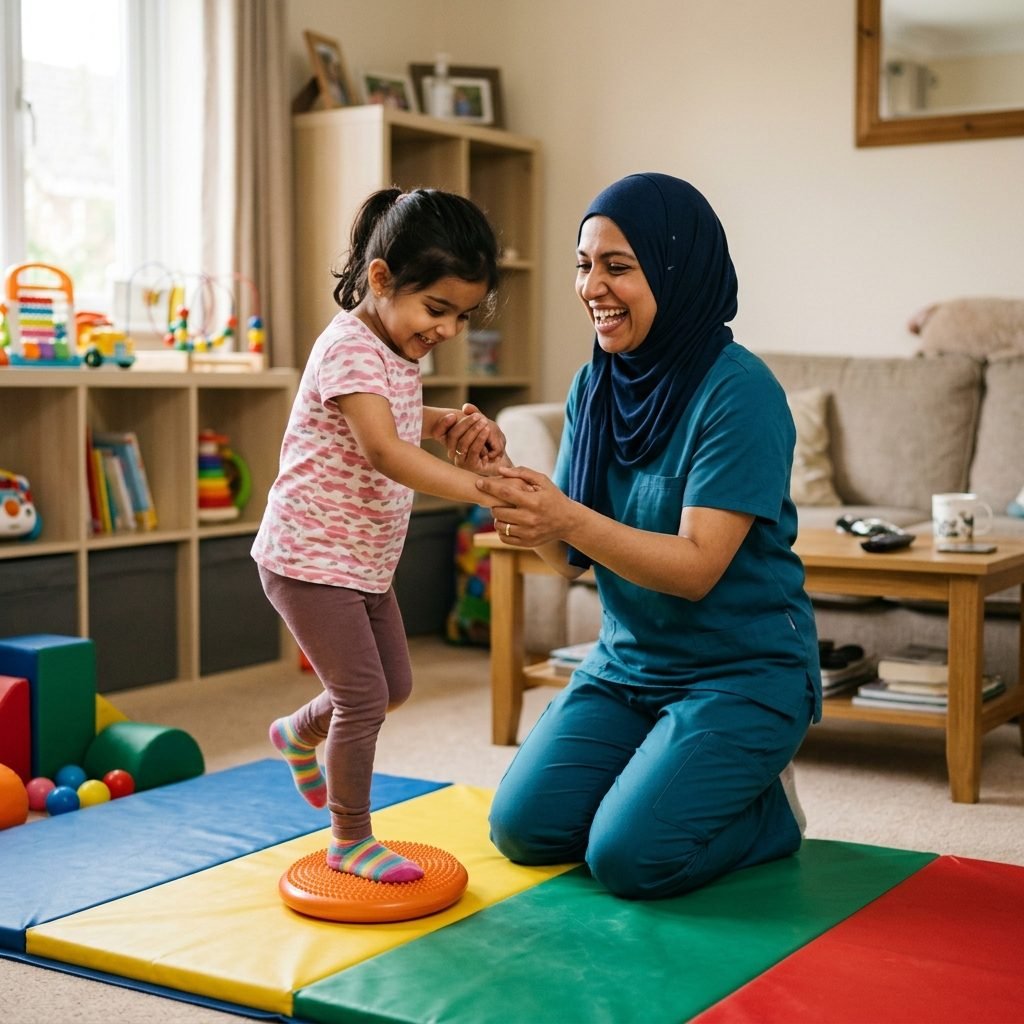
When a child is slow to pull up, stand, or take those first independent steps, parents naturally start to worry and the questions from relatives pile up. Home-based treatment for delayed walking is a movement rehabilitation program delivered by a qualified physiotherapist inside the family's own home. It works to strengthen the muscles, sharpen balance, and organize the movement patterns a child needs in order to stand and walk with confidence. Walking is a skill built through repetition and motivation, and there is no place a young child feels safer to practice than the floor of their own room.
Al Basateen in Jeddah is a residential district home to many young families with children in their earliest years. Its calm character and family apartments and houses make the in-home session a genuinely practical choice. Rather than waking a small child from a nap, breaking their routine, and driving through traffic to sit in a waiting room, the therapist comes to the home with the needed equipment and works with the child on their own floor, among the toys they already know.
That familiar setting is not a mere convenience; it is a real therapeutic advantage. A child who practices standing next to the family sofa or stepping toward a parent in the living room learns faster than a tense child in an unfamiliar clinic. The therapist also observes the actual environment the child moves through every day and adapts the exercises to fit it. We stress that the plan and the nature of each case are set only after a careful clinical and functional assessment. There is no single program that suits every child.
Signs and Symptoms That Call for Starting
Delayed walking on its own is not a diagnosis, but it is a signal worth noticing, especially when it appears alongside other patterns in how the child moves. It helps Al Basateen parents to watch for the following:
- Being unable to stand with support or bear weight steadily on the feet at around one year of age.
- Taking no independent steps well past eighteen months, or walking with an unsteady pattern and frequent falls.
- Persistently walking on the toes without the heels touching the floor.
- Clear weakness in weight-bearing through the legs, or an unusual floppiness that makes the child feel limp when held.
- Stiffness or tightness in the thigh or leg muscles, or a tendency to favor one side of the body over the other.
- Accompanying delays in sitting, crawling, or keeping balance while changing positions.
- Little interest in pulling up, exploring, or moving around compared with peers of the same age.
The presence of one or more of these signs does not necessarily mean a serious problem, but it is reason enough to request an assessment. Early intervention at this stage of a child's life is often easier and more responsive, and it is not wise to wait a long time hoping the child will simply walk on their own without understanding the cause.
Conditions and Groups Who Benefit
A home walking-rehabilitation program serves a wide range of children in Al Basateen, and the goals differ from one child to another according to their situation. Among the groups who benefit most:
- Children born prematurely or with low birth weight who needed extra time to reach their motor milestones.
- Children with weak or low muscle tone that makes standing and staying steady difficult.
- Children with increased tone or spasticity, including cases of cerebral palsy across its varying degrees.
- Children who struggle with balance and motor coordination.
- Cases of persistent toe-walking, or foot and leg positioning issues that affect stepping.
- Children with global developmental delay that involves the motor side alongside other areas.
- Children recovering after fractures, injuries, or surgical procedures that affected their ability to move.
Each of these situations calls for its own perspective. What suits a child with low tone is different from what suits a child with spasticity. For that reason the work always begins with understanding the specific child in front of us before any plan is drawn up.
Goals of the Rehabilitation Program
The final goal every parent longs for is to see their child walk, but the road there passes through smaller, graded goals that build on one another. Among the main things the program works on:
- Strengthening the trunk, hip, and leg muscles that carry the child and give the power to stand.
- Improving balance and the ability to stay steady while standing and while moving between positions.
- Correcting faulty movement patterns such as toe-walking or over-reliance on one side.
- Developing coordination between the upper and lower body during movement.
- Increasing the range of motion in the joints and addressing any tightness that blocks natural stepping.
- Building the child's self-confidence and encouraging them to explore and initiate movement.
- Coaching the family to continue the exercises and weave them into the child's ordinary day.
We keep the goals realistic and measurable, reviewing them regularly and adjusting them according to how the child responds. And we state plainly that we offer no promises or guarantees of a specific result. The extent and pace of progress depend on the nature of the case, the diagnosis, and consistency, and they are determined through ongoing assessment.
Stages and Path of the Home Sessions
The work follows a clear path that begins with the first visit to the home in Al Basateen and continues through regular follow-up:
- Initial assessment: the therapist examines the child's muscle strength, joint range, balance, and movement patterns, and listens to the parents' observations about the child's development and daily routine.
- Setting the plan: based on the assessment, an individual plan is drawn up with short and long-term goals and a suggested number of sessions.
- Training sessions: guided exercises to build muscle strength and balance, usually delivered as play the child enjoys so they engage without boredom or fear.
- Progression: we begin with foundation skills such as steady sitting and supported standing, then move to independent standing, first steps with help, and finally without it.
- Involving the home: the therapist guides the family through simple exercises to repeat between sessions using household furniture and the child's own toys.
- Reassessment: progress is measured periodically and the plan is adjusted according to what the child achieves.
The number of sessions, their length, and their spacing are not fixed figures; they are set for each child individually. Some children need intensive sessions at first that gradually ease as improvement appears.
The Role of the Family and Caregiver
The therapist visits the home for an hour or so, but the child spends the rest of the day with the family, which is why the family's role is central and no less important than the session itself. We encourage Al Basateen parents to:
- Repeat the recommended simple exercises daily, in a spirit of play rather than obligation.
- Prepare safe spaces at home that invite the child to stand and step, such as sturdy furniture to lean on.
- Motivate movement by placing a favorite toy at a distance that encourages the child to step toward it.
- Avoid overusing a walker or carrying the child all the time, which reduces chances to practice bearing weight.
- Notice and note any change in the child's movement and share it with the therapist at the next visit.
- Stay patient and avoid comparing the child with peers, since every child has their own rhythm.
When the exercises become a natural part of the child's day, the effect of the sessions multiplies and the child feels that progress is a warm family project, not a heavy duty.
Home Safety and Prevention Tips
As a child begins attempting to stand and step, the hazards of the home change, and child-proofing becomes part of both the program's success and the child's protection. We advise the following:
- Move furniture with sharp edges away from the child's practice areas, or cover the corners.
- Secure tip-prone furniture such as light shelves so the child cannot pull them over when leaning on them.
- Choose non-slip flooring, avoid smooth socks during practice, and prefer bare feet or a suitable supportive shoe.
- Guard stairs with safety gates and keep the child away from hazards such as sockets and cords.
- Never leave the child standing or moving without close supervision at this sensitive stage.
- Be cautious about relying on rolling walkers, given their risks and their effect on the natural walking pattern.
- Keep an open, safe space where the child can move freely while watched.
These precautions turn the home into a safe training environment that encourages the child to try without exposing them to harm, and they give parents peace of mind while following progress.
Frequently Asked Questions (FAQ)
My son is past one year and still isn't walking. Should I be worried?
Not necessarily, as the age of first walking varies from child to child. But if the delay comes with other movement signs, or the child passes eighteen months with no independent steps, it is best to arrange an assessment to understand the cause and decide whether intervention is needed.
Is a female therapist available to treat my daughter at home?
Yes. We have licensed male and female therapists, and you can request whichever suits your family best, with full commitment to privacy and comfort inside the home.
How many sessions will my child need before walking?
There is no fixed number. It depends on the child's condition, the cause of the delay, how they respond, and the family's consistency with the exercises. This is determined after the assessment and reviewed regularly, and we make no promise of a specific result or timeframe.
Is a home session as effective as a clinic?
The familiar home environment often helps the child engage and relax, and it lets the therapist tailor the exercises to the reality of the child's daily movement at home, while guiding the family to continue the work between sessions.
Do you reach the Al Basateen district in Jeddah?
Yes, we provide home physiotherapy to families in Al Basateen and the neighboring districts, and you can contact us to arrange a time for the first visit.
For a better beginning toward that first step, right in your home in Al Basateen, reach out to book a home visit by phone or WhatsApp by clicking Call Now, and let us start with an assessment of your child's condition and a plan made just for them.
Important Home Visit Details:
- ✓Setup: Please clear a 2x2m space in the room for safety.
- ✓Clothing: Wear loose, comfortable clothes for easy movement.
- ✓Therapist Parity: Male therapists for males, females for females.
- ✓Medical Reports: Keep your MRI or doctor reports ready for evaluation.
Rehabilitation & Services in Al Basateen
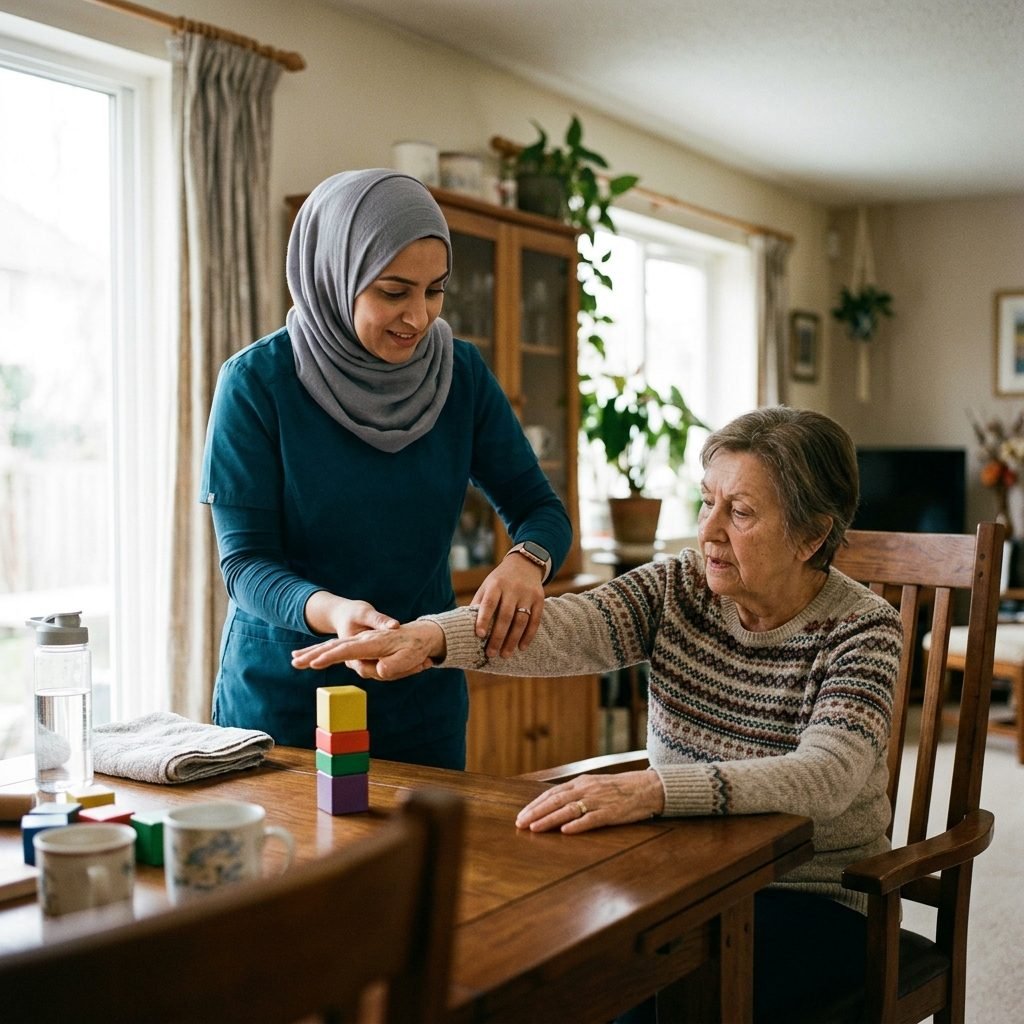
Stroke Rehabilitation
Advanced motor and neurological stroke recovery at home in Al Basateen.
Service Details ←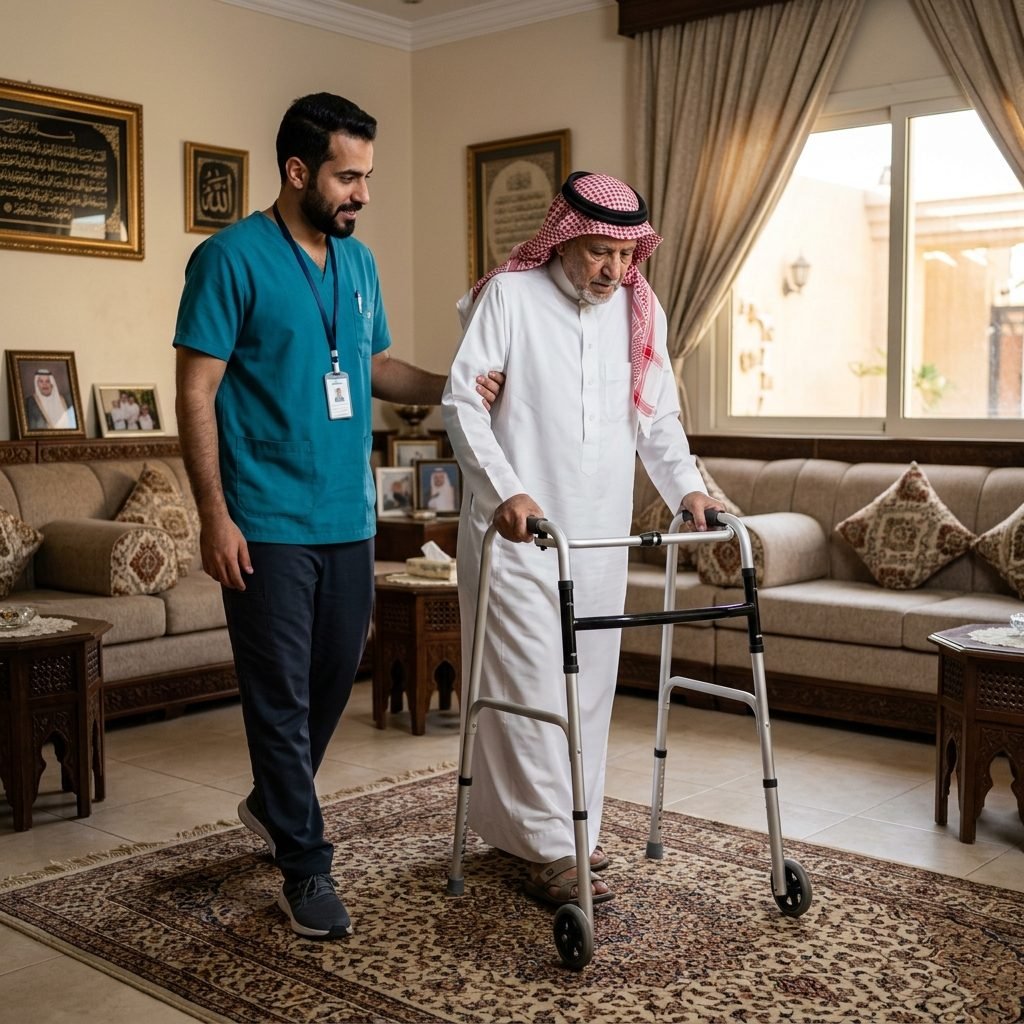
Geriatric Physical Therapy
Balance training, strengthening, and fall prevention for seniors in Al Basateen.
Service Details ←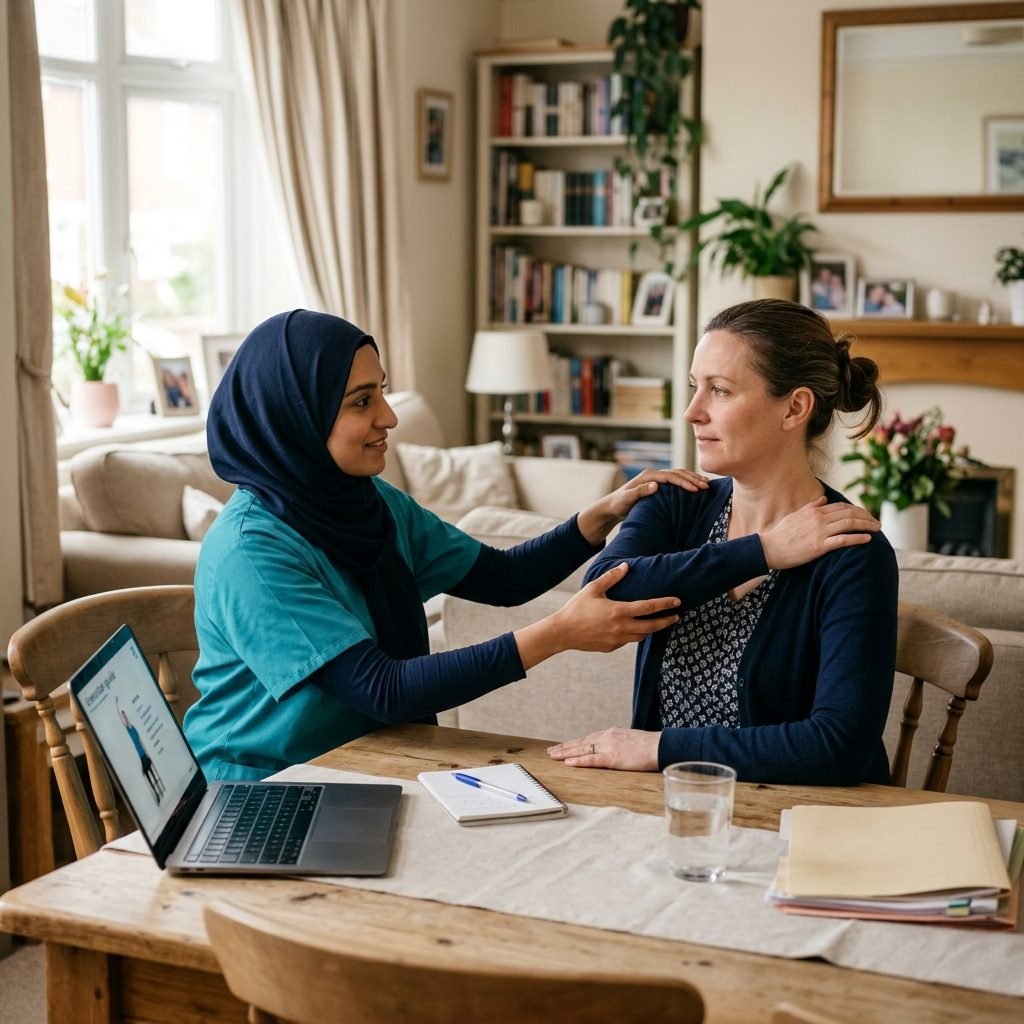
Female Physiotherapist
Licensed female therapists providing home care for women in Al Basateen.
Service Details ←