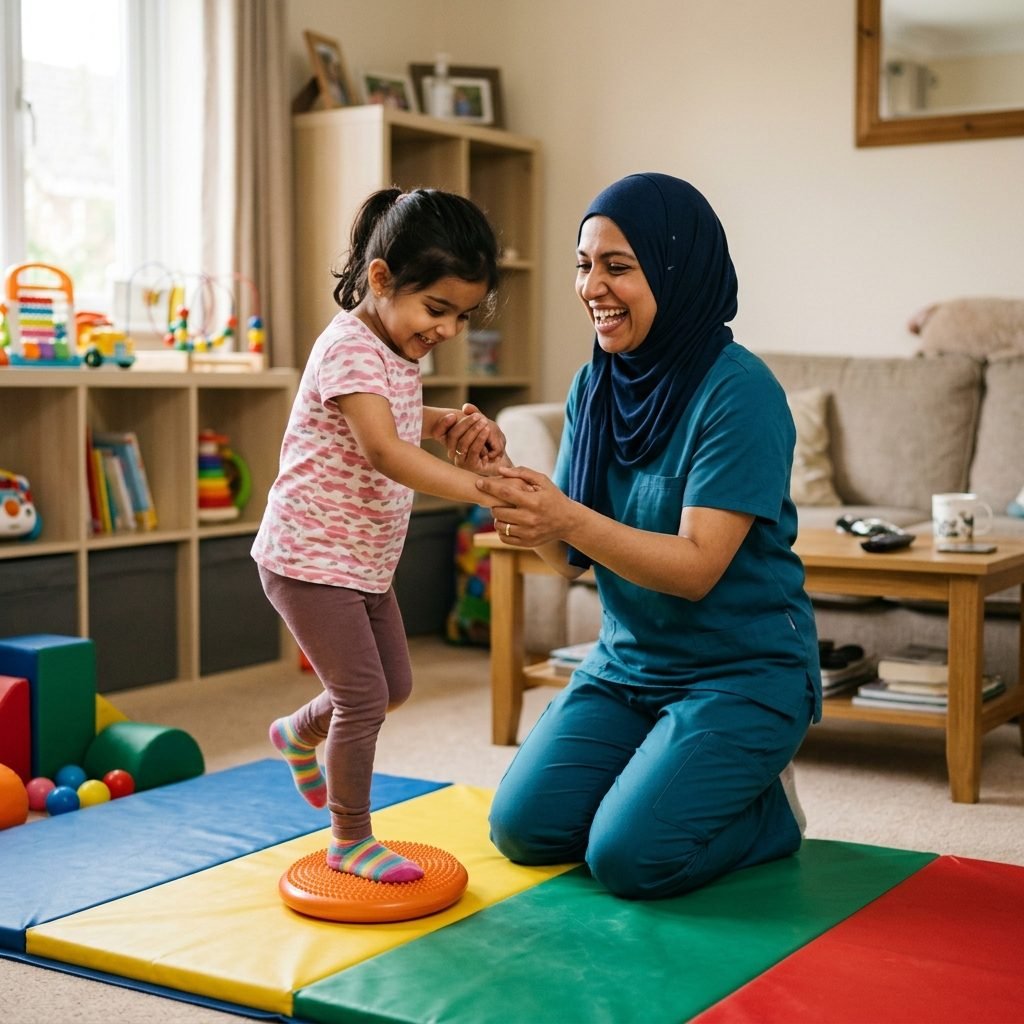
Having access to comprehensive, clinical physical therapy at home is crucial for maintaining rehabilitation progress, especially in busy neighborhoods. Al-Safa and Al Andalus districts in Jeddah present unique local mobility challenges due to high population density and traffic. At Bidaya Center, we deliver high-quality home physiotherapy and movement rehabilitation services directly to your doorstep, conforming to the clinical guidelines of the Saudi Commission for Health Specialties. We eliminate the stress of travel, traffic, and parking. We respect cultural privacy by providing certified male therapists for male patients and female therapists for female patients.
Our clinical approach in Al Andalus starts with a detailed physical and environmental safety assessment to eliminate fall hazards in the home. We bring all necessary portable, sterilized equipment to deliver a clinical standard of care comparable to external clinics. The therapist establishes a tailored milestone tracking plan to monitor muscle strength, balance, and joint range of motion (ROM) progression over time.
Why families in Al Andalus choose Bidaya for home physiotherapy
- ✅ Licensed male & female therapists — full privacy, in your own home in Al Andalus.
- ✅ Fully in-home visits across Al Andalus — no travel or traffic.
- ✅ A personalized rehab plan built after a thorough in-home assessment.
- ✅ Continuous follow-up and direct contact with your therapist throughout.
- ✅ Fast response — arrange your visit by a quick call or WhatsApp message.
We also serve nearby areas: Al Basateen · Al Bawadi · Al Fayha
* The treatment plan and expected outcomes are determined by a medical and functional assessment of each individual case.
Understanding Home-Based Treatment for Delayed Walking and Why It Matters for Al Andalus Families
A child's first independent steps are one of the milestones parents wait for most eagerly. When those steps are late in coming, it is natural to worry, and it is wise to pay attention. Most children pull to stand and cruise along furniture somewhere between ten and fourteen months, then begin walking independently in the months that follow. When a child passes eighteen months without walking on their own, or when their movement simply looks different from other children of the same age, an early professional assessment can make a meaningful difference to the outcome.
Home physiotherapy for delayed walking means a qualified therapist comes to the child's home in Al Andalus to evaluate muscle strength, balance, joint range of motion, and how the child loads weight through the feet. From that evaluation, an individual training program is built inside the very environment where the child lives each day. This point is more important than it first appears: a child learns to walk best in the place where they will actually walk, among their own room's furniture, the hallways of their home, and the rugs of their living room.
Al Andalus is one of Jeddah's lively residential districts close to the heart of the city, and many of its families live in multi-storey homes or spacious apartments. Its residential character makes repeated trips to a clinic with a small child genuinely tiring, especially given Jeddah's heat, humidity, and traffic at peak hours. A home visit removes that burden entirely, preserves the child's sleep and feeding routine, and gives them a sense of safety that makes them far more responsive to the exercises. Because both licensed male and female therapists are available, every family can choose what suits their privacy with complete comfort.
Symptoms and Signs That Signal It Is Time to Begin
Not every difference in the timing of walking is cause for concern, but some indicators should not be ignored. A parent's daily observation at home is the first line of monitoring, and when one of these signs recurs, a specialist assessment becomes a sensible step:
- The child cannot stand with support at around twelve months of age.
- Passing eighteen months without even a few independent steps.
- Persistent walking on the toes without the whole foot meeting the floor.
- A clear asymmetry between the two sides, such as favouring one leg or one hand over the other.
- Unusual floppiness in the body or, conversely, stiffness and tightness in the leg muscles.
- Frequent, atypical falling or obvious difficulty keeping balance while standing.
- Weak trunk control and sitting, or an accompanying delay in crawling.
- Little interest in exploring and moving compared with peers of the same age.
A single sign does not necessarily mean there is a problem, but it is reason enough to seek a specialist opinion. The purpose of assessment is not to hand out labels; it is to understand the cause of the delay precisely. Sometimes it traces back to mild muscle weakness that responds quickly, and sometimes it calls for deeper follow-up. What matters is that any decision rests on a clinical and functional evaluation of each individual child, not on a passing comparison.
Conditions and Groups That Benefit
A home program for delayed walking is designed to serve a broad spectrum of situations, ranging from the straightforward to the more complex. Among the groups that benefit most are:
- Healthy children whose walking is late because of mild muscle weakness or limited opportunity to move and practise.
- Premature babies born before term who need extra support to catch up with motor milestones.
- Cases of general motor delay accompanied by delays in other skills.
- Children with low muscle tone (hypotonia) that affects standing and stability.
- Cases of increased muscle tone or spasticity that limit range of motion in the legs and feet.
- Children with foot positioning or leg alignment issues that affect the walking pattern.
- Recovery after long periods of immobilisation or casting that temporarily weakened the muscles.
- Cerebral palsy across its varying degrees, which needs ongoing motor rehabilitation.
Each group has its own needs, which is why no single program suits everyone. The therapist sets the starting point and the pace of progress based on the child's current abilities and their nearest goal, whether that is improving sitting first, strengthening standing, or moving on to independent steps. Expected outcomes always remain tied to the assessment of each case, to consistent practice, and to close cooperation between the family and the therapist.
Goals of the Rehabilitation Program
The ultimate goal is clear to everyone: for the child to walk safely and independently. Reaching it, however, passes through a series of graded intermediate goals that the therapist builds step by step and keeps measurable, so the family can see the progress for themselves:
- Strengthening the trunk, pelvis, and leg muscles that form the foundation of standing and balance.
- Improving static balance while standing and dynamic balance during transitions.
- Correcting how weight is loaded through the feet and distributing it evenly.
- Widening range of motion in the hip, knee, and ankle joints and addressing any stiffness.
- Developing protective reactions that guard the child against falls.
- Building psychological confidence and the desire to move and explore.
- Improving coordination between the two sides and reducing reliance on one.
- Integrating acquired skills into everyday activities inside the home.
These goals are not achieved all at once; they accumulate. Better balance makes standing easier, steady standing sets the stage for a first step, and that first step opens the door to independent walking. We always emphasise that we make no promises of specific results or guaranteed timeframes, because the path depends on the child's response and the nature of their case as it becomes clear through ongoing assessment.
Stages and Course of the Home Sessions
The therapeutic journey begins with a first assessment visit to the family's home in Al Andalus. During it, the therapist gets to know the child in their natural setting, examines muscle strength, flexibility, balance, and movement pattern, and listens to the parents' observations and the child's medical history. From this assessment an individual plan is drawn up with near and longer-term goals.
Sessions typically progress through connected stages:
- Preparation stage: gentle exercises to improve range of motion, activate the muscles, and build rapport between the child and the therapist.
- Strengthening and stability stage: targeted exercises for the trunk and leg muscles, with training in stable sitting and moving from one position to another.
- Standing and balance stage: training the child to stand with support, then gradually reducing it, alongside exercises to develop balance reactions.
- First steps stage: encouraging sideways cruising with support, then supported steps, then independent ones, using games and cues familiar to the child.
- Integration and independence stage: transferring the skill to walking on different surfaces inside the home, safe climbing and descending, and walking while playing.
Simple tools and toys usually already available at home are put to use, which keeps practice enjoyable and close to real life. Session length and frequency are set according to the child's age and ability to concentrate, and the plan is reassessed regularly so the goals keep pace with the child's actual progress.
The Role of the Family and Caregiver
A child spends many times more hours with their family than with the therapist, which makes the family the single most important partner in the program's success. The weekly or twice-weekly session lays the groundwork, but simple daily repetition at home is what cements the skill.
- Applying the recommended home exercises consistently and in the way the therapist demonstrates.
- Turning training into enjoyable daily play rather than a heavy chore for the child.
- Preparing a safe, open space that encourages the child to move and explore.
- Encouraging the child with positive words at every attempt, even one that does not fully succeed.
- Noticing any change in movement, mood, or response and reporting it to the therapist.
- Being patient and avoiding comparison with other children, since every child has their own rhythm.
The caregiver, whether the mother, the father, or whoever looks after the child, receives practical guidance during every session so they become an extension of the therapist through the rest of the week. This continuous cooperation between home and specialist is what turns exercises into tangible, lasting progress.
Home Safety and Prevention Tips
When a child takes their first steps, the home becomes a learning arena, and with it the chances of falls and bumps rise. Preparing a safe environment protects the child and encourages them to try without fear:
- Secure or remove movable furniture and sharp-edged pieces from the child's walking paths.
- Ensure a non-slip floor, and avoid sliding rugs or keep them firmly fixed in place.
- Fit safety gates at stairways, since multi-storey homes are common in Al Andalus.
- Keep the child barefoot or in non-slip socks where possible to improve their feel for the ground.
- Provide good lighting in the hallways and rooms where the child moves.
- Keep cables, small objects, and glass edges out of the child's reach.
- Avoid wheeled baby walkers, as they can harm the natural walking pattern and raise the risk of accidents.
- Supervise the child closely during the early training stages without restricting their movement more than necessary.
These steps do not replace supervision, but they reduce risk and give the child safe freedom in which to learn with confidence. The therapist provides further recommendations tailored to the family's home after seeing its space and layout directly.
Frequently Asked Questions (FAQ)
When is delayed walking something to worry about?
When a child passes eighteen months without independent steps, or shows signs such as walking on the toes, stiffness, or a clear asymmetry between the two sides. In these cases a specialist assessment is advised to understand the cause without delay.
Are home sessions as effective as clinic sessions?
Yes, and they carry an added advantage: the child practises in their real environment among their own furniture and hallways, and tends to be calmer and more responsive, which helps the skill transfer into their everyday life at home.
How many sessions will my child need?
There is no fixed number, as it depends on the child's age, the cause and severity of the delay, and how well they respond. An initial pace is set after the first assessment and reviewed regularly according to the child's actual progress.
Are female therapists available to treat children at home?
Yes, both licensed male and female therapists are available, and the family can choose what suits their privacy. We are committed to complete privacy and respect inside the home on every visit.
Do you guarantee my child will walk within a set period?
We make no promises of guaranteed results or timeframes, because every case is different. What we offer is a plan built on a careful clinical and functional assessment, along with regular follow-up that aims to bring the child to their best possible ability.
To book a home visit in Al Andalus, Jeddah, or to ask about the delayed walking program for your child, contact Bidaya Center by phone or WhatsApp by clicking Call Now, and our team will be glad to help you and arrange a time that works for you.
Important Home Visit Details:
- ✓Setup: Please clear a 2x2m space in the room for safety.
- ✓Clothing: Wear loose, comfortable clothes for easy movement.
- ✓Therapist Parity: Male therapists for males, females for females.
- ✓Medical Reports: Keep your MRI or doctor reports ready for evaluation.
Rehabilitation & Services in Al Andalus
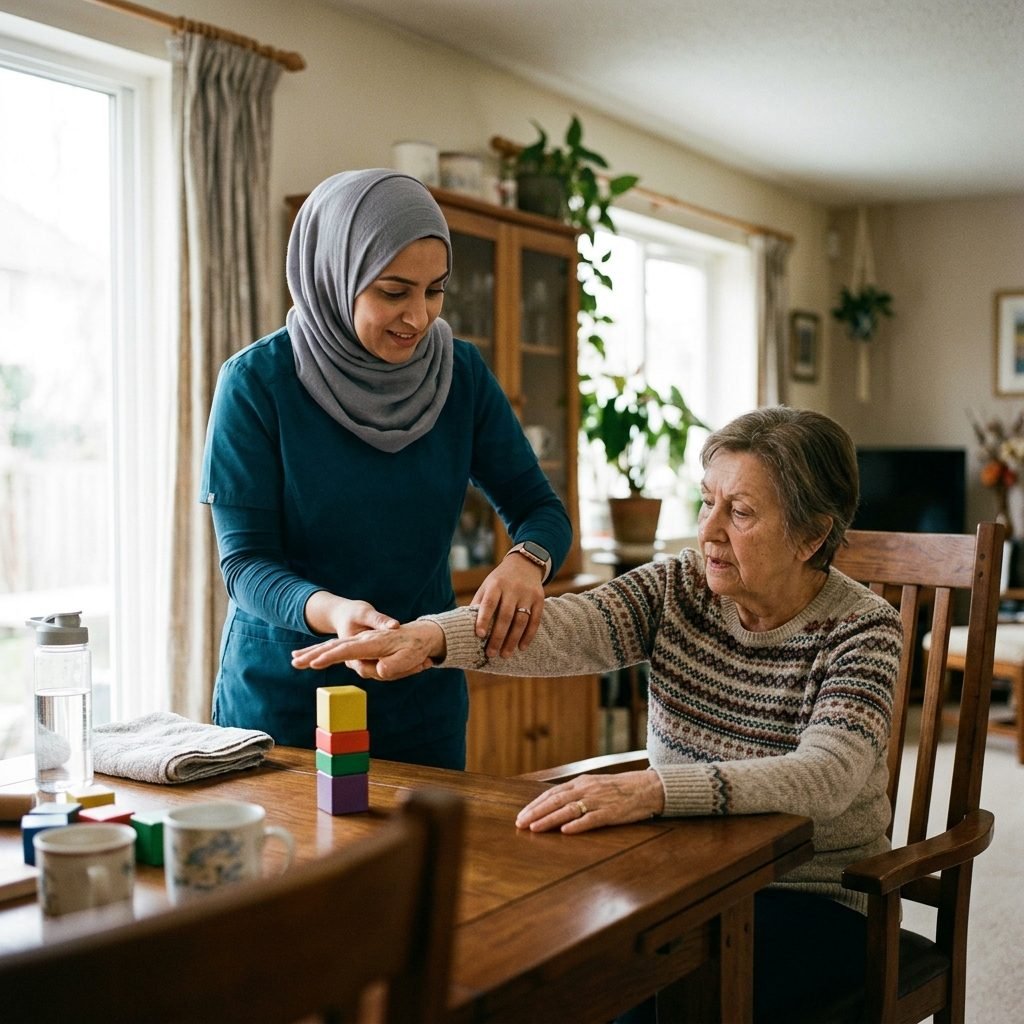
Stroke Rehabilitation
Advanced motor and neurological stroke recovery at home in Al Andalus.
Service Details ←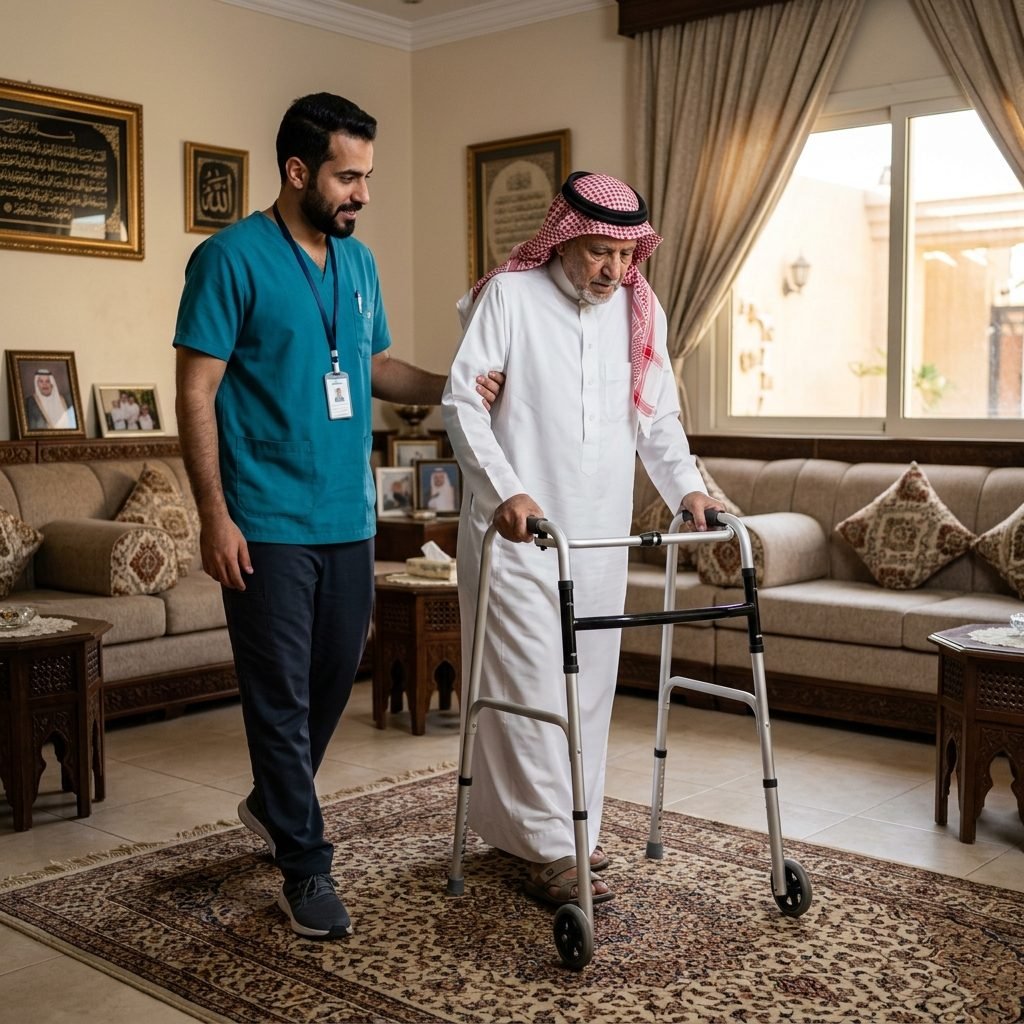
Geriatric Physical Therapy
Balance training, strengthening, and fall prevention for seniors in Al Andalus.
Service Details ←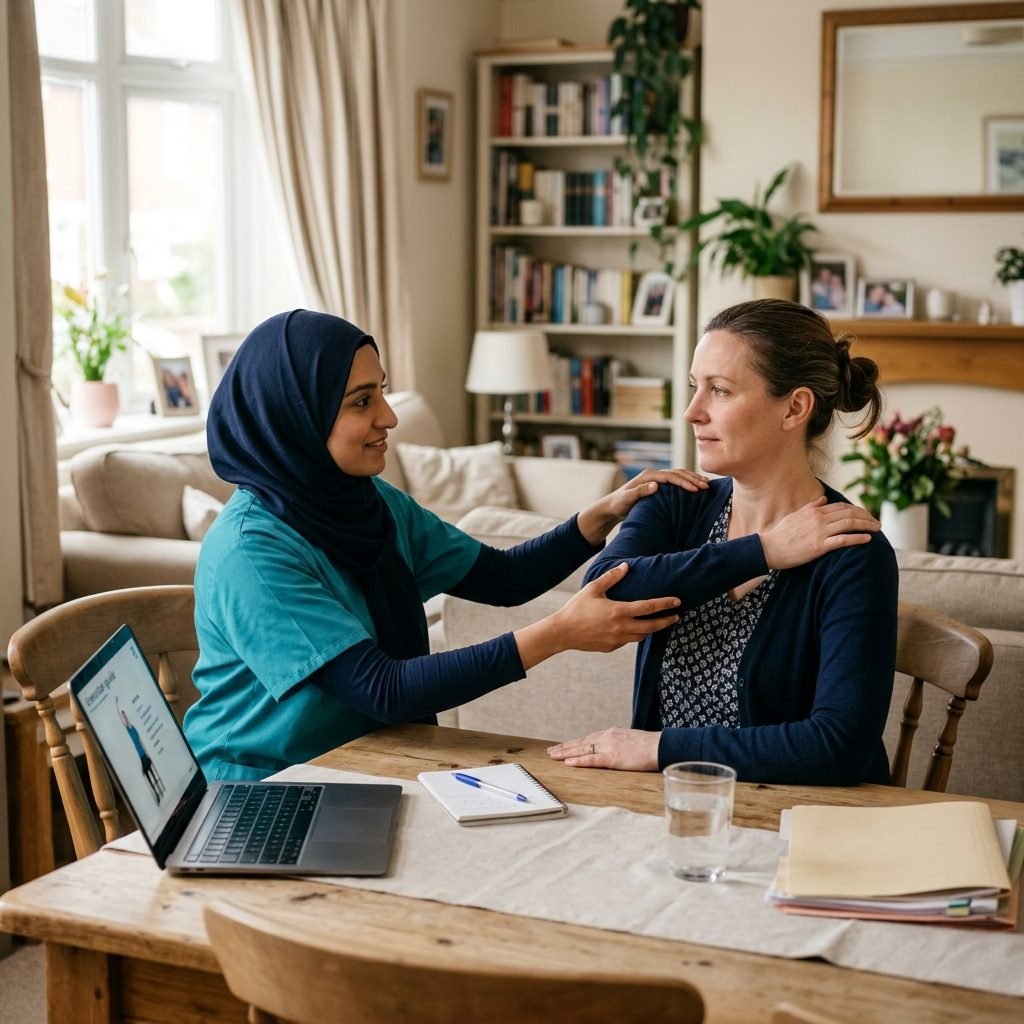
Female Physiotherapist
Licensed female therapists providing home care for women in Al Andalus.
Service Details ←