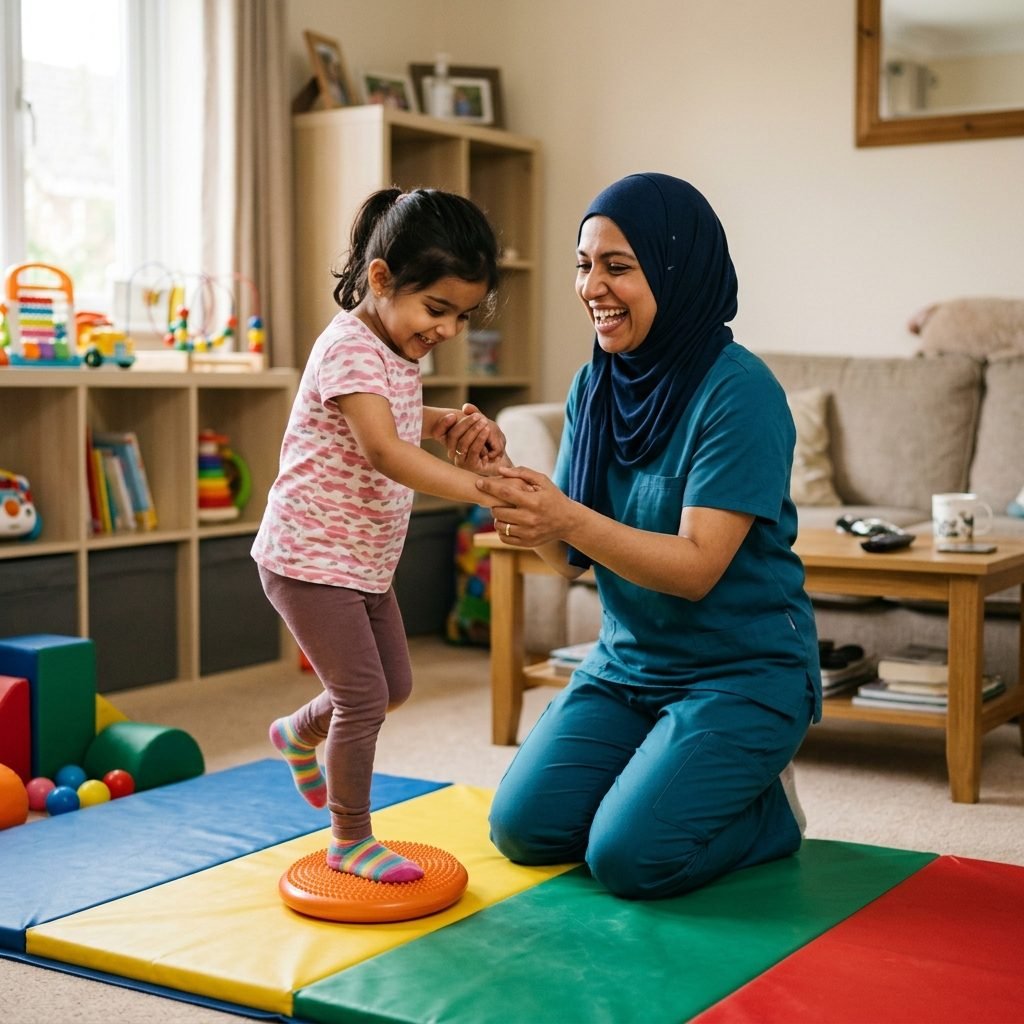
Having access to comprehensive, clinical physical therapy at home is crucial for maintaining rehabilitation progress, especially in busy neighborhoods. Al-Safa and Al Fayha districts in Jeddah present unique local mobility challenges due to high population density and traffic. At Bidaya Center, we deliver high-quality home physiotherapy and movement rehabilitation services directly to your doorstep, conforming to the clinical guidelines of the Saudi Commission for Health Specialties. We eliminate the stress of travel, traffic, and parking. We respect cultural privacy by providing certified male therapists for male patients and female therapists for female patients.
Our clinical approach in Al Fayha starts with a detailed physical and environmental safety assessment to eliminate fall hazards in the home. We bring all necessary portable, sterilized equipment to deliver a clinical standard of care comparable to external clinics. The therapist establishes a tailored milestone tracking plan to monitor muscle strength, balance, and joint range of motion (ROM) progression over time.
Why families in Al Fayha choose Bidaya for home physiotherapy
- ✅ Licensed male & female therapists — full privacy, in your own home in Al Fayha.
- ✅ Fully in-home visits across Al Fayha — no travel or traffic.
- ✅ A personalized rehab plan built after a thorough in-home assessment.
- ✅ Continuous follow-up and direct contact with your therapist throughout.
- ✅ Fast response — arrange your visit by a quick call or WhatsApp message.
We also serve nearby areas: Al Andalus · Al Basateen · Al Bawadi
* The treatment plan and expected outcomes are determined by a medical and functional assessment of each individual case.
Understanding Home Treatment for Delayed Walking and Why It Matters for Al Fayha Families
Delayed walking describes a child who has passed the age at which independent, steady steps are typically expected without yet being able to stand and walk on their own. Parents often first notice it when their little one is still crawling or cruising along the furniture while children of the same age have already started walking. Treatment for delayed walking is a specialized movement rehabilitation program that aims to strengthen muscles, improve balance, organize movement patterns, and encourage the child to acquire walking naturally and safely within their everyday surroundings.
What makes delivering this service at home in the Al Fayha neighborhood so valuable is that the child practices exactly where they move every single day: on the floor of their own room, among familiar pieces of furniture, and in the reassuring presence of the parents who are their first source of comfort. The calm residential character of the district, and how far many of its homes sit from crowded, busy centers, make the home visit a practical option that spares a family the strain of transporting a small child who may resist an unfamiliar clinic environment.
Young children learn through play and repetition in a place where they feel secure, and the home session builds directly on that principle. Instead of a few tense minutes of cooperation inside a clinic the child finds intimidating, the therapist gains more genuine and sustained engagement because the child works while relaxed among their own toys. At Bidaya Center we provide both licensed male and female therapists, so every family can choose what suits their privacy, with full respect for the sanctity of the home. It is important to stress that every treatment plan and any expected outcome is built on a careful clinical and functional assessment of the child, and no results can ever be promised in advance because every child is different.
Symptoms and Signs That Signal It Is Time to Begin
Not every mild delay in walking is cause for worry, but there are signs that should not be overlooked, and noticing them early opens the door to more effective intervention. Among the most important reasons to seek assessment:
- The child cannot stand with support or hold weight on their feet at the age this is usually expected.
- Continued reliance on crawling with no attempt to pull up to standing or cruise along furniture.
- Noticeable excessive floppiness in the body or, conversely, clear stiffness in the leg muscles when lifted or moved.
- Persistent walking on the toes, or an obvious tendency to favor one side of the body over the other.
- Poor balance and frequent falling beyond what is expected once first steps have begun.
- Little interest in movement or exploring surroundings, with a preference for prolonged, still sitting.
- An accompanying delay in other skills such as independent sitting, grasping objects, or communication.
The presence of one or more of these signs does not necessarily mean a serious problem, but it does warrant a specialized assessment to identify the cause and map out the right path. Intervening early during the first years of growth is usually more impactful, because a child's nervous and muscular systems are highly adaptable at this stage.
Conditions and Groups Who Benefit
The home-based delayed-walking service in Al Fayha is aimed at a broad range of children whose reasons for motor delay vary widely, including:
- Children with general motor delay who reached other developmental milestones on time but were late to walk for no obvious reason.
- Children with reduced or low muscle tone that makes standing and holding steady difficult.
- Cases of muscle stiffness and increased tone that affect the flexibility of movement in the legs and feet.
- Children born prematurely who needed extra time to catch up with motor development milestones.
- Children with balance or coordination difficulties that undermine their confidence in walking.
- Persistent toe-walking or unbalanced gait patterns that need correction.
- Children in the period after casting or restricted movement who need to rebuild strength and confidence.
Each of these groups has different needs, which is why no single program suits everyone. Work always begins by understanding the individual child's situation, their developmental age, their level of cooperation, and the environment available in their Al Fayha home, so that a path built specifically for them can be shaped from there.
Goals of the Rehabilitation Program
The rehabilitation program for delayed walking pursues a set of progressive goals tailored to each child's condition, the most prominent being:
- Strengthening the trunk, hip, and leg muscles that balanced standing and walking depend upon.
- Improving balance and the ability to hold steady in standing before moving on to independent steps.
- Organizing movement patterns and correcting faulty foot and ankle positions such as toe-walking.
- Enhancing coordination between the right and left sides of the body to achieve a symmetrical gait.
- Increasing range of motion in the joints and the flexibility of tight muscles to ease a natural stride.
- Building the child's confidence in their ability to move and encouraging them to explore without fear of falling.
- Integrating acquired skills into daily activities at home so they become part of the child's routine.
These goals are reviewed regularly; as soon as the child masters one skill, the challenge is gently raised toward the next stage. The real measure of success is the functional progress that shows up in the child's daily life, not merely performing an exercise within the session.
Stages and the Journey of Home Sessions
The therapeutic path moves through connected stages that begin with assessment and build gradually toward independent walking, always respecting the child's own pace:
- Initial assessment stage: the therapist visits the home in Al Fayha to evaluate muscle strength, balance, range of motion, and the child's postural patterns, and listens to the parents' observations about their development.
- Preparation and strengthening stage: playful exercises targeting the trunk and legs, preparing the child physically and mentally to bear weight on their feet.
- Standing and steadiness stage: training the child to pull up and stand with gradually reduced support, then hold alone for periods that lengthen over time.
- First steps stage: encouraging the child to cruise along furniture and then take their first independent steps across short, safe distances.
- Consolidation and generalization stage: refining gait quality, improving balance on different surfaces, and embedding the skill into familiar daily activities.
These stages do not unfold at the same pace for every child; some progress quickly while others need longer at a particular stage, and that is entirely normal. The therapist continually adjusts the plan according to the child's response and involves the family in tracking progress between visits.
The Role of the Family and Caregiver
The family is an essential partner in the program's success, because the child spends most of the day with their parents rather than the therapist, so what happens between sessions matters no less than what happens during them. The caregiver's role includes:
- Repeating the simple recommended exercises daily, woven into the child's play and usual activities.
- Preparing a safe space at home that encourages the child to stand and move without the risk of a harmful fall.
- Encouraging the child with words and smiles at every attempt, because emotional support raises their motivation to try.
- Noticing any change in the child's movement or gait patterns and noting it to share with the therapist.
- Keeping session appointments and maintaining continuity so progress can accumulate at its best.
- Avoiding discouraging comparisons with other children and staying patient with the child's own pace.
The therapist makes a point of coaching parents practically during the visit on the correct way to perform the exercises and to lift and position the child, so that the home becomes a complete therapeutic environment working in the child's favor throughout the day.
Home Safety and Prevention Tips
Because a child learning to walk is more prone to falling, preparing a safe home environment in Al Fayha is an inseparable part of the treatment. Among the most important tips:
- Remove slippery rugs, scattered cords, and small obstacles from the child's movement paths.
- Secure unstable furniture and protect the sharp edges of tables and cabinets with soft guards.
- Fit stairs with safety gates and supervise the child constantly near any change in height.
- Choose a non-slip floor and dry it immediately when wet, favoring bare feet or non-slip socks during training.
- Avoid wheeled baby walkers, which can delay the natural development of balance and pose an injury risk.
- Make sure the child is comfortable, not tired or hungry, before training sessions to ensure cooperation.
- Never pressure or forcefully push the child to stand; rely only on gentle, gradual encouragement.
The aim of these measures is not to restrict the child's movement but to give them a safe space in which to experiment, fall, and try again with confidence, since light tumbles are a natural part of the journey of learning to walk as long as the environment is protected.
Frequently Asked Questions (FAQ)
Does my child's delayed walking mean there is a serious problem?
Not necessarily; many children walk at different times, but a specialized assessment reassures you and determines whether there is a cause that calls for intervention, and shapes an appropriate plan if one is needed.
How many sessions will my child need before starting to walk?
There is no fixed number; the number of sessions and the length of the program depend on the child's condition, the degree of delay, and their response, all of which are determined after the initial assessment, with no promise of a predetermined result.
Is a home session as effective as a clinic session?
Yes, and it may even suit young children better because they train in their familiar environment while relaxed, which increases their cooperation, and it lets the family learn directly and weave the exercises into the daily routine.
Are female therapists available for the home visit?
Yes, we have both licensed male and female therapists, and you can choose what suits your family's privacy, with full respect for the sanctity of the home and the child's comfort.
What should I prepare before the first visit?
It is enough to set up a safe, relatively open space, bring a few of the child's favorite toys, and have your notes about their motor development ready; the therapist will handle the rest of the details during the assessment.
To book a home visit in the Al Fayha neighborhood of Jeddah or to ask about your child's condition, contact Bidaya Center by phone or WhatsApp by clicking Call Now, and we will be glad to help you take the first step toward supporting your child.
Important Home Visit Details:
- ✓Setup: Please clear a 2x2m space in the room for safety.
- ✓Clothing: Wear loose, comfortable clothes for easy movement.
- ✓Therapist Parity: Male therapists for males, females for females.
- ✓Medical Reports: Keep your MRI or doctor reports ready for evaluation.
Rehabilitation & Services in Al Fayha
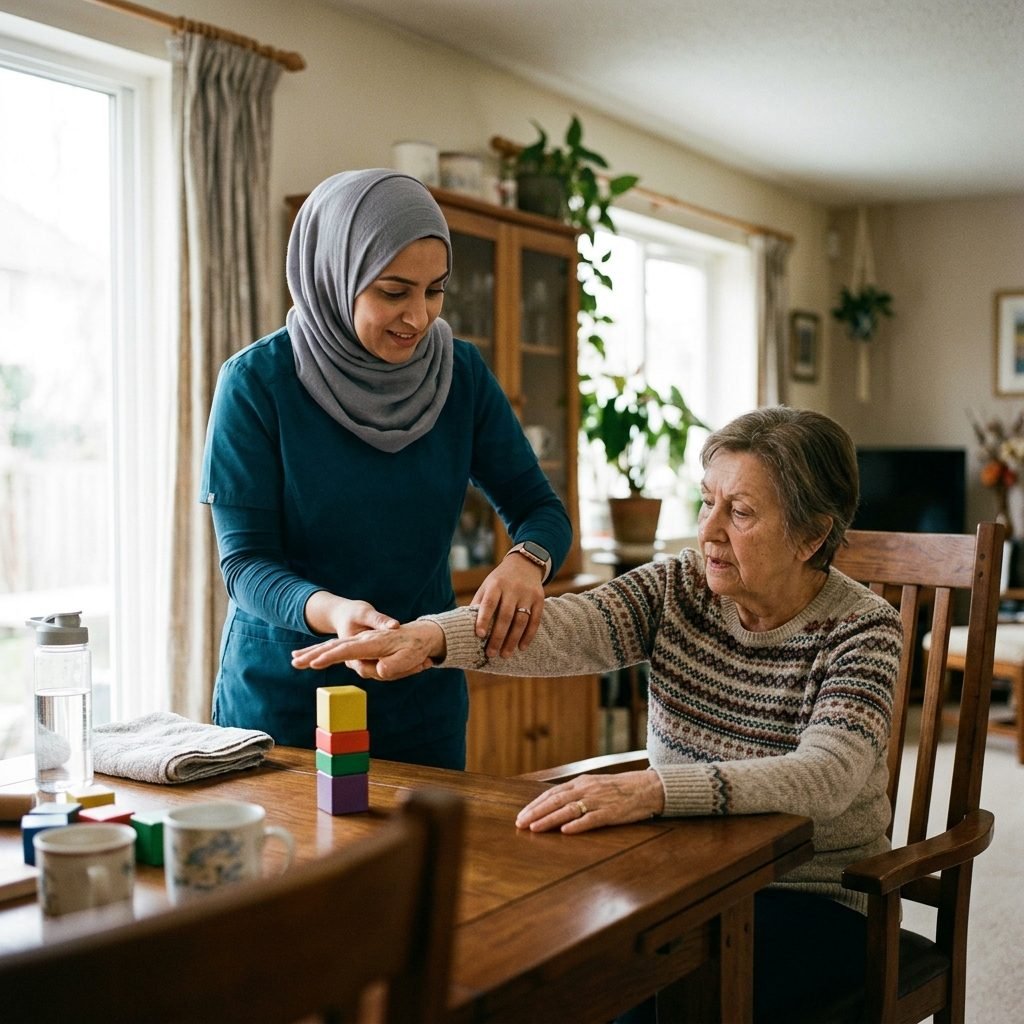
Stroke Rehabilitation
Advanced motor and neurological stroke recovery at home in Al Fayha.
Service Details ←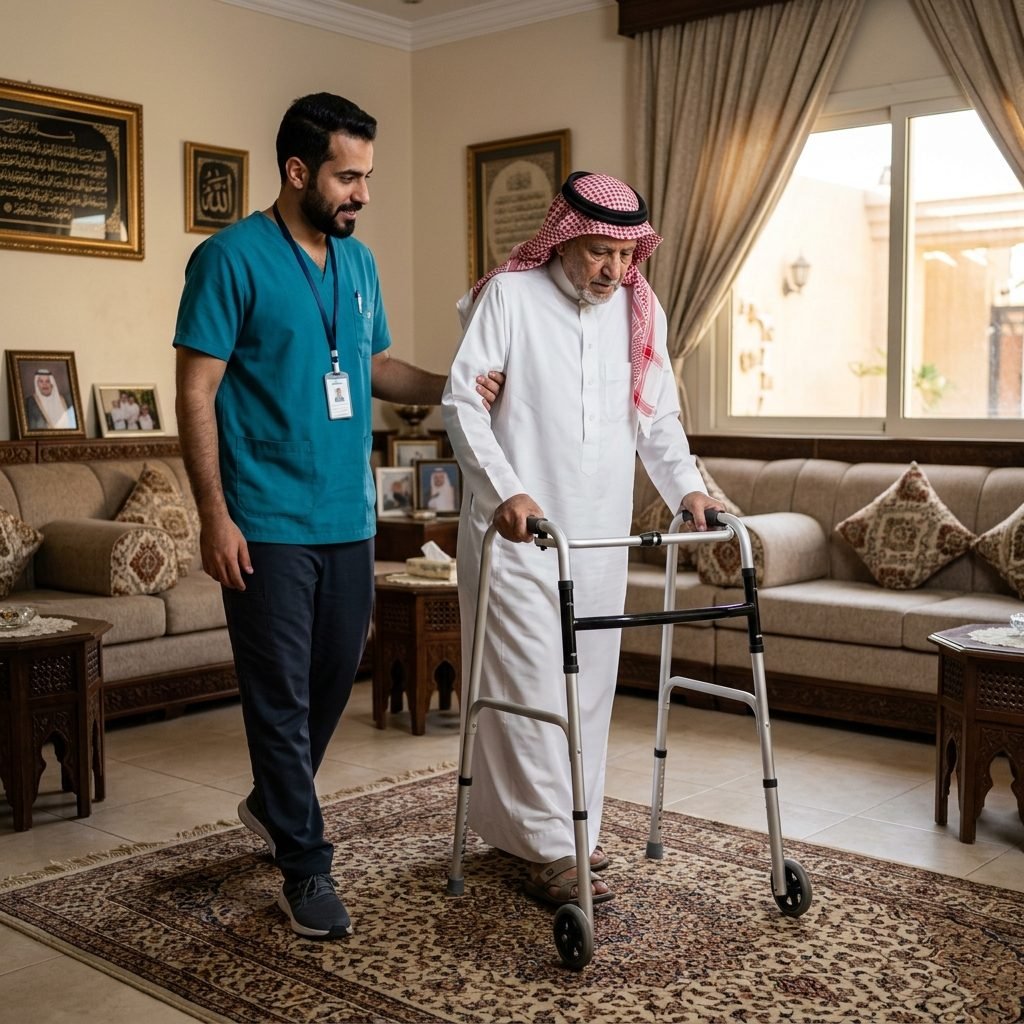
Geriatric Physical Therapy
Balance training, strengthening, and fall prevention for seniors in Al Fayha.
Service Details ←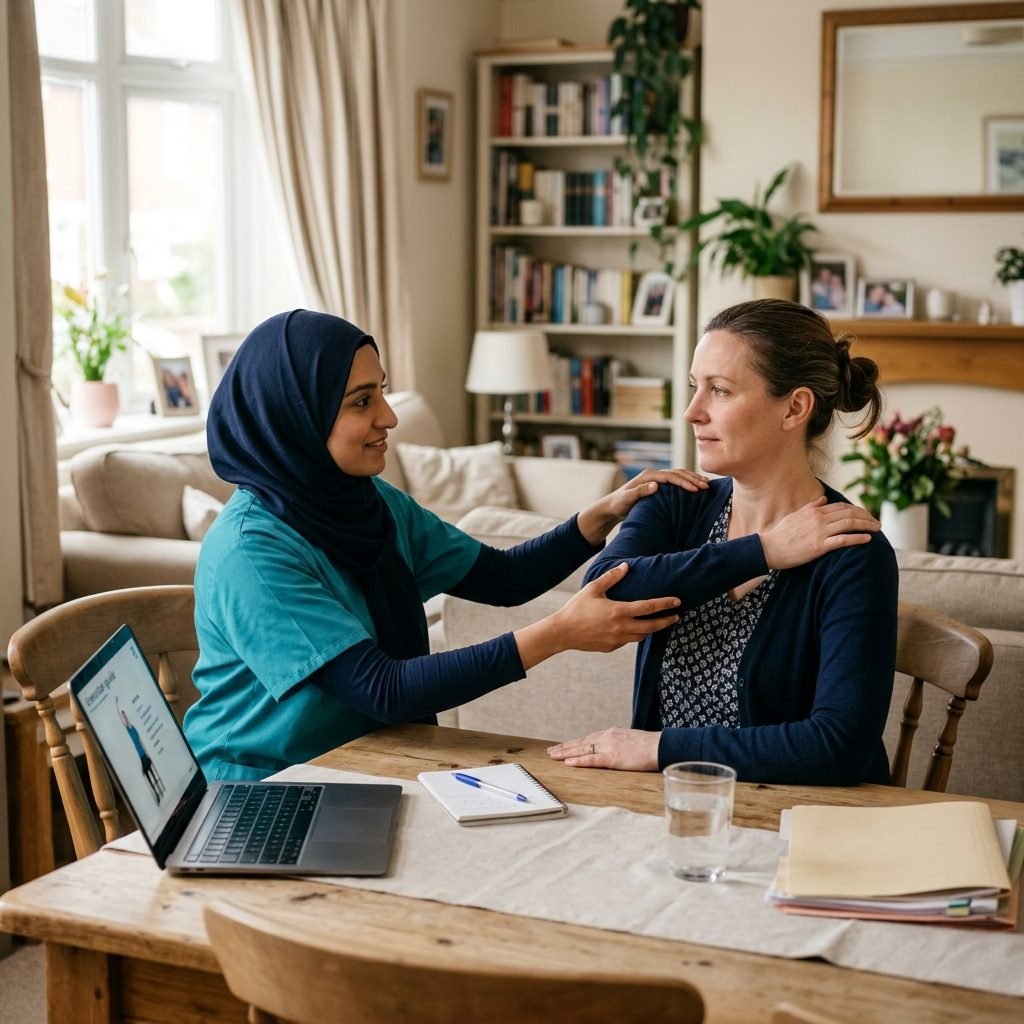
Female Physiotherapist
Licensed female therapists providing home care for women in Al Fayha.
Service Details ←