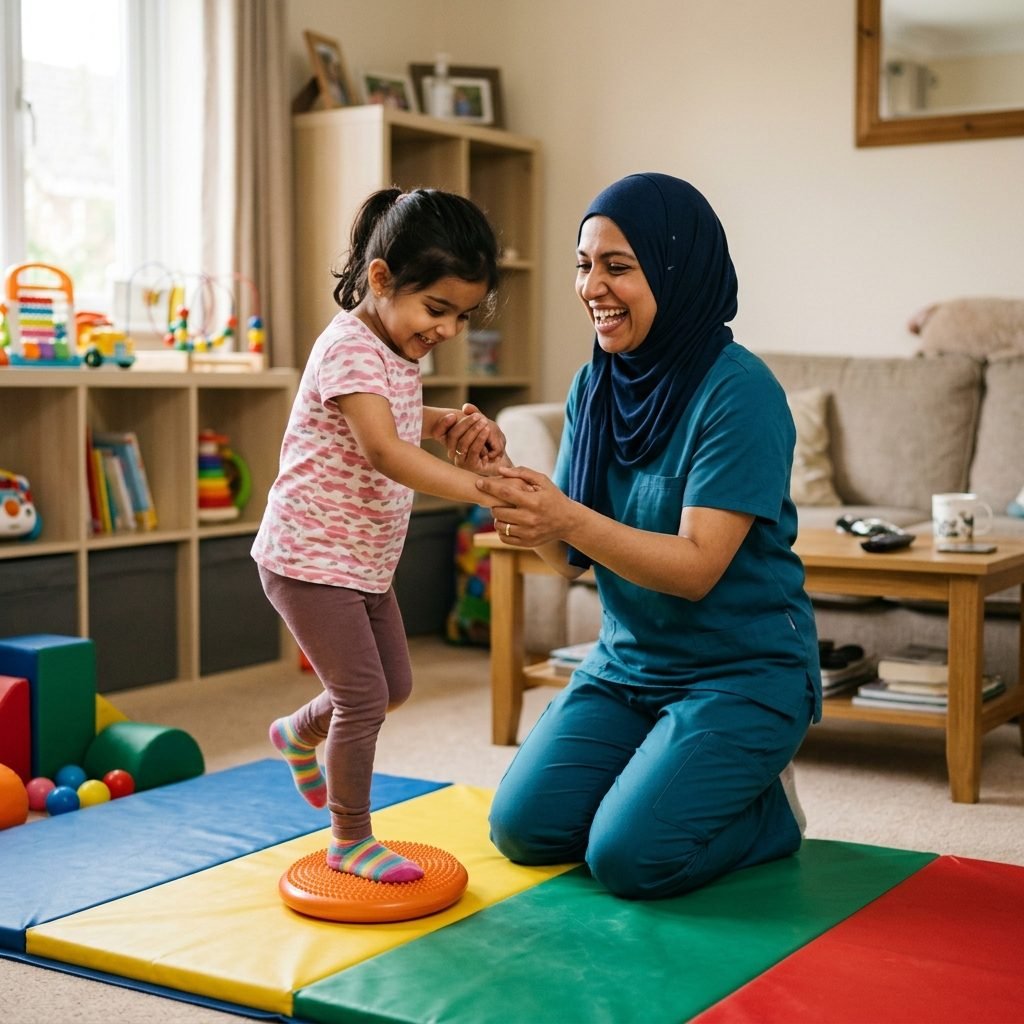
Having access to comprehensive, clinical physical therapy at home is crucial for maintaining rehabilitation progress, especially in busy neighborhoods. Al-Safa and Al Basateen districts in Jeddah present unique local mobility challenges due to high population density and traffic. At Bidaya Center, we deliver high-quality home physiotherapy and movement rehabilitation services directly to your doorstep, conforming to the clinical guidelines of the Saudi Commission for Health Specialties. We eliminate the stress of travel, traffic, and parking. We respect cultural privacy by providing certified male therapists for male patients and female therapists for female patients.
Our clinical approach in Al Basateen starts with a detailed physical and environmental safety assessment to eliminate fall hazards in the home. We bring all necessary portable, sterilized equipment to deliver a clinical standard of care comparable to external clinics. The therapist establishes a tailored milestone tracking plan to monitor muscle strength, balance, and joint range of motion (ROM) progression over time.
Why families in Al Basateen choose Bidaya for home physiotherapy
- ✅ Licensed male & female therapists — full privacy, in your own home in Al Basateen.
- ✅ Fully in-home visits across Al Basateen — no travel or traffic.
- ✅ A personalized rehab plan built after a thorough in-home assessment.
- ✅ Continuous follow-up and direct contact with your therapist throughout.
- ✅ Fast response — arrange your visit by a quick call or WhatsApp message.
We also serve nearby areas: Al Andalus · Al Bawadi · Al Fayha
* The treatment plan and expected outcomes are determined by a medical and functional assessment of each individual case.
Home-Based Cerebral Palsy Physiotherapy and Why It Matters for Al Basateen Families
Cerebral palsy physiotherapy is a long-term rehabilitation program that helps a child move more freely, build better balance and posture, and gain greater control over muscles that may be either too tight or too loose. Cerebral palsy is not a single fixed illness but a group of movement disorders that arise from an injury or abnormality in the developing brain during its earliest stages. Its severity varies enormously from one child to another, which is why the heart of rehabilitation is repeated, structured training of the nervous and muscular systems, so the child either acquires new motor skills or preserves existing ones and prevents them from deteriorating.
In the quiet, mostly residential neighborhood of Al Basateen in Jeddah, home visits carry particular value for families of children with cerebral palsy. Transporting a child who struggles to move, or who uses a wheelchair, to an outside clinic again and again places a real physical and emotional burden on both child and family, especially with traffic and shifting weather. When the physiotherapist comes to the home instead, the child trains in the very environment they live in every day: their own bed, the floor of their room, the stairs they climb, the chair they sit in to eat. This makes the skills they gain realistic and immediately useful.
At Bidaya Center, we provide home physiotherapy for children with cerebral palsy across Al Basateen through licensed male and female therapists, with full respect for each family's privacy. We believe successful rehabilitation begins with understanding the child within their own family routine, not in an isolated room, and that steady, consistent sessions are the true key to progress.
Symptoms and Signs That Signal It Is Time to Begin
The earlier rehabilitation begins, the better a child's chances of acquiring skills, because a young child's brain has a high degree of plasticity that allows it to reorganize its motor pathways. That is why parents in Al Basateen should watch for the following signs, any of which may warrant an assessment and the start of a program:
- A clear delay in motor milestones compared with peers, such as not controlling the head, sitting, crawling, or walking at the expected ages.
- Stiffness in the limbs or, conversely, a noticeable floppiness that makes the child's body feel limp and hard to hold.
- Using one side of the body far more than the other, or persistently clenching one hand and favoring it at a very early age.
- Involuntary movements, tremors, or recurrent muscle spasms in the arms or legs.
- Difficulty swallowing, chewing, or controlling saliva, and trouble coordinating mouth movements.
- Standing on tiptoes, or legs that cross in a scissor-like posture when the child is lifted.
- Poor balance and frequent falls in a child who has started walking, or an uneven, asymmetric gait.
The presence of one or more of these signs does not by itself confirm a specific diagnosis, but it is reason enough to seek a specialized evaluation. The treatment path and expected outcomes are determined by a careful clinical and functional assessment of each individual case and cannot be guaranteed in advance.
Conditions and Groups That Benefit
A home-based cerebral palsy program in Al Basateen benefits many groups of children, depending on the type and degree of their condition:
- Children with spastic cerebral palsy, the most common form, whose muscles are stiff, tight, and resistant to movement.
- Children with the ataxic type, marked by poor balance and coordination and difficulty with fine, precise movements.
- Children with the athetoid or dystonic type, who show involuntary, writhing movements that are hard to control.
- Mixed cases that combine more than one type at the same time.
- Children with hemiplegia (one side), quadriplegia involving all four limbs, or diplegia that mainly affects the legs.
- Infants born prematurely or who experienced oxygen deprivation during birth and show early signs of motor delay.
- Children recovering from surgeries such as tendon lengthening or spasticity reduction, who need post-operative rehabilitation.
Each of these groups has entirely different needs, which is why no single program suits everyone. We design an individual plan for each child that accounts for their age, degree of involvement, family goals, and current abilities.
Goals of the Rehabilitation Program
The ultimate goal of cerebral palsy rehabilitation is not a complete cure, since the condition stems from a stable brain injury, but rather to give the child the greatest possible independence and participation in daily life. Among the goals we work toward within each individual plan are:
- Reducing muscle spasticity and improving joint range of motion to prevent long-term contractures and deformities.
- Strengthening weak muscles and improving balance and control across different body positions.
- Gradually developing gross motor skills: head control, independent sitting, crawling, standing, and walking according to each child's capacity.
- Improving the fine motor skills needed to grasp objects, eat, and play.
- Teaching more efficient, less tiring movement patterns and correcting faulty postures.
- Protecting the health of the joints and spine and preventing secondary problems such as scoliosis or hip dislocation.
- Increasing the child's self-reliance in simple daily activities that build confidence and a sense of achievement.
These goals are reviewed and adjusted continually, as the child grows and their needs change. Outcomes differ from one child to another and depend on the severity of the condition, the age at which rehabilitation begins, and commitment to the plan; we do not offer any guarantees of specific results.
Stages and the Path of Home Sessions
We follow an organized path that begins with understanding and ends with follow-up, so every session becomes a building block in a clear structure:
- Initial assessment: During the first visit to the family's home in Al Basateen, the therapist conducts a thorough examination of muscle strength, degree of spasticity, range of motion, posture, and the child's current skills, while listening to the parents' observations and goals.
- Building the individual plan: Based on the assessment, we set realistic, measurable short- and long-term goals and determine the appropriate number of weekly sessions.
- Rehabilitation sessions: These include stretching for tight muscles, strengthening for weak ones, balance and posture training, and guided motor activities woven into the child's play so they stay engaged.
- Use of assistive tools: When needed, we guide the family in the correct use of splints, supportive cushions, or walking aids, and adjust seating positions.
- Periodic reassessment: We measure progress at regular intervals and adjust the exercises and goals according to what the child has achieved.
- Follow-up and education: We give the family simple home exercises to apply between sessions to speed progress and preserve gains.
The length of the program and the number of sessions are not fixed; they are built around the child's response and needs, and they require patience and consistency because motor changes happen gradually.
The Role of the Family and Caregiver
Cerebral palsy rehabilitation cannot succeed through the therapist's efforts alone. The child spends most of the day with their family, and sessions, however frequent, remain limited hours against the rest of the day. That is why the family in Al Basateen is the first and most important partner in this journey, and their role includes:
- Regularly applying the recommended exercises and positions between sessions, since daily repetition is what embeds a skill in the nervous system.
- Paying attention to how the child sits, sleeps, and is carried to avoid deformities and ease pressure on the joints.
- Encouraging the child to use their weaker limbs in daily activities rather than relying only on the stronger side.
- Weaving training into play and daily routine so rehabilitation becomes a welcome part of the child's life rather than a burden.
- Noticing any new changes, whether improvement or emerging difficulty, and sharing them with the therapist to adjust the plan.
- Protecting the child's emotional wellbeing with patience, encouragement, and celebration of even the smallest achievement.
At Bidaya Center we make a point of training and empowering the caregiver, because an aware, engaged family multiplies the chances of progress and turns the whole home into a supportive rehabilitation environment.
Home Safety and Prevention Tips
A safe home environment protects a child with cerebral palsy from injury and helps them move with confidence. Here are practical tips for Al Basateen families:
- Remove slippery rugs and obstacles from the child's movement paths, and keep cables and sharp edges out of reach.
- Ensure good lighting in hallways and on stairs, and fit handrails and supports where the child needs something to lean on.
- Use chairs and tables at an appropriate height that support correct seating, with the back and feet properly supported.
- Supervise the child during bathing, use non-slip mats, and never leave them alone near water.
- Reposition a child with limited mobility regularly to prevent pressure sores and joint stiffness.
- Lift and carry the child in the way the therapist has shown you, protecting both your back and theirs.
- Avoid forcing a spastic limb through a violent movement, and stick to the gentle stretching you were trained to do.
These measures do not replace specialized supervision, but they make a daily difference to the child's safety and comfort.
Frequently Asked Questions (FAQ)
Can my child be completely cured of cerebral palsy through physiotherapy?
Cerebral palsy results from a stable brain injury that does not disappear, but physiotherapy can greatly improve movement, function, and independence. We do not offer guarantees of a cure; the degree of improvement is determined after a clinical and functional assessment of your child's case.
At what age is it best to start rehabilitation?
The earlier the start, the better, because a young child's brain is more adaptable to learning. Even so, rehabilitation remains beneficial at any age to improve abilities and prevent the condition from worsening, and we build the plan around your child's age and abilities.
How many sessions does my child need each week?
There is no fixed number; it depends on the severity of the condition, the family's goals, and the child's response. The therapist determines the appropriate number after the initial assessment and adjusts it periodically as the program progresses.
Are female therapists available for privacy?
Yes, we have licensed male and female therapists, and you may choose what suits your family, with full respect for the privacy of your home in Al Basateen.
Are home sessions as effective as clinic sessions?
Home sessions are highly effective for children with cerebral palsy and can even be superior, because the child trains in their natural environment and applies skills directly to their daily routine, in addition to being more comfortable and sparing the strain of travel.
To book a home visit or ask about cerebral palsy physiotherapy for your child in Al Basateen, Jeddah, contact Bidaya Center by phone or WhatsApp by clicking Call Now, and we will be glad to help you take the first step toward your child's progress.
Important Home Visit Details:
- ✓Setup: Please clear a 2x2m space in the room for safety.
- ✓Clothing: Wear loose, comfortable clothes for easy movement.
- ✓Therapist Parity: Male therapists for males, females for females.
- ✓Medical Reports: Keep your MRI or doctor reports ready for evaluation.
Rehabilitation & Services in Al Basateen
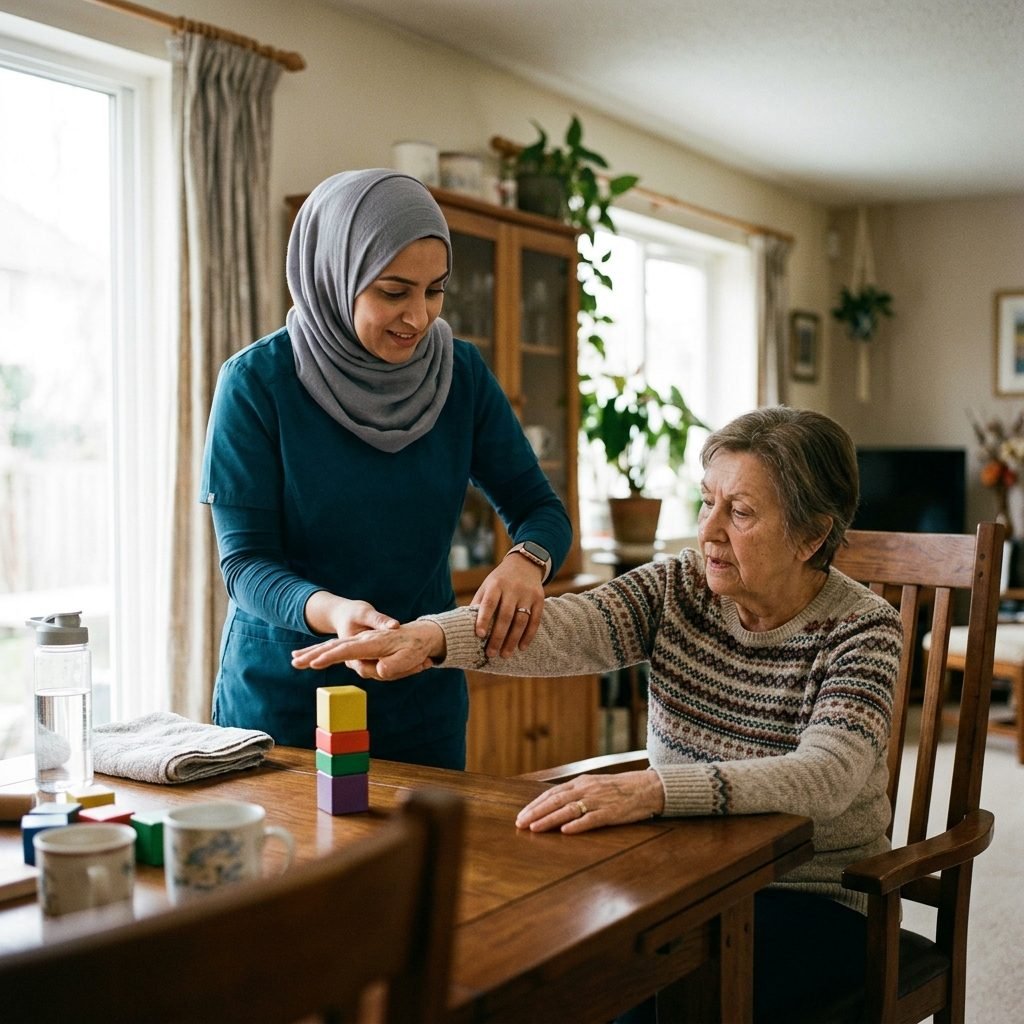
Stroke Rehabilitation
Advanced motor and neurological stroke recovery at home in Al Basateen.
Service Details ←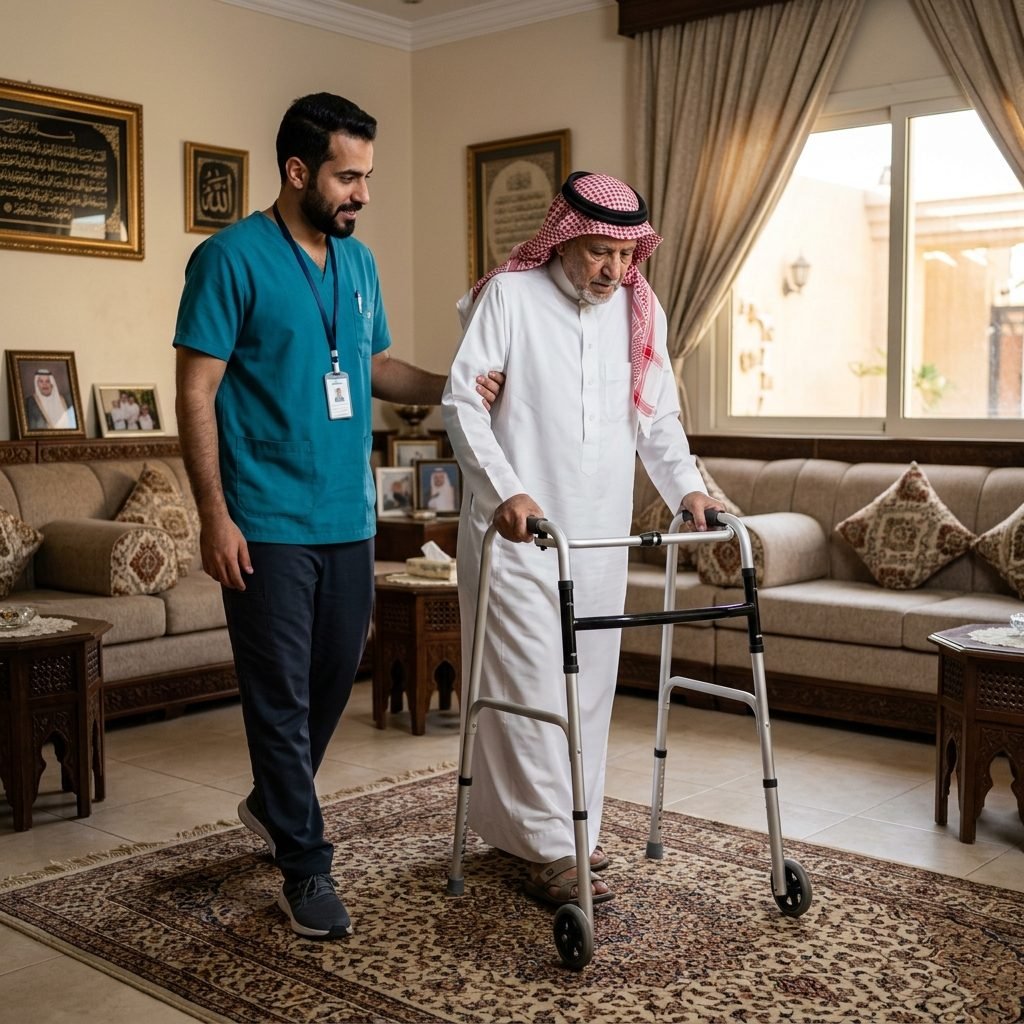
Geriatric Physical Therapy
Balance training, strengthening, and fall prevention for seniors in Al Basateen.
Service Details ←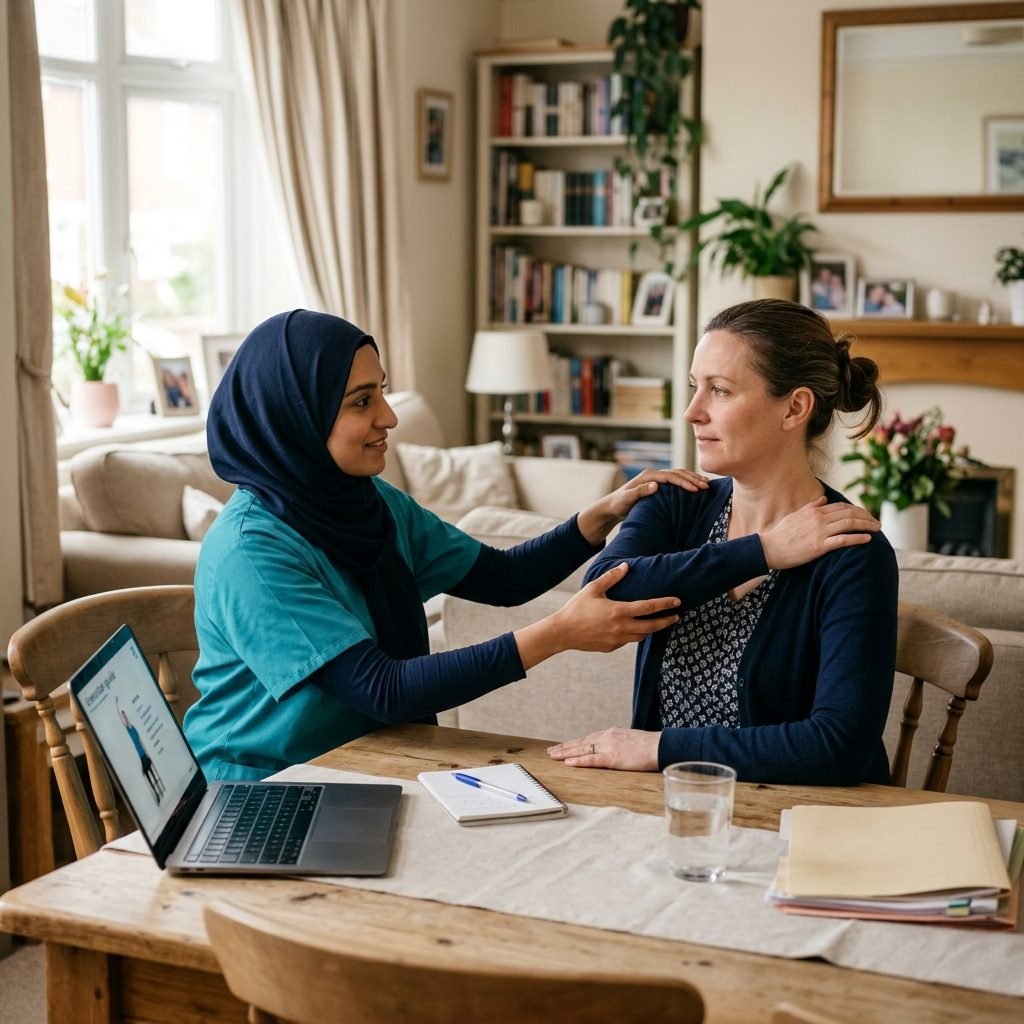
Female Physiotherapist
Licensed female therapists providing home care for women in Al Basateen.
Service Details ←