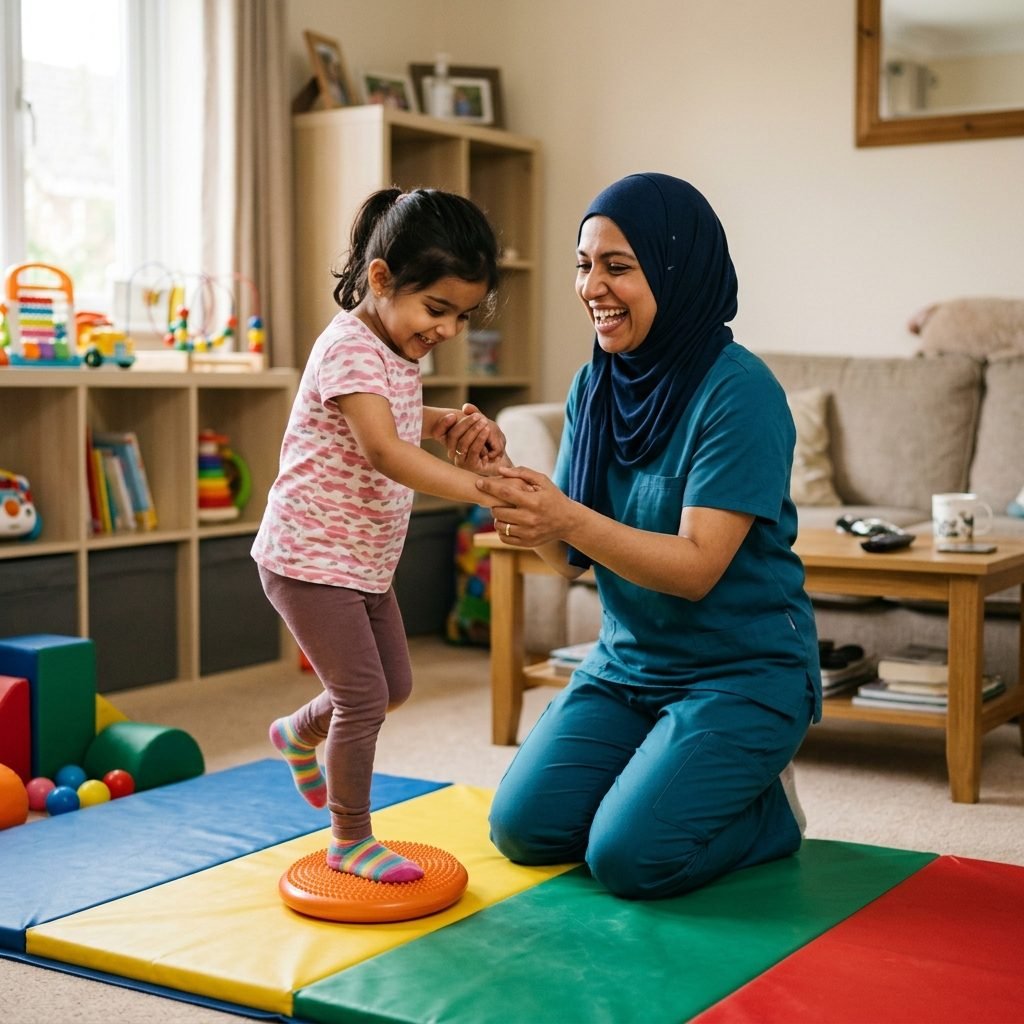
Having access to comprehensive, clinical physical therapy at home is crucial for maintaining rehabilitation progress, especially in busy neighborhoods. Al-Safa and Al Bawadi districts in Jeddah present unique local mobility challenges due to high population density and traffic. At Bidaya Center, we deliver high-quality home physiotherapy and movement rehabilitation services directly to your doorstep, conforming to the clinical guidelines of the Saudi Commission for Health Specialties. We eliminate the stress of travel, traffic, and parking. We respect cultural privacy by providing certified male therapists for male patients and female therapists for female patients.
Our clinical approach in Al Bawadi starts with a detailed physical and environmental safety assessment to eliminate fall hazards in the home. We bring all necessary portable, sterilized equipment to deliver a clinical standard of care comparable to external clinics. The therapist establishes a tailored milestone tracking plan to monitor muscle strength, balance, and joint range of motion (ROM) progression over time.
Why families in Al Bawadi choose Bidaya for home physiotherapy
- ✅ Licensed male & female therapists — full privacy, in your own home in Al Bawadi.
- ✅ Fully in-home visits across Al Bawadi — no travel or traffic.
- ✅ A personalized rehab plan built after a thorough in-home assessment.
- ✅ Continuous follow-up and direct contact with your therapist throughout.
- ✅ Fast response — arrange your visit by a quick call or WhatsApp message.
We also serve nearby areas: Al Andalus · Al Basateen · Al Fayha
* The treatment plan and expected outcomes are determined by a medical and functional assessment of each individual case.
Home-Based Cerebral Palsy Physiotherapy and Why It Matters for Families in Al Bawadi
Cerebral palsy is a group of neuromotor conditions caused by an injury to the developing brain in its earliest stages. It affects balance, muscle control and body posture, and it presents very differently from one child to the next. Home-based physiotherapy for these children means bringing the specialist's expertise directly into the child's own room, where they move through familiar routines and play with familiar toys, instead of a strange clinic environment that can heighten anxiety and resistance during a session.
Al Bawadi is a large, family-oriented residential district in Jeddah, with many apartment buildings and family homes. For a household caring for a child with motor difficulties, repeated travel to a clinic, often with a wheelchair or supportive equipment, is a genuine burden. A home visit removes that strain and lets the therapist observe the real environment the child lives in, so exercises can be tailored to the home's space, flooring, entrances and steps.
Just as importantly, home therapy gives the child consistency and regularity, the two keys to progress in cerebral palsy. Rather than sessions being cancelled by traffic, Jeddah's heat or the parents' schedules, care arrives at the front door on time. We also provide both licensed male and female therapists to ensure complete privacy for the family, respecting the preferences of every household in Al Bawadi.
Symptoms and Signs That Signal It Is Time to Begin
The earlier the intervention, the better the child's chances of gaining functional motor skills, because a young child's brain has remarkable neuroplasticity. That is why we encourage Al Bawadi parents not to wait for things to "sort themselves out" once they notice signs such as:
- Marked stiffness in the limbs, or the opposite: excessive floppiness that makes the child feel limp when held.
- A clear delay in motor milestones such as head control, sitting, crawling or standing compared with peers of the same age.
- A very early preference for one hand or one side of the body, before the age of one year.
- Involuntary movements, tremors or repeated spasms in the hands and feet.
- Difficulty swallowing, chewing or controlling drooling, or poor hand-eye coordination.
- Abnormal body postures when sitting or lying down, an arched back, or scissoring of the legs.
- Being easily distressed, feeding difficulty, and persistent crying accompanied by body stiffening.
The presence of one or more of these signs is not necessarily a final diagnosis, but it is reason enough to arrange a specialist assessment that identifies the situation precisely and shapes a suitable plan before faulty movement patterns become established and harder to correct later.
Conditions and Groups That Benefit
Our home cerebral palsy rehabilitation program is designed to serve a wide range of children in Al Bawadi, across different types and severities of the condition. The main groups who benefit include:
- Children with spastic cerebral palsy, the most common type, where muscles are tight and movement is restricted.
- Children with hypotonic (floppy) or mixed cerebral palsy, combining low muscle tone with involuntary movements.
- Premature or low-birth-weight babies, or those who experienced oxygen deprivation at birth and now show signs of motor delay.
- Children recovering after orthopedic surgery or muscle-relaxing injections who need post-operative rehabilitation.
- Those with balance and coordination weakness that hinders independent walking or standing.
- Children with associated impairments such as low vision or communication difficulties, who need a calm, patient rehabilitation approach.
Every case is unique. What suits a four-year-old may not suit a newborn in their first months or a teenager preparing for a new school stage. That is why we always begin with an individual assessment and never apply a single template to everyone.
Goals of the Rehabilitation Program
The aim of rehabilitation is not a "complete cure" — no honest professional promises that — but to improve the child's functional abilities as much as possible within their condition, and to raise their quality of life and independence. The practical goals include:
- Reducing muscle stiffness and improving joint range of motion to prevent contractures and deformities.
- Strengthening weak muscles and improving control of head and trunk posture as the foundation for every later skill.
- Developing balance and mobility, whether independent sitting, crawling, standing or walking, according to each child's ability.
- Improving hand-eye coordination to support play, eating and self-reliance skills.
- Preventing long-term complications such as hip dislocation or spinal curvature through correct positioning.
- Training the family to weave exercises into the daily routine so progress continues between sessions.
We set these goals together with the family, phrase them in realistic and measurable terms, and review them periodically. Progress in cerebral palsy is built gradually and patiently, and every small step toward independence counts as a real gain.
Stages and Path of the Home Sessions
We follow a structured path that begins with understanding the whole child and ends with ongoing follow-up that keeps gains stable:
- Initial assessment: a visit in which we learn the child's medical history, measure muscle tone, range of motion and current skills, and observe the Al Bawadi home environment and how the child moves within it.
- Building the plan: we design an individual program with short and long-term goals and set a weekly session frequency that suits the child's condition and the family's capacity.
- Therapy sessions: stretching, strengthening, and training in postures and movement transitions, using simple, safe tools and sometimes the child's own toys as motivation.
- Integration into routine: we show the family how to apply selected exercises between visits and advise on correct sitting, sleeping and carrying positions.
- Follow-up and reassessment: we measure progress regularly, adjust goals and exercises, and coordinate when needed with the rest of the child's medical team.
The length and frequency of each session depend on the child's age, the severity of the condition and their tolerance. We make sure the session is as enjoyable as possible so it does not become an exhausting experience for the child or the family.
The Role of the Family and Caregiver
The family is the first partner in the success of a child's rehabilitation. The therapist visits the home for a limited number of hours each week, while the child spends the rest of the time among their family in Al Bawadi. That is why training parents and caregivers is an essential part of the program, not an optional add-on.
- Learning how to carry the child and move them from place to place in a way that protects their own back and joints and encourages correct positioning.
- Practising short daily exercises woven into play, bathing and mealtimes rather than treating them as a separate, heavy chore.
- Noticing any change in the child's movement, stiffness or mood and noting it to share with the therapist.
- Setting up a comfortable sleeping and sitting routine that preserves the positions gained during sessions.
- Caring for the emotional side: patience, encouragement, and avoiding comparisons with other children so the child does not lose motivation.
We understand that the family's journey can be emotionally and physically exhausting, so we make a point of supporting parents with clear information and practical guidance, and we answer their questions honestly, without exaggeration or false promises.
Home Safety and Prevention Tips
A safe home environment protects the child from injury while also supporting the goals of rehabilitation. Here is what we most recommend to families in Al Bawadi:
- Remove obstacles and slippery rugs from the child's movement paths, and secure furniture the child might lean on.
- Use supportive chairs and equipment sized to the child's age and build, and check their condition regularly.
- Change the child's position regularly if they spend long periods in one posture, to prevent pressure sores and joint stiffness.
- Keep the indoor temperature moderate, as Jeddah's heat can add to the child's fatigue during exercises.
- Watch for sharp tools and sharp table corners, and install safety barriers at stairs.
- Never force an exercise that causes the child clear pain; stop and consult the therapist at any unusual reaction.
- Keep up with medication schedules and other medical follow-ups alongside the physiotherapy sessions.
These are general guidelines. During the visit we provide precise recommendations tailored to your home's layout and your child's specific condition, because every home and every child has its own circumstances.
Frequently Asked Questions (FAQ)
Can my child be completely cured of cerebral palsy through physiotherapy?
Cerebral palsy is a lifelong condition that no professional can promise to cure completely. However, regular physiotherapy noticeably improves motor abilities and independence and helps prevent complications. The degree of improvement depends on the type and severity of the condition and the child's age, and it is defined precisely after an individual assessment.
What is the right age to start rehabilitation sessions?
The earlier the start, the better, because of the high neuroplasticity of the first years, and sessions can begin in the early months when signs of motor delay appear. That said, older children also benefit from rehabilitation in improving their function and preventing deformities.
How many sessions does my child need each week?
There is no fixed number that suits everyone. Session frequency depends on the severity of the condition, the plan's goals, the child's age and their tolerance. We set a suitable schedule after the initial assessment and adjust it as the child progresses, in consultation with the family.
Are female therapists available for children's home rehabilitation?
Yes. We have both licensed male and female therapists, and the family can choose what suits their preferences, with complete privacy guaranteed inside the home and full respect for the family's privacy in Al Bawadi.
Do I need to prepare special equipment before the home visit?
Usually not. The therapist relies on simple exercises and portable tools and may use the child's own toys. If the case requires particular supportive equipment, we advise you on it clearly after the assessment and guide you on how to use it correctly.
To book a home visit in Al Bawadi, Jeddah, or to ask about the cerebral palsy rehabilitation program for your child, contact us now by phone or WhatsApp by clicking Call Now. The Bidaya Center team will be glad to answer your questions and arrange an assessment appointment at a time that suits you.
Important Home Visit Details:
- ✓Setup: Please clear a 2x2m space in the room for safety.
- ✓Clothing: Wear loose, comfortable clothes for easy movement.
- ✓Therapist Parity: Male therapists for males, females for females.
- ✓Medical Reports: Keep your MRI or doctor reports ready for evaluation.
Rehabilitation & Services in Al Bawadi
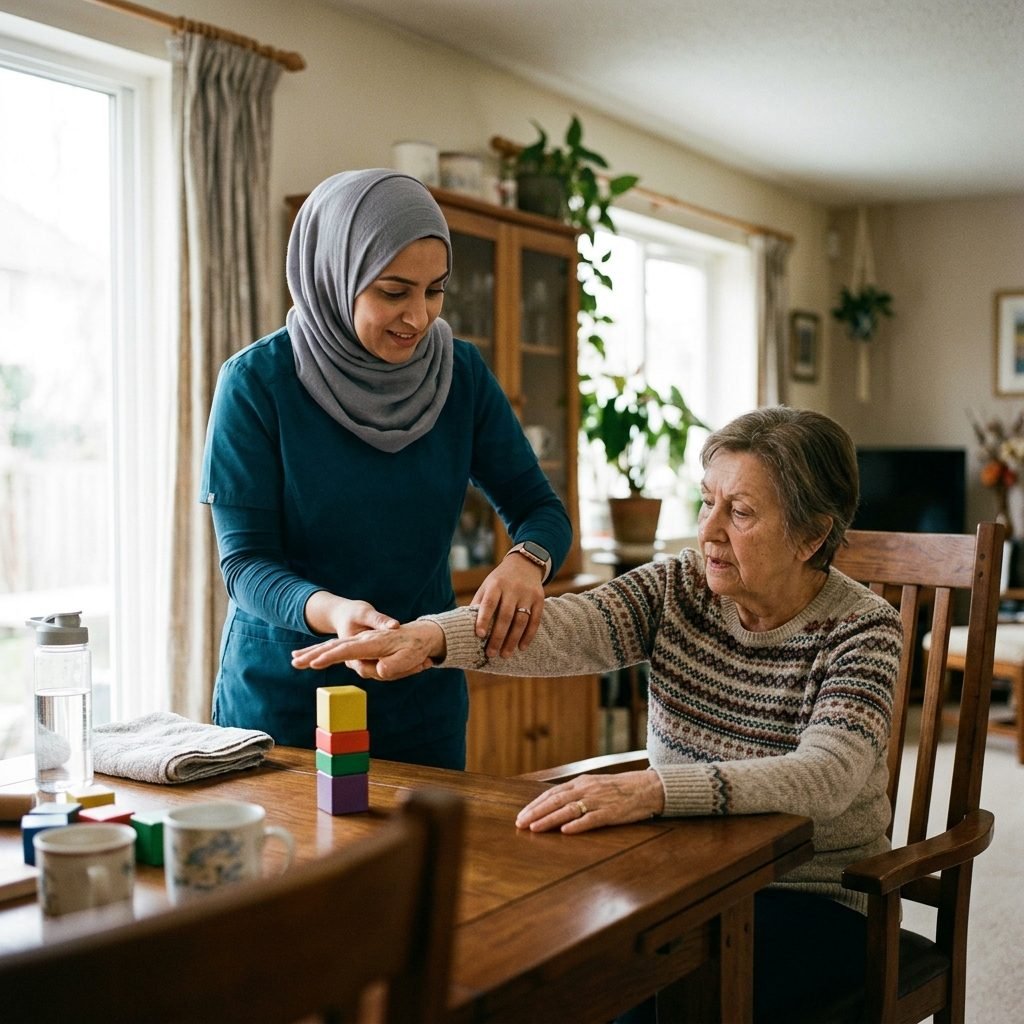
Stroke Rehabilitation
Advanced motor and neurological stroke recovery at home in Al Bawadi.
Service Details ←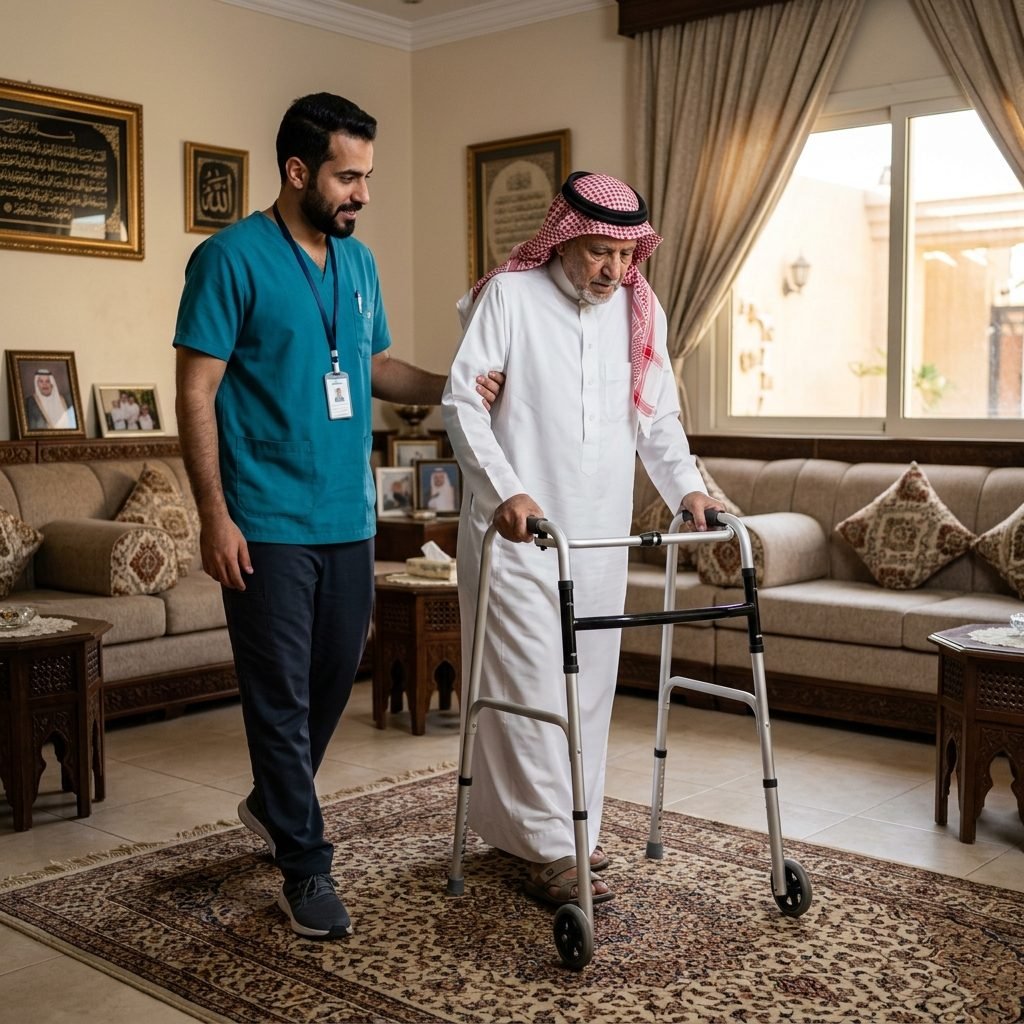
Geriatric Physical Therapy
Balance training, strengthening, and fall prevention for seniors in Al Bawadi.
Service Details ←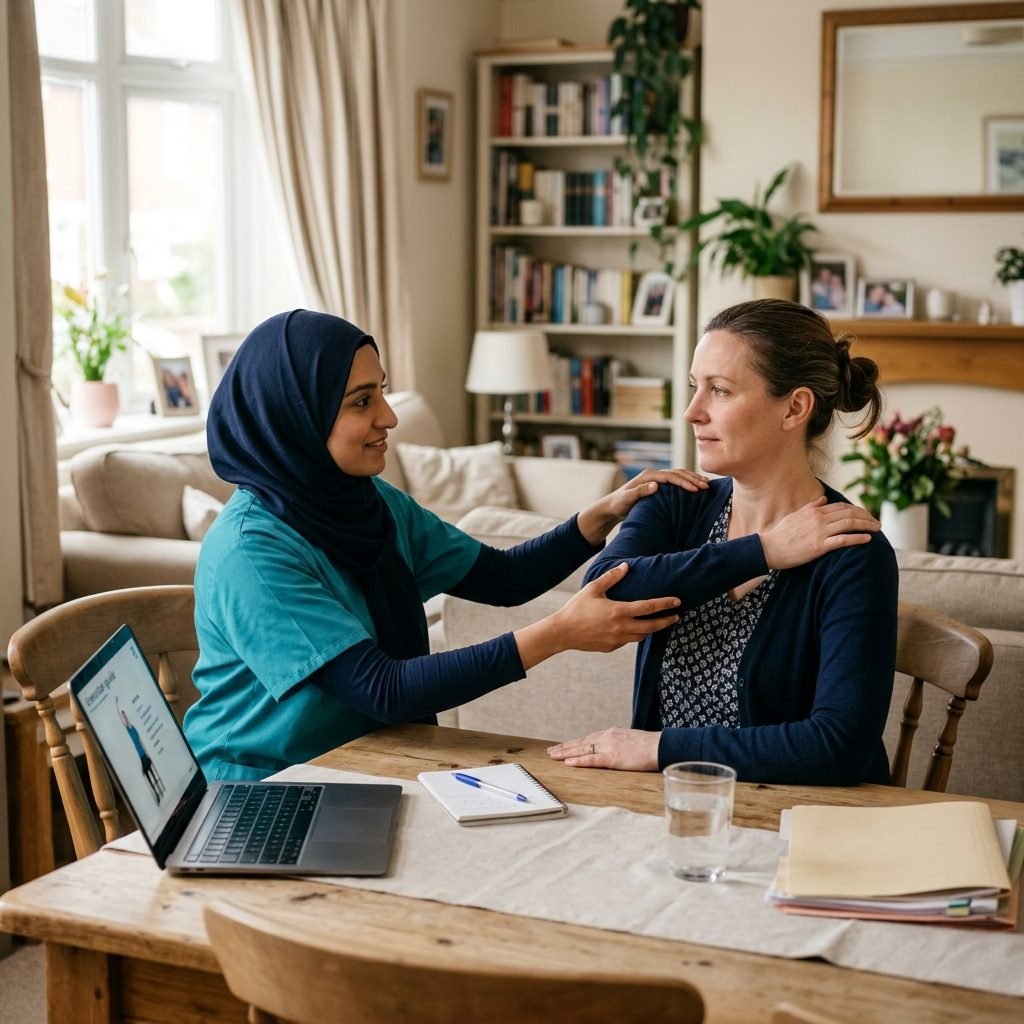
Female Physiotherapist
Licensed female therapists providing home care for women in Al Bawadi.
Service Details ←