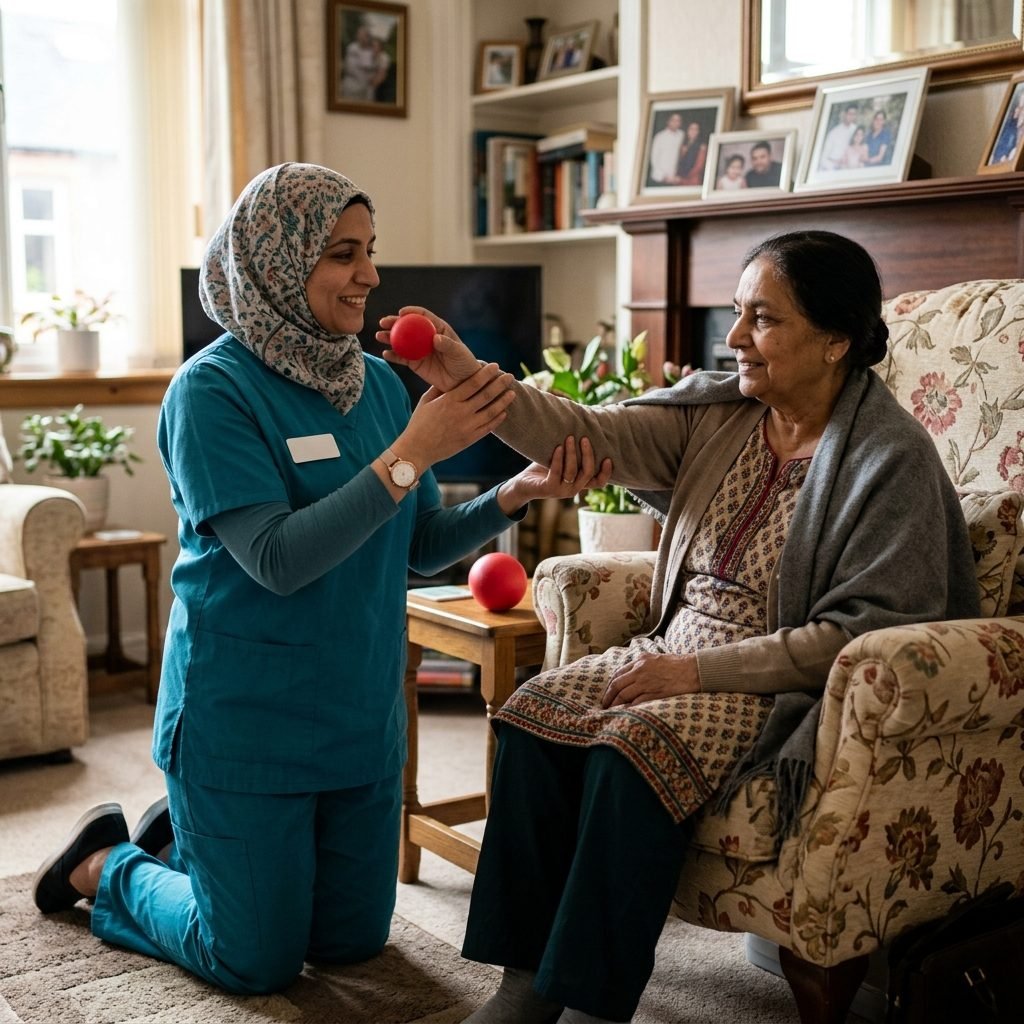
Having access to comprehensive, clinical physical therapy at home is crucial for maintaining rehabilitation progress, especially in busy neighborhoods. Al-Safa and Al Basateen districts in Jeddah present unique local mobility challenges due to high population density and traffic. At Bidaya Center, we deliver high-quality home physiotherapy and movement rehabilitation services directly to your doorstep, conforming to the clinical guidelines of the Saudi Commission for Health Specialties. We eliminate the stress of travel, traffic, and parking. We respect cultural privacy by providing certified male therapists for male patients and female therapists for female patients.
Our clinical approach in Al Basateen starts with a detailed physical and environmental safety assessment to eliminate fall hazards in the home. We bring all necessary portable, sterilized equipment to deliver a clinical standard of care comparable to external clinics. The therapist establishes a tailored milestone tracking plan to monitor muscle strength, balance, and joint range of motion (ROM) progression over time.
Why families in Al Basateen choose Bidaya for home physiotherapy
- ✅ Licensed male & female therapists — full privacy, in your own home in Al Basateen.
- ✅ Fully in-home visits across Al Basateen — no travel or traffic.
- ✅ A personalized rehab plan built after a thorough in-home assessment.
- ✅ Continuous follow-up and direct contact with your therapist throughout.
- ✅ Fast response — arrange your visit by a quick call or WhatsApp message.
We also serve nearby areas: Al Andalus · Al Bawadi · Al Fayha
* The treatment plan and expected outcomes are determined by a medical and functional assessment of each individual case.
Understanding Home-Based Neurological Physiotherapy and Its Value for Al Basateen Residents
Neurological physiotherapy is a specialized branch of rehabilitation devoted to people whose central or peripheral nervous system has been affected, whether by a stroke, a spinal cord injury, or a progressive neurological condition. What sets it apart from general physiotherapy is its reliance on neuroplasticity, the brain's remarkable ability to reorganize its pathways and relearn movement through purposeful repetition and consistent stimulation. Because of this, the regularity of sessions and the comfort of the environment in which they take place are not minor details; they shape the entire recovery journey.
When this service is delivered inside a family's home in the Al Basateen neighborhood of Jeddah, we bring rehabilitation to the very place where the patient spends most of their day. Al Basateen is a calm, family-oriented residential district, and many of its homes are apartments and multi-level houses that involve climbing stairs or moving between rooms every day, precisely the functional movements we aim to improve. Practicing walking along a patient's actual hallway, rising from their usual sofa, and reaching the bathroom they truly use makes each newly acquired skill immediately applicable, closing the gap between a clinic and real life.
Home care also spares the patient and their companions the strain of repeated trips through Jeddah's busy streets, an exhausting ordeal for anyone with impaired balance or partial paralysis. It reduces exposure to infection for those with weakened immunity and allows sessions to be scheduled flexibly around the family's routine. At Bidaya Center, we believe effective rehabilitation begins in an environment where the patient feels secure and emotionally settled.
Symptoms and Warning Signs That Call for Action
The earlier neurological rehabilitation begins, the greater the chance of recovering as much motor function as possible. For that reason, it matters that family members recognize the indicators suggesting a loved one needs specialized intervention. Among the most notable signs are:
- Sudden weakness or numbness on one side of the body, or difficulty moving an arm or leg.
- Clear balance disturbance with repeated stumbling or falls inside the home.
- Muscle stiffness or involuntary spasms that hinder bending or straightening the joints.
- Trouble walking, or a changed gait pattern such as dragging a foot or widening the stance for stability.
- Tremor in the hands or noticeable slowness of movement associated with conditions like Parkinson's.
- Reduced precision and coordination during daily tasks such as holding a spoon or buttoning a shirt.
- Poor head or trunk control in patients who have been bedbound for extended periods.
The appearance of any of these signs is not a final diagnosis, but it is an invitation to arrange a specialized functional assessment that establishes the true baseline and sets the starting point. We also advise against waiting until the condition worsens, since neuroplasticity is at its peak during the first months after an injury, though meaningful progress remains possible in chronic stages as well, only at a different pace.
Conditions and Groups Who Benefit
Neurological physiotherapy serves a wide range of patients who differ in age and circumstance, and each receives an independent program that respects the nature and severity of their injury. Among those who benefit most in Al Basateen are:
- Stroke survivors: to regain strength and control on the affected side and to relearn motor skills.
- Spinal cord injuries: whether quadriplegia or paraplegia, aiming to maximize independence within the limits of the injury.
- Multiple sclerosis (MS) patients: to manage fatigue and balance problems and preserve range of motion.
- Parkinson's patients: to address slowness, rigidity, and gait disturbances through targeted exercises.
- Traumatic brain and head injuries: following accidents, to gradually restore cognitive-motor function.
- Children with cerebral palsy: within early intervention programs that support motor development and correct posture.
- Peripheral neuropathies: such as nerve weakness accompanying diabetes or Guillain-Barré syndrome.
- Older adults experiencing a decline in balance and neuromuscular coordination.
Each of these conditions demands precise knowledge of neurological anatomy and the mechanisms of recovery, which is exactly what our licensed specialists provide. We emphasize that having both male and female therapists available lets every family choose what suits them while ensuring complete privacy inside the home.
Goals of the Rehabilitation Program
Success in neurological rehabilitation is not measured by a single yardstick but by a set of graduated goals shaped in partnership between the therapist, the patient, and the family. We are careful to keep goals realistic and measurable, reviewing them regularly according to how each case responds. Chief among what we work toward:
- Gradually improving muscle strength and voluntary control in the affected limbs.
- Enhancing balance and stability to reduce the risk of falling while standing and moving.
- Retraining the walking pattern to make it safer and more energy-efficient.
- Lowering stiffness and muscle spasticity while increasing joint range of motion.
- Building independence in daily activities such as transferring from bed to chair and self-care.
- Preventing secondary complications like muscle contractures, pressure sores, or poor circulation.
- Supporting emotional well-being and strengthening the patient's confidence in their renewing abilities.
We state plainly that we make no promises of a complete cure or guaranteed results. The path of recovery and its expected ceiling depend on the clinical and functional assessment of each individual case, and on factors such as the type and severity of the injury, how consistently the patient performs the exercises, and the support of those around them.
Stages and Pathway of the Home Sessions
We organize the therapeutic journey along a clear pathway that begins with assessment and ends only once the gains are firmly established. This progression gives the patient a sense of momentum and lets the family follow tangible results.
- Stage one — Comprehensive assessment: the specialist visits the home to examine strength, balance, range of motion, and functional status, and studies the home environment and its obstacles.
- Stage two — Building the plan: short and long-term goals are defined, and the initial number of sessions and their frequency are set according to the case.
- Stage three — Therapeutic intervention: neuroplasticity, balance, and strengthening exercises are applied, alongside specialized techniques to stimulate motor pathways and support relearning.
- Stage four — Functional training: improvement is transferred to real-life tasks within the home's own rooms so the patient becomes more independent.
- Stage five — Reassessment and follow-up: we measure progress with objective indicators, adjust the plan, and set a home program to maintain the gains.
The length of each stage varies from one person to another, and the stages sometimes overlap. What matters is that every session builds on the one before it within an integrated therapeutic vision, not a scattered set of exercises.
The Role of the Family and Caregiver
In neurological rehabilitation, the family is not a bystander but an essential partner in the plan's success. A patient spends only a limited number of hours each week with the therapist and the rest of the time with their household, which makes the family's daily follow-through decisive. That is why we make a point of training the caregiver in several practical areas.
- The correct way to help the patient transfer and stand without straining the companion's back or risking a fall.
- Carrying out the simple prescribed home exercises between sessions to consolidate motor learning.
- Watching for signs of fatigue, pain, or a change in condition and reporting them.
- Setting up correct sitting and sleeping positions to avoid stiffness and pressure sores.
- Offering moral encouragement and patience, since progress in neurological cases is usually gradual and requires persistence.
We also guide families to balance offering help with encouraging independence; too much assistance can slow recovery, while letting the patient do what they can on their own provides a powerful drive to reclaim ability. At Bidaya Center, we consider empowering the family an inseparable part of the treatment.
Home Safety and Prevention Tips
A safe home environment protects the patient from setbacks and speeds their progress. We offer Al Basateen families practical guidance that is easy to apply inside the house:
- Remove slippery rugs and scattered cords from walkways to prevent tripping.
- Ensure adequate lighting in rooms and hallways, especially on the route to the bathroom at night.
- Install fixed grab bars near the toilet and shower and support the staircase with a sturdy handrail.
- Choose closed, firm-soled indoor footwear that guards against slipping.
- Keep everyday items within easy reach to reduce risky bending and stretching.
- Respect rest periods and avoid tiring the patient with exercises beyond their current capacity.
- Attend to good hydration and balanced nutrition to support nerve and muscle health.
We remind families that any modification to the home environment is best made on the specialist's advice after inspecting the space, since needs differ from one case to another. The goal is always a home that supports safe movement and minimizes sources of risk.
Frequently Asked Questions (FAQ)
Can a stroke patient still improve even months after the injury?
Yes, improvement is possible even in later stages, though at a slower pace than the early phase. Neuroplasticity remains active, and we set a realistic expectation ceiling after a functional assessment of your specific case.
How many sessions will my relative need each week?
The number varies with the type and severity of the injury and how the patient responds. The initial frequency is set after the first assessment session and is readjusted periodically as the program progresses.
Are female therapists available for female patients in Al Basateen?
Yes, our team includes both licensed male and female therapists, and you may choose whatever puts you at ease, with complete privacy guaranteed inside the home.
What equipment does the specialist bring to the home?
The therapist brings the portable tools needed for assessment and exercise, and also makes use of the home's own features such as the stairs, a chair, and the bed to keep the training functional and realistic.
Do you guarantee a full recovery?
We make no promises of guaranteed results or a complete cure; the path of recovery depends on the clinical and functional assessment and on several factors. Our aim is to achieve the best possible independence for each individual.
To book a home visit in Al Basateen, Jeddah, or to ask about neurological physiotherapy, contact Bidaya Center by phone or on WhatsApp by clicking Call Now. Our team will be glad to help you and arrange a time that suits you.
Important Home Visit Details:
- ✓Setup: Please clear a 2x2m space in the room for safety.
- ✓Clothing: Wear loose, comfortable clothes for easy movement.
- ✓Therapist Parity: Male therapists for males, females for females.
- ✓Medical Reports: Keep your MRI or doctor reports ready for evaluation.
Rehabilitation & Services in Al Basateen
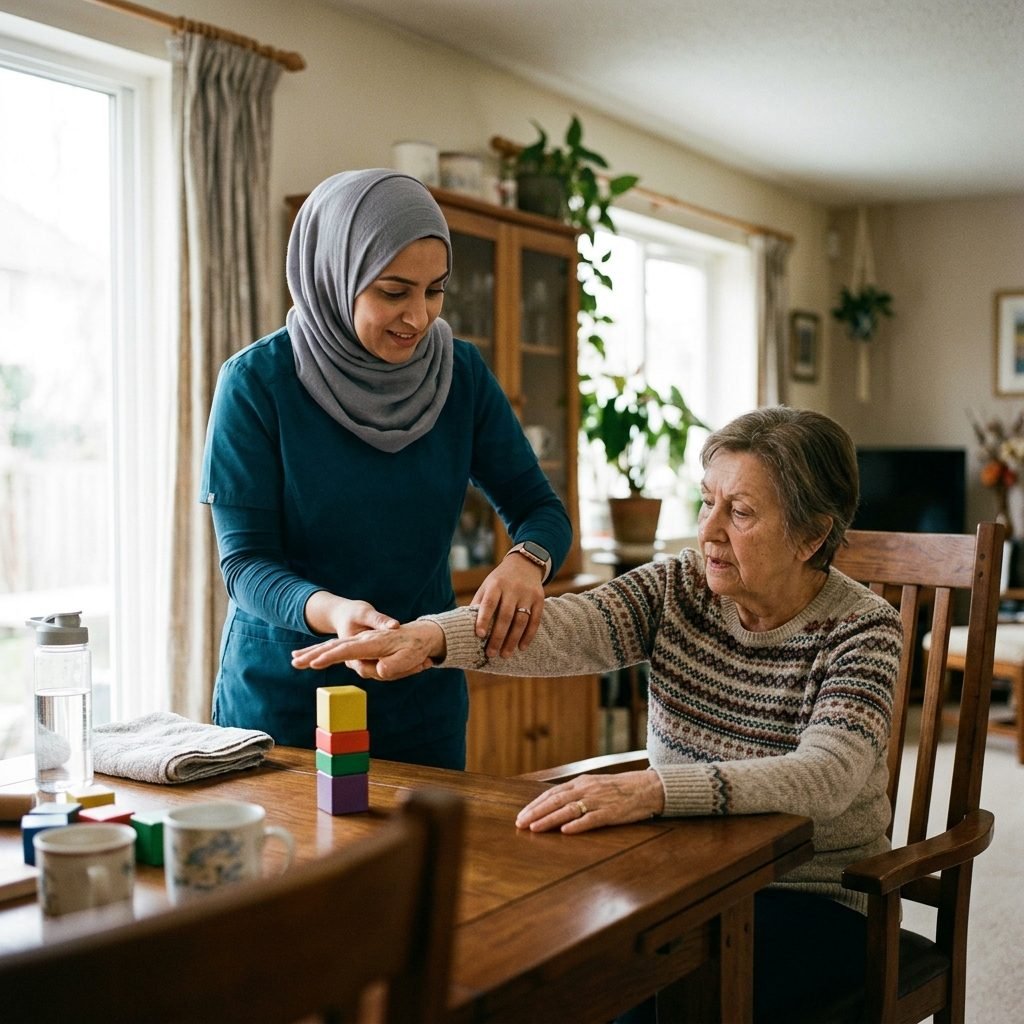
Stroke Rehabilitation
Advanced motor and neurological stroke recovery at home in Al Basateen.
Service Details ←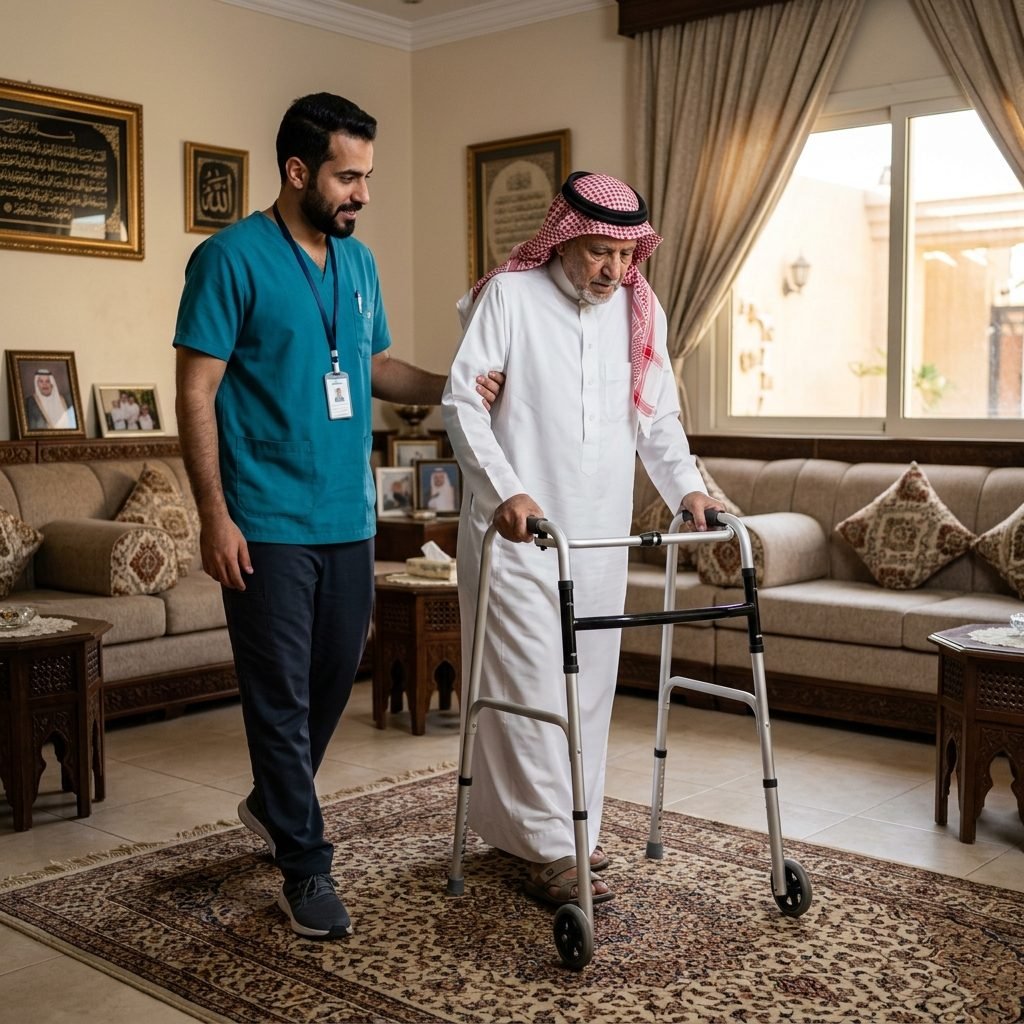
Geriatric Physical Therapy
Balance training, strengthening, and fall prevention for seniors in Al Basateen.
Service Details ←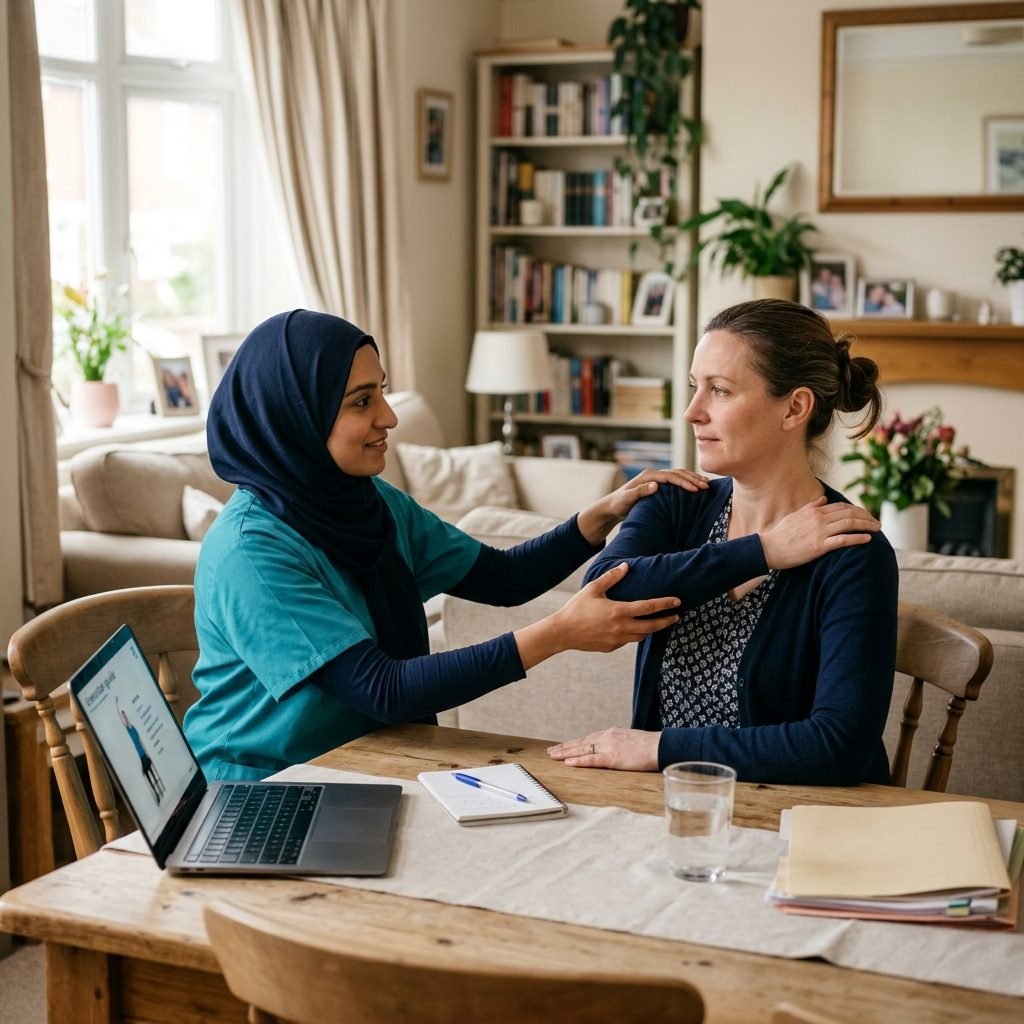
Female Physiotherapist
Licensed female therapists providing home care for women in Al Basateen.
Service Details ←