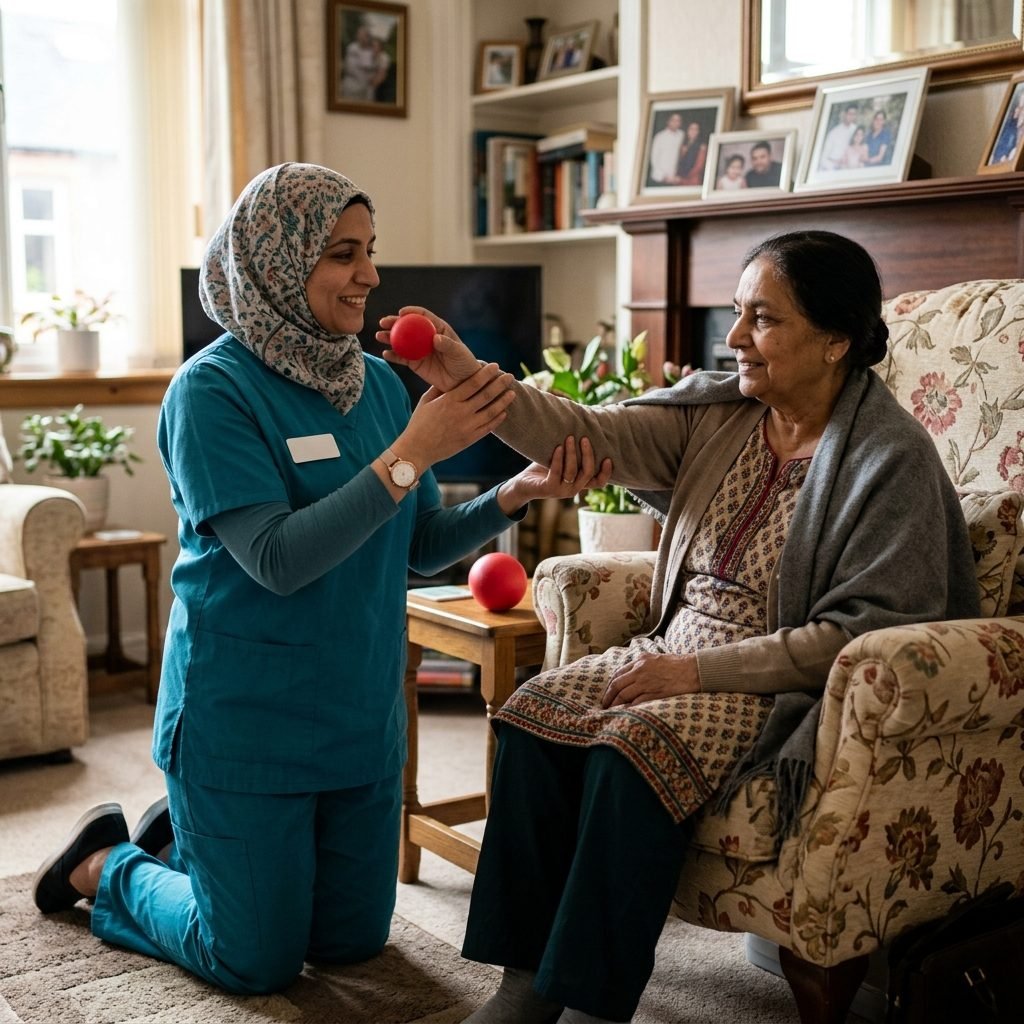
Having access to comprehensive, clinical physical therapy at home is crucial for maintaining rehabilitation progress, especially in busy neighborhoods. Al-Safa and Al Fayha districts in Jeddah present unique local mobility challenges due to high population density and traffic. At Bidaya Center, we deliver high-quality home physiotherapy and movement rehabilitation services directly to your doorstep, conforming to the clinical guidelines of the Saudi Commission for Health Specialties. We eliminate the stress of travel, traffic, and parking. We respect cultural privacy by providing certified male therapists for male patients and female therapists for female patients.
Our clinical approach in Al Fayha starts with a detailed physical and environmental safety assessment to eliminate fall hazards in the home. We bring all necessary portable, sterilized equipment to deliver a clinical standard of care comparable to external clinics. The therapist establishes a tailored milestone tracking plan to monitor muscle strength, balance, and joint range of motion (ROM) progression over time.
Why families in Al Fayha choose Bidaya for home physiotherapy
- ✅ Licensed male & female therapists — full privacy, in your own home in Al Fayha.
- ✅ Fully in-home visits across Al Fayha — no travel or traffic.
- ✅ A personalized rehab plan built after a thorough in-home assessment.
- ✅ Continuous follow-up and direct contact with your therapist throughout.
- ✅ Fast response — arrange your visit by a quick call or WhatsApp message.
We also serve nearby areas: Al Andalus · Al Basateen · Al Bawadi
* The treatment plan and expected outcomes are determined by a medical and functional assessment of each individual case.
What Home-Based Neurological Physiotherapy Means for Al Fayha Residents
Neurological physiotherapy is a specialized discipline focused on rehabilitating people whose central or peripheral nervous system has been affected, whether by a stroke, a spinal cord injury, or a chronic condition that alters movement, balance, and sensation. At its core lies the principle of neuroplasticity: the brain's remarkable ability to reorganize its pathways and learn new movement patterns when it is challenged with carefully structured, repeated exercise. When these sessions take place inside the home, that stimulation happens within the very surroundings the patient actually lives in, so the training stays anchored to the real tasks a person needs to reclaim.
Al Fayha is a calm, family-oriented residential district in Jeddah, and for many neurological patients here the repeated trips to a clinic are genuinely difficult, especially when one side of the body is weak or balance is unsteady enough to make travelling unsafe. This is precisely where a home service proves its worth. A licensed therapist arrives at the door with the necessary equipment, sparing the family the strain of transport and waiting rooms, and safeguarding the continuity of sessions that forms the very backbone of neurological recovery.
The advantage is not simply comfort; it reaches into the quality of the rehabilitation itself. When a therapist can see the patient's own bedroom, bathroom, hallways, and stairs, the program can be shaped around real life: rising from that specific bed, walking across that particular floor, using that kitchen. At Bidaya Center we believe rehabilitation carried out within the walls of the home gives Al Fayha residents an early, consistent intervention that protects the abilities that remain and builds steadily upon them.
Symptoms and Signs That Signal It Is Time to Begin
The nervous system sends early signals when something is wrong, and noticing them so that rehabilitation can start early makes a real difference to the path of recovery. Among the most important signs that warrant contacting a neurological specialist are the following:
- Sudden or gradual weakness in the muscles of one side of the body, or difficulty raising an arm or moving a foot.
- Clear disturbance of balance, with frequent stumbling or a tendency to lean to one side while standing or walking.
- Muscle stiffness or spasticity that restricts range of motion and makes joints hard to bend and straighten.
- Numbness, tingling, or loss of sensation in the limbs, or a chronic pins-and-needles feeling that affects gripping objects.
- Slowness of movement, tremor, or rigidity that turns starting to walk or changing direction into a demanding task.
- Difficulty coordinating the hands and eyes, or performing fine tasks the person once managed with ease.
- A decline in the ability to rise from sitting or to move from bed to chair without assistance.
The appearance of these signs is not a final diagnosis, but it is a serious call for assessment. Every neurological case has its own trajectory, and the earlier the intervention begins, the better the window of neuroplasticity can be used. We advise Al Fayha residents not to wait for spontaneous improvement, but to book a home assessment that pinpoints functional status accurately and draws a clear starting point.
Conditions and Groups Who Benefit
Home neurological physiotherapy serves a broad range of conditions that differ in their causes yet share the need to rebuild the connection between the brain and movement. Among the groups who benefit most are:
- Stroke patients: those experiencing weakness or paralysis on one side who need to regain strength and motor control.
- Spinal cord injuries: where the program focuses on strengthening remaining function and preventing complications.
- Parkinson's disease patients: to improve walking, balance, and the management of rigidity and slowness.
- Multiple sclerosis cases: to manage fatigue, preserve range of motion, and strengthen affected muscles.
- Traumatic brain and head injuries: for those who need to retrain motor skills and balance.
- Children with neurological movement needs: such as cerebral palsy and delays in motor development.
- Peripheral neuropathy patients: who experience weakness and numbness in the limbs from various causes.
- Older adults: whose balance and mobility have declined after long periods of bed rest or illness.
At Bidaya Center we approach each group with a program designed specifically for it, since a child's needs differ from those of an older adult, and the path of a recent stroke patient differs from someone whose condition is months old. Because Al Fayha is home to many multi-generational households, the in-home service also makes it possible to follow up on more than one family member under the same roof when needed.
Goals of the Rehabilitation Program
Every program is built on clear, measurable functional goals, framed in partnership with the patient and family after the initial assessment and reviewed regularly as progress unfolds. Among the outcomes we work toward are:
- Recovering as much muscular strength and voluntary control of the affected limbs as possible.
- Improving balance and stability to reduce the risk of falls inside and outside the home.
- Retraining the gait pattern and correcting faulty postures that may develop as compensations.
- Easing spasticity and rigidity while preserving joint range of motion and preventing contractures.
- Boosting independence in daily activities such as rising, transferring, and personal care.
- Stimulating neuroplasticity through graded exercises that rebuild motor pathways.
- Preventing complications such as pressure sores, joint stiffness, and poor circulation.
- Raising the patient's psychological confidence and reducing total dependence on those around them.
It is important to stress that these goals are framed realistically. The degree and pace of improvement depend on the nature and severity of the condition, the timing of the start, and the level of commitment. At Bidaya Center we make no promises of complete cure; instead we commit to a considered plan built on a precise clinical and functional assessment of each individual case, and we track progress indicators transparently with the family.
Stages and Pathway of the Home Sessions
The neurological rehabilitation journey at Bidaya Center follows an organized pathway that ensures continuity and accurate measurement of progress. Its stages can be summarized as follows:
- Initial assessment: the therapist visits the home to evaluate muscle strength, balance, sensation, and range of motion, and to understand the home environment and the patient's daily needs.
- Setting the treatment plan: short-term and long-term goals are framed, and the suggested number of sessions and the exercises suited to the condition are determined.
- Foundation stage: the first sessions focus on preparing the muscles, stimulating voluntary movement, and safely improving basic postures.
- Progression stage: exercises advance toward deeper strengthening and training in balance, walking, and more complex functional tasks.
- Functional integration stage: the patient is trained to apply what they have gained within their real daily activities inside their home in Al Fayha.
- Periodic re-assessment: indicators are measured at intervals to adjust the plan and ensure each session builds on the one before.
The length of each session and their weekly frequency are set according to the individual patient, and the therapist is careful to involve the family at every stage by teaching them simple exercises to be repeated between visits to reinforce the effect. This regular home repetition is what turns an exercise into a firmly rooted skill and accelerates the rebuilding of neural pathways.
The Role of the Family and Caregiver
In neurological rehabilitation, the family is not a spectator but an essential partner in the program's success. The patient spends most of the day with loved ones, and the minutes spent with the therapist need a daily extension in order to bear fruit. That is why at Bidaya Center we are committed to empowering the family and equipping it with the knowledge and tools it needs.
- Supervising home exercises: the caregiver learns how to help the patient safely repeat exercises between sessions.
- Safe assistance with movement: training the family in the correct way to transfer the patient and help them rise without straining either party.
- Observation and documentation: monitoring any change in abilities or the appearance of new signs and reporting them to the therapist.
- Emotional support: steady encouragement and patience ease the patient's frustration and strengthen their motivation to continue.
- Preparing the environment: helping to arrange the home in a way that eases the patient's movement and reduces the risk of falls.
We recognize that the caregiver's role can be exhausting, so we guide families to share tasks and take breaks, because the caregiver's own stability is part of the patient's stability. When the efforts of therapist and family come together, the home in Al Fayha becomes an integrated therapeutic environment that works throughout the week, not only during session times.
Home Safety and Prevention Tips
A neurological patient is more prone to falls and injuries, and preparing the home safely is an inseparable part of the treatment plan. Here are the key guidelines we recommend to Al Fayha families:
- Remove loose rugs, wires, and obstacles from walkways to reduce the chance of tripping.
- Install fixed grab bars near the bathroom and bed to provide safe points of support.
- Ensure adequate lighting in hallways and on stairs, especially at night.
- Use non-slip shoes or socks and avoid walking on wet floors.
- Arrange the most frequently used items within reach to avoid dangerous bending or stretching.
- Reposition a bedbound patient regularly to prevent pressure sores and joint stiffness.
- Keep to medication and prescribed exercise schedules and avoid overloading the patient.
- Maintain fluid intake and balanced nutrition to support muscle and nerve function.
These simple measures protect what is built in the sessions and prevent setbacks. During each visit the therapist reviews the home environment and suggests practical adjustments that suit the size of the dwelling and the nature of the condition, so that safety becomes a daily habit rather than a temporary measure.
Frequently Asked Questions (FAQ)
Can neurological physiotherapy return the patient completely to their former state?
The degree of improvement varies from case to case and depends on the type and severity of the injury, the timing of the start, and the level of commitment. We do not make promises of complete cure, but we commit to a considered plan aimed at achieving the greatest possible independence, with expectations defined precisely after the clinical and functional assessment.
Is the service available for women with privacy respected?
Yes. We have licensed male and female therapists, and the family can choose what suits it while full privacy is guaranteed inside the home and the preferences of every Al Fayha family are respected.
How many sessions does a patient need per week?
The number and length of sessions are determined based on the initial assessment, the nature of the condition, and the program goals, and are reviewed periodically according to the patient's progress; some cases need intensive work at first followed by a gradual reduction.
Does the home need special equipment before sessions begin?
Usually not; the therapist arrives with the essential tools, and a safe space with a chair or bed is enough. If minor adjustments are needed to improve safety, the therapist recommends them in a practical way that suits the home.
What if the patient's case is recent, right after leaving the hospital?
Starting early once the medical condition is stable is often beneficial in neurological rehabilitation. The therapist carries out a careful assessment to determine a safe starting point and exercises appropriate to that stage, in coordination with the treating physician's guidance.
To book a home assessment in the Al Fayha district of Jeddah or to inquire about neurological physiotherapy, contact Bidaya Center by phone or WhatsApp by clicking Call Now, and our team will be glad to help you take the first step toward safe, organized rehabilitation in your own home.
Important Home Visit Details:
- ✓Setup: Please clear a 2x2m space in the room for safety.
- ✓Clothing: Wear loose, comfortable clothes for easy movement.
- ✓Therapist Parity: Male therapists for males, females for females.
- ✓Medical Reports: Keep your MRI or doctor reports ready for evaluation.
Rehabilitation & Services in Al Fayha
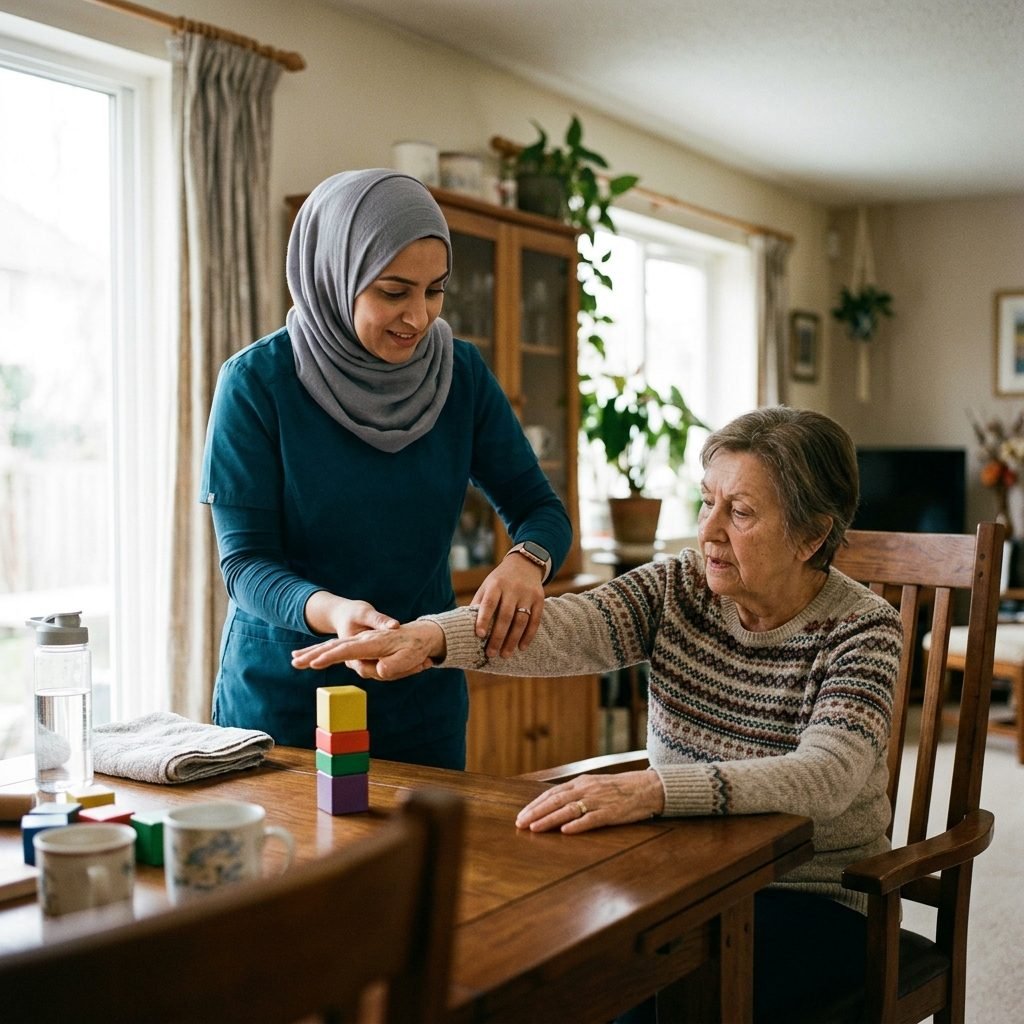
Stroke Rehabilitation
Advanced motor and neurological stroke recovery at home in Al Fayha.
Service Details ←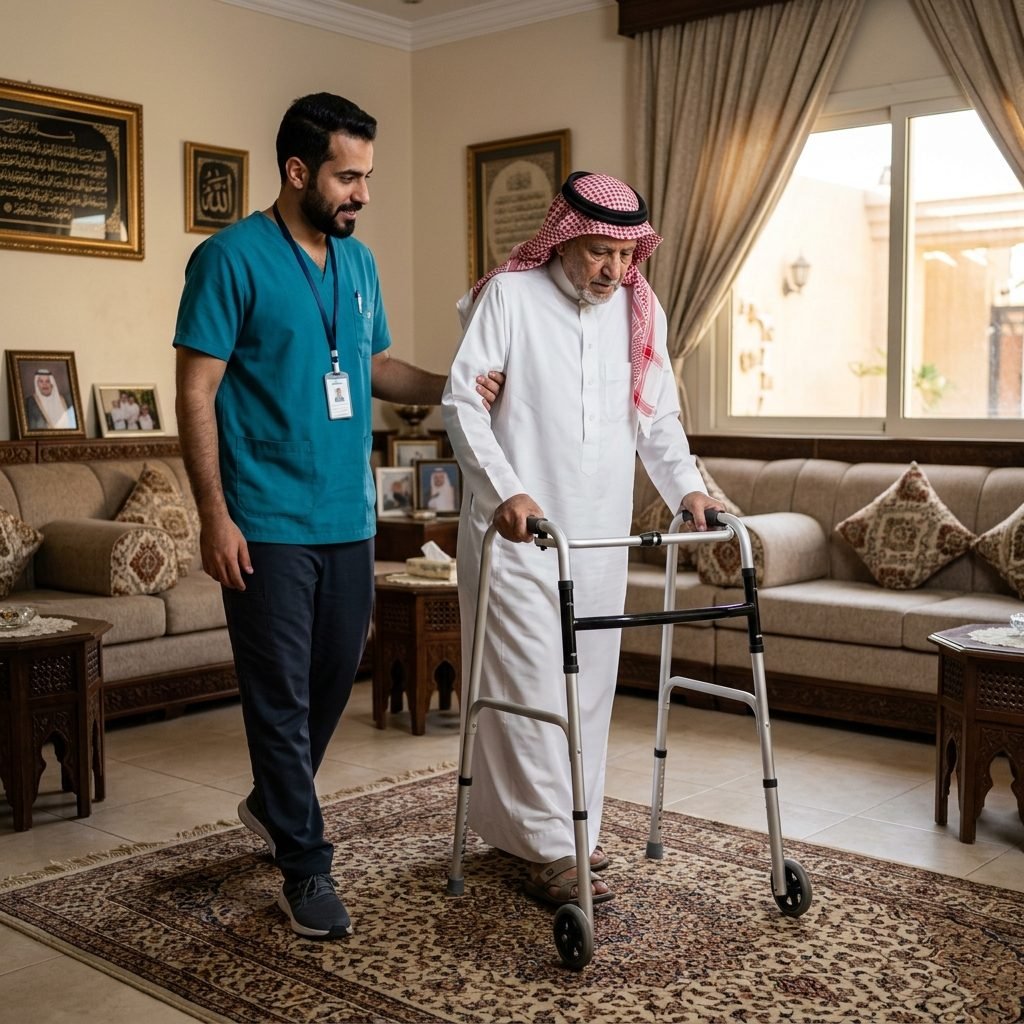
Geriatric Physical Therapy
Balance training, strengthening, and fall prevention for seniors in Al Fayha.
Service Details ←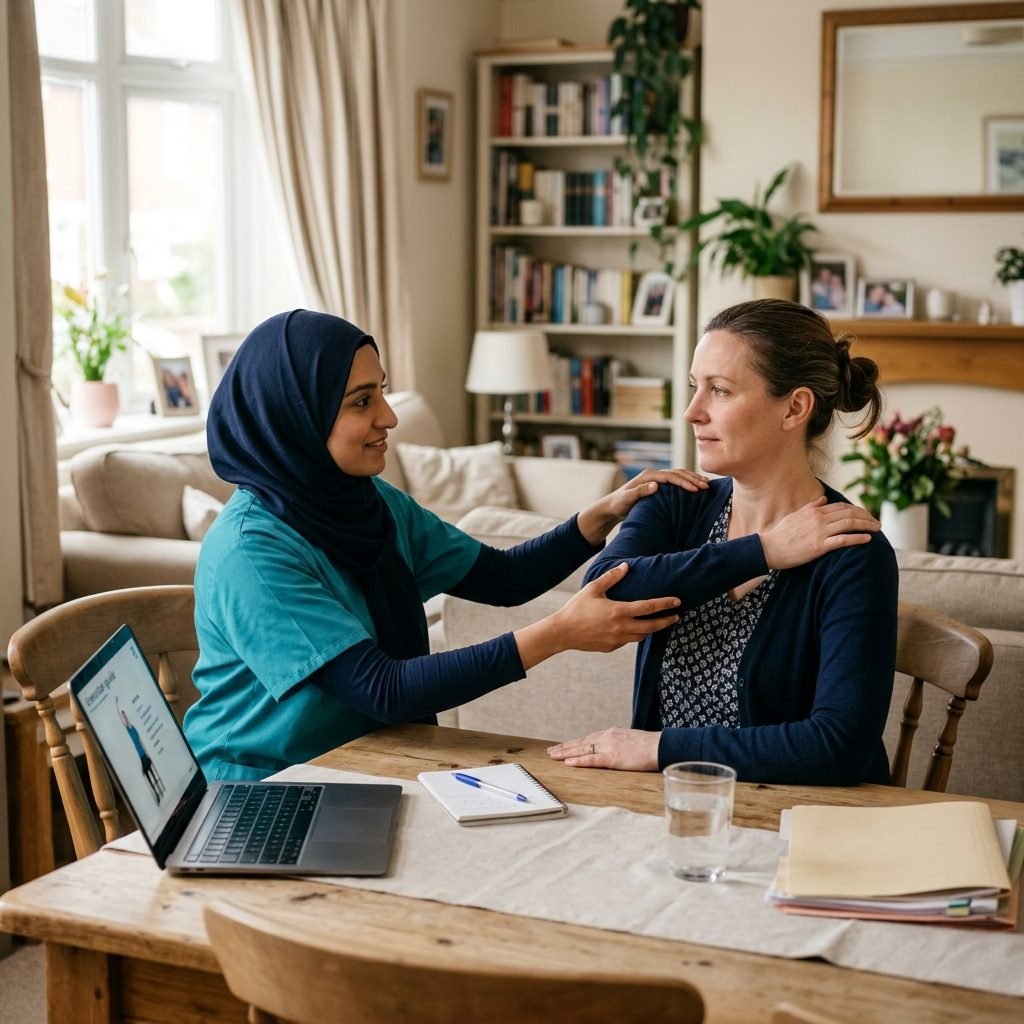
Female Physiotherapist
Licensed female therapists providing home care for women in Al Fayha.
Service Details ←