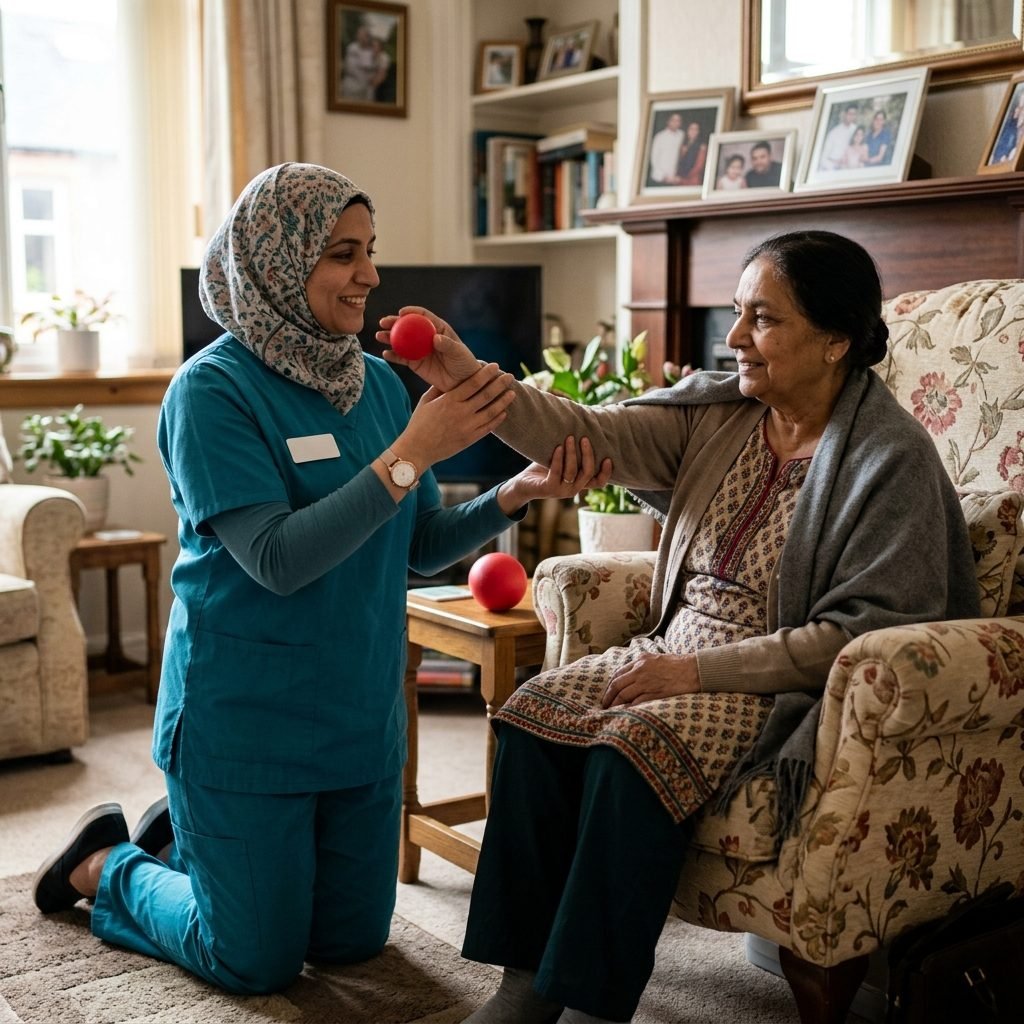
Having access to comprehensive, clinical physical therapy at home is crucial for maintaining rehabilitation progress, especially in busy neighborhoods. Al-Safa and Al Bawadi districts in Jeddah present unique local mobility challenges due to high population density and traffic. At Bidaya Center, we deliver high-quality home physiotherapy and movement rehabilitation services directly to your doorstep, conforming to the clinical guidelines of the Saudi Commission for Health Specialties. We eliminate the stress of travel, traffic, and parking. We respect cultural privacy by providing certified male therapists for male patients and female therapists for female patients.
Our clinical approach in Al Bawadi starts with a detailed physical and environmental safety assessment to eliminate fall hazards in the home. We bring all necessary portable, sterilized equipment to deliver a clinical standard of care comparable to external clinics. The therapist establishes a tailored milestone tracking plan to monitor muscle strength, balance, and joint range of motion (ROM) progression over time.
Why families in Al Bawadi choose Bidaya for home physiotherapy
- ✅ Licensed male & female therapists — full privacy, in your own home in Al Bawadi.
- ✅ Fully in-home visits across Al Bawadi — no travel or traffic.
- ✅ A personalized rehab plan built after a thorough in-home assessment.
- ✅ Continuous follow-up and direct contact with your therapist throughout.
- ✅ Fast response — arrange your visit by a quick call or WhatsApp message.
We also serve nearby areas: Al Andalus · Al Basateen · Al Fayha
* The treatment plan and expected outcomes are determined by a medical and functional assessment of each individual case.
What Home Neurological Physiotherapy Means for Al Bawadi Residents
Neurological physiotherapy is a specialised field focused on rehabilitating people whose movement, balance, and daily independence have been disrupted by a disorder of the central or peripheral nervous system, whether caused by a stroke, a spinal cord injury, or a chronic neurological disease. What sets it apart is that it never treats a muscle or joint in isolation from the source of the movement command; instead it retrains the brain and nerves to rebuild correct movement patterns, drawing on the principle of neuroplasticity, the nervous system's capacity to reorganise its pathways and learn again through carefully structured repetition.
In Al Bawadi, a residential, family-oriented district of Jeddah with streets that grow congested at peak hours, moving a neurological patient to a clinic becomes a genuine burden. A case may require a wheelchair, two escorts, or the avoidance of stairs, and the fatigue of travel often drains the patient's energy before the session has even begun. This is exactly where the home visit proves its value: the therapist reaches the patient's real environment, assessing movement in the very room they sleep in, on the floor they walk across, and beside the bathroom they use every day.
This closeness to the daily reality of Al Bawadi residents makes home-based neurological rehabilitation far more effective, because every skill the patient gains is trained in the place they will actually use it, not in an artificial clinic setting whose results are hard to transfer home. Licensed male and female therapists are available to guarantee full privacy for every member of the household.
Symptoms and Signs That Call for Starting
Many families wait too long, assuming improvement will arrive on its own, when in fact starting neurological rehabilitation early often makes a real difference to the quality of recovery. Watch for these signs, which warrant contacting us for an assessment:
- Weakness or paralysis on one side of the body that makes lifting the arm or moving the leg difficult or impossible.
- Disturbed balance and walking, with repeated stumbling, leaning to one side, or an intense fear of falling.
- Muscle stiffness or spasticity that worsens with movement, or conversely a marked floppiness in the limbs.
- Tremor or involuntary movements, or a general slowness in initiating movement and changing position.
- Difficulty with fine hand control, such as holding a spoon, buttoning a shirt, or writing.
- Numbness, tingling, or loss of sensation in the limbs that undermines confidence during movement.
- A decline in the ability to sit independently or move from bed to chair without full assistance.
Having one or more of these signs is not a final diagnosis, but it is an indicator that the nervous system needs a careful functional assessment. The sooner intervention begins within the appropriate recovery window, the greater the chance of rebuilding movement patterns before faulty compensatory habits take hold.
Conditions and Groups Who Benefit
Home neurological physiotherapy in Al Bawadi serves a wide range of conditions united by a neurologically driven disturbance of motor control, including:
- Stroke patients in the post-event stages, to restore movement on the affected side and improve walking and hand use.
- Partial or complete spinal cord injuries, working on residual strength, transfers, and position management.
- Parkinson's disease patients, to improve stride length, balance, movement initiation, and to reduce freezing.
- Multiple sclerosis cases, managing fatigue and balance and preserving independence for as long as possible.
- Traumatic head and brain injuries after accidents, to retrain coordination and motor attention.
- Children with cerebral palsy and delayed motor development, within a programme suited to their age and home play environment.
- Peripheral neuropathies with the muscle weakness that follows them, and syndromes arising from prolonged bed rest.
- Older adults whose balance has declined neurologically and who have become prone to repeated falls at home.
Each group has its own needs and rhythm, which is why we never apply a single uniform programme; instead we design a plan built on the results of an individual assessment for each case on its own.
Goals of the Rehabilitation Programme
We shape the goals of neurological rehabilitation together with the patient and their family so they are realistic, measurable, and tied to daily life in Al Bawadi rather than being abstract figures. Goals typically include:
- Restoring as much functional independence as possible in walking, sitting, transfers, and self-care.
- Improving balance and coordination and reducing the risk of falls at home and during daily activities.
- Managing muscle spasticity, maintaining joint range of motion, and preventing contractures and stiffness.
- Retraining correct movement patterns and limiting reliance on harmful compensatory movements.
- Strengthening targeted muscles and improving endurance in a way that matches the patient's energy without exhausting them.
- Building self-confidence and motivation, and reintegrating the patient into family and social life once more.
We state clearly that we offer no guarantee of a cure or of specific outcomes; the degree and pace of improvement depend on the nature of the neurological condition, its history, and adherence to the programme, and the goals are re-tuned periodically according to the evolving functional assessment.
Stages and Path of the Home Sessions
The course of treatment in Al Bawadi unfolds through interconnected stages that begin with understanding the case and end with preserving the gains:
- Initial assessment stage: the therapist visits the home to examine strength, balance, range of motion, sensation, and functional ability, and to learn the home environment and its obstacles.
- Planning stage: short- and long-term goals are set, and the initial number of sessions and required rehabilitation tools are determined.
- Active intervention stage: regular sessions combining neuromuscular facilitation exercises, gait and balance training, hand and fine-motor work, and spasticity management.
- Functional training stage: transferring the acquired skills into real tasks inside the home, such as getting up from bed, entering the bathroom, and moving between rooms.
- Reassessment stage: measuring progress periodically and adjusting the plan upward or in response to any new developments.
- Maintenance and continuity stage: a home programme the patient performs with family support to consolidate results between visits.
The duration of each stage and the number of sessions are not fixed; they are determined after assessment and according to the patient's response and goals, with care for their comfort and energy at every visit.
The Role of the Family and Caregiver
In neurological rehabilitation especially, real progress does not happen only during the session hour but in what takes place between sessions, which is why family members in Al Bawadi are essential partners in the programme's success. We make sure to train the caregiver in:
- Safe transfer and support technique when moving the patient from bed to chair or during walking, without harming their own back or the patient.
- Supervising simple home exercises and repeating them safely between visits.
- Noticing warning signs such as increased spasticity, skin redness, or excessive fatigue, and reporting them.
- Arranging correct sitting and sleeping positions to prevent pressure sores and stiffness.
- Encouraging the patient and supporting them emotionally, while giving them space to do what they can on their own without over-assisting.
We balance empowering the family with protecting them from burnout, explaining when to help and when to step back so the patient has a chance at independence, because over-protection can slow recovery just as much as neglect does.
Home Safety and Prevention Tips
A safe home environment multiplies the impact of the sessions and reduces the risk of falls and complications for the neurological patient. We advise Al Bawadi families to:
- Clear movement pathways of slippery rugs, cables, and excess furniture, and firmly secure any rug that is truly needed.
- Provide adequate lighting, especially along the route to the bathroom at night, with easily reachable switches.
- Install fixed grab bars near the toilet and shower, and use a shower chair when needed.
- Choose closed, non-slip footwear indoors instead of open slippers.
- Reposition a bed-bound patient regularly to prevent pressure sores and joint stiffness.
- Keep frequently used items within reach to reduce sudden bending and twisting.
- Respect the limits of fatigue and never push the patient into exhausting exercises without the therapist's guidance.
These are general preventive measures, and during the visit the therapist determines any additional adjustments suited to the patient's condition and the specific layout of their home.
Frequently Asked Questions (FAQ)
Can home neurological physiotherapy start right after a stroke?
Timing depends on the stability of the medical condition and the approval of the treating team. Once the case is stable, an early start is usually beneficial, and we determine the right starting point after the home assessment.
How many sessions does a neurological patient need per week?
There is no single fixed number; some cases benefit from closely spaced sessions at first and others from a lighter pace. The number is set after assessment according to the severity of the case, its goals, and the patient's energy.
Are female therapists available for our female patients to preserve privacy?
Yes, licensed male and female therapists are available, and you can request whoever suits your case best, with full privacy guaranteed inside your home in Al Bawadi.
Do you guarantee the patient will walk again as before?
We offer no guarantee of a specific outcome; improvement is tied to the nature of the neurological injury, the level of adherence, and ongoing assessment. Our aim is to achieve the maximum possible independence for each case.
What do you need from the home before the first visit?
You need no special preparations; a relatively open space to move in and a stable chair are enough. The therapist brings the necessary assessment tools and later recommends any assistive aids.
To book a home visit or ask about the condition of a loved one in Al Bawadi, contact us directly by phone or WhatsApp by clicking Call Now, and the Bidaya Center team will be glad to answer your questions and arrange the most suitable appointment for you.
Important Home Visit Details:
- ✓Setup: Please clear a 2x2m space in the room for safety.
- ✓Clothing: Wear loose, comfortable clothes for easy movement.
- ✓Therapist Parity: Male therapists for males, females for females.
- ✓Medical Reports: Keep your MRI or doctor reports ready for evaluation.
Rehabilitation & Services in Al Bawadi
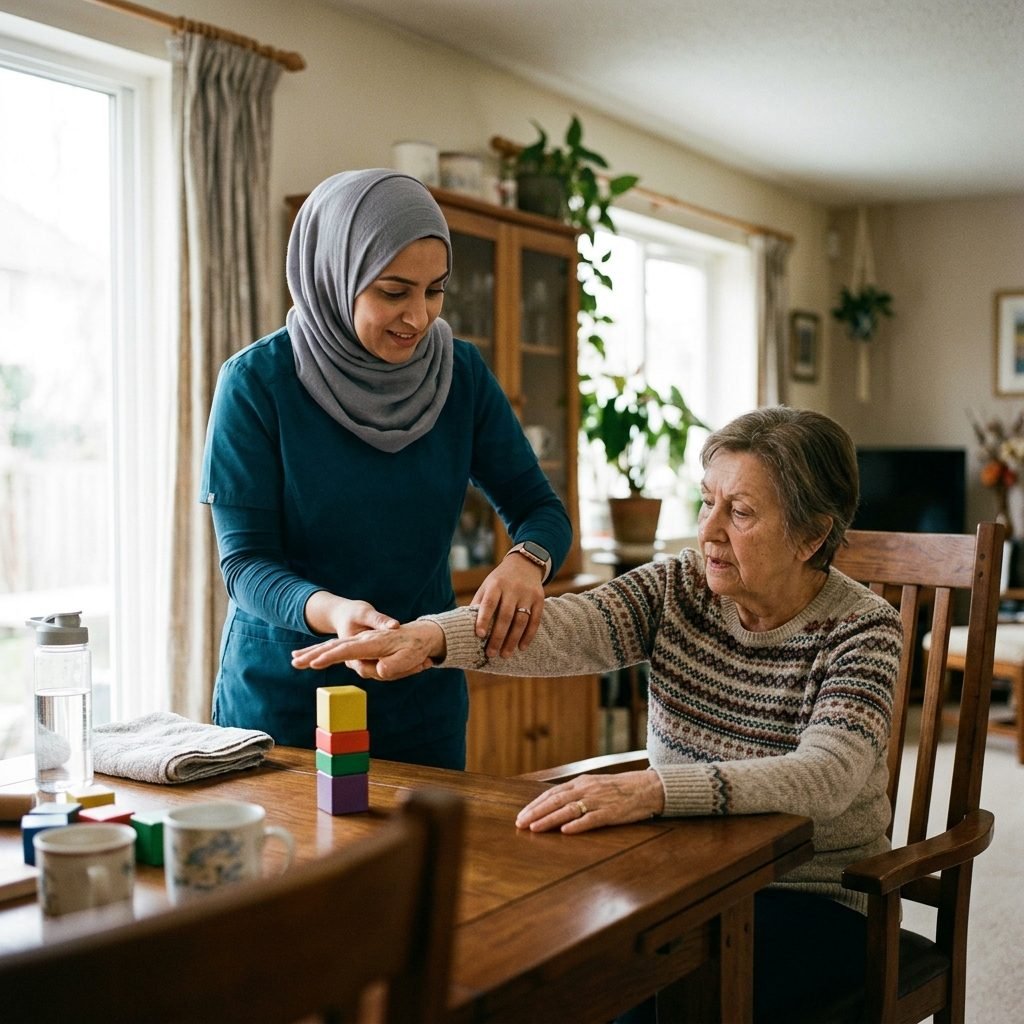
Stroke Rehabilitation
Advanced motor and neurological stroke recovery at home in Al Bawadi.
Service Details ←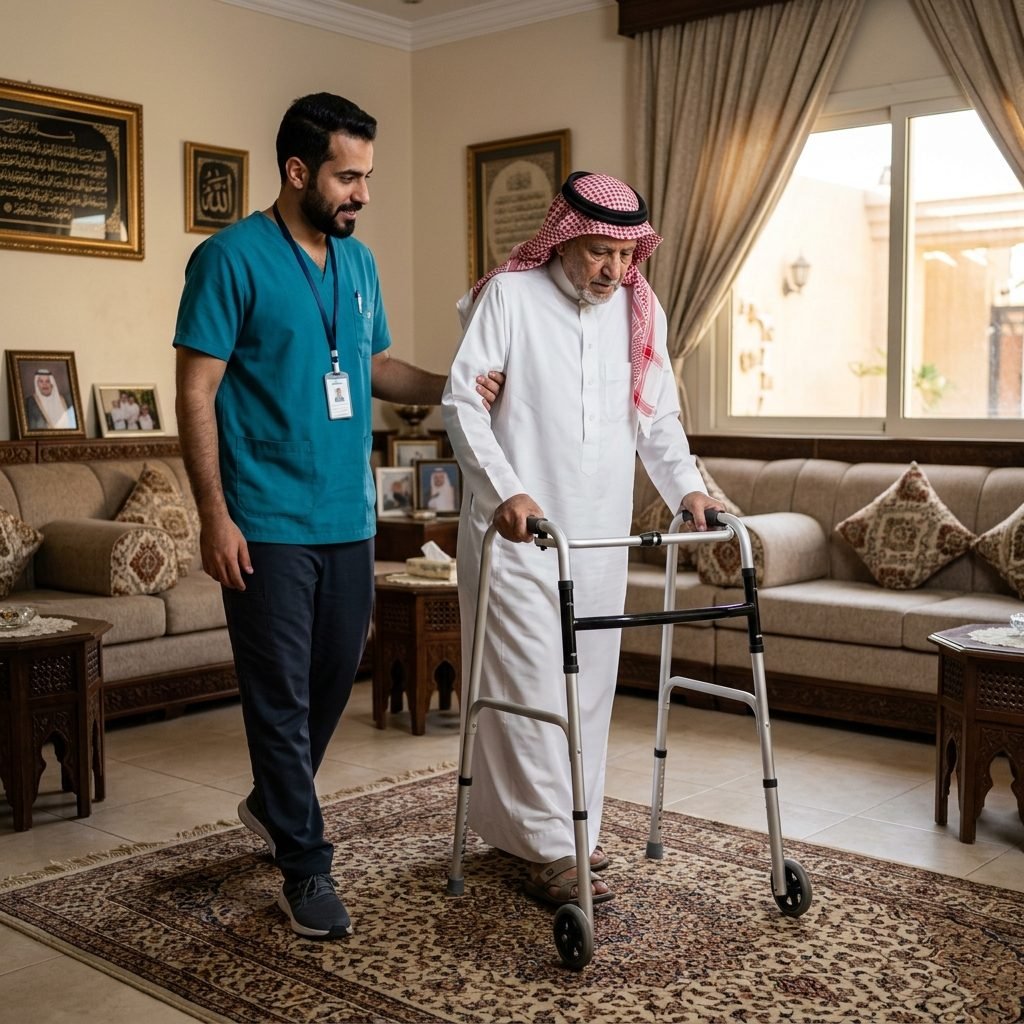
Geriatric Physical Therapy
Balance training, strengthening, and fall prevention for seniors in Al Bawadi.
Service Details ←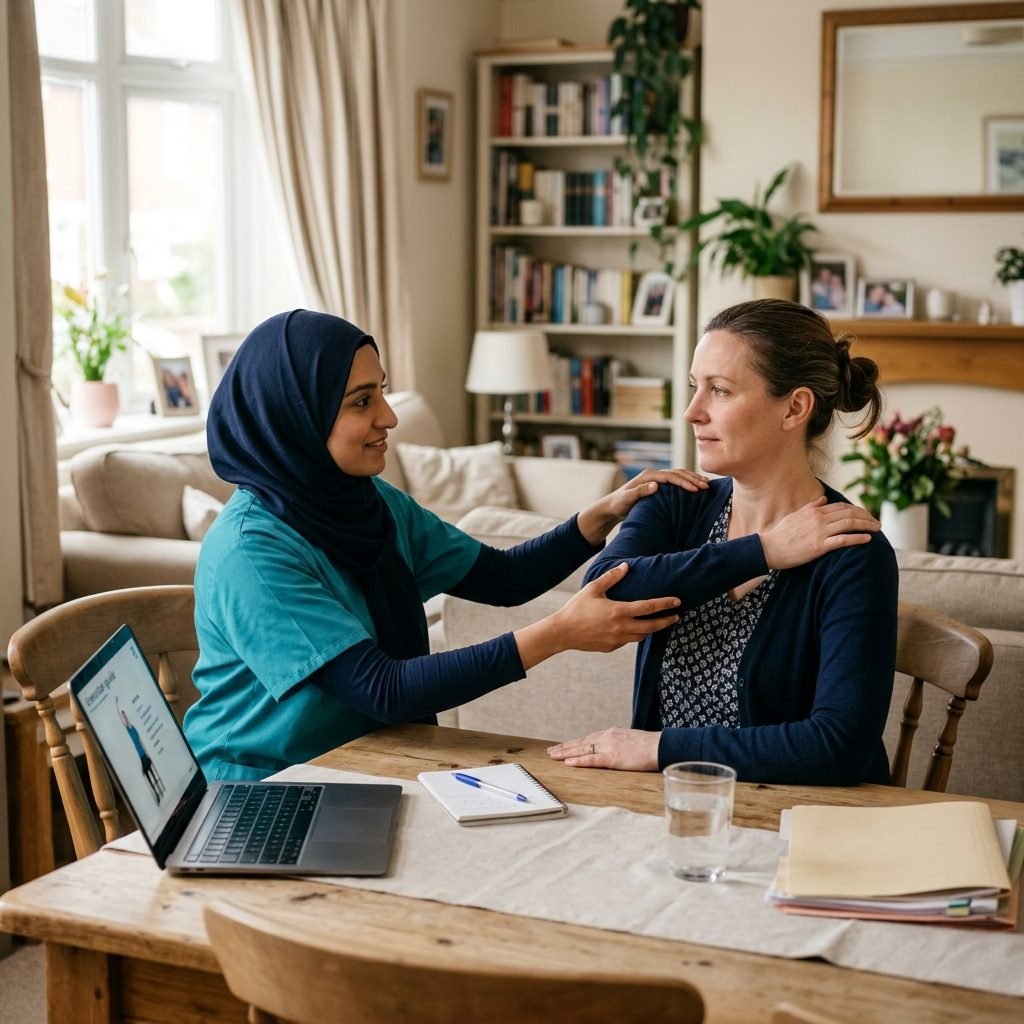
Female Physiotherapist
Licensed female therapists providing home care for women in Al Bawadi.
Service Details ←