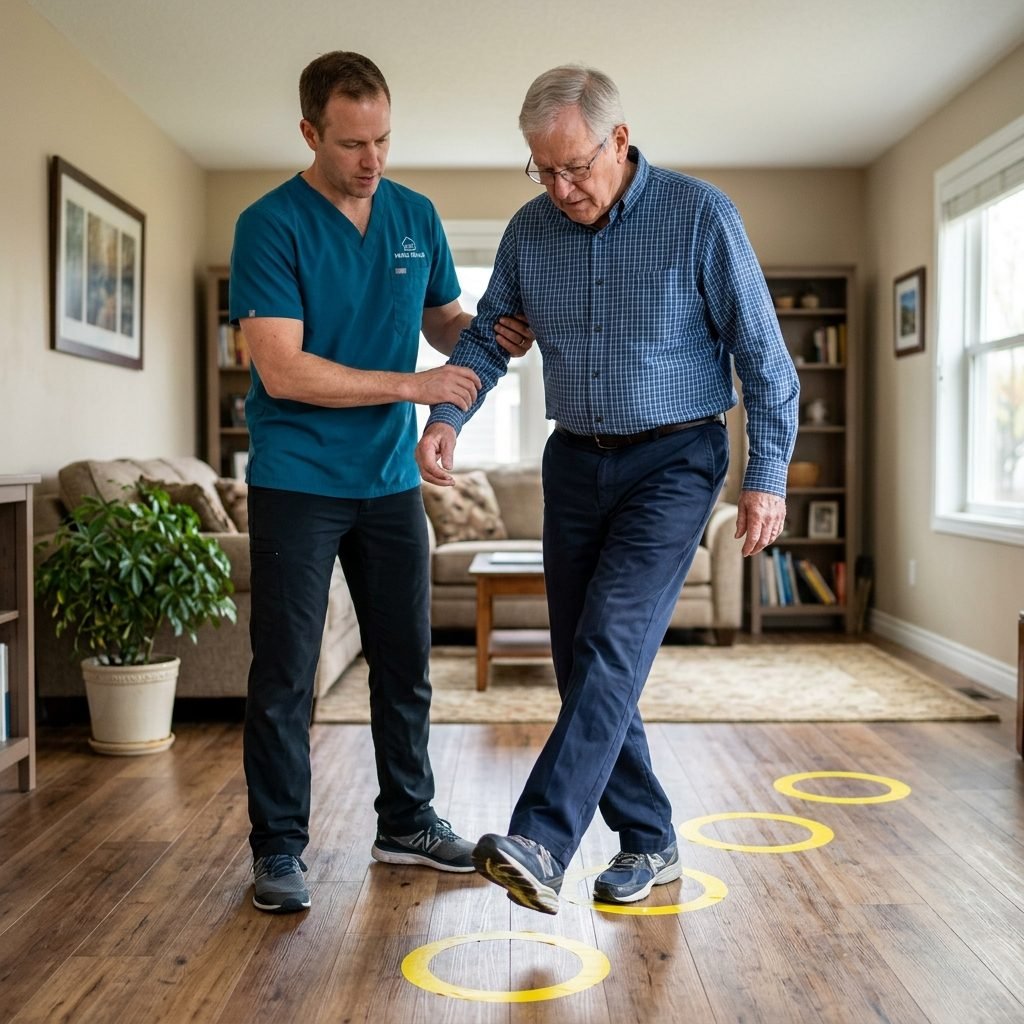
Having access to comprehensive, clinical physical therapy at home is crucial for maintaining rehabilitation progress, especially in busy neighborhoods. Al-Safa and Al Basateen districts in Jeddah present unique local mobility challenges due to high population density and traffic. At Bidaya Center, we deliver high-quality home physiotherapy and movement rehabilitation services directly to your doorstep, conforming to the clinical guidelines of the Saudi Commission for Health Specialties. We eliminate the stress of travel, traffic, and parking. We respect cultural privacy by providing certified male therapists for male patients and female therapists for female patients.
Our clinical approach in Al Basateen starts with a detailed physical and environmental safety assessment to eliminate fall hazards in the home. We bring all necessary portable, sterilized equipment to deliver a clinical standard of care comparable to external clinics. The therapist establishes a tailored milestone tracking plan to monitor muscle strength, balance, and joint range of motion (ROM) progression over time.
Why families in Al Basateen choose Bidaya for home physiotherapy
- ✅ Licensed male & female therapists — full privacy, in your own home in Al Basateen.
- ✅ Fully in-home visits across Al Basateen — no travel or traffic.
- ✅ A personalized rehab plan built after a thorough in-home assessment.
- ✅ Continuous follow-up and direct contact with your therapist throughout.
- ✅ Fast response — arrange your visit by a quick call or WhatsApp message.
We also serve nearby areas: Al Andalus · Al Bawadi · Al Fayha
* The treatment plan and expected outcomes are determined by a medical and functional assessment of each individual case.
Home Parkinson's Physiotherapy and Why It Matters for Al Basateen Residents
Home physiotherapy for Parkinson's disease is a specialized movement rehabilitation program designed to help a patient preserve mobility, balance and independence in daily life, despite the way the condition affects the nervous system and muscle control. Parkinson's is a progressive neurological condition that influences movement speed, muscle flexibility and stability, appearing gradually as slowness, stiffness and tremor. For this reason, consistent rehabilitation is a core pillar alongside the medication plan a patient follows with a physician.
In Al Basateen, a calm residential district in Jeddah where many families and older adults live, delivering this care inside the home carries real value. Repeated trips to a clinic can be exhausting for a person with Parkinson's because of walking difficulty, fall risk and the way symptoms fluctuate through the day. When the physiotherapist comes to the patient's home, training happens in the real environment the patient actually uses every day: the bedroom, bed, bathroom, hallways and stairs. This makes the exercises practical and directly relevant to daily living.
At Bidaya Center we provide this service through licensed male and female therapists, with full respect for privacy inside the home. We do not promise a complete cure. Instead, we build an individual plan grounded in a careful clinical and functional assessment of each case, because the course of the disease and its degree of impact differ from one person to another, and so do the realistic goals and expected outcomes.
Symptoms and Signs That Signal It Is Time to Start
Many families wait until symptoms worsen before seeking rehabilitation, yet starting earlier is often more effective at protecting movement abilities. It is worth reaching out when you notice one or more of these signs:
- Slowness of movement: a clear delay in starting to walk, rising from a chair, or turning over in bed.
- Stiffness and rigidity: a tight feeling in the limb or neck muscles and reduced joint flexibility.
- Tremor: shaking in the hand or fingers that often appears while at rest.
- Balance problems: a tendency to sway or stumble, or repeated falls inside the home.
- Changes in walking pattern: short shuffling steps, a forward-leaning trunk, or feet that freeze at doorways and thresholds.
- Difficulty with fine tasks: a decline in handwriting, fastening buttons, or holding utensils.
- Postural changes: a stooped back and shoulders, and reduced arm swing while walking.
The appearance of these signs does not necessarily mean an advanced stage, but it indicates the body is beginning to lose some flexibility and stability, and that organized rehabilitation can slow this decline and rebuild confidence in movement. The initial assessment is what defines the priorities for each individual patient.
Conditions and Groups That Benefit
Home Parkinson's physiotherapy in Al Basateen suits several groups that differ in severity and needs:
- Patients in early stages: to maintain fitness and flexibility and build sound movement habits before symptoms progress.
- Patients in moderate stages: who have begun facing balance and walking difficulties and need guided training to reduce fall risk.
- Patients in advanced stages: who rely on the help of others, where rehabilitation focuses on preventing complications and preserving as much independence and comfort as possible.
- Older adults: who find repeated travel to a clinic difficult and prefer the safe, familiar home environment.
- Those with recurrent falls: who need a balance and strengthening program along with home environment adjustments.
- Patients after long periods of inactivity: such as recovery following a hospital stay, to gradually rebuild strength and the ability to move.
Our assessment takes into account coexisting conditions such as high blood pressure, diabetes or joint problems, since these factors shape the design and pace of the exercises. We work in coordination with the treatment plan the patient follows with their doctor.
Goals of the Rehabilitation Program
The program is built on realistic, measurable goals that are reviewed regularly and adjusted according to the patient's response. Among the most important goals:
- Improving walking and balance: increasing step length, reducing freezing, and strengthening stability to lower fall risk.
- Reducing stiffness: flexibility and stretching exercises that maintain the range of motion of joints and muscles.
- Strengthening muscles: especially the trunk and lower limb muscles responsible for standing, rising and walking.
- Boosting independence: training the patient in daily tasks such as dressing, moving from bed to chair, and using the bathroom safely.
- Improving posture: correcting a stooped trunk and encouraging a more upright position with an open chest.
- Larger, wider movements: training the patient to perform bigger, clearer movements to counter the disease's tendency to shrink motion.
- Maintaining general activity: encouraging an active lifestyle that reduces the complications of inactivity.
We emphasize that these goals are set individually. What suits a patient in an early stage differs from the priorities of an advanced patient, and expected outcomes depend on ongoing assessment, the regularity of sessions, and the commitment of the patient and family to home exercises.
Stages and the Path of Home Sessions
We follow an organized path that begins with assessment and ends with follow-up, so the patient and family clearly understand each step:
- Initial assessment: a visit in which the therapist examines movement, balance, strength and posture, reviews the health history, and learns the goals of the patient and family.
- Building the plan: designing an individual program that defines the types of exercises, their intensity, and the suggested number of weekly sessions.
- Rehabilitation sessions: including warm-up, then flexibility, strengthening and balance exercises, plus functional training for walking and transfers, with practice for handling freezing at doorways and hallways.
- Functional training: applying exercises to real tasks inside the home, such as rising from the sofa, stepping up, or reaching the kitchen.
- Follow-up and reassessment: measuring progress regularly and adjusting the plan, increasing or easing exercises according to the response.
- Home assignment: simple exercises the patient practices between sessions to reinforce results and preserve gains.
The length of each session and the number per week are set based on the patient's condition and endurance. We aim to schedule sessions, as much as possible, at times when the patient is in their best movement state during the day.
The Role of the Family and Caregiver
Successful home rehabilitation for a Parkinson's patient is closely tied to the involvement of the family and caregiver. The therapist visits at set times, while the family spends most of the time with the patient. For this reason we train companions in:
- Safe movement assistance: how to support the patient when rising and walking without harming the patient or themselves.
- Supervising home exercises: reminding the patient and encouraging them to perform the exercises regularly and correctly.
- Noticing changes: watching for improvement or decline, freezing episodes or falls, and reporting them to the therapist.
- Emotional encouragement: supporting the patient's morale and easing their sense of burden, since the psychological side directly affects motivation to move.
- Organizing the daily routine: helping with medication, meal and rest timing in line with the patient's energy.
We believe the caregiver is an essential partner in the plan, so we provide clear, practical guidance, answer their questions, and teach them how to balance helping the patient with encouraging them to rely on themselves as much as possible.
Home Safety and Prevention Tips
Preparing the home is a key element in reducing fall risk for a Parkinson's patient, especially in the multi-level homes common in Al Basateen. In general, we recommend the following:
- Clearing pathways: removing excess furniture, cables and loose rugs that could cause tripping.
- Good lighting: providing adequate light in rooms, hallways and stairs, especially on the route to the bathroom at night.
- Support handles: installing fixed grab bars in the bathroom, near the toilet and along the stairs to support movement.
- Safe flooring: using non-slip surfaces and drying wet floors immediately.
- Suitable footwear: wearing closed, firm shoes with non-slippery soles, and avoiding walking in socks on smooth floors.
- Arranging items: keeping frequently used items within easy reach to avoid bending or sudden reaching.
- Deliberate movement: encouraging the patient to pause and steady themselves before changing direction, and not to rush when standing up.
These tips are general guidance. During the visit, the therapist assesses the specific home environment and suggests adjustments appropriate to the patient's condition and space, since what works in one home may need modification in another.
Frequently Asked Questions (FAQ)
Can physiotherapy cure Parkinson's disease completely?
There is no treatment that fully cures the disease, but regular physiotherapy helps preserve movement and balance, reduce complications and improve quality of life. Expected outcomes depend on assessing each case individually and on the level of commitment to the program.
How many sessions per week does a patient need?
The number varies from one patient to another according to the stage of the disease, endurance and goals. It is set precisely after the initial assessment and then adjusted regularly based on the patient's response and progress.
Are female therapists available for female patients?
Yes, we have licensed male and female therapists, and a female therapist can be arranged for a female patient with full respect for privacy inside the home, according to the family's preference.
Are home sessions as effective as clinic sessions?
A home session allows training in the actual environment where the patient lives, making the exercises more realistic and connected to daily tasks. It also removes the effort and risk of travel, and is very suitable for Parkinson's patients, especially when movement is difficult.
What should I prepare before the first visit?
It is enough to prepare a suitable space for movement, provide a list of current medications and any previous medical reports, and have the patient wear comfortable clothing and firm shoes. The therapist will handle the rest of the assessment and guidance.
To book a home visit in Al Basateen, Jeddah, or to ask about Parkinson's physiotherapy, contact Bidaya Center by phone or WhatsApp by clicking Call Now, and our team will be glad to help you and arrange a time that suits your case.
Important Home Visit Details:
- ✓Setup: Please clear a 2x2m space in the room for safety.
- ✓Clothing: Wear loose, comfortable clothes for easy movement.
- ✓Therapist Parity: Male therapists for males, females for females.
- ✓Medical Reports: Keep your MRI or doctor reports ready for evaluation.
Rehabilitation & Services in Al Basateen
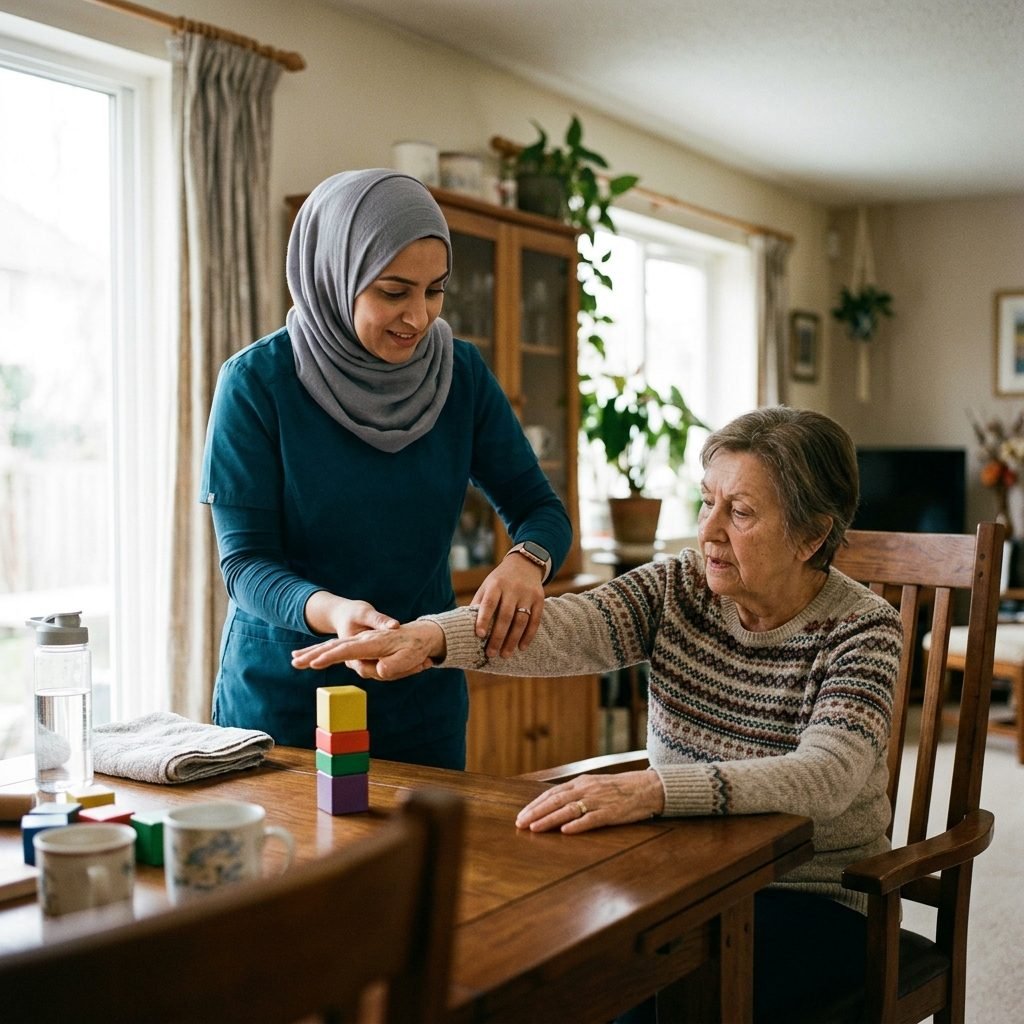
Stroke Rehabilitation
Advanced motor and neurological stroke recovery at home in Al Basateen.
Service Details ←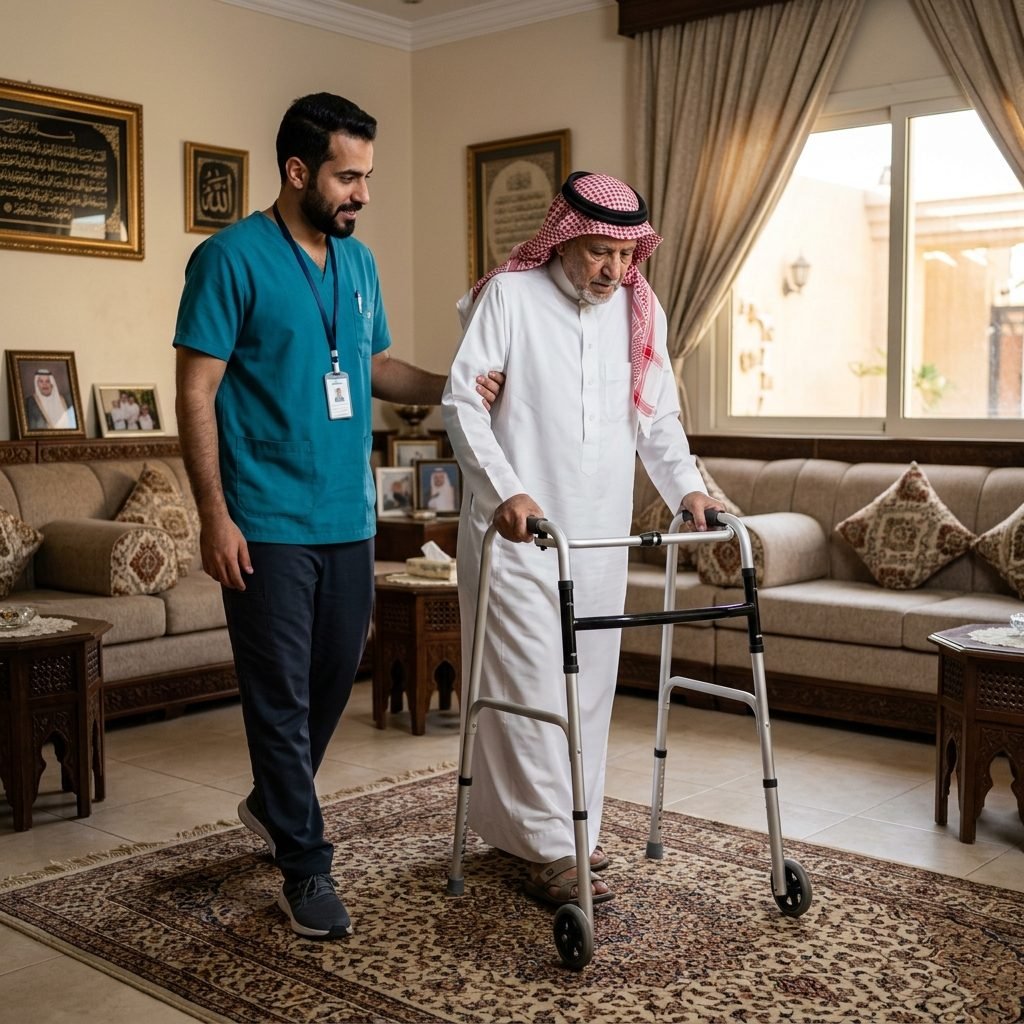
Geriatric Physical Therapy
Balance training, strengthening, and fall prevention for seniors in Al Basateen.
Service Details ←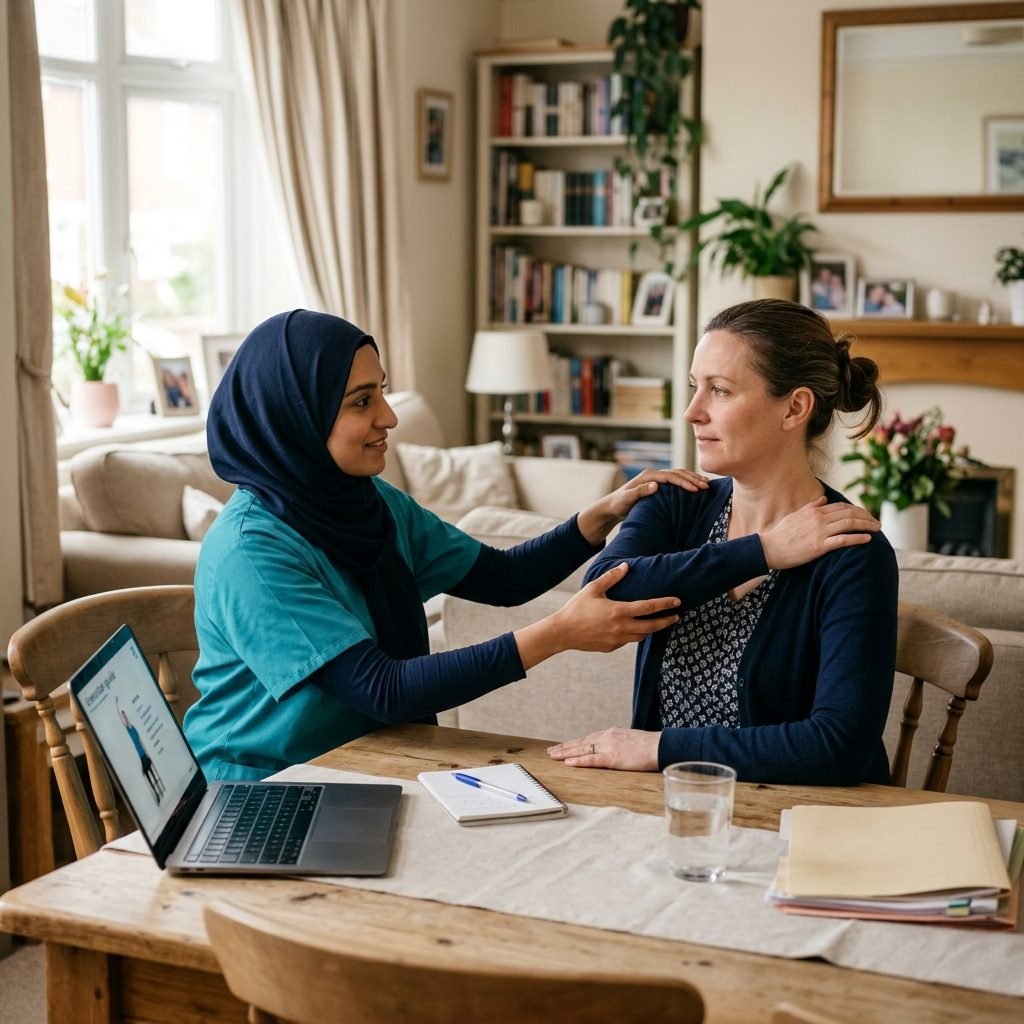
Female Physiotherapist
Licensed female therapists providing home care for women in Al Basateen.
Service Details ←