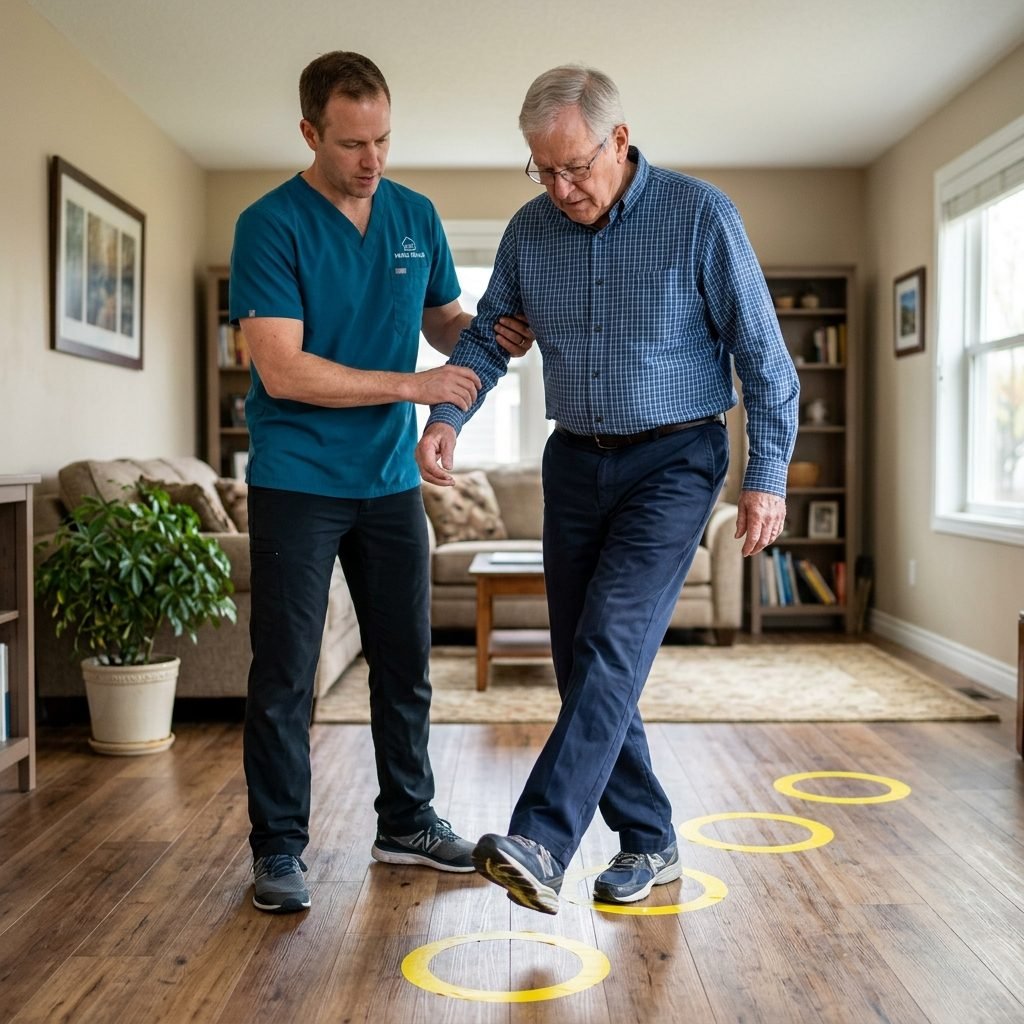
Having access to comprehensive, clinical physical therapy at home is crucial for maintaining rehabilitation progress, especially in busy neighborhoods. Al-Safa and Al Bawadi districts in Jeddah present unique local mobility challenges due to high population density and traffic. At Bidaya Center, we deliver high-quality home physiotherapy and movement rehabilitation services directly to your doorstep, conforming to the clinical guidelines of the Saudi Commission for Health Specialties. We eliminate the stress of travel, traffic, and parking. We respect cultural privacy by providing certified male therapists for male patients and female therapists for female patients.
Our clinical approach in Al Bawadi starts with a detailed physical and environmental safety assessment to eliminate fall hazards in the home. We bring all necessary portable, sterilized equipment to deliver a clinical standard of care comparable to external clinics. The therapist establishes a tailored milestone tracking plan to monitor muscle strength, balance, and joint range of motion (ROM) progression over time.
Why families in Al Bawadi choose Bidaya for home physiotherapy
- ✅ Licensed male & female therapists — full privacy, in your own home in Al Bawadi.
- ✅ Fully in-home visits across Al Bawadi — no travel or traffic.
- ✅ A personalized rehab plan built after a thorough in-home assessment.
- ✅ Continuous follow-up and direct contact with your therapist throughout.
- ✅ Fast response — arrange your visit by a quick call or WhatsApp message.
We also serve nearby areas: Al Andalus · Al Basateen · Al Fayha
* The treatment plan and expected outcomes are determined by a medical and functional assessment of each individual case.
Home Physiotherapy for Parkinson's Disease and Why It Matters for Al Bawadi Residents
Parkinson's disease is a progressive neurological condition that gradually erodes control over movement, bringing slowness, stiffness, tremor, and unsteady balance. Specialized physiotherapy does not stop the disease, but it is one of the most effective tools for slowing its impact on everyday life and protecting independence and safe mobility for as long as possible. The core of the work is retraining the brain and body to produce large, deliberate movements that counter Parkinson's natural tendency to shrink the step and reduce range.
Delivering these sessions at home is especially valuable in a calm residential district like Al Bawadi in Jeddah. Many families here care for an older relative or a patient who finds repeated trips to a clinic genuinely difficult, and the fatigue and waiting can leave muscles more rigid and tense before the session even begins. When the therapist arrives at the front door, the patient trains in the exact environment where life happens: the hallway, the bedroom, the bathroom entrance, and the doorstep. That makes every exercise realistic and directly connected to the situations they face each day.
At Bidaya Center we build each home program around one person, not a generic diagnosis. We assess the disease stage and how far walking, balance, and functional movement have been affected, then design a plan that can be adjusted as the condition evolves. Licensed male and female therapists are available with full respect for privacy inside the home, so every family can choose what suits them and feel at ease throughout the session.
Symptoms and Signs That Signal It Is Time to Start
Many families wait until movement has declined sharply before seeking physiotherapy, yet starting early is far better for preserving what is already there. Signs worth assessing include:
- Noticeable slowness of movement and difficulty initiating the first step, or a feeling that the feet are "glued" to the floor at thresholds or turns.
- Short, hurried steps that are hard to stop, with the trunk leaning forward and raising the risk of lurching and falling.
- Stiffness in the neck, shoulders, and limbs, and a sense of heaviness that is often worst in the morning.
- A resting tremor in the hand, and handwriting that becomes smaller and harder to read.
- Loss of balance when turning or rising from a chair, or repeated stumbles and falls.
- Reduced arm swing while walking, a fixed facial expression, and a softer, less distinct voice.
- Trouble with fine tasks such as buttoning a shirt or holding a spoon, and quick fatigue with minimal effort.
Some of these signs do not necessarily mean an advanced stage, but they are a cue to begin a careful functional assessment. The earlier rehabilitation starts, the easier it is to protect independence, and the right path always depends on a clinical evaluation of each individual case.
Conditions and Groups Who Benefit
The home program in Al Bawadi is designed for a broad range of Parkinson's-related presentations and closely related movement issues, including:
- People with early to mid-stage Parkinson's who want to preserve mobility and delay decline.
- Advanced cases where walking and balance have become risky and need safe, supervised training.
- Those experiencing recurrent "freezing of gait" at doorways, narrow corridors, and during turns.
- Patients after a fall or fracture who have lost confidence in walking and need a gradual rebuild.
- Older adults whose Parkinson's symptoms overlap with general weakness, frailty, or joint problems.
- Those with severe trunk and neck rigidity affecting sitting, sleep, and turning in bed.
- Families caring for a patient at home who need practical guidance on safe assistance and transfers.
The focus shifts with each group: early stages emphasize amplitude, strength, and fitness, while advanced stages emphasize safety, prevention of complications, and maintaining range of motion. We define this after the first in-home assessment.
Goals of the Rehabilitation Program
We do not promise a cure or a guaranteed outcome, because the course of Parkinson's differs from person to person. What we commit to is a clear plan with measurable goals that is reviewed continuously. Typical goals include:
- Enlarging movement amplitude and step length through deliberate big-movement training that counters the Parkinsonian tendency to shrink.
- Improving balance and protective reactions to reduce the risk of falls inside and outside the home.
- Reducing the impact of freezing by teaching visual, auditory, and rhythmic cueing strategies that help restart movement.
- Maintaining flexibility of the trunk, neck, and limbs and easing associated rigidity and pain.
- Building strength and endurance so daily activities require less effort and more confidence.
- Improving posture and controlling the forward trunk lean that fuels lurching.
- Supporting functional transitions: standing from a chair, getting in and out of bed, and turning safely.
- Coaching the patient and family in an ongoing home program that preserves gains between sessions.
These goals are framed in concrete, practical terms: crossing the home hallway without stopping, or rising from the usual chair with greater independence. We reset the goals whenever the condition shifts or medication is adjusted.
Stages and Flow of the Home Sessions
The path begins with a comprehensive in-home assessment covering the medical history, testing of strength, flexibility, and balance, analysis of the walking pattern, and a review of the "on" periods when medication makes movement easier. We also survey the home itself to spot hazards and training opportunities.
After the assessment we set an initial plan and agree on a suitable session frequency. A typical session is usually divided into:
- Warm-up and joint mobilization that eases rigidity and prepares the body to move.
- Big-movement and amplitude training to enlarge the step, limb range, and arm swing.
- Balance and transfer work in realistic situations drawn from inside the home.
- Gait practice with strategies for overcoming freezing and turning safely.
- Moderate strength and endurance exercises, followed by a cool-down and stretch.
We document progress with simple markers such as the time to rise from a chair or the number of steps without stopping, and we adjust loads and exercises gradually. As the patient improves, we increase the challenge with dual tasks such as walking while talking or carrying an object, and we review the plan regularly to keep it matched to the patient's stage. Frequency and duration are decided by the actual response, not by a fixed schedule set in advance.
The Role of the Family and Caregiver
At home, family members become genuine partners in rehabilitation, and the success of the plan depends heavily on their understanding of what Parkinson's is. We make a point of coaching the family in practical ways to:
- Help correctly without pulling or rushing the patient, giving them time to initiate movement.
- Use prompting cues: a spoken count, a rhythm, or visual floor markers that help during freezing.
- Accompany the patient through daily exercises and encourage large, clear movements in every activity.
- Notice the medication "on" periods and align the more demanding activity with the better-moving windows.
- Apply safe transfer and positioning techniques in bed and chair to avoid exhausting patient and caregiver.
- Watch for meaningful changes such as increased falls or sudden decline, to raise with the medical team.
This balanced role matters: over-helping can speed the loss of independence, while intelligent participation protects the patient's abilities. We involve the family from the very first session and make them part of every step.
Home Safety and Prevention Tips
A safe home environment is a cornerstone of reducing falls with Parkinson's. We suggest Al Bawadi families review the following points and apply them according to the home's condition:
- Remove loose rugs, cables, and obstacles from walkways, and keep habitual walking routes wide and clear.
- Ensure good lighting, especially at night and along the path between the bedroom and the bathroom.
- Install supportive grab bars near the toilet and shower, and use a non-slip mat inside the bathroom.
- Choose firm, closed, non-slip footwear and avoid walking in smooth socks on tile.
- Keep everyday items within easy reach to reduce bending and sudden turning.
- Sit while dressing, and stand up in stages to avoid dizziness when changing position.
- Provide a chair with armrests at a suitable height to ease standing, and schedule rest breaks to avoid fatigue.
- Move regularly, stay hydrated, and keep medication times without self-adjusting doses.
These are general supportive measures; we tailor precise recommendations after inspecting each patient's home, because the risks and layout of every house are different.
Frequently Asked Questions (FAQ)
Can physiotherapy cure Parkinson's disease?
No treatment cures Parkinson's, but physiotherapy can substantially slow its functional impact and improve movement, balance, and independence. The expected results depend on a careful clinical and functional assessment of each individual case.
Are home sessions as effective as clinic sessions?
Yes, and for many Parkinson's patients they can be more suitable; training in the same home ties exercises to real situations such as hallways and thresholds, and removes the travel fatigue that increases stiffness before a session begins.
How many sessions per week does a patient need?
There is no single number; the frequency is set after the first assessment based on disease stage, goals, and response, then reviewed regularly. Some cases start more intensively and later move to a maintenance program.
Are female therapists available for home visits?
Yes, licensed male and female therapists are available, and the family chooses what suits them with full respect for privacy inside the home and throughout the session.
My father fears falling and refuses to move, how do we handle this?
This is common with Parkinson's, and we begin with safe, graded exercises that rebuild confidence step by step, while coaching the family in correct support. The fear itself is part of what we address within the plan, not an obstacle to it.
To help your father or mother regain safer, more independent movement inside your home in Al Bawadi, contact Bidaya Center to book a home assessment visit by phone or WhatsApp by clicking Call Now. Our team is ready to answer your questions and arrange a time that suits you.
Important Home Visit Details:
- ✓Setup: Please clear a 2x2m space in the room for safety.
- ✓Clothing: Wear loose, comfortable clothes for easy movement.
- ✓Therapist Parity: Male therapists for males, females for females.
- ✓Medical Reports: Keep your MRI or doctor reports ready for evaluation.
Rehabilitation & Services in Al Bawadi
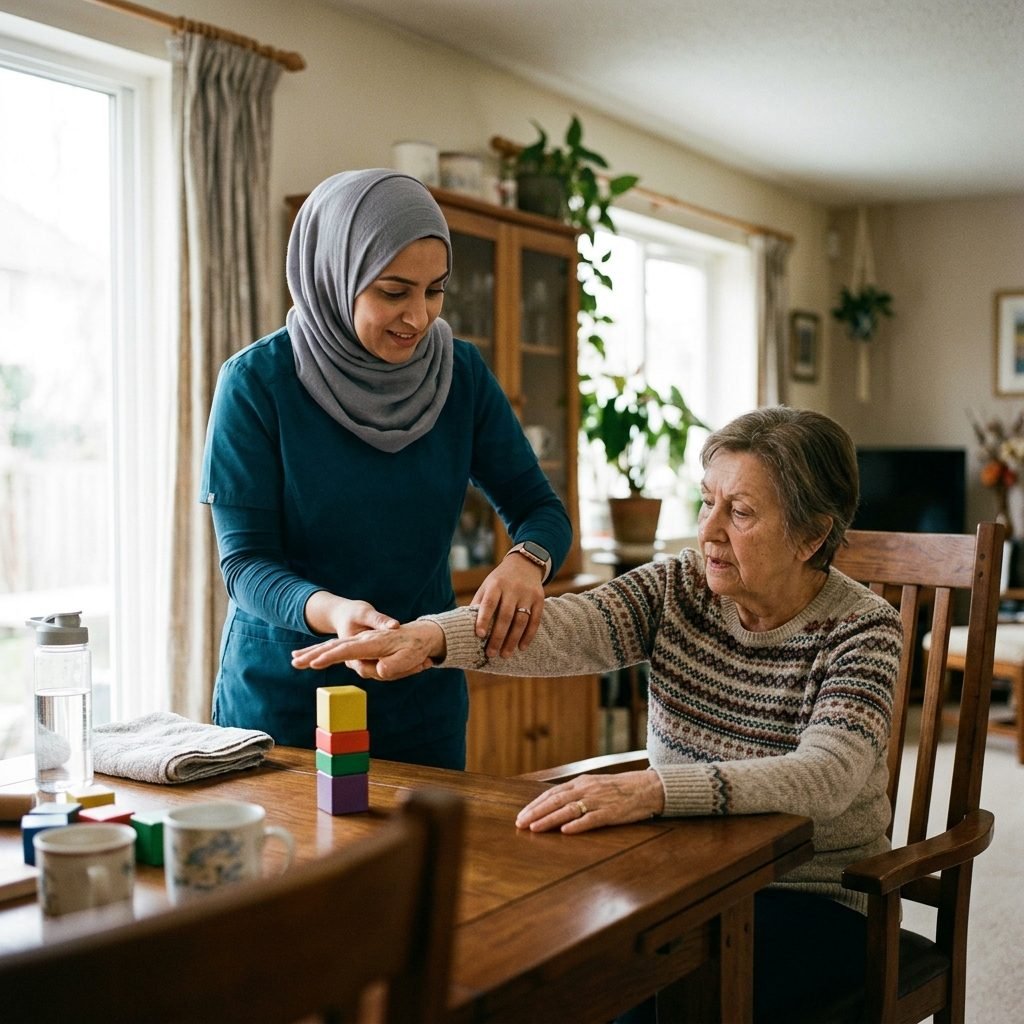
Stroke Rehabilitation
Advanced motor and neurological stroke recovery at home in Al Bawadi.
Service Details ←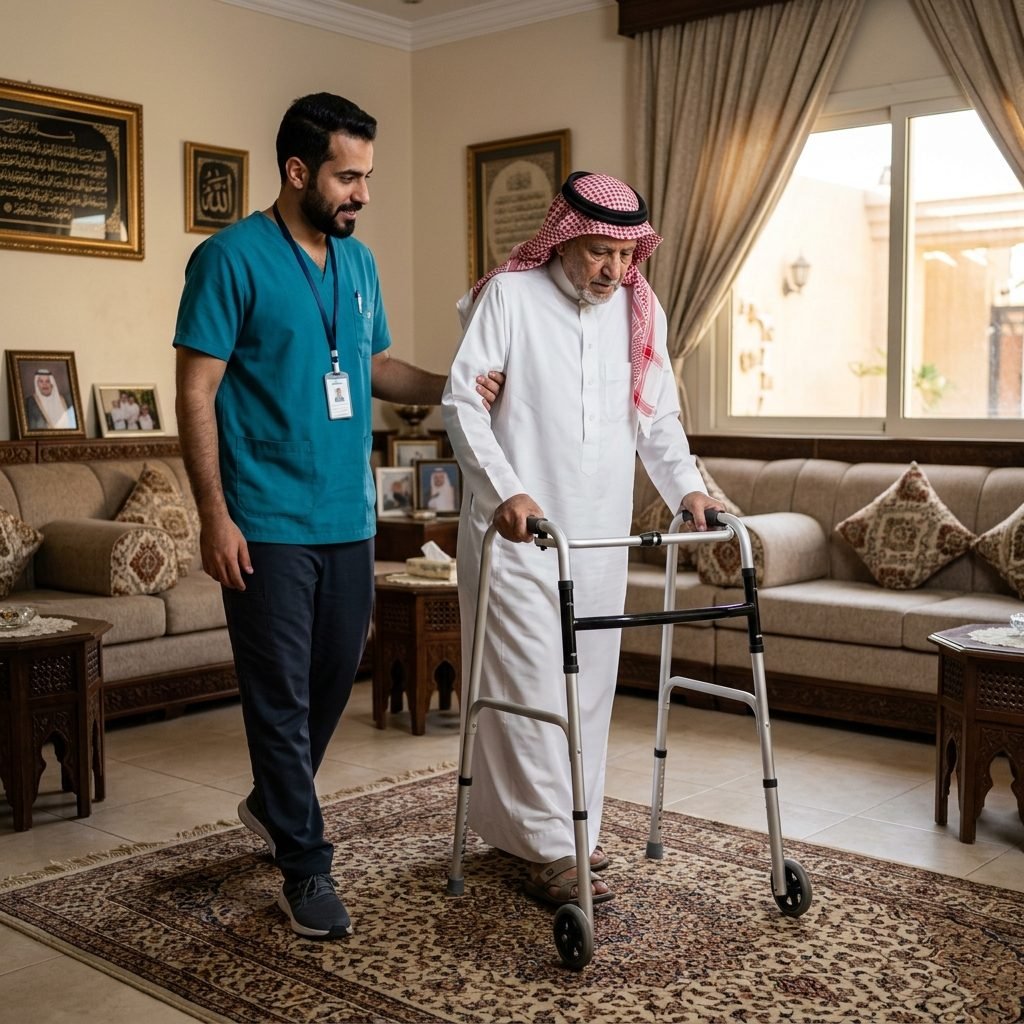
Geriatric Physical Therapy
Balance training, strengthening, and fall prevention for seniors in Al Bawadi.
Service Details ←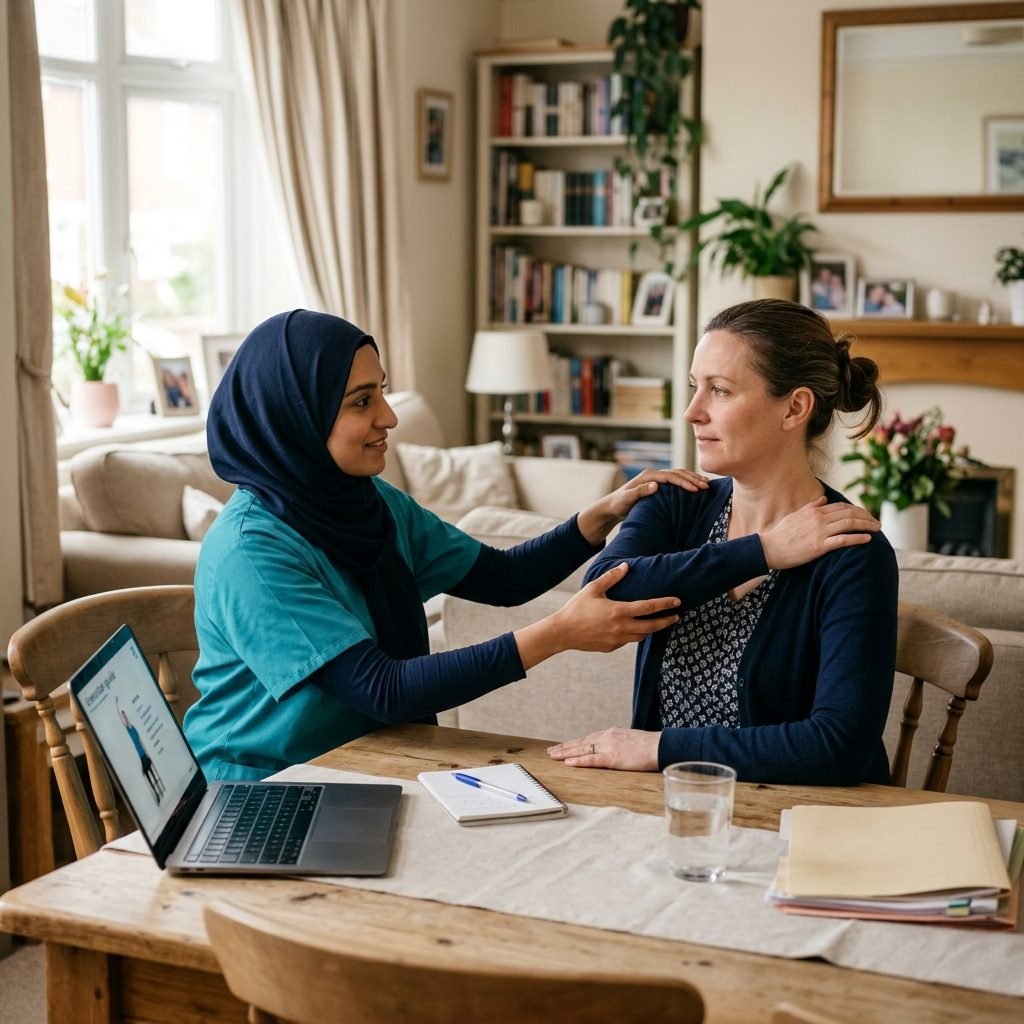
Female Physiotherapist
Licensed female therapists providing home care for women in Al Bawadi.
Service Details ←