Having access to comprehensive, clinical physical therapy at home is crucial for maintaining rehabilitation progress, especially in busy neighborhoods. Al-Safa and Al Basateen districts in Jeddah present unique local mobility challenges due to high population density and traffic. At Bidaya Center, we deliver high-quality home physiotherapy and movement rehabilitation services directly to your doorstep, conforming to the clinical guidelines of the Saudi Commission for Health Specialties. We eliminate the stress of travel, traffic, and parking. We respect cultural privacy by providing certified male therapists for male patients and female therapists for female patients.
Our clinical approach in Al Basateen starts with a detailed physical and environmental safety assessment to eliminate fall hazards in the home. We bring all necessary portable, sterilized equipment to deliver a clinical standard of care comparable to external clinics. The therapist establishes a tailored milestone tracking plan to monitor muscle strength, balance, and joint range of motion (ROM) progression over time.
Why families in Al Basateen choose Bidaya for home physiotherapy
- ✅ Licensed male & female therapists — full privacy, in your own home in Al Basateen.
- ✅ Fully in-home visits across Al Basateen — no travel or traffic.
- ✅ A personalized rehab plan built after a thorough in-home assessment.
- ✅ Continuous follow-up and direct contact with your therapist throughout.
- ✅ Fast response — arrange your visit by a quick call or WhatsApp message.
We also serve nearby areas: Al Andalus · Al Bawadi · Al Fayha
* The treatment plan and expected outcomes are determined by a medical and functional assessment of each individual case.
Home-Based Pediatric Physiotherapy and Why It Matters for Al Basateen Families in Jeddah
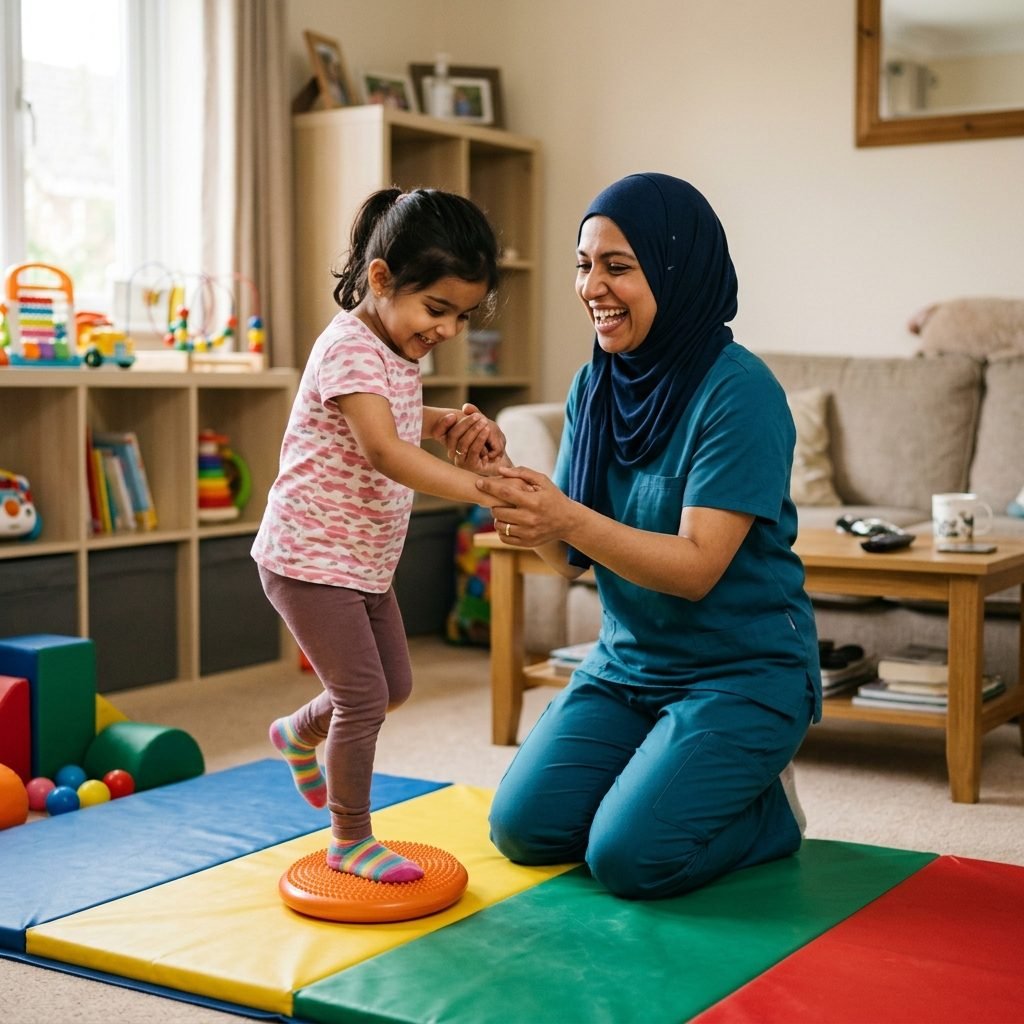
Pediatric physiotherapy at home is a specialized rehabilitation program designed to support a child's motor development, build body control, and encourage the skills expected at each age, all delivered inside the space where the child actually lives rather than an unfamiliar clinic. Al Basateen is a largely residential district in Jeddah where families and young children are everywhere, and many parents there are searching for an option that spares their child the stress of repeated travel and waiting rooms, especially when the child is very young or has a neurological condition that makes frequent outings exhausting for everyone.
The real advantage of a home session is that it happens where the child plays, eats, and sleeps. A Bidaya Center therapist works on the child's skills in their natural context: how they sit on the family sofa, how they crawl across their bedroom floor, how they hold a spoon at the dining table. That makes the exercises realistic and easy for the family to repeat once the session ends. Just as important, a child who feels safe in familiar surroundings resists and cries less, engages more, and responds better, which is a decisive factor in successful pediatric rehabilitation.
We provide licensed male and female therapists, with full respect for the family's privacy and comfort, so parents choose what suits them. We make no promises of guaranteed outcomes; every child begins with a careful clinical and functional assessment, and it is from that assessment that a realistic plan and expectations are built for their specific case.
Signs and Symptoms That Signal It Is Time to Start
Children develop at different rates, but some signs should not be dismissed with a hopeful "they'll grow out of it." The earlier the intervention, the more it can take advantage of how adaptable the nervous system is in the first years of life. We encourage Al Basateen parents to seek an assessment when they notice any of the following:
- A clear delay in motor milestones such as head control, sitting, crawling, or walking compared with peers.
- Noticeable stiffness in the limbs, or the opposite: excessive floppiness and weak muscle tone when the child is picked up.
- Using one side of the body far more than the other, or a strong hand preference at a very early age.
- Persistent walking on the toes, or visible turning of the feet or knees.
- Difficulty with balance, along with tripping and falling more than is typical for the child's age.
- Unusual head or neck positions, or a constant tilt of an infant's head toward one side.
- Weak fine-motor skills such as grasping objects or passing them from hand to hand.
Having one or more of these signs does not automatically mean a specific diagnosis, but it is reason enough for a specialized assessment to decide whether the child needs a rehabilitation program or simply developmental monitoring.
Conditions and Groups That Benefit
Pediatric physiotherapy serves a wide range of conditions, and the plan differs greatly from one child to the next. Among the groups the Bidaya Center team follows in Al Basateen homes are:
- Children with cerebral palsy in its various forms, whether spastic, hypotonic, or mixed.
- Infants with delayed motor milestones or reduced muscle tone.
- Cases of congenital torticollis (neck-muscle tightness) and persistent head tilt in babies.
- Premature infants who need close developmental follow-up.
- Children with Down syndrome who need support for tone, balance, and walking.
- Delayed walking, toe walking, flat feet, and limb-alignment concerns.
- Children recovering from fractures, orthopedic surgery, or peripheral nerve injuries.
- Motor delay associated with developmental and sensory-motor disorders.
Each of these groups follows a different path; what suits an infant with torticollis is nothing like the program for a six-year-old recovering from a fracture. That is why every case starts with an individual assessment before any goals are set.
Goals of the Rehabilitation Program
The aim of physiotherapy is not simply to "get the child moving," but to help them reach the greatest possible independence within the limits of their condition. Goals are shaped together with the family so they are realistic and measurable, and they typically include:
- Improving control of core positions: lifting the head, sitting steadily, standing, and transitioning between them.
- Strengthening balance and coordination to reduce falls and keep the child safe during play.
- Regulating muscle tone, whether by easing spasticity or strengthening weak muscles.
- Increasing joint range of motion and preventing contractures and deformities as the child grows.
- Supporting gross-motor skills such as crawling, walking, and climbing stairs.
- Encouraging independence in daily activities appropriate to the child's age and ability.
- Educating the family to become an active partner who continues support between sessions.
These goals are flexible; they are reviewed regularly and adjusted as the child progresses. We stress that progress may be gradual and varies from case to case, and that any expectations are built on assessment rather than on promises.
Stages and Journey of the Home Sessions
We organize the therapy journey along a clear path that gives families in Al Basateen a reassuring picture of what will happen in their home. It usually moves through the following stages:
- Initial assessment: a visit in which the therapist performs a full motor and functional evaluation and listens to the parents' observations and the child's medical history.
- Building the plan: setting short- and long-term goals, the suggested number of sessions, and the type of exercises that fit.
- Therapy sessions: guided exercises delivered through play and motivation, woven into the home's routine and available tools.
- Follow-up and reassessment: periodic measurement of progress and adjustment of the plan when needed, with every step documented.
- Home program: simple exercises the parents carry out between sessions to consolidate the gains.
Each session is designed to be as enjoyable as possible, because a child who enjoys the process cooperates more and learns faster. The length and weekly frequency of sessions are set according to the child's age, condition, and tolerance, not by a one-size-fits-all template imposed on everyone.
The Role of the Family and Caregiver
A child's rehabilitation does not succeed on sessions alone; the therapist spends limited hours each week, while the family spends the rest of the time with the child. That is why we consider the parents and caregiver an essential part of the therapy team, and we work to empower them by:
- Explaining the child's condition and the plan's goals in simple language free of medical jargon.
- Training parents hands-on in safe exercises that blend into play and the daily routine.
- Guiding the family toward correct carrying, sitting, and sleeping positions that support rehabilitation.
- Answering parents' questions and concerns as they arise, to build trust and continuity.
- Encouraging a positive, patient approach that reduces the child's frustration and preserves their motivation.
When the living room and dining table in an Al Basateen home turn into gentle daily practice spaces, the chances of progress multiply and rehabilitation becomes part of the child's life rather than an event separate from it.
Home Safety and Prevention Tips
A safe home environment protects the gains made in therapy and spares the child unnecessary setbacks. We recommend some practical steps for Al Basateen families:
- Prepare a spacious play area free of sharp edges and movable furniture during balance work.
- Use non-slip flooring and avoid bunched-up rugs that could trip the child.
- Never force the child into painful positions, and stop at any clear sign of pain or fatigue.
- Stick only to the prescribed exercises and avoid improvised moves that could harm joints or muscles.
- Supervise the child continuously during motor activities and never leave them unattended on raised surfaces.
- Keep sleep and nutrition regular, since both support the child's energy and response to rehabilitation.
These tips are general guidance; your therapist's instructions for your child's specific case remain the first reference whenever there is any conflict or question.
Frequently Asked Questions (FAQ)
Are home sessions as effective as clinic sessions?
Yes, and in many pediatric cases they can be more effective, because the child practices in familiar surroundings on skills they genuinely need in daily life, with greater involvement from the family.
What is the right age to start physiotherapy for a child?
There is no age that is "too early"; early intervention from the first months can be crucial when signs are present, and the rule is that a specialized assessment determines the need and the timing.
Are female therapists available, or can we choose according to the family's preference?
Yes, licensed male and female therapists are available, and the family chooses what suits them, with full respect for the home's privacy and comfort.
How many sessions will my child need?
No fixed number can be set in advance; it depends on the type and severity of the condition and the child's response, and it is determined after the initial assessment and reviewed regularly.
Do you guarantee the child's recovery or a specific result?
We make no promises of guaranteed outcomes; we commit to an evidence-informed program built on careful assessment, and realistic expectations are drawn according to each child's condition and progress.
To book a home visit in Al Basateen, Jeddah, or to ask about your child's case, contact Bidaya Center by phone or WhatsApp by clicking Call Now, and our team will be glad to help you choose a convenient time and begin your child's rehabilitation journey with confidence.
Important Home Visit Details:
- ✓Setup: Please clear a 2x2m space in the room for safety.
- ✓Clothing: Wear loose, comfortable clothes for easy movement.
- ✓Therapist Parity: Male therapists for males, females for females.
- ✓Medical Reports: Keep your MRI or doctor reports ready for evaluation.
Rehabilitation & Services in Al Basateen
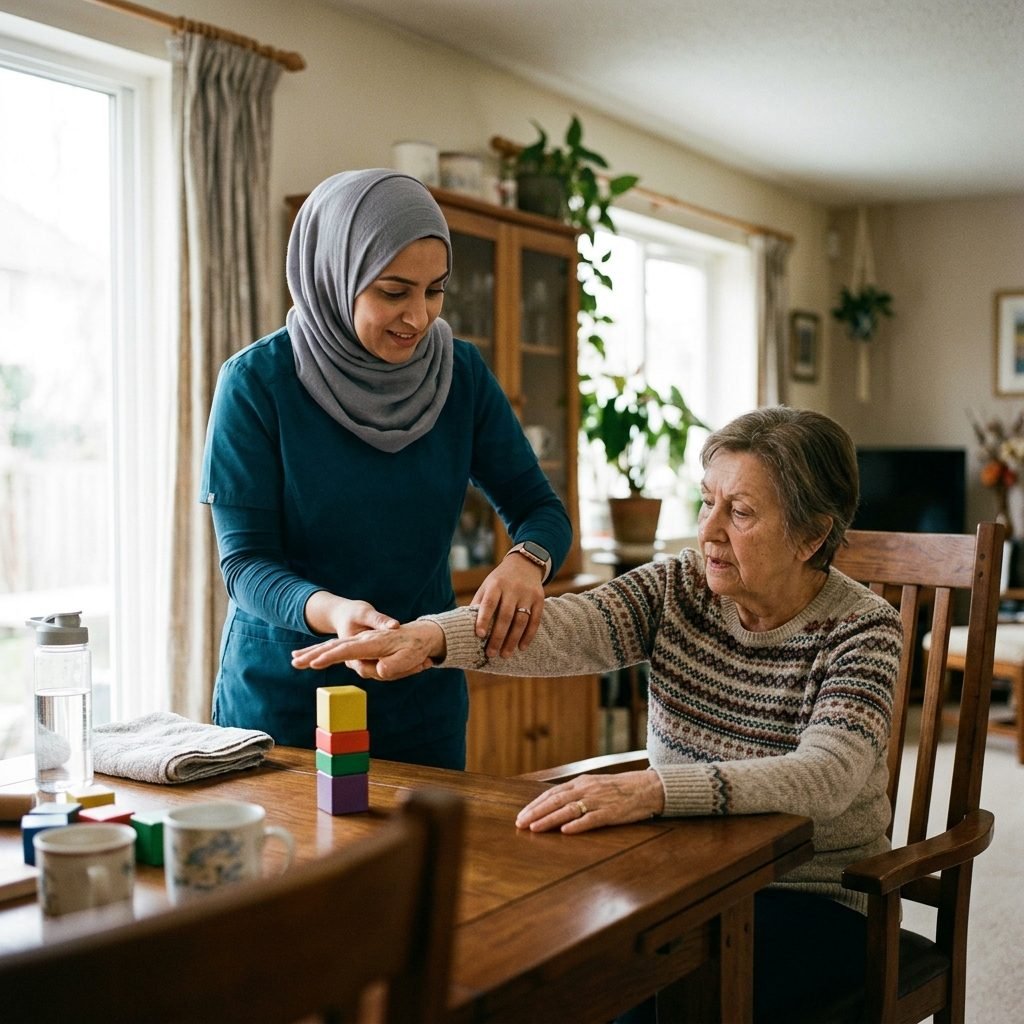
Stroke Rehabilitation
Advanced motor and neurological stroke recovery at home in Al Basateen.
Service Details ←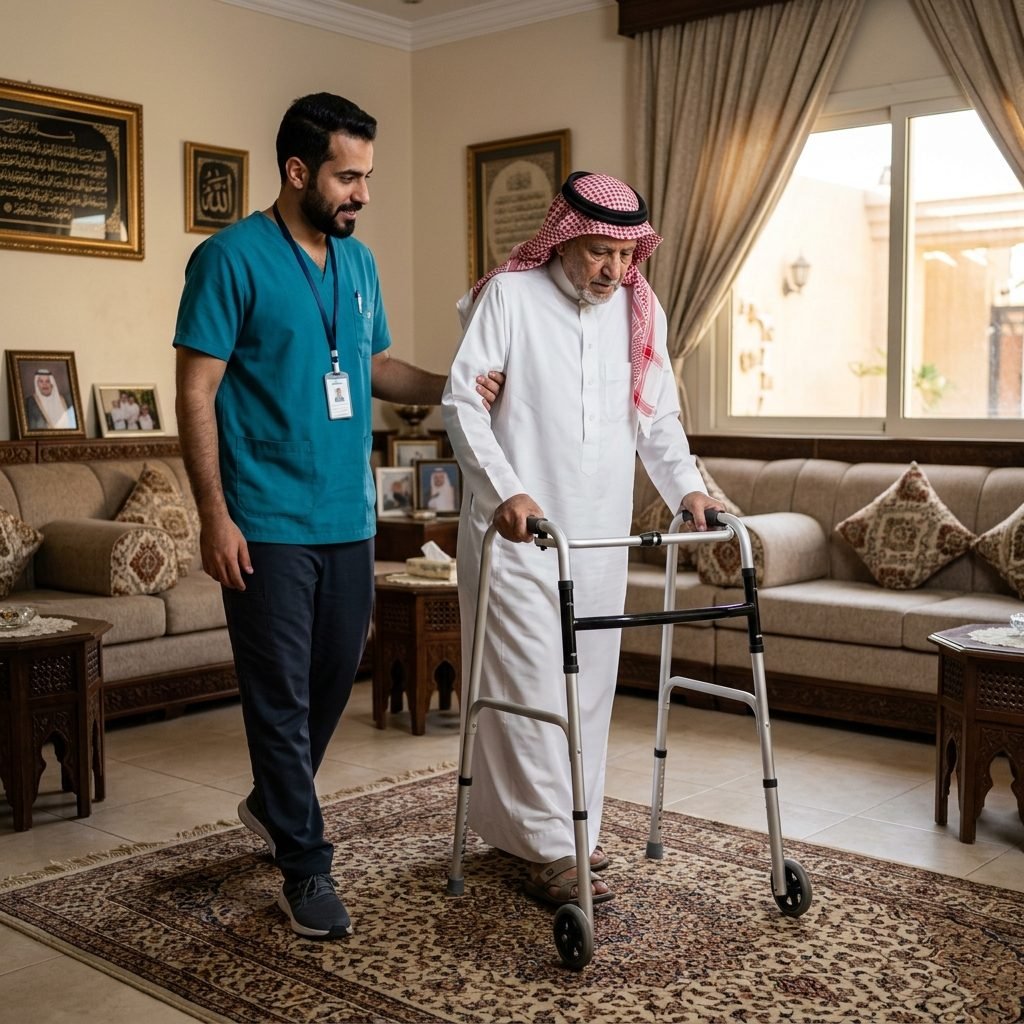
Geriatric Physical Therapy
Balance training, strengthening, and fall prevention for seniors in Al Basateen.
Service Details ←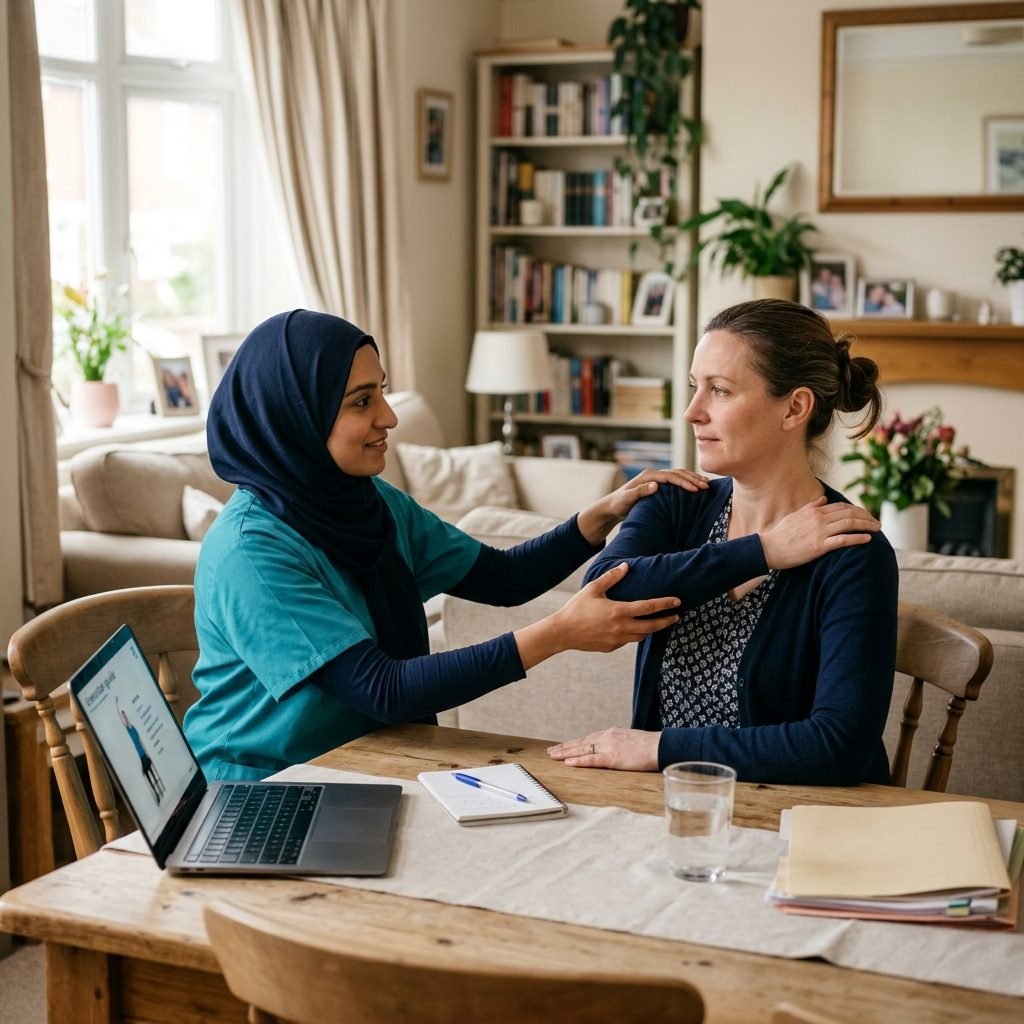
Female Physiotherapist
Licensed female therapists providing home care for women in Al Basateen.
Service Details ←