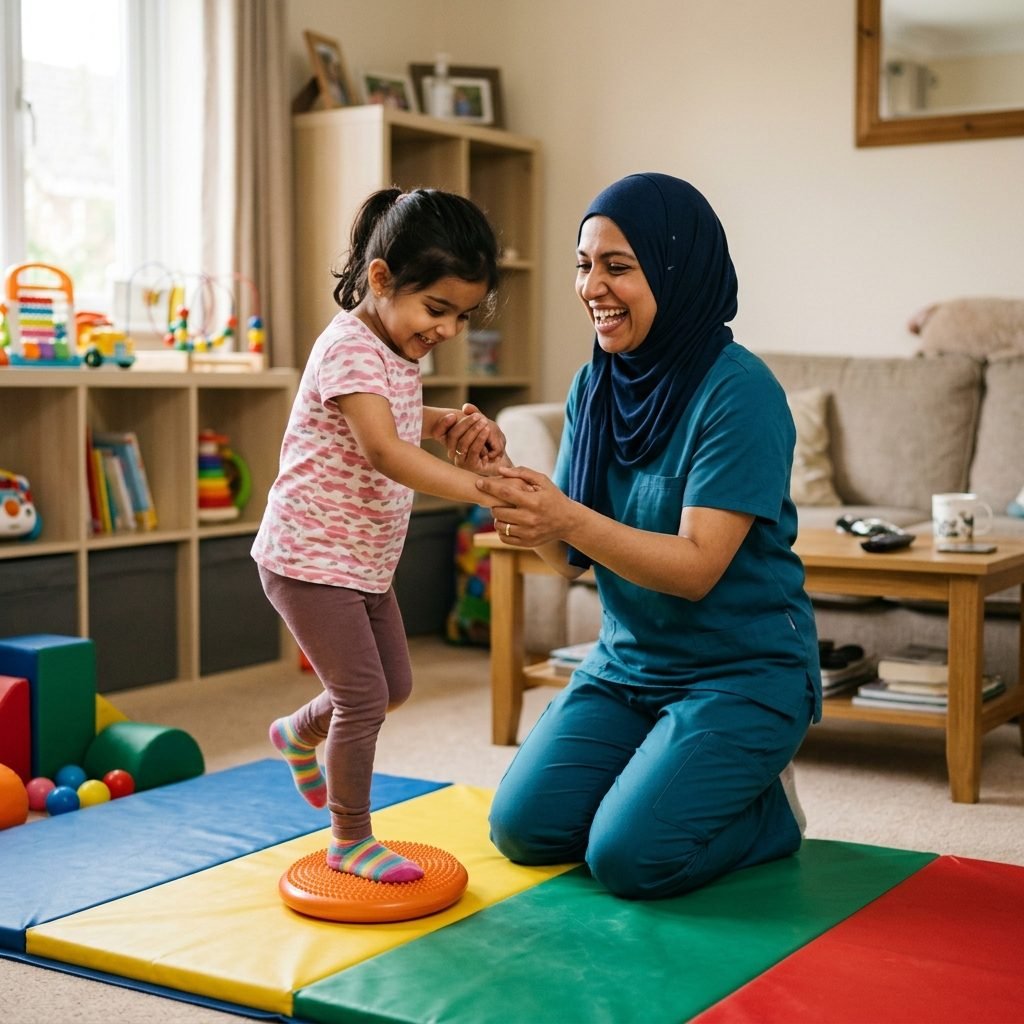
Having access to comprehensive, clinical physical therapy at home is crucial for maintaining rehabilitation progress, especially in busy neighborhoods. Al-Safa and Al Fayha districts in Jeddah present unique local mobility challenges due to high population density and traffic. At Bidaya Center, we deliver high-quality home physiotherapy and movement rehabilitation services directly to your doorstep, conforming to the clinical guidelines of the Saudi Commission for Health Specialties. We eliminate the stress of travel, traffic, and parking. We respect cultural privacy by providing certified male therapists for male patients and female therapists for female patients.
Our clinical approach in Al Fayha starts with a detailed physical and environmental safety assessment to eliminate fall hazards in the home. We bring all necessary portable, sterilized equipment to deliver a clinical standard of care comparable to external clinics. The therapist establishes a tailored milestone tracking plan to monitor muscle strength, balance, and joint range of motion (ROM) progression over time.
Why families in Al Fayha choose Bidaya for home physiotherapy
- ✅ Licensed male & female therapists — full privacy, in your own home in Al Fayha.
- ✅ Fully in-home visits across Al Fayha — no travel or traffic.
- ✅ A personalized rehab plan built after a thorough in-home assessment.
- ✅ Continuous follow-up and direct contact with your therapist throughout.
- ✅ Fast response — arrange your visit by a quick call or WhatsApp message.
We also serve nearby areas: Al Andalus · Al Basateen · Al Bawadi
* The treatment plan and expected outcomes are determined by a medical and functional assessment of each individual case.
What In-Home Pediatric Physiotherapy Means for Families in Al Fayha
Pediatric physiotherapy at home is a specialized rehabilitation service designed to support a child's motor development and improve movement, balance, and muscular coordination within the surroundings the child already knows and trusts. In the quiet, residential character of Al Fayha in Jeddah, where many households include young children in their earliest developmental years, having a licensed therapist arrive at the front door removes a real burden: no repeated travel with a child who may be difficult to transport, and no long waits in an unfamiliar clinic.
Treating a child is fundamentally different from treating an adult. A child is a growing, changing person, and every session must be built around the developmental stage and the skills expected at that age. For this reason our therapists rely on therapeutic play, turning each exercise into an enjoyable activity that invites the child to participate rather than resist. Because the session takes place among the child's own furniture, toys, and floor space, the therapist gains a rare view of how the child actually moves in daily life, not merely inside a strange treatment room.
We are clear that no program we begin rests on absolute promises of a cure. Instead, it rests on a careful clinical and functional assessment of each individual case, after which realistic goals and an expected path are defined. Both male and female licensed therapists are available, and we protect the privacy and comfort of every household when matching the right therapist to the family.
Signs and Symptoms That Signal It Is Time to Begin
Many parents in Al Fayha notice early signals yet hesitate to seek help, hoping the child will simply grow out of it. Early observation and timely intervention are among the strongest supports for healthy motor development. The following signs are worth discussing with a pediatric physiotherapist:
- A clear delay in sitting independently, crawling, standing, or walking compared with children of the same age.
- Noticeable floppiness, so the child feels limp when lifted, or the opposite: excessive stiffness and tightness in the limbs.
- Persistent reliance on one side of the body for reaching or crawling while the other side is neglected.
- Frequent toe-walking, visibly turned feet, or repeated stumbling and falling well past the usual walking age.
- Weak head and neck control beyond the first months, or difficulty adjusting body position.
- Avoidance of the physical play that peers enjoy, or unusually quick fatigue and breathlessness with minor effort.
The presence of one or more of these signs does not automatically mean a lasting problem, but it is reason enough for a specialized assessment that reassures the family and clarifies whether intervention is genuinely needed.
Conditions and Groups That Benefit
In-home pediatric physiotherapy serves a wide range of conditions that vary in nature and severity, and each is met with a completely different program. Among the groups our team supports in Al Fayha:
- Children with the various forms of cerebral palsy, who need ongoing work on muscle tone and functional positioning.
- Cases of general motor developmental delay without an obvious cause, where a child lags behind the milestones of their age.
- Premature and low-birth-weight infants who require close developmental follow-up in their early years.
- Children with Down syndrome and the low muscle tone that often accompanies it and affects motor skills.
- Birth-related brachial plexus injuries that limit arm and shoulder movement.
- Foot conditions such as flat or turned feet, toe-walking, and mild spinal curvatures.
- The recovery phase after orthopedic or muscular surgery, and rebuilding range of motion after fractures.
- Children with muscle weakness or neuromuscular conditions who need to maintain strength and flexibility.
In every one of these cases, the individual assessment is the starting point. Two children carrying the same diagnosis may need two entirely different plans, shaped by their abilities and their family environment.
Goals of the Rehabilitation Program
The aim of a session is never simply to exercise a muscle or move a joint. The program views the child as a whole person who lives, plays, and interacts. We shape goals together with the family so they are measurable, realistic, and tied to the child's everyday life at home in Al Fayha. Among the outcomes we work toward:
- Better control of foundational positions: lifting the head, sitting with balance, transitioning between positions with greater independence.
- Development of gross motor skills such as crawling, standing, walking, and climbing stairs to suit the child's capacity.
- Regulating muscle tone, whether by easing stiffness or strengthening weak muscles for better movement balance.
- Strengthening balance and coordination between both sides and improving awareness of the body in space.
- Preventing complications such as shortened tendons, joint stiffness, and long-term postural deformities.
- Increasing the child's independence in daily activities and supporting participation in play with family and peers.
- Equipping parents with practical skills to practice with the child between visits so progress takes root.
These goals are reviewed regularly and adjusted according to the child's response. Progress in pediatric rehabilitation is rarely a straight line; it is a path that calls for flexibility, patience, and consistent follow-up.
Stages and Flow of the Home Sessions
We organize the therapy journey along a clear path that reassures the family and makes progress tangible, step by step. The journey opens with a comprehensive assessment visit at home, where the therapist performs a motor and functional examination, listens to the family's observations and the child's health history, and looks at the home environment and the tools available in it.
After the assessment, an individualized treatment plan sets out short and long-term goals along with the suggested number of sessions and their frequency. Then the regular treatment sessions begin, using stretching and strengthening exercises, balance training, movement-facilitation techniques, and guided play that motivates the child to perform the target movement with enjoyment.
Throughout this phase we engage the child at a pace that suits them, so the session is neither exhausting nor dull but a blend of challenge and play. As the sessions advance, we move gradually toward more complex exercises that mirror the demands of daily life, such as walking on different surfaces or stepping over the thresholds inside the home.
Periodic re-assessment follows, measuring what has been achieved against the goals and adjusting the plan when needed. Once the child reaches the intended level of independence, we shift to light follow-up and a home program the family carries forward, with the option to return for assessment whenever the child's condition changes.
The Role of the Family and Caregiver
The family is not a bystander to therapy but a core partner in its success. A child spends far more hours with parents and caregivers than the length of any session, so what happens between visits matters just as much as what happens during them. On every visit we explain the purpose of the exercises and coach parents to perform them safely and confidently.
Parents learn how to carry and position the child in healthy ways that support development, and how to weave exercises into the daily routine, playtime, bathing, and dressing, rather than treating them as a tiring extra chore. We also guide the family to watch for the child's signs of fatigue and respect their limits, so exercise never becomes a negative experience.
Ongoing communication between the family and the home therapist allows any change to be noticed early and helps the child feel secure, because everyone around them speaks the same language and follows the same approach. This harmony between therapist and family is what turns temporary progress inside a session into a lasting gain in the child's life.
Home Safety and Prevention Tips
A safe and stimulating home environment is an inseparable part of therapy. Homes in Al Fayha vary in size and layout, and with a few simple adjustments a play area can become a space that both supports the child's movement and protects them. Among the most useful tips:
- Set aside a safe floor area with a comfortable surface that encourages free movement and exploration, away from sharp corners.
- Secure loose rugs and clear cables and obstacles from the child's pathways to reduce the risk of tripping and falling.
- Choose supportive, correctly sized shoes when practicing walking, and avoid tight or slippery footwear.
- Supervise closely during exercises on raised surfaces such as beds and sofas, and never leave the child unattended.
- Use appropriately sized toys that encourage movement and grasping, and avoid small parts a child could swallow.
- Spread exercise across short, frequent intervals rather than one long session that tires the child.
- Keep good ventilation and a moderate temperature, and offer water and rest when signs of fatigue appear.
These measures do more than protect the child from injury; they create an environment that naturally encourages helpful movements to be repeated throughout the day.
Frequently Asked Questions (FAQ)
When is the best time to start physiotherapy for my child?
The earlier it begins, the better the support for motor development. If you notice a delay or a worrying sign, the right step is an assessment rather than waiting for spontaneous improvement, since the assessment determines whether your child genuinely needs intervention.
Are home sessions as effective as clinic sessions?
The home setting adds an advantage: the child moves in a natural environment with familiar tools, which helps skills carry over into daily life. Effectiveness depends far more on an accurate assessment and consistency with the plan than on the location itself.
Will my child feel pain during the sessions?
We rely on therapeutic play and respect the child's limits, aiming for the session to be a positive experience. There may be some effort in certain exercises, but we progress gently and monitor the child's response continuously to avoid any distress.
How many sessions will my child need?
There is no fixed number. The count and frequency are set after the assessment, based on the child's condition, goals, and response to treatment. We review the plan regularly and may increase or reduce sessions as progress unfolds.
Can we request a male or female therapist?
Yes. We provide both licensed male and female therapists, and the family can choose what suits them, with complete privacy and comfort maintained inside the home.
To book a home assessment visit for your child in Al Fayha or to ask about the service, contact Bidaya Center by phone or WhatsApp by clicking Call Now, and our team will be glad to help you choose the right time and therapist for your child.
Important Home Visit Details:
- ✓Setup: Please clear a 2x2m space in the room for safety.
- ✓Clothing: Wear loose, comfortable clothes for easy movement.
- ✓Therapist Parity: Male therapists for males, females for females.
- ✓Medical Reports: Keep your MRI or doctor reports ready for evaluation.
Rehabilitation & Services in Al Fayha
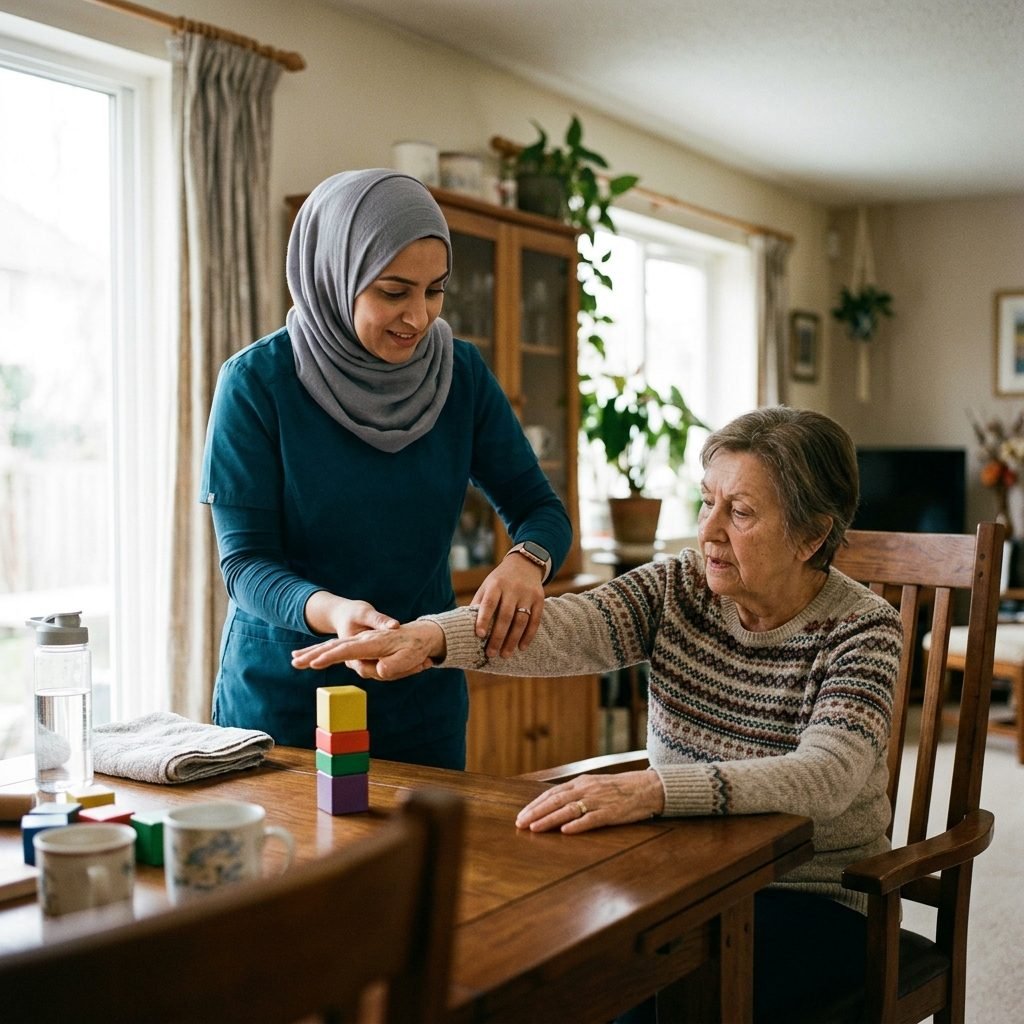
Stroke Rehabilitation
Advanced motor and neurological stroke recovery at home in Al Fayha.
Service Details ←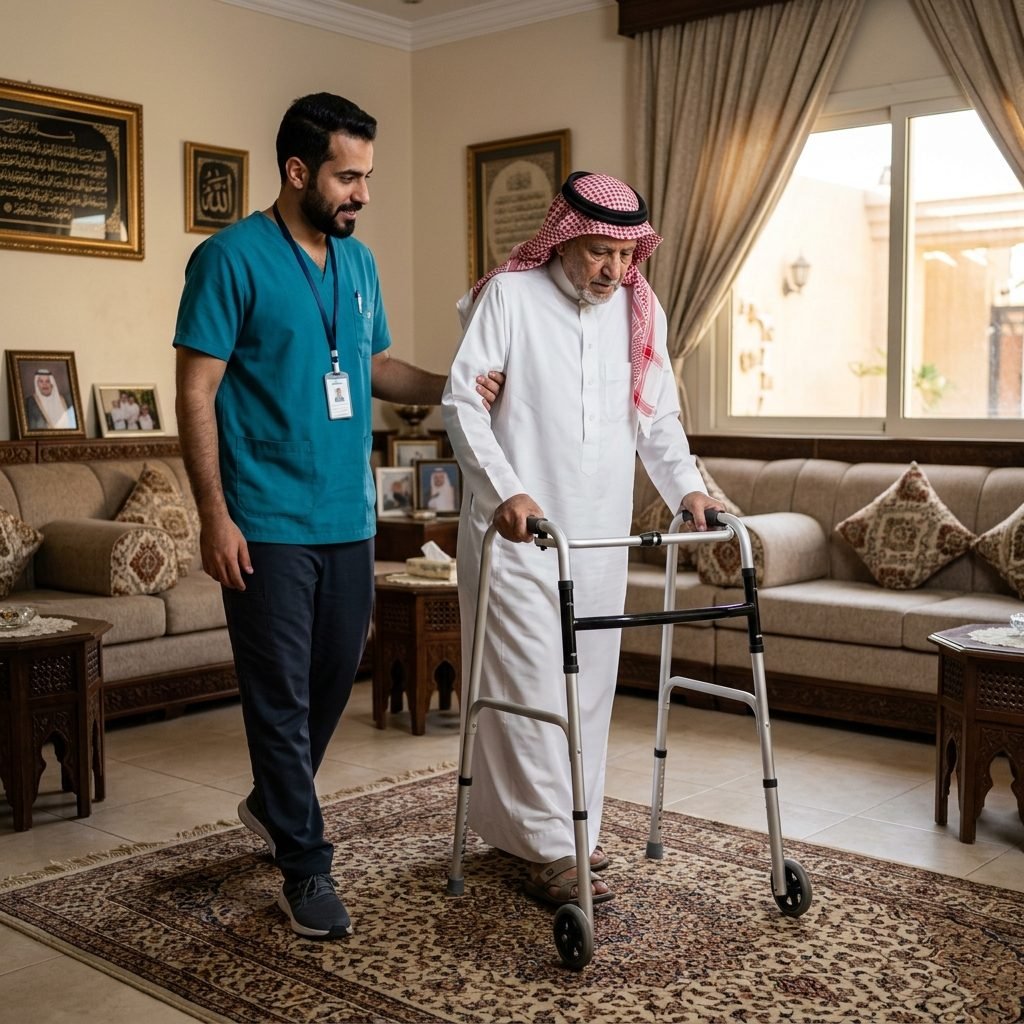
Geriatric Physical Therapy
Balance training, strengthening, and fall prevention for seniors in Al Fayha.
Service Details ←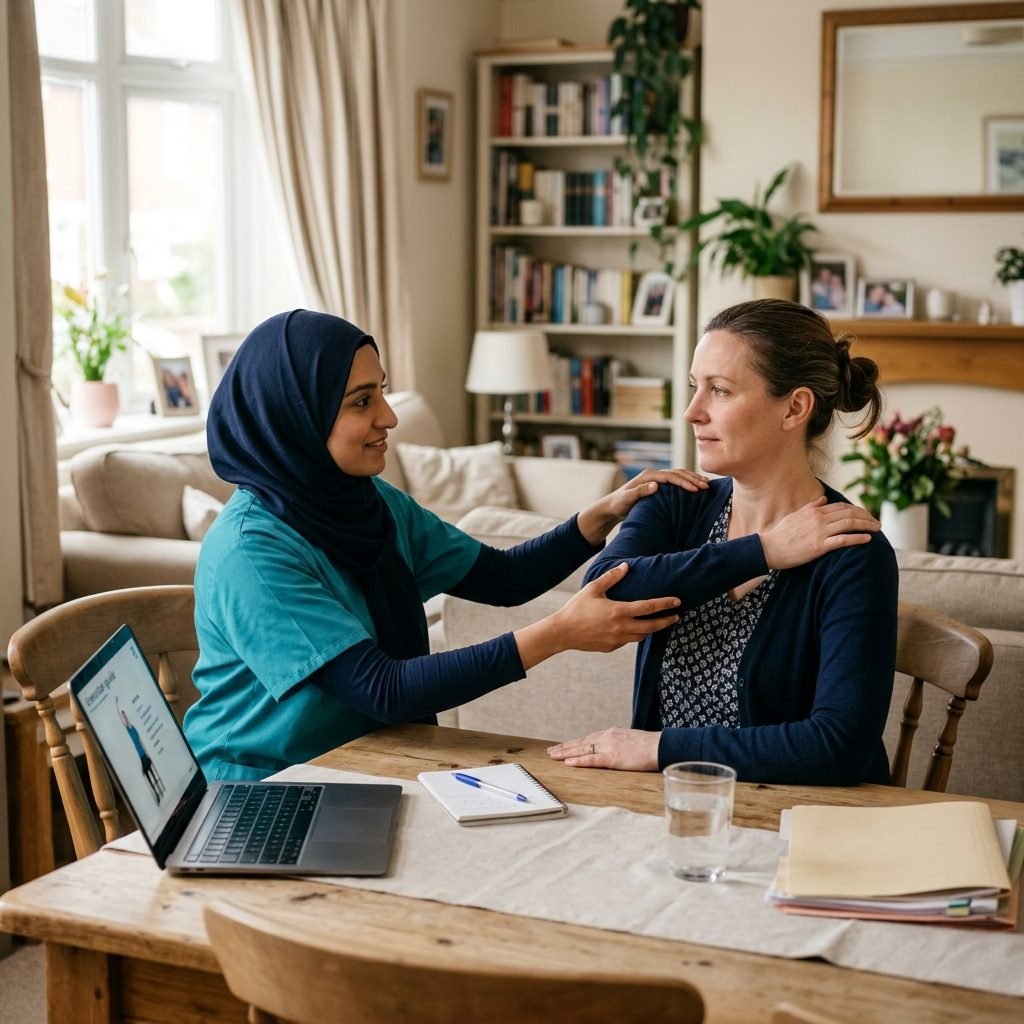
Female Physiotherapist
Licensed female therapists providing home care for women in Al Fayha.
Service Details ←