Having access to comprehensive, clinical physical therapy at home is crucial for maintaining rehabilitation progress, especially in busy neighborhoods. Al-Safa and Al Hamra districts in Jeddah present unique local mobility challenges due to high population density and traffic. At Bidaya Center, we deliver high-quality home physiotherapy and movement rehabilitation services directly to your doorstep, conforming to the clinical guidelines of the Saudi Commission for Health Specialties. We eliminate the stress of travel, traffic, and parking. We respect cultural privacy by providing certified male therapists for male patients and female therapists for female patients.
Our clinical approach in Al Hamra starts with a detailed physical and environmental safety assessment to eliminate fall hazards in the home. We bring all necessary portable, sterilized equipment to deliver a clinical standard of care comparable to external clinics. The therapist establishes a tailored milestone tracking plan to monitor muscle strength, balance, and joint range of motion (ROM) progression over time.
Why families in Al Hamra choose Bidaya for home physiotherapy
- ✅ Licensed male & female therapists — full privacy, in your own home in Al Hamra.
- ✅ Fully in-home visits across Al Hamra — no travel or traffic.
- ✅ A personalized rehab plan built after a thorough in-home assessment.
- ✅ Continuous follow-up and direct contact with your therapist throughout.
- ✅ Fast response — arrange your visit by a quick call or WhatsApp message.
We also serve nearby areas: Al Andalus · Al Basateen · Al Bawadi
* The treatment plan and expected outcomes are determined by a medical and functional assessment of each individual case.
What Home-Based Cerebral Palsy Physiotherapy Means for Families in Al Hamra
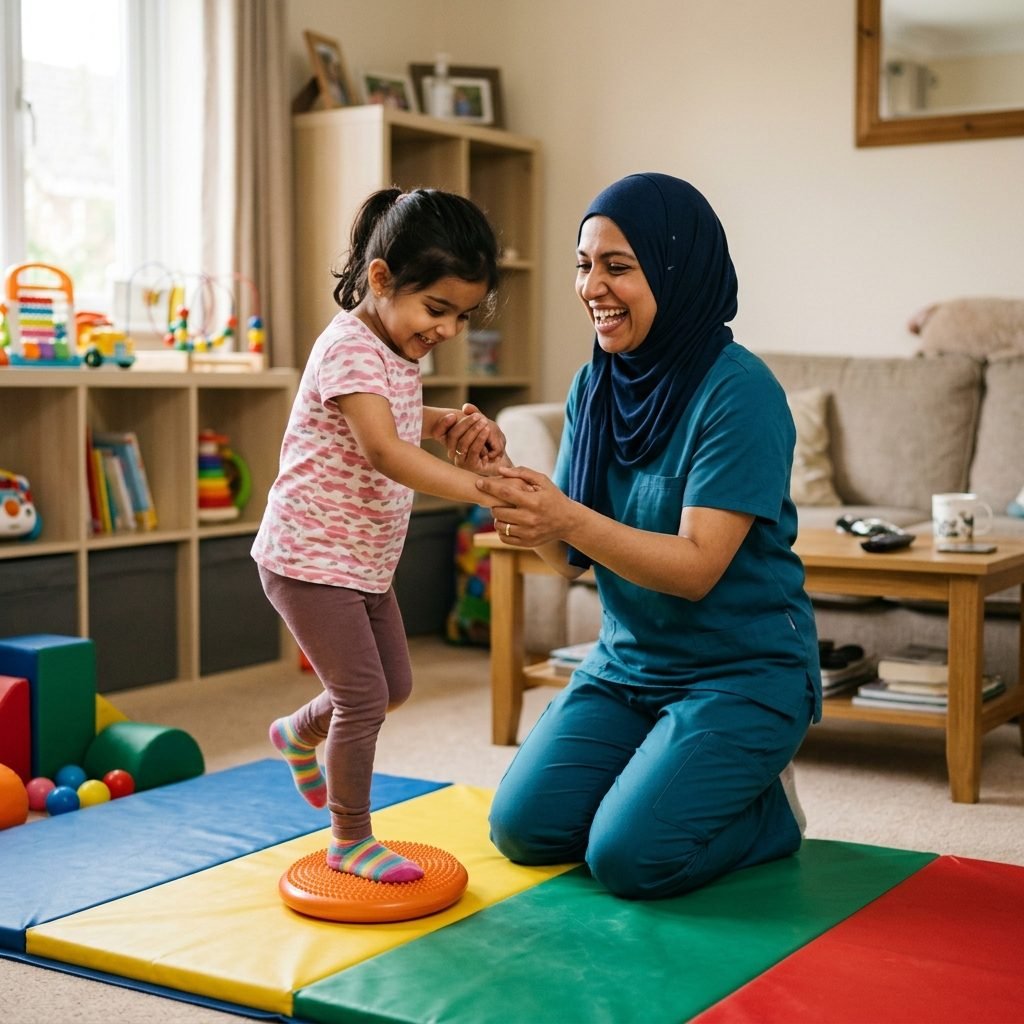
Cerebral palsy is not a single illness but a group of movement disorders caused by an injury to or abnormal development of the brain early in life, usually before birth, during delivery, or in the first months of infancy. The brain injury itself is fixed and does not worsen, yet the way it affects muscles, movement, and balance changes as the child grows. This is exactly where specialised physiotherapy earns its place: it works to improve motor function and to prevent secondary complications such as joint stiffness and postural deformities before they become permanent.
Delivering that therapy at home means moving the session into the environment where the child spends most of the day, the bed, the bedroom floor, the dining chair, the stairs. This matters because motor skills in a child with cerebral palsy are learned and consolidated within their real context. A child who practises independent sitting or supported standing against their own furniture tends to carry the skill over into daily life faster than one who only rehearses it in an unfamiliar clinic.
Al Hamra in Jeddah is a relatively calm residential district near the seafront, and repeatedly transporting a child who uses a wheelchair or leg braces can be exhausting for a family, especially at the peak of the city's heat and humidity. The home service spares the family the effort of moving the child and their equipment, protects the child's routine and sleep, and lets the therapist observe the actual living space and suggest realistic adjustments. At Bidaya Center, we provide this service through licensed male and female therapists, with full respect for the privacy of your home and the comfort of your family.
Signs and Symptoms That Signal It Is Time to Start
The earlier motor intervention begins, the better the chances of improving function, because a young child's brain has a high degree of neuroplasticity. For that reason we encourage families in Al Hamra not to wait for the child to simply grow out of it when they notice the following signs:
- Clear stiffness in the limbs, or the opposite, excessive floppiness and unusual limpness when the infant is picked up.
- Noticeable delay in motor milestones: no head control after around four months, no independent sitting at the expected age, or absence of crawling and standing.
- Using one side of the body far more than the other, such as always reaching for toys with a single hand before the age of one.
- Recurring abnormal postures: scissoring of the legs, a constantly fisted hand, or walking on tiptoes.
- Difficulty with feeding and swallowing, frequent choking, or poor control of mouth and tongue movements.
- Involuntary writhing movements or tremors, and difficulty holding a stable posture while sitting or standing.
Having one or more of these signs does not automatically confirm a diagnosis, but it is reason enough to request a specialised motor assessment. During that assessment we identify the movement pattern and the current functional level, and we build an individual plan on top of it rather than reaching for a ready-made solution.
Which Children and Cases Benefit
Home-based cerebral palsy rehabilitation is aimed at a wide spectrum of children across different patterns and severities, including:
- Children with the spastic pattern, marked by increased muscle tone and difficulty relaxing the muscles, which is the most common type.
- Children with the dyskinetic pattern, who show shifting involuntary movements.
- Children with the ataxic pattern, who struggle with balance and fine motor accuracy.
- Mixed cases that combine more than one pattern.
- Newly diagnosed children who need an early-intervention programme, and older children who need to preserve gains and prevent deformities.
- Children after surgical procedures such as tendon lengthening or botulinum toxin injections, where rehabilitation is a core part of the procedure's success.
- Children with associated problems such as trunk weakness, limited range of motion, or difficulty with functional sitting and standing.
Every child has a different functional level, so we treat each case on its own terms. A child whose goal is independent walking follows a fundamentally different programme from a child whose realistic goal is better sitting, positioning, and day-to-day comfort.
Goals of the Rehabilitation Programme
We do not promise a cure or guaranteed results. Goals are set after a clinical and functional assessment and are reviewed regularly according to how the child responds. In broad terms we work on:
- Regulating muscle tone through stretching and positioning techniques to reduce spasticity and make voluntary movement easier.
- Strengthening weak muscles, particularly the trunk and pelvic muscles that form the foundation of any higher motor skill.
- Preserving range of motion in the joints and preventing contractures and deformities that might later require surgery.
- Developing functional motor milestones in sequence: head control, sitting, crawling, standing, transfers, and then walking for those whose level allows it.
- Improving balance and coordination and postural control during everyday activities.
- Supporting functional independence in skills such as changing positions and moving from the floor to standing.
- Training the family in correct lifting, positioning, and handling to avoid straining the child or the caregiver.
Stages and Flow of the Home Sessions
We follow a structured path that begins with a precise understanding of the case and ends with an empowered family:
- Initial assessment: a visit in which we review the medical history and reports, evaluate muscle tone, range of motion, strength, balance, and motor milestones, and observe the child within their real environment inside the Al Hamra home.
- Plan and goal-setting: we formulate measurable short-term and long-term goals, agree on them with the family, and determine a suitable session frequency.
- Therapy sessions: targeted therapeutic exercises, movement facilitation, training on functional milestones, and the use of games and activities the child enjoys to raise motivation and cooperation.
- Positioning and assistive devices: we guide the family on using splints, supportive seating, or walking aids when needed, and coordinate with the relevant providers when they need adjusting.
- Reassessment and review: we measure progress at intervals and adjust goals and exercises, since what works at one stage may change as the child grows.
- Ongoing home programme: we hand the family simple daily exercises, because the repetition between sessions is what truly consolidates the gains.
The Role of the Family and Caregiver
Successful rehabilitation of a child with cerebral palsy is never achieved by the sessions alone. The child spends the greatest part of the day with the family, and the family is the most important therapeutic partner. For that reason we make sure a parent or caregiver is present and involved in every session.
- We train parents in how to lift, transfer, and position the child during sleep and sitting in a way that reduces spasticity and protects the joints.
- We explain how to weave exercises into the daily routine, during dressing, bathing, play, and mealtimes, so they are not an added burden.
- We help the family read the child's signals of fatigue, pain, or resistance, and learn when to stop and when to encourage.
- We offer support in understanding the condition and managing expectations realistically, since progress in cerebral palsy comes in small, accumulating steps.
An empowered family turns the whole home into a supportive therapeutic environment, and that is the greatest impact of the home service.
Home Safety and Prevention Tips
Adapting the home environment is a core part of both safety and progress. Here is practical guidance for families in Al Hamra:
- Provide a safe, non-slip surface for exercises, with a firm mat that does not slide.
- Ensure correct positioning during long periods of sitting and sleeping to avoid joints settling into faulty positions.
- Avoid leaving the child in a single position for long stretches, and change their position regularly to protect the skin and joints.
- Stabilise any furniture the child may lean on during standing practice, and remove sharp edges nearby.
- Keep checking the fit of assistive devices such as splints and chairs as the child grows, because the wrong size can do more harm than good.
- Watch for signs of skin irritation under splints or straps, and never ignore any recurring complaint of pain.
- Maintain adequate ventilation and cooling, as high temperatures can add to the child's fatigue during exercise.
Frequently Asked Questions (FAQ)
Can my child fully recover and walk normally?
Cerebral palsy is a permanent condition, so we do not promise a complete cure. However, many children achieve meaningful functional improvement with early, regular rehabilitation. The extent of improvement and the type of goals depend on assessing each case individually, and we set realistic goals and review them continuously.
What is the right age to start physiotherapy?
The earlier the better, thanks to the high neuroplasticity of the first years, and intervention can begin even in infancy when there are early indicators. That said, there is no age that is too late, rehabilitation is valuable at every stage to preserve function and prevent complications.
How many sessions does my child need each week?
There is no fixed formula. The frequency is decided after the assessment according to the severity of the case, its goals, the child's age, and their tolerance. More important than the number is consistency and the family's commitment to the home programme between sessions.
Is a female therapist available with privacy respected?
Yes, we have licensed male and female therapists, and you can request a female therapist when booking. We are committed to the complete privacy of your home and the comfort of your family on every visit within Al Hamra.
Do you bring equipment and tools to the home?
We bring the essential therapy tools needed for the session and rely a great deal on making smart use of the home's furniture and the child's toys. As for specialised devices such as splints and supportive chairs, we guide you on how to obtain them and fit them correctly for your child.
To book a home visit for your child's cerebral palsy rehabilitation in the Al Hamra district of Jeddah, or to ask about an initial assessment, contact Bidaya Center by phone or WhatsApp by clicking Call Now, and we will be glad to help you choose a suitable time and arrange the visit.
Important Home Visit Details:
- ✓Setup: Please clear a 2x2m space in the room for safety.
- ✓Clothing: Wear loose, comfortable clothes for easy movement.
- ✓Therapist Parity: Male therapists for males, females for females.
- ✓Medical Reports: Keep your MRI or doctor reports ready for evaluation.
Rehabilitation & Services in Al Hamra
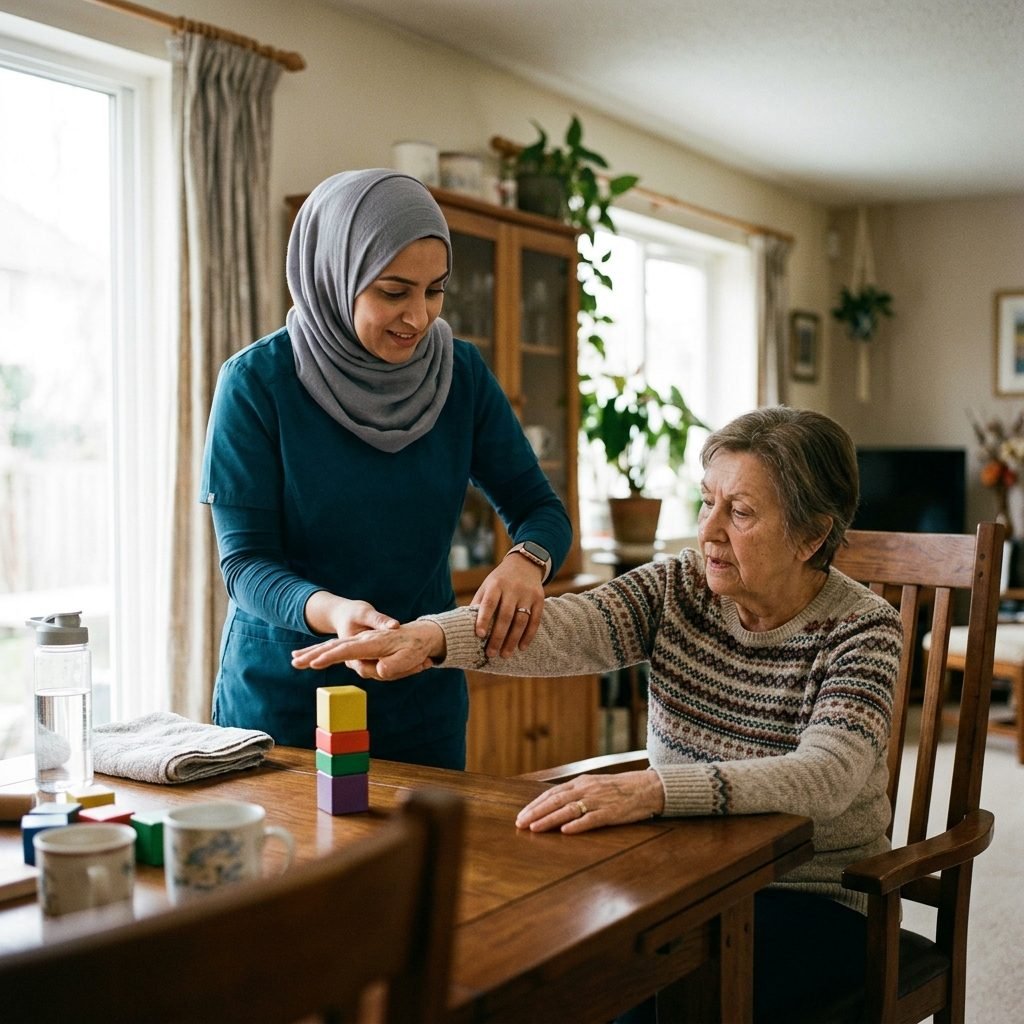
Stroke Rehabilitation
Advanced motor and neurological stroke recovery at home in Al Hamra.
Service Details ←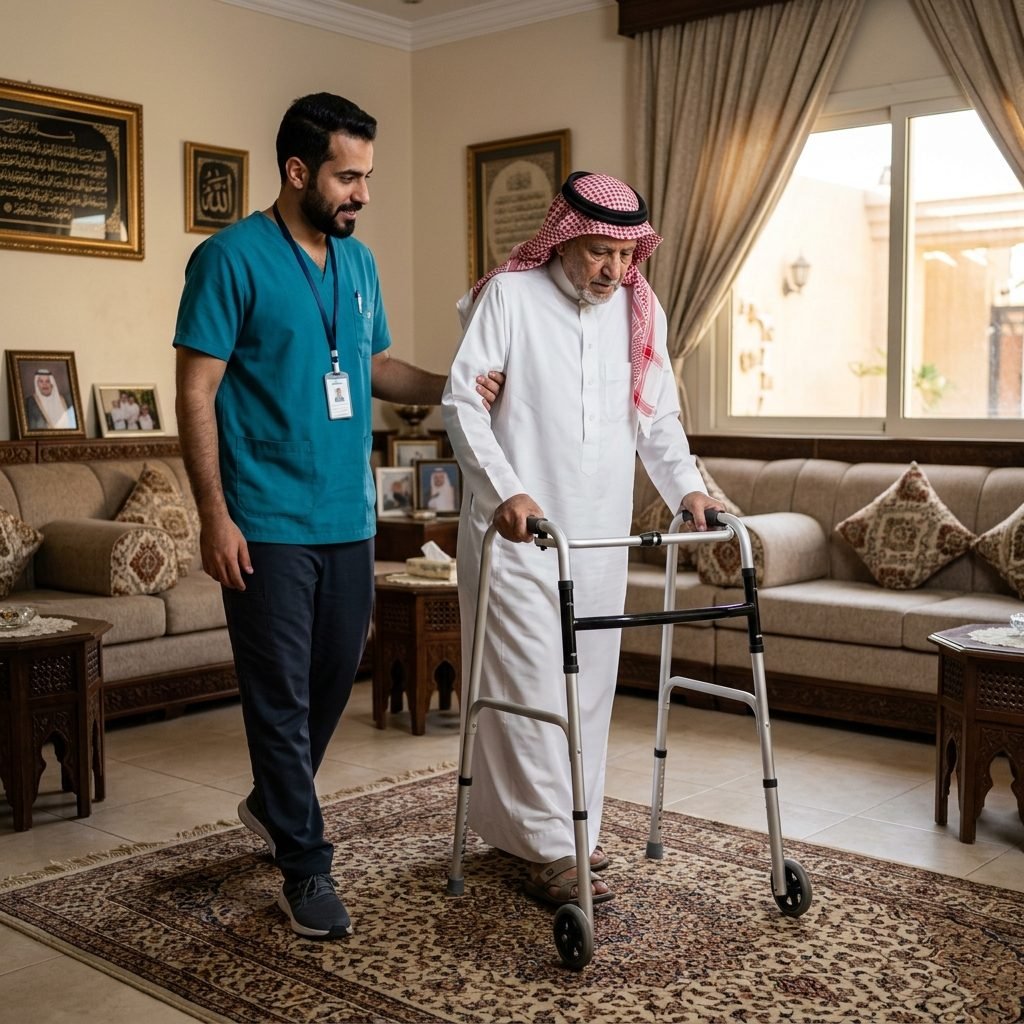
Geriatric Physical Therapy
Balance training, strengthening, and fall prevention for seniors in Al Hamra.
Service Details ←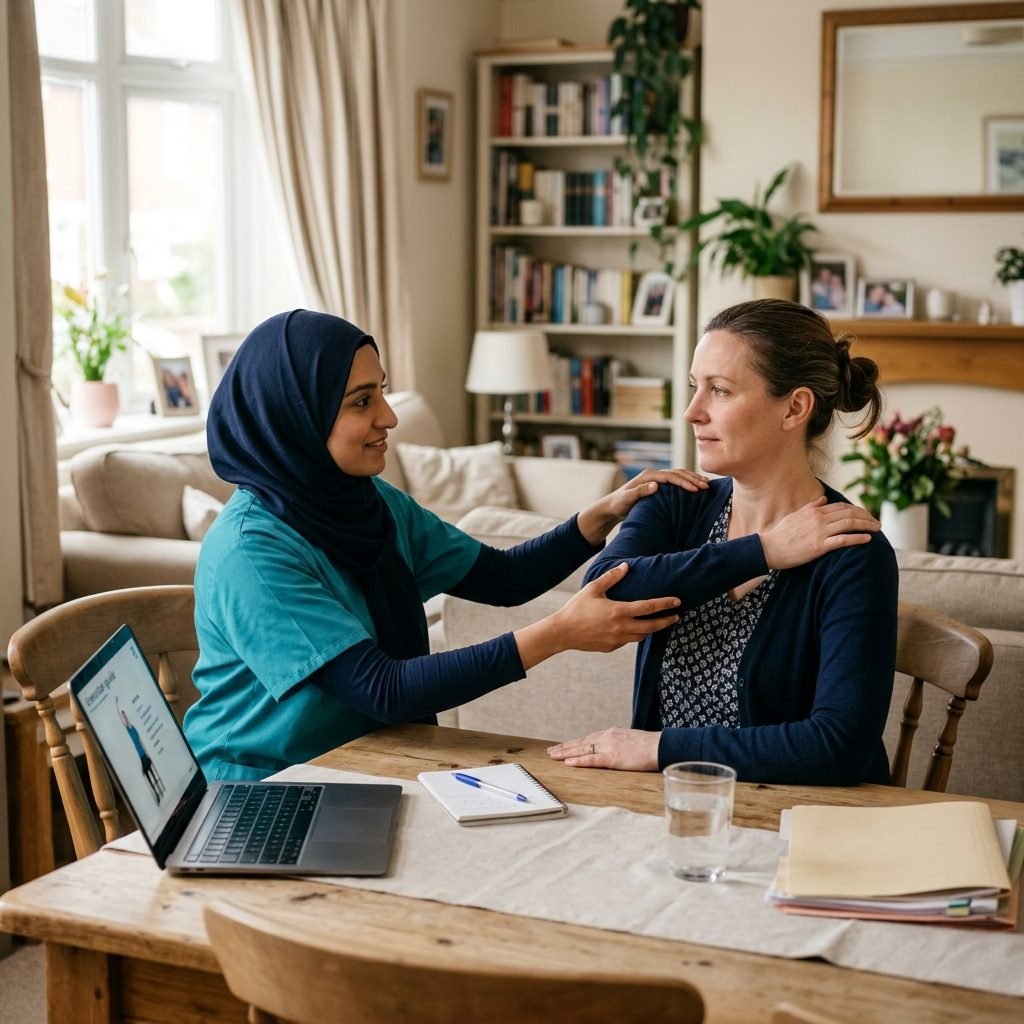
Female Physiotherapist
Licensed female therapists providing home care for women in Al Hamra.
Service Details ←