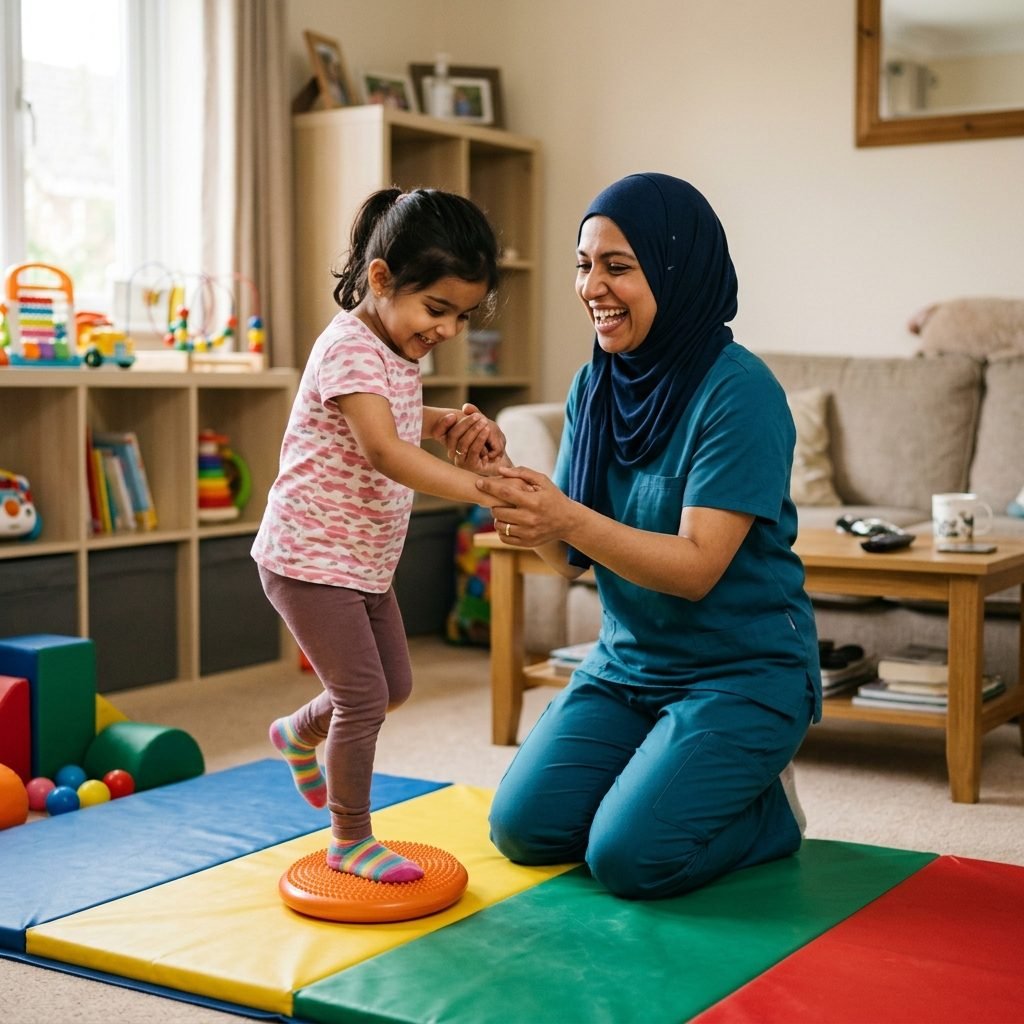
Having access to comprehensive, clinical physical therapy at home is crucial for maintaining rehabilitation progress, especially in busy neighborhoods. Al-Safa and Al Hamra districts in Jeddah present unique local mobility challenges due to high population density and traffic. At Bidaya Center, we deliver high-quality home physiotherapy and movement rehabilitation services directly to your doorstep, conforming to the clinical guidelines of the Saudi Commission for Health Specialties. We eliminate the stress of travel, traffic, and parking. We respect cultural privacy by providing certified male therapists for male patients and female therapists for female patients.
Our clinical approach in Al Hamra starts with a detailed physical and environmental safety assessment to eliminate fall hazards in the home. We bring all necessary portable, sterilized equipment to deliver a clinical standard of care comparable to external clinics. The therapist establishes a tailored milestone tracking plan to monitor muscle strength, balance, and joint range of motion (ROM) progression over time.
Why families in Al Hamra choose Bidaya for home physiotherapy
- ✅ Licensed male & female therapists — full privacy, in your own home in Al Hamra.
- ✅ Fully in-home visits across Al Hamra — no travel or traffic.
- ✅ A personalized rehab plan built after a thorough in-home assessment.
- ✅ Continuous follow-up and direct contact with your therapist throughout.
- ✅ Fast response — arrange your visit by a quick call or WhatsApp message.
We also serve nearby areas: Al Andalus · Al Basateen · Al Bawadi
* The treatment plan and expected outcomes are determined by a medical and functional assessment of each individual case.
Home-Based Care for Delayed Walking in Children and Why It Matters for Al Hamra Families
When a child is late to walk, it is rarely just about a missing first step. Independent walking sits on top of a whole staircase of earlier skills: head and trunk control, independent sitting, crawling, pulling to stand, and cruising along the furniture. A delay in any of these can quietly hold back the ability to walk. When a child passes eighteen months without taking independent steps, or walks with an unusual pattern such as persistent toe-walking or noticeably bowed legs, an early assessment stops being optional and becomes genuinely useful. Home physiotherapy for delayed walking rests on a simple but powerful idea: a child learns to walk best in the environment where they actually live, not in an unfamiliar clinic room.
In the Al Hamra district of Jeddah, where family villas and apartments sit in a calm, residential setting near the coast, many parents discover that hauling a tired or frightened toddler across the city to a distant clinic drains the child before the session even starts. A little one who cries the whole way arrives exhausted and unwilling to play or move. When a licensed physiotherapist comes to the family's home in Al Hamra instead, the child's energy is preserved and poured into the session itself. The skill is trained on the floor of their own room, against their own furniture, and on the very stairs they will climb every day. That link between a skill and the real place it belongs to speeds up walking and makes it functional and lasting.
At Bidaya Center, we provide a complete home service for children in Al Hamra through licensed male and female therapists, with full respect for the family's privacy and comfort. We do not promise a fixed outcome or a guaranteed date for that first step, because every child is different. Instead, we build the plan and the expectations on a careful clinical and functional assessment of your individual child.
Signs and Symptoms That Signal It Is Time to Start
Noticing the early markers of motor delay can save a child and family precious months. Signs that warrant a specialist physiotherapy assessment include:
- Not sitting independently and steadily by around nine months, or clear weakness in head and trunk control.
- Absence of crawling, scooting, or any self-directed way of moving by ten to twelve months.
- Not pulling up to stand against furniture after one year of age.
- No independent steps by eighteen months, one of the clearest markers of delayed walking.
- Persistent walking on tiptoes, or walking with feet turned noticeably inward or outward.
- Strongly favouring one side of the body when moving or grasping, which may hint at uneven muscle strength.
- Excessive floppiness (a "loose", low-tone child) or, conversely, stiffness and tightness in the leg muscles.
- Falling far more often than is typical for the age, and difficulty getting up from the floor without heavy help.
Having one or more of these signs does not automatically mean a serious diagnosis, but it does deserve a calm, professional assessment. Starting early takes advantage of how adaptable the nervous system is in the first years, a precious window for motor learning.
Conditions and Groups Who Benefit
Delayed walking is an umbrella covering many different causes, and our home programme in Al Hamra is designed around the cause and functional level, never a one-size template. Children who typically benefit include:
- Children with mild or isolated motor delay without a clear underlying condition, who need structured stimulation to build strength and balance.
- Children with low muscle tone (hypotonia) or with increased muscle tone.
- Premature babies, who may show motor milestones later when measured against their corrected age.
- Children with developmental disorders or syndromes affecting motor development, within a broader rehabilitation plan.
- Children who do walk but with a faulty pattern, such as toe-walking or a crookedness that needs correcting.
- Children recovering after periods of immobilisation, rest, or a medical intervention that temporarily reduced their strength and confidence in moving.
In all of these situations, the initial assessment remains the foundation that determines how suitable home care is, and whether the case also needs a referral or parallel specialist follow-up.
Goals of the Rehabilitation Programme
Our aim is not simply that the child "walks", but that they walk safely, steadily, and with a sound pattern that serves them in daily life inside their Al Hamra home and beyond. Goals are shaped together with the family and include:
- Strengthening the trunk, pelvic, and leg muscles that form the base of balance and standing.
- Improving both static and dynamic balance so the child can stand and move without fear of falling.
- Developing the natural motor sequence: from sitting to crawling to standing to independent walking.
- Correcting faulty walking patterns as far as possible before they harden into a fixed motor habit.
- Increasing joint range and flexibility and preventing shortening of the muscle tendons.
- Building the child's confidence in their own body and sparking their motivation to move through purposeful play.
- Equipping the family to keep up the right stimulation between sessions with confidence.
These goals are reviewed regularly and adjusted according to the child's response, because progress is measured by tangible skills, not by promises made in advance.
Stages and Pathway of the Home Sessions
We follow a clear pathway that begins with understanding the child before training them:
- Initial assessment: On the first visit to your Al Hamra home, we assess muscle strength, muscle tone, balance, joint range, and the current motor stage, and we listen to the parents' notes about the child's routine.
- Individual plan: We set short-term and longer-term goals and choose exercises and play activities suited to the child's age and home environment.
- Therapy sessions: Strengthening, balance, and movement-stimulation exercises delivered through play to hold the child's attention, using household furniture and simple available tools.
- Functional training: Applying the skill in its real context: standing at the sofa, moving between rooms, and gradual supervised stair climbing on the home staircase.
- Re-assessment and follow-up: Periodic measurement of progress and adjustment of the plan, with home exercises given to the family for the time between sessions.
The number of sessions and how often they are held depend on the child's condition and response, and are decided after the assessment rather than before it.
The Role of the Family and Caregiver
A child spends most of the day with their family, not with the therapist, which makes the parents' role in Al Hamra central to the programme's success. We make sure parents are trained partners, not just onlookers:
- Repeating the recommended simple exercises within daily play, in short and frequent doses.
- Setting up an environment that encourages movement: placing toys at a distance that tempts the child to reach for them and stand.
- Reducing over-reliance on the bouncing baby walker, which may not support sound walking development.
- Noticing and jotting down changes in the child to share with the therapist at follow-up.
- Patience and positive encouragement at every attempt, because motivation is part of the therapy.
We provide clear, practical guidance to parents with full respect for the privacy of the home, and the mother, father, or caregiver is welcome to be present at every session.
Home Safety and Prevention Tips
The home where a child learns to walk should be both safe and stimulating at once. For Al Hamra children approaching the standing and stepping stage, we recommend:
- Removing slippery rugs and exposed cables from the child's likely movement paths.
- Fitting safety gates at the top and bottom of the stairs in multi-level villas and apartments.
- Cushioning sharp table edges and securing tip-prone furniture that the child might lean on.
- Letting the child go barefoot or in non-slip socks on safe surfaces to strengthen the foot's sense of the ground.
- Directly supervising standing and transfer practice and never leaving the child standing unwatched.
- Avoiding anxious comparison with other children and consulting the therapist if a mastered skill suddenly regresses.
These are general preventive measures that support the programme and do not replace an individual specialist assessment for each child.
Frequently Asked Questions (FAQ)
My son is past eighteen months and still not walking. Should I be worried?
Not taking independent steps by eighteen months deserves a specialist assessment to identify the cause, but it does not necessarily mean a serious problem; an early assessment is the most accurate way to learn what your child specifically needs.
Are home sessions as effective as clinic sessions for delayed walking?
The home environment offers a real advantage because the child practises walking in their actual space with their familiar tools, while preserving their energy and emotional comfort; the degree of benefit is determined for each child after the assessment.
Will using a baby walker help my child walk sooner?
The bouncing walker may not support the development of a sound walking pattern and can delay some skills, so we discuss the most suitable alternatives with the family within the child's individual plan.
How many sessions will my child need?
A fixed number cannot be set in advance; it depends on the cause and degree of the delay and the child's response, and it is mapped out after the initial assessment and reviewed periodically.
Is a female therapist available out of respect for privacy?
Yes, both licensed male and female therapists are available, and you can choose what suits the family's comfort while the privacy of the Al Hamra home is fully preserved.
To book a home assessment for your child in Al Hamra, Jeddah, or to ask about physiotherapy for delayed walking in children, contact Bidaya Center by phone or WhatsApp by clicking Call Now. We would be glad to help you take the first step toward your child's first steps.
Important Home Visit Details:
- ✓Setup: Please clear a 2x2m space in the room for safety.
- ✓Clothing: Wear loose, comfortable clothes for easy movement.
- ✓Therapist Parity: Male therapists for males, females for females.
- ✓Medical Reports: Keep your MRI or doctor reports ready for evaluation.
Rehabilitation & Services in Al Hamra
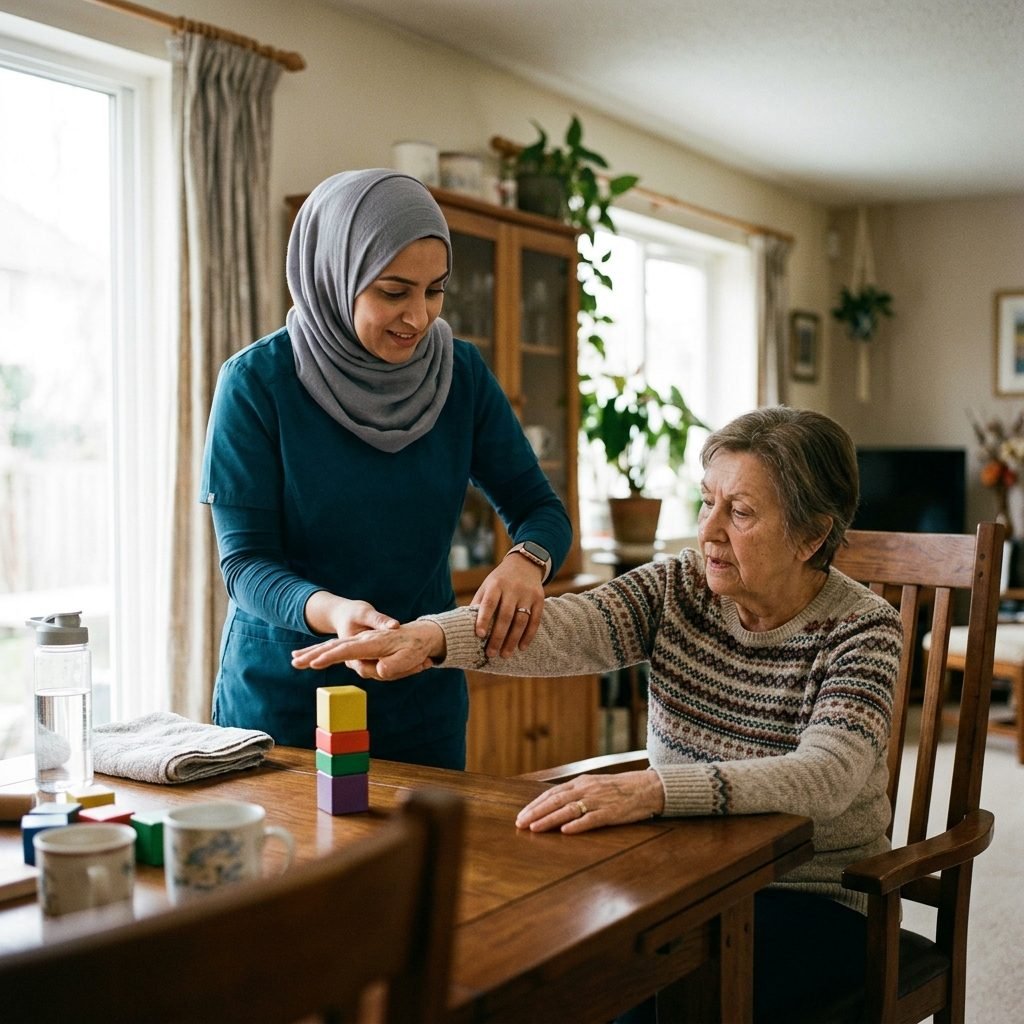
Stroke Rehabilitation
Advanced motor and neurological stroke recovery at home in Al Hamra.
Service Details ←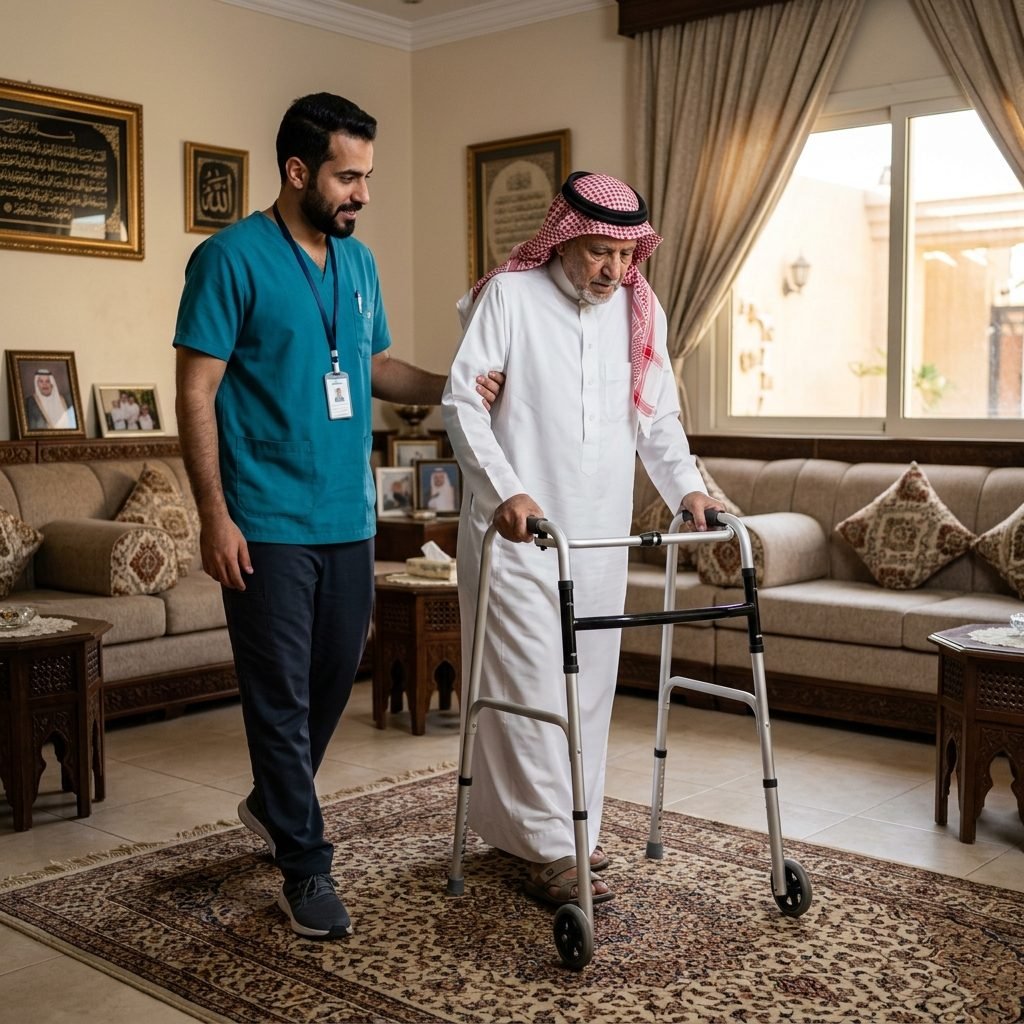
Geriatric Physical Therapy
Balance training, strengthening, and fall prevention for seniors in Al Hamra.
Service Details ←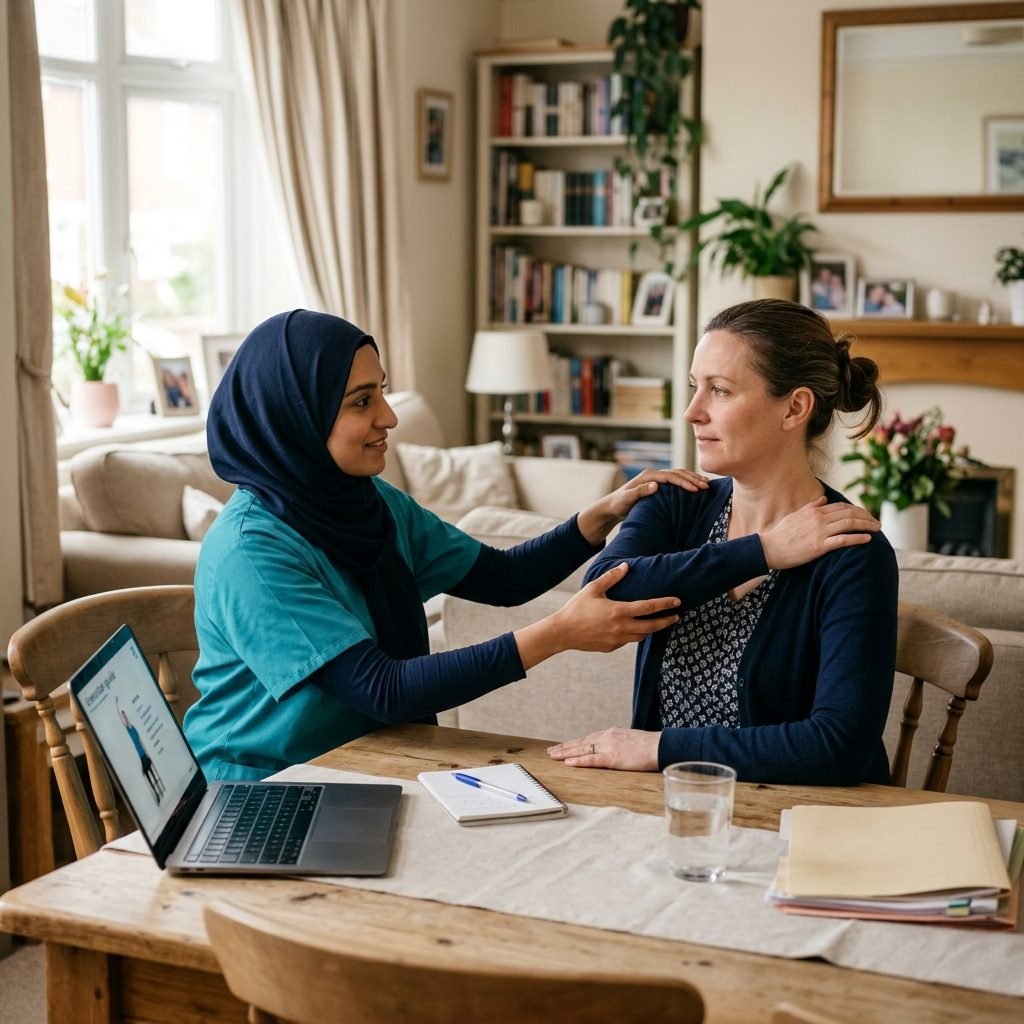
Female Physiotherapist
Licensed female therapists providing home care for women in Al Hamra.
Service Details ←