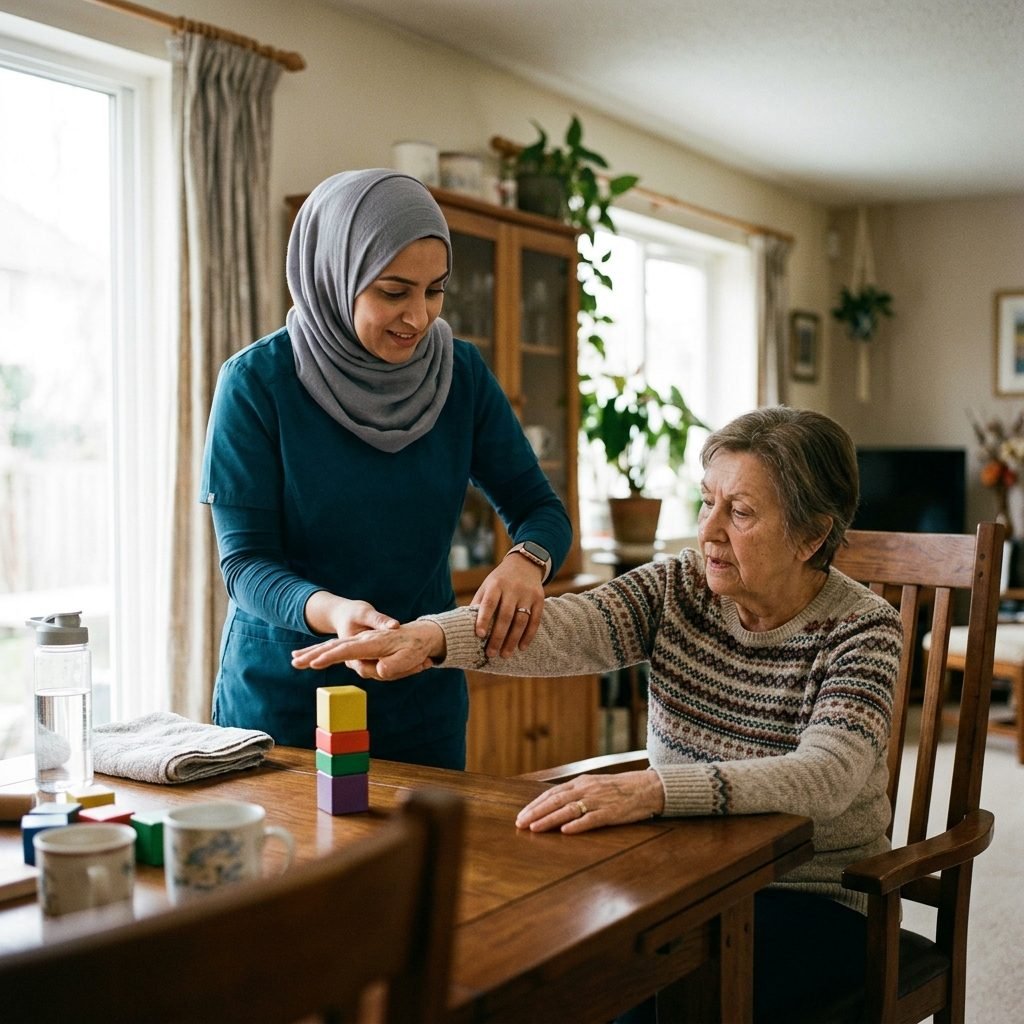
Having access to comprehensive, clinical physical therapy at home is crucial for maintaining rehabilitation progress, especially in busy neighborhoods. Al-Safa and Al Hamra districts in Jeddah present unique local mobility challenges due to high population density and traffic. At Bidaya Center, we deliver high-quality home physiotherapy and movement rehabilitation services directly to your doorstep, conforming to the clinical guidelines of the Saudi Commission for Health Specialties. We eliminate the stress of travel, traffic, and parking. We respect cultural privacy by providing certified male therapists for male patients and female therapists for female patients.
Our clinical approach in Al Hamra starts with a detailed physical and environmental safety assessment to eliminate fall hazards in the home. We bring all necessary portable, sterilized equipment to deliver a clinical standard of care comparable to external clinics. The therapist establishes a tailored milestone tracking plan to monitor muscle strength, balance, and joint range of motion (ROM) progression over time.
Why families in Al Hamra choose Bidaya for home physiotherapy
- ✅ Licensed male & female therapists — full privacy, in your own home in Al Hamra.
- ✅ Fully in-home visits across Al Hamra — no travel or traffic.
- ✅ A personalized rehab plan built after a thorough in-home assessment.
- ✅ Continuous follow-up and direct contact with your therapist throughout.
- ✅ Fast response — arrange your visit by a quick call or WhatsApp message.
We also serve nearby areas: Al Andalus · Al Basateen · Al Bawadi
* The treatment plan and expected outcomes are determined by a medical and functional assessment of each individual case.
Home-Based Hemiplegia Rehabilitation and Why It Matters for Al Hamra Residents
Hemiplegia is weakness or loss of movement affecting one side of the body, the arm, the leg, and sometimes the facial muscles, on the side opposite the injured area of the brain. It most often follows a stroke, a brain bleed, a head injury, or a brain tumor, and it also appears in children as one form of cerebral palsy. Hemiplegia rehabilitation is not a set of casual exercises; it is a structured neuromotor program that retrains the brain and nervous system to recover as much control of the affected side as possible, reduce stiffness, and rebuild independence in everyday tasks.
When this rehabilitation is delivered inside the home in Al Hamra, it gains real added value. Al Hamra is an upscale residential district along the northern seafront of Jeddah, dense with residential towers and villas where repeated travel to a center can be exhausting for a patient who struggles with balance or with descending from an upper floor. Bringing the session to the patient's home removes the burden of transport, lowers the risk of falls while going out, and lets the therapist train the patient in the very environment they navigate every day: the doorway threshold, the bathroom, the sofa they sit on, and the hallway they walk between rooms.
The core advantage of home care is that it makes practice realistic and functional. Instead of rehearsing on artificial steps in a clinic, the patient trains on their own real staircase; instead of a demonstration chair, they learn to stand up from their usual seat. This direct link between exercise and daily life speeds up skill acquisition and strengthens the confidence of both patient and family. We stress that the path and expected outcomes of every case are set only after a careful clinical and functional assessment, because no single program fits everyone.
Symptoms and Signs That Call for Starting
The earlier and more consistently rehabilitation begins, the better the chance of functional improvement. Signs that call for starting a structured home program include:
- Clear weakness on one side of the body, whether the arm, the leg, or both, with difficulty lifting or holding the limb steady.
- Muscle stiffness and spasticity that pull the elbow, wrist, or ankle into a bent position that is hard to straighten.
- Impaired balance and walking, with the body leaning to one side or the affected foot dragging during steps.
- Difficulty grasping objects, loss of precision in the hand and fingers, or dropping tools.
- Numbness, tingling, or reduced sensation on the affected side, sometimes neglecting it as if it were not part of the body.
- Drooping at the corner of the mouth, or difficulty with speech or swallowing accompanying the one-sided weakness.
- A decline in daily activities such as dressing, bathing, and moving from bed to chair.
The appearance of any of these signs, especially after a medically diagnosed stroke or head injury, indicates the need for a specialist assessment to begin a rehabilitation plan. We emphasize that any sudden, acute symptoms, such as new abrupt weakness or altered consciousness, require immediate emergency care before rehabilitation is even considered.
Conditions and Groups That Benefit
The home hemiplegia rehabilitation program in Al Hamra serves a broad group who share one-sided body weakness, including:
- Post-stroke patients (ischemic or hemorrhagic) who have been discharged from hospital and need regular rehabilitation follow-up in their own environment.
- People with a brain bleed or who have undergone brain surgery and are left with one-sided motor weakness.
- Patients with traumatic head injuries (after accidents) that resulted in partial or complete hemiplegia.
- Children with the hemiplegic form of cerebral palsy, who need early, age-appropriate motor training.
- Older adults with one-sided weakness for whom repeated travel to a center is difficult.
- Patients in advanced recovery stages seeking to refine fine-motor skills and regain full independence as far as possible.
We have licensed female and male therapists available, so each family can choose what suits them while full privacy is guaranteed inside the home, something many residents of Al Hamra's towers and villas value highly.
Goals of the Rehabilitation Program
Rehabilitation goals are built after a functional assessment of each case and are framed to be measurable and trackable. The most important include:
- Improving motor control of the affected side and reactivating natural movement patterns as much as possible.
- Reducing spasticity and muscle stiffness and preserving joint range of motion to prevent contractures.
- Enhancing balance and the ability to stand and transfer safely between bed, chair, and bathroom.
- Improving the walking pattern, reducing reliance on the sound side alone, and training the use of assistive devices when needed.
- Restoring hand and finger function: grasping, releasing, and precision in daily tasks.
- Raising independence in daily activities such as dressing, eating, and personal hygiene.
- Preventing complications such as pressure sores, blood clots, and the shoulder pain that often accompanies hemiplegia.
These goals are reviewed periodically and adjusted according to the patient's progress; some improve first in the trunk and balance, others in the hand. For that reason we avoid promising any specific result and always tie expectations to the actual assessment.
Stages and Course of the Home Sessions
Home rehabilitation in Al Hamra follows a considered path that starts from the very first visit:
- Initial assessment: the therapist visits the home and evaluates muscle strength, range of motion, balance, degree of spasticity, and level of independence, reviewing any medical reports or imaging.
- Building the plan: short- and long-term goals are set, and the appropriate weekly session count and type of exercises are determined.
- Activation and protection stage: focuses on range-of-motion exercises, correct positioning of the affected limb, and gentle exercises to awaken movement and avoid stiffness.
- Strengthening and control stage: introducing graded resistance exercises, balance training, transfers, and safe weight-bearing on the affected side.
- Function and walking stage: training walking within the home's hallways, standing up from a chair, and climbing stairs where present, while integrating hand tasks into daily life.
- Independence and follow-up stage: refining skills, setting a home program the patient performs between sessions, and periodic review to measure progress and adjust the plan.
The length of each stage and the pace of moving between them differ from one patient to another according to age, the cause and severity of the injury, and commitment to the home exercises.
The Role of the Family and Caregiver
The family is a core partner in the success of hemiplegia rehabilitation, because session hours are limited while the patient spends most of the day with loved ones. We therefore train the caregiver on:
- Correct positioning of the affected limb during sitting and sleeping to avoid spasticity and shoulder pain.
- Safe transfer methods for moving the patient from bed to chair and to the bathroom without strain or fall risk.
- Supervising simple home exercises between sessions and encouraging the patient to use the affected hand in daily tasks.
- Noticing warning signs such as skin redness, leg swelling, or a sudden increase in stiffness, and reporting them to the team.
- Psychological support and motivation, since many hemiplegia patients experience frustration and family encouragement makes a large difference in adherence.
We make sure the caregiver leaves each session with clear, practical knowledge, so the home becomes a supportive therapeutic environment throughout the day, not just a place where a session happens.
Home Safety and Prevention Tips
Preparing the home is essential to protecting a hemiplegia patient, especially in the tower apartments and multi-floor villas common in Al Hamra. Key tips include:
- Removing loose rugs and cables from walking paths to reduce the risk of tripping and falling.
- Installing fixed grab bars in the bathroom and near the toilet, and using a shower chair when needed.
- Providing adequate lighting in hallways and on stairs, especially at night, and avoiding slippery or wet floors.
- Arranging furniture so there is a clear, wide path for the patient and any assistive device they use.
- Avoiding leaving the patient to stand or transfer alone in the early stages before the therapist approves it.
- Caring for the skin of the affected side and changing position regularly for those confined to bed, to prevent pressure sores.
- Maintaining regular physical activity within safe limits, along with good hydration and nutrition to support recovery.
These measures are tailored to the layout of each home, and the therapist offers practical recommendations after inspecting the patient's actual environment.
Frequently Asked Questions (FAQ)
When is it best to start hemiplegia rehabilitation?
It is generally advised to begin as soon as it is safe after the medical condition is stable and with the treating physician's approval, because early, consistent starting offers a better chance of recovering function, though each case is assessed individually.
Can rehabilitation fully restore movement?
No specific result can be guaranteed; the degree of improvement depends on the cause and severity of the injury, the patient's age, and their commitment to the program. Our aim is the greatest possible independence, and expectations are set after the clinical and functional assessment.
How many sessions per week does a patient need?
The number varies by case and stage; some cases need closely spaced sessions at first that then spread out as improvement occurs. The suitable schedule is set in the treatment plan after the first visit.
Is a female therapist available for female patients?
Yes, licensed female and male therapists are available, and the most suitable can be chosen with full privacy guaranteed inside the home.
What do I need to prepare at home before the session?
A relatively open space for movement, a stable chair, and any previous medical reports or imaging are enough; the therapist will guide you on any additional needs after inspecting the space during the first visit.
To book a home visit for hemiplegia rehabilitation in the Al Hamra district of Jeddah, or to ask about the initial assessment, contact us by phone or via WhatsApp by clicking Call Now, and the Bidaya Center team will be glad to help you and arrange a suitable appointment.
Important Home Visit Details:
- ✓Setup: Please clear a 2x2m space in the room for safety.
- ✓Clothing: Wear loose, comfortable clothes for easy movement.
- ✓Therapist Parity: Male therapists for males, females for females.
- ✓Medical Reports: Keep your MRI or doctor reports ready for evaluation.
Rehabilitation & Services in Al Hamra
Stroke Rehabilitation
Advanced motor and neurological stroke recovery at home in Al Hamra.
Service Details ←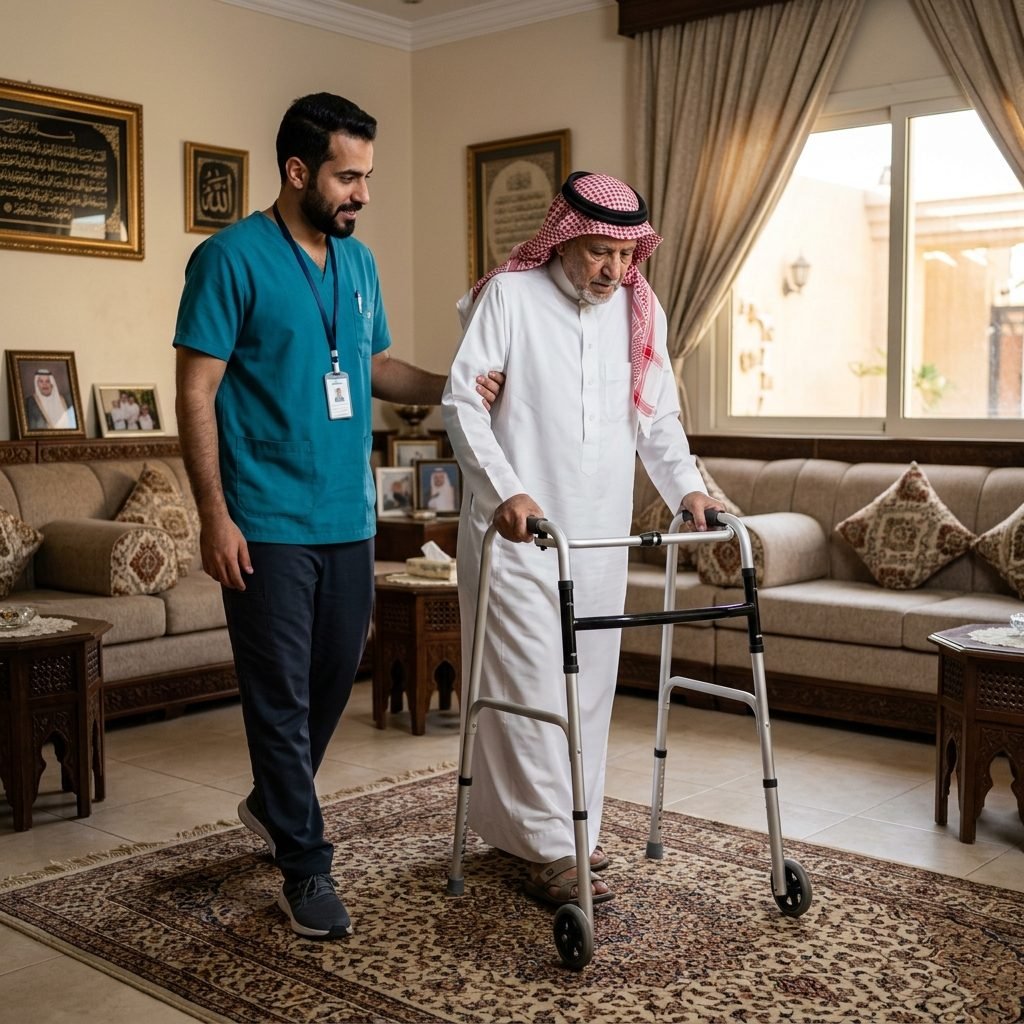
Geriatric Physical Therapy
Balance training, strengthening, and fall prevention for seniors in Al Hamra.
Service Details ←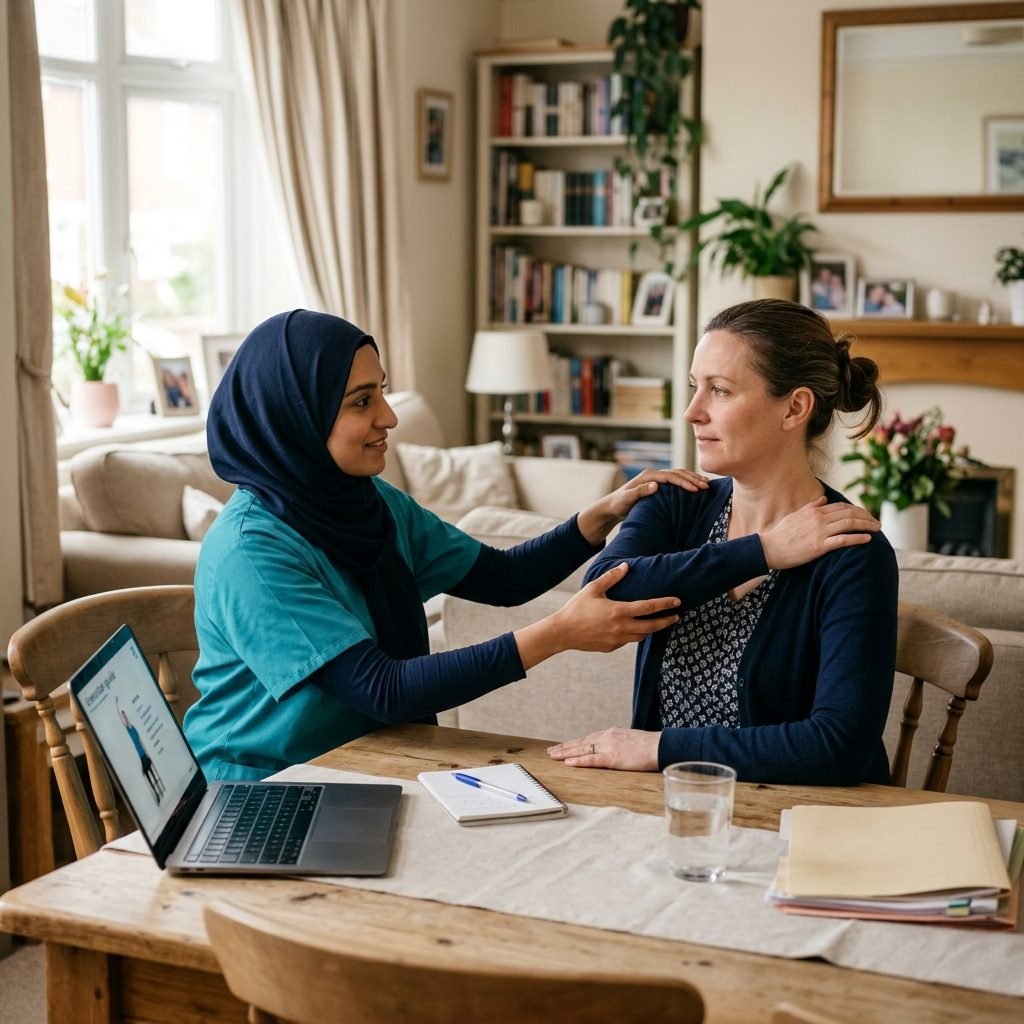
Female Physiotherapist
Licensed female therapists providing home care for women in Al Hamra.
Service Details ←