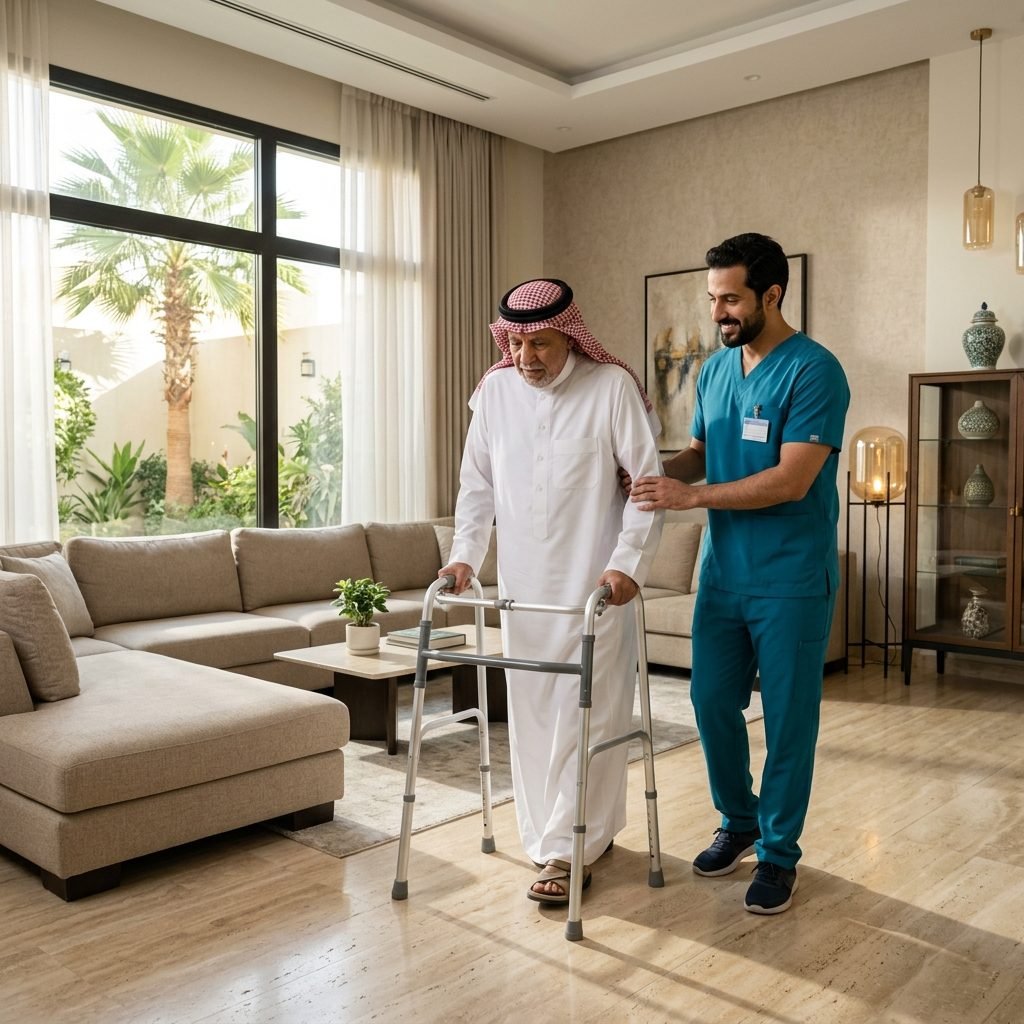
Having access to comprehensive, clinical physical therapy at home is crucial for maintaining rehabilitation progress, especially in busy neighborhoods. Al-Safa and Al Hamra districts in Jeddah present unique local mobility challenges due to high population density and traffic. At Bidaya Center, we deliver high-quality home physiotherapy and movement rehabilitation services directly to your doorstep, conforming to the clinical guidelines of the Saudi Commission for Health Specialties. We eliminate the stress of travel, traffic, and parking. We respect cultural privacy by providing certified male therapists for male patients and female therapists for female patients.
Our clinical approach in Al Hamra starts with a detailed physical and environmental safety assessment to eliminate fall hazards in the home. We bring all necessary portable, sterilized equipment to deliver a clinical standard of care comparable to external clinics. The therapist establishes a tailored milestone tracking plan to monitor muscle strength, balance, and joint range of motion (ROM) progression over time.
Why families in Al Hamra choose Bidaya for home physiotherapy
- ✅ Licensed male & female therapists — full privacy, in your own home in Al Hamra.
- ✅ Fully in-home visits across Al Hamra — no travel or traffic.
- ✅ A personalized rehab plan built after a thorough in-home assessment.
- ✅ Continuous follow-up and direct contact with your therapist throughout.
- ✅ Fast response — arrange your visit by a quick call or WhatsApp message.
We also serve nearby areas: Al Andalus · Al Basateen · Al Bawadi
* The treatment plan and expected outcomes are determined by a medical and functional assessment of each individual case.
What integrated home physiotherapy means and why it matters for Al Hamra residents
Integrated home physiotherapy is the practice of moving a full rehabilitation session, with all of its components, out of the clinic and into the patient's own room inside their home in Al Hamra, Jeddah. A licensed therapist arrives with the assessment tools and core equipment needed to begin a program built around the person's actual condition rather than a ready-made template. The word "integrated" is deliberate: this is not one exercise repeated on a loop, but a system that combines movement, strength and balance assessment, retraining of everyday functional skills, manual therapy where indicated, adjustment of the home environment, family education, and session-by-session progress tracking.
Al Hamra is a quiet residential district in central-north Jeddah, close to the seafront, home to settled families, older residents, and expatriates who value privacy and prefer to avoid the strain of commuting. That residential character makes home-based care a logical choice. Instead of moving a frail patient, an elderly person, or someone in acute pain out into road congestion and heat, then having them wait for their turn, rehabilitation happens in the very environment where they will actually use what they learn. A session in the place where the patient lives means the exercise is tied directly to their reality: the same stairs they climb, the same chair they rise from, the same bathroom they move through.
A further advantage specific to Al Hamra is that many of its dwellings are apartments and multi-storey villas, which turns the assessment of stairs, entrances, and hallways into a genuine part of the plan rather than a theoretical detail. We make sure both male and female licensed therapists are available, with full respect for privacy inside the home, and we state from the outset that the treatment path and its expected outcomes are defined only after a careful clinical and functional assessment of each individual case, with no promises of a complete cure or guaranteed results.
Symptoms and signs that call for starting
Integrated home physiotherapy is a broad service that addresses more than one problem, so the signals pointing to a need for it vary. It helps Al Hamra residents to notice the following indicators and act on them early rather than waiting for them to worsen:
- Difficulty or fear when rising from a chair or bed, or needing to lean on another person every time.
- Unsteady walking, frequent stumbling, or at least one fall inside the home.
- Chronic pain in the back, knee, or shoulder that limits daily movement or wakes the person at night.
- Clear weakness in one or more limbs after surgery, a fracture, or a long period of bed rest.
- Joint stiffness after a cast or an operation, with difficulty regaining normal range of motion.
- A decline in the ability to perform daily tasks such as dressing, using the bathroom, or climbing the home's stairs.
- Shortness of breath on minimal effort, or general weakness following a prolonged illness.
- In children: delay in movement milestones, or an asymmetric movement pattern that concerns the family.
Having one or more of these signs is not a diagnosis in itself, but it is a sound reason to request a home assessment. A practical rule: any decline in movement that lasts more than two weeks, or any fall, deserves a specialist assessment before avoidance and fear turn into deeper weakness.
Conditions and groups who benefit
What distinguishes integrated home physiotherapy is that it brings several groups under one umbrella, groups that may find it hard to reach a clinic. Among the most common beneficiaries in Al Hamra:
- Older adults with muscle weakness, poor balance, and fall risk, who need a program that preserves their independence at home.
- Post-surgical patients such as knee or hip replacement or spinal surgery, who need early, regular rehabilitation without the strain of travel.
- Post-fracture and injury cases that need to recover range of motion and strength after a cast is removed.
- Neurological patients such as those recovering from a stroke or living with a chronic condition affecting movement, within a home functional-rehab plan.
- People with chronic pain in the neck, back, and joints, especially those whose work or age places limits on mobility.
- Patients with respiratory and chronic diseases who need to rebuild endurance gradually.
- Children with motor delay or special needs, who benefit from training in their familiar environment among their own family.
- Postpartum women who need gradual rehabilitation with full privacy provided by a female therapist.
Each of these groups follows an entirely different path in goals and pace, which is precisely why every case begins with an individual assessment before any plan is drawn up.
Goals of the rehabilitation program
The overarching goal of integrated home physiotherapy is to return the person to the highest possible degree of functional independence within their Al Hamra home, and to do so safely. Beneath that broad aim sit smaller, practical goals that are measured and tracked:
- Reducing pain and using its frequency as a measure of improvement from one session to the next.
- Restoring joint range of motion and tissue flexibility after injury, surgery, or stiffness.
- Building muscle strength and endurance in a graded, considered way.
- Improving balance and stability to lower fall risk, a pivotal goal for older adults.
- Retraining daily functional skills: rising, walking, climbing stairs, using the bathroom, dressing.
- Correcting gait pattern, posture, and the way any assistive device is used.
- Raising respiratory and muscular endurance after long periods of bed rest.
- Enabling the patient and family to continue safe home exercises between visits and after the program ends.
We frame these goals with the patient and family in plain language and tie them to measurable markers such as the number of independent steps or the time taken to rise from a chair. Realistic, agreed goals are what make progress tangible, and we recalibrate them periodically according to how the case responds, without offering any advance guarantee of the outcome.
Stages and course of the home sessions
The program follows an organized path that begins at the door and does not end until the greatest possible benefit is achieved:
- First visit and assessment: the therapist examines strength, range of motion, balance, and gait pattern, reviews the case history, medications, and medical reports, and observes the home environment and its sources of risk.
- Building the plan: short- and long-term goals are set, an initial session count and frequency are proposed, and the markers for measuring progress are agreed.
- Treatment sessions: these combine therapeutic exercise, manual therapy where needed, and functional retraining, with a measured progression in intensity.
- Periodic re-assessment: the plan is reviewed at intervals to measure what has been achieved and adjust the exercises, so what works is advanced and what does not fit is changed.
- Independence stage: the patient and family are trained on a home program they can complete on their own, with a gradual reduction in the number of visits as the condition improves.
The length of each session, its weekly frequency, and its total number are all estimated according to the diagnosis and response, and cannot be stated with certainty before the assessment. We keep communication clear so the family knows at every stage where we have reached and what the next step is.
The role of the family and caregiver
In home therapy the family is a partner in treatment, not a bystander, and this is one of the greatest gains of delivering the service inside an Al Hamra home. The therapist is present for about an hour, but the patient spends the rest of the day among family members, and this is where the program's success is actually decided.
- Learning the safe way to assist during rising, transfers, and walking without harming the patient or the caregiver.
- Supervising the home exercises between visits and making sure they are done regularly.
- Noticing any change in pain, ability, or mood and reporting it to the therapist.
- Preparing the time and place of the session so it is quiet, safe, and free of distraction.
- Providing continual encouragement, since moral motivation is an integral part of physical recovery.
We devote part of every visit to training the caregiver practically, not just theoretically, because a family's skill in daily assistance is often the difference between steady progress and faltering progress. We do this while taking into account the circumstances of each home and the abilities of its members, so the tasks are genuinely workable.
Home safety and prevention tips
A large part of the success of home rehabilitation rests on making the home itself a safe environment that supports movement rather than obstructs it. We advise Al Hamra families to take the following practical steps:
- Remove loose rugs and cables from walking paths, and secure the edges of fixed carpets.
- Provide adequate lighting in hallways, on stairs, and in bathrooms, especially along the nighttime route to the toilet.
- Install fixed grab bars near the toilet and inside the bathroom, and use a non-slip mat.
- Arrange frequently used items within easy reach to avoid bending or standing on a chair.
- Choose an indoor shoe that is closed at the back with a stable sole, rather than open slippers.
- Use assistive devices (cane, walker) only in the manner and at the height set by the therapist.
- Respect the graded progression of exercises and avoid jumping to greater effort out of a wish to rush.
- Drink enough water and avoid the hottest hours for any physical activity, keeping Jeddah's humid climate in mind.
Preventing a fall is far cheaper and safer than treating its consequences, and adjusting the home environment is a small step with a large effect on the continuity of recovery.
Frequently asked questions (FAQ)
Does the service reach every part of Al Hamra, at home?
Yes. The service is designed primarily to reach the patient's home in Al Hamra and the surrounding areas of Jeddah, and the therapist arrives with the core equipment, so the patient does not need to leave the house.
Are both male and female therapists available on the family's request?
Yes. Licensed male and female therapists are available, and you can choose what suits the patient and family, with full respect for privacy inside the home.
How many sessions will I need?
The number cannot be set before the assessment; it depends on the diagnosis, the severity of the case, and the response, and it is recalibrated periodically, with no promise of a guaranteed result.
Do I need to prepare special equipment at home?
Usually not; we make use of the home's furniture and space, and if a simple aid is needed we guide you to it in advance, in a way that suits your condition and budget.
Is home therapy as effective as clinic sessions?
For many cases home rehabilitation is very suitable because it takes place in the actual environment of daily use, and the final decision is based on the clinical and functional assessment of each case.
To book a home assessment visit in Al Hamra, Jeddah, or to ask about the service, contact us by phone or WhatsApp by clicking Call Now, and the Bidaya Center team will be glad to help you arrange a suitable appointment.
Important Home Visit Details:
- ✓Setup: Please clear a 2x2m space in the room for safety.
- ✓Clothing: Wear loose, comfortable clothes for easy movement.
- ✓Therapist Parity: Male therapists for males, females for females.
- ✓Medical Reports: Keep your MRI or doctor reports ready for evaluation.
Rehabilitation & Services in Al Hamra
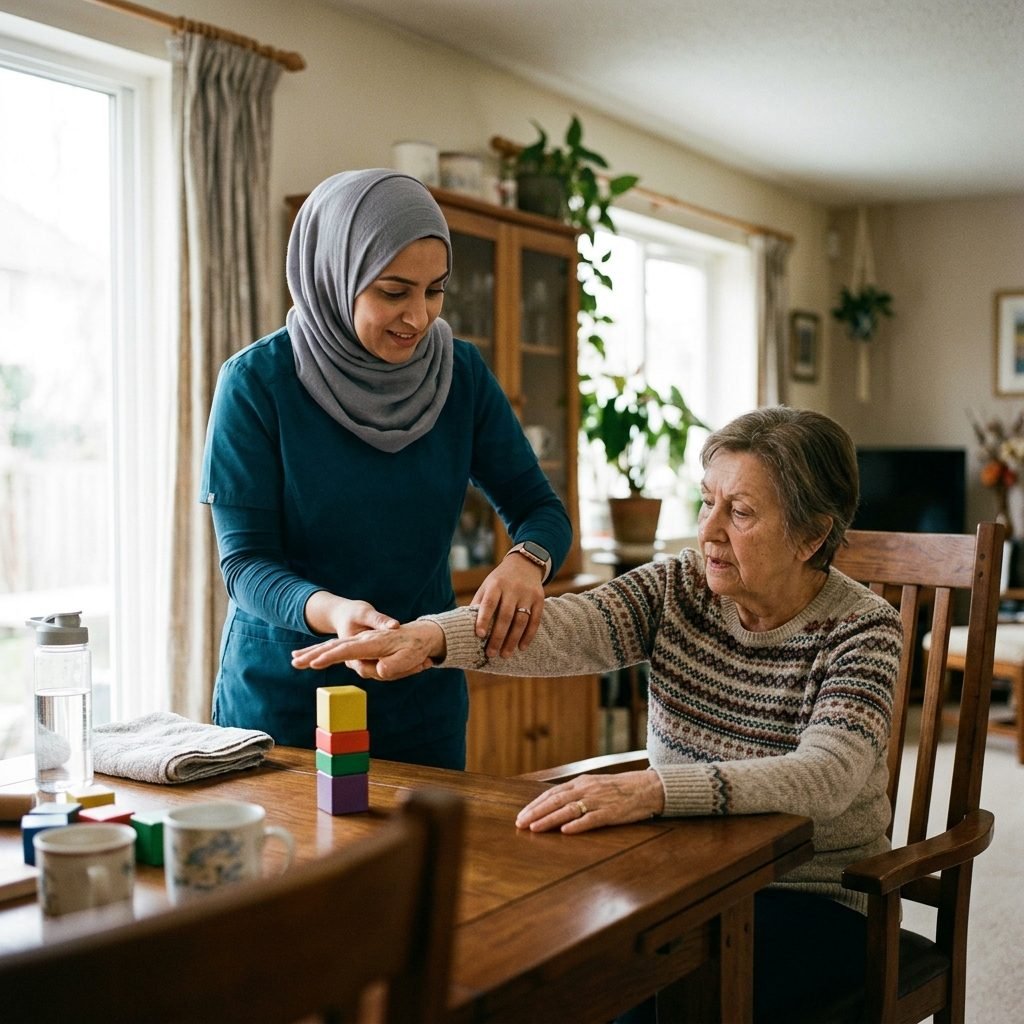
Stroke Rehabilitation
Advanced motor and neurological stroke recovery at home in Al Hamra.
Service Details ←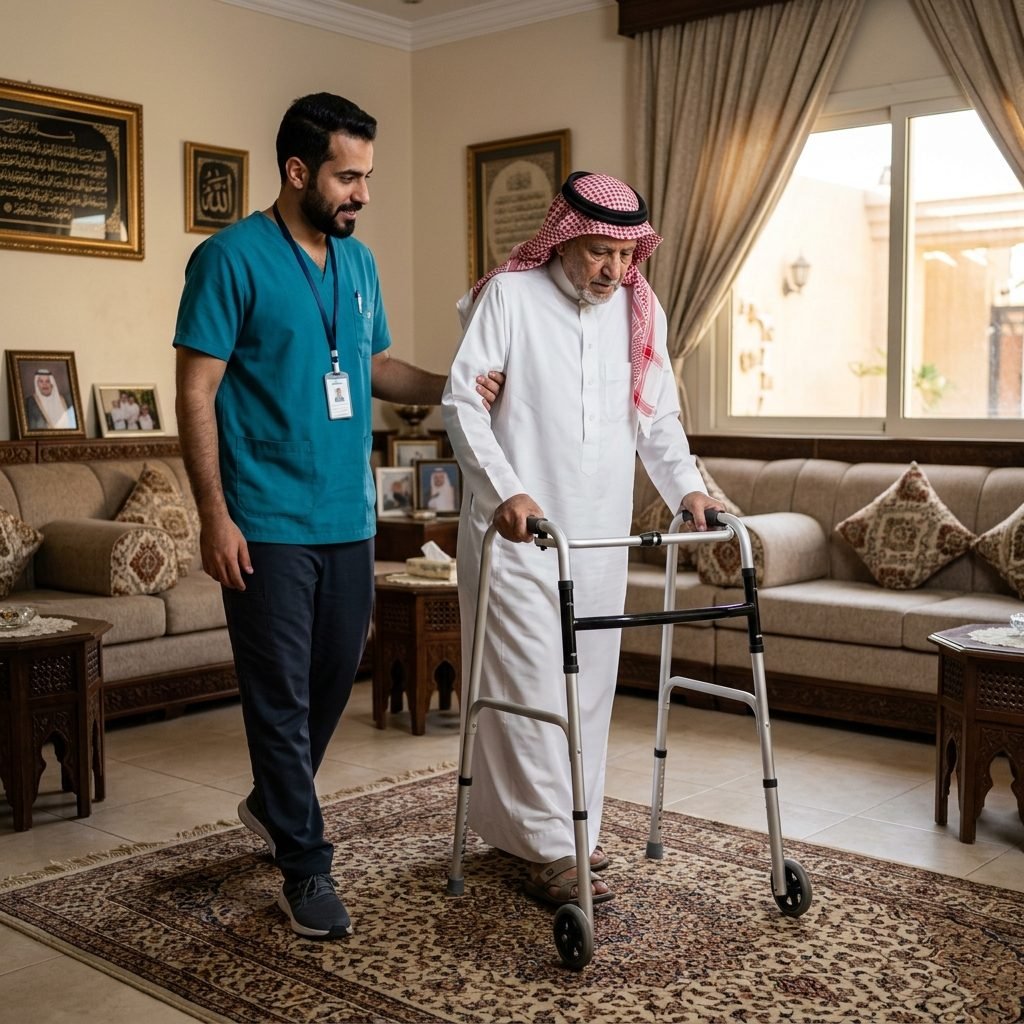
Geriatric Physical Therapy
Balance training, strengthening, and fall prevention for seniors in Al Hamra.
Service Details ←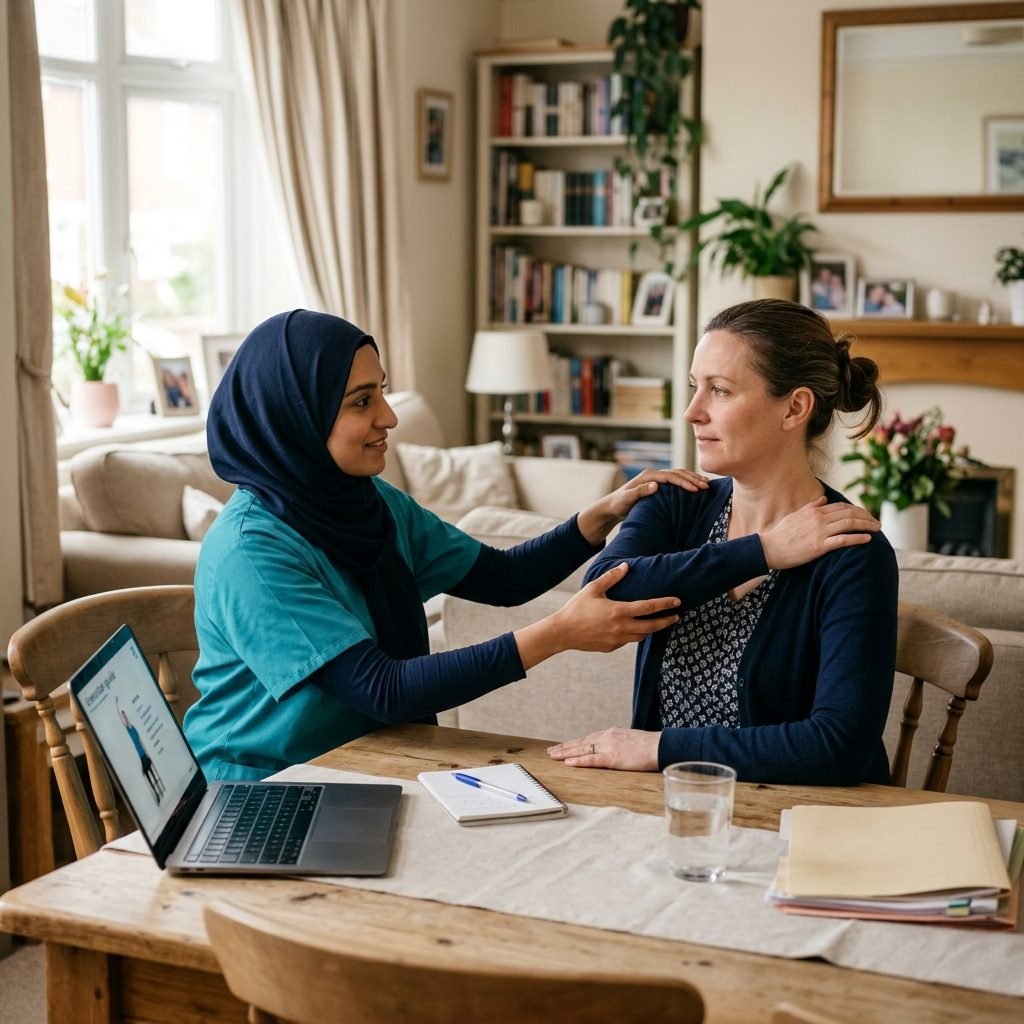
Female Physiotherapist
Licensed female therapists providing home care for women in Al Hamra.
Service Details ←