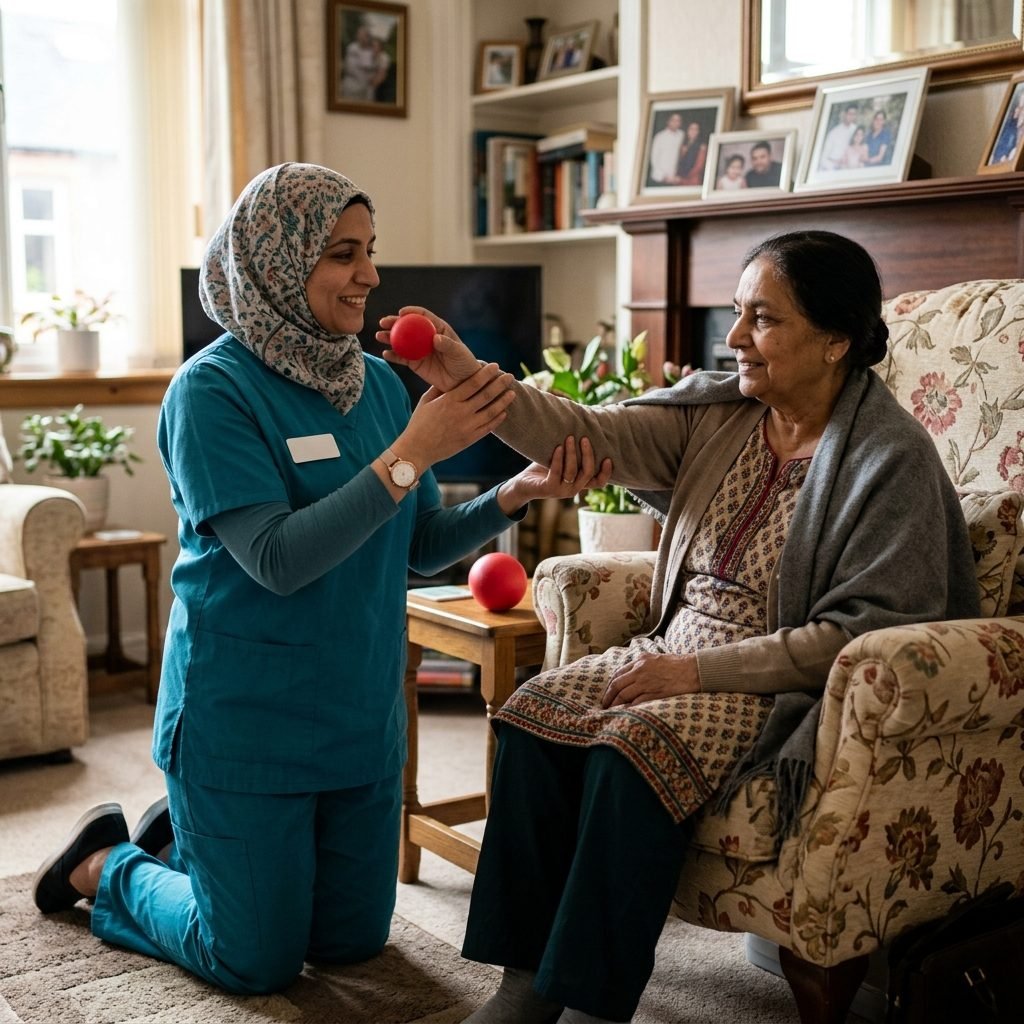
Having access to comprehensive, clinical physical therapy at home is crucial for maintaining rehabilitation progress, especially in busy neighborhoods. Al-Safa and Al Hamra districts in Jeddah present unique local mobility challenges due to high population density and traffic. At Bidaya Center, we deliver high-quality home physiotherapy and movement rehabilitation services directly to your doorstep, conforming to the clinical guidelines of the Saudi Commission for Health Specialties. We eliminate the stress of travel, traffic, and parking. We respect cultural privacy by providing certified male therapists for male patients and female therapists for female patients.
Our clinical approach in Al Hamra starts with a detailed physical and environmental safety assessment to eliminate fall hazards in the home. We bring all necessary portable, sterilized equipment to deliver a clinical standard of care comparable to external clinics. The therapist establishes a tailored milestone tracking plan to monitor muscle strength, balance, and joint range of motion (ROM) progression over time.
Why families in Al Hamra choose Bidaya for home physiotherapy
- ✅ Licensed male & female therapists — full privacy, in your own home in Al Hamra.
- ✅ Fully in-home visits across Al Hamra — no travel or traffic.
- ✅ A personalized rehab plan built after a thorough in-home assessment.
- ✅ Continuous follow-up and direct contact with your therapist throughout.
- ✅ Fast response — arrange your visit by a quick call or WhatsApp message.
We also serve nearby areas: Al Andalus · Al Basateen · Al Bawadi
* The treatment plan and expected outcomes are determined by a medical and functional assessment of each individual case.
What home-based neurological physiotherapy means for residents of Al Hamra
Neurological physiotherapy is a specialised branch of rehabilitation focused on people whose central or peripheral nervous system has been affected, whether by a stroke, a spinal cord injury, a degenerative condition such as Parkinson's or multiple sclerosis, or a peripheral nerve injury. The core principle it rests on is neuroplasticity the brain's capacity to reorganise its pathways and build alternative connections when it is stimulated repeatedly and correctly through movement. Because of this, the quality and repetition of practice inside a familiar environment can make a genuine difference to functional recovery.
Al Hamra is one of Jeddah's established residential districts, close to the coastal front and known for its relatively calm character. For many patients here and their families, the repeated commute to a clinic is a real burden, especially when the patient has limited mobility, depends on a wheelchair, or has balance problems that turn every outing into a risk. This is exactly where home-based neurological physiotherapy proves its value: a licensed therapist comes to the house with the necessary tools, so the patient trains on the stairs they actually use, on transfers from their own bed and bathroom, and on walking through their own hallways rather than an unfamiliar gym.
This link between practice and the real environment reflects the principle of functional specificity: a skill rehearsed in the place where it is genuinely used transfers into daily life faster and more reliably. At Bidaya Center we provide licensed male and female therapists with full respect for privacy inside the home, so every session is shaped around the patient's actual situation and goals rather than a fixed template.
Symptoms and signs that call for starting
The earlier neurological rehabilitation begins after a case is medically stable, the better the therapeutic window tends to be. The following signs should not be ignored, and warrant consulting a neurological physiotherapy specialist:
- Sudden or gradual weakness or heaviness in a limb or across one whole side of the body, affecting grip or walking.
- Balance disturbance and recurrent dizziness with a tendency to fall or a lack of confidence when standing and walking.
- Muscle stiffness or spasticity that limits range of motion and leaves the limbs rigid, particularly on waking.
- Tremor or slowness of movement and difficulty initiating a step or changing direction, as seen in Parkinson's.
- Numbness, tingling or loss of sensation in the limbs that dulls awareness of the ground and objects.
- Difficulty with coordination during fine tasks such as buttoning a shirt or holding a cup without spilling.
- A change in walking pattern such as dragging or catching a foot, or widening the stance to stay steady.
Having one or more of these signs does not amount to a specific diagnosis, but it does indicate that the sensorimotor system needs a careful functional assessment. The treatment decision and its course are always built on that assessment for each individual case, and expected outcomes cannot be judged before the patient is examined clinically and functionally.
Conditions and groups who benefit
Home-based neurological physiotherapy in Al Hamra serves a broad range of conditions, most notably:
- Post-stroke recovery in both acute and chronic phases, to regain control of the affected side and improve independence.
- Spinal cord injuries, partial or complete, with emphasis on preserving and strengthening remaining abilities.
- Parkinson's disease and movement disorders, working on movement initiation, stride length and balance.
- Multiple sclerosis, managing fatigue and maintaining range of motion and function as much as possible.
- Peripheral nerve injuries and the muscle weakness associated with them.
- After traumatic brain injury and neurosurgical procedures, once medically cleared.
- Diabetes-related neuropathies that affect balance and sensation in the feet.
Older adults with general weakness and declining steadiness also benefit, as do patients who find it hard to leave home at all. Each group has different priorities: a stroke patient may need a focus on regaining function, while someone with multiple sclerosis needs a careful balance between effort and rest to avoid overexertion.
Goals of the rehabilitation programme
The programme is not built on a single vague aim but on measurable functional goals, shaped together with the patient and family and reviewed regularly:
- Improving independence in daily activities such as transfers from bed, sitting to standing, and self-care.
- Strengthening balance and steadiness to reduce the risk of falls at home and around stairs and hallways.
- Restoring strength and motor control in the affected limbs through graded, guided exercise.
- Managing spasticity and stiffness with stretching, localised techniques and improved range of motion.
- Correcting the walking pattern, improving its efficiency and safety, and selecting a suitable assistive device when needed.
- Maintaining fitness and circulation and preventing complications of immobility such as pressure sores and joint stiffness.
- Training the family to support safely and continue exercises between sessions.
These goals are prioritised for each case and adjusted as progress is made. We are careful that every goal is realistic and tied to the patient's actual life in Al Hamra, not just a figure in a report. It is important to stress that expected results differ from one person to another and depend on ongoing assessment and the level of commitment.
Stages and pathway of the home sessions
The therapeutic journey follows an organised pathway that begins with the very first visit:
- Initial assessment: the therapist visits the home to examine strength, balance, range of motion and walking pattern, evaluate the home environment and its hazards, and set an initial plan with clear goals.
- Foundation phase: exercises to prepare the muscles and joints, reduce stiffness, and build a safe base for movement before progressing to more complex skills.
- Motor re-learning phase: intensive training on functional tasks such as standing, transfers and walking, using guided repetition to stimulate neuroplasticity.
- Progression and challenge phase: introducing harder balance and coordination tasks within scenarios close to the patient's everyday life.
- Integration and sustainability phase: carrying the skills into the daily routine and designing a home programme the patient continues with family support.
The length of each session and the number per week are set according to the patient's condition and tolerance, and reassessment is carried out periodically to measure progress and adjust the plan. The flexibility of scheduling at home makes it possible to match sessions to the patient's most active and energetic times something particularly important in cases accompanied by rapid fatigue.
The role of the family and caregiver
In neurological rehabilitation, the family is not a spectator but a genuine part of the treatment team. A session lasts an hour or so, but the patient spends the rest of the day with their family, and much of the recovery path is shaped there. For this reason we make a point of:
- Training the caregiver in safe ways to assist the patient with transfers and standing without harming their own back or the patient.
- Explaining simple home exercises that can be repeated safely between sessions.
- Alerting the family to avoid excessive help that undermines the patient's independence; the goal is to enable, not to replace, their movement.
- Supporting the patient psychologically, since encouragement and patience noticeably raise commitment and motivation.
- Watching for signs that call for contacting the team or the treating physician.
When the family understands the purpose of each exercise and its role in repeating it, the home environment in Al Hamra becomes a natural extension of the clinic, and progress becomes steadier and more sustainable.
Home safety and prevention tips
A safe home environment is a basic condition for neurological rehabilitation, because a fall can set the patient back several steps. Among the most important preventive measures:
- Removing tripping hazards such as unsecured rugs and scattered wires, and arranging furniture to keep clear walkways.
- Improving lighting in hallways, on stairs and in bathrooms, especially along night-time routes.
- Fitting fixed grab bars near the toilet and bath and using non-slip mats.
- Choosing supportive footwear that is closed and stable, and avoiding walking in socks on smooth floors.
- Organising medication and keeping to its timing, since some medicines affect balance and alertness.
- Moving gradually when changing position from lying to sitting to standing, to avoid a drop in blood pressure and dizziness.
- Not overexerting and respecting signs of fatigue, particularly in multiple sclerosis.
During the home visit the therapist gives precise recommendations tailored to the specific layout of the patient's home what suits an apartment differs from what suits a multi-storey house and this is one of the greatest advantages home rehabilitation offers compared with a clinic.
Frequently asked questions (FAQ)
Can home physiotherapy replace medical follow-up for a neurological condition?
No. Neurological physiotherapy complements the treating physician's plan rather than replacing it. We work within the medical framework of the case, coordinate when needed, and focus on the functional and movement side of rehabilitation.
When is it best to start rehabilitation after a stroke or injury?
It is best to begin early once the case is medically stable and the physician has given clearance, since the early window matters. That said, rehabilitation still has value at later stages too, and the assessment determines the appropriate starting point.
Are female therapists available for female patients?
Yes. Licensed male and female therapists are available, with full respect for privacy inside the home, and you can request what suits your case when booking.
How many sessions will I need per week?
The number varies from case to case depending on the diagnosis, tolerance and goals. An initial schedule is proposed after the first assessment and reviewed periodically according to progress.
Do you cover Al Hamra and neighbouring Jeddah districts with home visits?
Yes. We provide home-based neurological physiotherapy in Al Hamra and the areas nearby in Jeddah, and coverage and timing can be confirmed when you get in touch.
To book a home visit or to ask about neurological physiotherapy in Al Hamra, contact Bidaya Center by phone or WhatsApp by clicking Call Now, and our team will help arrange the initial assessment and build a plan suited to your case.
Important Home Visit Details:
- ✓Setup: Please clear a 2x2m space in the room for safety.
- ✓Clothing: Wear loose, comfortable clothes for easy movement.
- ✓Therapist Parity: Male therapists for males, females for females.
- ✓Medical Reports: Keep your MRI or doctor reports ready for evaluation.
Rehabilitation & Services in Al Hamra
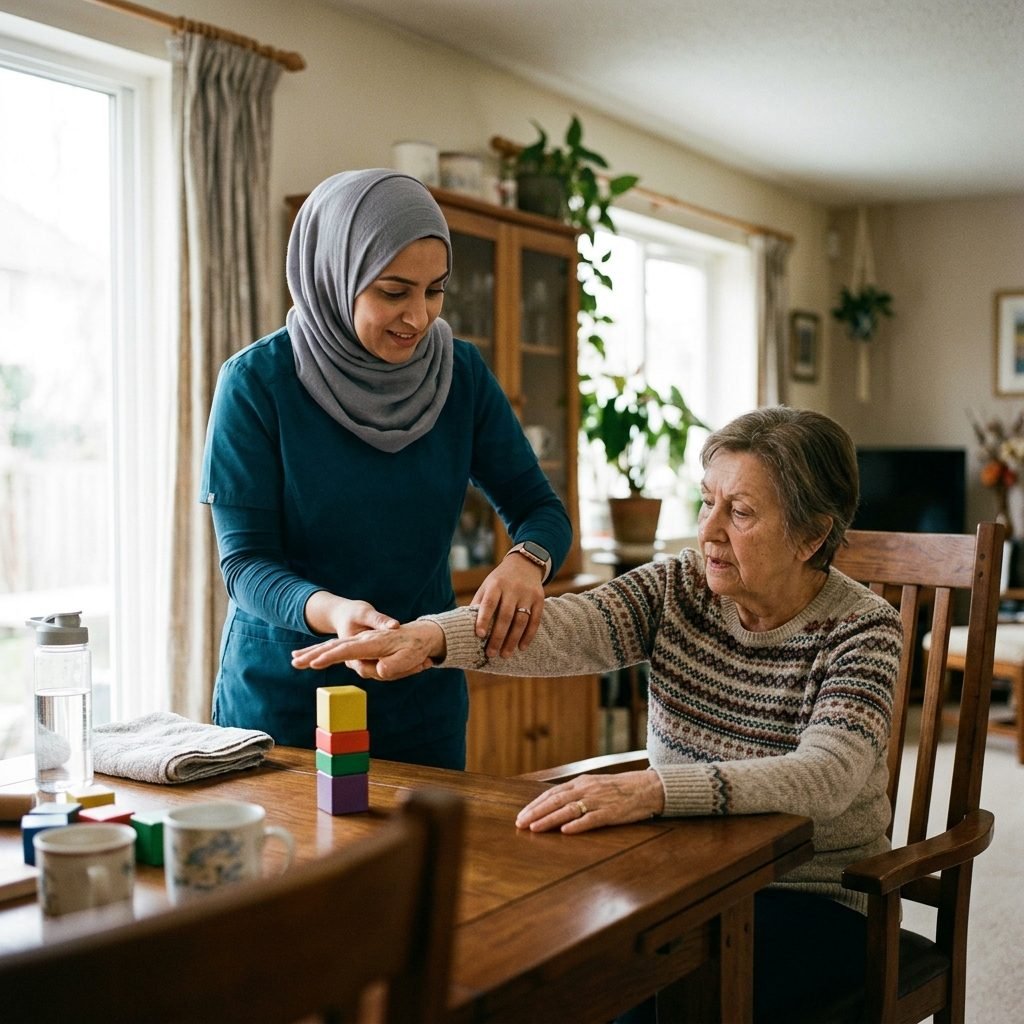
Stroke Rehabilitation
Advanced motor and neurological stroke recovery at home in Al Hamra.
Service Details ←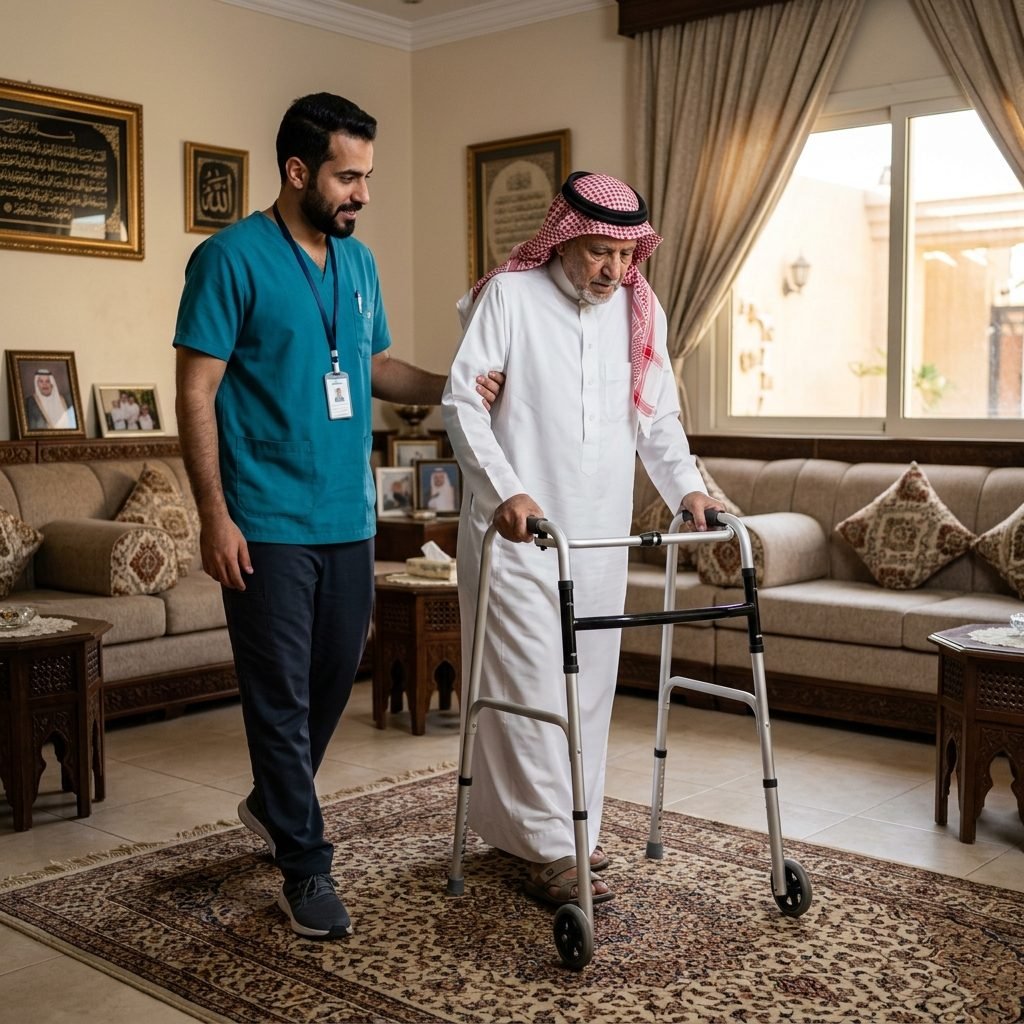
Geriatric Physical Therapy
Balance training, strengthening, and fall prevention for seniors in Al Hamra.
Service Details ←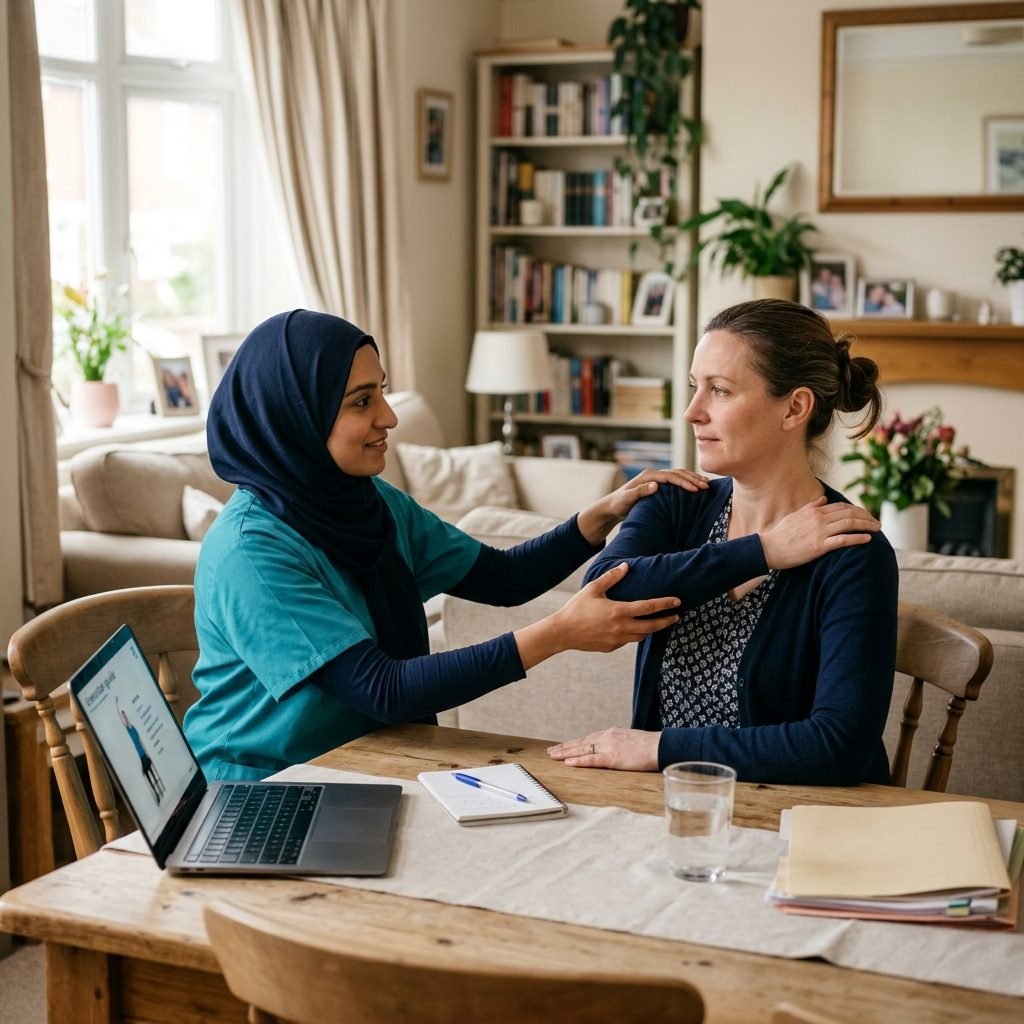
Female Physiotherapist
Licensed female therapists providing home care for women in Al Hamra.
Service Details ←