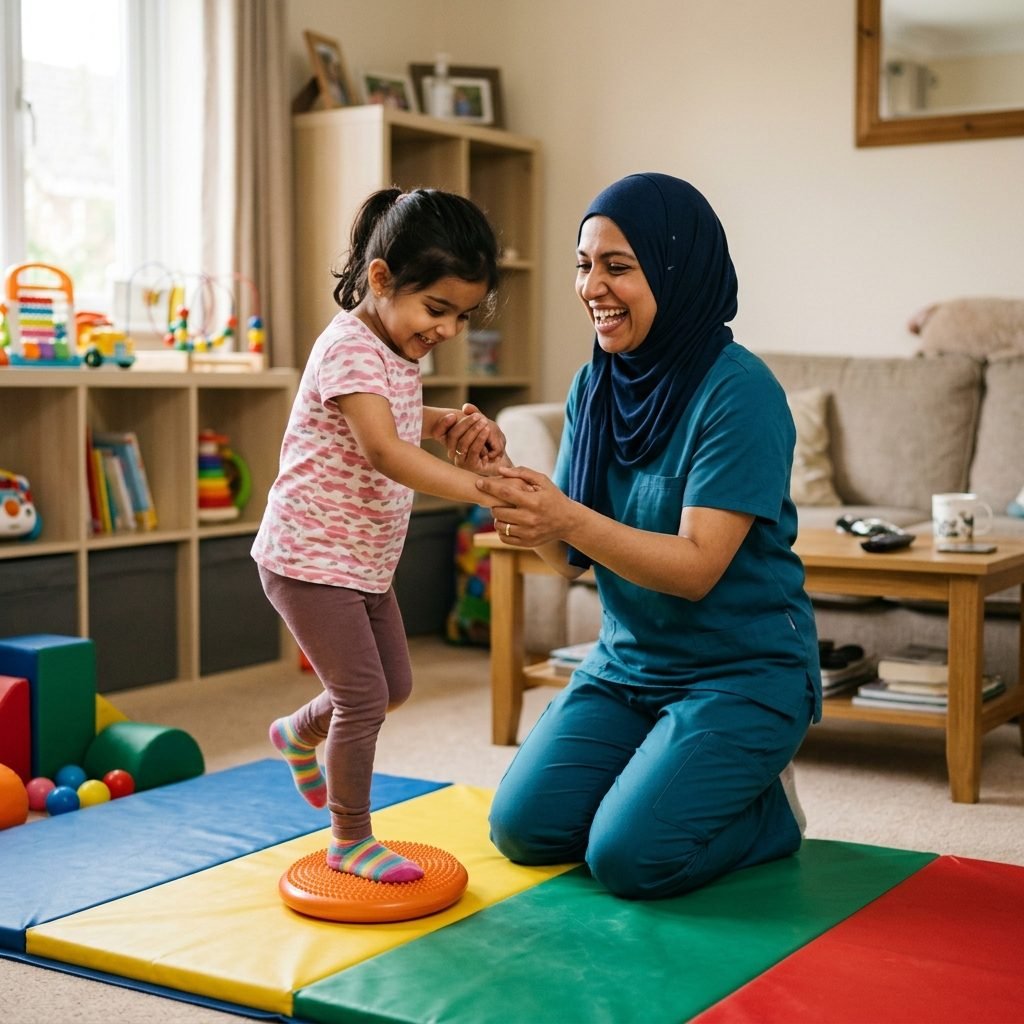
Having access to comprehensive, clinical physical therapy at home is crucial for maintaining rehabilitation progress, especially in busy neighborhoods. Al-Safa and Al Hamra districts in Jeddah present unique local mobility challenges due to high population density and traffic. At Bidaya Center, we deliver high-quality home physiotherapy and movement rehabilitation services directly to your doorstep, conforming to the clinical guidelines of the Saudi Commission for Health Specialties. We eliminate the stress of travel, traffic, and parking. We respect cultural privacy by providing certified male therapists for male patients and female therapists for female patients.
Our clinical approach in Al Hamra starts with a detailed physical and environmental safety assessment to eliminate fall hazards in the home. We bring all necessary portable, sterilized equipment to deliver a clinical standard of care comparable to external clinics. The therapist establishes a tailored milestone tracking plan to monitor muscle strength, balance, and joint range of motion (ROM) progression over time.
Why families in Al Hamra choose Bidaya for home physiotherapy
- ✅ Licensed male & female therapists — full privacy, in your own home in Al Hamra.
- ✅ Fully in-home visits across Al Hamra — no travel or traffic.
- ✅ A personalized rehab plan built after a thorough in-home assessment.
- ✅ Continuous follow-up and direct contact with your therapist throughout.
- ✅ Fast response — arrange your visit by a quick call or WhatsApp message.
We also serve nearby areas: Al Andalus · Al Basateen · Al Bawadi
* The treatment plan and expected outcomes are determined by a medical and functional assessment of each individual case.
What Home Pediatric Physiotherapy Means and Why It Matters for Al Hamra Families
Pediatric physiotherapy at home is a movement-based rehabilitation program tailored to each child according to age, developmental stage, and health condition, and delivered inside the child's familiar surroundings rather than through repeated clinic trips. The approach supports natural motor development, improves control of muscles and joints, and encourages skills such as head control, sitting, crawling, standing, and walking, while addressing difficulties that can affect a young child's balance, coordination, and muscle strength.
In the Al Hamra district of Jeddah, a calm residential area near the seafront where family villas and apartments sit side by side, many parents find that home sessions are a practical solution that spares them the strain of traffic and travel, especially with a young child who may be hard to bring to frequent appointments. When a child receives therapy surrounded by their own toys, family, and bed, resistance and fear tend to fade, and cooperation with the exercises improves.
A core advantage of home care is that it lets the therapist observe the child within the real context of daily life: how they move across the floor of their room, how they handle stairs or furniture, and which everyday activities they struggle with. This direct observation makes the treatment plan far more realistic and easy to apply. We emphasize that the plan and its expected outcomes depend on a careful clinical and functional assessment of each individual case. Licensed male and female therapists are available, with full respect for the family's privacy inside their own home.
Signs and Symptoms That Signal It Is Time to Start
Many motor development concerns respond better the earlier the intervention begins. For that reason it helps parents in Al Hamra to watch for certain signs that may call for a consultation with a pediatric physiotherapist, including:
- Delay compared with peers in motor milestones such as head control, sitting without support, crawling, or standing and walking.
- Noticeable stiffness in the limbs, or conversely excessive floppiness and low tone that makes the child's body seem limp.
- Using one side of the body far more than the other, or a strong hand preference at a very early age.
- Persistent toe-walking, or a visible turning or curving of the feet or legs.
- Poor balance and frequent falls beyond what is typical for the child's age.
- Difficulty coordinating movements, or being noticeably slow and hesitant in play and motion compared with children of the same age.
- Unusual head, neck, or trunk postures, or a fixed tilt of the head toward one side.
Having one or more of these signs does not necessarily mean a serious problem, but it is reason enough to request a specialist assessment. An early evaluation determines whether a child needs a rehabilitation program and shapes its direction before unhelpful movement patterns become entrenched.
Conditions and Groups That Benefit
Pediatric physiotherapy serves a wide range of conditions across different ages and causes. Among those who most benefit from home sessions in Al Hamra are:
- Premature infants who need close monitoring of their motor development.
- Cases of general motor delay without a clear cause, where the child falls behind expected milestones.
- Children with low or high muscle tone that affects their posture and movement.
- Cases of foot deformities or alignment issues in the legs and hips.
- Children recovering from fractures, injuries, or surgery who need to regain range of motion and strength.
- Infants with torticollis (neck tilt) and a fixed head preference to one side.
- Children with special needs and syndromes accompanied by motor and balance difficulties.
Every plan is built around the child's diagnosis, age, current abilities, and the family's goals, since what suits an infant in the first months differs entirely from what suits a school-age child. Work therefore always begins with a comprehensive individual assessment before exercises and goals are set.
Goals of the Rehabilitation Program
The aim of physiotherapy is never simply to exercise a single muscle or joint; it extends to supporting the child's independence and participation in daily life and play with peers. Among the broad goals we pursue, within the limits allowed by each case's assessment:
- Encouraging motor development and bringing the child as close as possible to milestones appropriate for their age.
- Improving muscle strength and endurance and correcting tone imbalances where present.
- Increasing joint range of motion, maintaining flexibility, and preventing contractures.
- Developing balance, coordination, and control of body positions during sitting, standing, and movement.
- Improving the walking pattern and correcting faulty postures before they become fixed habits.
- Supporting the child's gross and fine motor skills in ways that serve daily activities.
- Enabling the family to weave the exercises into home routines in an enjoyable, safe way.
We take care to keep goals realistic, measurable, and progressive, and to review them regularly according to the child's response. We are always clear that there are no guarantees of specific results; progress varies from child to child and depends on the nature of the condition and consistency with the program.
Stages and Pathway of the Home Sessions
The home rehabilitation program in Al Hamra follows an organized path that begins at the first visit and evolves with the child's progress:
- Initial assessment: the therapist visits the home to examine the child, review their health history, observe movement in the natural setting, and identify strengths and difficulties.
- Building the plan: short- and long-term goals are drafted, and exercises and activities suited to the child's age and abilities are chosen, with the family's priorities agreed upon together.
- Therapy sessions: exercises are delivered through a play-based, motivating approach to engage the child, often using simple tools and toys already available at home.
- Follow-up and reassessment: progress is measured at intervals, and the plan and exercises are adjusted according to the new gains the child achieves.
- Home exercises between sessions: the therapist gives the family simple exercises to repeat daily to reinforce skills and speed up progress.
The length of each session and the number of weekly sessions are set according to the child's condition and their ability to focus and cooperate. We schedule appointments around the child's active hours, away from sleep and hunger times, to ensure the best response.
The Role of the Family and Caregiver
The family is an essential partner in the success of pediatric physiotherapy, since the child spends most of their time with parents and caregivers rather than with the therapist. We therefore place special emphasis on coaching the family, and the parents' role in Al Hamra includes:
- Repeating the exercises recommended by the therapist within the daily routine in a gentle, appealing way.
- Creating a safe, stimulating home environment that encourages the child to move and explore.
- Noticing any change in the child's movement or response and reporting it to the therapist.
- Being patient, accepting that progress may be gradual, and encouraging the child while celebrating even the smallest achievements.
- Keeping session and exercise times consistent, because continuity is a fundamental element of results.
When parents understand the purpose of each exercise and how to perform it correctly, the entire home becomes a supportive therapeutic environment, and every moment of play turns into an opportunity to strengthen the child's motor skills.
Home Safety and Prevention Tips
A safe home environment supports the child's progress and protects them from injury, especially for children still developing their balance and motor control. We advise Al Hamra families to:
- Secure slippery surfaces and provide a safe floor for play and exercise, avoiding loose rugs that could cause tripping.
- Keep furniture with sharp edges away from the child's movement space and anchor pieces that could tip over.
- Install safety gates at stairs if the child is at the crawling or early-walking stage.
- Choose comfortable clothing and shoes that do not restrict the child's movement during exercises.
- Never force the child into postures that cause pain, stopping at any sign of discomfort or fatigue and consulting the therapist.
- Respect the child's rest times and avoid overexerting them so they do not lose enthusiasm for the exercises.
These are general guidelines and do not replace the therapist's tailored instructions for your child's case after a direct assessment, as some conditions may require additional precautions depending on their nature.
Frequently Asked Questions (FAQ)
What is the right age to start physiotherapy for a child?
There is no fixed age. Some conditions are identified in the first months of life and benefit from early intervention, while others appear at the walking or school stage. The key indicator is the presence of a developmental or motor sign that calls for assessment, and starting earlier usually offers a better opportunity.
Are the sessions really held at home, and what needs to be prepared?
Yes, the therapist comes to your home in Al Hamra and usually needs only a clean, safe space for movement and some of the child's toys. No complex equipment is required, since the approach relies on functional exercises and engaging play.
Will my child cooperate with the sessions if they are young or shy?
We use a play-based approach that makes the exercises enjoyable and non-threatening, and being in familiar surroundings among their family reduces the child's anxiety and gradually increases cooperation as sessions repeat and rapport with the therapist grows.
How many sessions will my child need?
This varies according to the child's condition, the plan's goals, and their response, and it is determined after the initial assessment and reviewed regularly. A fixed number cannot be given in advance because every case is unique.
Are female therapists available, with privacy respected?
Yes, licensed male and female therapists are available, and you may choose what suits your family, with full respect for the privacy of the home and the child's comfort.
To book a home visit or ask about pediatric physiotherapy in Al Hamra, contact us by phone or WhatsApp by clicking Call Now, and the Bidaya Center team will be glad to help you and arrange a time that works for you.
Important Home Visit Details:
- ✓Setup: Please clear a 2x2m space in the room for safety.
- ✓Clothing: Wear loose, comfortable clothes for easy movement.
- ✓Therapist Parity: Male therapists for males, females for females.
- ✓Medical Reports: Keep your MRI or doctor reports ready for evaluation.
Rehabilitation & Services in Al Hamra
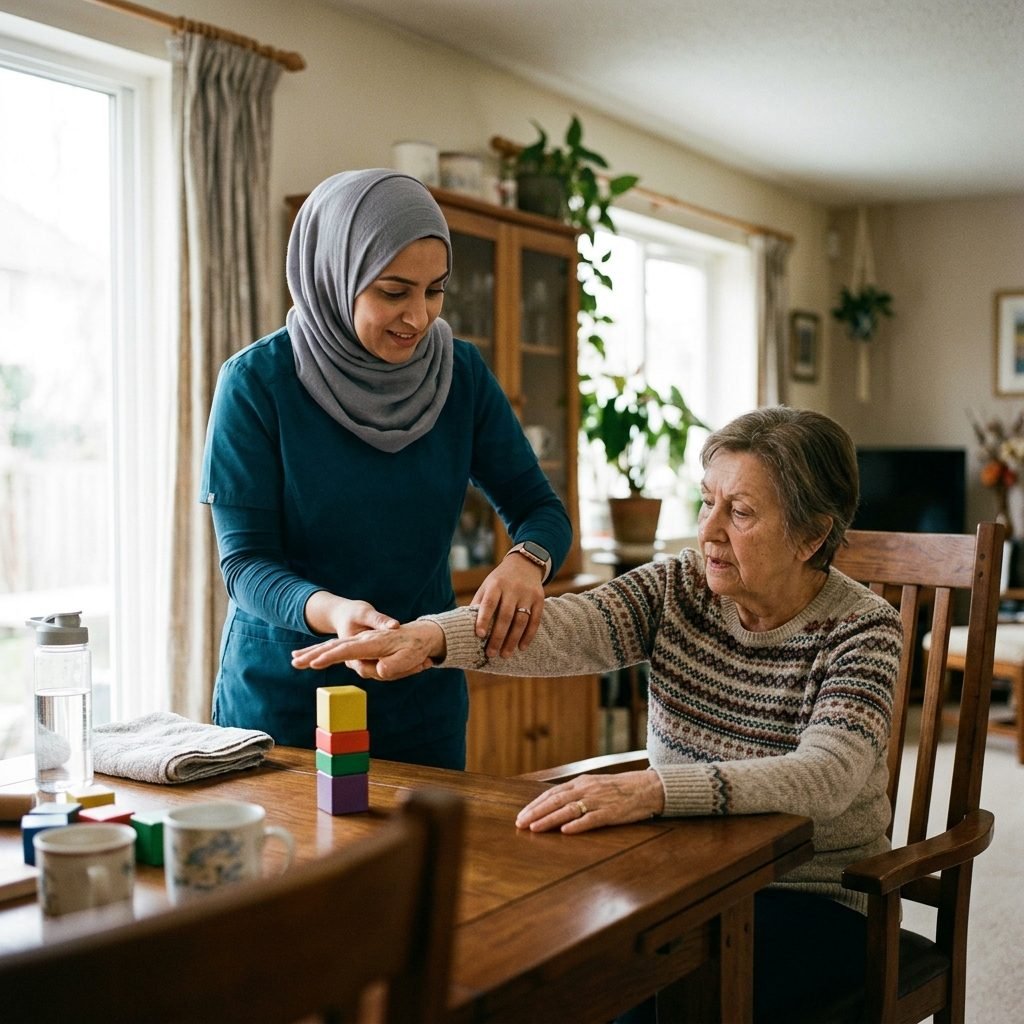
Stroke Rehabilitation
Advanced motor and neurological stroke recovery at home in Al Hamra.
Service Details ←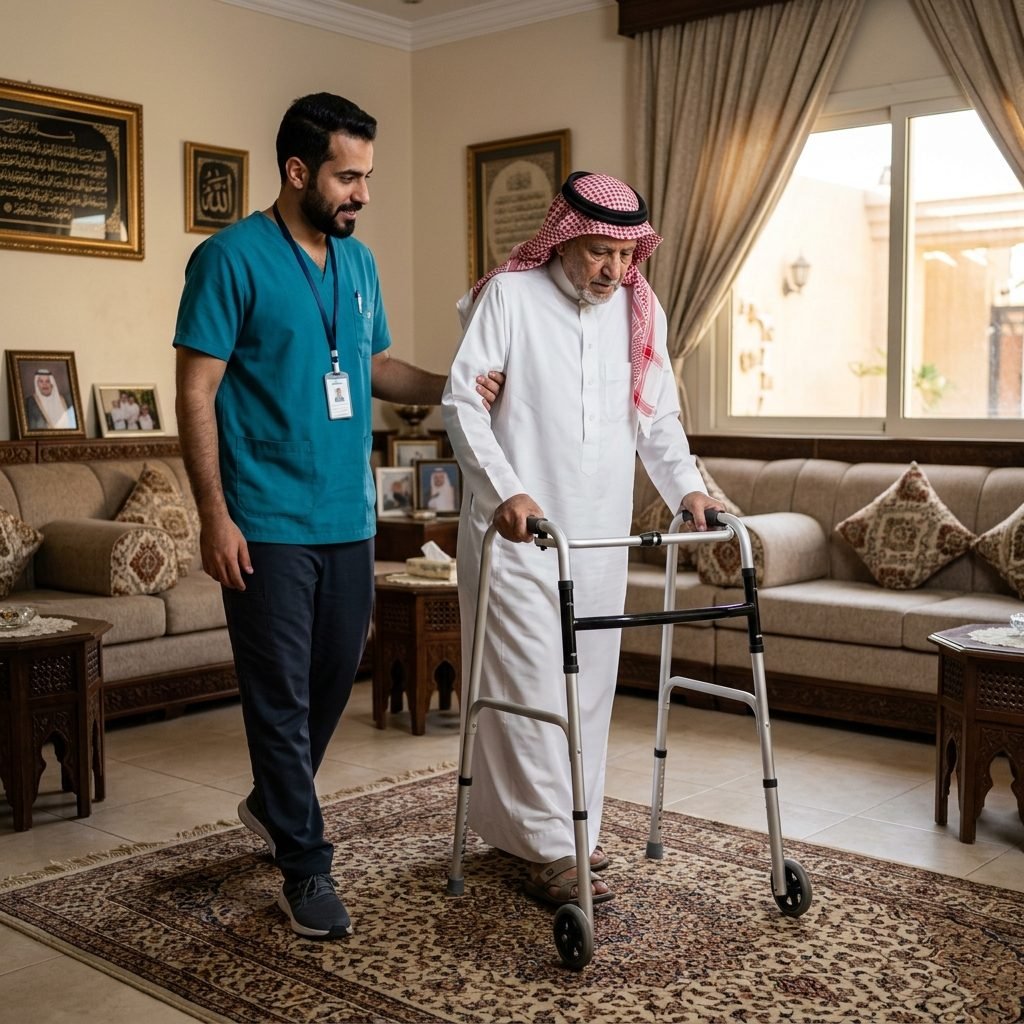
Geriatric Physical Therapy
Balance training, strengthening, and fall prevention for seniors in Al Hamra.
Service Details ←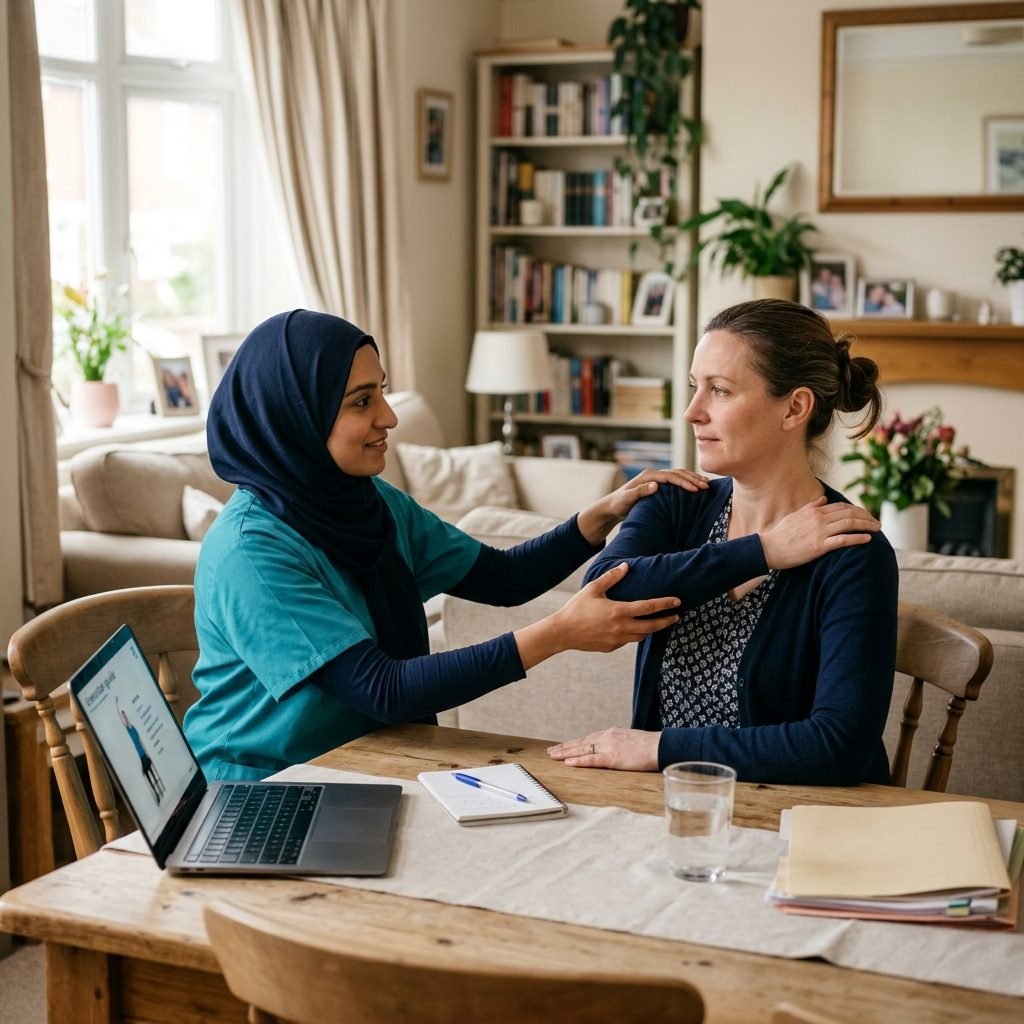
Female Physiotherapist
Licensed female therapists providing home care for women in Al Hamra.
Service Details ←