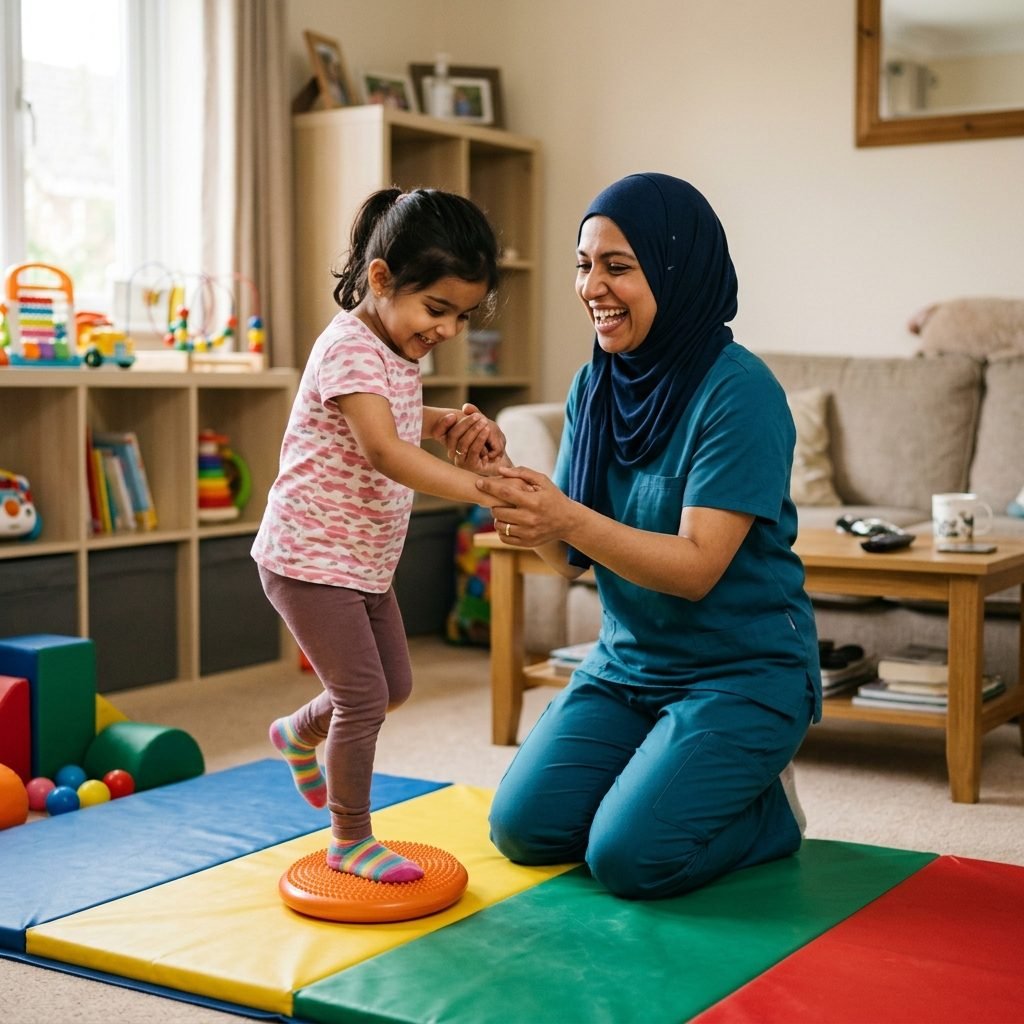
Having access to comprehensive, clinical physical therapy at home is crucial for maintaining rehabilitation progress, especially in busy neighborhoods. Al-Safa and Al Khaldiyah districts in Jeddah present unique local mobility challenges due to high population density and traffic. At Bidaya Center, we deliver high-quality home physiotherapy and movement rehabilitation services directly to your doorstep, conforming to the clinical guidelines of the Saudi Commission for Health Specialties. We eliminate the stress of travel, traffic, and parking. We respect cultural privacy by providing certified male therapists for male patients and female therapists for female patients.
Our clinical approach in Al Khaldiyah starts with a detailed physical and environmental safety assessment to eliminate fall hazards in the home. We bring all necessary portable, sterilized equipment to deliver a clinical standard of care comparable to external clinics. The therapist establishes a tailored milestone tracking plan to monitor muscle strength, balance, and joint range of motion (ROM) progression over time.
Why families in Al Khaldiyah choose Bidaya for home physiotherapy
- ✅ Licensed male & female therapists — full privacy, in your own home in Al Khaldiyah.
- ✅ Fully in-home visits across Al Khaldiyah — no travel or traffic.
- ✅ A personalized rehab plan built after a thorough in-home assessment.
- ✅ Continuous follow-up and direct contact with your therapist throughout.
- ✅ Fast response — arrange your visit by a quick call or WhatsApp message.
We also serve nearby areas: Al Andalus · Al Basateen · Al Bawadi
* The treatment plan and expected outcomes are determined by a medical and functional assessment of each individual case.
Home-Based Cerebral Palsy Physiotherapy for Children and Why It Matters in Al Khaldiyah
Cerebral palsy is not a single fixed illness but a group of movement disorders that result from an injury or disruption to the developing brain before, during, or shortly after birth. The underlying brain injury itself does not worsen over time, yet its effect on muscles, joints, and movement changes as the child grows. This is precisely why early, consistent rehabilitation makes a genuine difference to a child's functional path. Physiotherapy here does not aim to "repair" the brain; it helps the child make the most of the abilities they have while reducing secondary complications such as muscle tightness, joint deformity, and shortened tendons.
Delivering this care at home means bringing the therapy session into the environment where the child actually lives: their bedroom, the majlis floor, the chair they sit in, and the bed they sleep in. This matters a great deal, because skills such as balanced sitting, moving from the floor to standing, or cruising along furniture are mastered far more effectively when practised in the very setting where they will be used every day, rather than in a clinic that feels foreign to the child.
For families in the Al Khaldiyah district of Jeddah, home therapy is a practical solution for several reasons. The area is a family-oriented residential neighbourhood with busy daily traffic, and many children with cerebral palsy are difficult to transport repeatedly because of wheelchairs, spasticity, or quick fatigue. Avoiding frequent trips in Jeddah's heat, preserving the child's sleep and feeding routine, and enjoying complete privacy inside the home all make the in-home session more comfortable and more effective. We provide both licensed male and female therapists, so each family can choose what suits them best, with full respect for the privacy of the home.
Symptoms and Signs That Signal It Is Time to Begin
Noticing the early signs of cerebral palsy, or of the motor delay that accompanies it, opens a valuable window for intervention. We encourage Al Khaldiyah families to consult a specialist when they observe any of the following, especially if they persist or recur:
- Marked stiffness in the limbs or, conversely, excessive floppiness that makes the child feel "limp" when held.
- A consistent preference for one hand before the age of one, or a persistently clenched fist with difficulty opening the palm.
- Clear delays in developmental milestones: poor head control, no independent sitting, or no crawling or standing at the expected ages.
- Involuntary movements, tremor, or sudden shifts in muscle tone between floppiness and stiffness.
- Walking on tiptoes, legs crossing in a "scissoring" pattern, or an asymmetric walking pattern.
- Difficulty swallowing, chewing, or controlling saliva, with drooling that persists beyond the typical age.
- Repeated painful muscle tightening, or a constant tilt of the head and trunk toward one side.
The presence of one of these signs does not necessarily mean cerebral palsy, but it is reason enough for a specialised assessment. We do not provide a medical diagnosis that replaces the doctor's; instead we begin with a thorough movement and functional evaluation to identify exactly what the child needs.
Conditions and Groups That Benefit
The home rehabilitation programme is designed to adapt to the variety of cerebral palsy presentations and their differing severities. It is particularly valuable for:
- Children with spastic cerebral palsy (the most common type) who experience increased muscle tone, whether in the lower limbs (diplegia), one side of the body (hemiplegia), or all four limbs.
- Children with a dyskinetic (involuntary) movement pattern or an ataxic pattern accompanied by poor balance.
- Infants diagnosed early or considered at risk due to premature birth or oxygen deprivation, who need early developmental stimulation.
- Children in the recovery phase after surgery to lengthen tendons or correct joints, within their post-operative rehabilitation.
- Children receiving Botox injections to ease spasticity, who need a complementary stretching and strengthening programme to maximise the treatment's effect.
- Children across all levels of motor ability, from those who walk with partial independence to those who rely on a wheelchair, with goals tuned to each level.
Every child follows a different plan. The path of sessions for a child working toward improved walking differs from that of a child whose goal is to maintain joint flexibility, prevent deformity, and make comfortable sitting and daily care easier.
Goals of the Rehabilitation Programme
We shape rehabilitation goals together with the family so that they are realistic, measurable, and tied to the child's daily life rather than being mere numbers. Common goals include:
- Managing muscle tone: reducing spasticity that obstructs movement and supporting stability where muscles are floppy, to make functional positions easier.
- Preventing secondary complications: avoiding shortened tendons, stiff joints, and spinal or hip deformities through regular stretching and correct positioning.
- Developing motor control: improving head and trunk control, balanced sitting, and transitions between positions (lying to sitting, sitting to standing).
- Building strength and endurance: strengthening the muscles responsible for standing, walking, and balance within safe limits.
- Supporting functional independence: training skills the child actually uses, such as reaching for a toy, eating, or moving around the room.
- Improving quality of life: reducing pain, easing care and hygiene, and increasing the child's participation in family activities.
We state clearly that the extent and pace at which these goals are reached depend on the clinical and functional assessment of each case, on the severity of the condition, and on the consistency of the home programme. We make no promises of a cure or guaranteed results.
Stages and Pathway of the Home Sessions
We organise the therapeutic journey into connected stages, with ongoing review that allows the plan to be adjusted whenever the child progresses or their needs change:
- Initial assessment: during the first home visit in Al Khaldiyah we evaluate muscle tone, joint range of motion, developmental milestones, balance, and movement pattern, and we discuss the child's medical history and the family's priorities to build a tailored plan.
- Setting short- and long-term goals: we agree with the family on clear staged goals and a timeline for review.
- Active session phase: this includes stretching to lengthen tight muscles, strengthening exercises, positional control training, neuromuscular facilitation of natural movement patterns, and work on specific functional skills.
- Integrating assistive devices: when needed we guide the use of splints, foot orthoses, and sitting or standing aids, and we train the family to use them safely at home.
- Daily home programme: we give the family simple exercises and activities to weave into the daily routine between sessions, because these are what create cumulative gains.
- Follow-up and reassessment: we measure progress regularly, adjust goals and exercises, and coordinate with the rest of the medical team when necessary.
The length of each session and its weekly frequency are set according to the child's age, tolerance, and the goals of the stage, always taking care not to exhaust the child.
The Role of the Family and Caregiver
In cerebral palsy rehabilitation, the family is not a spectator but an essential partner. A child spends many times more hours with their family than with the therapist, and what happens between sessions matters no less than the session itself. We therefore make a point of practically empowering parents and caregivers by:
- Teaching correct carrying, sitting, and sleeping positions that reduce spasticity and protect joints from deformity.
- Training the mother, father, or caregiver in safe stretching exercises and embedding them into everyday moments such as dressing and bathing.
- Explaining how to use splints and foot orthoses and how to recognise signs of pressure or redness on the skin.
- Turning play into a therapeutic opportunity: choosing toys and situations that encourage the child to reach, move, and use the weaker limb.
- Offering emotional support: helping the family set realistic expectations, celebrate small gains, and avoid burnout or guilt.
Once the family can confidently carry out the essentials, the entire home in Al Khaldiyah becomes a supportive therapeutic environment throughout the day.
Home Safety and Prevention Tips
Keeping the child safe during rehabilitation and in daily life is a priority, especially given limited balance and motor control. We recommend the following to Al Khaldiyah families:
- Prepare a safe, spacious floor area for exercises, free of slippery surfaces and sharp-cornered furniture, with a firm non-slip mat.
- Never force a joint into a painful range; stretching should be gentle and gradual, and any sharp pain is a signal to stop and review.
- Check the child's skin daily at splint and chair pressure points, and watch for any redness that does not fade.
- Keep sitting and sleeping positions varied and well supported to prevent the body from settling into one pattern that increases deformity.
- Secure stair steps and bed edges, and use suitable sitting and standing aids under proper guidance.
- During feeding, watch for signs of swallowing difficulty or choking, and keep the child upright while eating.
- Follow the home programme steadily without overdoing it; moderate consistency is better than intense, intermittent effort that tires the child.
These tips are general and supportive and do not replace direct guidance from the therapist after assessing your child and your home.
Frequently Asked Questions (FAQ)
Can my child be cured of cerebral palsy through physiotherapy?
Cerebral palsy is a permanent condition resulting from an earlier brain injury, and physiotherapy does not "cure" it; instead it improves functional abilities, reduces complications, and enhances quality of life. The degree of improvement depends on the severity of the case and the individual assessment, and we make no promises of guaranteed results.
What is the best age to start rehabilitation?
The earlier the intervention, the better, because a young child's brain is more plastic and adaptable. That said, every age has suitable goals, and older children also benefit from improved function and prevention of deformities.
How many sessions a week does the child need?
This varies with the child's age, the severity of the condition, the goals of the stage, and the child's tolerance. We set the appropriate frequency after the initial assessment and adjust it as the programme progresses.
Is a female therapist available for girls and to respect the home's privacy?
Yes, we provide both licensed male and female therapists, and the family chooses what suits them, with full respect for the privacy of the home in Al Khaldiyah.
Does home therapy remove the need for assistive devices such as splints?
No, it complements them. We guide the use of splints and foot orthoses when needed and train the family to use them, because together with the exercises they help achieve better outcomes.
To book a home visit in Al Khaldiyah or to ask about cerebral palsy rehabilitation for your child, contact Bidaya Center by phone or WhatsApp by clicking Call Now, and our team will be glad to help you decide on the right next step for your child.
Important Home Visit Details:
- ✓Setup: Please clear a 2x2m space in the room for safety.
- ✓Clothing: Wear loose, comfortable clothes for easy movement.
- ✓Therapist Parity: Male therapists for males, females for females.
- ✓Medical Reports: Keep your MRI or doctor reports ready for evaluation.
Rehabilitation & Services in Al Khaldiyah
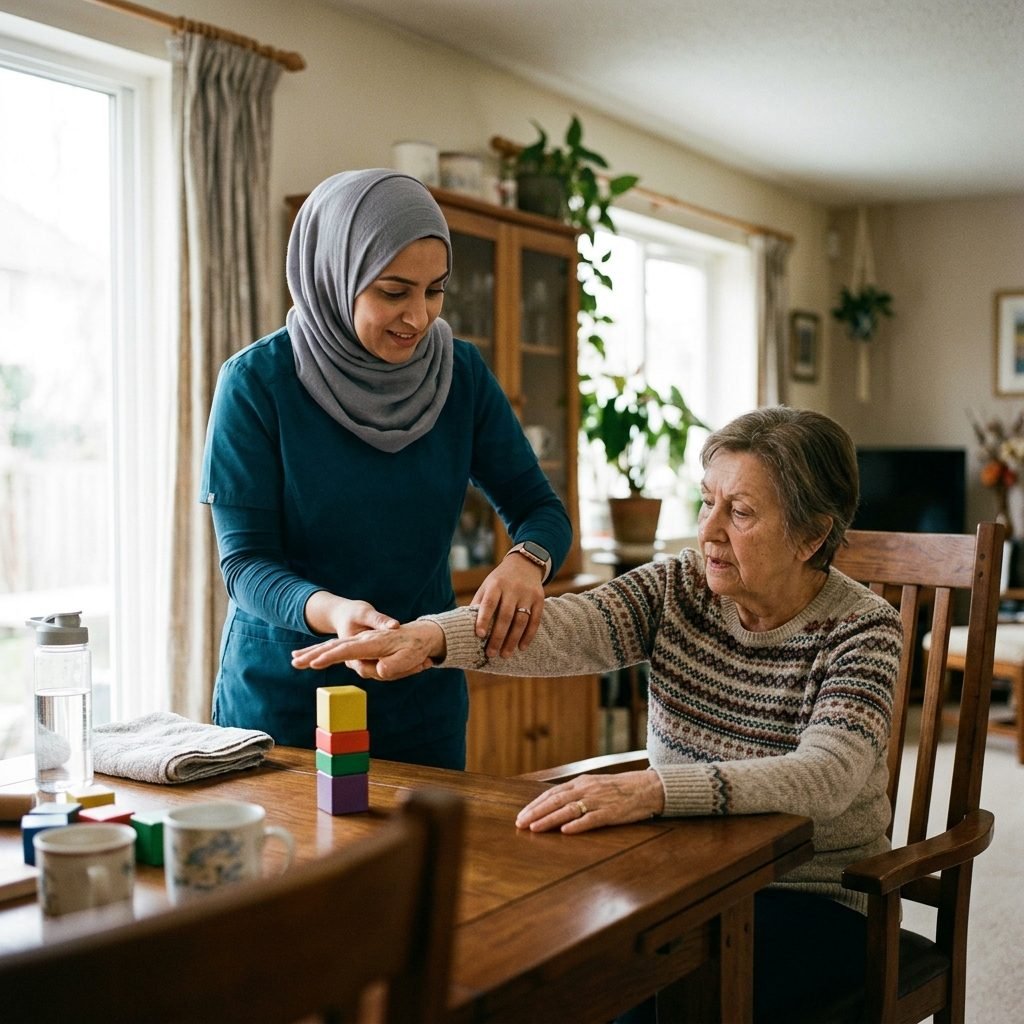
Stroke Rehabilitation
Advanced motor and neurological stroke recovery at home in Al Khaldiyah.
Service Details ←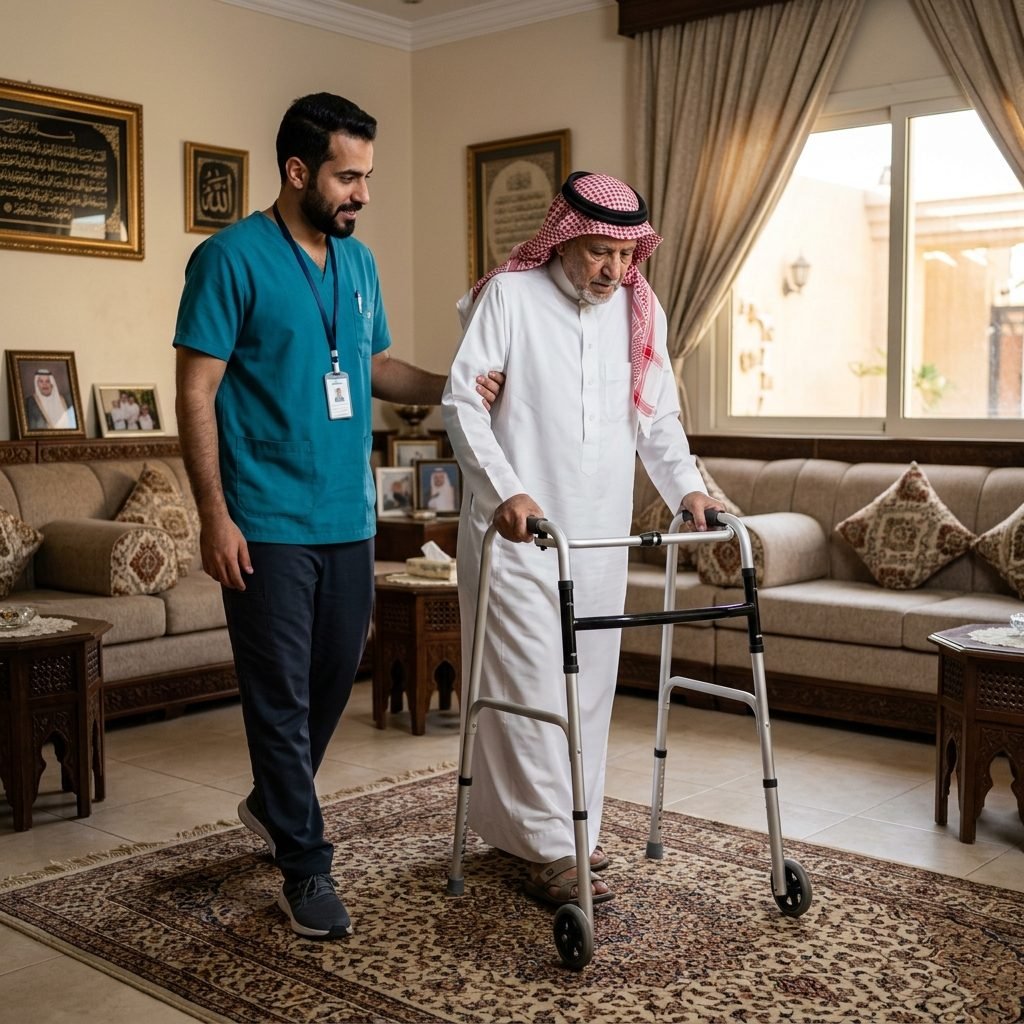
Geriatric Physical Therapy
Balance training, strengthening, and fall prevention for seniors in Al Khaldiyah.
Service Details ←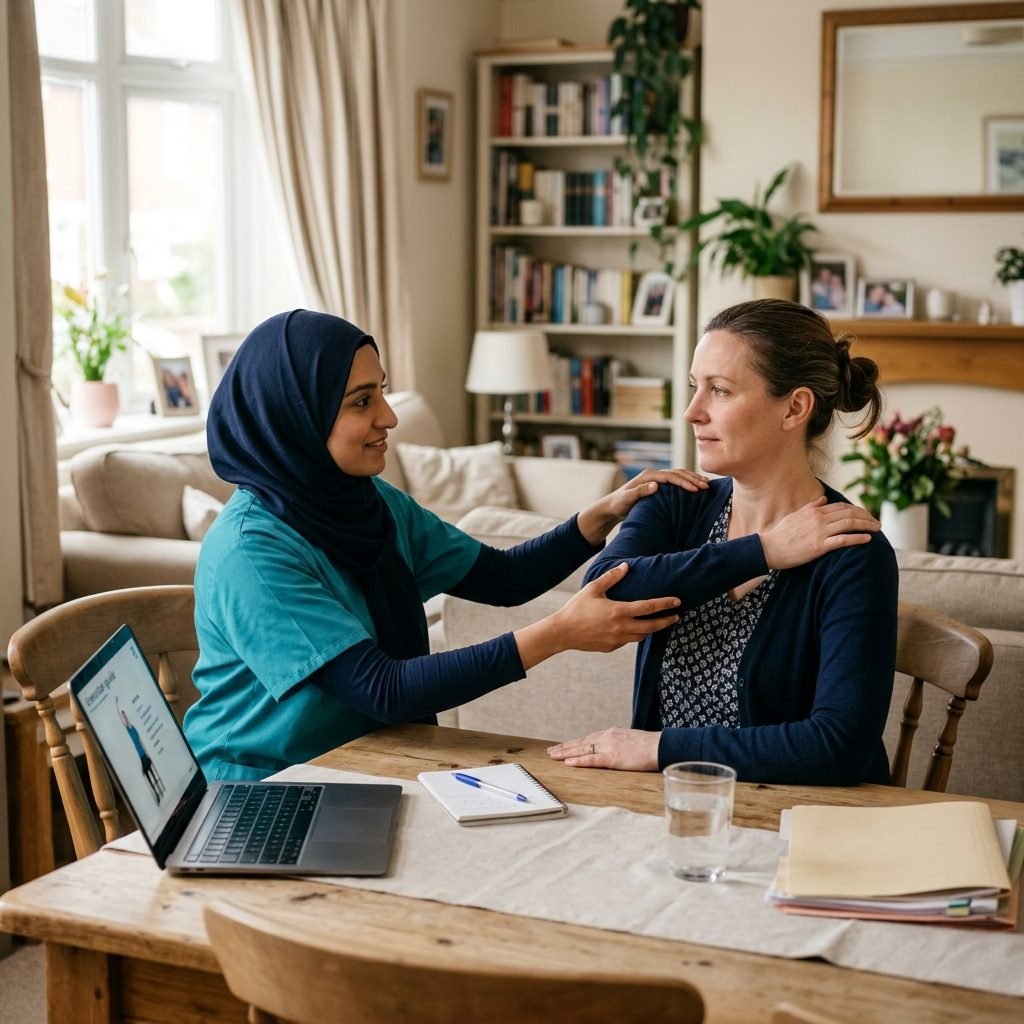
Female Physiotherapist
Licensed female therapists providing home care for women in Al Khaldiyah.
Service Details ←