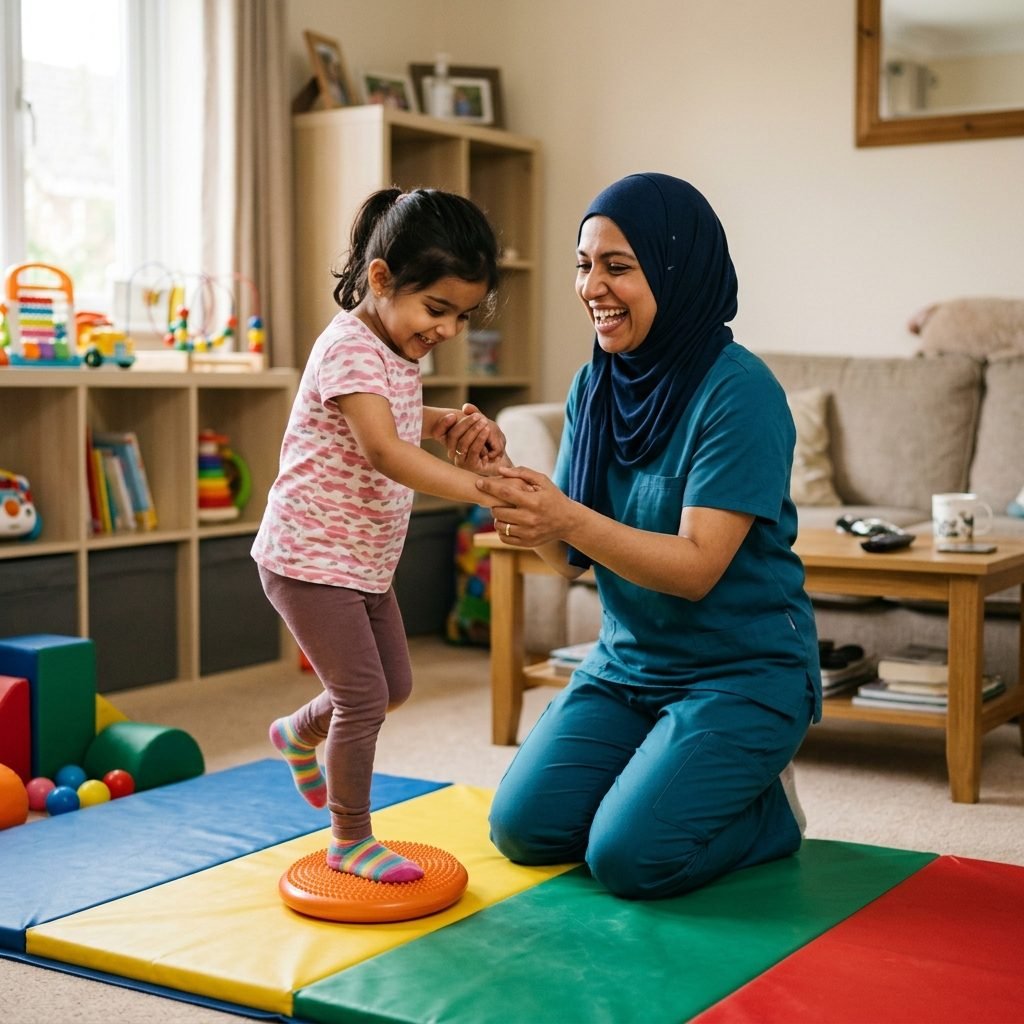
Having access to comprehensive, clinical physical therapy at home is crucial for maintaining rehabilitation progress, especially in busy neighborhoods. Al-Safa and Al Khaldiyah districts in Jeddah present unique local mobility challenges due to high population density and traffic. At Bidaya Center, we deliver high-quality home physiotherapy and movement rehabilitation services directly to your doorstep, conforming to the clinical guidelines of the Saudi Commission for Health Specialties. We eliminate the stress of travel, traffic, and parking. We respect cultural privacy by providing certified male therapists for male patients and female therapists for female patients.
Our clinical approach in Al Khaldiyah starts with a detailed physical and environmental safety assessment to eliminate fall hazards in the home. We bring all necessary portable, sterilized equipment to deliver a clinical standard of care comparable to external clinics. The therapist establishes a tailored milestone tracking plan to monitor muscle strength, balance, and joint range of motion (ROM) progression over time.
Why families in Al Khaldiyah choose Bidaya for home physiotherapy
- ✅ Licensed male & female therapists — full privacy, in your own home in Al Khaldiyah.
- ✅ Fully in-home visits across Al Khaldiyah — no travel or traffic.
- ✅ A personalized rehab plan built after a thorough in-home assessment.
- ✅ Continuous follow-up and direct contact with your therapist throughout.
- ✅ Fast response — arrange your visit by a quick call or WhatsApp message.
We also serve nearby areas: Al Andalus · Al Basateen · Al Bawadi
* The treatment plan and expected outcomes are determined by a medical and functional assessment of each individual case.
Home-Based Care for Delayed Walking and Why It Matters for Al Khaldiyah Families
When a child is slow to pull up, stand, or take independent steps well past the age most children reach these milestones, "he's just a late walker" is not always the whole story. Delayed walking is a functional signal that deserves a proper look. At Bidaya Center we provide a focused program to assess and support children with delayed walking right inside their own home in the Al Khaldiyah neighborhood of Jeddah, where the child spends most of the day moving between their room, the play area, and the living-room floor.
Walking is a deeply contextual skill. A child learns to step when there is a reason to move toward a favorite toy or toward a parent, across the floor they already know. By coming to the family home in Al Khaldiyah, we see the child as they truly are, without the tension of an unfamiliar clinic. We measure how they perform on the actual tiles, rugs, and furniture they use every day, and that makes the rehabilitation plan far more realistic than any assessment done in a strange room.
The quiet, residential character of Al Khaldiyah and its closeness to everyday family life make it easier for parents to stay consistent with sessions, sparing them the strain of repeatedly transporting a small child through traffic and waiting rooms. We come to you with a licensed physiotherapist and work side by side with the family to build movement skills step by step. Both female and male therapists are available, with full respect for the privacy of your home and whatever each family prefers.
We want to be clear from the outset that every case of delayed walking is different. Some children are slow for simple reasons, such as temporary muscle weakness or limited chances to practice, while for others the delay may be part of a broader picture that needs ongoing follow-up. For that reason we never promise a fixed result or a specific date for a first step; our expectations are always built on a careful clinical and functional assessment of each individual child.
Symptoms and Signs That Signal It Is Time to Start
There are indicators where it is wise not to wait too long before arranging an assessment for delayed walking, especially when more than one appears together:
- The child cannot pull up to stand while holding furniture around the age of twelve to eighteen months.
- The child is past roughly eighteen months without independent steps, even though other areas of development seem on track.
- A constant preference for crawling or "bottom shuffling" while avoiding putting weight through the feet.
- Late walking combined with persistent toe-walking or a noticeable bend at the knees when upright.
- A difference in strength or movement between the two sides of the body, or a clear preference for one hand or leg over the other.
- Unusual floppiness (low tone) or, conversely, stiffness and tightness in the leg muscles when the child tries to stand.
- Frequent, out-of-the-ordinary falling after the child had already started taking first steps.
- Poor balance while sitting, or delays in earlier motor skills such as independent sitting and crawling.
The presence of a single sign does not necessarily mean a serious problem, but it is reason enough for an assessment that either reassures the family or guides them early. Early intervention in movement skills gives the child a better chance to practice during the stage when the nervous and muscular systems are most ready to learn.
Conditions and Groups Who Benefit
The home program for delayed walking at Bidaya Center serves a wide range of children in Al Khaldiyah and the surrounding area, including:
- Children slow to stand and walk independently with no obvious underlying cause (simple or temporary motor delay).
- Children with general muscle weakness or low tone in the lower limbs.
- Children born prematurely, whose motor milestones may follow a delayed sequence.
- Children with persistent toe-walking or other atypical stepping patterns.
- Children under motor-development follow-up within neurological or muscular conditions, in coordination with their treating physician.
- Children recovering from long periods of rest or casting that affected their confidence in bearing weight through the feet.
- Children who do walk but with weak balance or a clear fear of moving across open spaces.
We make sure every child begins with a program shaped around their own case rather than a generic template. Some children need strengthening and confidence-building, some need their standing pattern corrected, and others need their motivation to move encouraged more than the exercise itself.
Goals of the Rehabilitation Program
Goals for delayed walking are set in a practical, measurable way, and parents take part so that each goal is tied to the child's real daily life at home. Among the main areas we work on:
- Strengthening the trunk, hip, and leg muscles that form the true foundation for standing and stepping.
- Improving balance in sitting and standing, and building the protective reactions that keep the child safe when they lose their footing.
- Encouraging the child to bear weight confidently through the feet and to let go of the fear tied to standing.
- Correcting atypical movement patterns such as toe-standing or excessive knee bending.
- Developing transitions between positions (from sitting to standing, and from standing to supported stepping).
- Increasing range of motion and joint flexibility where tightness gets in the way of a natural step.
- Boosting motivation and engagement through guided play so that practice feels fun rather than a burden.
These goals are reviewed regularly and adjusted according to the child's response. We stress that the pace of progress differs from one child to another, and that expectations are built on repeated assessment rather than offered as promises in advance.
Stages and Path of the Home Sessions
Working with a child inside their home in Al Khaldiyah follows a connected path that starts with understanding before exercise:
- Initial assessment: we observe the child moving in their natural setting and examine muscle strength, range of motion, balance, and standing patterns, while taking a motor-development history from the parents.
- Planning: we define short- and long-term goals and agree with the family on the priorities of the opening stage and the suggested number of sessions.
- Foundation stage: we focus on strength, balance, and confidence in bearing weight, using play-based exercises suited to the child's age and the home floor.
- Standing and transition stage: we practice supported standing, moving between positions, and side-stepping along safe furniture.
- Independent stepping stage: we gradually reduce support and encourage free steps toward things the child loves, across the living room or hallway.
- Consolidation and follow-up: we reinforce the gained skill in varied daily situations and re-measure progress to adjust the plan when needed.
In every session we make use of the home's own furnishings: the sofa for supported standing, the hallway for first steps, and favorite toys as motivation. This makes what the child learns easy to repeat right after the therapist leaves.
The Role of the Family and Caregiver
The success of treatment for delayed walking cannot be separated from the family's role, because the child spends far more time with parents than with the therapist. We therefore make the parents and caregiver genuine partners in the plan:
- We teach the family simple, safe exercises that can be folded into daily play without feeling like a "chore" to the child.
- We show how to carry, position, and encourage the child to stand in a way that supports a healthy movement pattern.
- We advise on arranging opportunities for movement at home, such as motivating the child to step toward toys instead of always handing them over.
- We help parents read the child's signals: when they are tired, when they need a greater challenge, and when to stop.
- We track the skill's progress with the family between sessions and adjust the home exercises based on their observations.
This partnership turns the whole home in Al Khaldiyah into a gentle, continuous training environment, and it is often what makes the biggest difference in how quickly a child gains confidence in walking.
Home Safety and Prevention Tips
As a child begins to stand and step, preparing a safe home that encourages movement while reducing the risk of harmful falls becomes even more important:
- Clear obstacles and cords from movement paths, and secure slippery rugs so they do not slide under the child's feet.
- Provide stable furniture at a suitable height for leaning on while learning to stand, and avoid movable or unsteady pieces.
- Protect sharp table corners and keep tip-over items out of reach of a newly standing child.
- Let the child practice barefoot or in non-slip socks on safe floors to improve their sense of the ground and their balance.
- Supervise closely near doors and stairs, and fit safety gates at the entrances to internal staircases.
- Do not over-rely on baby walkers; it is better to allow guided, free movement under supervision.
- Keep practice sessions short, frequent, and linked to play so the child stays enthusiastic and standing never becomes associated with fatigue.
The aim of these tips is not to restrict the child but to give them a safe space to experiment freely, because a safe environment invites attempts, and repeated attempts are the very heart of learning to walk.
Frequently Asked Questions (FAQ)
My son is past eighteen months and still isn't walking. Should I be worried?
Being past this age is a reasonable reason to arrange an assessment, but it is not a verdict of a serious problem. Many children simply need strengthening, confidence, and chances to practice, while some need closer follow-up. A home assessment clarifies the picture and identifies the right next step for each child.
Do you really come to the home in Al Khaldiyah?
Yes, the service is fully home-based and we come to your home in Al Khaldiyah and the neighboring areas of Jeddah. A session inside the child's own environment makes the assessment more accurate and the training closer to daily reality, and it spares the family the effort of traveling with a small child.
How many sessions will my child need before walking?
There is no fixed number. The pace of progress depends on the cause of the delay, the child's age and response, and how consistently the family follows the home exercises. We set an initial plan after the assessment and re-measure progress regularly to adjust it, without promising a specific date for a first step.
Are the exercises painful or upsetting for the child?
We use a gentle, play-based approach suited to the child's age, so most exercises look like guided play rather than hard therapy. We respect the child's limits and signs of tiredness, and we build up the challenge gradually so they stay cooperative and enjoy the sessions as much as possible.
Is a female therapist available for my daughter?
Yes, both licensed female and male therapists are available, and the family chooses what suits them, with full respect for the privacy of the home. We are happy to arrange this when you book, in line with your preference.
To book a home assessment for your child's delayed walking in Al Khaldiyah, or to ask a question, contact Bidaya Center by phone or WhatsApp by clicking Call Now. Our team will be glad to help and to arrange the nearest suitable appointment.
Important Home Visit Details:
- ✓Setup: Please clear a 2x2m space in the room for safety.
- ✓Clothing: Wear loose, comfortable clothes for easy movement.
- ✓Therapist Parity: Male therapists for males, females for females.
- ✓Medical Reports: Keep your MRI or doctor reports ready for evaluation.
Rehabilitation & Services in Al Khaldiyah
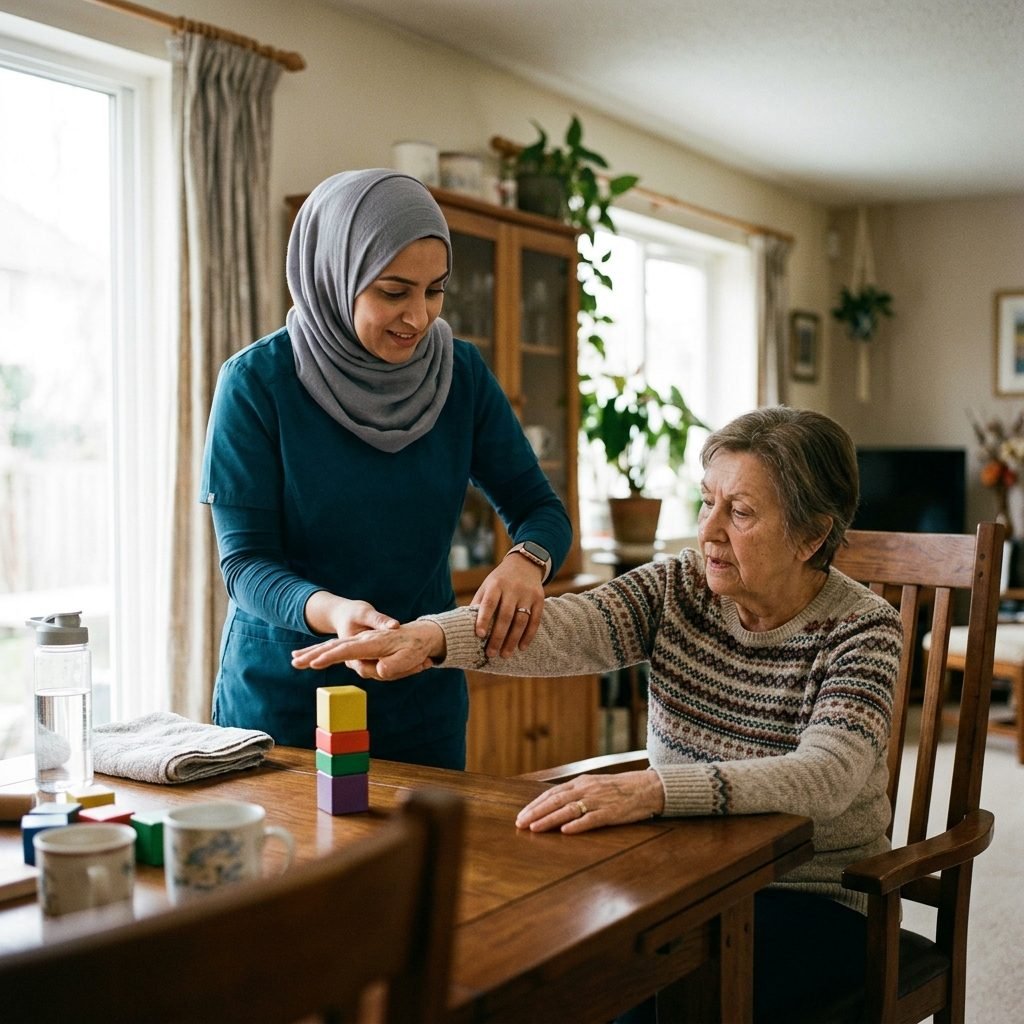
Stroke Rehabilitation
Advanced motor and neurological stroke recovery at home in Al Khaldiyah.
Service Details ←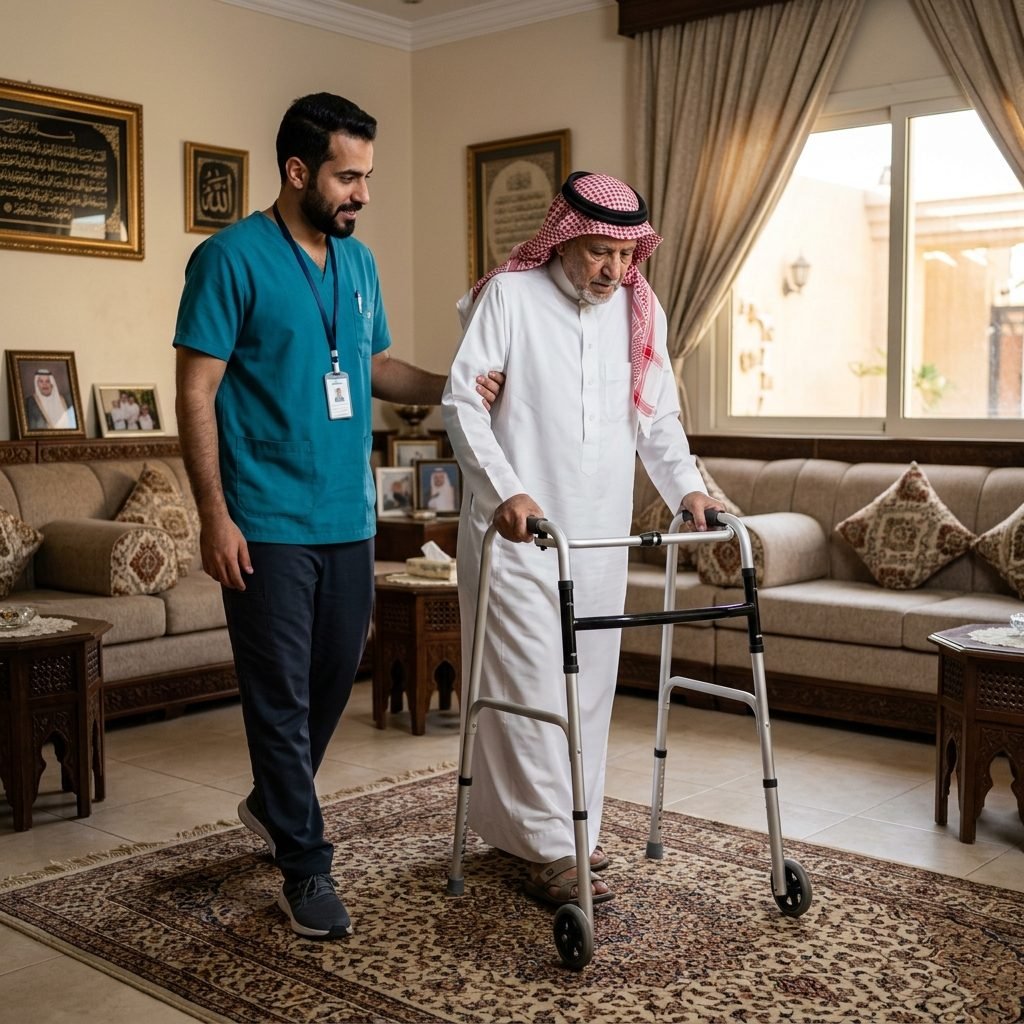
Geriatric Physical Therapy
Balance training, strengthening, and fall prevention for seniors in Al Khaldiyah.
Service Details ←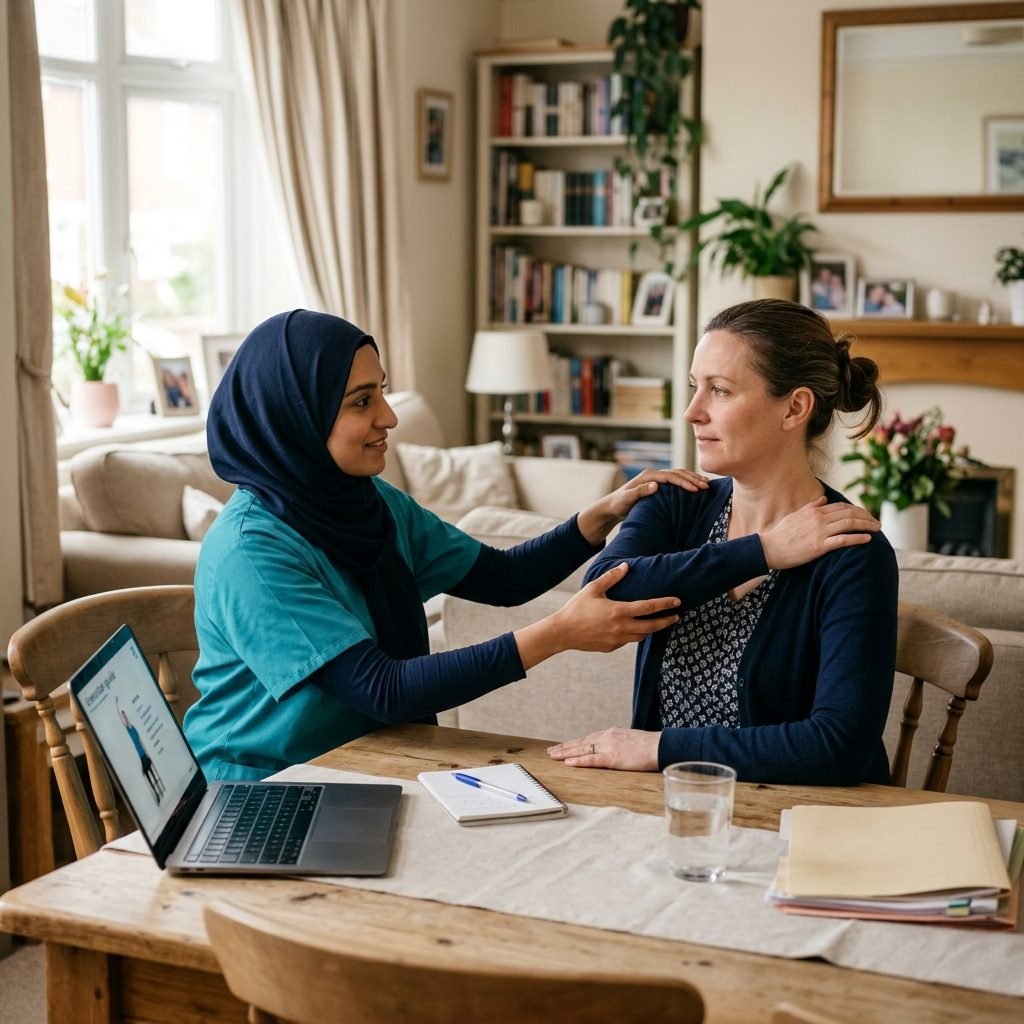
Female Physiotherapist
Licensed female therapists providing home care for women in Al Khaldiyah.
Service Details ←