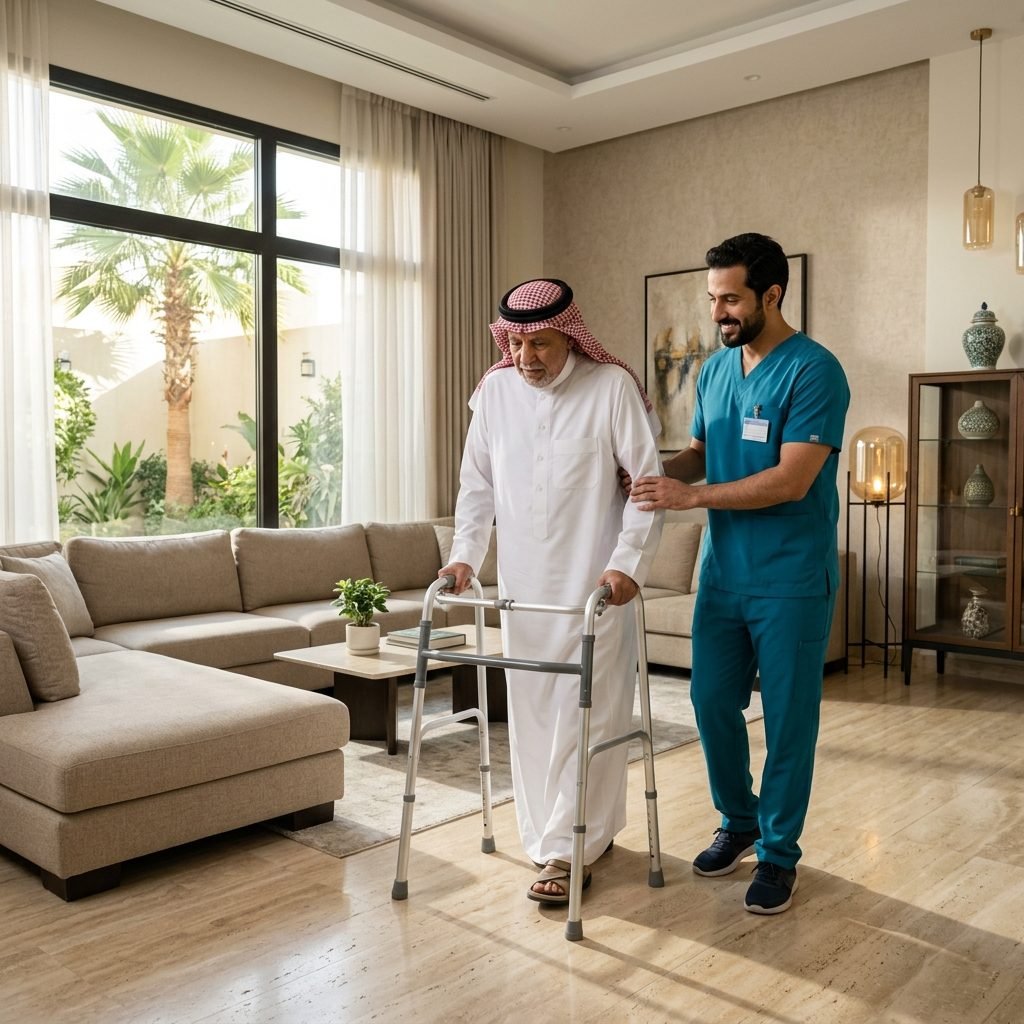
Having access to comprehensive, clinical physical therapy at home is crucial for maintaining rehabilitation progress, especially in busy neighborhoods. Al-Safa and Al Khaldiyah districts in Jeddah present unique local mobility challenges due to high population density and traffic. At Bidaya Center, we deliver high-quality home physiotherapy and movement rehabilitation services directly to your doorstep, conforming to the clinical guidelines of the Saudi Commission for Health Specialties. We eliminate the stress of travel, traffic, and parking. We respect cultural privacy by providing certified male therapists for male patients and female therapists for female patients.
Our clinical approach in Al Khaldiyah starts with a detailed physical and environmental safety assessment to eliminate fall hazards in the home. We bring all necessary portable, sterilized equipment to deliver a clinical standard of care comparable to external clinics. The therapist establishes a tailored milestone tracking plan to monitor muscle strength, balance, and joint range of motion (ROM) progression over time.
Why families in Al Khaldiyah choose Bidaya for home physiotherapy
- ✅ Licensed male & female therapists — full privacy, in your own home in Al Khaldiyah.
- ✅ Fully in-home visits across Al Khaldiyah — no travel or traffic.
- ✅ A personalized rehab plan built after a thorough in-home assessment.
- ✅ Continuous follow-up and direct contact with your therapist throughout.
- ✅ Fast response — arrange your visit by a quick call or WhatsApp message.
We also serve nearby areas: Al Andalus · Al Basateen · Al Bawadi
* The treatment plan and expected outcomes are determined by a medical and functional assessment of each individual case.
What Integrated Home Physiotherapy Means and Why It Matters for Al Khaldiyah Residents
Integrated home physiotherapy in the Al Khaldiyah district of Jeddah simply means that a licensed therapist comes to your door with the tools and expertise needed, so the rehabilitation session happens in the very room where the patient actually lives rather than in an unfamiliar clinic hall. The word "integrated" is not decorative: it means the service covers the initial assessment, an individual plan, the treatment sessions themselves, family training, and ongoing progress monitoring, all coordinated as one pathway inside your own home in Al Khaldiyah.
Al Khaldiyah is a relatively calm residential district in central Jeddah, with a mix of multi-storey villas and apartments in mid-rise buildings. Many of its households include an elderly relative, someone recovering after surgery, or a person who finds it genuinely hard to travel repeatedly through city traffic. For exactly these people, home-based therapy makes a real difference: it removes the burden of transport, it spares the exhausted or immune-compromised patient the strain of the road, and it lets the therapist see the patient's true environment and design the exercises around their own stairs, bathroom, and bed rather than around standardized clinic equipment.
At Bidaya Center we are careful to deliver the service in a way that fully respects the privacy of the home, with both male and female licensed therapists available so every household can choose what suits it. The plan and the expected outcomes always depend on a clinical and functional assessment of each individual case, and we make no promise of a guaranteed cure. Our aim is realistic and clear: to improve the patient's ability to move and stay independent, safely.
Symptoms and Signs That Signal It Is Time to Begin
Many people hesitate to request home physiotherapy, assuming things will "sort themselves out." Yet there are signs where waiting is not wise and an early assessment in Al Khaldiyah is preferable:
- Difficulty or fear of walking inside the home, frequent stumbling, or needing to grip walls and furniture.
- Chronic pain in the back, neck, or joints that disrupts sleep, sitting, or everyday tasks.
- Noticeable weakness in one or more limbs after a long recovery period or bed rest.
- Joint stiffness and limited range of motion following a fracture, operation, or dislocation.
- Loss of balance, or recurring dizziness when moving from sitting to standing.
- Declining ability to perform simple activities: dressing, using the bathroom, climbing the home stairs.
- Swelling or weakness after a sports injury or accident, where the limb has not regained full strength.
- Shortness of breath or general weakness that keeps the patient bed-bound and in need of gradual fitness rebuilding.
Having one or more of these symptoms is not a final diagnosis, but it is a good reason to book a home assessment visit. Early intervention is usually simpler and shorter than treating complications that have accumulated over time.
Conditions and Groups That Benefit
Integrated home physiotherapy is a broad service that serves many segments of the Al Khaldiyah community. Those who benefit most include:
- Older adults with muscle weakness and poor balance who want to preserve their independence at home and reduce the risk of falling.
- Post-surgical patients such as those after knee or hip replacement or spinal surgery, who need structured rehabilitation as soon as they return home.
- Patients recovering from fractures and injuries after a cast is removed, to restore range of motion and strength.
- Chronic pain cases in the lower back, neck, shoulder, or knee arising from prolonged sitting or desk work.
- Patients with neurological conditions or those in a recovery phase requiring precise movement follow-up within a wider plan.
- Those who are hard to transport for health reasons, general weakness, or mobility difficulty, for whom home is the safest and most suitable place.
- Very busy individuals who prefer to save travel time and receive the session in their own Al Khaldiyah home.
Each group has its own program; what suits an elderly person regaining balance is entirely different from what suits a young adult recovering from a sports injury, which is why every pathway begins with a careful individual assessment.
Goals of the Rehabilitation Program
We frame the treatment goals in practical language whose effect the patient and family can feel in their daily life, not in abstract terms. Goals usually center on:
- Relieving and managing pain with safe therapeutic methods that reduce excessive reliance on painkillers.
- Restoring joint range of motion and flexibility after periods of stiffness or immobilization.
- Strengthening weak muscles and gradually rebuilding endurance.
- Improving balance and stability to lower the risk of falls at home, a serious hazard for the elderly.
- Re-teaching walking and functional movement: rising from bed, sitting and standing, safely climbing the home stairs.
- Increasing independence in daily activities so the patient relies on themselves as much as possible.
- Preventing complications linked to inactivity, such as joint stiffness and poor circulation.
- Educating the patient and family so they become active partners in sustaining progress between sessions.
These goals are set in a graded, measurable way, reviewed regularly, and adjusted according to each case's response. We emphasize that results differ from person to person, depend on the clinical assessment and adherence to the plan, and come with no advance guarantee.
Stages and Path of the Home Sessions
Integrated home physiotherapy in Al Khaldiyah follows an organized path that makes every visit a building block in a clear plan:
- The first visit — comprehensive assessment: the therapist listens to the patient's complaint and medical history, then examines muscle strength, range of motion, balance, and gait, while also observing the home environment itself in Al Khaldiyah, from stairs to bathroom to furniture.
- Building the individual plan: based on the assessment, short- and long-term goals are set, along with an initial number of sessions and their weekly frequency.
- The treatment sessions: these include targeted therapeutic exercises, manual techniques to relieve pain and improve joint mobility, and functional training in daily-living skills inside the home, with a carefully graded increase in intensity.
- Follow-up and re-assessment: progress is measured at regular intervals, and exercises are adjusted and made more challenging as the patient's ability improves.
- The independence and prevention stage: as the goals draw near, the patient is given a home program to continue independently, preserving the gains and preventing relapse.
The length of each session and the total number are not fixed figures; a case after major surgery differs from mild neck pain, and the decision is always built on continuous assessment rather than a ready-made template.
The Role of the Family and Caregiver
In home therapy in particular, the family's role becomes pivotal; the therapist spends an hour or less with the patient during the session, while the family spends the rest of the day with them. We therefore involve the caregiver from the very first visit and train them in:
- The safe way to help the patient stand and transfer between bed and chair without straining the caregiver's own back.
- Supervising simple home exercises between sessions and ensuring they are performed correctly.
- Noticing warning signs such as increased pain, swelling, or unusual fatigue and reporting them to the therapist.
- Preparing the space before each session: enough room, good lighting, and a floor clear of obstacles.
- Providing emotional support and encouragement, since the patient's morale directly affects their commitment and progress.
When the family shifts from an anxious bystander into a trained partner, the pace of improvement accelerates and the gains become more stable between visits.
Home Safety and Prevention Tips
A safe home is half the treatment, especially in Al Khaldiyah houses that may contain internal staircases and multiple rooms. We recommend the following to reduce risks and support the rehabilitation plan:
- Remove sliding rugs and scattered cables from walking paths, and secure the edges of fixed carpets.
- Install safety grab bars in the bathroom and beside the toilet, and place a non-slip mat in front of the shower area.
- Provide sufficient lighting in corridors and on the stairs, with a night light along the route to the bathroom.
- Arrange frequently used items within easy reach to avoid excessive bending or reaching to high places.
- Wear closed, stable shoes indoors instead of open, slippery slippers.
- Do not rush movement when getting up; sitting for a moment before standing reduces dizziness and fall risk.
- Follow the prescribed exercises exactly, neither more nor less, and stop any exercise that causes sharp pain and consult the therapist.
- Keep up water intake and the permitted light movement to stimulate circulation and prevent stiffness.
These are general preventive measures, and the therapist may add tailored recommendations after inspecting your home in Al Khaldiyah.
Frequently Asked Questions (FAQ)
Is home therapy lower in quality than a clinic?
No; the session is delivered by a licensed therapist using the same tools and techniques, and the advantage of the home is that it allows training the patient in their real Al Khaldiyah environment, such as their stairs and bathroom, which a standard clinic cannot offer.
How many sessions will I need to improve?
There is no single number; a post-surgical case differs from mild chronic pain. The initial number is set after the first assessment and reviewed regularly according to your response, and results depend on your condition and adherence with no advance guarantee.
Is a female therapist available inside the home?
Yes; both male and female licensed therapists are available, and you can choose what suits your household while the privacy of the home and the comfort of the family are fully preserved.
What should I prepare before the therapist arrives?
It is enough to provide a small, well-lit space and a stable bed or chair, and to have your medical reports and imaging ready if available; no special equipment is needed, as the therapist brings what is required.
Does the service include a home assessment and fall prevention?
Yes; the integrated assessment includes observing the home environment and suggesting simple adjustments to lighting, the bathroom, and corridors to raise safety and support the treatment plan.
To book a home assessment visit in Al Khaldiyah, Jeddah, or to ask about integrated home physiotherapy, contact Bidaya Center by phone or WhatsApp by clicking Call Now, and our team will be glad to arrange a time that suits you.
Important Home Visit Details:
- ✓Setup: Please clear a 2x2m space in the room for safety.
- ✓Clothing: Wear loose, comfortable clothes for easy movement.
- ✓Therapist Parity: Male therapists for males, females for females.
- ✓Medical Reports: Keep your MRI or doctor reports ready for evaluation.
Rehabilitation & Services in Al Khaldiyah
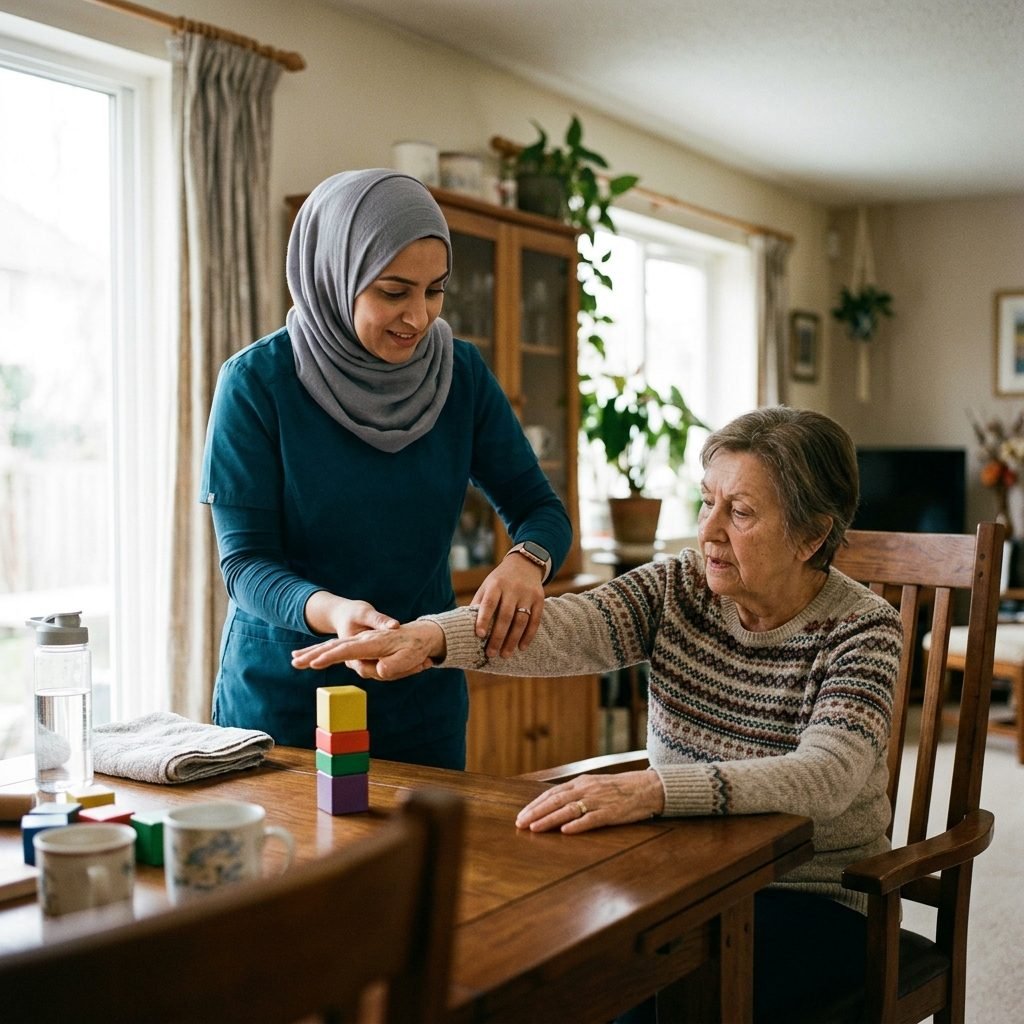
Stroke Rehabilitation
Advanced motor and neurological stroke recovery at home in Al Khaldiyah.
Service Details ←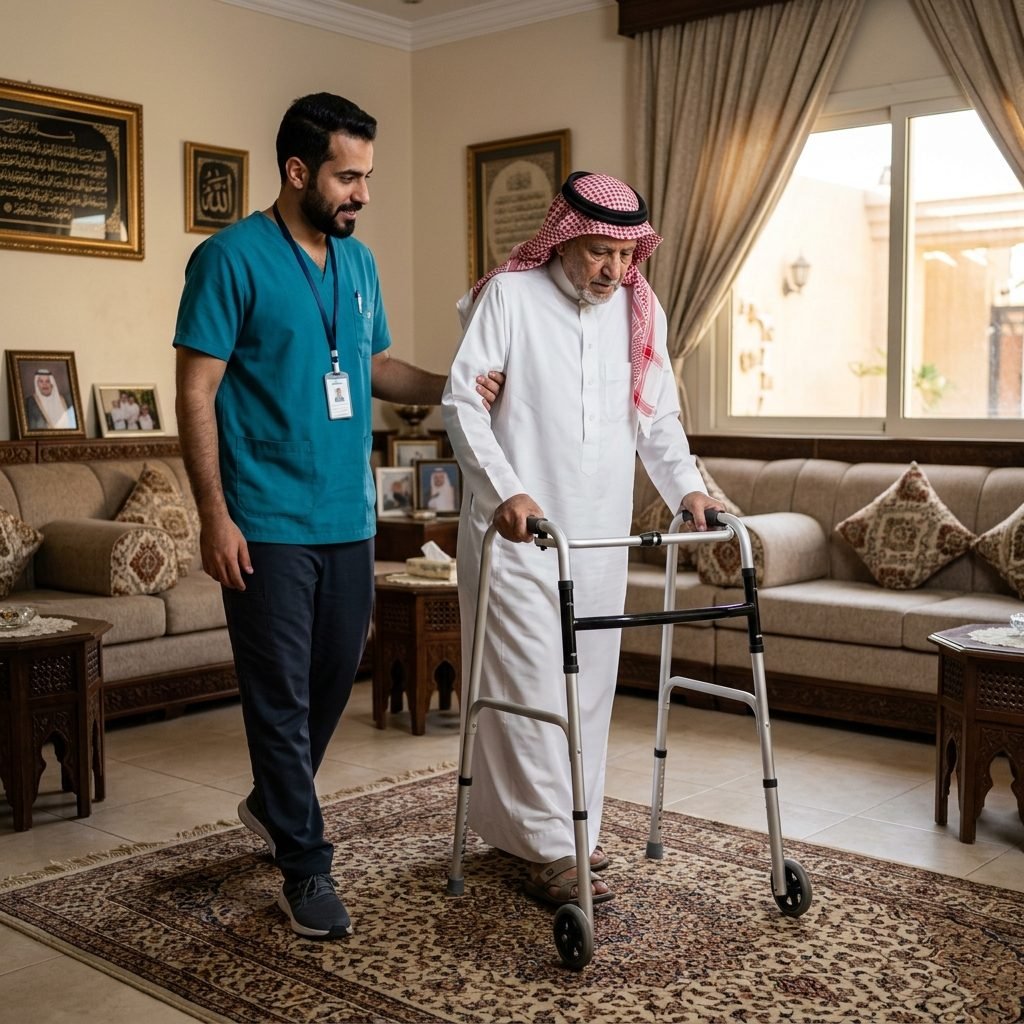
Geriatric Physical Therapy
Balance training, strengthening, and fall prevention for seniors in Al Khaldiyah.
Service Details ←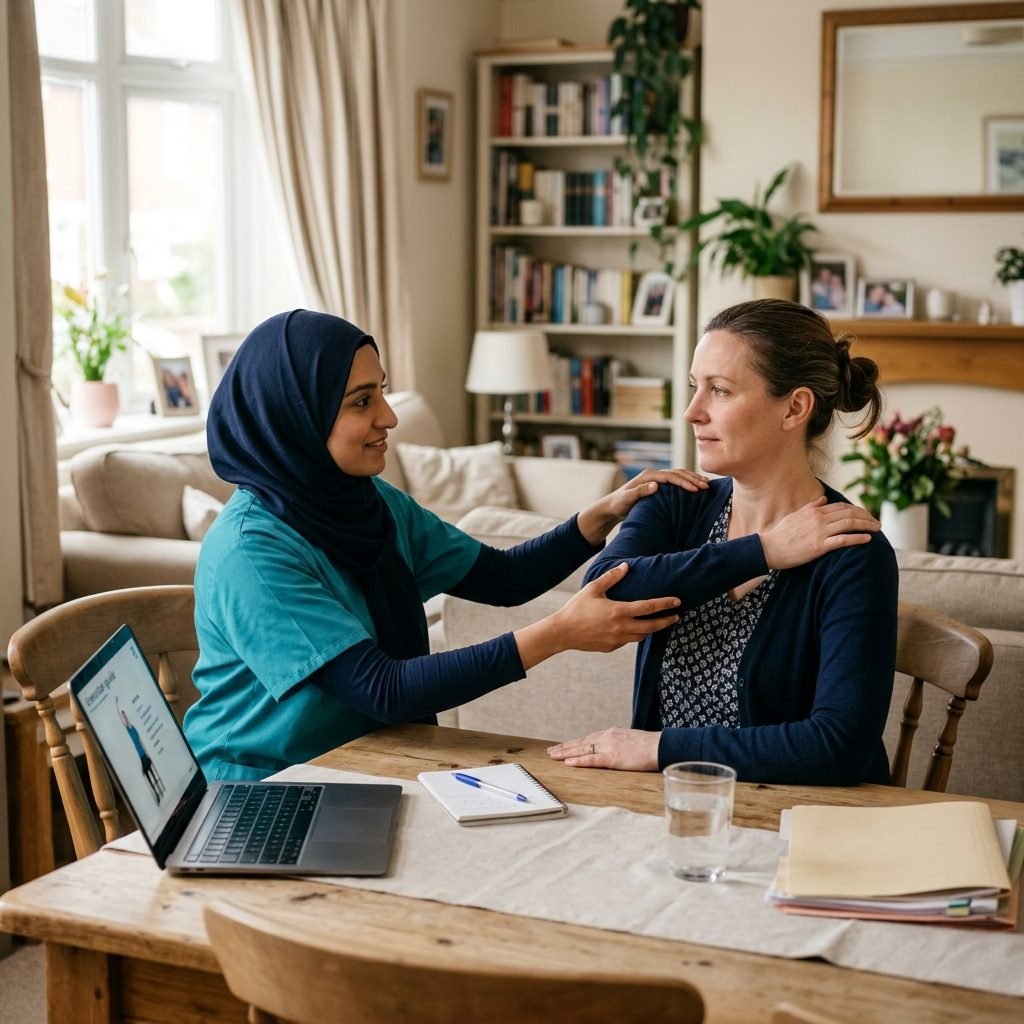
Female Physiotherapist
Licensed female therapists providing home care for women in Al Khaldiyah.
Service Details ←