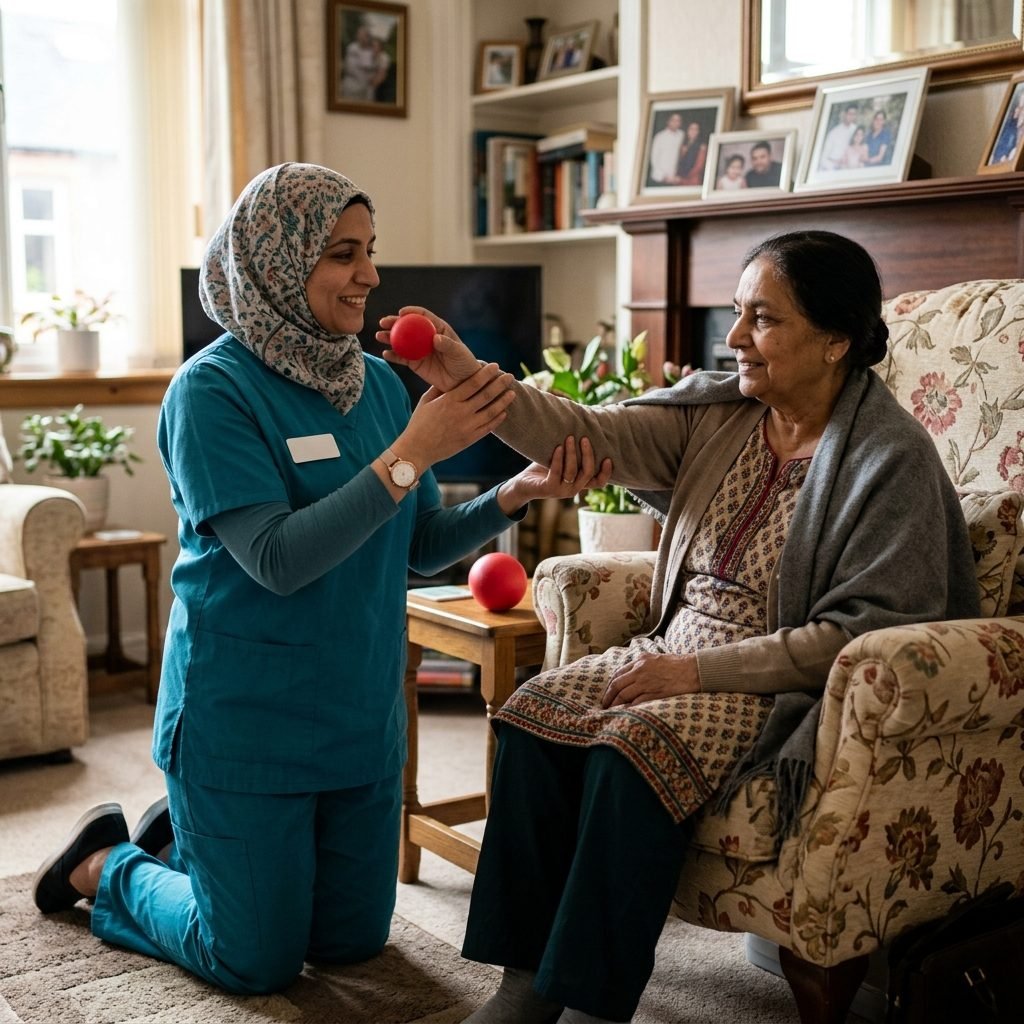
Having access to comprehensive, clinical physical therapy at home is crucial for maintaining rehabilitation progress, especially in busy neighborhoods. Al-Safa and Al Khaldiyah districts in Jeddah present unique local mobility challenges due to high population density and traffic. At Bidaya Center, we deliver high-quality home physiotherapy and movement rehabilitation services directly to your doorstep, conforming to the clinical guidelines of the Saudi Commission for Health Specialties. We eliminate the stress of travel, traffic, and parking. We respect cultural privacy by providing certified male therapists for male patients and female therapists for female patients.
Our clinical approach in Al Khaldiyah starts with a detailed physical and environmental safety assessment to eliminate fall hazards in the home. We bring all necessary portable, sterilized equipment to deliver a clinical standard of care comparable to external clinics. The therapist establishes a tailored milestone tracking plan to monitor muscle strength, balance, and joint range of motion (ROM) progression over time.
Why families in Al Khaldiyah choose Bidaya for home physiotherapy
- ✅ Licensed male & female therapists — full privacy, in your own home in Al Khaldiyah.
- ✅ Fully in-home visits across Al Khaldiyah — no travel or traffic.
- ✅ A personalized rehab plan built after a thorough in-home assessment.
- ✅ Continuous follow-up and direct contact with your therapist throughout.
- ✅ Fast response — arrange your visit by a quick call or WhatsApp message.
We also serve nearby areas: Al Andalus · Al Basateen · Al Bawadi
* The treatment plan and expected outcomes are determined by a medical and functional assessment of each individual case.
Home-Based Neurological Physiotherapy and Why It Matters for Al Khaldiyah Residents
Neurological physiotherapy is a specialized field dedicated to rehabilitating people whose central or peripheral nervous system has been affected, whether by a stroke, a spinal cord injury, or conditions such as multiple sclerosis, Parkinson's disease, and peripheral neuropathy. It rests on the principle of neuroplasticity the brain's capacity to reorganize its pathways and learn new movement patterns when exposed to repeated, purposeful exercise. When this rehabilitation is delivered inside the home, the brain practises movement in the very environment where the patient lives every day, rather than in an unfamiliar therapy room.
Al Khaldiyah is one of Jeddah's established and lively residential districts, with a mix of villas and apartment buildings, and many of its households include elderly members or someone recovering from a neurological event. Repeatedly travelling to a rehabilitation centre through busy streets can be exhausting for a neurological patient who struggles with poor balance, muscle stiffness, or rapid fatigue. Home physiotherapy in Al Khaldiyah is therefore a practical solution that keeps sessions consistent and prevents the interruptions that so often delay recovery.
At Bidaya Center we reach the patient at home in Al Khaldiyah with licensed therapists, both male and female, and with full respect for family privacy. We design the programme only after a careful clinical and functional assessment, taking the home itself into account: the stairs, the width of the hallways, the type of flooring, and the proximity of a bathroom. These small details are the heart of neurological rehabilitation, because the ultimate goal is not to perform an exercise in a clinic but to restore safe movement within the walls where the patient actually lives.
Symptoms and Signs That Signal It Is Time to Start
The nervous system sends early warnings when its function falters, and noticing these signs in time makes a real difference to the recovery path. We advise Al Khaldiyah residents not to postpone an assessment when any of the following appear:
- Sudden or gradual weakness in a limb or an entire side of the body, or difficulty lifting the foot while walking.
- Clear loss of balance, with repeated tripping or falling at home, especially on stairs or when rising from a chair.
- Muscle stiffness or spasticity that makes moving a joint difficult or painful.
- Tremor in the hands, general slowness of movement, or sudden "freezing" of the feet while walking, as seen in Parkinson's.
- Numbness, tingling, or burning in the limbs, pointing to a problem in the peripheral nerves.
- Difficulty with fine coordination, such as holding a spoon, buttoning a shirt, or writing.
- A changed walking pattern: short shuffling steps, a dragging foot, or the body leaning to one side.
- Rapid neurological fatigue and poor endurance that stops the patient completing usual daily activities.
Having one or more of these symptoms does not confirm a specific diagnosis, but it is reason enough to request a specialist assessment. The earlier rehabilitation begins, the greater the chance of harnessing the brain's plasticity before faulty movement patterns become entrenched or complications such as joint stiffness and muscle shortening set in.
Conditions and Groups That Benefit
Home-based neurological physiotherapy serves a wide range of patients in Al Khaldiyah across ages and conditions. Among the groups who benefit most:
- Stroke patients: in the early or later recovery phase, to restore movement, balance, and function of the affected limb.
- Spinal cord injuries: complete or partial, to preserve range of motion, strengthen unaffected muscles, and prevent complications.
- Multiple sclerosis patients: to manage fatigue and spasticity and maintain independence between relapses.
- Parkinson's patients: to improve stride length and balance and counter slowness of movement and gait freezing.
- Traumatic head and brain injuries: to retrain the motor and movement-related cognitive functions.
- Peripheral neuropathy: due to diabetes or other causes, to restore sensation, strength, and coordination.
- Facial palsy (seventh nerve) and weakness of the surrounding peripheral nerves.
- Older adults experiencing a general neuromotor decline that threatens their independence and safety at home.
Every programme is built individually; what suits a Parkinson's patient differs fundamentally from what a spinal cord injury requires. That is why we always begin with an individual assessment before drawing up any plan, and we make no promises of specific results only realistic goals that are reviewed continually according to how each case responds.
Goals of the Rehabilitation Programme
Neurological rehabilitation centres on restoring as much functional independence as possible and improving quality of life, and the goals are framed in concrete, everyday language the patient and family can understand. Among the things we work toward:
- Improving the walking pattern, increasing endurance distance, and steadying the patient on their feet to reduce fall risk.
- Retraining balance and coordination in sitting, standing, and the transitions between them.
- Reducing muscle spasticity, maintaining joint range of motion, and preventing stiffness.
- Strengthening weak muscles and reactivating neural pathways through purposeful repetition.
- Training the patient in daily activities: getting out of bed, dressing, using the bathroom, climbing stairs.
- Managing neurological fatigue and distributing energy wisely across the day.
- Preventing complications such as pressure sores, joint stiffness, and circulation problems in less mobile patients.
- Boosting the patient's confidence and psychological independence, and supporting their return to a social and family role.
These goals are not absolute promises; the extent and pace of improvement depend on the nature, severity, and duration of the neurological condition and on the commitment of patient and family to the plan. We review the goals periodically and adjust them transparently based on the real progress we observe.
Stages and Course of the Home Sessions
We organize the therapeutic journey in Al Khaldiyah along a clear path that begins with assessment and ends only when the gains are stable:
- Initial assessment: a comprehensive home visit measuring muscle strength, balance, range of motion, gait, and degree of spasticity, while examining the home environment and its hazards.
- Setting the plan and goals: we define short- and long-term goals together with the patient and family and decide on the suitable number of weekly sessions.
- Foundation phase: sessions focused on preparing muscles and joints, range-of-motion work, spasticity-reduction techniques, and re-teaching correct postures.
- Functional building phase: we move on to balance, gait, and transfer exercises, training daily tasks inside the home with the patient's own tools.
- Integration and independence phase: we reinforce correct movement patterns in real situations and gradually reduce reliance on assistance.
- Follow-up and re-assessment: we measure progress periodically, adjust the plan, and provide the family with a home exercise programme for between sessions.
The length of each session and its weekly frequency are set according to the neurological patient's tolerance, since overtraining can increase fatigue and delay progress. We weigh this balance carefully on every visit to Al Khaldiyah.
The Role of the Family and Caregiver
In neurological rehabilitation specifically, the family is not a bystander but an essential partner in the plan's success. The therapist spends only a few hours a week with the patient, while the family lives with them the rest of the time and that is where the difference between steady progress and slow decline is decided. We work with the caregiver in Al Khaldiyah on several fronts:
- Training them in how to transfer the patient and assist movement without hurting their own back or the patient.
- Teaching them simple, safe exercises to supervise between sessions to consolidate the gains.
- Making them aware of the signs of neurological fatigue and the difference between normal tiredness and what warrants stopping.
- Involving them in adapting the home environment and removing hazards that could cause a fall.
- Supporting them psychologically, because caring for a neurological patient is exhausting, and protecting the caregiver's morale is part of the therapy's success.
We maintain open communication with the family and answer their questions as they arise, because an informed, reassured family passes that reassurance on to the patient and speeds recovery.
Home Safety and Prevention Tips
A safe home environment is half the battle in neurological rehabilitation. Here are practical guidelines we apply and recommend in Al Khaldiyah homes:
- Remove slippery rugs and cables that cross hallways, and secure any mats with adhesive edges.
- Provide adequate lighting, especially in corridors, bathroom entrances, and on stairs, to avoid tripping.
- Install grab bars near the toilet, in the bathroom, and along the stairs to support balance.
- Make sure the patient wears closed, stable, non-slip shoes instead of open slippers.
- Keep frequently used items within easy reach to avoid bending or standing on tiptoe.
- Regularly reposition a less mobile patient to prevent pressure sores and improve circulation.
- Watch for signs of dehydration and dizziness, especially in Jeddah's hot climate, and keep the patient hydrated.
- Do not push the patient beyond their capacity; measured, gradual progress is safer and more effective than rushing.
These are general preventive measures that reduce risk, but they do not replace specialist supervision. On every visit the therapist reviews the safety of the environment and suggests further adjustments as the patient's condition evolves.
Frequently Asked Questions (FAQ)
Is home neurological physiotherapy as effective as sessions at a centre?
Yes, and for neurological care the home has an added advantage: training takes place in the patient's real environment with their own tools and furniture, which reinforces the transfer of skills to daily life. What matters is consistent sessions, a competent therapist, and a plan built on an accurate assessment.
When will we start to notice improvement?
This varies greatly from one patient to another depending on the type, severity, and duration of the neurological injury and the family's commitment. Some cases show early signs within weeks, while others need longer. We do not offer fixed promises, only realistic goals that we review continually.
Are male and female therapists available in Al Khaldiyah?
Yes, we have licensed staff of both genders, and you can choose what best suits the patient's comfort and the family's privacy, with full respect for privacy inside the home.
What should I prepare at home before the first visit?
No complicated preparations are needed; a comfortable space that allows movement is enough, along with any medical reports or scans if available. The therapist brings the necessary assessment tools and will guide you on any simple additions after the evaluation.
Does the programme include training family members?
Certainly; we consider caregiver training an essential part of the plan, and we provide the family with safe exercises and guidance to apply between sessions to consolidate progress.
To book a home assessment in Al Khaldiyah or to ask about neurological physiotherapy, contact Bidaya Center by phone or WhatsApp by clicking Call Now, and our team will be glad to help and arrange a visit that suits your circumstances.
Important Home Visit Details:
- ✓Setup: Please clear a 2x2m space in the room for safety.
- ✓Clothing: Wear loose, comfortable clothes for easy movement.
- ✓Therapist Parity: Male therapists for males, females for females.
- ✓Medical Reports: Keep your MRI or doctor reports ready for evaluation.
Rehabilitation & Services in Al Khaldiyah
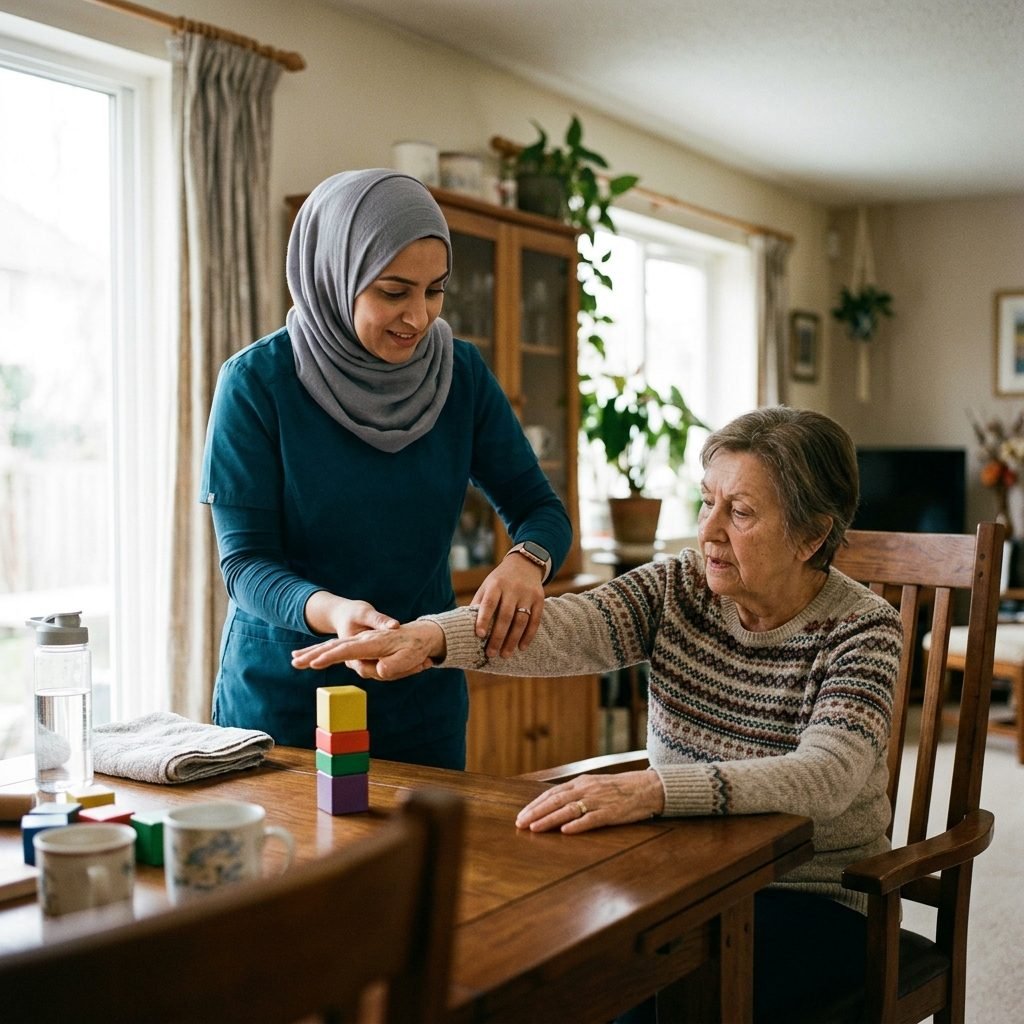
Stroke Rehabilitation
Advanced motor and neurological stroke recovery at home in Al Khaldiyah.
Service Details ←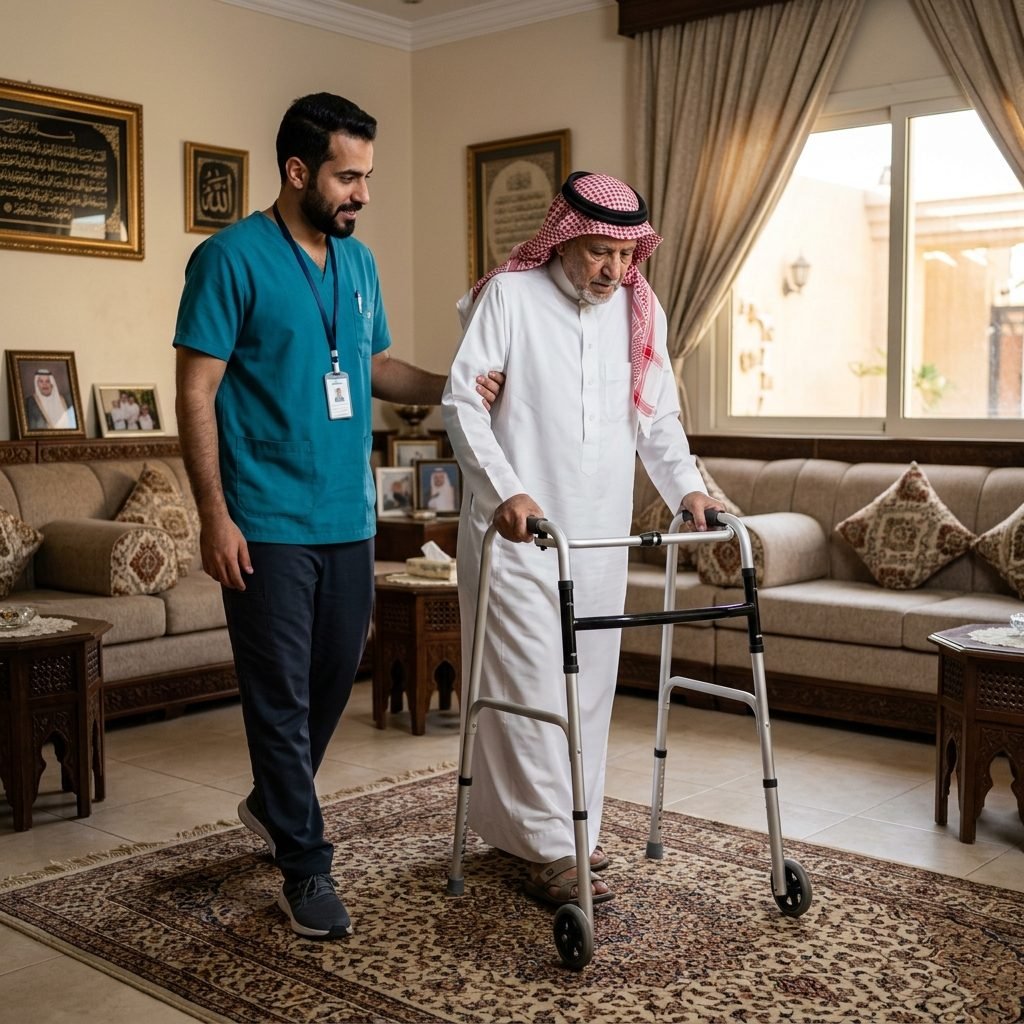
Geriatric Physical Therapy
Balance training, strengthening, and fall prevention for seniors in Al Khaldiyah.
Service Details ←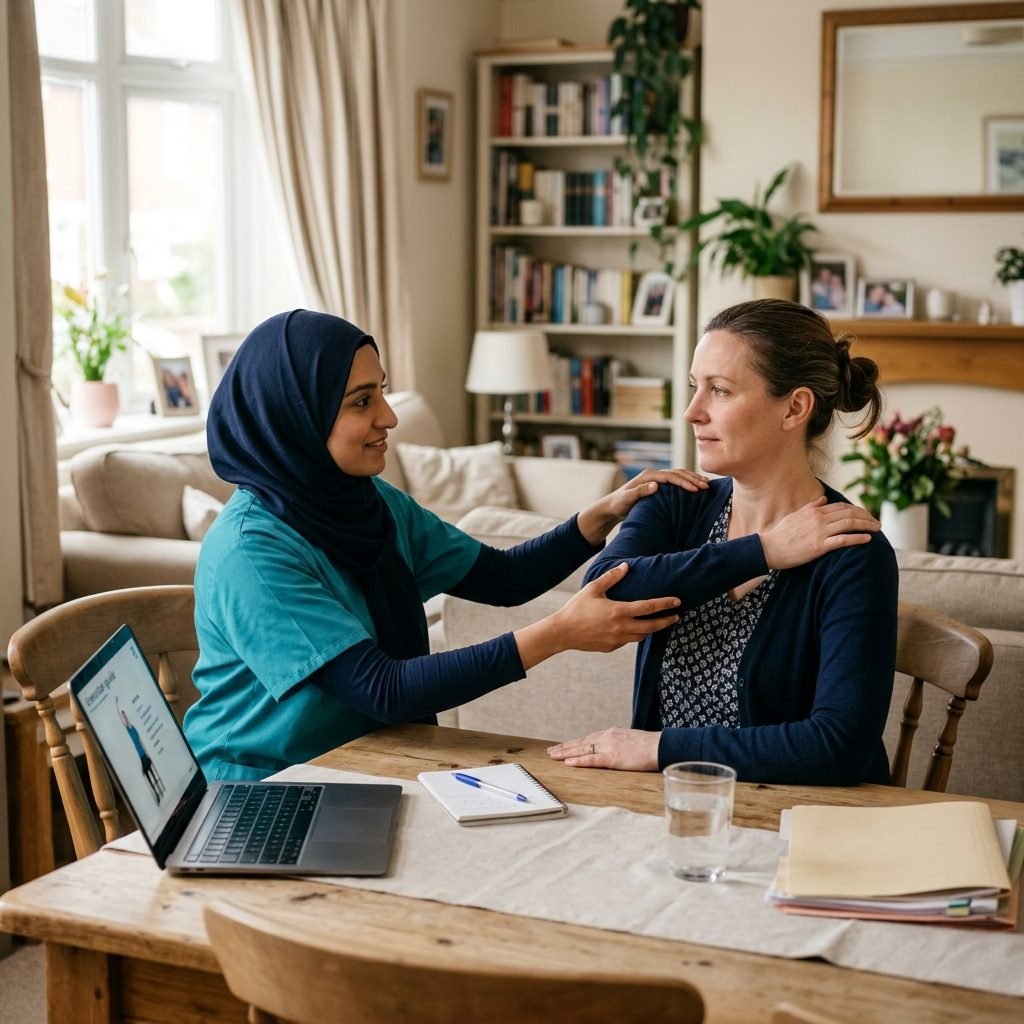
Female Physiotherapist
Licensed female therapists providing home care for women in Al Khaldiyah.
Service Details ←