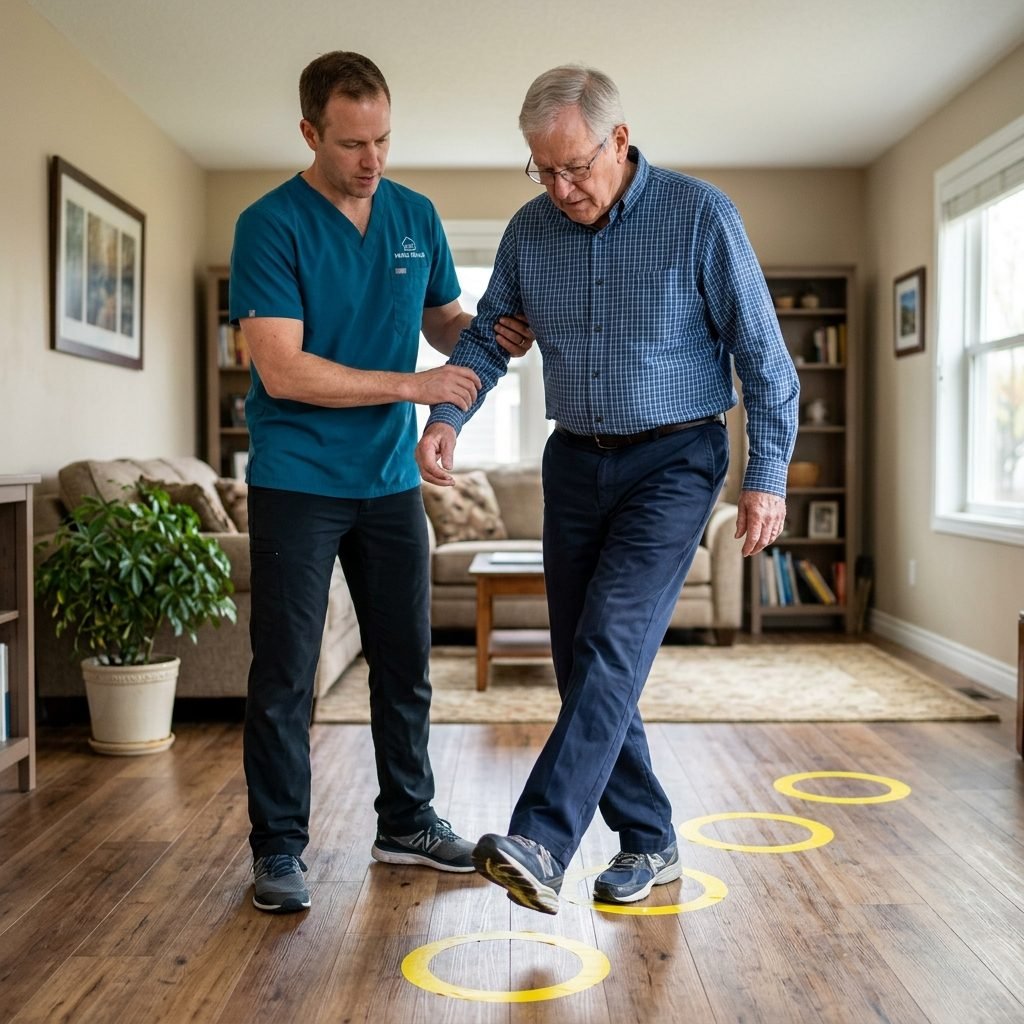
Having access to comprehensive, clinical physical therapy at home is crucial for maintaining rehabilitation progress, especially in busy neighborhoods. Al-Safa and Al Khaldiyah districts in Jeddah present unique local mobility challenges due to high population density and traffic. At Bidaya Center, we deliver high-quality home physiotherapy and movement rehabilitation services directly to your doorstep, conforming to the clinical guidelines of the Saudi Commission for Health Specialties. We eliminate the stress of travel, traffic, and parking. We respect cultural privacy by providing certified male therapists for male patients and female therapists for female patients.
Our clinical approach in Al Khaldiyah starts with a detailed physical and environmental safety assessment to eliminate fall hazards in the home. We bring all necessary portable, sterilized equipment to deliver a clinical standard of care comparable to external clinics. The therapist establishes a tailored milestone tracking plan to monitor muscle strength, balance, and joint range of motion (ROM) progression over time.
Why families in Al Khaldiyah choose Bidaya for home physiotherapy
- ✅ Licensed male & female therapists — full privacy, in your own home in Al Khaldiyah.
- ✅ Fully in-home visits across Al Khaldiyah — no travel or traffic.
- ✅ A personalized rehab plan built after a thorough in-home assessment.
- ✅ Continuous follow-up and direct contact with your therapist throughout.
- ✅ Fast response — arrange your visit by a quick call or WhatsApp message.
We also serve nearby areas: Al Andalus · Al Basateen · Al Bawadi
* The treatment plan and expected outcomes are determined by a medical and functional assessment of each individual case.
Home Physiotherapy for Parkinson's Disease and Why It Matters for Al Khaldiyah Residents
Physiotherapy for Parkinson's disease is a movement-focused rehabilitation programme built around the progressive nature of the condition. It targets the slowness of movement, muscle rigidity, balance disturbance and walking difficulties that emerge as the disease advances. Exercise does not cure Parkinson's, but the evidence is clear that regular, well-directed rehabilitation helps slow the decline in functional ability and preserves independence for as long as possible. For this reason physiotherapy has become a core part of a Parkinson's care plan, working alongside the medication and follow-up managed by the treating neurologist.
What makes delivering this service at home in Al Khaldiyah especially valuable is that the patient trains in the very environment they move through every day. Al Khaldiyah is a busy residential district in the heart of Jeddah, full of multi-storey buildings and villas with stairs, corridors and doorways. These are precisely the situations where a person with Parkinson's meets their real challenges: rising from a low sofa, turning in a narrow kitchen, crossing a door threshold, or stepping down a staircase. When the patient practises on these exact obstacles instead of an unfamiliar clinic room, the skills they build transfer directly into daily life.
Home therapy also spares older adults and Parkinson's patients the strain of travelling through Jeddah's traffic and heat, both of which add fatigue and raise the risk of a fall while out. Coming to your home in Al Khaldiyah means a calm session with the therapist's full attention on one patient and complete privacy. Both licensed male and female therapists are available, so the family can choose what suits them, with privacy fully respected throughout.
Symptoms and Signs That Signal It Is Time to Begin
Many families delay rehabilitation, waiting for symptoms to worsen, yet current recommendations show that an earlier start produces better functional outcomes. Signs that warrant booking a home assessment include:
- Noticeable slowness of movement (bradykinesia), difficulty initiating the first step, or steps that gradually become smaller.
- Muscle rigidity and a sense of heaviness in the limbs, with difficulty changing position or turning over in bed.
- A resting tremor that usually begins in one hand and may interfere with fine tasks.
- A forward-stooped trunk and altered posture, with loss of the natural arm swing during walking.
- "Freezing of gait," where the feet suddenly feel glued to the floor, particularly at doorways, in narrow corridors and when turning.
- Involuntary quickening of the steps (festination) with difficulty stopping, a clear warning sign for falls.
- Poor balance with repeated stumbling or falls, or a growing fear of moving independently.
- Reduced voice clarity, diminished facial expression, and difficulty writing (small handwriting).
Having one or more of these signs is not a diagnosis in itself, but it is reason enough to request a specialised functional assessment. Any recent fall, or a sudden decline in walking ability, calls for prompt contact, because early intervention lowers the risk of repeated falls and their complications.
Conditions and Groups Who Benefit
The home programme is designed to serve a wide range of Parkinson's patients across different stages of the disease. Those who benefit most include:
- Patients in the early stages who want to build a protective movement habit and maintain their fitness and flexibility.
- Patients in the middle stages who have begun to develop walking and balance problems, freezing, and a need for compensatory strategies.
- Patients in the advanced stages who need to preserve range of motion, prevent contractures and pressure sores, and make care easier for the family.
- Those who experience fluctuations in their response to medication, with better and worse periods through the day, and who need training that accounts for this variability.
- Patients recovering after a hospital admission or a long period of bed rest who have lost some of their movement capacity.
- People who have had one or more falls and need a fall-prevention programme to rebuild confidence in movement.
- Families caring for a member at home who need practical training on how to handle and transfer the patient safely.
It is worth emphasising that every plan is built individually; two patients at the same stage may need completely different programmes depending on their goals, their home environment and their pattern of symptoms.
Goals of the Rehabilitation Programme
The programme promises neither a cure nor a guaranteed result. Instead it works towards realistic functional goals set after the assessment and reviewed regularly. The most important of these are:
- Improving the amplitude of movement and countering the tendency to shrink movements, through high-amplitude training on large, deliberate motions.
- Making walking safer by lengthening the stride, widening the base of support, and reducing freezing episodes using auditory and visual cues.
- Improving both dynamic and static balance and lowering fall risk within the actual space of the home.
- Maintaining flexibility of the spine and chest, countering the forward stoop, and improving posture.
- Strengthening the key muscles used for standing, sitting, turning and transferring between positions independently.
- Training dual tasks (moving while thinking or talking), which are among the situations that most disrupt a person with Parkinson's.
- Supporting breathing capacity and voice clarity within the therapist's scope and in cooperation with other disciplines when needed.
- Building self-confidence, reducing fear of movement, and enabling the patient to continue their daily and social activities.
Stages and Path of the Home Sessions
Rehabilitation follows a structured path that begins with assessment and does not end with the sessions; it extends into an ongoing home programme:
- Initial assessment: On the first visit to your home in Al Khaldiyah the therapist measures strength, flexibility, balance and gait pattern, observes freezing episodes, and checks the movement routes through the house from the bedroom to the bathroom and kitchen.
- Plan and goal setting: Clear, measurable goals are agreed with the patient and family, taking medication timing into account so sessions can be scheduled during the best-performing periods.
- Foundation stage: Exercises to restore flexibility and range of motion, training in movement amplitude and correct posture, and building a safe fitness base.
- Functional skills stage: Practising rising from a chair and bed, turning, walking with wide steps, and using cues to overcome freezing at doorways and in corridors.
- Challenge and integration stage: Introducing dual tasks, training balance on different surfaces within the home, and simulating everyday situations such as carrying an object while walking.
- Follow-up and reassessment: Measuring progress regularly and adjusting the plan, while handing over a simple daily home programme to ensure the benefit continues between visits.
The length of each session and its weekly frequency are set according to the patient's condition and tolerance, with care taken not to overtire them, especially during periods when the medication effect is wearing off.
The Role of the Family and Caregiver
The success of Parkinson's rehabilitation at home is closely tied to family involvement, because the therapist spends only a limited number of hours each week while the family lives with the patient all the time. We therefore give the caregiver hands-on training in:
- Using auditory and visual cues correctly (such as counting out loud or lines on the floor) to help the patient start walking and to break through freezing.
- The safe way to help the patient stand and transfer without pulling on the arm, which could injure the shoulder or cause loss of balance.
- Encouraging in a supportive style that promotes independence rather than doing everything for the patient, since over-helping accelerates loss of ability.
- Watching symptom fluctuations through the day and linking them to medication timing, organising activity around the best-performing periods.
- Noticing any sudden decline or increase in falls and reporting it to the therapy team and treating physician.
This cooperation turns the home in Al Khaldiyah into a continuous rehabilitation environment, and it eases the psychological pressure on the family by giving them concrete skills that leave them feeling able to help safely.
Home Safety and Prevention Tips
Fall prevention is a top priority in caring for a Parkinson's patient, and many falls can be avoided with simple changes at home. We recommend the following:
- Removing loose rugs and scattered cables, and firmly securing any rug that must stay to prevent slipping.
- Providing adequate lighting in corridors, near the bed and in the bathroom, particularly for night-time movement.
- Installing fixed grab bars in the bathroom and beside the toilet, and using a shower chair and supports when needed.
- Arranging furniture to allow wide, obstacle-free pathways, since tight spaces trigger freezing episodes.
- Choosing closed, stable shoes with a non-slip sole, and avoiding walking in socks on smooth floors.
- Keeping the most frequently used items within easy reach to reduce the need to bend or reach up high.
- Encouraging the patient not to rush, and to pause and focus before turning or changing direction.
- Ensuring good hydration, especially in Jeddah's hot climate, and watching for dizziness on standing due to orthostatic drops in blood pressure.
During the visit the therapist gives recommendations tailored to each patient's home according to its layout and actual risks, since what suits a two-storey villa differs from what suits an apartment in a building.
Frequently Asked Questions (FAQ)
Can physiotherapy cure Parkinson's disease or stop it from progressing?
No, physiotherapy does not cure the disease or halt its progression, but it is an essential tool for preserving movement, balance and independence for as long as possible and for reducing the risk of falls and complications. Expected outcomes are set individually after assessment and differ from one patient to another.
When is the best time to start rehabilitation sessions?
The earlier the better. There is no need to wait for symptoms to worsen; rehabilitation in the early stages helps build a protective movement habit and maintain fitness before functional difficulties accumulate.
How is a session arranged around medication fluctuations during the day?
We coordinate the session time as far as possible with the medication's best-performing periods to gain maximum benefit, and we design the exercises to account for the "off" periods too, so the patient stays safe and is not overtired.
Are female therapists available and is privacy respected?
Yes, we have licensed male and female therapists, and the family chooses what suits them. The service is delivered at home with full respect for privacy and in a way that fits the comfort of the patient and their family.
What do we need to prepare at home before the visit?
No special equipment is required; a safe, reasonably spacious area to move in and a sturdy chair are enough. The therapist brings the basic tools and, after the assessment, offers recommendations for any simple adjustments your Al Khaldiyah home may need.
To book a home assessment for a Parkinson's patient in the Al Khaldiyah district of Jeddah, or to ask about the service, contact us directly by phone or WhatsApp by clicking Call Now. The Bidaya Center team will be glad to help you and arrange the most suitable time to begin the rehabilitation journey.
Important Home Visit Details:
- ✓Setup: Please clear a 2x2m space in the room for safety.
- ✓Clothing: Wear loose, comfortable clothes for easy movement.
- ✓Therapist Parity: Male therapists for males, females for females.
- ✓Medical Reports: Keep your MRI or doctor reports ready for evaluation.
Rehabilitation & Services in Al Khaldiyah
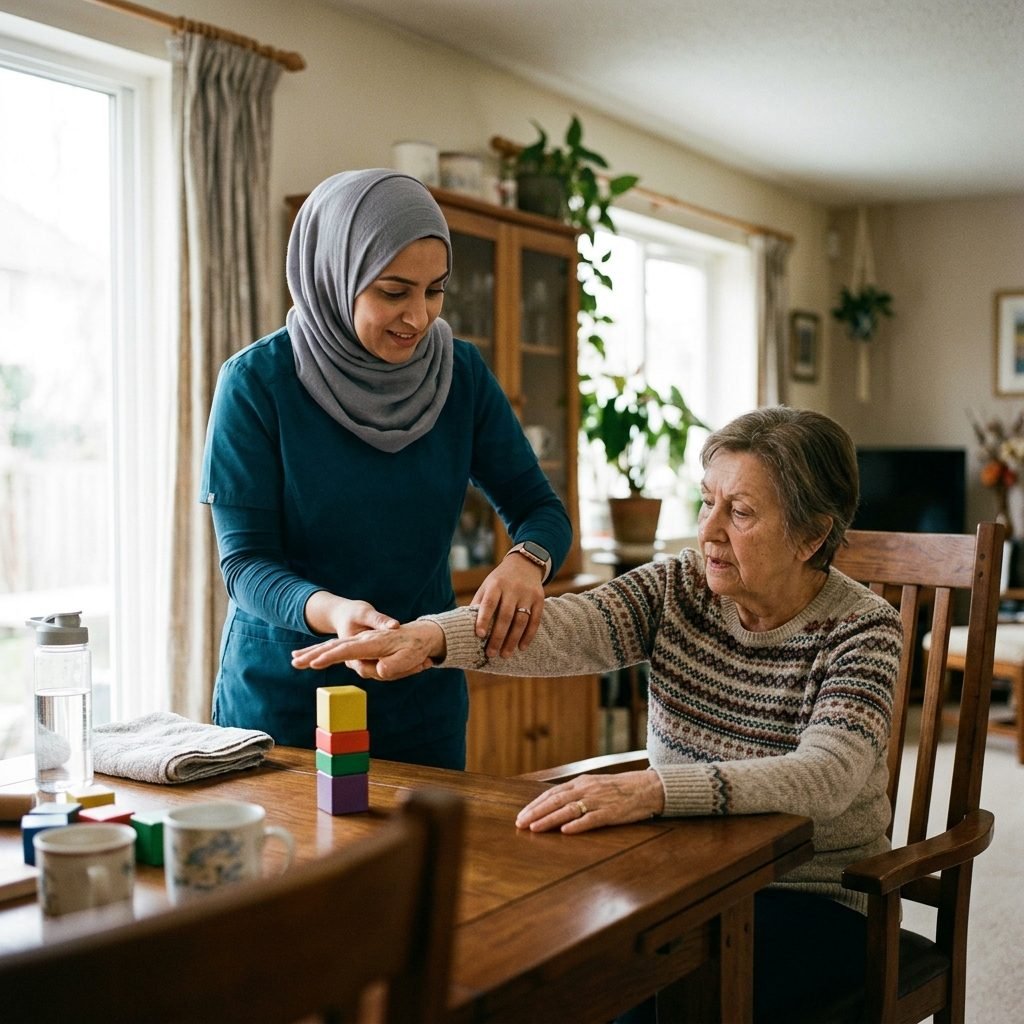
Stroke Rehabilitation
Advanced motor and neurological stroke recovery at home in Al Khaldiyah.
Service Details ←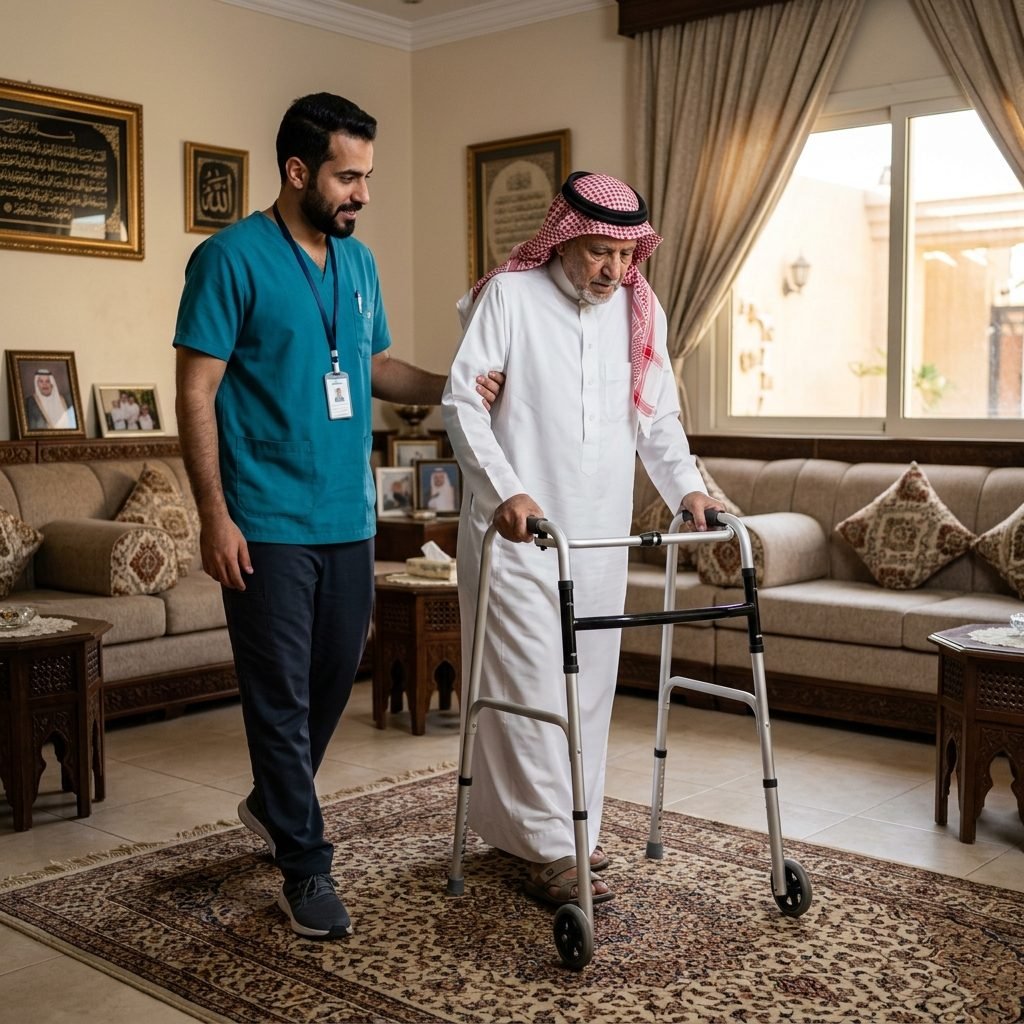
Geriatric Physical Therapy
Balance training, strengthening, and fall prevention for seniors in Al Khaldiyah.
Service Details ←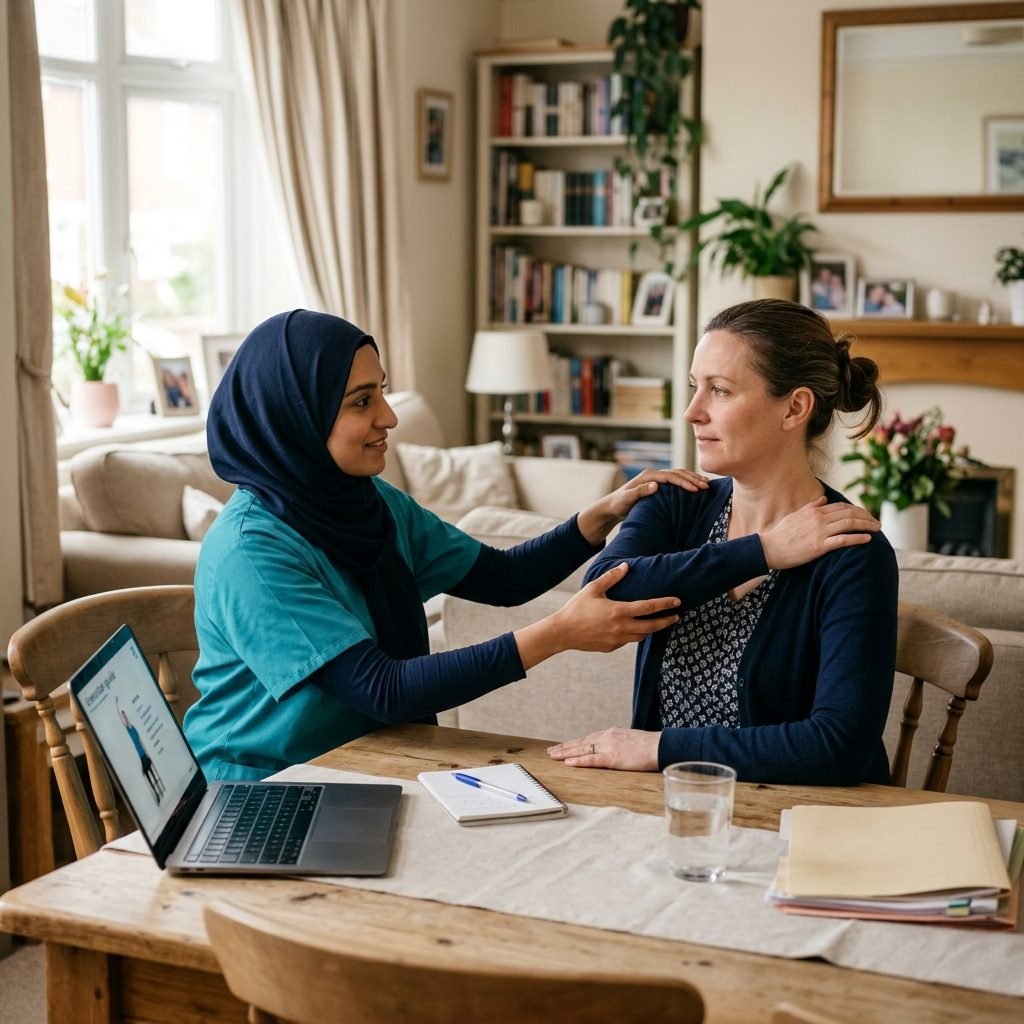
Female Physiotherapist
Licensed female therapists providing home care for women in Al Khaldiyah.
Service Details ←