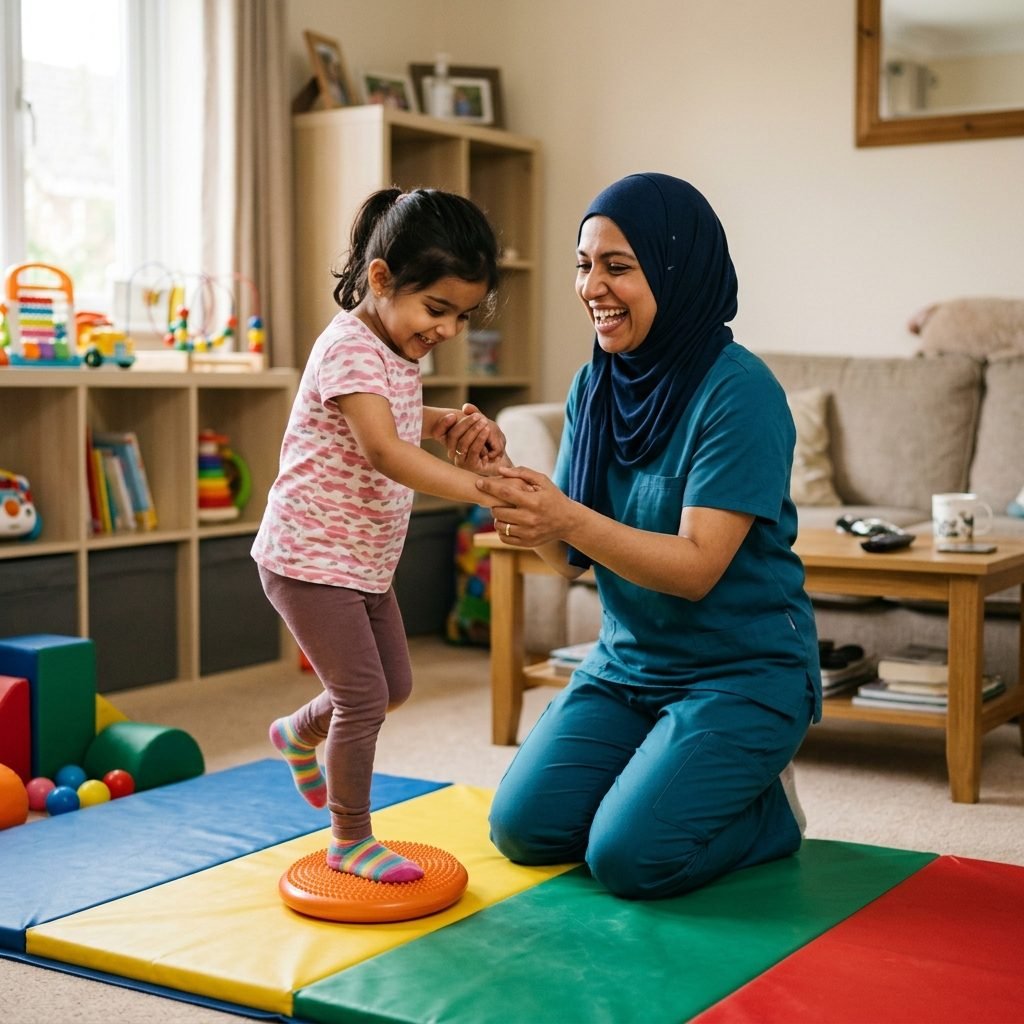
Having access to comprehensive, clinical physical therapy at home is crucial for maintaining rehabilitation progress, especially in busy neighborhoods. Al-Safa and Al Khaldiyah districts in Jeddah present unique local mobility challenges due to high population density and traffic. At Bidaya Center, we deliver high-quality home physiotherapy and movement rehabilitation services directly to your doorstep, conforming to the clinical guidelines of the Saudi Commission for Health Specialties. We eliminate the stress of travel, traffic, and parking. We respect cultural privacy by providing certified male therapists for male patients and female therapists for female patients.
Our clinical approach in Al Khaldiyah starts with a detailed physical and environmental safety assessment to eliminate fall hazards in the home. We bring all necessary portable, sterilized equipment to deliver a clinical standard of care comparable to external clinics. The therapist establishes a tailored milestone tracking plan to monitor muscle strength, balance, and joint range of motion (ROM) progression over time.
Why families in Al Khaldiyah choose Bidaya for home physiotherapy
- ✅ Licensed male & female therapists — full privacy, in your own home in Al Khaldiyah.
- ✅ Fully in-home visits across Al Khaldiyah — no travel or traffic.
- ✅ A personalized rehab plan built after a thorough in-home assessment.
- ✅ Continuous follow-up and direct contact with your therapist throughout.
- ✅ Fast response — arrange your visit by a quick call or WhatsApp message.
We also serve nearby areas: Al Andalus · Al Basateen · Al Bawadi
* The treatment plan and expected outcomes are determined by a medical and functional assessment of each individual case.
What Home-Based Pediatric Physiotherapy Means for Al Khaldiyah Families
Pediatric physiotherapy is a distinct specialty focused on developing a child's motor skills from the earliest months through the school years, from head control, sitting and crawling all the way to standing, walking, jumping and balancing during play. It differs fundamentally from adult physiotherapy because a child's body is still growing, and every session must be shaped around the child's developmental stage and their ability to understand and play, rather than a set of exercises imposed on them.
At Bidaya Center we deliver this service inside the child's own home in the Al Khaldiyah district of Jeddah, and that choice is not a minor detail but central to why therapy succeeds with children in particular. A child shows their true motor ability in familiar surroundings: their bed, the floor of their room, the sofa they climb, and the interior stairs they are learning to manage. When the physiotherapist works within that space they see the real obstacles and measure progress against the skills the child actually needs during their day.
The calm residential character of Al Khaldiyah, and its central-to-northern position within Jeddah, makes the home visit a practical option for families who find it difficult to bring a young child or a child with a movement difficulty to a clinic several times a week. We bring the expertise and the tools to the doorstep, sparing the family the strain of travel and the child's fatigue, while preserving the daily routine in which the child feels secure. Both licensed male and female therapists are available, with full respect for the family's privacy and comfort.
Signs and Symptoms That Signal It Is Time to Begin
Many families wait a long time in the hope that a child will simply "catch up" to their peers, when early intervention is the single most important factor in improving the motor path. We encourage Al Khaldiyah families to watch for the following signs and to reach out when they notice any of them:
- A noticeable delay in motor milestones: no head control past the fourth month, not sitting without support near the ninth month, or not walking by around eighteen months.
- A persistent tilt of the head to one side, or a strong preference for one hand before the first birthday, which may point to torticollis or an imbalance in muscle strength.
- Excessive floppiness that makes the child feel "loose" when held, or the opposite, stiffness and tightness in the limbs with difficulty straightening the legs or opening the fist.
- Persistent walking on the toes, or an unsteady gait with frequent tripping and falling compared with children of the same age.
- Clear weakness in balance while sitting or playing, and difficulty moving between positions such as rising from the floor or climbing a step.
- Little interest in exploring the surroundings through movement, or an over-reliance on being carried and refusal to place the feet on the ground.
A single sign does not necessarily mean there is a problem, but it is reason enough for a reassuring assessment. An evaluation does no harm to the child, and it often gives the family peace of mind or reveals a small need that is easy to address early.
Conditions and Groups That Benefit
Pediatric physiotherapy is a broad umbrella that serves many conditions, and we build a separate plan for each child after assessment. Among the groups we most often support in Al Khaldiyah homes:
- Children with general motor delay of no clear cause, who need structured stimulation to reach their milestones.
- Cerebral palsy in its various forms, where we work on movement control, managing muscle stiffness, and improving daily function.
- Premature and low-birth-weight infants who need close developmental follow-up through the first and second years.
- Congenital muscular torticollis (neck tilt), which typically responds well to early intervention.
- Low or high muscle tone, and various developmental syndromes that affect strength and balance.
- Birth-related brachial plexus injuries, and weakness or limited movement in one limb.
- Children with coordination and balance difficulties, and those with joint laxity that affects walking and play.
- The recovery phase after certain orthopedic operations or surgeries that call for rebuilding strength and range of motion.
We also guide families who simply want reassurance about a healthy child's development and support for their motor skills through the early growth stages.
Goals of the Rehabilitation Program
We do not set vague, generic goals; we set functional, measurable ones built on the child's assessment and the family's needs, and we review them regularly. Promising guaranteed results is neither honest nor sound, because the path and the expected outcomes depend on the clinical and functional assessment of each individual case. The goals we typically work toward include:
- Strengthening control of body, head and trunk posture as the foundation for every motor skill that follows.
- Developing the major motor milestones in sequence: rolling, sitting, crawling, standing, then independent and safe walking.
- Improving muscle balance and range of motion, easing stiffness or supporting weakness according to the child's condition.
- Raising the quality of balance and coordination during play and while transitioning between different positions.
- Encouraging the child's independence in age-appropriate daily activities, such as eating, moving around the home, and playing with peers.
- Preventing future complications such as postural deformities or joint limitation through structured early intervention.
- Empowering the family by training them in home activities woven into daily play that multiply the effect of the sessions.
Stages and Path of the Home Sessions
We design the therapy journey in clear stages so the family becomes an informed partner at every step:
Initial assessment: On the first visit inside the Al Khaldiyah home, the therapist gathers the child's medical and developmental history, observes natural movement during play, and measures strength, range of motion, muscle tone and balance. From this complete picture we define the starting point and the short- and long-term goals.
Building the plan: We create an individual program that sets the suggested number of weekly sessions, the type of exercises and activities, and any simple tools we may use in the home. We explain the plan to the family in clear language and agree on timing that suits the child's routine.
Therapy sessions: Exercises are delivered as enjoyable play, because a child cooperates far more when they are having fun. We make use of the home environment itself: cushions for balance, the sofa for safe climbing, favorite toys as motivation to reach and move. The length and intensity of each session are tuned to the child's tolerance and mood.
Follow-up and reassessment: We document progress on the targeted skills and reassess at intervals to adjust goals and exercises. When a child masters a skill we move to the next, and we may gradually revisit session frequency as independence improves.
This path is flexible; some children progress quickly and others need more time, and patience and consistency are essential ingredients in the results of pediatric physiotherapy.
The Role of the Family and Caregiver
The family is not a spectator but the pivot of the plan's success. A child spends every hour of the day with their parents, while a session is only a limited part of the week, so what a mother, father or caregiver does between sessions is what makes the real difference. At Bidaya Center we are careful to:
- Train parents in a hands-on way on simple, safe activities they can carry out with the child within daily play, without it becoming a burden.
- Explain correct carrying, sitting and sleeping positions that support proper posture and avoid reinforcing unwanted patterns.
- Guide the family in preparing a safe, stimulating space for movement inside the home that encourages the child to explore.
- Listen to the family's daily observations, since they know their child's changes best, and fold those observations into adjusting the plan.
- Support the parents emotionally, because a child's rehabilitation journey can be long and needs realistic reassurance and encouragement, without exaggeration.
When the whole home environment becomes a gentle space for stimulation, the effect of every session is multiplied and the child progresses with greater steadiness.
Home Safety and Prevention Tips
A child's safety while exploring movement is a priority, especially during the stages of learning to stand and walk. We share practical guidance with Al Khaldiyah families:
- Set aside a safe, clean floor area large enough for movement, and keep furniture with sharp edges away from the child's play and practice zone.
- Install safety gates at the tops of stairs, and supervise the child closely while they learn to climb up and down.
- Choose a flexible, well-fitting shoe that supports the foot without dulling the sense of the ground, and let the child move barefoot on safe surfaces to strengthen the foot.
- Avoid overusing a jumping walker or long periods sitting in restrictive chairs; the child needs free opportunities to move on the floor.
- Spread movement activities across short periods through the day rather than one tiring session, and watch for signs of fatigue.
- Keep positions varied during carrying and play so the child does not come to rely on one side of the body.
- Do not start any new tool or exercise before consulting the therapist following the case, to make sure it suits the child.
Frequently Asked Questions (FAQ)
Is home physiotherapy as effective as the clinic for children?
Yes, and for children it has particular advantages, because the child cooperates more in familiar surroundings and the therapist applies exercises to the skills the child truly needs at home, while training the family to keep them going in between.
From what age can a child begin sessions?
Assessment and intervention can start in the first months when there are indications, and early intervention generally offers a better opportunity, but every age has its own appropriate goals, defined after assessment.
How many sessions will my child need?
There is no fixed number; the count and length of sessions depend on the child's condition, goals and rate of progress, and we determine this after the initial assessment and review it regularly.
Is a female therapist available for my daughter?
Yes, we have licensed male and female therapists, and we respect the family's comfort and full privacy inside the home in Al Khaldiyah.
Will my child's condition definitely improve?
We commit to a sound, evidence-based plan and careful follow-up, but we do not promise guaranteed results; the path and expected outcomes depend on the clinical and functional assessment of each case and on how consistently the home plan is followed.
To book a home visit in Al Khaldiyah or to ask about pediatric physiotherapy, contact Bidaya Center by phone or WhatsApp by clicking Call Now, and we will be glad to help you decide the right next step for your child.
Important Home Visit Details:
- ✓Setup: Please clear a 2x2m space in the room for safety.
- ✓Clothing: Wear loose, comfortable clothes for easy movement.
- ✓Therapist Parity: Male therapists for males, females for females.
- ✓Medical Reports: Keep your MRI or doctor reports ready for evaluation.
Rehabilitation & Services in Al Khaldiyah
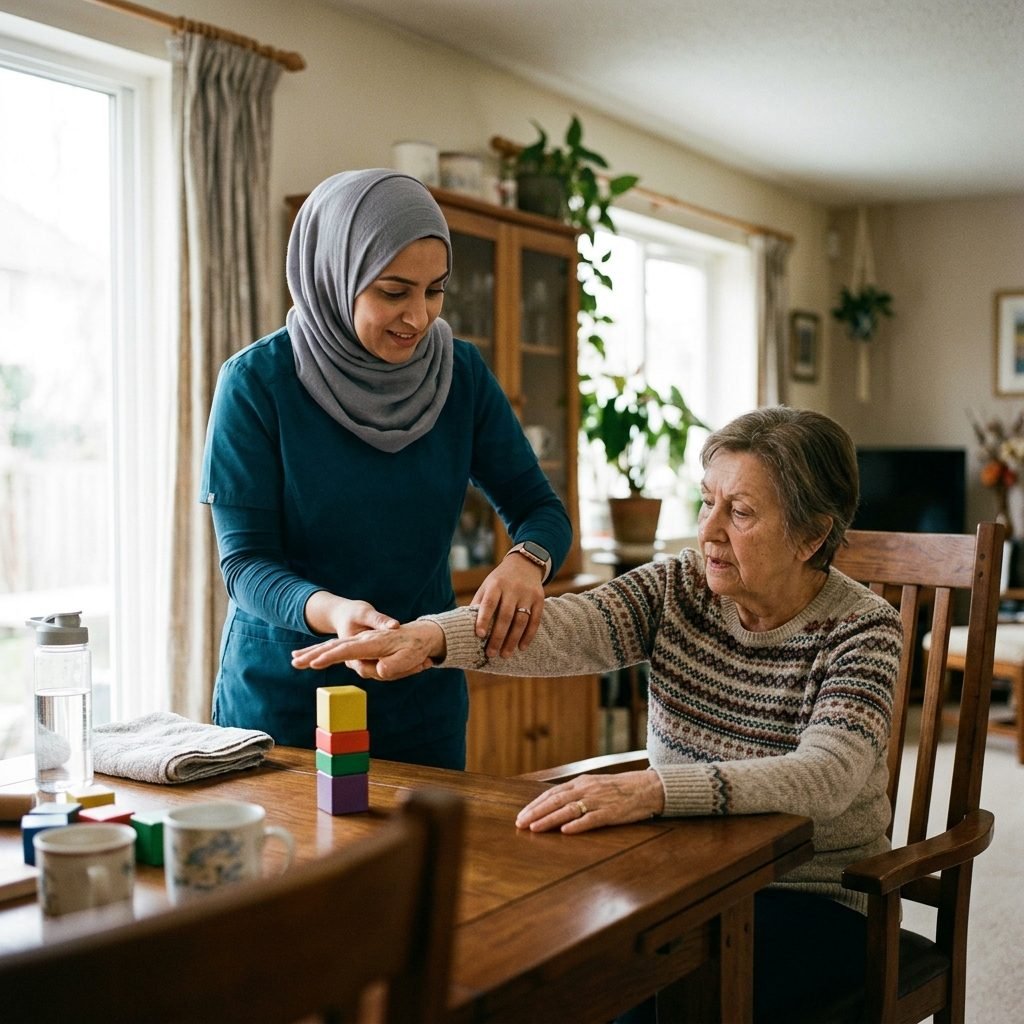
Stroke Rehabilitation
Advanced motor and neurological stroke recovery at home in Al Khaldiyah.
Service Details ←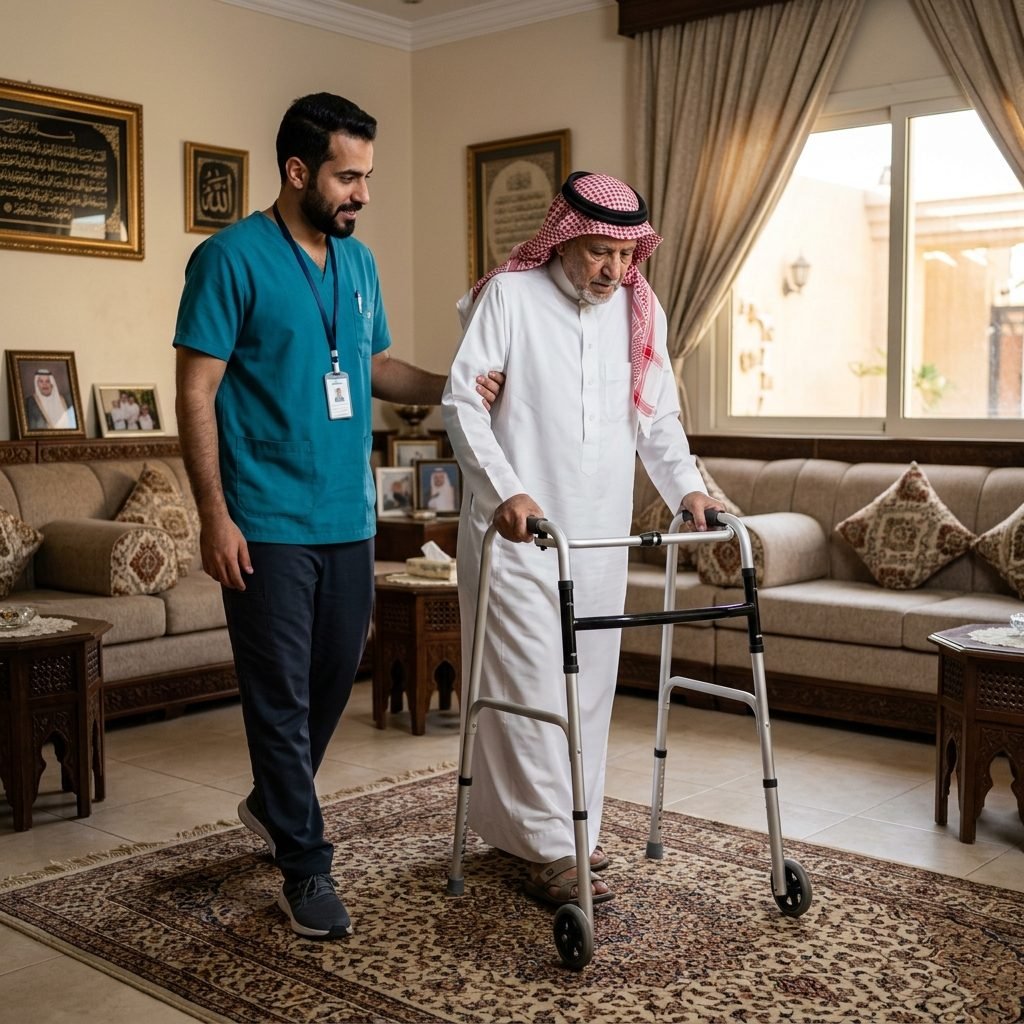
Geriatric Physical Therapy
Balance training, strengthening, and fall prevention for seniors in Al Khaldiyah.
Service Details ←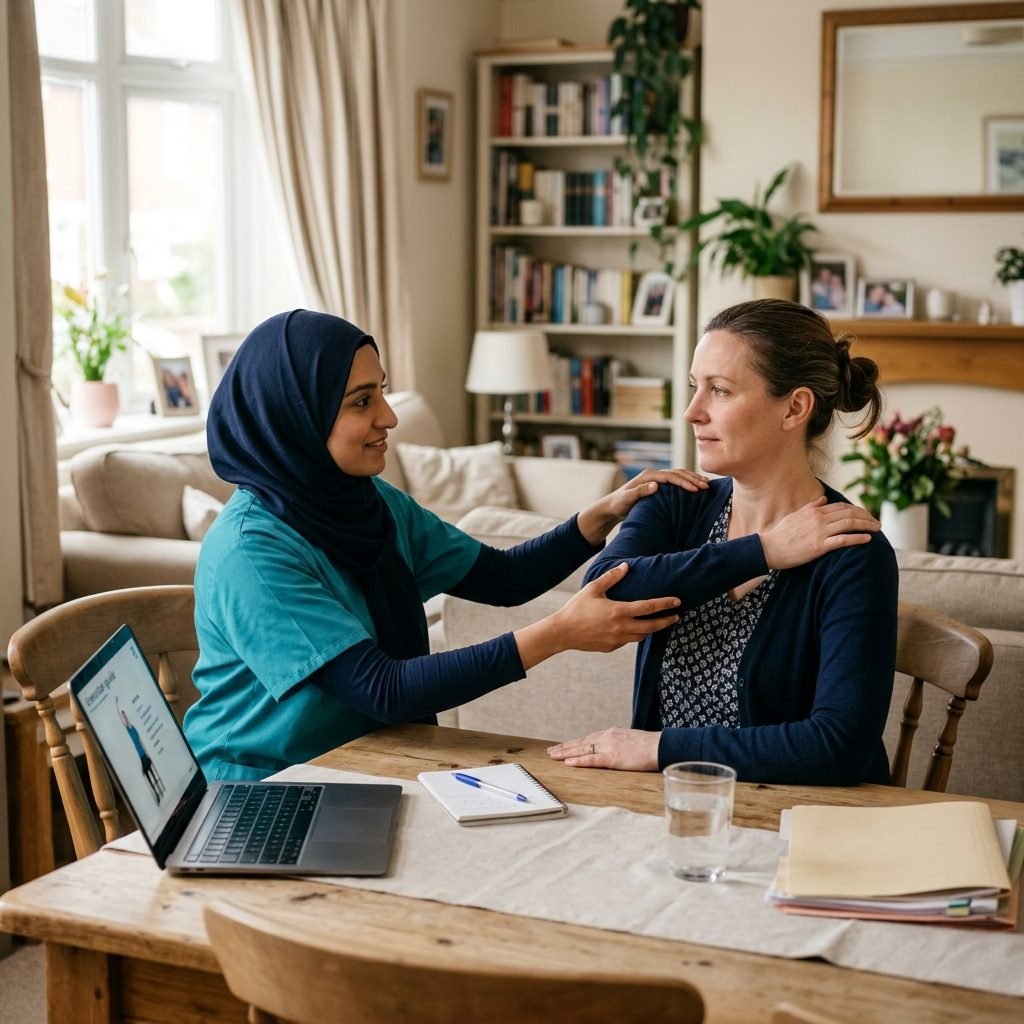
Female Physiotherapist
Licensed female therapists providing home care for women in Al Khaldiyah.
Service Details ←