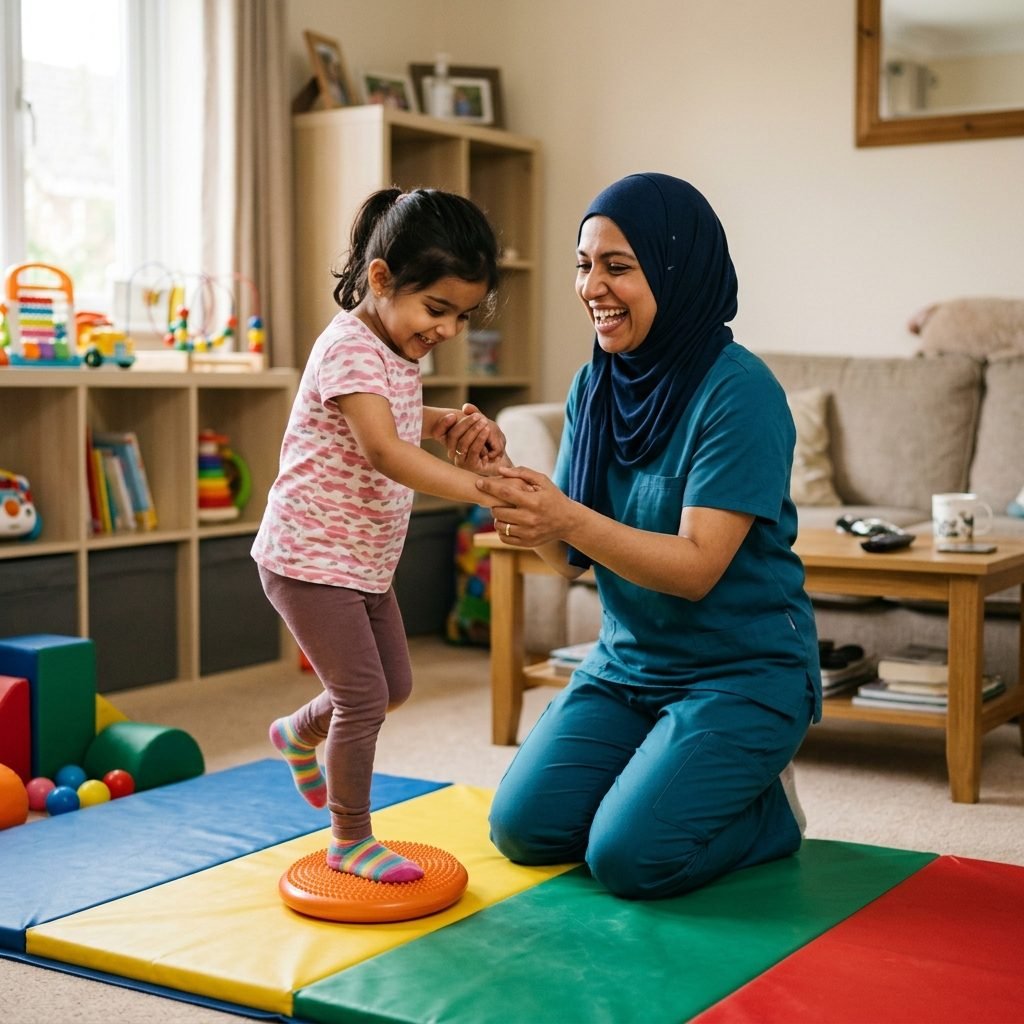
Having access to comprehensive, clinical physical therapy at home is crucial for maintaining rehabilitation progress, especially in busy neighborhoods. Al-Safa and Al Marwah districts in Jeddah present unique local mobility challenges due to high population density and traffic. At Bidaya Center, we deliver high-quality home physiotherapy and movement rehabilitation services directly to your doorstep, conforming to the clinical guidelines of the Saudi Commission for Health Specialties. We eliminate the stress of travel, traffic, and parking. We respect cultural privacy by providing certified male therapists for male patients and female therapists for female patients.
Our clinical approach in Al Marwah starts with a detailed physical and environmental safety assessment to eliminate fall hazards in the home. We bring all necessary portable, sterilized equipment to deliver a clinical standard of care comparable to external clinics. The therapist establishes a tailored milestone tracking plan to monitor muscle strength, balance, and joint range of motion (ROM) progression over time.
Why families in Al Marwah choose Bidaya for home physiotherapy
- ✅ Licensed male & female therapists — full privacy, in your own home in Al Marwah.
- ✅ Fully in-home visits across Al Marwah — no travel or traffic.
- ✅ A personalized rehab plan built after a thorough in-home assessment.
- ✅ Continuous follow-up and direct contact with your therapist throughout.
- ✅ Fast response — arrange your visit by a quick call or WhatsApp message.
We also serve nearby areas: Al Andalus · Al Basateen · Al Bawadi
* The treatment plan and expected outcomes are determined by a medical and functional assessment of each individual case.
Understanding Home-Based Treatment for Delayed Walking in Children and Its Value for Al Marwah Families
When your child approaches eighteen months and there is still no sign of pulling to stand or taking those first tentative steps, a quiet worry begins to settle in the hearts of parents across Al Marwah in Jeddah. Delayed walking in children is rarely about a single missing skill. It often reflects the interplay of body balance, the strength of the hip and lower-limb muscles, the coordination between the nervous and muscular systems, and sometimes movement habits a child has picked up at home. This is exactly why early intervention through a thoughtfully designed home physiotherapy program gives your child a genuine opportunity to build a sound motor foundation for the developmental stages ahead.
The core idea behind home-based physiotherapy is that we bring the session into the child's natural environment, where he feels safe among his family and his familiar toys. A young child learns movement through play and repetition, and when the session takes place on the floor of his own room and within reach of his parents, his tension eases and his engagement rises. His response to the exercises becomes deeper and more consistent than it would be in the unfamiliar setting of a clinic.
Al Marwah has practical characteristics that make the home service a sensible choice for many families. Daily travel along the main roads and moving between appointments with an infant can be exhausting, especially during peak hours or through Jeddah's hot summer months. Providing a professional session inside the home means the child keeps his sleeping and feeding routine intact, and the family can follow a consistent therapeutic path without interruptions caused by traffic, weather, or the commitments of siblings.
At Bidaya Center we believe every child walks to his own rhythm, and our role is to read that rhythm accurately through a clinical and functional assessment, then map out an individual path that respects the child's abilities without rushing his stages. We work with Al Marwah families in complete transparency: we explain what we observe, we describe realistic goals, and we involve the family in every step, because a child's success in walking is the fruit of a genuine partnership between the therapist and the home.
Developmental Signs and Indicators
Walking is a skill built on top of a long chain of earlier motor abilities, and any stumble in that chain can show up in the first steps. It helps every family to observe developmental indicators without excessive anxiety, because variation between one child and another is normal. What warrants a consultation and assessment is the clustering of several signs together rather than any single one in isolation.
Among the most important indicators we encourage Al Marwah families to notice:
- Inability to sit steadily without support beyond roughly nine months of age.
- Absence of crawling in its various forms, or reliance on a single uncoordinated way of moving around.
- No attempt to pull up to stand against furniture or the sides of the bed as the first birthday nears.
- Persistent standing on the toes accompanied by clear stiffness in the leg muscles.
- Noticeable weakness in the grip of the foot, or excessive floppiness that makes the child feel limp when carried.
- A constant tendency to use one side of the body while neglecting the other in reaching and movement.
- Passing eighteen months without any independent steps despite the availability of support.
- Frequent, unusual falling after walking begins, with difficulty maintaining balance.
We want to reassure you that the presence of one of these signs does not necessarily mean a confirmed problem, but it does mean the time is right to seek a specialized assessment. The earlier the intervention, the better the child's chances of acquiring a sound walking pattern, and the less need there is to correct movement habits that have taken root over time. Our assessment begins by listening to the family's observations, because they are the most accurate monitor of their child's daily development.
Conditions and Groups That Benefit
The home-based delayed walking program at Bidaya Center is designed to serve a wide spectrum of children, each with his own story and particular need. We do not treat cases with a single template; instead, we tailor the plan after assessment to suit the nature of every child and his family in Al Marwah.
Among the groups most likely to benefit from the service:
- Children who have passed the expected age for walking with no clear organic cause and who need organized motor stimulation.
- Children born earlier than their natural due date, who may show variation in acquiring motor skills.
- Cases of low or increased muscle tone that affect the child's ability to stand and balance.
- Children with general weakness in the muscular strength of the trunk and lower limbs.
- Disorders of balance and motor coordination that make steps unsteady.
- Children who walk on their toes in a fixed pattern that needs correction and guidance.
- Children following long periods of rest or casting that led to temporary weakness in the leg muscles.
- Children showing motor delay associated with syndromes or developmental conditions that require rehabilitative follow-up.
In all of these situations, we make no absolute promises of a specific result, because each child's path is determined by the clinical and functional assessment and his individual response. What we offer is a professional commitment to a clear plan, careful follow-up, and continuous adjustment of goals in a way that serves the child's interest first. We also ensure that sessions are delivered by licensed male and female therapists, allowing each family to choose what suits its comfort while guaranteeing complete privacy inside the home.
Goals of the Rehabilitation Program
Our goal is not merely for the child to take his first steps, but for him to build a sound, balanced walking pattern that serves him in play, running, and daily life. Together with each family in Al Marwah, we set realistic, measurable goals and review them periodically to be sure the child is progressing along his own path.
The main goals the program works to achieve include:
- Strengthening the muscles of the trunk, pelvis, and lower limbs that form the base of standing and walking.
- Improving balance and motor stability in sitting, standing, and the transitions between them.
- Correcting faulty movement patterns such as toe-walking or dependence on a single side.
- Enhancing coordination between the movement of the upper and lower limbs during transitions and motion.
- Increasing the range of motion in the hip, knee, and ankle joints and the flexibility of the surrounding muscles.
- Building the child's confidence in his ability to move and encouraging him to explore his surroundings independently.
- Improving the protective reactions that guard the child against falling and help him recover his balance.
- Integrating the acquired motor skills into the daily play routine inside the home.
We phrase these goals in language the family can understand, and we set clear success indicators for each stage so parents feel the progress step by step. As the child develops, we recalibrate the goals upward, because successful rehabilitation is a gradual journey rather than a single leap, and its true fruit is a child who moves with confidence and safety.
Stages and Path of the Home Sessions
We are keen for the treatment path to be clear and organized from the very first moment, so that every family in Al Marwah knows what to expect at each stage. The home session is not merely a set of exercises; it is a complete experience that begins with understanding the child and ends with empowering his family.
The program typically moves through the following stages:
- Initial assessment stage: the therapist visits the home to get to know the child in his environment and conducts a clinical and functional assessment covering muscle strength, balance, and movement patterns, while listening to the family's observations and developmental history.
- Planning stage: based on the assessment results, we draw up an individual plan with staged goals, a proposed number of sessions, and supportive home exercises, and we discuss it transparently with the family.
- Therapeutic sessions stage: regular sessions that blend exercises with play and motor stimulation, so the child progresses gradually from trunk control to standing, then to supported steps and finally independent ones.
- Follow-up and measurement stage: we review the indicators periodically, document the progress, and adjust the plan upward whenever the child acquires a new skill.
- Empowerment and sustainability stage: we prepare the family to continue motor stimulation in daily life and give them tools that help maintain the gains after the program ends.
The length of each session and the total number depend on the child's condition and response, and cannot be pinned down precisely before the assessment. What we do guarantee is commitment to appointments, clarity at every step, and continuous communication with the family, so they never feel they are walking this journey alone.
The Role of the Family and Caregiver
The family is the most important partner in the success of treating delayed walking. The therapist spends only a limited number of hours with the child each week, while the child spends the rest of his time among his household. This is why we consider training the family an essential part of the program rather than an optional extra, and we invest in empowering every parent and caregiver in Al Marwah.
The family's role takes shape in several practical ways:
- Repeating the simple exercises the therapist prescribes within the daily play routine.
- Preparing a safe home environment that encourages the child to move and explore without fear.
- Observing the child's response, documenting any change, and sharing it with the therapist at the next visit.
- Encouraging the child with a word and a smile at every attempt, because motivation is the fuel of movement.
- Committing to session appointments and keeping the routine as consistent as possible.
- Avoiding comparison between the child and his peers and focusing on his own progress step by step.
We do not ask the family to become therapists, but to be a natural extension of the session inside the home. We explain each exercise in clear language and make sure the caregiver performs it with confidence before we leave. When everyday moments of play turn into opportunities for motor stimulation, the effect of treatment multiplies and the child's progress becomes faster and more firmly established. This warm partnership between the home and the therapist is the secret behind the reassuring results we see.
Home Safety and Prevention Tips
A safe home environment is the cornerstone for any child learning to move. A child who feels safe dares to try, while a child who suffers a painful fall may hesitate and pull back. For this reason we offer Al Marwah families a set of practical recommendations that protect the child and encourage exploration at the same time.
Among the most important safety and prevention guidelines:
- Set aside a wide, obstacle-free floor space where the child can move freely on a non-slip surface.
- Secure furniture that could tip over and keep sharp edges and dangerous corners away from the child's movement paths.
- Let the child move barefoot on safe surfaces, since this strengthens the foot muscles and improves the sense of the ground.
- Avoid long reliance on circular baby walkers, as they may reinforce less-than-ideal movement patterns.
- Watch the child closely during attempts to stand near furniture and secure anything that might tip under his weight.
- Choose comfortable clothing that does not restrict leg movement and allows a full range of joint motion.
- Keep an appropriate indoor temperature, away from the heat of Jeddah's summer, so the child stays active without exhaustion.
- Secure stairs and entrances with safety gates and keep sockets and wires out of the child's reach.
These guidelines are not a luxury but part of the treatment itself, because every safe environment is an open invitation for the child to try again with confidence. During the visit we help the family review their home and suggest simple adjustments that make a big difference to the child's safety and the course of his progress.
Frequently Asked Questions
Does my child's delayed walking mean he has a serious problem?
Not necessarily. Variation in acquiring skills between children is normal, and many cases of delay are mild and respond well to organized motor stimulation. The most accurate way to know the cause is a clinical and functional assessment, which determines whether the child needs only temporary support or a longer rehabilitation program, without any premature judgments.
Why should I choose home sessions instead of the clinic?
Because a young child learns best in his familiar environment, where he feels safe among his toys and family, which increases his response to the exercises. The home session also spares Al Marwah families the burden of travel, traffic, and changing weather, and it preserves the child's sleeping and feeding routine, making his therapeutic path more consistent and stable.
Can I choose a female or male therapist according to my preference?
Yes. Bidaya Center provides licensed male and female therapists, and each family can choose what suits its comfort and privacy. We are keen to fully respect the privacy of the home and commit to the highest standards of professionalism and respect on every visit.
How many sessions will my child need before he walks?
There is no fixed number that fits all children. The number and length of sessions depend on the assessment result, the nature of the case, and the child's individual response. After the first assessment session we set out a realistic picture of the goals and path and review it periodically with transparency, without offering absolute promises of a specific result.
How can I support my child between sessions?
Your role is pivotal to the program's success. We will teach you simple exercises to weave into your child's daily play and guide you in preparing a safe, movement-friendly home environment. Your continuous encouragement and the repetition of simple exercises multiply the effect of the sessions and make the child's progress faster and more stable.
Begin your child's journey toward his first steps with confidence alongside the Bidaya Center home physiotherapy team in Al Marwah, Jeddah. Contact us now to book the first assessment session by phone or WhatsApp by clicking Call Now, and we will be glad to answer all your questions and map out a suitable path for your child.
Important Home Visit Details:
- ✓Setup: Please clear a 2x2m space in the room for safety.
- ✓Clothing: Wear loose, comfortable clothes for easy movement.
- ✓Therapist Parity: Male therapists for males, females for females.
- ✓Medical Reports: Keep your MRI or doctor reports ready for evaluation.
Rehabilitation & Services in Al Marwah
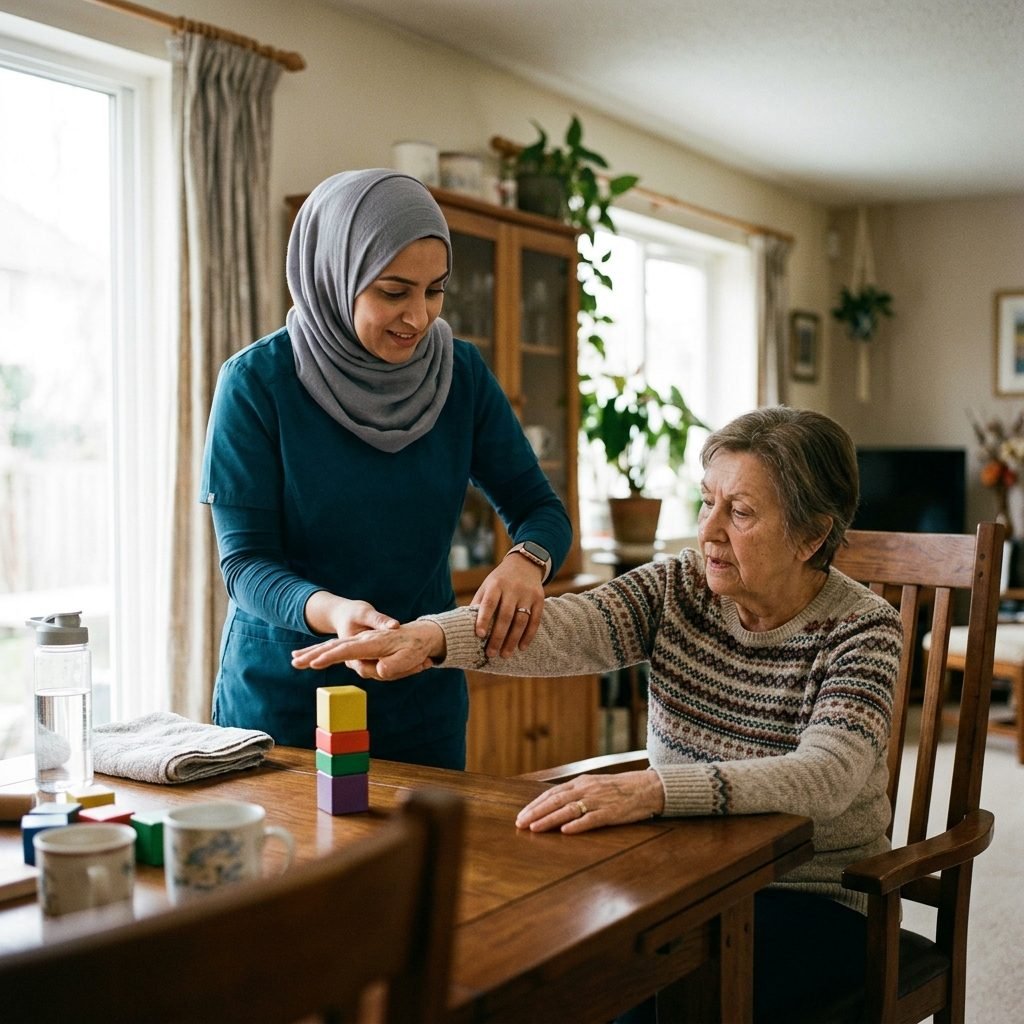
Stroke Rehabilitation
Advanced motor and neurological stroke recovery at home in Al Marwah.
Service Details ←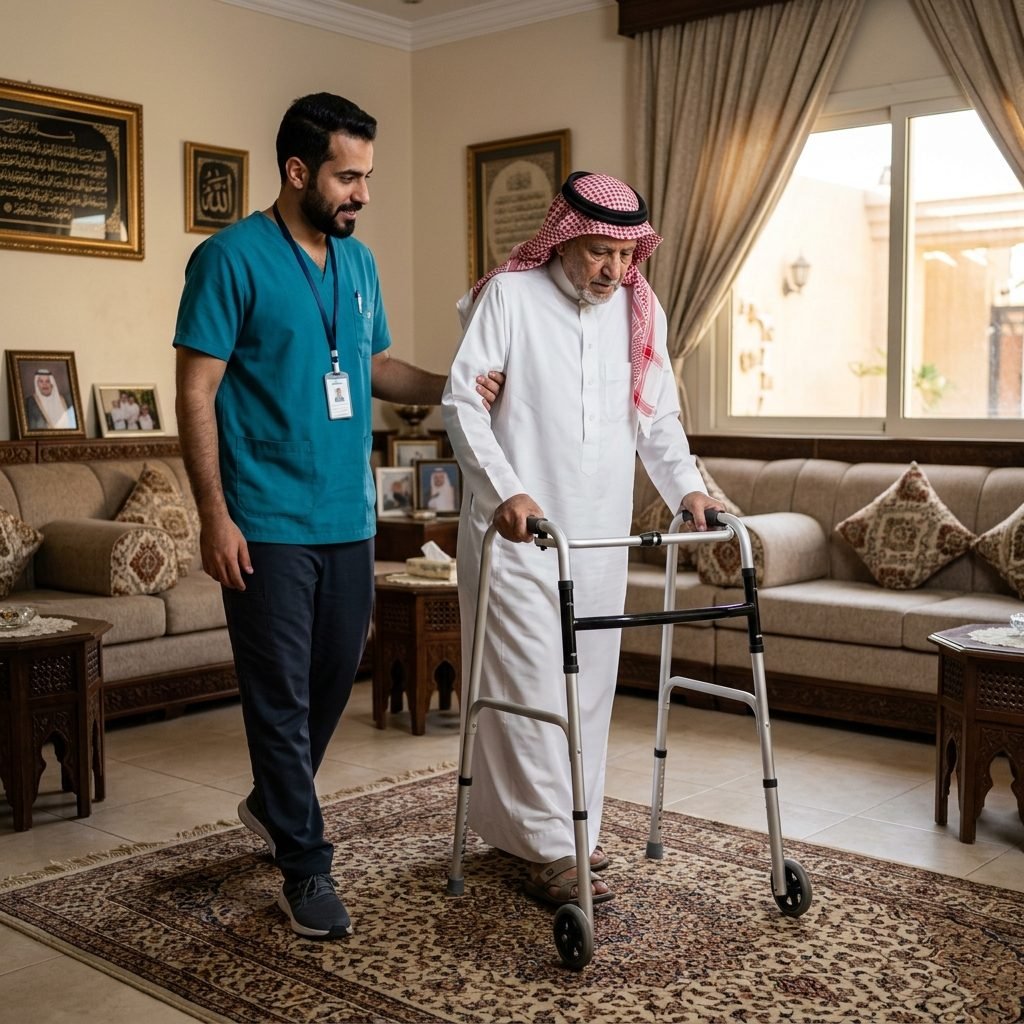
Geriatric Physical Therapy
Balance training, strengthening, and fall prevention for seniors in Al Marwah.
Service Details ←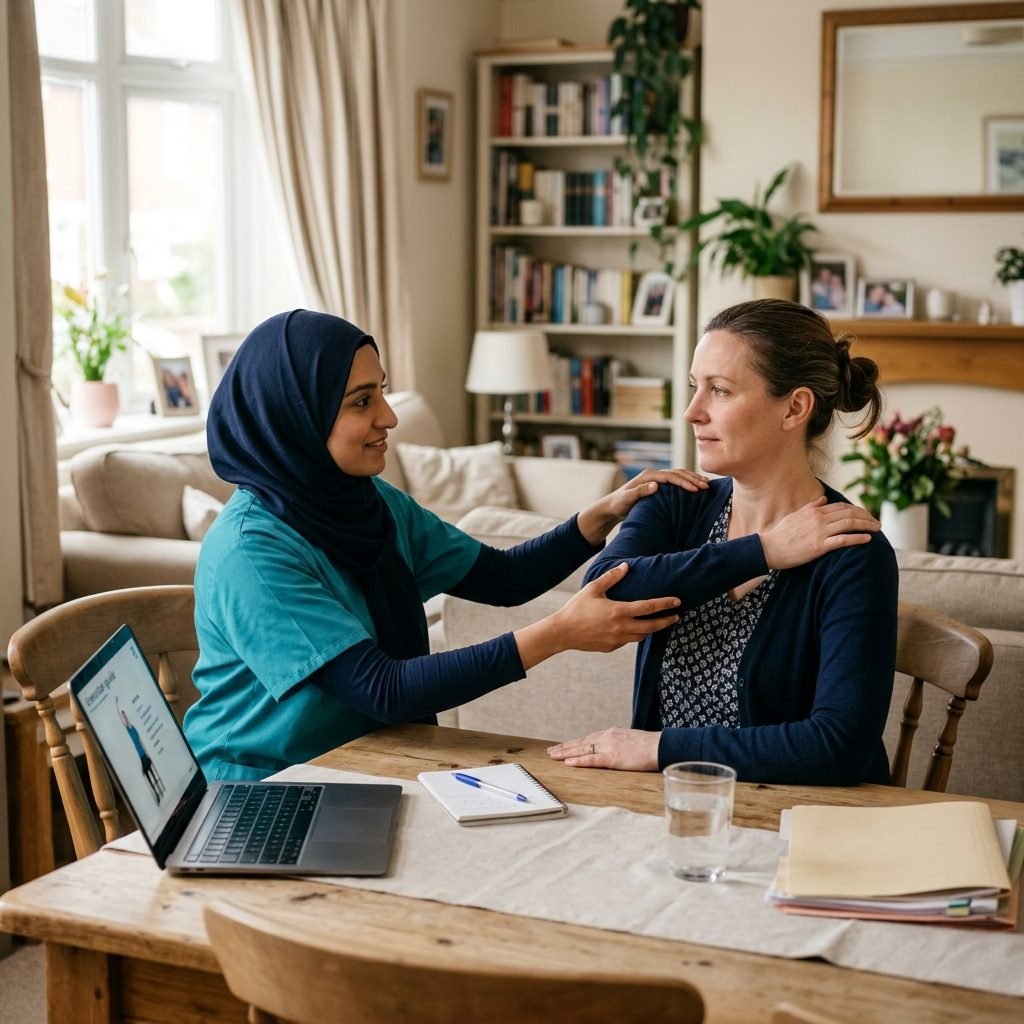
Female Physiotherapist
Licensed female therapists providing home care for women in Al Marwah.
Service Details ←