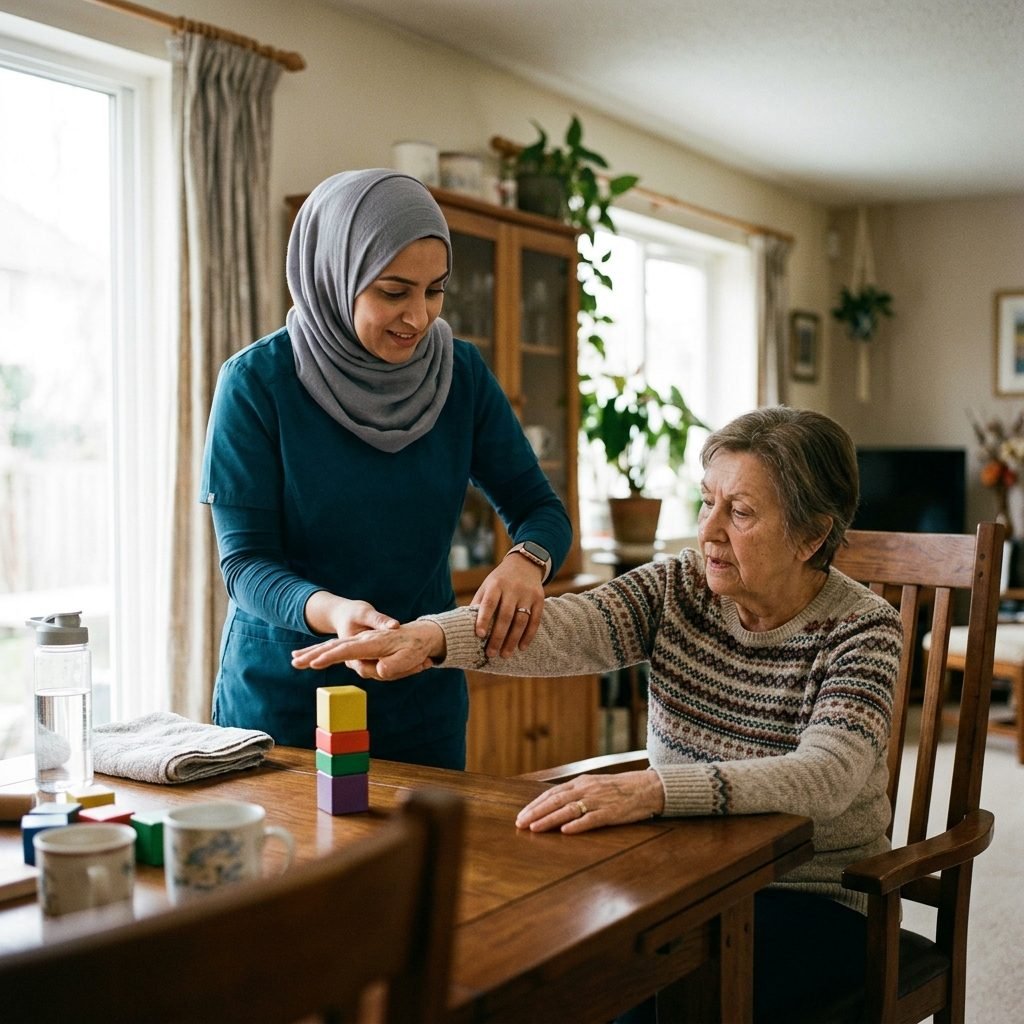
Having access to comprehensive, clinical physical therapy at home is crucial for maintaining rehabilitation progress, especially in busy neighborhoods. Al-Safa and Al Marwah districts in Jeddah present unique local mobility challenges due to high population density and traffic. At Bidaya Center, we deliver high-quality home physiotherapy and movement rehabilitation services directly to your doorstep, conforming to the clinical guidelines of the Saudi Commission for Health Specialties. We eliminate the stress of travel, traffic, and parking. We respect cultural privacy by providing certified male therapists for male patients and female therapists for female patients.
Our clinical approach in Al Marwah starts with a detailed physical and environmental safety assessment to eliminate fall hazards in the home. We bring all necessary portable, sterilized equipment to deliver a clinical standard of care comparable to external clinics. The therapist establishes a tailored milestone tracking plan to monitor muscle strength, balance, and joint range of motion (ROM) progression over time.
Why families in Al Marwah choose Bidaya for home physiotherapy
- ✅ Licensed male & female therapists — full privacy, in your own home in Al Marwah.
- ✅ Fully in-home visits across Al Marwah — no travel or traffic.
- ✅ A personalized rehab plan built after a thorough in-home assessment.
- ✅ Continuous follow-up and direct contact with your therapist throughout.
- ✅ Fast response — arrange your visit by a quick call or WhatsApp message.
We also serve nearby areas: Al Andalus · Al Basateen · Al Bawadi
* The treatment plan and expected outcomes are determined by a medical and functional assessment of each individual case.
Understanding Home-Based Hemiplegia Rehabilitation and Why It Matters for Al Marwah Residents
Hemiplegia is weakness or loss of movement on one side of the body, usually affecting the arm, leg, and face on the same side. It most often follows a stroke, a brain hemorrhage, or an injury that damages the opposite half of the brain. Home-based hemiplegia rehabilitation brings the specialized treatment plan directly into the patient's own room, sparing them the strain of repeated trips to a clinic, while the therapist works to recover as much movement, balance, and independence in daily tasks as possible.
At Bidaya Center we believe the home is not merely a comfortable setting but a therapeutic tool in its own right. When a patient practices rising from their actual bed, entering their real bathroom, and walking their familiar hallway, the skills they gain transfer straight into everyday life with no gap between the clinic and reality. This is exactly what makes home rehabilitation in Al Marwah a practical choice for many families here.
Al Marwah in Jeddah is a lively, densely populated district with streets that grow congested at peak hours. Transporting a hemiplegia patient repeatedly can be physically and emotionally exhausting for both the patient and the family, especially during the hot months or when the person struggles with mobility or fears falling. Having the Bidaya Center team arrive at your door removes this burden and keeps sessions consistent, without interruptions caused by traffic or logistics. That consistency is decisive, because neurological rehabilitation depends on repetition and continuity.
We are honest with every family that rehabilitation outcomes differ from one person to another and depend on a careful clinical and functional assessment covering the size and location of the injury, the time elapsed since it occurred, and the patient's general health. We make no promise of a complete cure. Instead, we commit to building a realistic program that pursues the greatest possible improvement within each individual patient's condition, with full honesty about expectations.
Symptoms and Signs
The presentation of hemiplegia varies with the affected side of the brain and the severity of the injury, but there are common signs that patients and families notice and that call for a structured rehabilitation program:
- Weakness or paralysis on one side: difficulty moving the arm or leg on the affected side, ranging from mild heaviness to a complete loss of movement.
- Impaired balance and walking: a tendency to lean toward the affected side, stumbling while standing or walking, and a constant need for support out of fear of falling.
- Muscle spasticity and stiffness: involuntary tightening in the arm or leg muscles, particularly bending of the elbow and wrist and an abnormal fixed position of the ankle, which obstructs natural movement.
- Weak grip and fine-motor control: trouble holding utensils, undoing buttons, lifting a cup, and performing delicate tasks that were once easy.
- Facial drooping: asymmetry in the features, with difficulty closing the eye or controlling the corner of the mouth on the affected side.
- Swallowing and speech difficulties: occasional trouble swallowing, changes in speech clarity, and slower word retrieval in some cases.
- Sensory changes: numbness, tingling, or reduced sensation of touch and temperature on the affected side, or conversely a painful heightened sensitivity.
- Neglect of the affected side: the patient may overlook the affected side entirely, forgetting to use it or bumping into objects on that side without noticing.
- Rapid fatigue and emotional impact: severe tiredness after minor effort, sometimes accompanied by frustration or social withdrawal that calls for psychological support alongside physical therapy.
The appearance of any of these signs does not mean improvement has stopped; rather, it signals how important early, structured intervention is. The sooner and more consistently rehabilitation begins, the better the chance of retraining the brain and muscles toward more effective patterns of movement.
Conditions and Groups That Benefit
Bidaya Center's home hemiplegia rehabilitation program is designed to suit a wide spectrum of cases in Al Marwah and its surroundings. The most prominent groups that benefit include:
- Post-stroke patients: whether ischemic or hemorrhagic stroke, who need to recover movement and balance in the phase following medical stabilization.
- Cases after brain hemorrhage or aneurysm: where the injury has left weakness on one side and gradual rehabilitation is required.
- Brain tumor patients after surgery: who experience one-sided motor weakness caused by the tumor or the effects of the surgical intervention.
- Traumatic head injuries: resulting from accidents or falls that have left a motor deficit in one half of the body.
- Children with cerebral palsy: who have one-sided involvement and need early, age-appropriate motor training.
- Older adults with limited mobility: for whom repeated travel to clinics is difficult and who benefit from regular home follow-up.
- Patients in the chronic phase: whose injury occurred long ago and who wish to improve their daily function, preserve remaining abilities, and prevent decline.
- Those who value privacy: families who need a modest, private treatment environment, with the option to choose a male or female therapist as they prefer.
Each of these groups requires a completely different plan, because a patient in the first week after a stroke is not treated like one whose injury occurred two years ago. That is why we always begin with an individual assessment before designing any program, and we speak candidly with the family about what is achievable and what needs more time.
Goals of the Rehabilitation Program
The aim of hemiplegia rehabilitation is not merely to move the affected limb, but to restore a life as close to independence as possible. We set realistic, measurable goals agreed upon with the patient and family, the most important of which are:
- Improving voluntary movement: retraining the brain to control the muscles of the affected side using the principle of neuroplasticity, the brain's ability to build alternative pathways.
- Enhancing balance and stability: training the patient to sit, stand, and transfer safely without losing balance or fearing a fall.
- Restoring the ability to walk: working toward a safer, more coordinated gait pattern, with or without aids, according to each patient's condition.
- Managing spasticity and stiffness: using stretching exercises and correct positioning to reduce muscle tightness and preserve joint range of motion.
- Preventing complications: guarding against joint contractures, pressure sores, and venous clots that result from immobility.
- Developing daily-living skills: training the patient to dress, eat, bathe, and transfer to and from bed with the greatest possible self-reliance.
- Reintegrating the affected limb: encouraging the patient to use the affected hand and arm in tasks rather than neglecting it, to stimulate functional recovery.
- Psychological support and motivation: lifting the patient's spirits and strengthening their confidence in their capacity to progress, because emotional wellbeing is an integral part of successful rehabilitation.
We review these goals periodically and adjust them as the case progresses or changes; the program is not fixed but evolves with the patient step by step. We make sure every goal is understood by the family so they can share in following it up between sessions.
Stages and Pathway of the Home Sessions
We organize the rehabilitation journey at Bidaya Center along a clear pathway that begins at the first phone call and continues until the best possible improvement is achieved, so the family understands every step:
- Comprehensive initial assessment: on the first home visit, the therapist evaluates muscle strength, range of motion, balance, functional abilities, and general condition, listens to the case history and the family's goals, then inspects the home itself to spot challenges and opportunities.
- Building an individual treatment plan: based on the assessment, a tailored plan is drawn up defining the number of weekly sessions, the type of exercises, and the short- and long-term goals, all explained clearly to the family.
- Activation and preparation stage: the early sessions focus on preventing complications, gentle stretching, improving positioning, and stimulating sensation and initial movement in the affected side.
- Strengthening and motor relearning stage: we progress toward muscle-strengthening exercises, balance training in sitting and standing, and re-teaching correct movement patterns through structured repetition.
- Functional training stage: we transfer skills into real life, practicing rising from bed, transferring to a chair, walking the home's hallways, and performing self-care tasks within the patient's actual environment.
- Follow-up and maintenance stage: after reaching tangible improvement, we review the case periodically, update the exercises, and give the family a home program to preserve the gains and prevent relapse.
A typical session usually starts with a warm-up and preparation, then core goal-oriented therapeutic exercises, followed by practical functional training, and ends with guidance for the family and a simple home assignment. The session length and weekly frequency are set according to the patient's condition and tolerance, and we adjust the pace whenever needed without exhausting the patient.
The Role of the Family and Caregiver
The success of hemiplegia rehabilitation is not achieved during the session hour alone, but in what happens throughout the rest of the day in the family's hands. The caregiver is the therapist's first partner, and their role is pivotal in turning progress from intermittent into continuous:
- Follow-up between sessions: consistently applying the simple home exercises recommended by the therapist, because daily repetition is what cements the skill in the brain and muscles.
- Correct positioning: learning how to support the affected limb during sitting and sleeping, and repositioning the patient regularly to prevent sores and stiffness.
- Safe transfer assistance: mastering how to move the patient from bed to chair and support them while walking in a way that protects both the caregiver's back and the patient.
- Encouraging independence: giving the patient time to do what they can on their own instead of stepping in too quickly, because excessive help can slow recovery.
- Emotional support and patience: understanding moments of frustration, celebrating any progress however small, and involving the patient in decisions so they feel in control of their path.
- Watching for warning signs: noticing any sudden change in condition, unusual pain, or reddening of the skin, and informing the treatment team immediately.
At Bidaya Center we do not leave the family to guess. We train the caregiver hands-on, step by step, answer their questions, and provide clear written guidance. We believe a confident, well-trained family is the single greatest ally for any hemiplegia patient on their journey to recovery.
Home Safety and Prevention Tips
A safe home environment reduces the risk of falls and injuries and speeds up independence. Before and during the program, we advise Al Marwah families to prepare the home through practical steps:
- Clear the walkways: lift loose rugs, cables, and excess furniture from the patient's paths to avoid tripping.
- Install support handrails: fix grab bars in the bathroom, beside the bed, and along walking routes to provide safe points of support.
- Adequate night lighting: provide clear lighting in hallways and the bathroom, especially for nighttime transfers where falls are most common.
- Non-slip flooring: use rubber mats in the bathroom and avoid wet or highly glossy floors.
- Suitable footwear and clothing: wear firm, closed shoes with a non-smooth sole, and easy-to-wear clothing that does not restrict movement.
- Keep items within reach: place essential belongings at a suitable height on the unaffected side to reduce strenuous bending and reaching.
- Care for the affected side: protect the affected limb from bumps, heat, or prolonged pressure, especially where sensation is reduced.
- Adhere to medication and hydration: follow the medications prescribed by the treating physician, drink enough fluids, and watch for signs of dehydration or fatigue.
- Avoid overexertion: do not push the patient beyond their capacity, and balance activity with rest to prevent exhaustion and mood setbacks.
These tips are general guidance for creating a safe environment and do not replace an individual assessment. The Bidaya Center therapist tours your home and suggests precise modifications suited to your condition and to the nature of your residence in Al Marwah specifically.
Frequently Asked Questions (FAQ)
When should hemiplegia rehabilitation begin after a stroke?
It is best to start as soon as possible after the medical condition stabilizes and the treating physician approves, because the first months are a precious window for the brain's response. However, rehabilitation remains beneficial even in the chronic stages and can still improve daily function, preserve abilities, and prevent decline.
Can you guarantee that movement will return exactly as it was before the injury?
We offer no guarantee of a complete cure or full recovery. Outcomes differ from one patient to another and depend on a careful clinical and functional assessment and on many factors such as the size of the injury and the time elapsed. Our commitment is to build a realistic program pursuing the greatest possible improvement within your condition, while being candid about expectations.
Are female therapists available for female patients?
Yes. The Bidaya Center team includes licensed male and female therapists, and you may choose a male or female therapist according to your preference and the family's comfort. We uphold the highest standards of privacy and modesty inside your home, as this is a fundamental right we protect on every visit.
How many weekly sessions will I need?
The number of sessions is determined after the initial assessment according to the severity of the case, the goals, and the patient's tolerance, and may range from intensive sessions at the start to follow-up sessions later. We review the plan periodically and adjust the pace as your condition progresses, without overtiring you.
What do I need to prepare at home before the first session?
You usually do not need complex equipment; a quiet spot with enough room to move is sufficient, and the therapist brings their essential tools. On the first visit, they inspect the home and suggest simple environmental modifications or suitable aids if needed, all in the service of your safety and progress.
Begin the rehabilitation journey today with Bidaya Center. Our team is ready to serve you in Al Marwah, Jeddah. To book or inquire, call or reach us on WhatsApp or by clicking Call Now, and we will be by your side every step of the way.
Important Home Visit Details:
- ✓Setup: Please clear a 2x2m space in the room for safety.
- ✓Clothing: Wear loose, comfortable clothes for easy movement.
- ✓Therapist Parity: Male therapists for males, females for females.
- ✓Medical Reports: Keep your MRI or doctor reports ready for evaluation.
Rehabilitation & Services in Al Marwah
Stroke Rehabilitation
Advanced motor and neurological stroke recovery at home in Al Marwah.
Service Details ←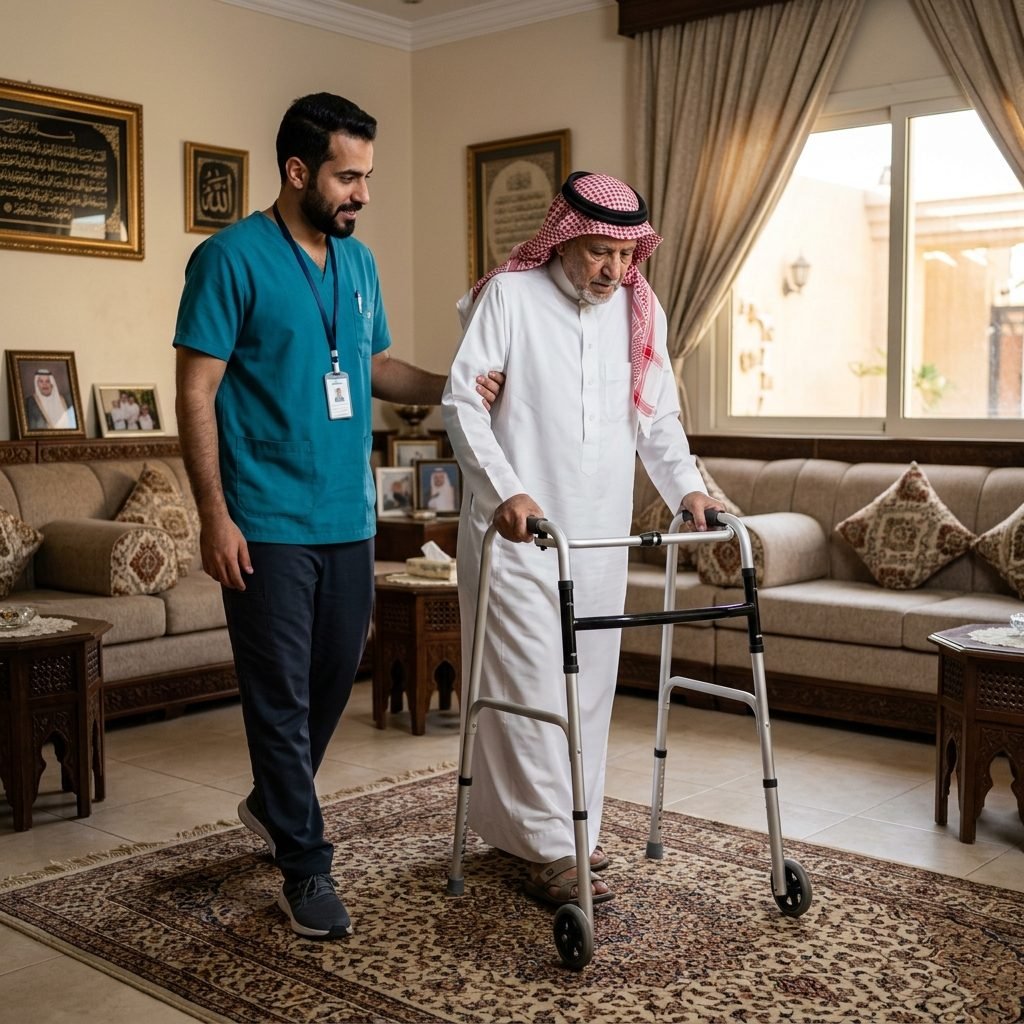
Geriatric Physical Therapy
Balance training, strengthening, and fall prevention for seniors in Al Marwah.
Service Details ←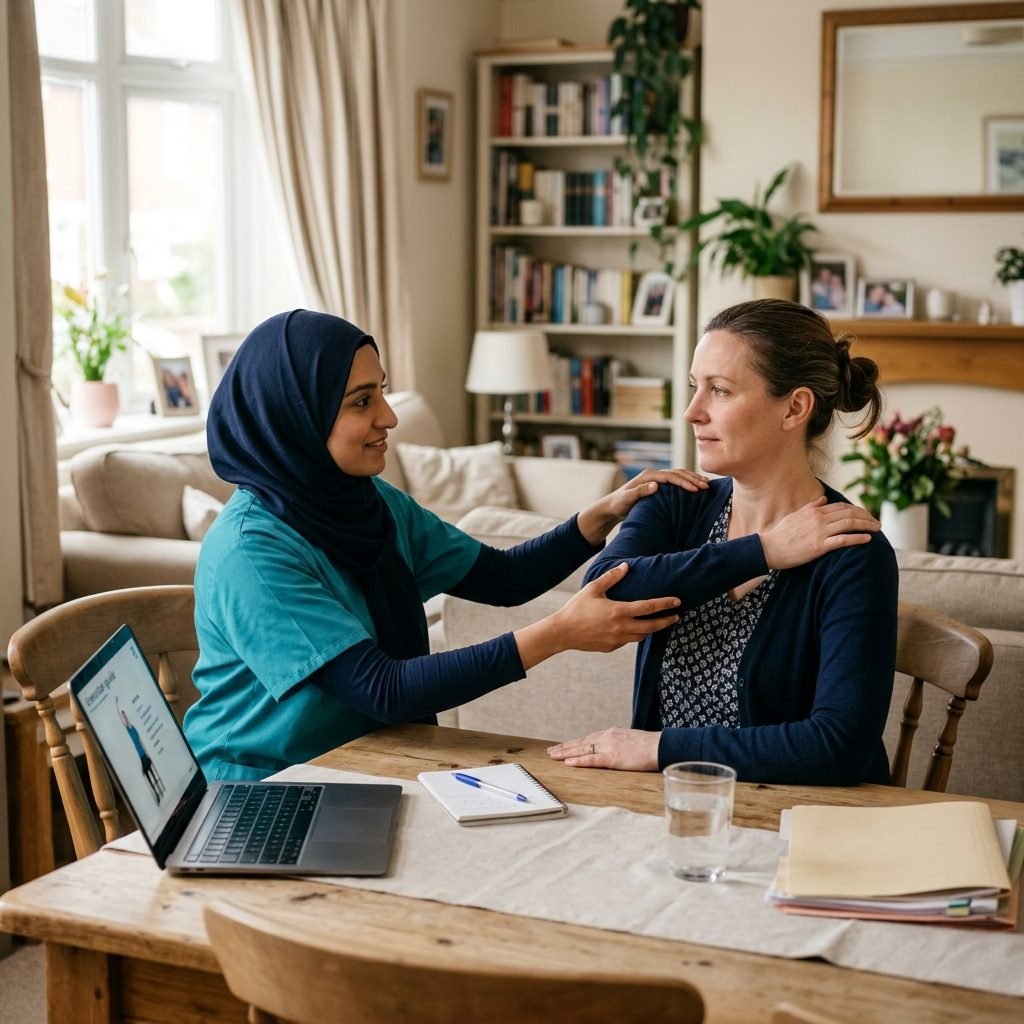
Female Physiotherapist
Licensed female therapists providing home care for women in Al Marwah.
Service Details ←