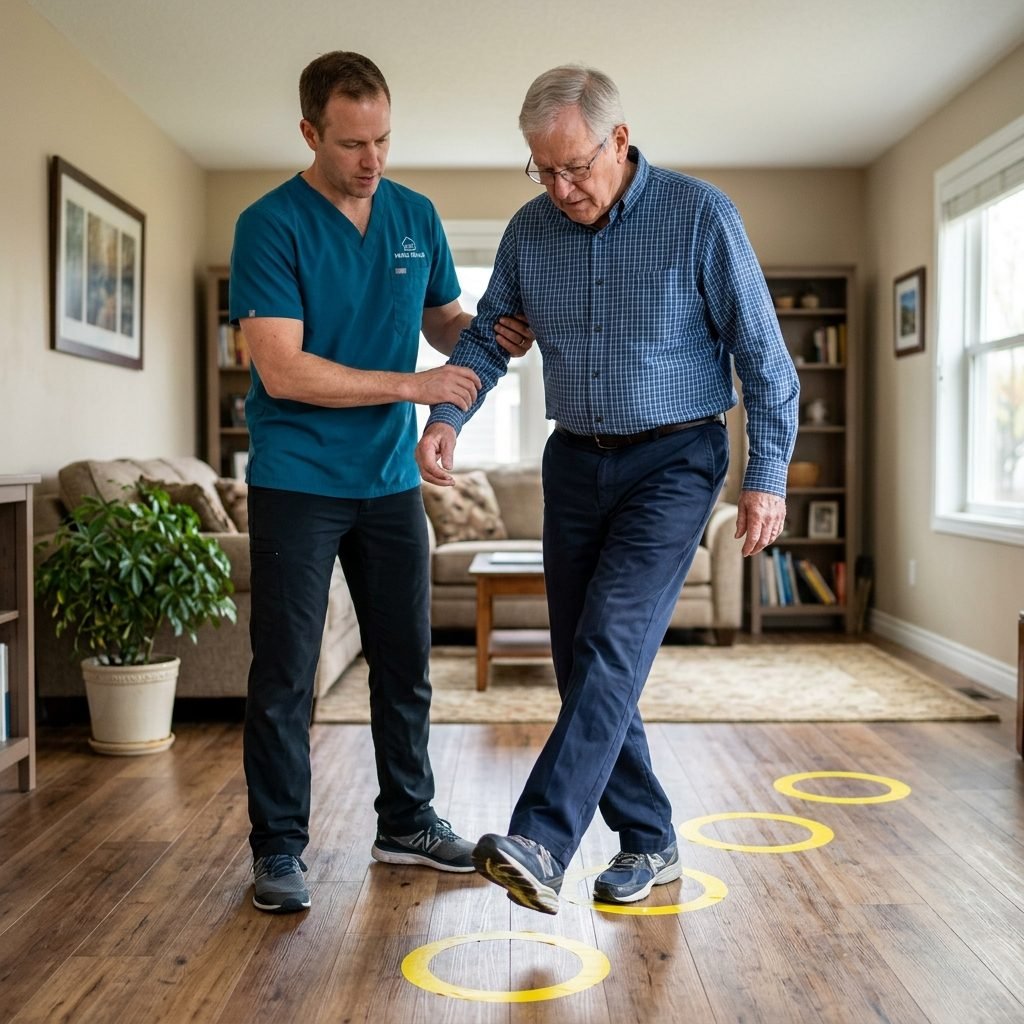
Having access to comprehensive, clinical physical therapy at home is crucial for maintaining rehabilitation progress, especially in busy neighborhoods. Al-Safa and Al Marwah districts in Jeddah present unique local mobility challenges due to high population density and traffic. At Bidaya Center, we deliver high-quality home physiotherapy and movement rehabilitation services directly to your doorstep, conforming to the clinical guidelines of the Saudi Commission for Health Specialties. We eliminate the stress of travel, traffic, and parking. We respect cultural privacy by providing certified male therapists for male patients and female therapists for female patients.
Our clinical approach in Al Marwah starts with a detailed physical and environmental safety assessment to eliminate fall hazards in the home. We bring all necessary portable, sterilized equipment to deliver a clinical standard of care comparable to external clinics. The therapist establishes a tailored milestone tracking plan to monitor muscle strength, balance, and joint range of motion (ROM) progression over time.
Why families in Al Marwah choose Bidaya for home physiotherapy
- ✅ Licensed male & female therapists — full privacy, in your own home in Al Marwah.
- ✅ Fully in-home visits across Al Marwah — no travel or traffic.
- ✅ A personalized rehab plan built after a thorough in-home assessment.
- ✅ Continuous follow-up and direct contact with your therapist throughout.
- ✅ Fast response — arrange your visit by a quick call or WhatsApp message.
We also serve nearby areas: Al Andalus · Al Basateen · Al Bawadi
* The treatment plan and expected outcomes are determined by a medical and functional assessment of each individual case.
Understanding Home Physiotherapy for Parkinson's Disease and Its Importance for Al Marwah Residents
Home-based physiotherapy for Parkinson's disease is a specialized rehabilitation program designed to preserve a patient's ability to move, balance, and stay independent within their familiar surroundings, without the burden of repeated trips to a clinic. Parkinson's is a progressive neurological condition that affects the brain's movement-control centers, gradually appearing as slowness of movement, muscle stiffness, tremor, and disturbances in balance and walking. A carefully structured movement program helps slow the pace at which these symptoms erode daily life, and restores much of the patient's confidence in their own ability to carry out everyday tasks.
At Bidaya Center, we deliver this service inside the homes of Al Marwah residents in Jeddah, because we believe the home is the ideal setting for rehabilitating a person with Parkinson's. The patient practices walking in the very same hallway they use every day, learns how to rise from their own favorite chair, and how to move safely between the bedroom, bathroom, and kitchen. This realistic training on actual tasks is far more valuable than abstract exercises performed in a clinic that feels foreign to the patient.
Al Marwah is a large, densely populated district with sprawling residential blocks, and many of its residents are older adults who find frequent travel difficult, especially during peak traffic or the intense heat of Jeddah's daytime hours. The high humidity and congested roads make repeated outings a genuine strain on families caring for a Parkinson's patient. Having a physiotherapist arrive at the front door saves the patient and their family time and effort, and ensures the sessions continue without interruption.
An important note: we make no promises of a complete cure or of halting the disease's progression, as Parkinson's is a chronic condition. What we do promise is a realistic action plan grounded in a careful clinical and functional assessment, aimed at improving quality of life, reducing the risk of falls, and extending the period of independence as much as possible. Our services are delivered by licensed male and female therapists, with full respect for the privacy of the home and the comfort of the patient.
Symptoms and Signs
Parkinson's symptoms vary from one patient to another in severity and in the order they appear, which is why every rehabilitation program begins with a careful individual assessment. Among the most prominent motor signs that physiotherapy works to address:
- Resting tremor: an involuntary shaking that usually appears in the hand or fingers when the limb is at rest, and lessens with movement.
- Slowness of movement (bradykinesia): a noticeable delay in starting and completing movements, so rising, dressing, or getting around takes longer than usual.
- Muscle rigidity: a sense of stiffness in the limbs and trunk, sometimes accompanied by pain or cramping, which limits the joints' normal range of motion.
- Balance and posture disturbance: a forward stoop of the trunk and weakened balance reflexes, increasing the likelihood of losing balance and falling.
- Freezing of gait: a sudden halt of the feet as if glued to the floor, particularly when starting to walk, passing through doorways, or turning.
- Shuffling and altered walking pattern: short, hurried steps with reduced arm swing and a tendency to drag the feet.
- Reduced facial expression and softened voice: less muscular movement in the face and a drop in the volume and strength of speech.
Alongside the motor symptoms, non-motor signs may appear, such as constipation, sleep disturbance, fatigue, and mood fluctuations. Although physiotherapy focuses on the movement side, improving physical activity reflects positively on many of these areas. We always advise contacting us as soon as you notice a decline in balance or repeated stumbling, because early intervention makes a genuine difference.
Conditions and Groups Who Benefit
Bidaya Center's home physiotherapy service for Parkinson's disease is designed to serve a broad range of patients across Al Marwah, regardless of the stage of their illness or their circumstances. Among the groups who benefit most:
- The newly diagnosed: those who wish to build sound movement habits from the start and learn exercises that preserve their fitness before symptoms worsen.
- Patients in the moderate stages: whose symptoms have begun to affect their walking, balance, and independence in daily tasks.
- Those with recurrent falls: patients who have experienced stumbles or falls and need an intensive program to improve balance and protective reflexes.
- Older adults with limited mobility: those who find travel to a clinic difficult and prefer receiving care in their safe environment.
- Patients after a sudden decline: following hospital stays or a health setback that reduced their movement capacity.
- Those experiencing freezing of gait: patients who struggle to start walking or to stop, and who need special techniques and sensory cues.
- Families seeking training and guidance: households who want to learn how to help their relative correctly and safely.
Before starting any program, we carry out a comprehensive assessment to determine whether the case is suitable for home rehabilitation, and we may coordinate with the treating physician when needed. Every plan is built on the patient's actual situation, so there is no ready-made program applied to everyone. We emphasize that the availability of both male and female therapists lets each patient choose what suits them and achieves the highest degree of comfort and privacy.
Goals of the Rehabilitation Program
The rehabilitation program starts from realistic, measurable goals, formulated together with the patient and their family according to their priorities. We do not chase perfect promises, but tangible gains that improve the patient's ordinary day. Among the key goals:
- Improving balance and reducing fall risk: through targeted exercises that strengthen balance reflexes and build confidence while standing and moving.
- Preserving range of motion and joint flexibility: to counter stiffness and prevent muscle contracture and joint rigidity.
- Enhancing the walking pattern: lengthening the stride, improving arm swing, and addressing freezing of gait using rhythmic and visual cues.
- Strengthening core muscles: especially the trunk and lower-limb muscles that support standing and transitions between positions.
- Improving the ability to transfer: such as rising from a chair, turning in bed, and getting in and out of a car safely.
- Preserving daily independence: enabling the patient to perform personal activities with the least possible reliance on others.
- Improving general fitness and endurance: to counter fatigue and increase safe physical activity.
These goals are reviewed regularly, since what suits a patient in the first month may evolve later. Through this ongoing review we ensure the program stays matched to the patient's changing condition, and that exercises are adjusted to keep pace with their progress or any new health developments. The ultimate aim is always a better quality of life and greater dignity in living with the disease.
Stages and Path of the Home Sessions
A Parkinson's patient at Bidaya Center follows an organized path that begins from the first phone call and continues into long-term follow-up. Here we outline the core stages of the home sessions in Al Marwah:
- Stage one - initial assessment: the therapist visits the home to conduct a comprehensive clinical and functional assessment covering range of motion, balance, walking pattern, and transfer ability, along with inspecting the home environment and identifying potential hazards.
- Stage two - building the treatment plan: based on the assessment results, an individual plan is drawn up with clear goals and a session schedule, all explained to the patient and family in understandable terms.
- Stage three - the actual rehabilitation sessions: exercises are carried out gradually and professionally, including balance, stretching, strengthening, gait training, and techniques for handling freezing of gait, while monitoring the patient's response in each session.
- Stage four - functional training: applying what the patient has learned to real tasks inside the home, such as rising, walking between rooms, and using the bathroom safely.
- Stage five - follow-up and reassessment: measuring progress periodically, adjusting exercises, raising or lowering their intensity by response, and giving the family home exercises for the days without a session.
The duration of each session and the weekly count are determined according to the patient's condition and endurance, without imposing a uniform schedule on everyone. We take care to make the session a comfortable, safe experience that respects medication timing and the patient's active hours, because session timing has a major effect on the quality of movement performance. Consistency and regularity are the key to good results in Parkinson's rehabilitation.
The Role of the Family and Caregiver
The family is an essential partner in the success of a Parkinson's patient's rehabilitation, because the therapist attends for a limited number of hours, while the patient spends most of the day with their loved ones. That is why at Bidaya Center we make a point of training the family and caregiver and equipping them to play their part with confidence and safety. Among the key aspects of this role:
- Supervising home exercises: encouraging the patient to perform the prescribed exercises on the days between sessions and making sure they are done correctly.
- Safe help with transfers: learning the correct way to help the patient rise or walk without straining either the patient or the caregiver.
- Monitoring and observation: noting any change in symptoms, balance, or an increase in stumbling, and relaying it to the therapist at the next visit.
- Emotional support and motivation: encouraging independence without harshness, and giving the patient enough time to complete tasks themselves.
- Sticking to medication times: because coordinating medication timing with physical activity improves the patient's response to exercise.
- Preparing a supportive environment: helping to arrange the home and reduce obstacles to ensure a safe space for movement.
We recognize that caring for a Parkinson's patient can be physically and emotionally exhausting for the family, so we also guide the caregiver to look after themselves and share tasks where possible. Our male and female therapists are keen to answer the family's questions and offer clear, practical guidance, because a confident and reassured caregiver has a direct effect on the patient's stability and progress.
Home Safety and Prevention Tips
Falls are among the greatest risks facing a Parkinson's patient, and they can lead to fractures and complications that disrupt the rehabilitation path. Preparing the home is therefore an essential step, no less important than the exercises themselves. Here is a set of practical tips for a safer environment:
- Remove floor obstacles: lift loose rugs, cables, and scattered items from movement paths to reduce the chance of tripping.
- Improve lighting: provide adequate lighting in hallways, the bathroom, and stairs, with a night light along the route between the bedroom and bathroom.
- Install grab bars: in the bathroom, beside the toilet, and inside the shower to offer support when standing and sitting.
- Choose suitable footwear: closed, stable shoes with a non-slip sole, and avoid walking in socks on smooth floors.
- Arrange furniture: leave enough space to pass, and stabilize chairs with armrests to make rising safer.
- Take care during freezing of gait: do not push the patient forward, but use visual or audible cues to help them resume moving calmly.
- Watch for wet floors: especially in the kitchen and bathroom, and dry them immediately to avoid slipping.
- Keep a means of communication nearby: keeping a phone within reach to call for help when needed.
These simple measures can prevent serious accidents and give the patient and family greater peace of mind. During the assessment visit, our therapists provide recommendations tailored to each home's environment, because what suits one home may not suit another. Remember that prevention is an investment in the continuity of rehabilitation, as every fall avoided is a step preserved on the path to improvement.
Frequently Asked Questions (FAQ)
Can physiotherapy cure Parkinson's disease completely?
No. Parkinson's is a chronic, progressive condition, and there is no physiotherapy that stops or fully cures it. However, physiotherapy helps considerably to improve movement and balance, reduce the risk of falls, and preserve independence for as long as possible. The expected outcomes for each patient are determined after a careful clinical and functional assessment.
How many sessions does a Parkinson's patient need per week?
There is no single number that suits everyone. The number and duration of sessions are set according to the disease stage, the patient's capacity, and the plan's goals. Some patients benefit from closer sessions at the start, while others need less frequent follow-up. This is clarified precisely after the initial assessment.
Are home sessions as effective as clinic sessions?
Yes, and in many cases they may be more suitable for a Parkinson's patient, because training takes place in their actual environment on their real daily tasks, and spares them the trouble of travel and congestion in Jeddah. It also lets the therapist assess home hazards and provide tailored safety recommendations.
Are female therapists available to treat female patients at home?
Yes. Bidaya Center has licensed male and female therapists, and sessions can be arranged to achieve the highest degree of privacy and comfort for the patient and their family. Respecting the privacy of the home is a core part of our service.
Do you cover Al Marwah and the rest of Jeddah's districts?
Yes, we provide home physiotherapy for Parkinson's disease in Al Marwah and the neighboring districts of Jeddah. To ask about coverage in your area and arrange an assessment appointment, we would be glad to hear from you directly.
To book or ask about home physiotherapy for Parkinson's disease in Al Marwah, Jeddah, contact Bidaya Center by phone or WhatsApp by clicking Call Now. Our team is ready to help you and arrange an assessment appointment at a time that suits you.
Important Home Visit Details:
- ✓Setup: Please clear a 2x2m space in the room for safety.
- ✓Clothing: Wear loose, comfortable clothes for easy movement.
- ✓Therapist Parity: Male therapists for males, females for females.
- ✓Medical Reports: Keep your MRI or doctor reports ready for evaluation.
Rehabilitation & Services in Al Marwah
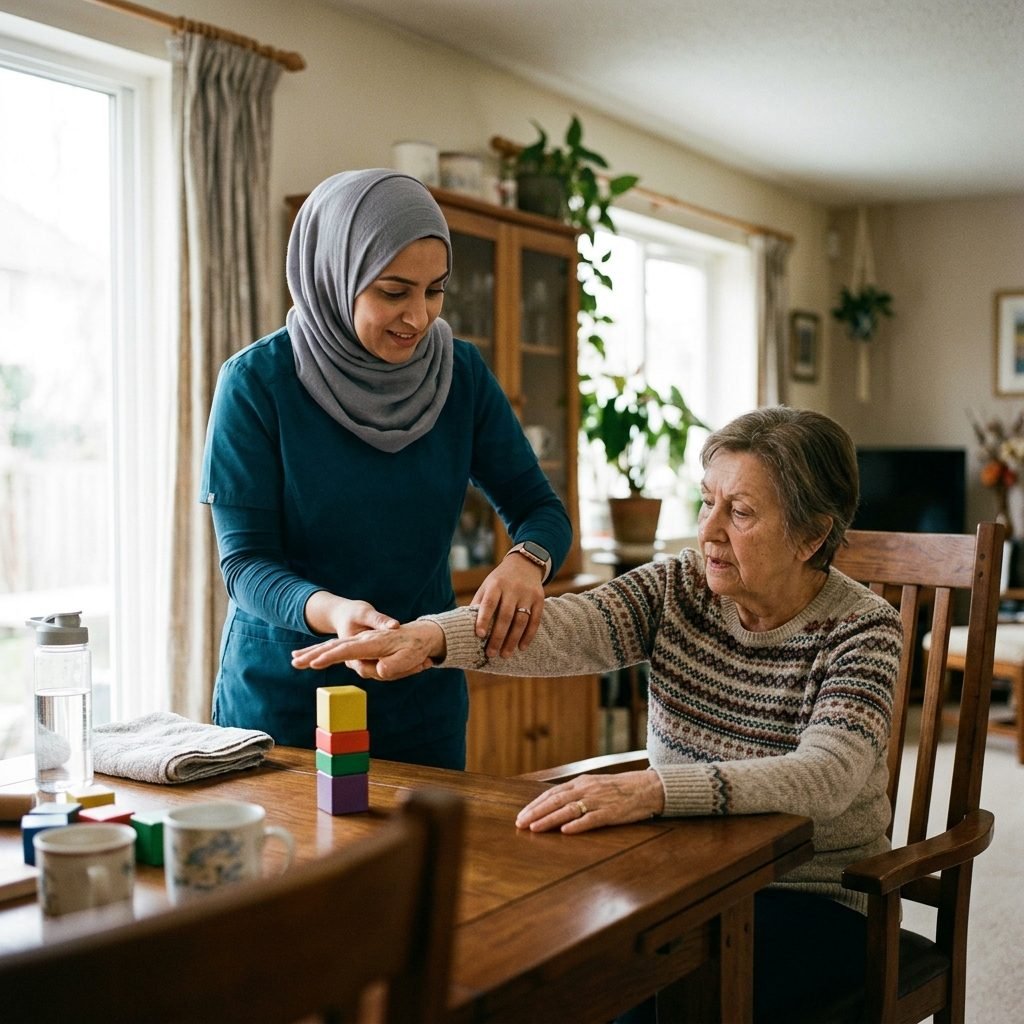
Stroke Rehabilitation
Advanced motor and neurological stroke recovery at home in Al Marwah.
Service Details ←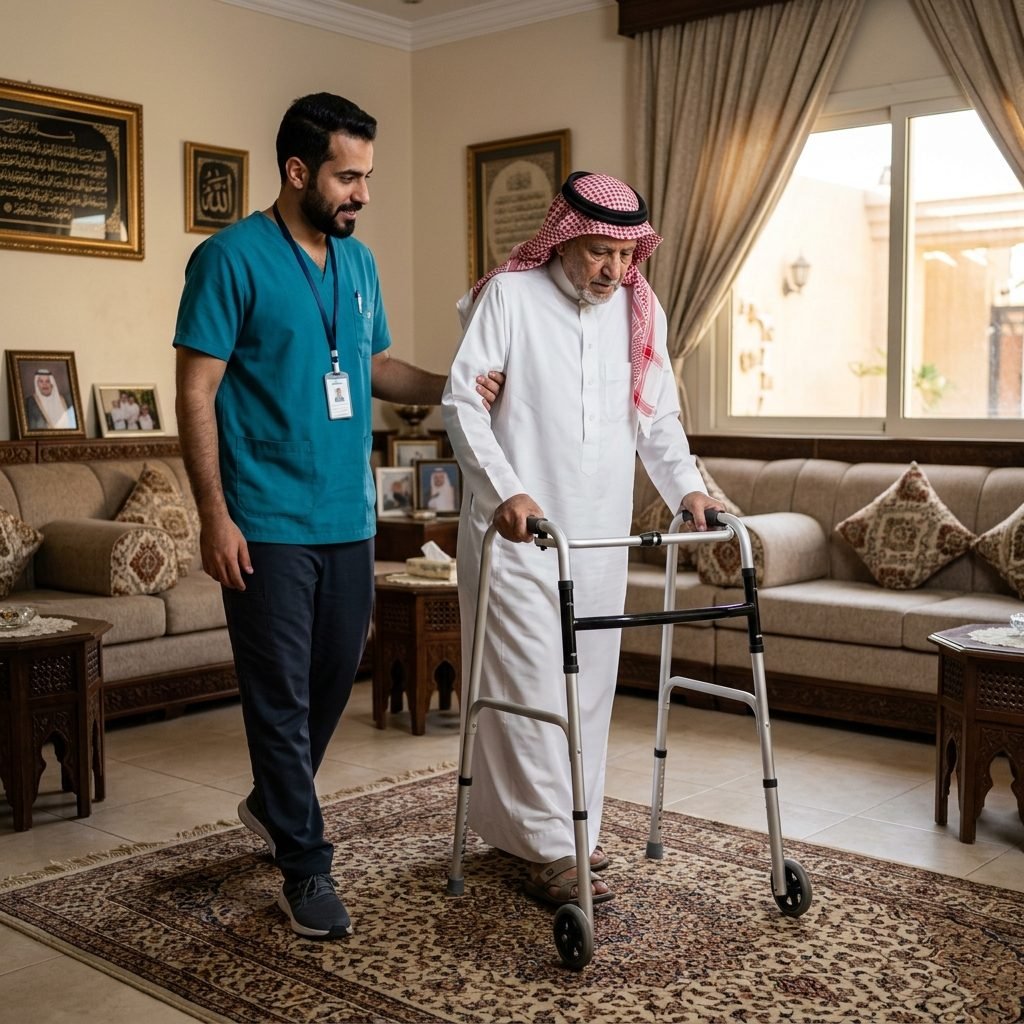
Geriatric Physical Therapy
Balance training, strengthening, and fall prevention for seniors in Al Marwah.
Service Details ←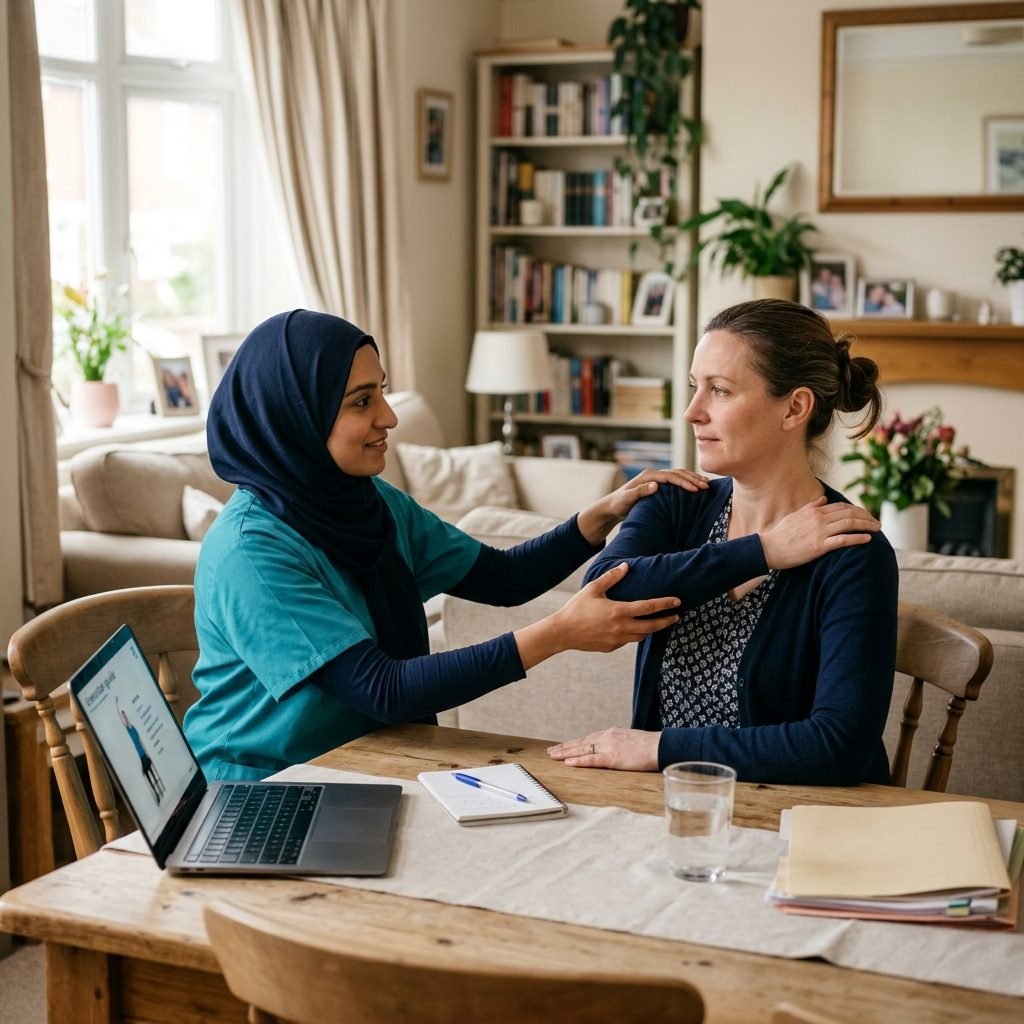
Female Physiotherapist
Licensed female therapists providing home care for women in Al Marwah.
Service Details ←