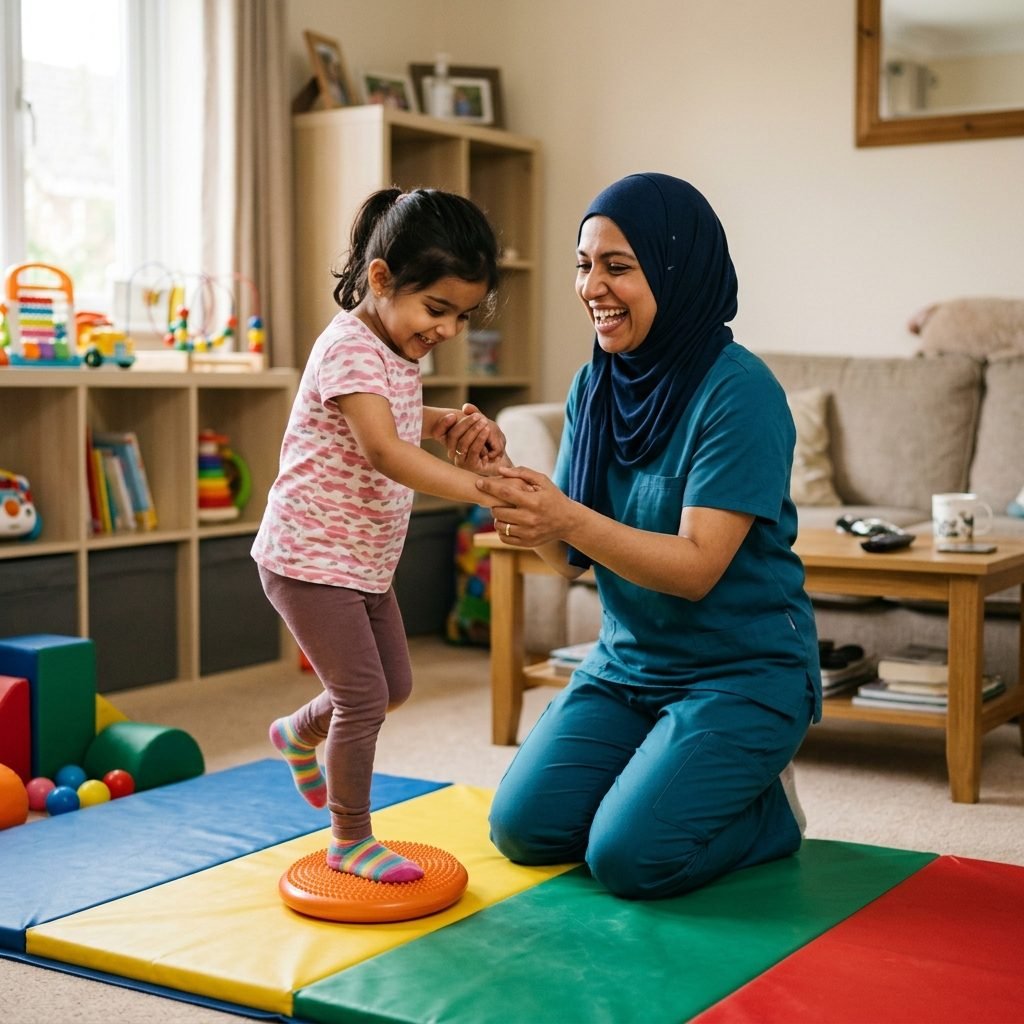
Having access to comprehensive, clinical physical therapy at home is crucial for maintaining rehabilitation progress, especially in busy neighborhoods. Al-Safa and Al Marwah districts in Jeddah present unique local mobility challenges due to high population density and traffic. At Bidaya Center, we deliver high-quality home physiotherapy and movement rehabilitation services directly to your doorstep, conforming to the clinical guidelines of the Saudi Commission for Health Specialties. We eliminate the stress of travel, traffic, and parking. We respect cultural privacy by providing certified male therapists for male patients and female therapists for female patients.
Our clinical approach in Al Marwah starts with a detailed physical and environmental safety assessment to eliminate fall hazards in the home. We bring all necessary portable, sterilized equipment to deliver a clinical standard of care comparable to external clinics. The therapist establishes a tailored milestone tracking plan to monitor muscle strength, balance, and joint range of motion (ROM) progression over time.
Why families in Al Marwah choose Bidaya for home physiotherapy
- ✅ Licensed male & female therapists — full privacy, in your own home in Al Marwah.
- ✅ Fully in-home visits across Al Marwah — no travel or traffic.
- ✅ A personalized rehab plan built after a thorough in-home assessment.
- ✅ Continuous follow-up and direct contact with your therapist throughout.
- ✅ Fast response — arrange your visit by a quick call or WhatsApp message.
We also serve nearby areas: Al Andalus · Al Basateen · Al Bawadi
* The treatment plan and expected outcomes are determined by a medical and functional assessment of each individual case.
What Home-Based Pediatric Physiotherapy Means and Why It Matters for Al Marwah Families
Pediatric physiotherapy is a specialized field focused on developing movement, balance, and muscle control in infants and children, from the earliest months through the school years. A child is fundamentally different from an adult; the body is still growing, and the brain enjoys a high degree of neuroplasticity that makes early intervention far more effective than waiting. This is why the Bidaya Center program is designed to reach the child directly at home in Al Marwah, Jeddah, delivering care within the child's own room, among familiar toys and belongings.
The home setting is not merely convenient; it is a genuine therapeutic asset. A child who practices crawling or walking on the floor of their own home, and who learns to hold a spoon at the family table, gains functional skills that can be repeated daily without waiting for a clinic appointment. The home approach also spares Al Marwah families the effort of navigating busy streets and rush-hour traffic, and it shields the child from the stress of waiting rooms and unfamiliar faces, which matters greatly for children with sensory sensitivity or difficulty adapting to new environments.
We work as a licensed team of male and female therapists, with full respect for the home's privacy and for the family's preference regarding the therapist's gender. We make no promises of a cure; every plan is built on a careful clinical and functional assessment of the child's condition, and it is reviewed regularly according to real progress and the family's goals.
Symptoms and Developmental Signs
Each age has its expected developmental milestones, and a delay in reaching them may call for a specialist assessment. Signs worth monitoring in infants and children include:
- Lack of steady head control after the fourth month, or clear weakness in lifting the neck while lying on the tummy.
- Delayed independent sitting beyond the ninth month, or sitting with a constant lean to one side.
- Not crawling or scooting around the usual time, or a marked preference for using one side of the body over the other.
- Delay in pulling to stand or walking beyond the age typically expected for each child.
- Persistent toe-walking, or noticeable inward turning of the feet or knees.
- General floppiness that makes the child feel "loose" when held, or conversely excessive stiffness and tightness in the limbs.
- Difficulty grasping objects, or poor hand-eye coordination during simple play.
- A constant preference for turning the head one way, with flattening or persistent neck rotation.
- Unusually frequent falling after walking is established, or an unsteady gait.
The presence of one or more signs does not necessarily confirm a problem, but it is an invitation to have the child seen by a qualified specialist. Early observation by the family is the first step, and a professional assessment is what determines whether intervention is needed and of what kind.
Conditions and Groups That Benefit
Our program serves a broad range of children in Al Marwah who need motor and functional support. Among the most common groups:
- Children with cerebral palsy of varying degrees, where rehabilitation focuses on movement control, reducing spasticity, and supporting daily function.
- Cases of general motor delay without a specific cause, which benefit from structured stimulation and training.
- Children born prematurely who require close developmental follow-up during the early years.
- Down syndrome and its associated low muscle tone and delay in gross motor skills.
- Children on the autism spectrum who experience difficulties with motor coordination and sensorimotor planning.
- Birth-related brachial plexus injuries and weakness in arm or hand movement.
- Foot deformities such as flat feet or toe-walking, and mild cases of spinal curvature.
- Muscle weakness resulting from neuromuscular conditions or long periods of illness and bed rest.
- Children recovering from fractures or orthopedic surgery who need to regain range of motion and strength.
- Infants with muscular torticollis (neck twisting).
Every case is unique, so we never apply a ready-made program; instead we build an individual plan that starts from the child's current abilities and the priorities of both child and family, adjusting it with each observed gain.
Goals of the Rehabilitation Program
Rehabilitation goals center on helping the child become more independent and able to take part in daily life, not on abstract numbers. Goals we work toward together with the family include:
- Improving head and trunk control as the foundation for every later motor skill.
- Developing gross motor skills: rolling, sitting, crawling, standing, and walking according to each child's ability.
- Enhancing balance and coordination to reduce falls and increase safety during play.
- Easing spasticity or muscle tightness and gently increasing joint range of motion.
- Strengthening weak muscles and supporting correct posture of the body and spine.
- Developing the fine motor skills needed for eating, playing, and preparing for writing.
- Improving the walking pattern and correcting foot positioning as far as possible.
- Integrating newly acquired skills into the daily home routine.
- Empowering the family with the knowledge and skills to become an active partner in the rehabilitation.
These goals are set realistically and measurably after the assessment, and they remain flexible and are reviewed regularly. We emphasize that outcomes vary from one child to another depending on the nature of the condition, the consistency of sessions, and family involvement, with no advance guarantee of a cure.
Stages and Pathway of the Home Sessions
We follow a clear pathway that begins with understanding the child before any exercise and continues with close follow-up until goals are met:
- Initial contact: We listen to the family's concerns and the child's developmental and medical history, and we arrange the first home visit in Al Marwah.
- Clinical and functional assessment: The specialist examines muscle strength, range of motion, balance, and age-appropriate skills, observing the child moving within their natural environment.
- Individual plan design: We formulate short- and long-term goals and set the initial number of sessions and the nature of the exercises.
- Therapy sessions: Delivered through purposeful play and guided exercises, in an engaging style that keeps the child interacting without fatigue.
- Home practice between sessions: We equip the family with simple, safe exercises woven into the child's day to reinforce the gains.
- Periodic reassessment: We measure progress at defined intervals and adjust the plan according to results.
- Follow-up and gradual transition: As goals are met, we taper sessions gradually with a home maintenance plan to preserve the improvement.
Session length and frequency vary with the child's age, condition, and ability to concentrate, and they are agreed upon clearly with the family in advance.
The Role of the Family and Caregiver
In pediatric physiotherapy, the family is not a bystander but an integral part of the treatment. The child spends most of the day with parents and caregivers, so what happens between sessions is no less important than what happens during them. We make sure to:
- Explain the child's condition and the plan's goals in clear language, free of medical complexity.
- Train parents practically in exercises and activities that can be woven into play, eating, bathing, and dressing.
- Guide the family on how to carry the child and change positions in ways that support healthy motor development.
- Answer the family's questions, reassure them, and help them read the child's cues.
- Involve older siblings when helpful, to motivate the child within a warm family atmosphere.
We encourage families toward consistency and patience, because progress in children comes through small, accumulating steps. A caregiver's commitment to simple daily exercises is one of the strongest factors influencing a child's improvement.
Home Safety and Prevention Tips
A safe home supports a child's motor development and reduces the risk of injury. We recommend several preventive practices to Al Marwah families:
- Prepare a spacious play area free of sharp objects or hard-edged furniture, and secure anything that could tip over.
- Use safe floor mats that let the child crawl, roll, and stand steadily without slipping.
- Fit stair gates, cover electrical outlets, and keep cords and small objects out of the child's reach.
- Avoid leaving the child for long hours in bouncers or walkers, as these may hinder natural motor development.
- Encourage daily supervised tummy time for infants to strengthen the neck, shoulders, and trunk.
- Provide suitable supportive shoes when walking begins, and let the child move barefoot in safe areas to strengthen the feet.
- Never force the child into painful positions or movements, and stop immediately at any crying or strong resistance.
- Follow only the exercises prescribed by the specialist, and avoid exercises drawn from unreliable sources.
If you notice any sudden decline in the child's movement or unexplained pain, it is best to contact the team before the next session to evaluate the situation.
Frequently Asked Questions
Will my child feel pain during the sessions?
Our aim is for the session to be an enjoyable, play-based experience. Some exercises may cause brief, mild discomfort, but we work within the child's comfort limits, stop at any sign of strain or resistance, and reassure both child and family at every step.
What is the right age to start pediatric physiotherapy?
There is no such thing as "too early." The sooner a delay or motor difficulty is noticed and intervention begins, the greater the benefit from neuroplasticity. We work with infants from the earliest months through the school years, and the assessment determines the extent of need.
Can I choose a female therapist for my daughter?
Yes. The team includes licensed male and female therapists, and the family can state its preference for the therapist's gender to ensure full comfort and privacy within the home.
How many sessions will my child need?
This depends on the type and severity of the condition, the child's age, and their response. We set an initial plan after the assessment and review it regularly. We offer no fixed numbers or guarantees, because every child's path is unique.
What should I prepare at home before the visit?
It is enough to provide a clean, quiet space, a few of the child's favorite toys, and comfortable clothing that allows movement. The specialist will bring the needed equipment and will guide you if any additional preparation is required.
To book a home assessment for your child in Al Marwah, Jeddah, contact Bidaya Center by phone or WhatsApp by clicking Call Now, and our team is ready to help you choose a time that suits you.
Important Home Visit Details:
- ✓Setup: Please clear a 2x2m space in the room for safety.
- ✓Clothing: Wear loose, comfortable clothes for easy movement.
- ✓Therapist Parity: Male therapists for males, females for females.
- ✓Medical Reports: Keep your MRI or doctor reports ready for evaluation.
Rehabilitation & Services in Al Marwah
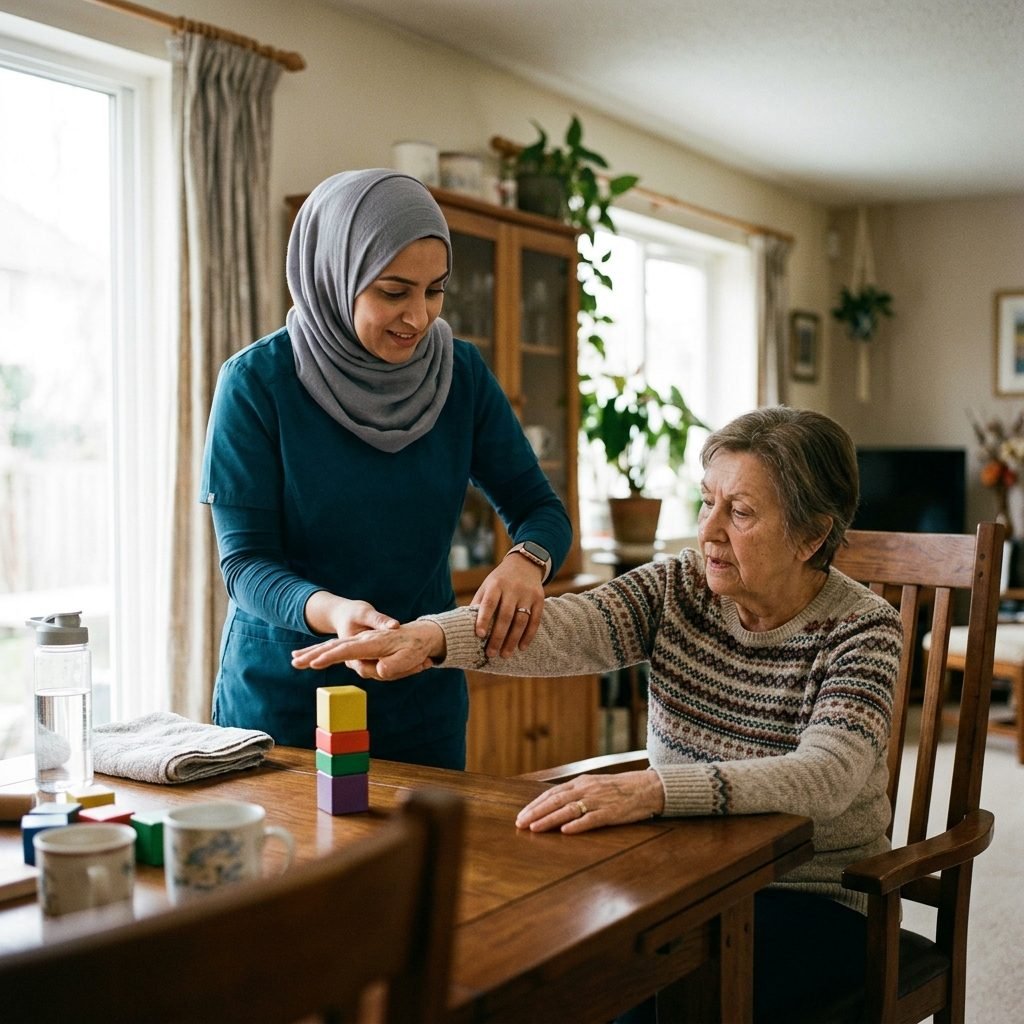
Stroke Rehabilitation
Advanced motor and neurological stroke recovery at home in Al Marwah.
Service Details ←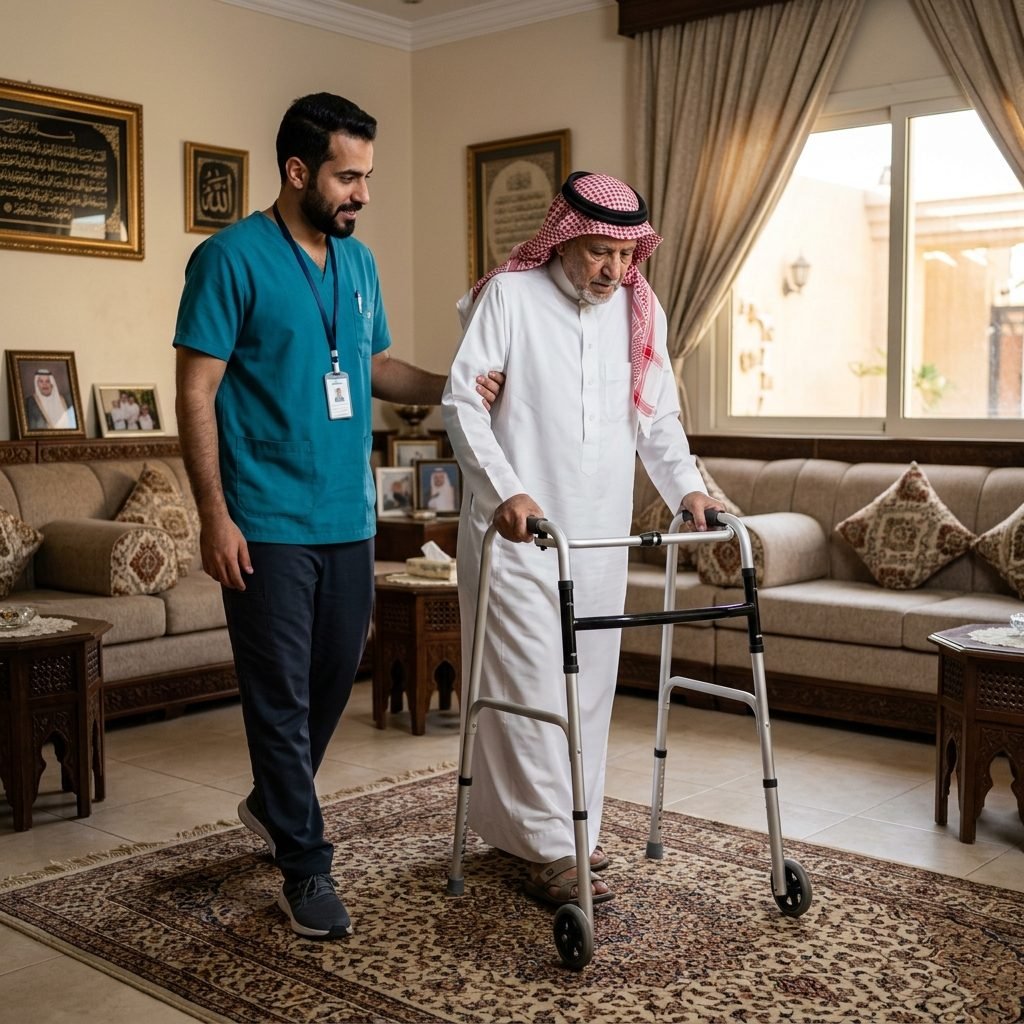
Geriatric Physical Therapy
Balance training, strengthening, and fall prevention for seniors in Al Marwah.
Service Details ←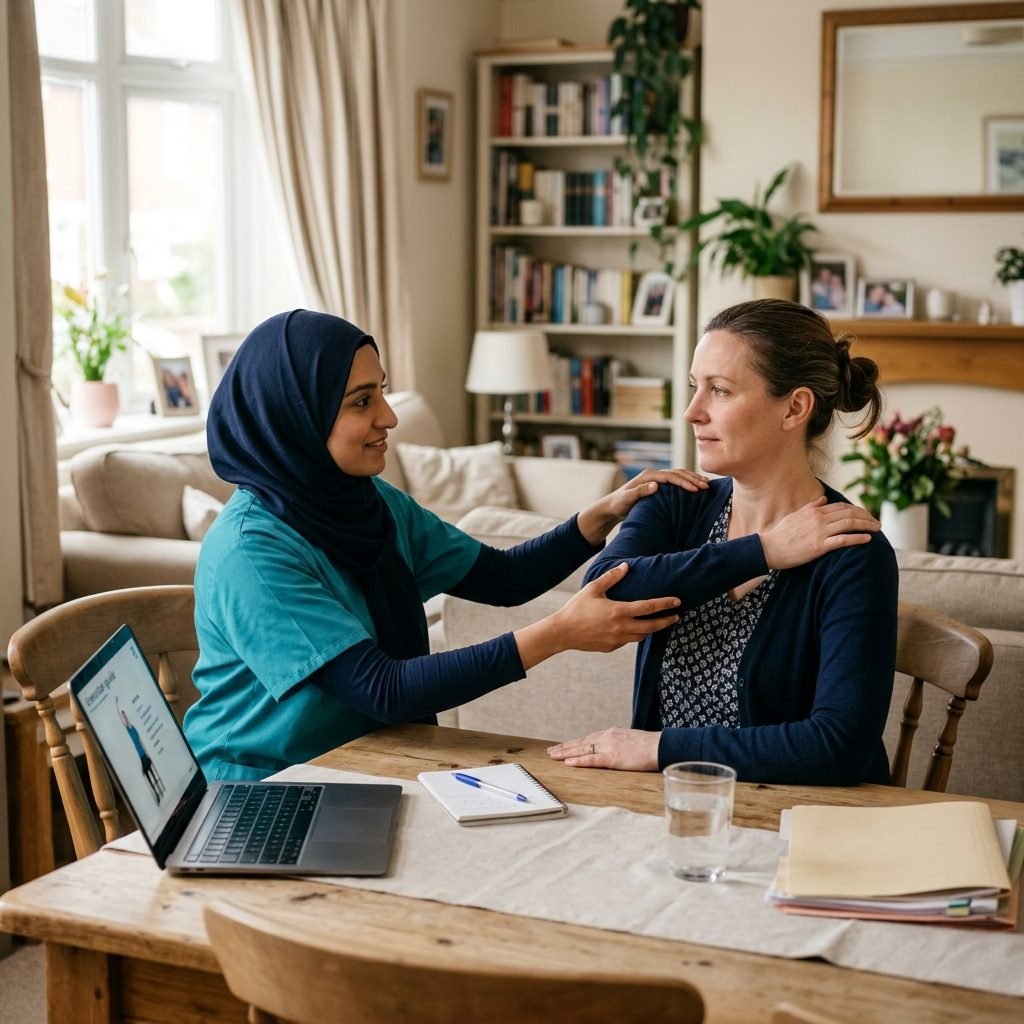
Female Physiotherapist
Licensed female therapists providing home care for women in Al Marwah.
Service Details ←