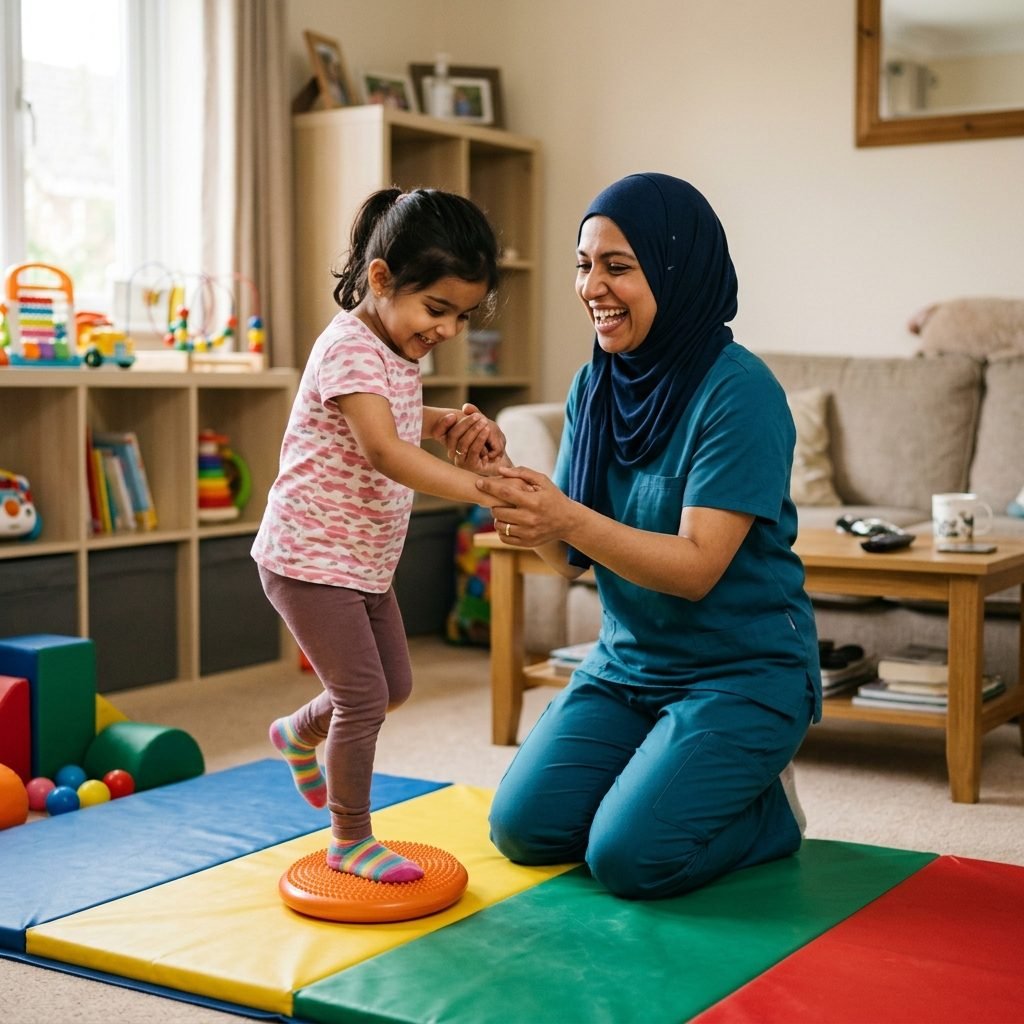
Having access to comprehensive, clinical physical therapy at home is crucial for maintaining rehabilitation progress, especially in busy neighborhoods. Al-Safa and Al Mohammadiyah districts in Jeddah present unique local mobility challenges due to high population density and traffic. At Bidaya Center, we deliver high-quality home physiotherapy and movement rehabilitation services directly to your doorstep, conforming to the clinical guidelines of the Saudi Commission for Health Specialties. We eliminate the stress of travel, traffic, and parking. We respect cultural privacy by providing certified male therapists for male patients and female therapists for female patients.
Our clinical approach in Al Mohammadiyah starts with a detailed physical and environmental safety assessment to eliminate fall hazards in the home. We bring all necessary portable, sterilized equipment to deliver a clinical standard of care comparable to external clinics. The therapist establishes a tailored milestone tracking plan to monitor muscle strength, balance, and joint range of motion (ROM) progression over time.
Why families in Al Mohammadiyah choose Bidaya for home physiotherapy
- ✅ Licensed male & female therapists — full privacy, in your own home in Al Mohammadiyah.
- ✅ Fully in-home visits across Al Mohammadiyah — no travel or traffic.
- ✅ A personalized rehab plan built after a thorough in-home assessment.
- ✅ Continuous follow-up and direct contact with your therapist throughout.
- ✅ Fast response — arrange your visit by a quick call or WhatsApp message.
We also serve nearby areas: Al Andalus · Al Basateen · Al Bawadi
* The treatment plan and expected outcomes are determined by a medical and functional assessment of each individual case.
What Home Treatment for Delayed Walking Means for Al Mohammadiyah Families
Delayed walking describes a child who has passed the age at which independent steps are typically expected without walking a short distance steadily, or who walks with an unusual pattern such as persistent toe-walking or an overly wide stance. Home-based treatment for delayed walking in Al Mohammadiyah means a licensed pediatric physiotherapist comes to your home, assesses the child's movement in the very space where they actually play and explore, and then builds a graded walking program using the floors and furniture the child already knows.
This approach carries real value for families in Al Mohammadiyah. The district is a calm residential area with many family apartments and villas, and many parents would rather not tire a young child with repeated clinic trips through peak-hour traffic. A home session removes travel stress, preserves the child's nap and feeding schedule, and lets the therapist see the interior steps, rugs, and thresholds where the child truly stumbles, addressing the problem in context rather than in a bare therapy room. A familiar setting also makes the child calmer and more cooperative, which is decisive in walking training.
We make one thing clear from the start: the treatment path and its timeline depend on a clinical and functional assessment of each individual case, and we never promise guaranteed results. Some delays are simple and respond quickly, while others are linked to neurological or muscular causes that call for longer follow-up and coordination with the child's pediatrician or neurologist.
Symptoms and Signs That Call for Starting
Not every late step is a cause for worry, but certain indicators warrant an early assessment rather than waiting. Among the most common signs we observe in Al Mohammadiyah children:
- Inability to stand with support or to cruise along furniture well after peers of the same age are doing so.
- Persistent toe-walking with the heel not making contact with the floor beyond the early learning phase.
- Excessive falling, constant tripping, or reliance on a wall or a hand for every single step.
- Clear weakness in bearing weight on one leg, or a strong preference for one side when moving and crawling.
- Unusual floppiness (low tone) throughout the body, or conversely stiffness and tightness in the leg and foot muscles.
- Accompanying delay in sitting, crawling, or rolling, or weak head and trunk control.
- A walking pattern that fails to mature and stays wobbly and wide-based long after the child began stepping.
The presence of one or more of these signs is not a diagnosis in itself, but it is reason enough for a specialist assessment. Early intervention gives the nervous and muscular systems a better chance to respond and reduces the risk that faulty movement patterns become entrenched and harder to correct later.
Who Benefits From the Program
The home walking-rehabilitation program is designed to serve a broad range of children in Al Mohammadiyah, and the plan differs fundamentally according to the underlying cause. The main groups that benefit include:
- Children with mild motor delay or a lag in acquiring milestones without a clear medical cause.
- Cases of low muscle tone (hypotonia) that make standing and walking effortful for the child.
- Children who toe-walk, whether idiopathically and persistently or in connection with tightness of the Achilles tendon.
- Premature (preterm) infants who may need extra support to reach walking milestones.
- Children with neurological conditions such as mild cerebral palsy or poor motor coordination, in coordination with the medical team.
- Those with asymmetry in leg strength, or foot and ankle alignment issues that affect balance.
- Children who developed a fear of walking after a fall or painful experience and need to rebuild movement confidence.
We have both male and female licensed therapists, and your family can choose whoever suits you best, with full privacy maintained inside the home, something many families in the district appreciate.
Goals of the Rehabilitation Program
The aim is not merely for the child "to walk," but to build safe, independent, functional walking that serves daily life. We set measurable goals and review them regularly. The most important include:
- Strengthening the trunk, hip, and leg muscles on which balance during standing and stepping depends.
- Improving balance and postural control so the child can stand and transition without support.
- Correcting the gait pattern: from heel strike to step length, base width, and coordinated movement.
- Increasing range of motion and joint flexibility and addressing any muscle tightness that hinders a natural step.
- Building endurance and the ability to walk longer distances without quickly tiring.
- Boosting the child's self-confidence and reducing fear of falling through a safe, graded increase in challenge.
- Integrating the skill into daily activities: moving between rooms, climbing a step, carrying a toy while walking.
These goals are shaped individually after assessment, and their priorities may shift as the child progresses. We emphasize that the ceiling of improvement and the timeframe are tied to the child's condition, its cause, and the consistency of home practice.
Stages and Course of the Home Sessions
The program follows a structured path that begins with understanding the case and ends with consolidating the skill within the child's everyday life:
- Initial assessment: In the first visit the therapist observes the child's movement, muscle strength, joint range, protective reactions, and standing and stepping attempts, while listening to the family's observations and the child's history.
- Setting the plan and goals: We define short- and long-term goals and agree with the family on an initial number of sessions and their frequency.
- Preparation phase: Exercises to lengthen tight muscles, activate weak ones, and improve trunk control as the foundation for walking.
- Standing and transition training: Working on independent standing, sit-to-stand transitions, and single-leg stability as a prelude to stepping.
- Guided walking training: Using play, motivation, and graded manual support to encourage independent steps, correcting the pattern along the way.
- Advanced functional training: Walking on different surfaces, climbing thresholds and stairs, changing direction, and walking while carrying objects.
- Follow-up and reassessment: Measuring progress periodically and adjusting the plan, while giving the family home exercises to apply between sessions.
We make use of the features of the child's home in Al Mohammadiyah; the hallways, furniture, and interior thresholds become natural training tools that let the skill transfer directly into the child's usual environment.
The Role of the Family and Caregiver
The family is an essential partner. The child spends only a limited number of hours each week with the therapist while spending the rest of the time with the parents. We therefore work to empower the family through:
- Training parents in simple, safe exercises that can be repeated daily within play and routine.
- Explaining how to support the child during standing and stepping without the excessive reliance that delays independence.
- Encouraging free movement and safe exploration instead of constantly carrying the child or keeping them in a walker.
- Providing positive motivation: praise for every attempt, and placing favorite toys at a distance that encourages stepping toward them.
- Noticing signs of fatigue or discomfort and stopping the activity there, and noting anything new to share with the therapist.
Consistent family practice between visits is one of the strongest factors shaping the pace of progress, and we make sure the instructions are clear and doable within an ordinary family day.
Home Safety and Prevention Tips
A safe home environment speeds up walking and reduces falls. We advise Al Mohammadiyah families to:
- Prepare a wide play area free of cables and sharp-cornered furniture that could injure the child during a stumble.
- Secure rugs, remove small slippery items, and keep floors dry to avoid slipping.
- Install safety gates on interior stairs and directly supervise any climbing or descending practice.
- Avoid overusing a circular baby walker, as it may not encourage a correct walking pattern; it is best to ask the therapist about alternatives.
- Choose suitable footwear that is light and flexible and supports the foot without restricting it, and allow barefoot walking on a safe surface at times to strengthen foot sensation.
- Ensure the child practices movement while rested, fed, and not tired, since fatigue increases stumbling.
These are general preventive measures to support training, and they are not a substitute for the specialist assessment that determines each child's precise needs.
Frequently Asked Questions (FAQ)
My child is behind peers in walking. Should I wait or request an assessment?
If the child has passed the expected age for independent walking, or shows signs such as toe-walking, frequent falls, or weak weight-bearing, it is best not to wait and to request an early assessment; early intervention offers a better chance to respond.
Are the sessions really held inside our home in Al Mohammadiyah?
Yes. The therapist comes to your home in Al Mohammadiyah with the necessary assessment and training tools and makes use of the child's real environment, sparing you travel stress and preserving the child's routine.
How many sessions will my child need?
There is no fixed number. The count and duration are set after the clinical and functional assessment according to the cause and severity of the delay and the consistency of home practice, and they are revisited regularly as the child progresses.
Can our family choose a female therapist instead of a male one?
Yes. We have both male and female licensed therapists, and you can choose whoever best suits your family, with full privacy maintained inside the home.
Do you guarantee that my child will walk completely normally?
We do not offer guaranteed results; improvement and its extent depend on each child's condition and its cause. Our aim is to help the child reach the best possible functional level through a well-studied plan and regular follow-up.
To book a home assessment for your child in Al Mohammadiyah or to ask a question, contact us by phone or WhatsApp by clicking Call Now, and the Bidaya Center team will be glad to help and arrange the time that works best for you.
Important Home Visit Details:
- ✓Setup: Please clear a 2x2m space in the room for safety.
- ✓Clothing: Wear loose, comfortable clothes for easy movement.
- ✓Therapist Parity: Male therapists for males, females for females.
- ✓Medical Reports: Keep your MRI or doctor reports ready for evaluation.
Rehabilitation & Services in Al Mohammadiyah
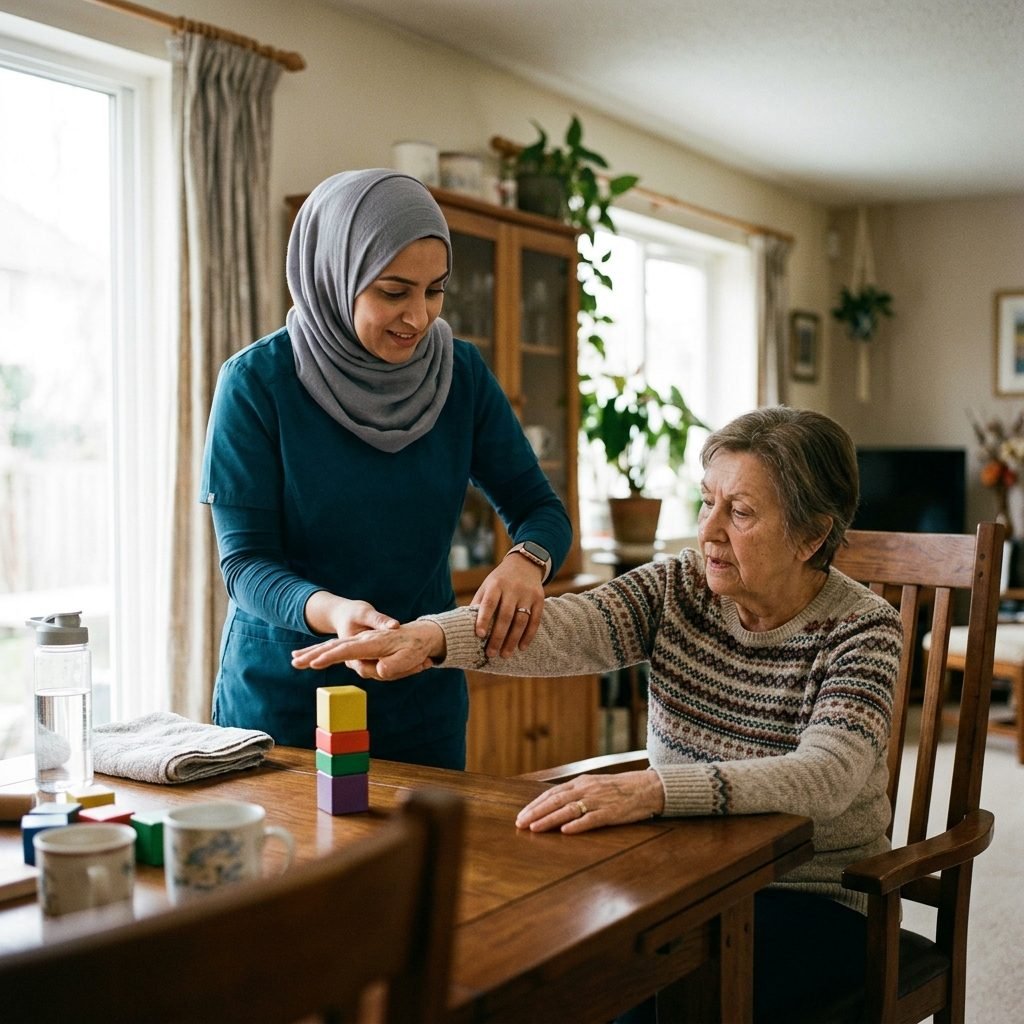
Stroke Rehabilitation
Advanced motor and neurological stroke recovery at home in Al Mohammadiyah.
Service Details ←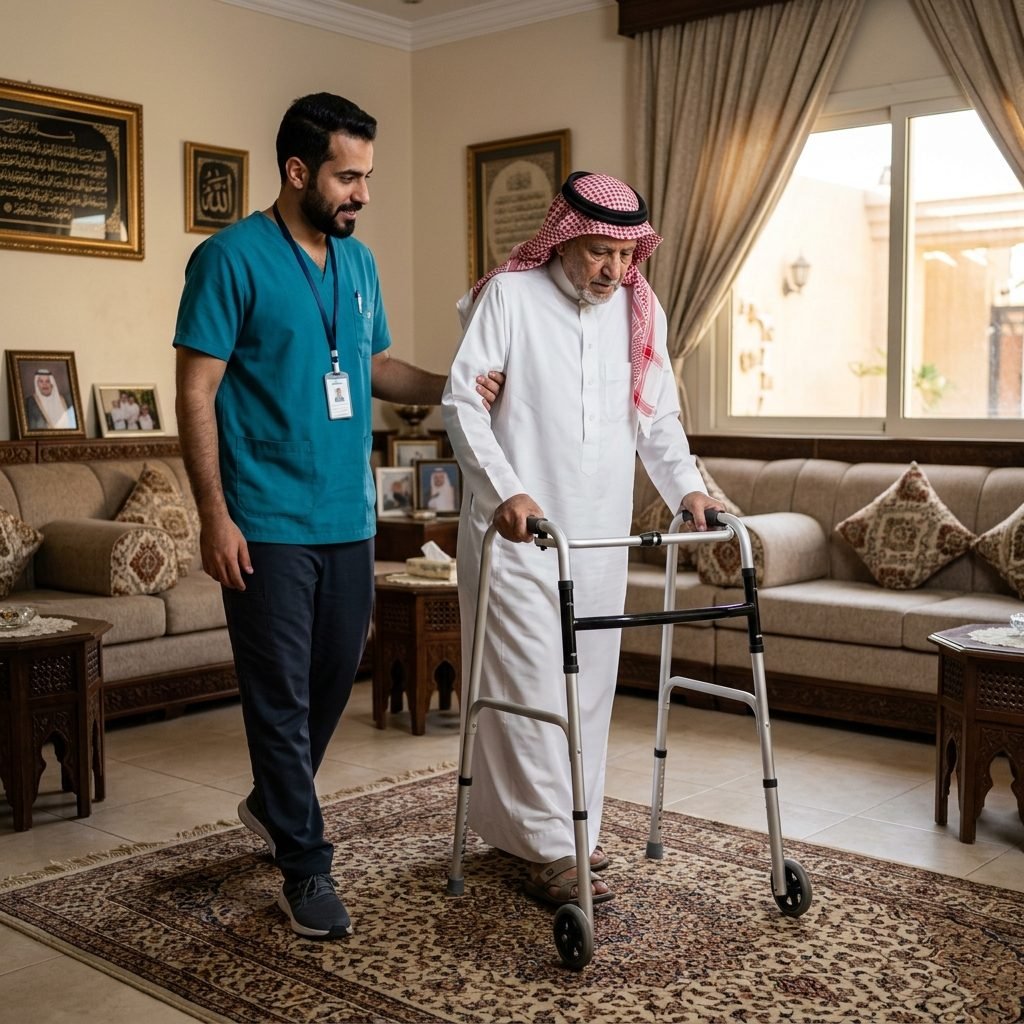
Geriatric Physical Therapy
Balance training, strengthening, and fall prevention for seniors in Al Mohammadiyah.
Service Details ←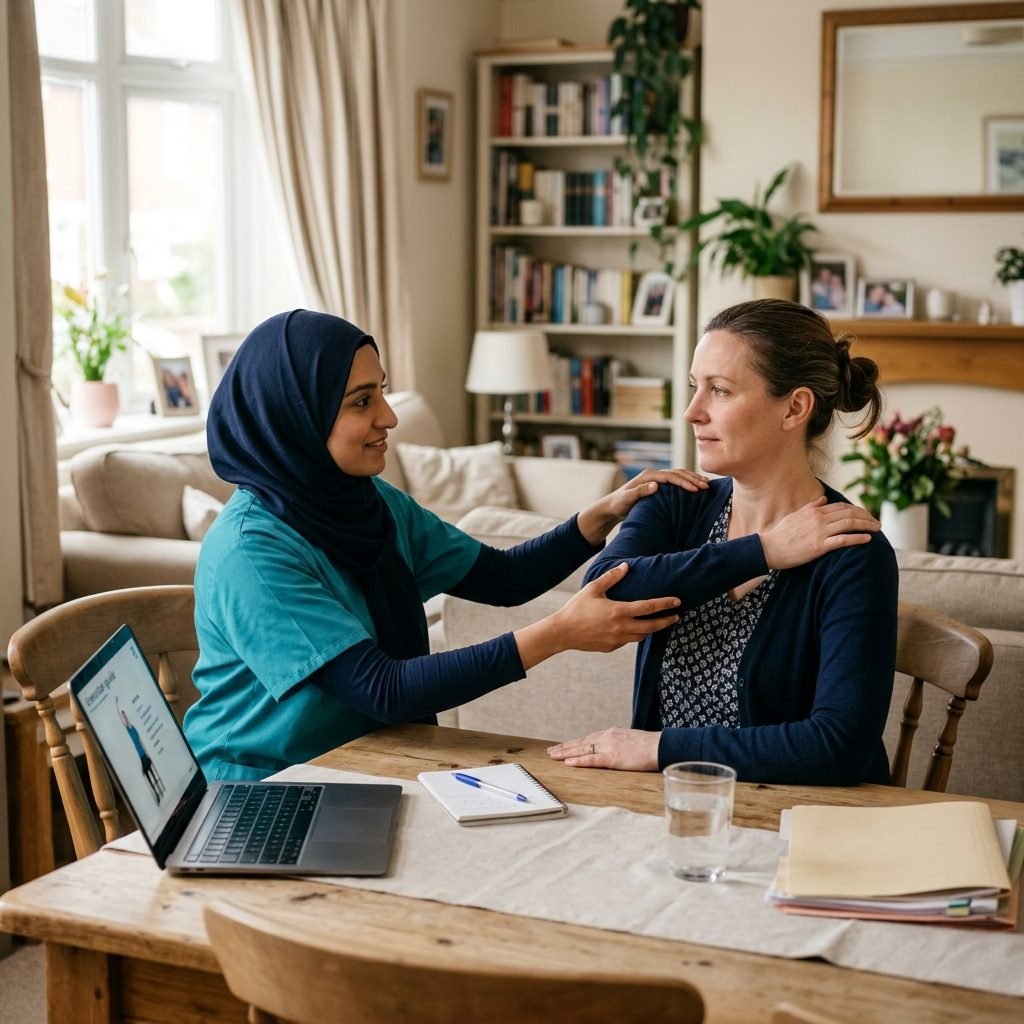
Female Physiotherapist
Licensed female therapists providing home care for women in Al Mohammadiyah.
Service Details ←