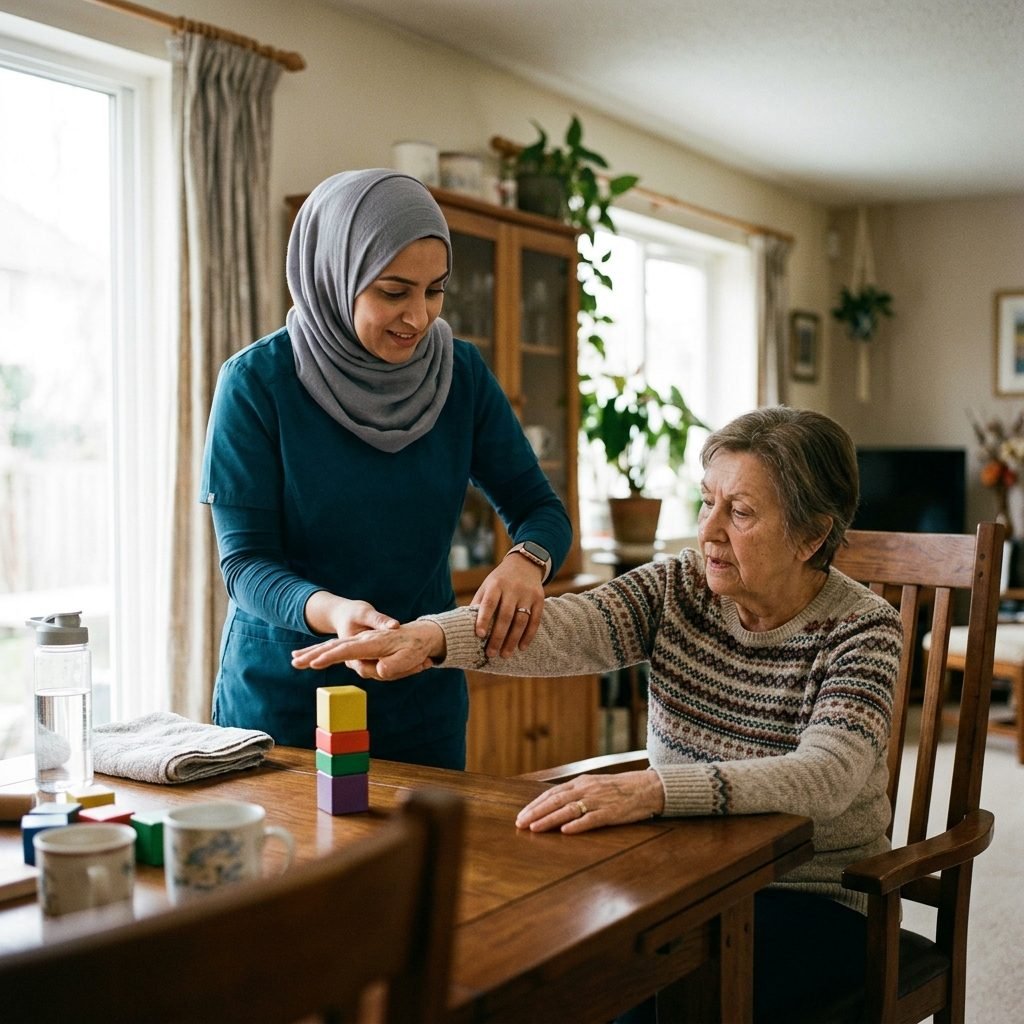
Having access to comprehensive, clinical physical therapy at home is crucial for maintaining rehabilitation progress, especially in busy neighborhoods. Al-Safa and Al Mohammadiyah districts in Jeddah present unique local mobility challenges due to high population density and traffic. At Bidaya Center, we deliver high-quality home physiotherapy and movement rehabilitation services directly to your doorstep, conforming to the clinical guidelines of the Saudi Commission for Health Specialties. We eliminate the stress of travel, traffic, and parking. We respect cultural privacy by providing certified male therapists for male patients and female therapists for female patients.
Our clinical approach in Al Mohammadiyah starts with a detailed physical and environmental safety assessment to eliminate fall hazards in the home. We bring all necessary portable, sterilized equipment to deliver a clinical standard of care comparable to external clinics. The therapist establishes a tailored milestone tracking plan to monitor muscle strength, balance, and joint range of motion (ROM) progression over time.
Why families in Al Mohammadiyah choose Bidaya for home physiotherapy
- ✅ Licensed male & female therapists — full privacy, in your own home in Al Mohammadiyah.
- ✅ Fully in-home visits across Al Mohammadiyah — no travel or traffic.
- ✅ A personalized rehab plan built after a thorough in-home assessment.
- ✅ Continuous follow-up and direct contact with your therapist throughout.
- ✅ Fast response — arrange your visit by a quick call or WhatsApp message.
We also serve nearby areas: Al Andalus · Al Basateen · Al Bawadi
* The treatment plan and expected outcomes are determined by a medical and functional assessment of each individual case.
What Home-Based Hemiplegia Rehabilitation Means for Al Mohammadiyah Residents
Hemiplegia is weakness or loss of movement and sensation on one side of the body, typically affecting the arm, hand and leg on the same side, and sometimes the facial muscles on that side too. It is not a disease in itself but a consequence of injury to the opposite half of the brain, whether from a stroke, a brain bleed, a head injury, a tumour, or a congenital condition in children. The goal of hemiplegia rehabilitation is not simply to move the weak limb; it is to retrain the brain to control the affected side and to recover as much independence as possible in walking, gripping, standing and self-care.
Bidaya Center delivers this service in the homes of residents across Al Mohammadiyah, a large residential district in Jeddah where villas and apartment buildings are spread across distances that can make repeated clinic trips exhausting for someone whose whole one side is weak. When descending a staircase or transferring from bed to chair is a daily challenge, home therapy becomes a practical choice that spares the family the burden of transport and reduces the risk of falls while leaving the house.
The core advantage of home rehabilitation is that it takes place in the real environment where the patient lives. The therapist sees the patient's actual bed, the bathroom they use, the hallway they walk through and the height of their sofa, and builds the plan around those details instead of running generic exercises in an unfamiliar room. This direct link between exercise and daily life inside an Al Mohammadiyah home speeds up the transfer of a skill from the session into genuine use. Licensed male and female therapists are available with full respect for household privacy, and every plan and its expected outcomes are built on a careful clinical and functional assessment of each individual case, without any promise of a cure.
Symptoms and Signs That Signal It Is Time to Begin
The earlier rehabilitation starts once the medical condition is stable, the better the chances of recovering function. Waiting for the limb to "improve on its own" is not advisable, because prolonged immobility leads to joint stiffness and muscle shortening. Signs that call for starting a hemiplegia rehabilitation programme include:
- Clear weakness in the hand or leg on one side, or difficulty raising the arm or moving the fingers.
- A changed gait: dragging the affected foot, abnormal knee bending, or full reliance on the sound side.
- Increased muscle tone (spasticity) that keeps the hand clenched or the elbow bent and hard to straighten.
- Loss or reduction of sensation on one half of the body, or tingling and numbness down one side.
- Difficulty balancing while sitting or standing, with the body leaning toward the affected side.
- Neglect or inattention to the affected limb, as if the patient has "forgotten" it exists.
- Trouble with fine tasks such as holding a spoon, buttoning a shirt or carrying a cup.
The presence of some of these signs is not a diagnosis in itself, but it is an indicator that a specialist assessment is needed. And if sudden weakness is accompanied by disturbed speech, consciousness or vision, that is an emergency requiring immediate hospital care before any talk of rehabilitation.
Who Benefits From This Service
Hemiplegia rehabilitation in Al Mohammadiyah is aimed at a broad group whose causes of injury differ but who share weakness on one side of the body:
- Post-stroke patients left with one-sided weakness whose condition has medically stabilised.
- People recovering from a brain haemorrhage or from head injuries following accidents.
- Patients after removal of a brain tumour or brain surgery that affected movement.
- Children with spastic hemiplegia as one form of cerebral palsy.
- Those with one-sided weakness following infections or cerebral vascular problems.
- Long-standing chronic cases seeking functional improvement or the prevention of further decline and joint stiffness.
Each group has different needs: a child needs a play-based approach that folds exercise into activity, an older adult's priority may be safety and fall prevention, and a working adult may target specific skills tied to their job. That is why the work always begins with an individual assessment that identifies the starting point and realistic goals for each person.
Goals of the Rehabilitation Programme
No single programme suits everyone; goals are shaped by the severity and duration of the injury, the patient's age and their lifestyle inside their Al Mohammadiyah home. Even so, general goals revolve around the following themes:
- Reactivating the affected side and encouraging the brain to re-engage it rather than relying wholly on the sound side.
- Improving safe mobility: bed to chair, sit to stand, and then walking with or without assistance depending on the case.
- Managing spasticity and muscle tone through stretching and correct positioning to reduce stiffness and prevent deformity.
- Preserving joint range of motion and preventing tendon shortening in the shoulder, elbow, wrist and ankle.
- Gradually strengthening weak muscles and improving fine motor control of the hand.
- Training balance and stability to lower the risk of falls at home.
- Raising independence in daily activities such as dressing, eating and personal hygiene.
- Preventing complications such as painful frozen shoulder and pressure sores in low-mobility patients.
These goals are measured against clear functional criteria, reviewed periodically and adjusted according to each case's response. We emphasise that the degree and pace of improvement differ from person to person and depend on the clinical assessment, with no guarantee of a specific result.
Stages and Path of the Home Sessions
The home rehabilitation journey in Al Mohammadiyah moves through connected stages that begin with understanding the case and end with preserving the gains:
- Initial assessment: On the first visit the therapist examines muscle strength, range of motion, degree of spasticity, sensation, balance and mobility, reviews the medical reports, and observes the home layout and its hazards.
- Building the plan: Short-term and longer-term goals are agreed with the patient and family, along with an initial number of sessions and work priorities.
- Activation and preparation stage: Passive then assisted joint movement, correct positioning to reduce spasticity, and sensory stimulation of the affected limb.
- Functional recovery stage: Training balance in sitting and standing, transfers, balanced standing, then walking steps, together with targeted strengthening exercises.
- Integration into daily life: Transferring skills into real household tasks such as reaching the bathroom or using the hand to eat and dress.
- Follow-up and maintenance: Home exercises between sessions and periodic reassessment to adjust the plan and hold on to progress.
The therapist ensures each session is graded and safe, mindful of the patient's fatigue level, and builds every skill on the one before it. The patient and family are given simple exercises to repeat between visits, because daily repetition is what cements motor re-learning.
The Role of the Family and Caregiver
In hemiplegia rehabilitation specifically, the family is part of the therapy team, not a mere spectator. The patient spends most of the day with family at home, and what they do between sessions matters as much as what happens during them. The role of the family and caregiver includes:
- Encouraging the patient to use the affected side in daily tasks rather than doing everything for them.
- Helping carry out the prescribed home exercises correctly and at the required frequency.
- Maintaining correct positioning of the affected limb during sitting and sleeping to reduce spasticity and prevent a stiff shoulder.
- Noticing any change in the skin, new pain, or a decline in movement and reporting it to the therapist.
- Offering emotional support and patience, since frustration and fatigue are common and can slow progress if left unaddressed.
- Balancing rest and activity so the patient is neither exhausted nor left idle for long stretches.
The therapist devotes part of the visit to training the caregiver in safe transfer techniques and correct assistance, because faulty daily care can harm the patient and strain the family alike.
Home Safety and Prevention Tips
A safe home environment lowers risk and supports the independence of a hemiplegia patient. We advise Al Mohammadiyah residents to keep the following in mind inside their homes:
- Remove slippery rugs and loose wires from walking paths to reduce tripping.
- Fit sturdy grab bars near the toilet and basin, and use a suitable shower chair if needed.
- Provide adequate lighting, especially in hallways, on stairs and on the route to the bathroom at night.
- Arrange furniture to leave a wide, clear path for walking or a wheelchair.
- Use firm, closed shoes indoors instead of slippery slippers.
- Mind the affected limb during sitting and transfers so it is never left dangling or hung in a position that injures the shoulder.
- Reposition a low-mobility patient regularly to prevent pressure sores.
- Adhere to the medication prescribed by the treating physician and monitor accompanying conditions such as blood pressure and diabetes.
These measures are preventive by nature, and it is best to review them with the therapist during the home visit, since they can spot hazards specific to each home's layout and suggest precise adjustments to suit it.
Frequently Asked Questions (FAQ)
Can the affected side return exactly as it was?
The extent of recovery differs from person to person depending on the cause and severity of the injury and how early rehabilitation begins. The aim is to recover as much function and independence as possible, but a full return cannot be guaranteed, and expectations are set after the clinical and functional assessment.
When is it best to start rehabilitation after a stroke or injury?
It is best to start early once the medical condition is stable and with the treating physician's approval, because delay raises the risk of joint stiffness and muscle shortening. Each case has its own suitable timing, determined by the assessment.
Are home sessions as effective as clinic sessions?
Home therapy takes place in the patient's real environment, which makes transferring skills into daily life easier and spares them travel and the risk of falling on the way out. Effectiveness depends on the plan and exercise adherence more than on the location.
Are female therapists available to treat female patients at home?
Yes, licensed male and female staff are available, with full respect for household privacy and family preferences, and this can be specified when booking the visit.
How many sessions does a patient need?
There is no fixed number; it depends on each patient's condition, goals and response. An initial estimate is given after the first assessment and adjusted during periodic follow-up.
To book a home visit for hemiplegia rehabilitation in Al Mohammadiyah, Jeddah, or to ask about the service, contact Bidaya Center by phone or WhatsApp by clicking Call Now, and our team will be glad to help you arrange a suitable appointment.
Important Home Visit Details:
- ✓Setup: Please clear a 2x2m space in the room for safety.
- ✓Clothing: Wear loose, comfortable clothes for easy movement.
- ✓Therapist Parity: Male therapists for males, females for females.
- ✓Medical Reports: Keep your MRI or doctor reports ready for evaluation.
Rehabilitation & Services in Al Mohammadiyah
Stroke Rehabilitation
Advanced motor and neurological stroke recovery at home in Al Mohammadiyah.
Service Details ←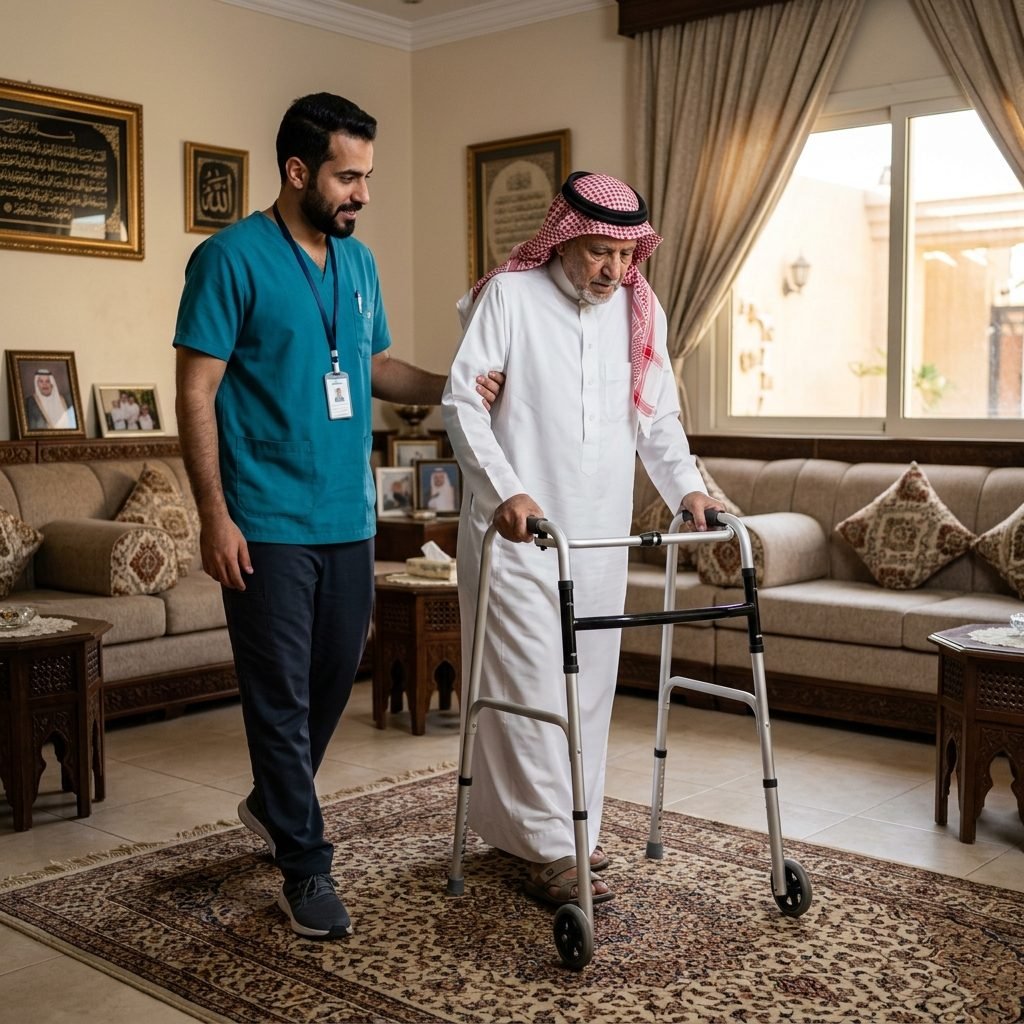
Geriatric Physical Therapy
Balance training, strengthening, and fall prevention for seniors in Al Mohammadiyah.
Service Details ←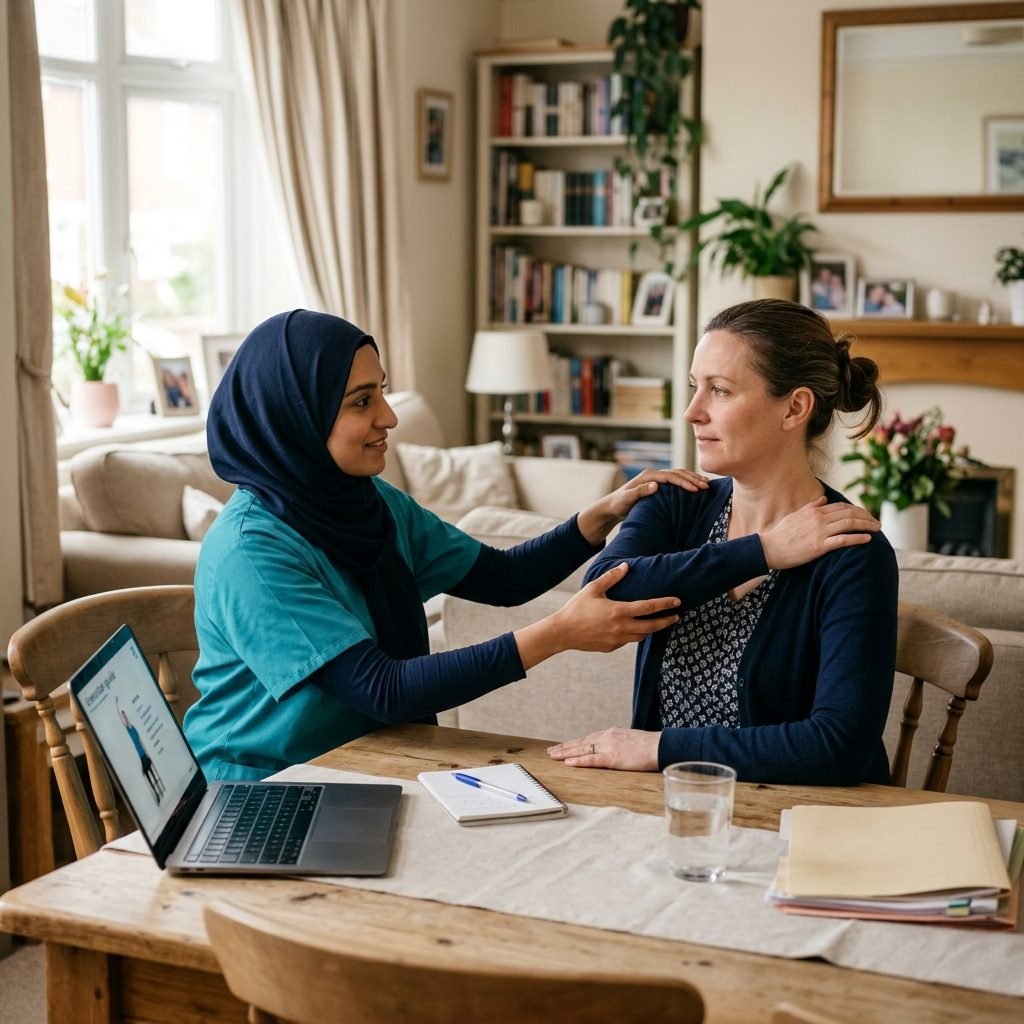
Female Physiotherapist
Licensed female therapists providing home care for women in Al Mohammadiyah.
Service Details ←