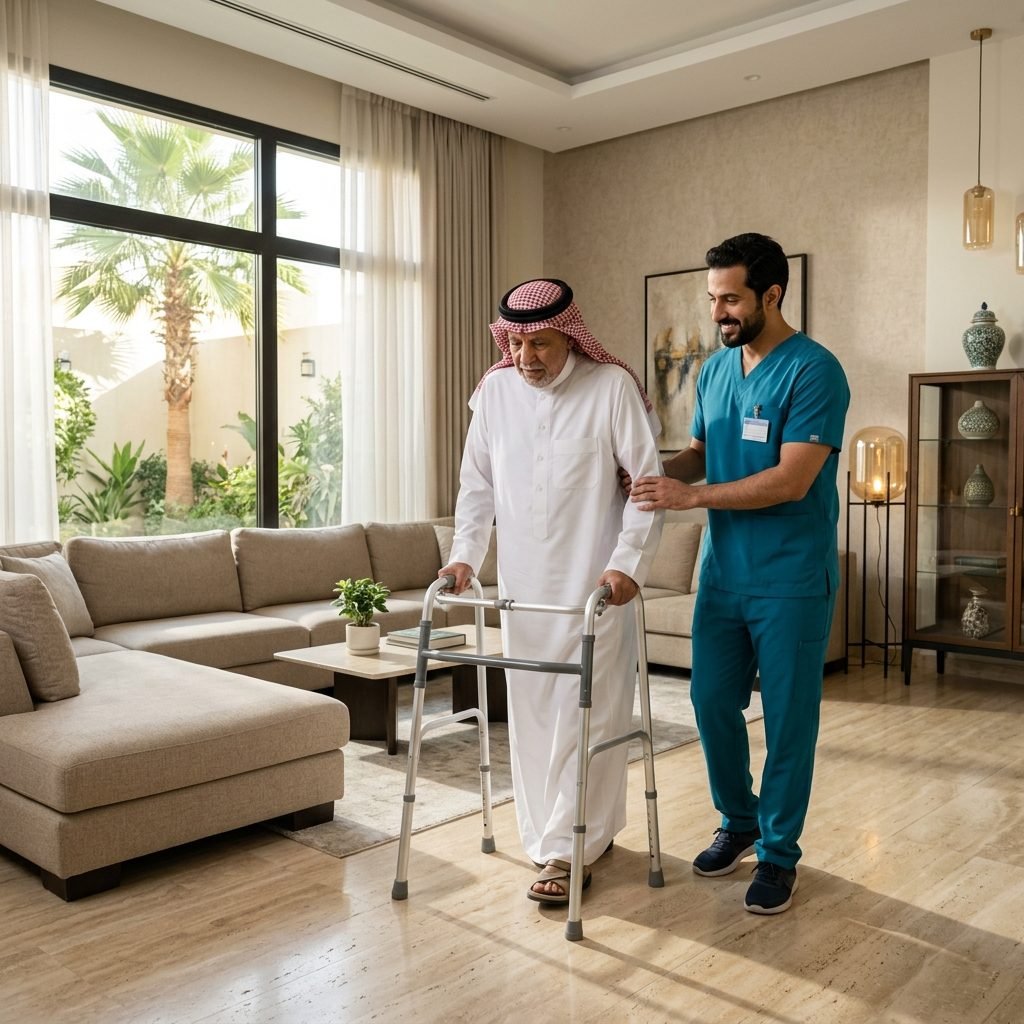
Having access to comprehensive, clinical physical therapy at home is crucial for maintaining rehabilitation progress, especially in busy neighborhoods. Al-Safa and Al Mohammadiyah districts in Jeddah present unique local mobility challenges due to high population density and traffic. At Bidaya Center, we deliver high-quality home physiotherapy and movement rehabilitation services directly to your doorstep, conforming to the clinical guidelines of the Saudi Commission for Health Specialties. We eliminate the stress of travel, traffic, and parking. We respect cultural privacy by providing certified male therapists for male patients and female therapists for female patients.
Our clinical approach in Al Mohammadiyah starts with a detailed physical and environmental safety assessment to eliminate fall hazards in the home. We bring all necessary portable, sterilized equipment to deliver a clinical standard of care comparable to external clinics. The therapist establishes a tailored milestone tracking plan to monitor muscle strength, balance, and joint range of motion (ROM) progression over time.
Why families in Al Mohammadiyah choose Bidaya for home physiotherapy
- ✅ Licensed male & female therapists — full privacy, in your own home in Al Mohammadiyah.
- ✅ Fully in-home visits across Al Mohammadiyah — no travel or traffic.
- ✅ A personalized rehab plan built after a thorough in-home assessment.
- ✅ Continuous follow-up and direct contact with your therapist throughout.
- ✅ Fast response — arrange your visit by a quick call or WhatsApp message.
We also serve nearby areas: Al Andalus · Al Basateen · Al Bawadi
* The treatment plan and expected outcomes are determined by a medical and functional assessment of each individual case.
What Integrated Home Physiotherapy Means and Why It Matters for Al Mohammadiyah Residents
Integrated home physiotherapy is a complete rehabilitation service delivered inside the patient's own home rather than at a clinic. A licensed therapist comes to the patient's room carrying an assessment and treatment plan along with portable equipment, and works within the very environment where the person actually lives day to day. The word "integrated" here is not a slogan: a single session is never just a passing muscle exercise. It brings together movement and functional assessment, hands-on manual therapy, gait and balance retraining, pain management, home-environment adaptation, and family education, all under one functional goal that belongs to this specific patient.
This service holds particular value for the residents of Al Mohammadiyah in northern Jeddah. It is a calm residential district characterised by villas and family apartment buildings and its proximity to the coastline, home to a large share of families and older adults. Many of these households find that transporting a patient, someone recovering from surgery, living with the effects of a stroke, or an elderly relative with poor balance, back and forth to a clinic several times a week is a genuine burden on both the patient and their companions, especially during the heat of the day and heavy traffic. Home care removes that burden from the equation: the patient stays in familiar surroundings while the expertise comes to the door.
More important than convenience is that the home itself is the most authentic treatment ground. When a patient practises rising from their own bed, entering their own bathroom, and climbing their own stairs, the skill transfers directly into real life with no gap between the clinic and daily living. We emphasise that the nature of the plan and the expected degree of progress are determined only after a careful clinical and functional assessment of each individual case, and we make no promises of a complete cure. We have both male and female licensed therapists available, with full respect for the privacy of the home and the family.
Symptoms and Signs That Signal It Is Time to Begin
It is not always obvious when a "minor mobility issue" turns into something that needs structured rehabilitation. The following are indicators for which we advise Al Mohammadiyah residents to request an early home assessment:
- Declining independent mobility: difficulty rising from a chair or bed, or an increasing reliance on walls and furniture to move around the house.
- Repeated stumbling or falls, even without injury, or a visible fear of walking that has begun to limit the person's activity and confine them to their room.
- Chronic pain in the back, knee, or shoulder that disrupts sleep, walking, or daily tasks and does not respond to rest alone.
- Weakness or stiffness after a long period in bed following surgery, illness, or hospitalisation, with a clear loss of muscle mass and fitness.
- Restricted joint range of motion after a fracture, dislocation, or operation, or swelling and stiffness preventing a joint from fully bending or straightening.
- Neurological changes such as weakness on one side of the body, disturbed balance, or slow, heavy movement after a health event.
- Noticeable delay in a child's motor development compared with peers in sitting, crawling, standing, or walking.
The appearance of one or more of these signs does not necessarily mean a serious condition, but it is a signal that an early functional assessment can save time and effort and prevent the problem from worsening. Starting early is often easier and safer than waiting until the body loses further capacity.
Conditions and Groups That Benefit
The strength of integrated home physiotherapy lies in the breadth of its umbrella. It is not a service for a single group, but a flexible framework tailored to need. Among those who benefit most in Al Mohammadiyah:
- Older adults: to strengthen muscles, improve balance, prevent falls, and preserve as much independence as possible in walking and self-care.
- Post-surgical patients: knee, hip, spine, and shoulder operations, where early home rehabilitation begins as soon as medically cleared to restore movement safely.
- Post-stroke and neurological injury cases: within a programme that gradually retrains movement, balance, and daily function.
- People with chronic spinal and joint pain: neck and back pain, disc problems, osteoarthritis, and soft-tissue injuries.
- Patients with chronic illnesses who experience general weakness and deconditioning from inactivity and need a safe, graded programme.
- Children with motor delay or developmental conditions who benefit from training in their familiar environment with family involvement.
- Bed-bound or mobility-limited patients who are hard to transport, to prevent complications of prolonged bed rest such as stiffness, pressure sores, and declining respiratory fitness.
Across all of these groups the rule holds constant: there is no ready-made plan, only a plan built on assessment findings, the patient's goals, and the circumstances of their home.
Goals of the Rehabilitation Programme
We frame every programme's goals in realistic, measurable functional language, not in vague promises. The general goals we usually work toward are:
- Restoring functional independence in daily activities: rising, walking around the house, using the bathroom, dressing, and moving safely between positions.
- Relieving and controlling pain through considered therapeutic methods, and gradually reducing reliance on painkillers where appropriate and in coordination with the physician.
- Improving muscle strength and flexibility and joint range of motion to ease task performance without strain or faulty compensation.
- Enhancing balance and stability and lowering fall risk, a central goal for older adults and cases of impaired balance.
- Retraining gait into a sound pattern, with or without an appropriate assistive device when needed.
- Preventing complications linked to inactivity and prolonged bed rest, and maintaining overall fitness.
- Empowering the patient and family through a clear home programme that makes them active partners in progress between sessions.
We review these goals periodically and adjust them according to each case's response; expected progress depends on many individual factors that emerge during follow-up and cannot be guaranteed in advance.
Stages and Pathway of the Home Sessions
We organise the therapeutic journey into a clear pathway that begins with understanding before intervention:
- Stage one — comprehensive assessment: at the first visit the therapist takes a health history and examines strength, flexibility, balance, and gait, together with a functional assessment of what the patient can and cannot actually do at home, plus a look at the safety of the surrounding environment.
- Stage two — building the plan and goals: we set short- and long-term goals jointly with the patient and family, and define an initial number of sessions and their weekly frequency.
- Stage three — active therapeutic intervention: regular sessions combining manual therapy, targeted therapeutic exercise, balance and gait training, and pain-control methods, with a measured progression in intensity.
- Stage four — functional progression: transferring acquired skills into real-life tasks around the home step by step, safely increasing the challenge as ability improves.
- Stage five — reassessment and follow-up: periodic measurement of progress against goals, adjustment of the plan, then a maintenance programme to preserve gains and reduce the risk of relapse.
The number of sessions and the programme's duration are not a fixed figure; some cases need a short, intensive course and others a longer follow-up, determined by assessment and actual response.
The Role of the Family and Caregiver
In home care the family is not a spectator but an integral part of the treatment team, and their daily presence is what turns two or three sessions a week into continuous progress. We therefore make a point of training the caregiver in:
- Safe assistance with movement and transfers between bed, chair, and bathroom without harming the patient or straining the caregiver's own back.
- Supervising the prescribed home exercises between sessions, correcting simple technique, and keeping to the required repetitions.
- Noticing and recording important signs, such as increased pain or swelling or any sudden change in ability, and reporting them to the team.
- Providing psychological encouragement and moral support, since the patient's emotional state directly affects commitment and improvement.
We always balance family involvement with protecting the family's own energy; an exhausted caregiver cannot sustain support, so we guide them toward approaches that safeguard their physical and mental wellbeing too.
Home Safety and Prevention Tips
A large part of the success of home therapy begins with making the home itself a safe environment that supports movement. We recommend the following to Al Mohammadiyah families:
- Clear the walking paths of cables and excess furniture, and secure or remove rug edges to prevent tripping.
- Improve lighting in hallways, bathrooms, and on stairs, with a soft night light for anyone who wakes during the night.
- Equip the bathroom with fixed grab bars, a non-slip mat, and a shower chair when needed, as it is one of the most common places for falls.
- Choose closed, non-slip indoor footwear rather than open slippers or walking in socks on a smooth floor.
- Keep frequently used items within reach to avoid excessive bending or reaching to high places.
- Respect effort limits, do not exceed the prescribed exercises, stop at sharp pain or dizziness, and inform the therapist.
- Stay hydrated and add frequent light movement for those who spend long periods sitting or lying down, to reduce stiffness and the complications of inactivity.
These simple measures lower the risk of home accidents and create a safe foundation on which the rehabilitation programme can build its progress.
Frequently Asked Questions (FAQ)
Is home physiotherapy as effective as clinic sessions?
For many cases, yes, and it can even be superior on the functional side because training takes place in the real environment the patient uses every day. The licensed therapist brings the necessary portable equipment; the difference is not in quality but in where the care is delivered and how well that suits each case.
How many sessions will I need and how long will it take?
There is no single number. Some cases need a short, intensive course and others a longer follow-up. This is determined after the first assessment based on the condition, goals, and response, and is reviewed periodically as progress is made.
Are female therapists available for female patients?
Yes, we have both male and female licensed therapists, and the therapist's gender can be arranged to suit the comfort of the patient and family, with full respect for the privacy of the home at every visit.
What should be prepared at home before the first visit?
Usually it is enough to have a comfortable space for the patient to move in, clothing suitable for movement, and any medical reports or imaging if available. The therapist brings their own equipment and will advise on any additional arrangements after the assessment.
Is this service suitable for older adults and bed-bound patients?
Yes, and they are among those who benefit most, since it spares them the effort of travelling and allows safe, graded rehabilitation focused on balance, fall prevention, and preventing the complications of inactivity within their familiar surroundings.
To book a home assessment visit in Al Mohammadiyah, Jeddah, contact Bidaya Center by phone or WhatsApp by clicking Call Now, and our team will help you arrange a suitable appointment and answer any questions before the first visit.
Important Home Visit Details:
- ✓Setup: Please clear a 2x2m space in the room for safety.
- ✓Clothing: Wear loose, comfortable clothes for easy movement.
- ✓Therapist Parity: Male therapists for males, females for females.
- ✓Medical Reports: Keep your MRI or doctor reports ready for evaluation.
Rehabilitation & Services in Al Mohammadiyah
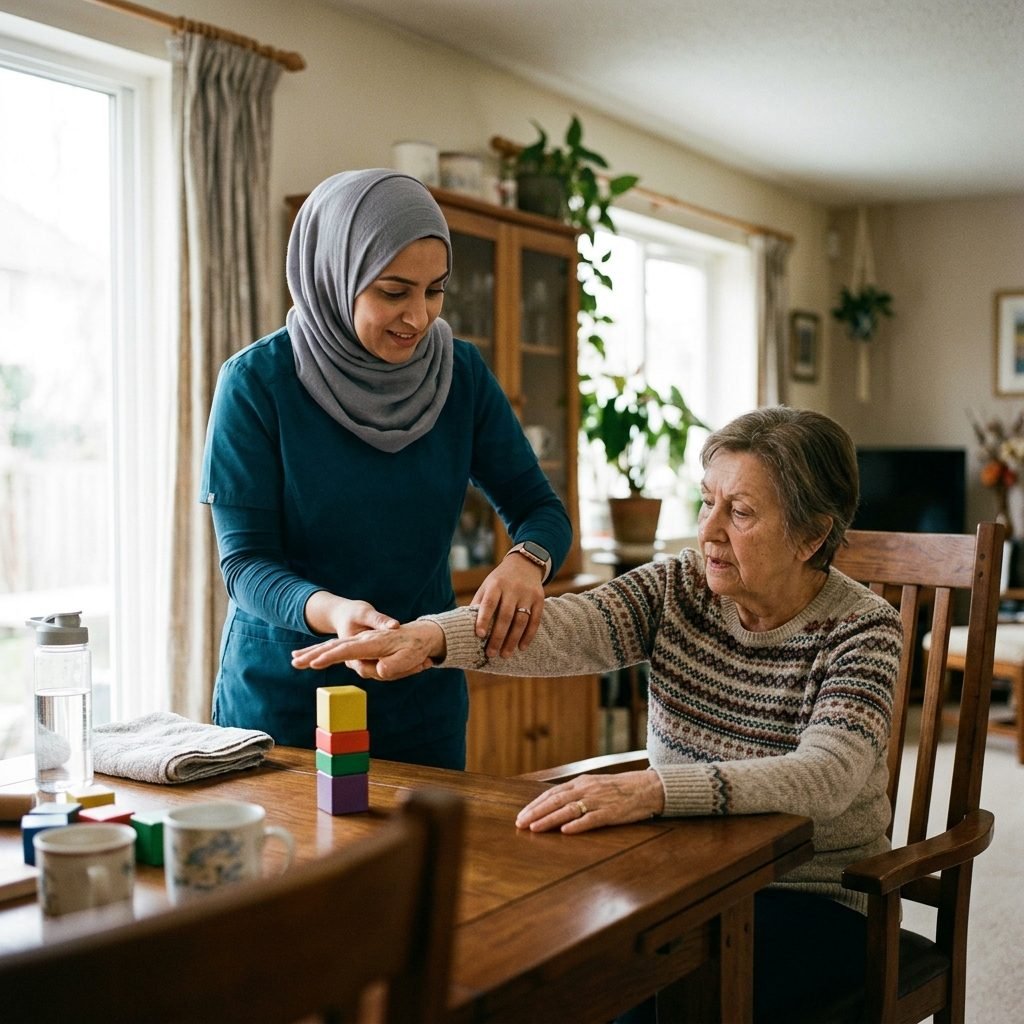
Stroke Rehabilitation
Advanced motor and neurological stroke recovery at home in Al Mohammadiyah.
Service Details ←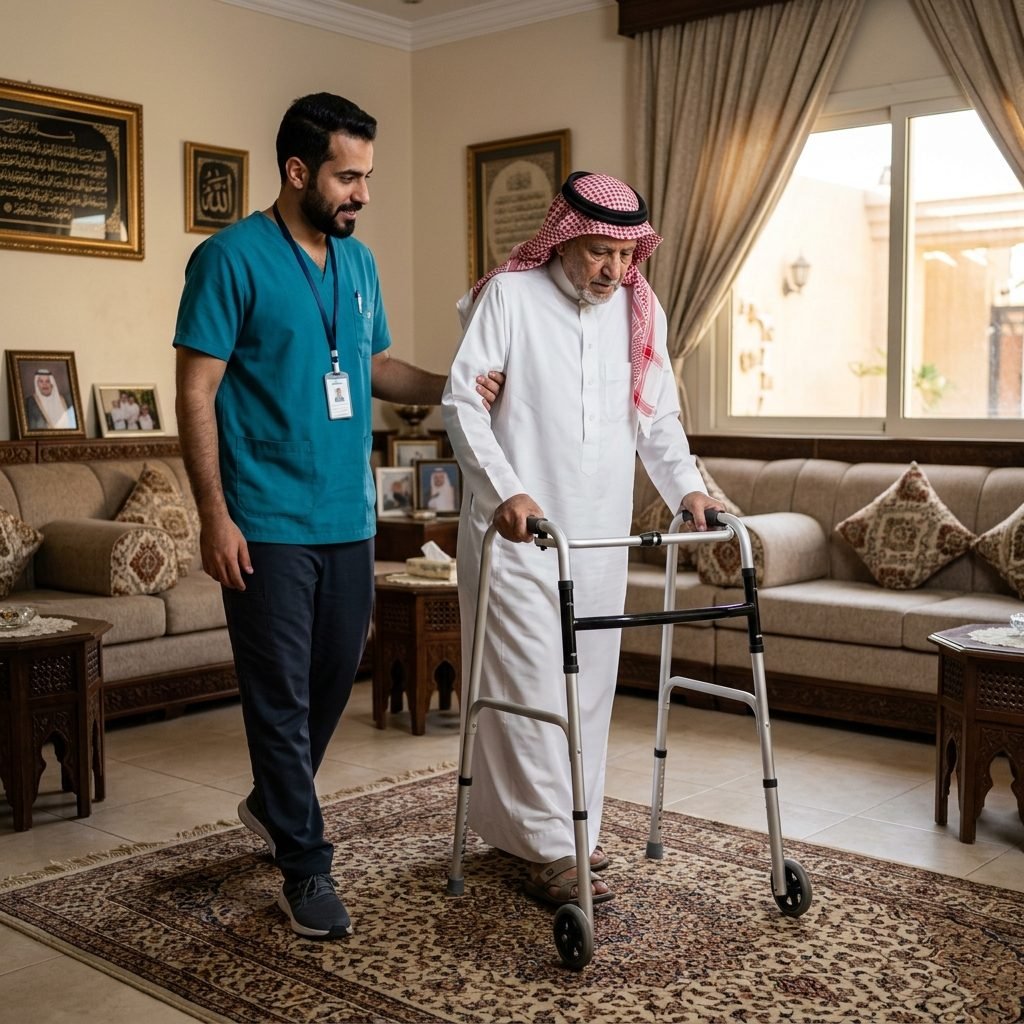
Geriatric Physical Therapy
Balance training, strengthening, and fall prevention for seniors in Al Mohammadiyah.
Service Details ←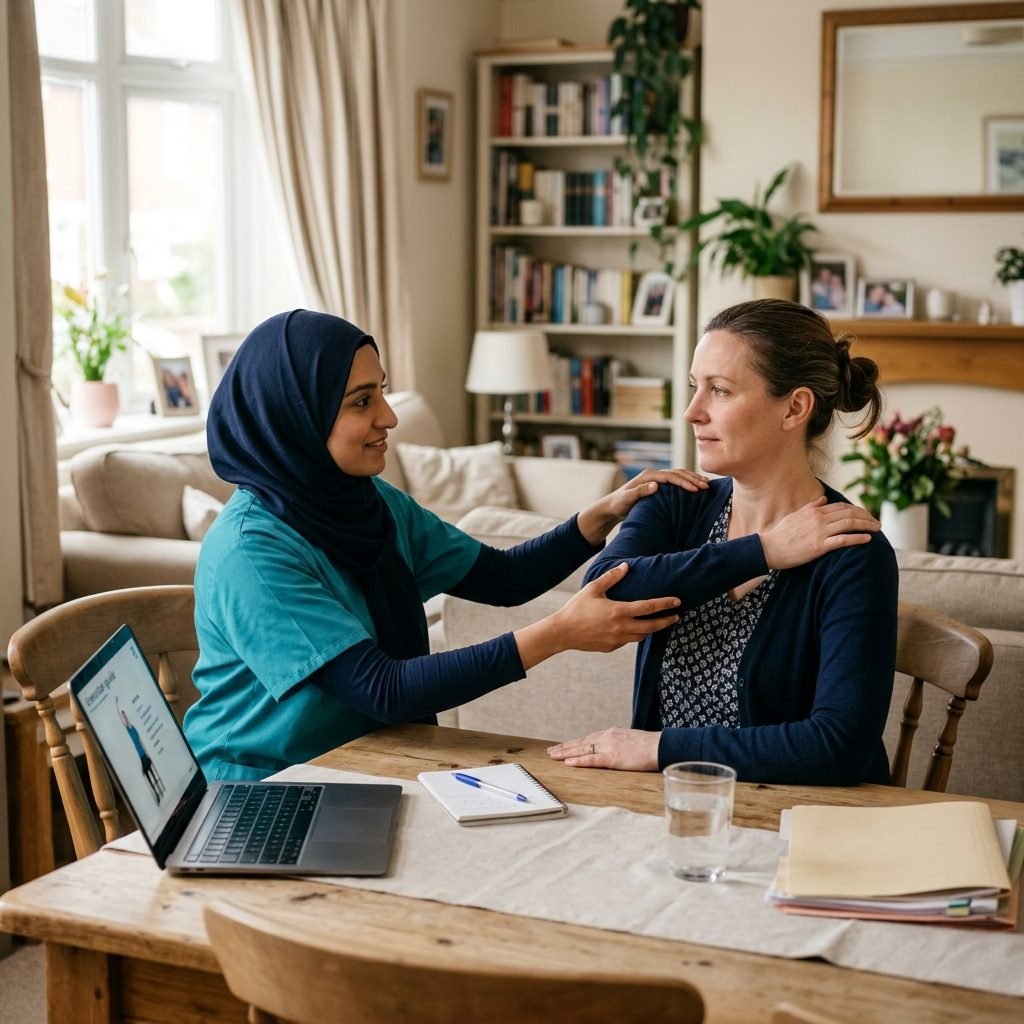
Female Physiotherapist
Licensed female therapists providing home care for women in Al Mohammadiyah.
Service Details ←