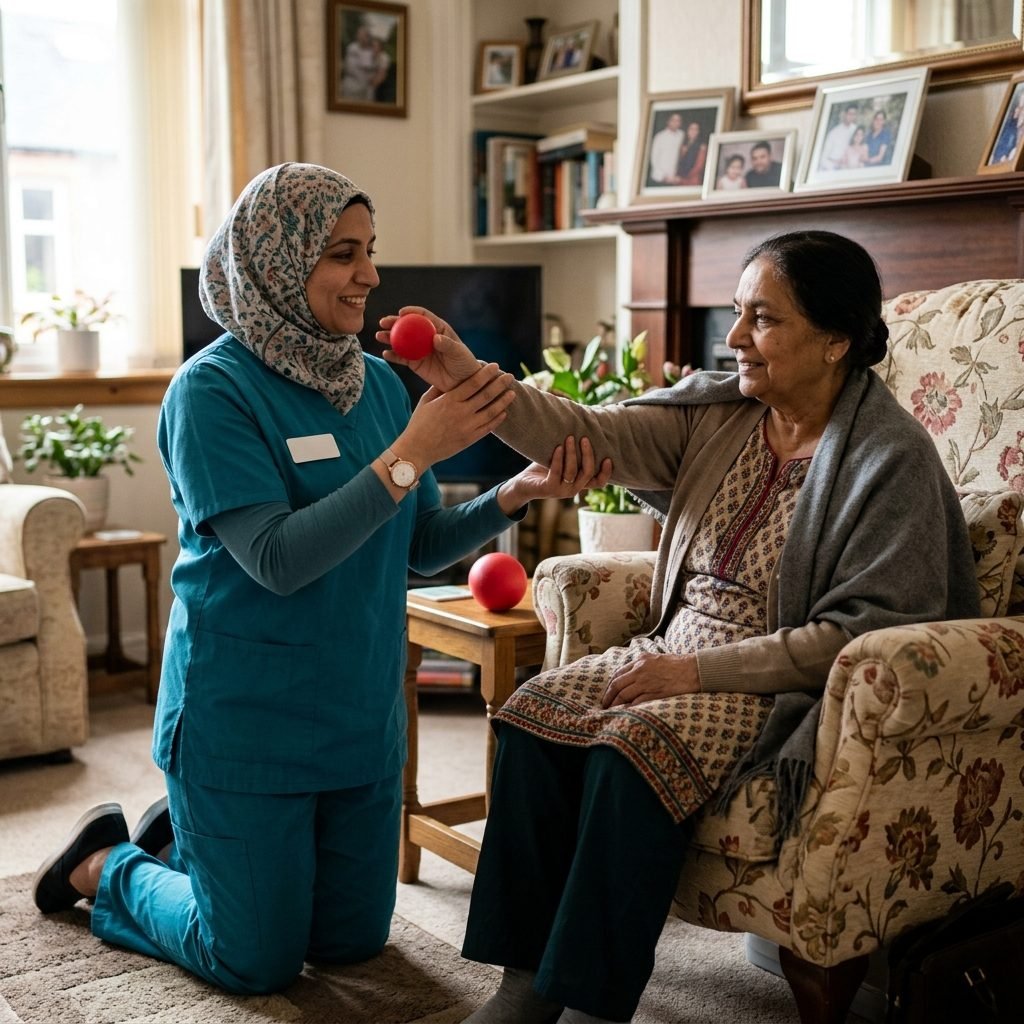
Having access to comprehensive, clinical physical therapy at home is crucial for maintaining rehabilitation progress, especially in busy neighborhoods. Al-Safa and Al Mohammadiyah districts in Jeddah present unique local mobility challenges due to high population density and traffic. At Bidaya Center, we deliver high-quality home physiotherapy and movement rehabilitation services directly to your doorstep, conforming to the clinical guidelines of the Saudi Commission for Health Specialties. We eliminate the stress of travel, traffic, and parking. We respect cultural privacy by providing certified male therapists for male patients and female therapists for female patients.
Our clinical approach in Al Mohammadiyah starts with a detailed physical and environmental safety assessment to eliminate fall hazards in the home. We bring all necessary portable, sterilized equipment to deliver a clinical standard of care comparable to external clinics. The therapist establishes a tailored milestone tracking plan to monitor muscle strength, balance, and joint range of motion (ROM) progression over time.
Why families in Al Mohammadiyah choose Bidaya for home physiotherapy
- ✅ Licensed male & female therapists — full privacy, in your own home in Al Mohammadiyah.
- ✅ Fully in-home visits across Al Mohammadiyah — no travel or traffic.
- ✅ A personalized rehab plan built after a thorough in-home assessment.
- ✅ Continuous follow-up and direct contact with your therapist throughout.
- ✅ Fast response — arrange your visit by a quick call or WhatsApp message.
We also serve nearby areas: Al Andalus · Al Basateen · Al Bawadi
* The treatment plan and expected outcomes are determined by a medical and functional assessment of each individual case.
What home-based neurological physiotherapy means for Al Mohammadiyah residents
Neurological physiotherapy is a specialised branch that retrains the nervous and muscular systems after an injury or illness affecting the brain, spinal cord, or peripheral nerves. It is built on the principle of neuroplasticity - the brain's ability to reorganise its pathways and relearn movement patterns through guided repetition and carefully dosed stimulation. When these sessions take place inside the home, the training becomes tied directly to the environment the patient actually lives in: the same sofa they rise from, the same hallway they cross to the kitchen, the same interior stairs they climb every day.
Al Mohammadiyah, in northern Jeddah, is a relatively calm residential district that mixes villas, apartment buildings, and family flats, and many of its homes are multi-storey with internal staircases. This character makes repeated clinic trips exhausting for a patient with poor balance or limited mobility, especially in Jeddah's coastal heat and humidity, which tire the patient during transfers. Home care here is not a luxury but a practical solution: it spares the family the burden of transport, lowers the risk of falls while getting in and out, and lets the therapist see the real obstacles inside the house and address them where they occur.
At Bidaya Center we design the neurological physiotherapy programme to begin with a precise clinical and functional assessment, then build on realistic, measurable goals. We make no promises of a cure; instead we offer a clear plan whose course and expected outcomes are determined by each patient's individual case, and we recalibrate it whenever the person progresses or their needs change.
Symptoms and signs that call for starting
Neurological conditions vary widely, but there are shared indicators that a patient needs early rehabilitation. The sooner rehabilitation begins after the condition is medically stable, the better the chances of restoring function. Among the signs that should not be ignored:
- Weakness or numbness in one limb or across an entire side of the body, with difficulty lifting the foot or closing the hand.
- Balance disturbances and recurrent dizziness, with a tendency to fall or stumble when turning or standing up.
- Muscle stiffness or spasticity that makes moving a joint harder, or tremor that interferes with fine tasks like writing or holding a cup.
- A change in walking pattern: short steps, dragging of the foot, or a sudden "freezing" in one spot.
- Difficulty coordinating both sides of the body, or a noticeable slowness in everyday movements.
- General loss of endurance after a long period of bed rest in hospital or at home.
Having one or more of these signs does not mean a specific diagnosis, but it does warrant a specialist assessment. A home evaluation lets the therapist observe the patient in their natural setting, without the tension of a clinic, so the real difficulties emerge more clearly.
Conditions and groups who benefit
Neurological physiotherapy covers a broad spectrum of diagnoses that share an impact on motor control, balance, and function. Groups who benefit from home sessions in Al Mohammadiyah include:
- Patients recovering from a stroke, and those with weakness on one side of the body.
- People with spinal cord injuries or traumatic head injuries once their condition has stabilised.
- Patients with progressive neurological diseases such as Parkinson's and multiple sclerosis, within a plan aimed at preserving independence for as long as possible.
- Those with peripheral neuropathy or muscle weakness resulting from neuromuscular disorders.
- Older adults whose balance and mobility have declined after an illness or a fall.
- Patients after brain or nerve surgery who need a gradual rebuilding of motor abilities.
Each group has entirely different needs; what suits a Parkinson's patient differs from a stroke patient's plan, which is why every programme is built individually after assessment. We have both licensed female and male therapists, with full respect for the privacy of the patient and the family inside the home.
Goals of the rehabilitation programme
The core aim is not merely to strengthen a muscle, but to restore the patient's ability to do what matters to them in daily life with the greatest possible independence and safety. We frame the goals together with the patient and family so they connect to real life, including:
- Improving motor control and retraining correct movement patterns instead of faulty compensatory ones.
- Enhancing balance in standing, sitting, and the transitions between them to reduce the risk of falls at home.
- Reducing spasticity and stiffness and maintaining joint range of motion to prevent contractures.
- Strengthening weakened muscles and gradually building endurance.
- Retraining walking, improving its quality and safety, and the correct use of assistive devices when needed.
- Raising independence in daily activities: getting out of bed, dressing, using the bathroom, moving between rooms.
These goals are measurable, and we review their progress regularly. We stress that the degree and speed of improvement differ from person to person and are determined by the nature of the injury, the general condition, and adherence to the programme, without any advance guarantee of a result.
Stages and pathway of the home sessions
We organise the therapeutic journey into successive stages that ensure gradual, safe progress, with the flexibility to adjust the pathway according to the patient's response:
- Stage one - comprehensive assessment: a first visit in which the therapist examines muscle strength, balance, muscle tone, range of motion, and walking, while reviewing medical reports and understanding the patient's goals and the layout of their Al Mohammadiyah home.
- Stage two - building the foundation: exercises to activate muscles, range-of-motion and stretching work, and postural training to restore body awareness and early control.
- Stage three - functional training: transferring the exercises into real tasks inside the house, such as rising from a chair, transferring to the bed, and balancing while standing at the sink.
- Stage four - walking and coordination: retraining gait on the home's actual flooring, negotiating hallways and interior stairs, and improving coordination and confidence in movement.
- Stage five - independence and follow-up: consolidating gains, a daily home programme the patient practises between sessions, and periodic reassessment to fine-tune the goals.
The length of each stage and the number of sessions depend on the assessment and the response; stages may overlap or some steps may be repeated according to what best serves the patient's progress.
The role of the family and caregiver
In home-based neurological rehabilitation the family is an essential partner, not a bystander. The time the patient spends with the therapist is limited, while the rest of the day is spent with loved ones, so their daily support makes a large difference to outcomes. We take care to train the caregiver in:
- The correct way to support the patient during standing and transfers, without straining the caregiver's back or risking a fall.
- Supervising the simple home exercises prescribed between sessions and encouraging adherence to them.
- Noticing warning signs such as increasing spasticity, pain, or unusual fatigue, and reporting them to the team.
- Creating a motivating environment that encourages the patient to use the affected limb rather than relying entirely on the sound one.
We also support the family emotionally; the neurological path can be long and fluctuating, and patience with realistic encouragement is part of the treatment. We always balance motivating the patient toward self-reliance with providing safe assistance when it is genuinely needed.
Home safety and prevention tips
A safe home is half the success of rehabilitation, especially for a patient with poor balance. During the first visit we inspect the home environment and recommend practical modifications suited to the multi-storey nature of Al Mohammadiyah homes:
- Remove sliding rugs and exposed wires from movement paths, and secure rug edges well.
- Provide adequate lighting in hallways, stairs, and the bathroom, particularly on night-time trips to the toilet.
- Install grab bars beside the toilet and in the bathroom, and use a non-slip mat.
- Arrange daily-use items within easy reach to avoid dangerous bending or reaching.
- Pay attention to interior stairs by fixing a firm handrail on both sides and marking the edges of the steps clearly.
- Wear firm, closed footwear with a non-slip sole instead of loose slippers.
We also stress the importance of drinking enough water in Jeddah's hot climate, not rushing to move when feeling dizzy, and keeping to the medication schedule prescribed by the doctor. These small details reduce accidents and support continued progress.
Frequently asked questions (FAQ)
Can home therapy replace follow-up with the specialist doctor?
No; neurological physiotherapy is a complementary part of the care team. We work in parallel with your doctor and do not change your medication or medical plan; instead we focus on the movement and functional side and communicate about any important developments.
How many sessions will the patient need?
There is no fixed number; it is determined after the first assessment based on the type and severity of the condition, the patient's goals, and their response. We set an initial plan and review it regularly, and sessions may increase or decrease depending on progress.
Is a female therapist available for female patients in Al Mohammadiyah?
Yes, we have both licensed male and female therapists, and the visit can be arranged to suit the family's preference with full respect for privacy inside the home.
When is it best to start rehabilitation after a stroke or injury?
It is generally advised to begin early once the condition is medically stable and with the doctor's approval, because the early phase is often fertile for recovery, but rehabilitation remains beneficial in later stages too, to improve function and prevent complications.
Do you bring the necessary equipment to the home?
The therapist brings the essential tools suited to neurological rehabilitation sessions, and we rely heavily on exercises that use the home's own furniture to make the training realistic. If the patient needs particular assistive devices, we advise you on them and explain the correct way to use them.
To book a home visit for neurological physiotherapy in Al Mohammadiyah, Jeddah, or to enquire and have a family member's condition assessed, contact Bidaya Center by phone or WhatsApp by clicking Call Now, and our team will be glad to help you and arrange a suitable appointment.
Important Home Visit Details:
- ✓Setup: Please clear a 2x2m space in the room for safety.
- ✓Clothing: Wear loose, comfortable clothes for easy movement.
- ✓Therapist Parity: Male therapists for males, females for females.
- ✓Medical Reports: Keep your MRI or doctor reports ready for evaluation.
Rehabilitation & Services in Al Mohammadiyah
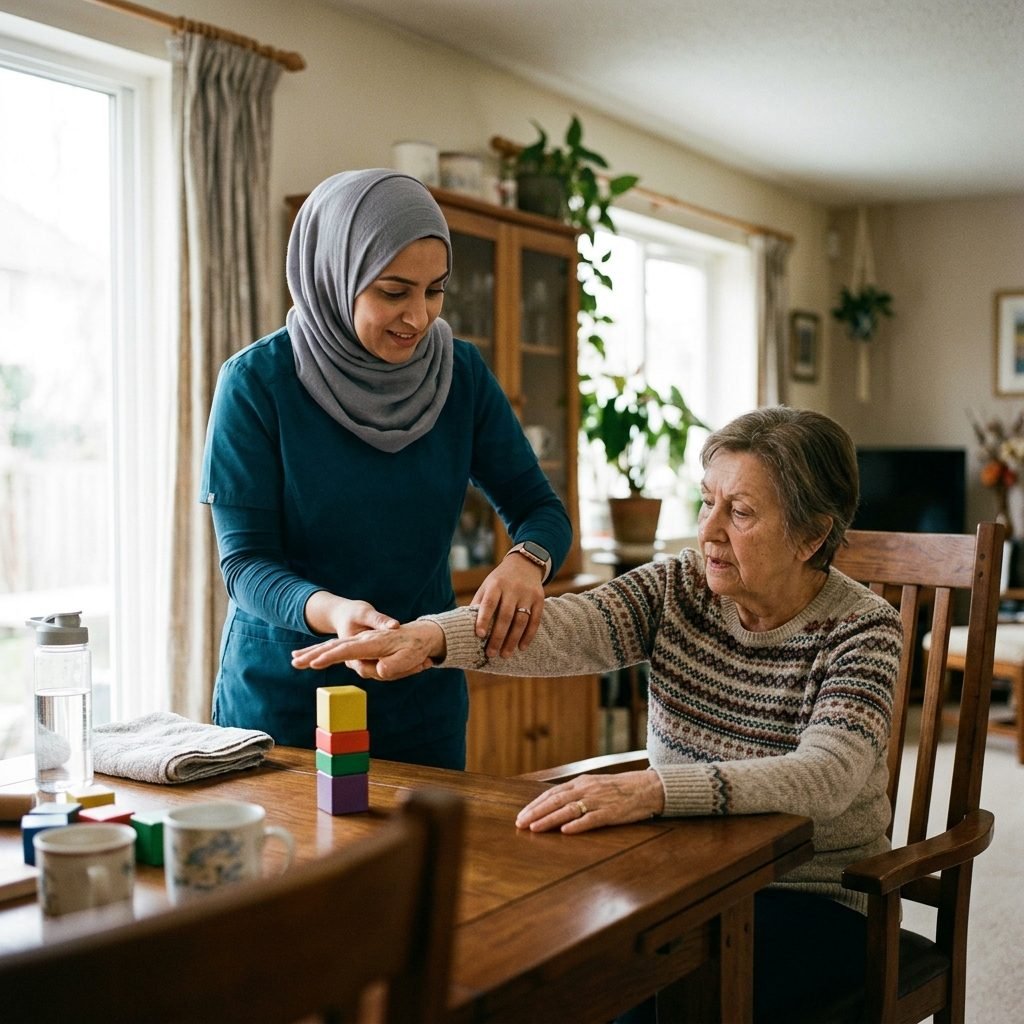
Stroke Rehabilitation
Advanced motor and neurological stroke recovery at home in Al Mohammadiyah.
Service Details ←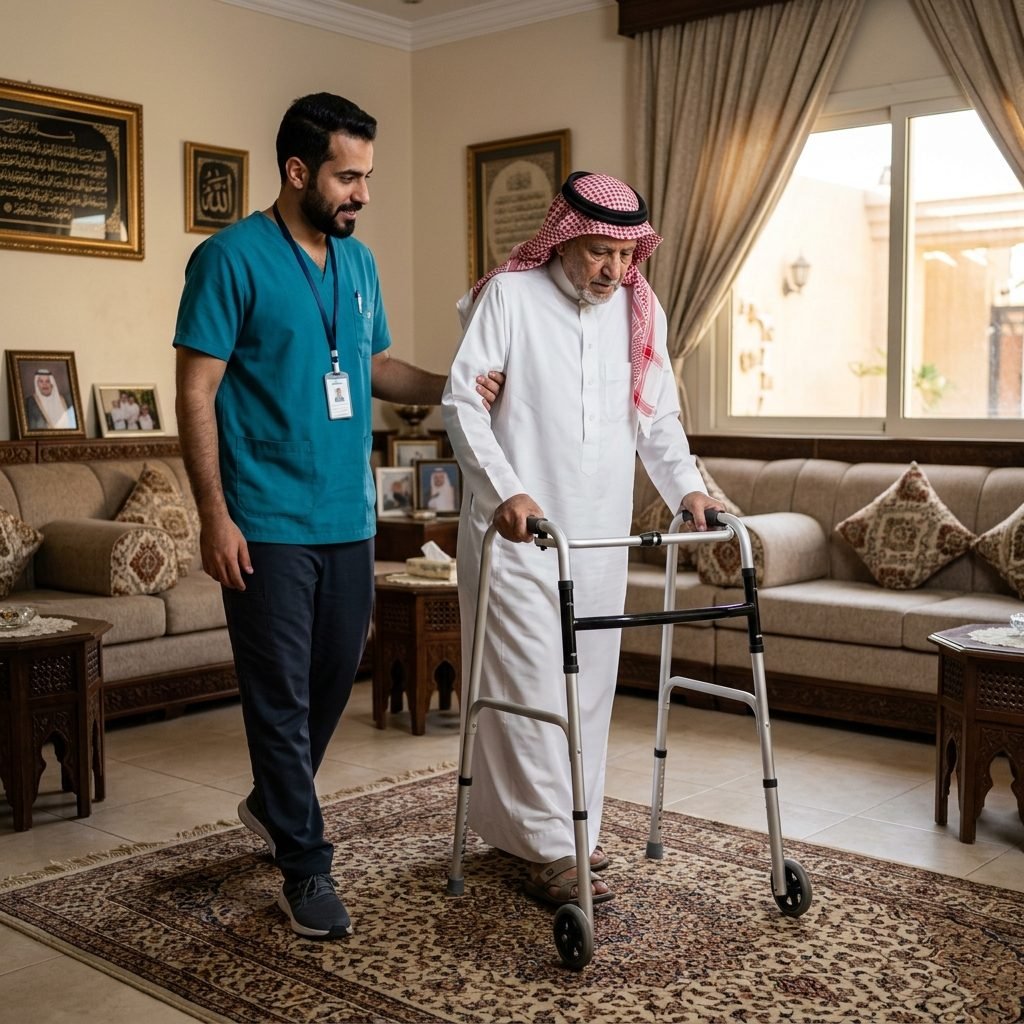
Geriatric Physical Therapy
Balance training, strengthening, and fall prevention for seniors in Al Mohammadiyah.
Service Details ←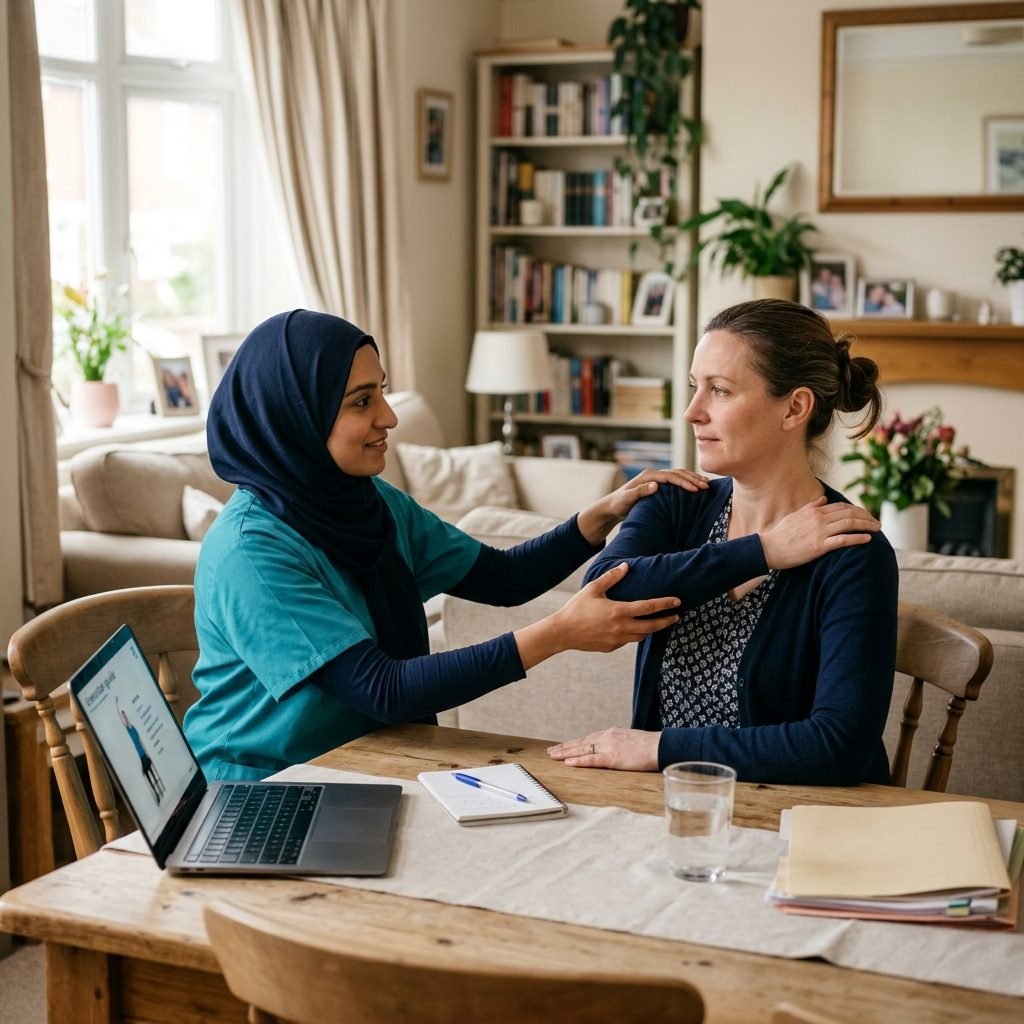
Female Physiotherapist
Licensed female therapists providing home care for women in Al Mohammadiyah.
Service Details ←