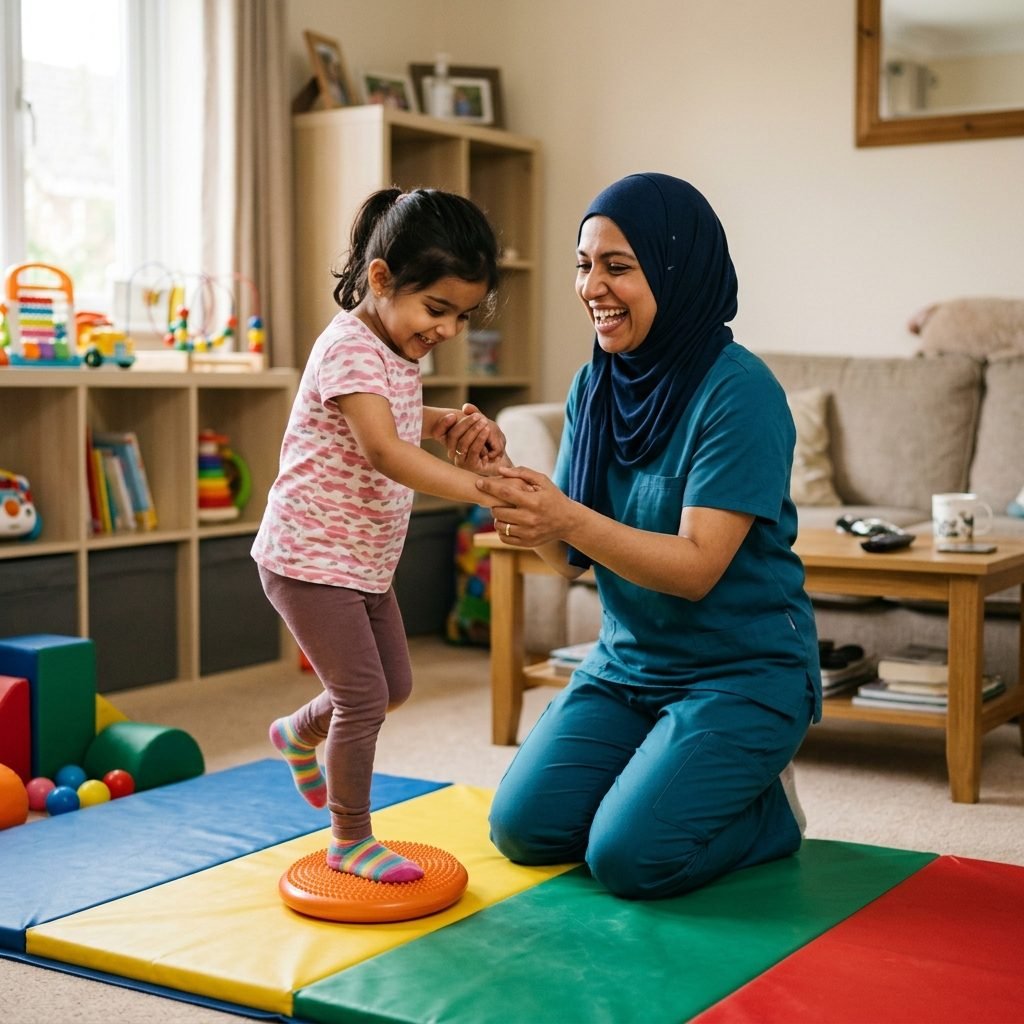
Having access to comprehensive, clinical physical therapy at home is crucial for maintaining rehabilitation progress, especially in busy neighborhoods. Al-Safa and Al Naeem districts in Jeddah present unique local mobility challenges due to high population density and traffic. At Bidaya Center, we deliver high-quality home physiotherapy and movement rehabilitation services directly to your doorstep, conforming to the clinical guidelines of the Saudi Commission for Health Specialties. We eliminate the stress of travel, traffic, and parking. We respect cultural privacy by providing certified male therapists for male patients and female therapists for female patients.
Our clinical approach in Al Naeem starts with a detailed physical and environmental safety assessment to eliminate fall hazards in the home. We bring all necessary portable, sterilized equipment to deliver a clinical standard of care comparable to external clinics. The therapist establishes a tailored milestone tracking plan to monitor muscle strength, balance, and joint range of motion (ROM) progression over time.
Why families in Al Naeem choose Bidaya for home physiotherapy
- ✅ Licensed male & female therapists — full privacy, in your own home in Al Naeem.
- ✅ Fully in-home visits across Al Naeem — no travel or traffic.
- ✅ A personalized rehab plan built after a thorough in-home assessment.
- ✅ Continuous follow-up and direct contact with your therapist throughout.
- ✅ Fast response — arrange your visit by a quick call or WhatsApp message.
We also serve nearby areas: Al Andalus · Al Basateen · Al Bawadi
* The treatment plan and expected outcomes are determined by a medical and functional assessment of each individual case.
Home-Based Cerebral Palsy Physiotherapy for Children and Why It Matters for Al Naeem Families
Cerebral palsy physiotherapy for children is a specialised, long-term rehabilitation program aimed at improving a child's movement control, posture, and balance when areas of the brain responsible for regulating muscles have been affected. Cerebral palsy is not a progressive disease that worsens over time; its brain origin is stable, but the way it shows in the muscles and joints can change as the child grows. This is precisely why early, consistent intervention makes a genuine difference to how independent a child can become. At Bidaya Center we deliver this therapy inside the family home in the Al Naeem neighborhood of Jeddah, so the child receives every session in a natural setting, surrounded by family, familiar toys, and everyday furniture.
Al Naeem is a relatively calm residential district in northern Jeddah, and many of its families have children in the early growth years. The residential nature of the area makes frequently transporting a child to clinics a daily burden on parents, especially when the child needs several sessions each week over many months. Home therapy removes that burden entirely: a licensed physiotherapist arrives at the door with the needed equipment, so the child avoids the strain of travel and waiting rooms, and sessions are not disrupted by traffic or distant appointments. More importantly, skills such as sitting, crawling, standing, and walking are best acquired in the very place where the child practises them every single day.
We work with Al Naeem families in full privacy, and both licensed male and female therapists are available so each family can choose what suits it. From the outset we make clear that every plan is built after a careful clinical and functional assessment of the child, and that expected outcomes depend on each individual case. We do not promise a complete cure or a guaranteed result; instead we commit to professional, gradual work that pursues the greatest possible improvement.
Signs and Symptoms That Signal It Is Time to Begin
Many families notice early signals before a formal diagnosis, and paying attention to them opens the door to intervention at a time when the brain is most adaptable. Signs that warrant seeing a specialist and beginning rehabilitation include:
- Marked stiffness in the limbs, or the opposite, such floppiness that holding the child feels like holding a limp, unsupported body.
- Noticeable delay in motor milestones: not controlling the head at the expected age, not sitting, not crawling, or not standing compared with peers.
- Using one side of the body more than the other, such as always reaching with one hand and neglecting the other, or crawling asymmetrically.
- Involuntary movements, tremors, or sudden changes in muscle tone with excitement or effort.
- Walking on tiptoes, scissoring of the legs, or difficulty straightening the knee or elbow.
- Difficulty chewing and swallowing, constant drooling, or weak control of the mouth muscles.
- The child stiffening when their position is changed or during dressing, with clear resistance to stretching a limb.
The presence of one or more of these signs is not a diagnosis on its own, but it is reason enough to request an assessment. The earlier rehabilitation begins, the wider the child's opportunity to build better movement patterns before faulty postures become entrenched and start to affect the joints.
Conditions and Groups That Benefit
The home cerebral palsy rehabilitation program in Al Naeem is designed to serve a broad range of children across different types and degrees of the condition:
- Spastic cerebral palsy in its forms: hemiplegia affecting one side, diplegia mainly involving the lower limbs, and quadriplegia involving all four limbs.
- Dyskinetic (involuntary-movement) type, where irregular movements and difficulty holding a position dominate.
- Ataxic type, associated with poor balance and coordination during movement and walking.
- Premature infants or those who experienced oxygen deprivation or complications around birth and now show motor delay.
- Children in the phase after tendon-lengthening or tone-reducing procedures, within a post-surgical rehabilitation plan.
- Children who use supportive devices such as splints, walkers, or chairs and need training to use them safely.
- Older children with cerebral palsy who aim to preserve range of movement and prevent postural deterioration as they grow.
Each of these groups has its own challenges, so we never treat cases with a single mould. The assessment establishes the child's current level of motor ability and builds realistic goals upon it.
Goals of the Rehabilitation Program
Success in cerebral palsy rehabilitation is not measured by a single yardstick, but by a set of functional goals shaped specifically for each child according to age, degree of the condition, and family priorities. Goals we commonly work toward include:
- Improving basic postural control: head stability, independent sitting, and transitioning between positions.
- Preserving joint range of motion and muscle flexibility to reduce the risk of contractures and deformities as the child grows.
- Regulating muscle tone as much as possible to ease voluntary movement and reduce spasticity that hampers the child.
- Strengthening the muscles supporting the trunk and pelvis to provide a stable base from which limb movement can launch.
- Developing practical transfer skills: crawling, supported standing, and walking with a suitable aid where feasible.
- Enhancing balance, coordination, and awareness of the body's position in space.
- Supporting independence in daily activities as far as the condition allows: dressing, eating, and safe movement within the home.
- Preventing secondary complications such as joint stiffness, pain from faulty postures, and skin problems caused by limited movement.
We recalibrate these goals periodically, because what suits a two-year-old differs from what a six-year-old needs. Transparency is part of our work: we explain to the family what is realistic within a given timeframe, without absolute promises.
Stages and Course of the Home Sessions
The home rehabilitation journey in Al Naeem follows an organised path that starts with understanding before intervention:
- Initial assessment: On the first visit the therapist conducts a thorough examination of muscle tone, joint range of motion, current motor skills, and postural patterns, while listening to the family's observations and priorities. The plan is born from this assessment.
- Setting the plan and goals: We agree with the family on short-term and longer-term goals, and determine the weekly session frequency suited to the child's condition and tolerance.
- Therapy sessions: These include stretching and lengthening exercises, targeted strengthening, training on postures and transitions, and movement activities often delivered as enjoyable play so the child engages without feeling forced.
- Functional training: We apply the skills to real-life situations inside the home, such as sitting on the sofa, rising from the floor, and moving between rooms.
- Follow-up and reassessment: At regular intervals we measure progress against the goals, adjust the exercises and their intensity, and review the need for supportive devices or their modification.
The course of sessions is not a straight line; we may speed up or slow down according to the child's response, growth, and any parallel medical interventions. Coordinating with the treating physician or other specialists following the child is a natural part of this path.
The Role of the Family and Caregiver
However long a weekly session lasts, it remains a limited number of hours in the child's week, whereas the family is present the whole time. For this reason, the success of cerebral palsy rehabilitation depends heavily on the involvement of parents and caregivers. Our role is not confined to treating the child; it extends to empowering the family:
- We train parents in simple, safe home exercises that can be woven into the daily routine without becoming a burden.
- We teach correct methods of carrying, transferring, and positioning that protect the caregiver's back and maintain the child's proper posture.
- We explain how to use splints and supportive devices, when to wear them, and the signs of discomfort that call for review.
- We help the family read their child's signals: when the child is tired, when a rest is needed, and how to present exercises as play.
- We support the family emotionally and realistically, because the rehabilitation journey is long and needs patience, and slow progress is still progress to build upon.
When the family becomes an aware partner in the program, the child's chances multiply, and every moment at home becomes an extension of the therapy session.
Home Safety and Prevention Tips
A well-prepared home environment protects the child and supports progress at the same time. We recommend that Al Naeem families adopt several practical habits:
- Prepare a safe floor space for movement, free of sharp edges and moveable furniture, covered with a firm, non-slip surface.
- If the child's movement is limited, change their position regularly to avoid joint stiffness and skin problems.
- Watch for repeated faulty postures, such as a constantly bent limb or the trunk leaning to one side, and gently correct them under the therapist's guidance.
- Keep splints and devices clean and intact, and inspect the skin after removal for redness or pressure marks.
- Stabilise supportive devices such as the walker or chair, and make sure the size still fits your child as they grow.
- Account for Jeddah's high heat: keep the child well hydrated during exercises and avoid exertion during the hottest parts of the day.
- Never push the child into an exercise that makes them cry in pain; acceptable fatigue is expected, but sharp pain is a signal to stop and review.
These measures do not replace specialised sessions, but they preserve the child's gains between visits and guard against avoidable complications.
Frequently Asked Questions (FAQ)
Can physiotherapy completely cure my child's cerebral palsy?
Cerebral palsy is a permanent condition in its brain origin; physiotherapy does not remove it, but it improves motor ability and independence and reduces complications. The extent of improvement differs from child to child and is determined after assessment, and we do not offer promises of a guaranteed result.
What is the right age to start cerebral palsy rehabilitation?
The earlier the better, because a child's brain is more adaptable in the first years. That said, older children also benefit from rehabilitation in preserving range of movement and preventing the deterioration of posture.
Are home sessions as effective as clinic sessions?
Yes, and the home offers an added advantage: the child practises skills used every day in their real environment, and tends to be more relaxed and cooperative among family and familiar toys.
How many sessions does my child need each week?
This is determined after assessment according to the degree of the condition, the plan's goals, and the child's tolerance. Some children begin with two or more sessions a week, and the number is then recalibrated as the program advances.
Are female therapists available to treat my daughter with privacy respected?
Yes, we have both licensed male and female therapists, and the family chooses what suits it, with full commitment to privacy inside the home.
To book a home visit in Al Naeem or to ask about cerebral palsy rehabilitation for your child, contact Bidaya Center by phone or WhatsApp by clicking Call Now, and our team will help arrange a suitable assessment appointment for your child.
Important Home Visit Details:
- ✓Setup: Please clear a 2x2m space in the room for safety.
- ✓Clothing: Wear loose, comfortable clothes for easy movement.
- ✓Therapist Parity: Male therapists for males, females for females.
- ✓Medical Reports: Keep your MRI or doctor reports ready for evaluation.
Rehabilitation & Services in Al Naeem
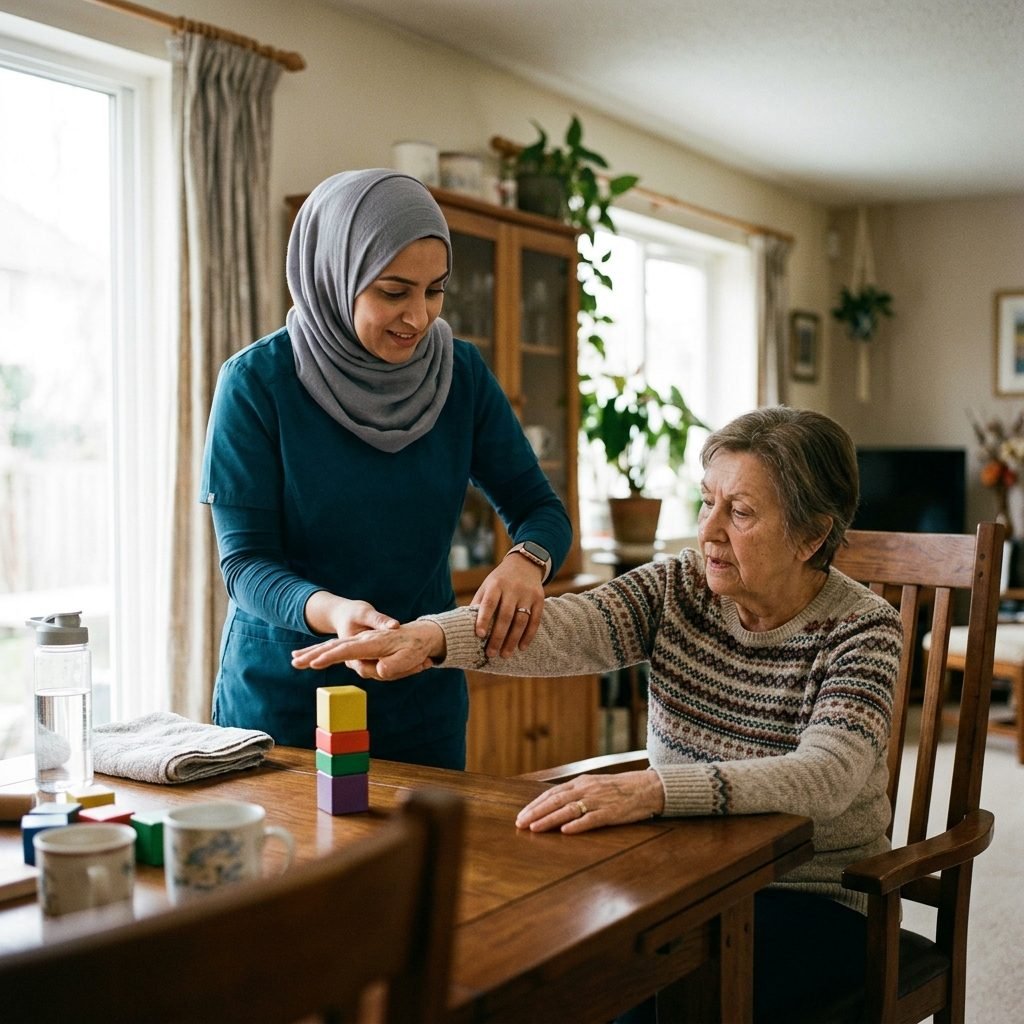
Stroke Rehabilitation
Advanced motor and neurological stroke recovery at home in Al Naeem.
Service Details ←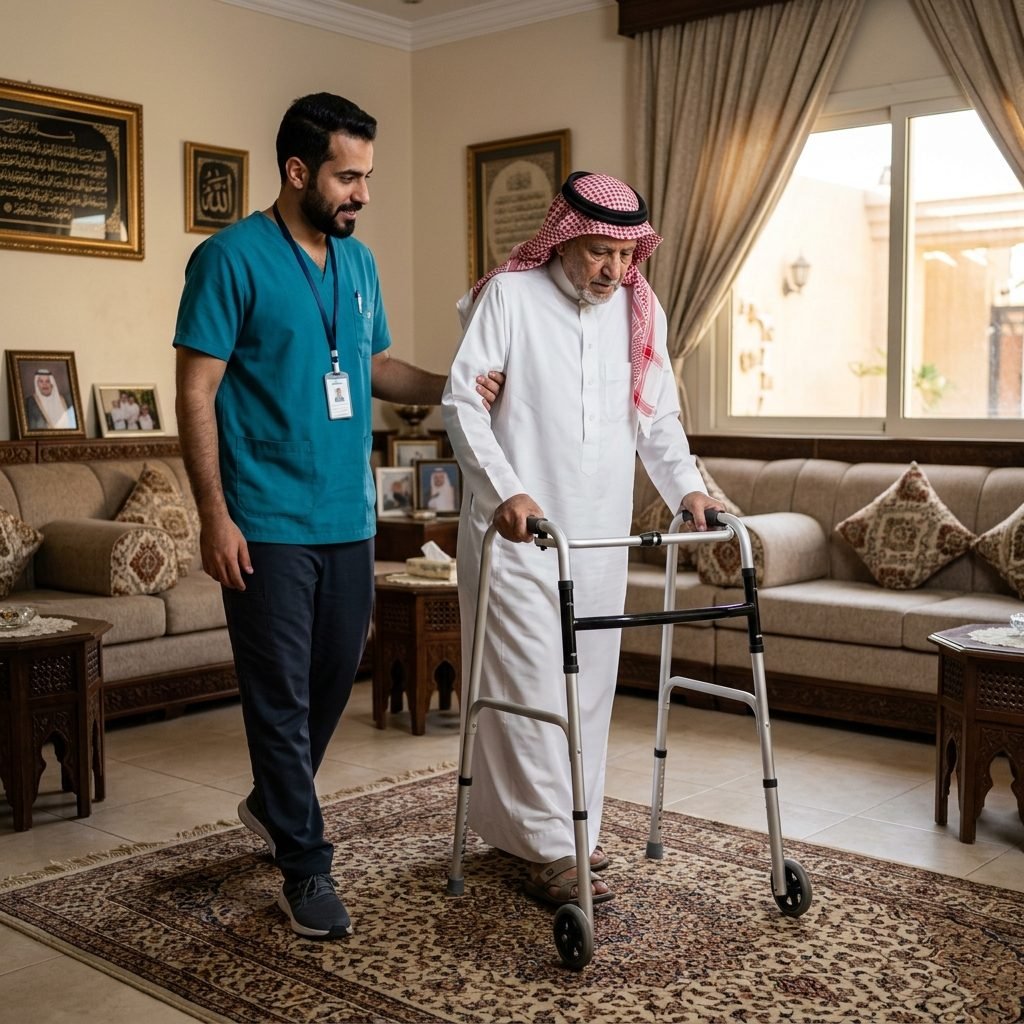
Geriatric Physical Therapy
Balance training, strengthening, and fall prevention for seniors in Al Naeem.
Service Details ←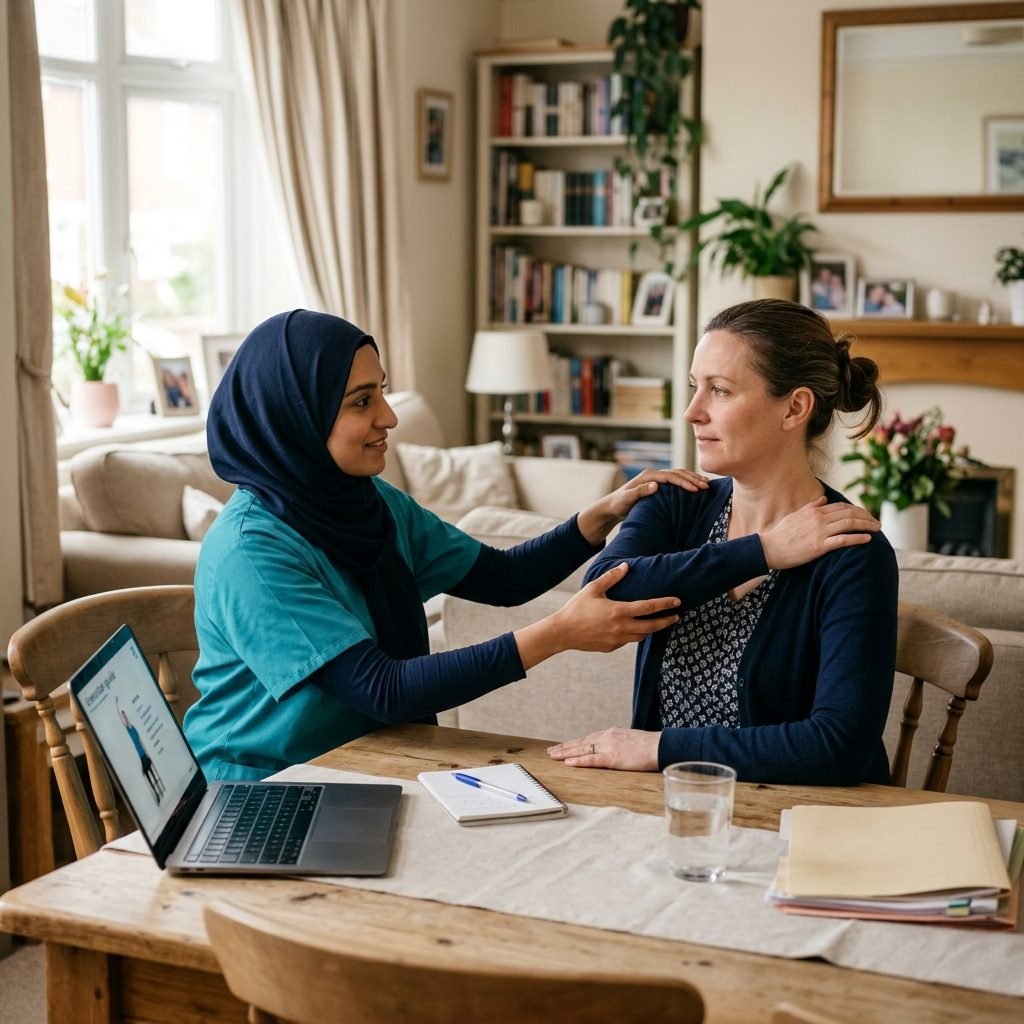
Female Physiotherapist
Licensed female therapists providing home care for women in Al Naeem.
Service Details ←