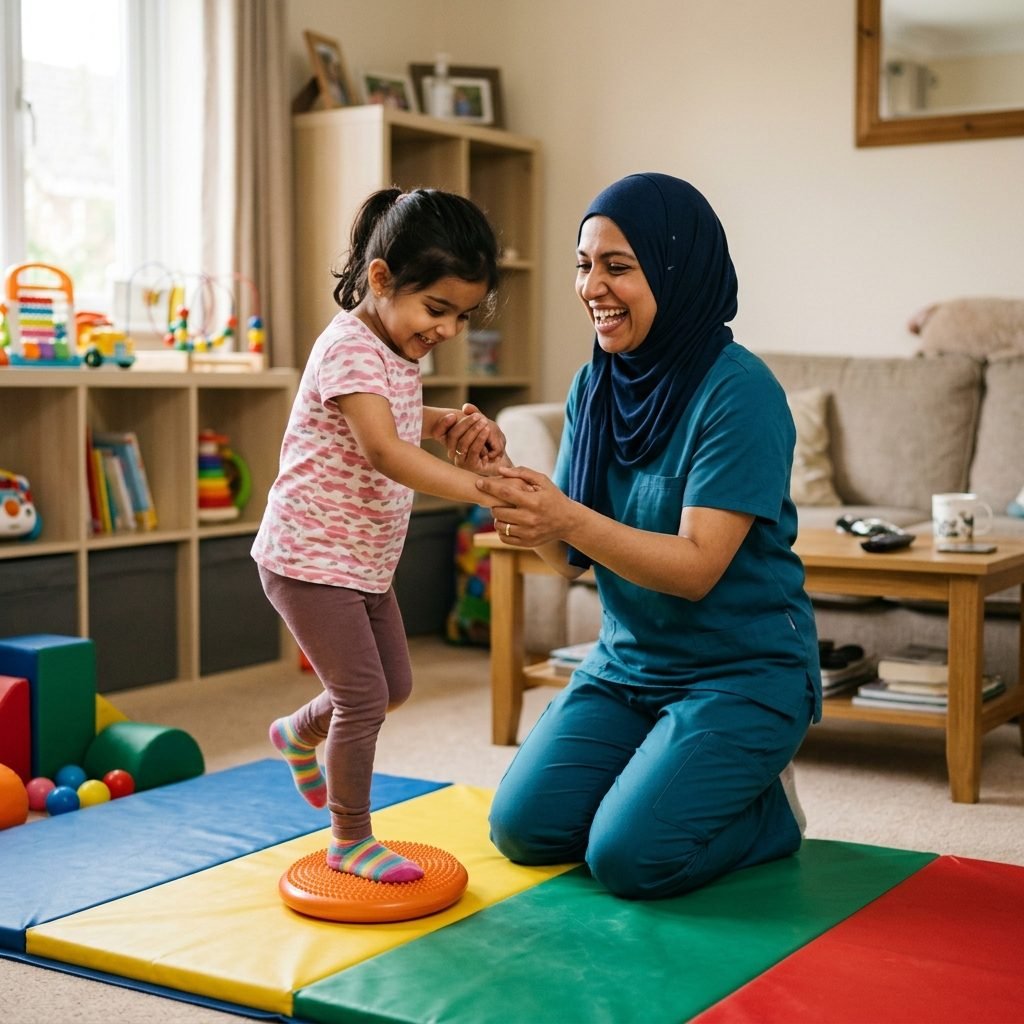
Having access to comprehensive, clinical physical therapy at home is crucial for maintaining rehabilitation progress, especially in busy neighborhoods. Al-Safa and Al Naeem districts in Jeddah present unique local mobility challenges due to high population density and traffic. At Bidaya Center, we deliver high-quality home physiotherapy and movement rehabilitation services directly to your doorstep, conforming to the clinical guidelines of the Saudi Commission for Health Specialties. We eliminate the stress of travel, traffic, and parking. We respect cultural privacy by providing certified male therapists for male patients and female therapists for female patients.
Our clinical approach in Al Naeem starts with a detailed physical and environmental safety assessment to eliminate fall hazards in the home. We bring all necessary portable, sterilized equipment to deliver a clinical standard of care comparable to external clinics. The therapist establishes a tailored milestone tracking plan to monitor muscle strength, balance, and joint range of motion (ROM) progression over time.
Why families in Al Naeem choose Bidaya for home physiotherapy
- ✅ Licensed male & female therapists — full privacy, in your own home in Al Naeem.
- ✅ Fully in-home visits across Al Naeem — no travel or traffic.
- ✅ A personalized rehab plan built after a thorough in-home assessment.
- ✅ Continuous follow-up and direct contact with your therapist throughout.
- ✅ Fast response — arrange your visit by a quick call or WhatsApp message.
We also serve nearby areas: Al Andalus · Al Basateen · Al Bawadi
* The treatment plan and expected outcomes are determined by a medical and functional assessment of each individual case.
What Home Care for Delayed Walking Means and Why It Matters for Al Naeem Families
Delayed walking is not a single diagnosis. It is a sign that can have many roots, ranging from a simple lag in the maturing of balance and muscle control to neurological or muscular causes that call for careful follow-up. When a child passes eighteen months without taking independent first steps, or walks with an unusual pattern such as constant tip-toeing or noticeable stiffness in the legs, an early functional assessment becomes the key that keeps a small delay from turning into a bigger obstacle over time.
Home care for delayed walking rests on an idea that is both simple and profound: a child learns to move in the environment where they actually live, not in an unfamiliar room. When a physiotherapist visits a family's home in Al Naeem, they see the child moving on the floor of their own room, among familiar furniture, close to mother and father. In that setting the child's true abilities emerge, free from the anxiety of a clinic or the stress of a trip out. This gives the therapist a more honest picture of the child's level and ties every exercise directly to the spaces the child will move through every single day.
Al Naeem is a calm residential district where families tend to stay closely involved in their children's daily lives, and many households here prefer home visits because they spare a very young child the strain of repeated travel and protect their sleep, feeding, and mealtime routines. Home care also suits families with more than one small child, since it can be hard to take an infant to regular appointments outside the house. At Bidaya Center we provide licensed male and female therapists, with full respect for the privacy of your home, so that learning to walk becomes a safe and reassuring experience for the child and the parents alike. We always emphasise that the treatment path and expected outcomes are built on a precise clinical and functional assessment of each individual case.
Symptoms and Signs That Signal It Is Time to Start
Not every slow start to walking is a cause for concern, but there are indicators that should not be ignored, and the presence of more than one of them warrants seeing a physiotherapy specialist sooner rather than later. The most notable signs include:
- Inability to stand with support by ten to twelve months, or no independent walking after eighteen months.
- Persistent walking on the toes without the heel touching the ground, or walking with a stiff, rigid pattern.
- Clear weakness in the leg or trunk muscles, or a tendency to fall far more often than is typical for the child's age.
- Relying on one side of the body more than the other, or using one hand or leg noticeably more than the opposite limb.
- An accompanying delay in other milestones such as sitting, crawling, or grasping objects, pointing to a broader motor delay.
- Marked floppiness (excessive looseness) or, conversely, stiffness and tightness in the limbs when the child is lifted or moved.
The presence of these signs does not necessarily mean a serious problem, but it does mean that early assessment is essential. The earlier the intervention begins, the greater the plasticity of the child's nervous and muscular systems, and the better the chances of building sound movement patterns. We make no promises of a specific result, but we always start from a clear understanding of the reason behind the delay through examination, then build a plan tailored specifically to that child.
Conditions and Groups That Benefit
A home-based program for delayed walking helps a wide range of children in Al Naeem, and the plan changes according to the cause and the child's age. Among the groups who benefit most:
- Children with a mild motor delay who need guided stimulation for balance and leg strength to begin walking independently.
- Children with muscle weakness (low muscle tone) that makes standing and walking harder and slower.
- Children with increased muscle tone or tightness that affects their walking pattern and foot movement.
- Premature infants or those born with low birth weight who need follow-up through the stages of motor development.
- Children who walk persistently on their toes, or who have misalignment of the feet and knees.
- Children recovering after a cast or after long periods of reduced movement, who need to regain confidence in standing and walking.
In every case the journey begins with an assessment session in which the therapist determines the level of strength, balance, range of motion, and current movement patterns, and then builds a customised program. The goal is never to compare the child to others, but to help each child reach the best functional ability possible for their own situation.
Goals of the Rehabilitation Program
A program for delayed walking aims to build the motor foundation that lets a child stand and walk with stability and safety, focusing on quality rather than speed alone. The main goals include:
- Strengthening the weight-bearing muscles of the legs, pelvis, and trunk, since these form the base on which standing and walking are built.
- Improving balance and control of body posture during sitting, standing, and the transitions between them.
- Correcting faulty walking patterns such as toe-walking or over-reliance on one side.
- Developing the child's awareness of their body in space and coordinating movement between the upper and lower limbs.
- Building the child's self-confidence and encouraging them to initiate movement and exploration instead of hesitating out of fear of falling.
- Equipping the family with practical skills that support the child's progress between sessions and turn the home into an environment that invites movement.
These goals are translated into small, measurable steps that are reviewed regularly and readjusted as the child progresses. We stress again that results depend on the nature of each case, the consistency of sessions, and family involvement, without any advance guarantee of a particular outcome.
Stages and Path of the Home Sessions
The home program in Al Naeem moves through gradual stages, beginning with assessment and progressing toward steadier, functional walking, with flexibility to adjust according to how the child responds:
- Initial assessment stage: the therapist visits the home, examines muscle strength, range of motion, balance, and movement patterns, and listens to the parents' observations about the child's day and developmental milestones.
- Preparation and foundation stage: exercises to strengthen the trunk and legs and improve postural control, most often through guided play so the child engages with enjoyment rather than compulsion.
- Standing and transitions stage: training the child to stand with support and then with less support, to move between sitting and standing, and to bear weight evenly on both feet.
- First steps stage: encouraging independent stepping using targets the child loves and short distances that gradually widen within the familiar spaces of the home.
- Quality and stability stage: refining the walking pattern and balance on different surfaces, handling simple obstacles such as moving between rooms, and managing safe stepping up and down.
The length of each stage and the number of weekly sessions are set according to the child's condition, and progress is reviewed continuously. The familiar home environment in Al Naeem helps generalise newly acquired skills directly into the child's daily life, an advantage that is hard to reproduce in a clinic alone.
The Role of the Family and Caregiver
The family is the most important partner in the success of treatment for delayed walking, because a child spends many times more hours with their parents than with the therapist. That is why we make sure parents are active participants in every session rather than mere onlookers. The family's key roles include:
- Repeating the simple recommended exercises through the day within play, feeding, and dressing routines, so training becomes a natural part of the child's life.
- Encouraging the child to move and explore and giving them a safe space, instead of carrying them constantly or restricting movement out of worry.
- Noticing the child's changes, noting them down, and sharing them with the therapist, since these daily observations enrich the treatment plan.
- Showing patience and consistency, because learning to walk is a journey that takes time, and comparing the child to peers can add stress without benefit.
- Staying in ongoing contact with the therapist to ask questions and request adjustments, since the plan is flexible and built through cooperation between home and specialist.
When the caregiver masters these skills, the chances of progress multiply, and the child feels consistent support and a stimulating environment throughout the whole day, not only during session time.
Home Safety and Prevention Tips
Because a child learning to walk is more prone to falling, preparing a safe home environment in Al Naeem is a core part of the program. We advise families to:
- Remove obstacles, wires, and slippery rugs from the child's walking paths, and secure fixed carpets firmly.
- Protect sharp furniture corners with guards, and move away unstable furniture that could tip if the child leans on it.
- Install safety gates on stairs and balcony openings, and supervise the child closely in open areas.
- Let the child go barefoot on safe surfaces as much as possible, since this improves foot sensation and balance, while using a supportive, well-fitting shoe when needed.
- Ensure good lighting along movement paths, especially when moving between rooms at night.
- Avoid prolonged use of round baby walkers and consult the therapist about the most suitable alternatives to support walking.
These measures do more than protect the child from injury; they give the child greater freedom to move and experiment with confidence, which in turn speeds the acquisition of motor skills.
Frequently Asked Questions (FAQ)
My son is sixteen months old and not walking yet. Should I worry?
Not necessarily, since some children walk anywhere between twelve and eighteen months within the normal range. But if he is not standing with support, is not crawling, or you notice other signs, an early assessment is the best way to gain reassurance and decide whether he needs support.
Are home sessions as effective as clinic sessions?
A home session lets the child train in their real environment among familiar tools, which helps generalise skills into daily life. Effectiveness depends far more on the accuracy of the assessment, the consistency of sessions, and family involvement than on the location on its own.
How many sessions will my child need before they start walking?
There is no fixed number. It varies with the cause of the delay, the child's age and current level, and how consistently the home exercises are done. The therapist gives an initial estimate after the assessment and reviews it continuously as the child progresses, without promising a specific result by a specific time.
Can I attend the session and take part in it?
We strongly encourage it. Your presence reassures your child and lets you learn the exercises so you can repeat them between sessions, which makes a big difference to progress. We also fully respect the privacy of your home, and female therapists are available for families who prefer that.
Is a female pediatric therapist available in Al Naeem?
Yes. We have licensed male and female therapists, and you can request whoever suits your family best when booking the visit, with complete respect for the privacy of your home and the comfort of the child and family.
To book a home visit in Al Naeem, Jeddah, or to ask about treatment for your child's delayed walking, contact Bidaya Center by phone or WhatsApp by clicking Call Now, and our team will be glad to arrange the initial assessment at a time that suits you.
Important Home Visit Details:
- ✓Setup: Please clear a 2x2m space in the room for safety.
- ✓Clothing: Wear loose, comfortable clothes for easy movement.
- ✓Therapist Parity: Male therapists for males, females for females.
- ✓Medical Reports: Keep your MRI or doctor reports ready for evaluation.
Rehabilitation & Services in Al Naeem
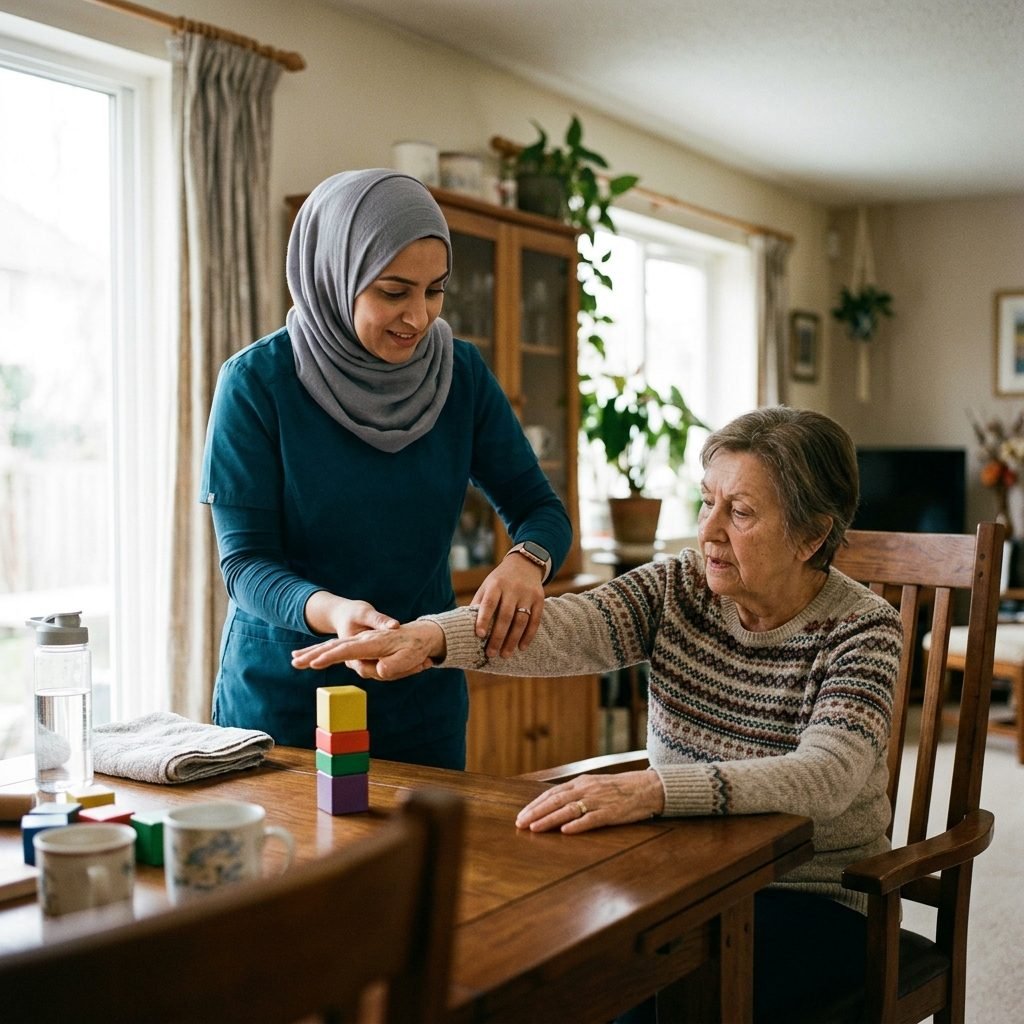
Stroke Rehabilitation
Advanced motor and neurological stroke recovery at home in Al Naeem.
Service Details ←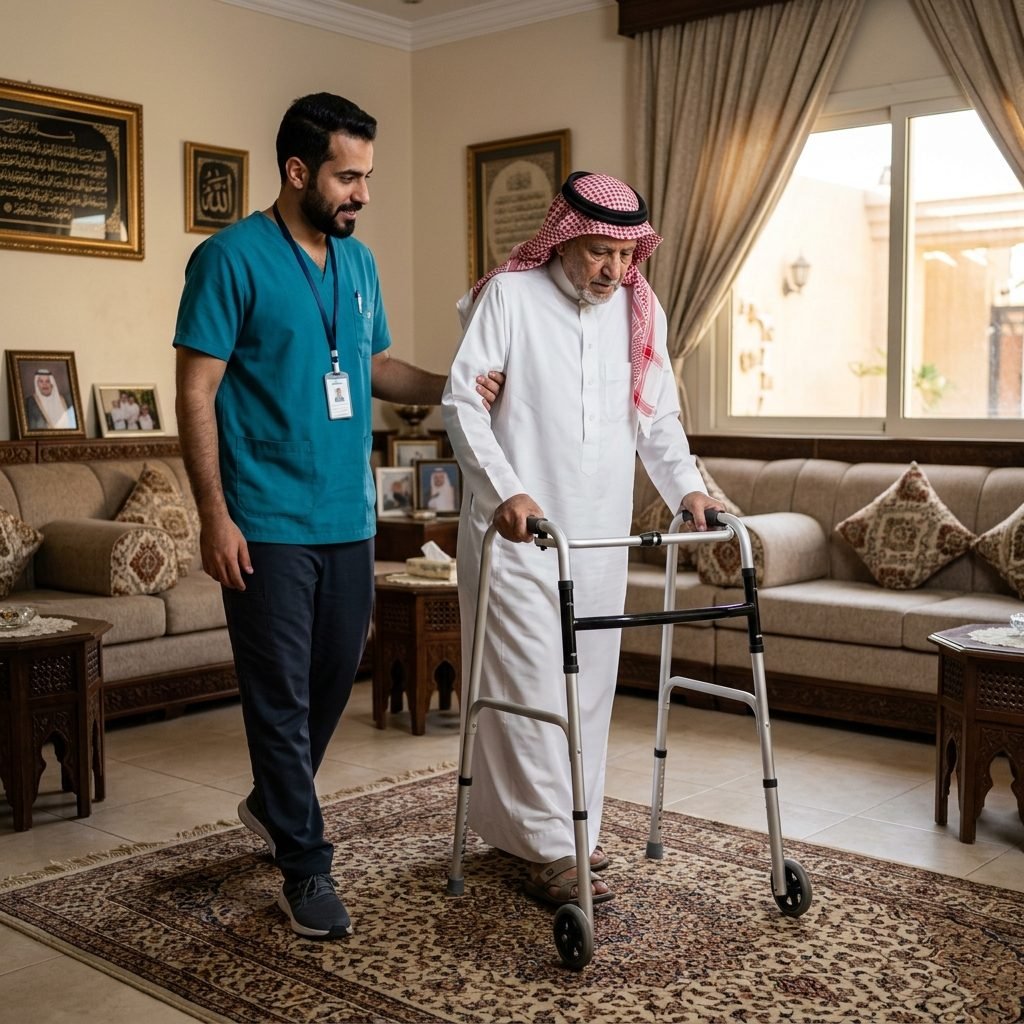
Geriatric Physical Therapy
Balance training, strengthening, and fall prevention for seniors in Al Naeem.
Service Details ←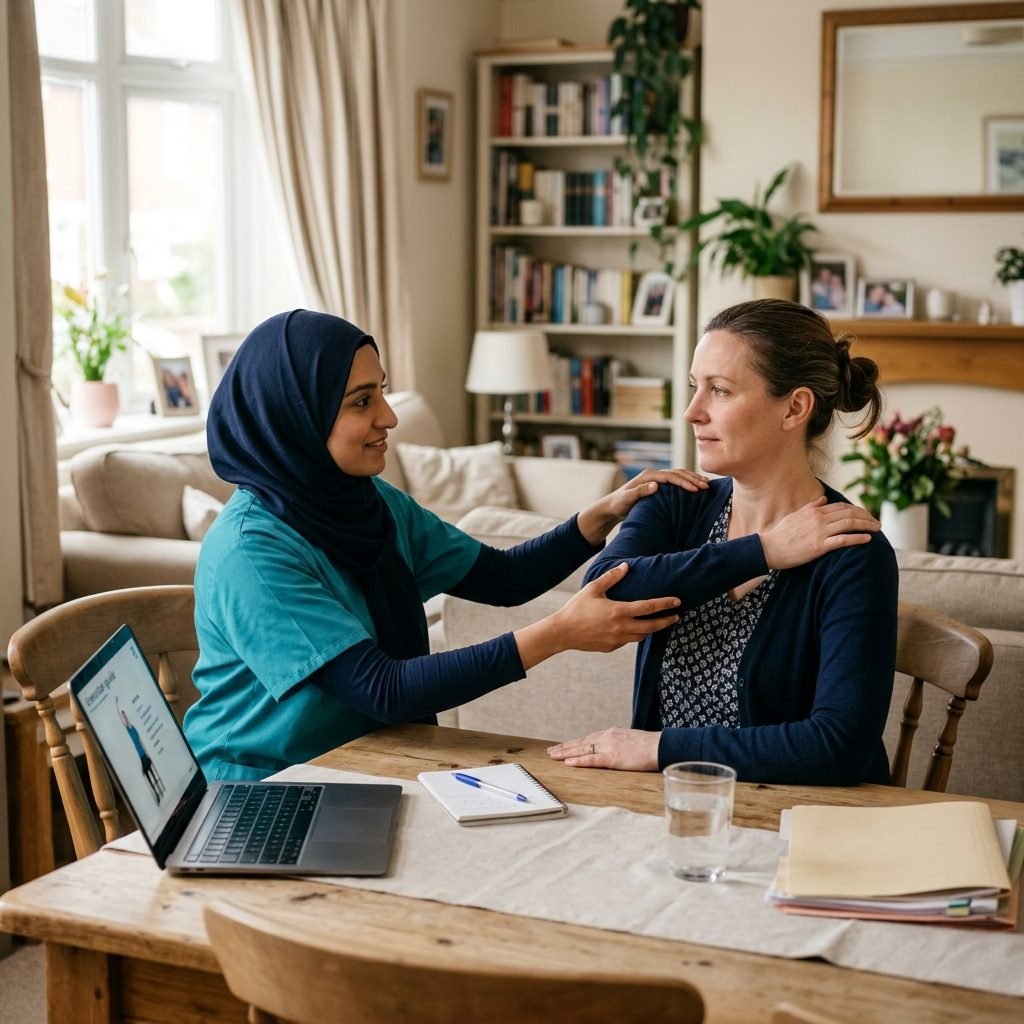
Female Physiotherapist
Licensed female therapists providing home care for women in Al Naeem.
Service Details ←