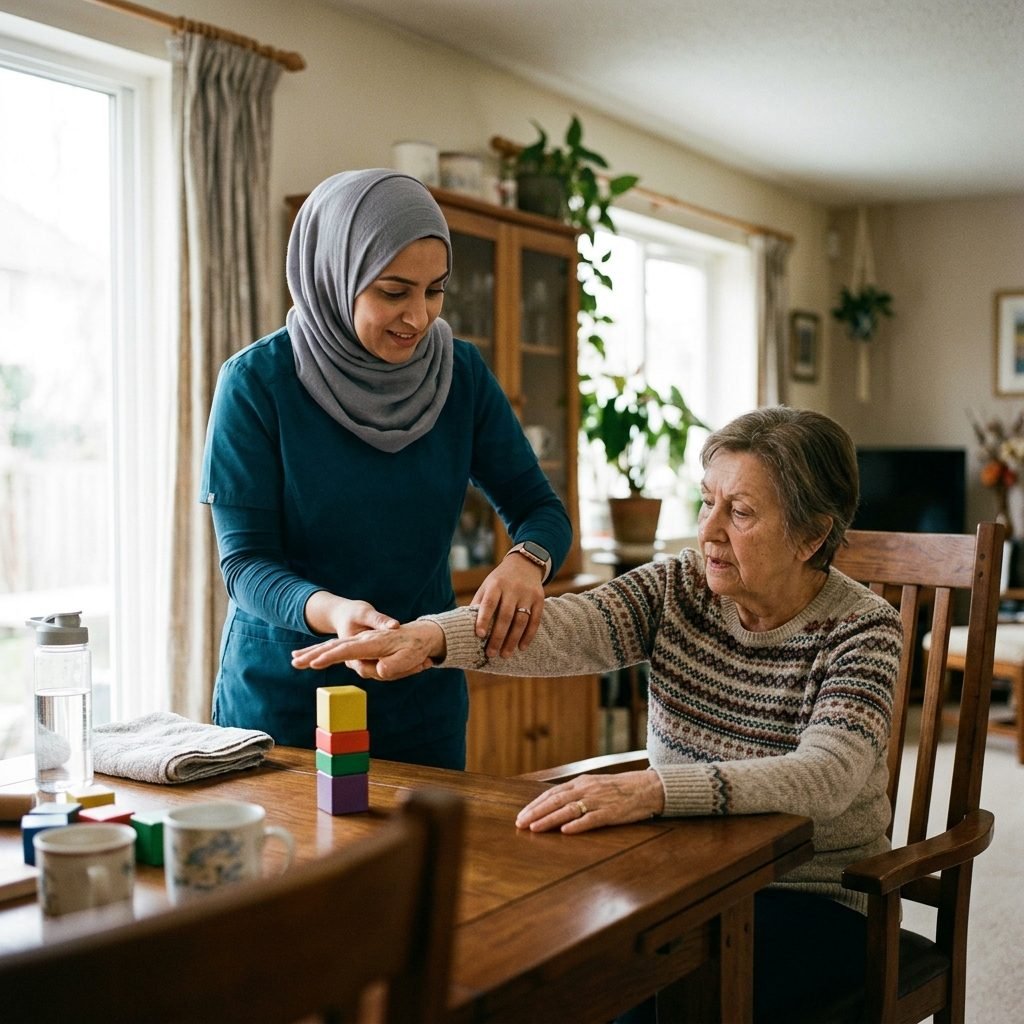
Having access to comprehensive, clinical physical therapy at home is crucial for maintaining rehabilitation progress, especially in busy neighborhoods. Al-Safa and Al Naeem districts in Jeddah present unique local mobility challenges due to high population density and traffic. At Bidaya Center, we deliver high-quality home physiotherapy and movement rehabilitation services directly to your doorstep, conforming to the clinical guidelines of the Saudi Commission for Health Specialties. We eliminate the stress of travel, traffic, and parking. We respect cultural privacy by providing certified male therapists for male patients and female therapists for female patients.
Our clinical approach in Al Naeem starts with a detailed physical and environmental safety assessment to eliminate fall hazards in the home. We bring all necessary portable, sterilized equipment to deliver a clinical standard of care comparable to external clinics. The therapist establishes a tailored milestone tracking plan to monitor muscle strength, balance, and joint range of motion (ROM) progression over time.
Why families in Al Naeem choose Bidaya for home physiotherapy
- ✅ Licensed male & female therapists — full privacy, in your own home in Al Naeem.
- ✅ Fully in-home visits across Al Naeem — no travel or traffic.
- ✅ A personalized rehab plan built after a thorough in-home assessment.
- ✅ Continuous follow-up and direct contact with your therapist throughout.
- ✅ Fast response — arrange your visit by a quick call or WhatsApp message.
We also serve nearby areas: Al Andalus · Al Basateen · Al Bawadi
* The treatment plan and expected outcomes are determined by a medical and functional assessment of each individual case.
What Home-Based Hemiplegia Rehabilitation Means for Al Naeem Residents
Hemiplegia is a weakness or loss of movement affecting one side of the body, most often following a brain injury such as a stroke, a bleed, certain neurosurgeries, or head trauma. Its effects appear in the arm and leg on the same side, and sometimes in the muscles of the face, speech, and swallowing. Home-based hemiplegia rehabilitation is a structured physiotherapy programme delivered inside the patient's own home. It aims to reactivate the affected side, re-teach the brain patterns of movement, and rebuild independence in daily activities rather than leaving the patient fully dependent on others.
In Al Naeem, a calm residential district in northern Jeddah with its many family villas and apartments, a great number of families find that transporting a hemiplegia patient repeatedly to a clinic is physically and emotionally exhausting, especially given limited mobility and the need for an escort and suitable transport. This is where home care proves its value: the physiotherapist arrives with the necessary equipment, and the patient trains in a natural setting, learning to rise from the same bed they use, to move between the rooms they live in, and to manage the bathroom and kitchen they face every day.
Rehabilitating within the real home environment carries genuine weight at Bidaya Center, because whatever the patient learns is applied directly to their actual life, not to a training room that differs from home. From the outset we make clear that the treatment path and the expected outcomes depend on a precise clinical and functional assessment of each individual case, since hemiplegia differs from one person to another according to the site and size of the injury, how much time has passed, and overall health.
Symptoms and Signs That Call for Starting
The earlier rehabilitation begins after the medical condition has stabilised, the better the chances of improving function. We encourage Al Naeem residents to reach out for a home assessment when they notice any of the following in a family member:
- Clear weakness or heaviness in the arm or leg on one side, with difficulty fully lifting or moving the limb.
- Loss of balance and leaning toward the affected side when sitting or trying to stand.
- Stiffness and spasticity in the hand, shoulder, or foot, and difficulty opening the palm or straightening the fingers.
- Difficulty walking, such as dragging the foot along the floor or the leg swinging outward with each step.
- Foot drop and repeated stumbling, or intense fear of falling inside the home.
- Neglect of the affected side, where the patient does not attend to the impaired arm or leg.
- Pain in the affected shoulder or a feeling of tightness and stiffness in the joints after a period of inactivity.
- Decline in the ability to perform daily tasks such as dressing, eating, and transferring from bed to chair.
A medically documented prior brain injury together with any of these signs is a clear indication that a structured rehabilitation programme is needed. The appearance of some of them does not mean improvement is impossible; rather, it is a call to begin considered work under specialised hands before faulty movement patterns become entrenched or deformities worsen.
Who Benefits From This Service
Home hemiplegia rehabilitation in Al Naeem is directed at several groups, including:
- Post-stroke patients who have been discharged from hospital and need continued rehabilitation follow-up at home.
- Those affected by a brain bleed or who have undergone brain surgery and retain weakness on one side of the body.
- Cases of head injury and accidents that have resulted in partial or complete hemiplegia.
- Patients with increasing muscle spasticity on the affected side that hinders their movement, sleep, and comfort.
- Older adults who are difficult to transport frequently and need gentle, gradual rehabilitation within their homes.
- Those experiencing declining balance and walking who fear falling around the house and on stairs.
- Cases that began rehabilitation at a centre and wish to continue it at home to reduce the burden of travel.
We stress that every case is studied on its own. The programme suited to a young patient after a recent stroke differs from that of an elderly person with chronic stiffness and accompanying conditions such as diabetes and hypertension. We have licensed male and female therapists, the family's preference for the therapist's gender is respected, and full privacy is maintained inside the home.
Goals of the Rehabilitation Programme
The goal is not merely to move the affected limb, but to restore the greatest possible independence and safety in daily life. Among the key aims of Bidaya Center's hemiplegia rehabilitation programme:
- Reactivating the affected side and rebuilding the connection between brain and muscle through guided, repeated exercises.
- Controlling spasticity and stiffness and improving joint range of motion to reduce pain and prevent deformity.
- Strengthening the trunk and the unaffected side to support balance and stable sitting and standing.
- Retraining a safe walking pattern and reducing foot-dragging and excessive reliance on one side.
- Improving hand and shoulder control and restoring grip and touch functions as far as the condition allows.
- Raising the ability to perform daily activities: transferring from bed, dressing, using the bathroom, and eating.
- Preventing the complications of inactivity such as pressure sores, joint stiffness, and poor circulation.
- Supporting the patient psychologically and building confidence in their ability to progress step by step.
These goals are re-prioritised according to the assessment, and expected outcomes are set realistically and gradually, without any promise of complete recovery or a guaranteed result. Progress is measured against clear functional indicators that are reviewed regularly.
Stages and Path of the Home Sessions
At Bidaya Center we follow a structured path that begins with the first visit to Al Naeem:
- Initial assessment: the therapist examines muscle strength, degree of spasticity, range of motion, balance, and the ability to walk and transfer, reviews prior medical reports, and sets measurable goals.
- Building the treatment plan: an individual plan is designed with a suitable number and intensity of sessions, explained clearly to the family along with what is required between sessions.
- Activation and control stage: exercises to stimulate the affected side, correct positioning, and reduce spasticity, alongside range-of-motion work to prevent stiffness.
- Balance and standing stage: training stable sitting, then progressing to standing and safely shifting weight onto the affected side.
- Walking and function stage: retraining walking along the home's hallways, ascending and descending stairs where needed, and training the hand on practical tasks.
- Follow-up and reassessment: periodic measurement of progress and adjustment of exercises, raising the level of challenge gradually as ability improves.
The length and frequency of each session are determined by the patient's condition and tolerance, and in Al Naeem we take care to choose comfortable times for the family that do not exhaust the patient. Consistency and regularity between sessions are essential factors in the quality of the outcome.
The Role of the Family and Caregiver
The family is a core partner in the success of hemiplegia rehabilitation, since the patient spends most of the day with them rather than with the therapist. For this reason, Bidaya's specialists are keen to train family members and caregivers in:
- How to transfer the patient safely from bed to chair or wheelchair without straining the caregiver's back.
- Correct sitting and sleeping positions that protect the affected shoulder and reduce spasticity and stiffness.
- Encouraging the patient to use the affected side in daily tasks rather than ignoring it entirely.
- Performing simple, safe exercises between sessions according to clear written instructions.
- Noticing warning signs such as skin redness, increased pain, or swelling, and informing the team.
This home role multiplies the impact of the sessions and turns the house into a supportive therapeutic environment throughout the day, while preserving the patient's morale and respecting their current abilities without undue pressure.
Home Safety and Prevention Tips
Preventing falls and complications is an integral part of rehabilitation. We advise families of hemiplegia patients in Al Naeem to:
- Remove loose rugs, wires, and obstacles from the hallways the patient moves through.
- Provide adequate lighting at night, especially on the way to the bathroom, and fit safety grab bars where needed.
- Use closed, stable, non-slip footwear indoors instead of open slippers.
- Regularly change the position of a bed-bound patient to prevent pressure sores and stimulate circulation.
- Ensure good hydration and nutrition and adherence to the treating physician's medication.
- Avoid pulling the affected arm forcefully when transferring the patient, to protect the weakened shoulder joint.
- Rely only on the assistive devices recommended by the therapist, and in the manner the family was trained to use.
These guidelines are general and are tailored to each home and each case during the home visit, as the therapist assesses the actual risks in the patient's surroundings and suggests practical, suitable adjustments.
Frequently Asked Questions (FAQ)
Can a patient walk again after hemiplegia?
Many patients achieve tangible improvement in walking and independence with regular rehabilitation, but the extent of improvement varies from case to case and depends on the clinical and functional assessment; we do not make promises of guaranteed results.
When is it best to start rehabilitation after a stroke?
It usually begins as soon as possible after the medical condition has stabilised and with the treating physician's approval, since an early, structured start helps improve outcomes and prevent complications. We determine the appropriate timing during the assessment.
Are home sessions suitable for older adults with limited mobility?
Yes. The home service is designed specifically to spare the burden of transport; the therapist comes to the patient's home in Al Naeem and applies a gentle, gradual programme suited to their ability and overall health.
Are female therapists available for female patients?
Yes, we have licensed male and female therapists, and the family may choose the therapist's gender to ensure comfort and full privacy inside the home.
How many sessions does a patient need?
There is no fixed number for everyone; the number and frequency of sessions are set after the initial assessment according to the severity and goals of the case, and are reviewed periodically as the patient progresses.
To book or enquire about home hemiplegia rehabilitation in the Al Naeem district of Jeddah, contact Bidaya Center by phone or WhatsApp by clicking Call Now, and our team will be glad to arrange a home assessment visit at a time that suits you.
Important Home Visit Details:
- ✓Setup: Please clear a 2x2m space in the room for safety.
- ✓Clothing: Wear loose, comfortable clothes for easy movement.
- ✓Therapist Parity: Male therapists for males, females for females.
- ✓Medical Reports: Keep your MRI or doctor reports ready for evaluation.
Rehabilitation & Services in Al Naeem
Stroke Rehabilitation
Advanced motor and neurological stroke recovery at home in Al Naeem.
Service Details ←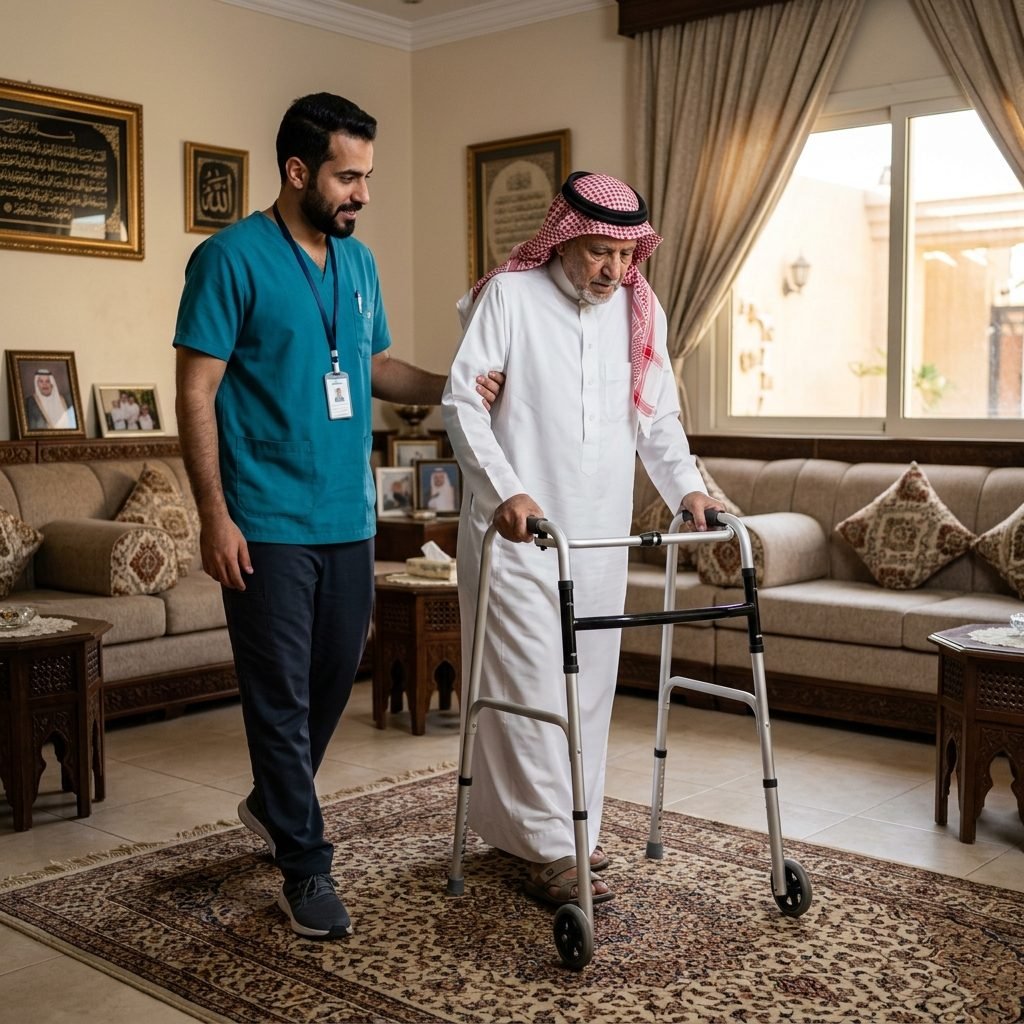
Geriatric Physical Therapy
Balance training, strengthening, and fall prevention for seniors in Al Naeem.
Service Details ←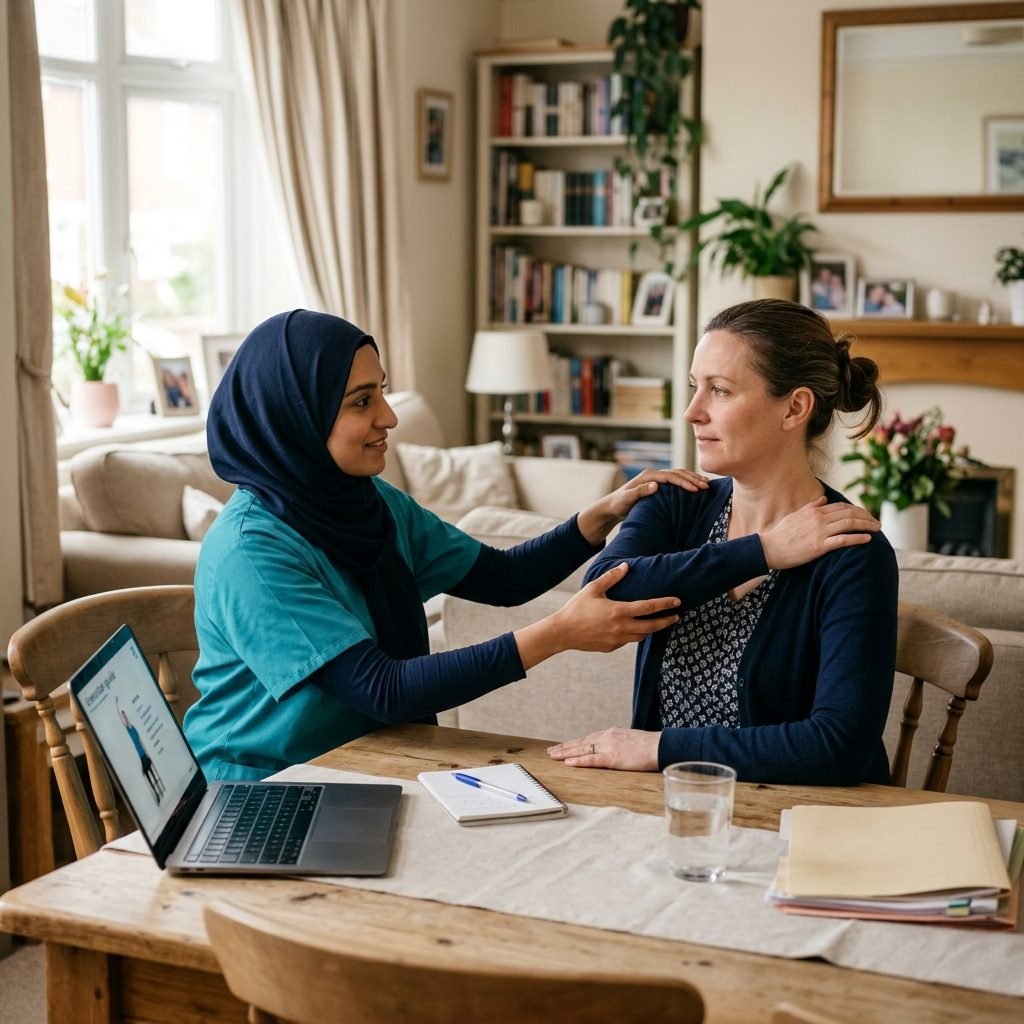
Female Physiotherapist
Licensed female therapists providing home care for women in Al Naeem.
Service Details ←