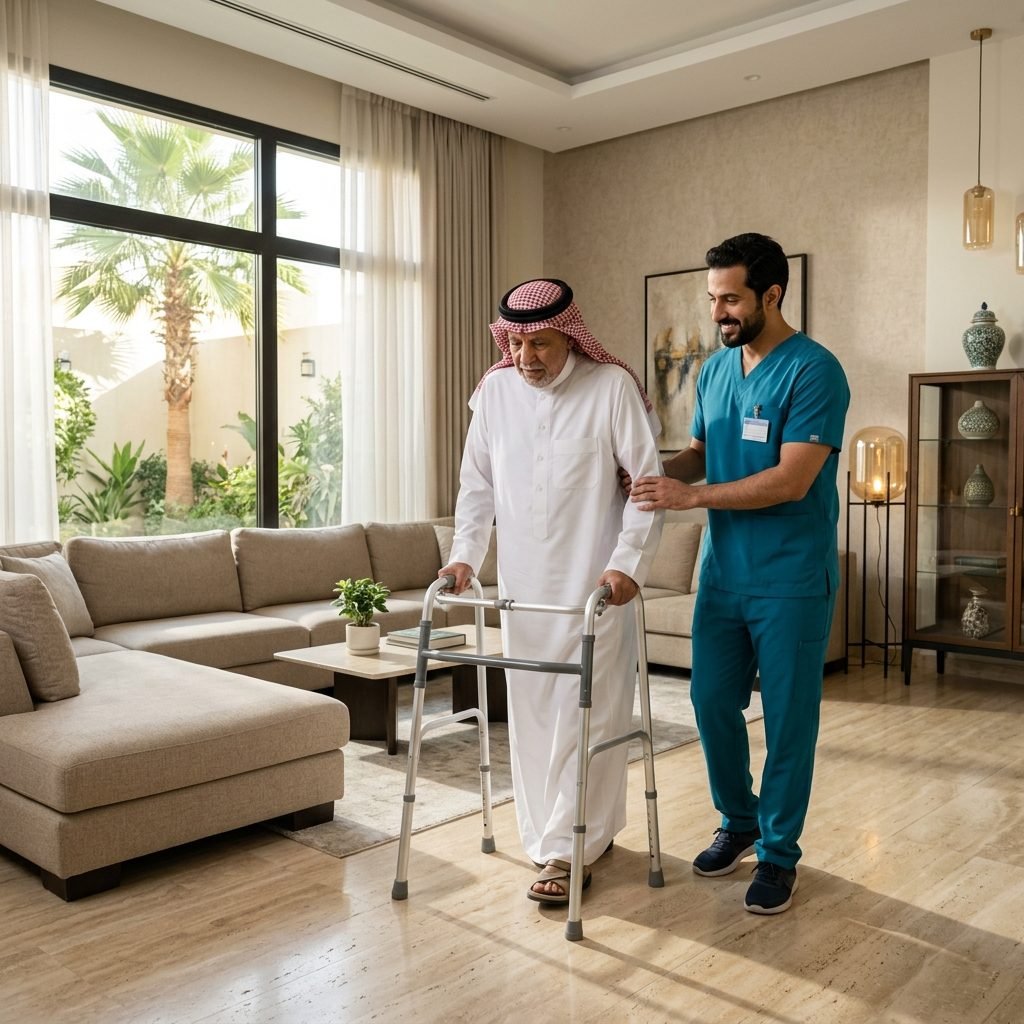
Having access to comprehensive, clinical physical therapy at home is crucial for maintaining rehabilitation progress, especially in busy neighborhoods. Al-Safa and Al Naeem districts in Jeddah present unique local mobility challenges due to high population density and traffic. At Bidaya Center, we deliver high-quality home physiotherapy and movement rehabilitation services directly to your doorstep, conforming to the clinical guidelines of the Saudi Commission for Health Specialties. We eliminate the stress of travel, traffic, and parking. We respect cultural privacy by providing certified male therapists for male patients and female therapists for female patients.
Our clinical approach in Al Naeem starts with a detailed physical and environmental safety assessment to eliminate fall hazards in the home. We bring all necessary portable, sterilized equipment to deliver a clinical standard of care comparable to external clinics. The therapist establishes a tailored milestone tracking plan to monitor muscle strength, balance, and joint range of motion (ROM) progression over time.
Why families in Al Naeem choose Bidaya for home physiotherapy
- ✅ Licensed male & female therapists — full privacy, in your own home in Al Naeem.
- ✅ Fully in-home visits across Al Naeem — no travel or traffic.
- ✅ A personalized rehab plan built after a thorough in-home assessment.
- ✅ Continuous follow-up and direct contact with your therapist throughout.
- ✅ Fast response — arrange your visit by a quick call or WhatsApp message.
We also serve nearby areas: Al Andalus · Al Basateen · Al Bawadi
* The treatment plan and expected outcomes are determined by a medical and functional assessment of each individual case.
What Integrated Home Physiotherapy Means and Why It Matters for Al Naeem Residents
Integrated home physiotherapy in the Al Naeem district of northern Jeddah is a complete rehabilitation service delivered inside the patient's own home rather than requiring repeated trips to a clinic. Under a single visit it brings together assessment, planning, hands-on treatment, and progress tracking. The word "integrated" is not marketing language here: it means the therapist looks at the whole person, the muscles and joints, balance and gait, the ability to manage daily self-care, and the actual environment the person lives in. That comprehensive approach is what makes the service suitable for a broad range of neurological, orthopedic, post-surgical, and elderly cases, all organized within one structured visit instead of scattering the family across separate appointments.
Al Naeem is a calm, largely residential neighborhood in the north of the city, close to the coastal front, and home to many families that include elderly members, children, and patients who need regular follow-up. Moving a frail or wheelchair-bound patient through congested main roads, then having them wait in a clinic reception, drains their energy before the session even begins. When the therapist comes to the home, that energy is preserved entirely for the exercises, and the patient is assessed in the very room, bed, and bathroom they use every day, which gives the treatment plan a realism that clinic walls simply cannot provide.
The practical value of the service in Al Naeem comes down to three things: first, continuity of care that is not interrupted by transport difficulties, hot weather, or family commitments; second, tailoring every exercise to the tools genuinely available inside the real home; and third, reducing the infection risk and fatigue that a patient with weakened immunity can face when travelling. We stress from the outset that the type of program, its duration, and its expected outcomes are determined only after a careful clinical and functional assessment of each individual case, with no promise of a guaranteed cure.
Symptoms and Signs That Signal It Is Time to Start
Many families in Al Naeem delay requesting physiotherapy while waiting for spontaneous improvement, yet earlier intervention tends to be more effective. Signs that warrant reaching out for an assessment include:
- Weakness or stiffness in a limb or one side of the body that hinders walking or hand use.
- Repeated stumbling or falls inside the home, or fear of walking without support.
- Chronic neck, back, knee, or shoulder pain that does not settle with rest.
- Limited movement after surgery, a fracture, or a joint replacement.
- Declining ability to rise from a chair, climb the home's stairs, or get out of bed.
- General weakness and loss of fitness after a long illness or extended bed rest.
- Swelling or stiffness in the joints accompanied by difficulty with daily tasks.
- Noticeable delay in a child's motor skills compared with peers of the same age.
The presence of one or more of these signs does not point to a specific diagnosis, but it is reason enough to request a home assessment. The greater danger is allowing weakness to worsen until the patient loses confidence in their own movement and becomes increasingly isolated at home. An early evaluation interrupts that cycle and clarifies whether the case needs an intensive program or lighter follow-up.
Conditions and Groups That Benefit
The integrated nature of the service means it can serve several members of the same Al Naeem household. The most common beneficiaries include:
- Older adults: to improve balance, prevent falls, and preserve independence in walking and self-care.
- Neurological patients: such as those after a stroke or with nerve injuries, to retrain movement and control.
- Post-surgery and fracture cases: to restore range of motion and strength after joint, bone, and spinal procedures.
- Spinal and joint pain conditions: such as disc problems, knee osteoarthritis, and chronic shoulder pain.
- Patients with chronic disease: who have general weakness and low activity because of a prolonged illness.
- Children: with motor delay or conditions that benefit from early rehabilitation in a familiar environment.
- Bedbound patients: to prevent pressure sores, joint stiffness, and the complications of immobility.
Each group has goals that differ in the details, and the common thread is that the therapist builds the plan around the patient's real situation inside their Al Naeem home rather than a ready-made template. Licensed male and female therapists are available, so every family can choose what suits them best, with full respect for privacy.
Goals of the Rehabilitation Program
The program is built around clear, measurable functional goals that are reviewed regularly according to the patient's response:
- Reducing pain and inflammation and restoring comfort during everyday movement.
- Increasing joint range of motion and the flexibility of muscles and surrounding tissue.
- Strengthening weakened muscles and restoring balance between muscle groups.
- Improving balance and stability and lowering the risk of falls inside the home.
- Correcting the pattern of walking and standing and rebuilding confidence in movement.
- Training the patient in daily activities: dressing, bathing, and transfers.
- Preventing complications such as stiffness, pressure sores, and muscle wasting.
- Gradually raising general fitness and endurance.
These goals are prioritized for each case; a post-surgical patient may begin with pain control and regaining range, while an older adult focuses on balance and fall prevention. We emphasize that the ceiling and pace of improvement are determined by the clinical assessment, and we do not offer guarantees of a particular result.
Stages and Pathway of the Home Sessions
Integrated home care in Al Naeem follows a structured pathway that ensures quality and follow-up:
- Initial assessment visit: the therapist examines the case, reviews medical reports, measures strength, range, and balance, and inspects the home environment itself.
- Setting the treatment plan: goals, the number of weekly sessions, the nature of the exercises, and any tools required are defined.
- Treatment sessions: manual, movement-based, and functional exercises are delivered progressively and adjusted to the patient's response.
- Follow-up and reassessment: progress is measured at intervals, and goals and exercises are updated based on the results.
- Complementary home program: simple exercises the patient performs between sessions, supported by the family, to speed progress.
- Sustainability plan: guidance for maintaining gains after the intensive program ends.
The therapist takes care to coordinate visit times with the rhythm of the Al Naeem household, and to use whatever is available at home, a chair, bed, stairs, or handrails, to keep the exercises realistic and repeatable without complex equipment.
The Role of the Family and Caregiver
The success of home physiotherapy is directly tied to the family's role, because the patient spends most of the time between sessions with their relatives. For that reason we involve the caregiver from the very first visit and explain how to support the patient without exhausting them or putting them at risk.
- Encouraging the patient to perform the home exercises regularly and on schedule.
- Learning the correct way to help the patient move from bed to chair.
- Watching for any unusual pain, swelling, or change in condition and informing the therapist.
- Preparing a suitable, quiet space for the session away from the busier parts of the home.
- Ensuring good hydration and nutrition to support recovery.
- Showing patience and valuing gradual progress without rushing.
This cooperation turns the Al Naeem home into a continuous therapeutic environment, reduces the patient's sense of being a burden, and strengthens their commitment to the plan. We make sure that communication with the family is clear and respectful of privacy at every visit.
Home Safety and Prevention Advice
Preparing the home is an essential part of integrated care, especially for anyone with limited mobility or a risk of falling. Practical recommendations the therapist offers after inspecting the family's Al Naeem home include:
- Removing slippery rugs and cables that run across the floor in walkways.
- Ensuring adequate lighting in corridors, bathrooms, and beside the bed at night.
- Installing firm grab bars near the toilet and inside the bathroom when needed.
- Wearing firm-soled indoor shoes and avoiding walking on wet floors.
- Keeping frequently used items within easy reach to avoid excessive bending.
- Sticking only to the prescribed exercises and avoiding sudden unsupervised effort.
- Taking sufficient rest breaks and watching for signs of fatigue during activity.
These measures are complementary and preventive; they do not replace the treatment plan, but they meaningfully reduce household accidents and protect the progress the patient achieves between sessions.
Frequently Asked Questions (FAQ)
Does integrated home physiotherapy cover every condition?
The program covers a wide spectrum of neurological, orthopedic, post-surgical, elderly, and pediatric cases, but whether it suits your situation is determined after a clinical and functional assessment at home, and a medical referral may be recommended when needed.
How many sessions will I need each week?
There is no fixed number; the count and length of sessions depend on the type and severity of the case and the patient's goals, and the program is reviewed regularly according to the progress achieved.
Are female therapists available in Al Naeem?
Yes, licensed male and female therapists are available, and the family can choose what suits them while full privacy is maintained inside the home.
Do I need special equipment at home?
Usually not; the therapist relies on manual and functional exercises and on what is available such as a chair, bed, and stairs, recommending only simple tools when genuinely necessary.
Do you guarantee a full recovery?
We do not offer guarantees of recovery; expected outcomes and the pace of improvement vary from person to person and are set based on the assessment and commitment to the plan, with our aim being the best possible functional improvement for your case.
To book a home visit in Al Naeem or to ask about the service, contact us by phone or WhatsApp by clicking Call Now, and the Bidaya Center team will be glad to arrange your first assessment at a time that suits you.
Important Home Visit Details:
- ✓Setup: Please clear a 2x2m space in the room for safety.
- ✓Clothing: Wear loose, comfortable clothes for easy movement.
- ✓Therapist Parity: Male therapists for males, females for females.
- ✓Medical Reports: Keep your MRI or doctor reports ready for evaluation.
Rehabilitation & Services in Al Naeem
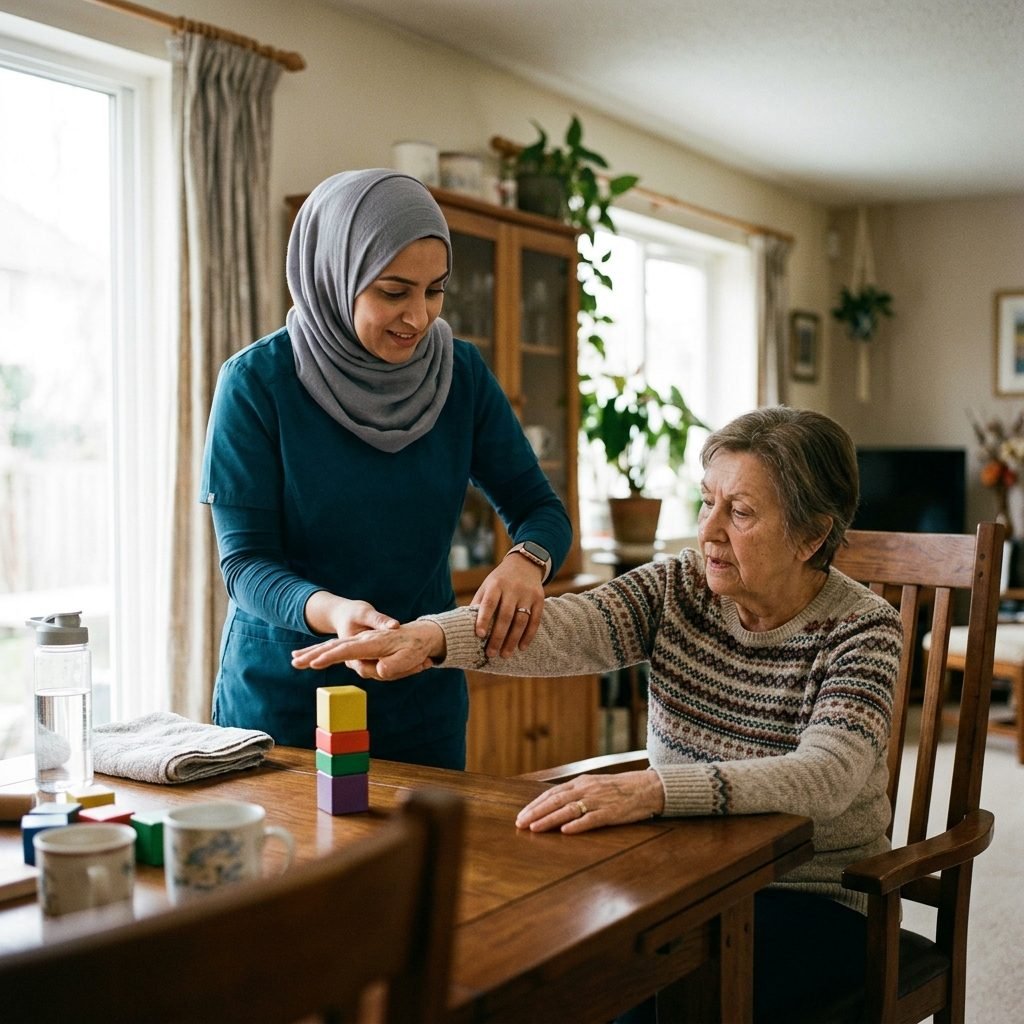
Stroke Rehabilitation
Advanced motor and neurological stroke recovery at home in Al Naeem.
Service Details ←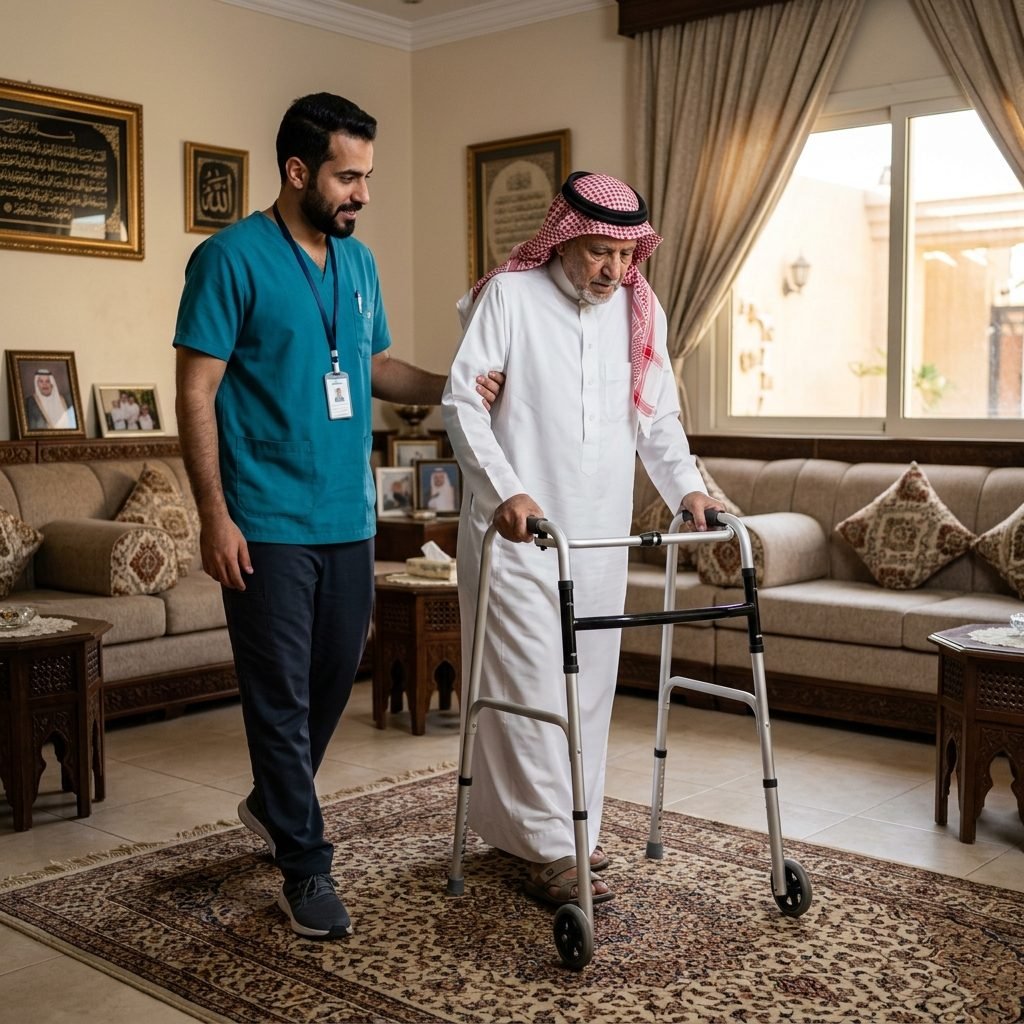
Geriatric Physical Therapy
Balance training, strengthening, and fall prevention for seniors in Al Naeem.
Service Details ←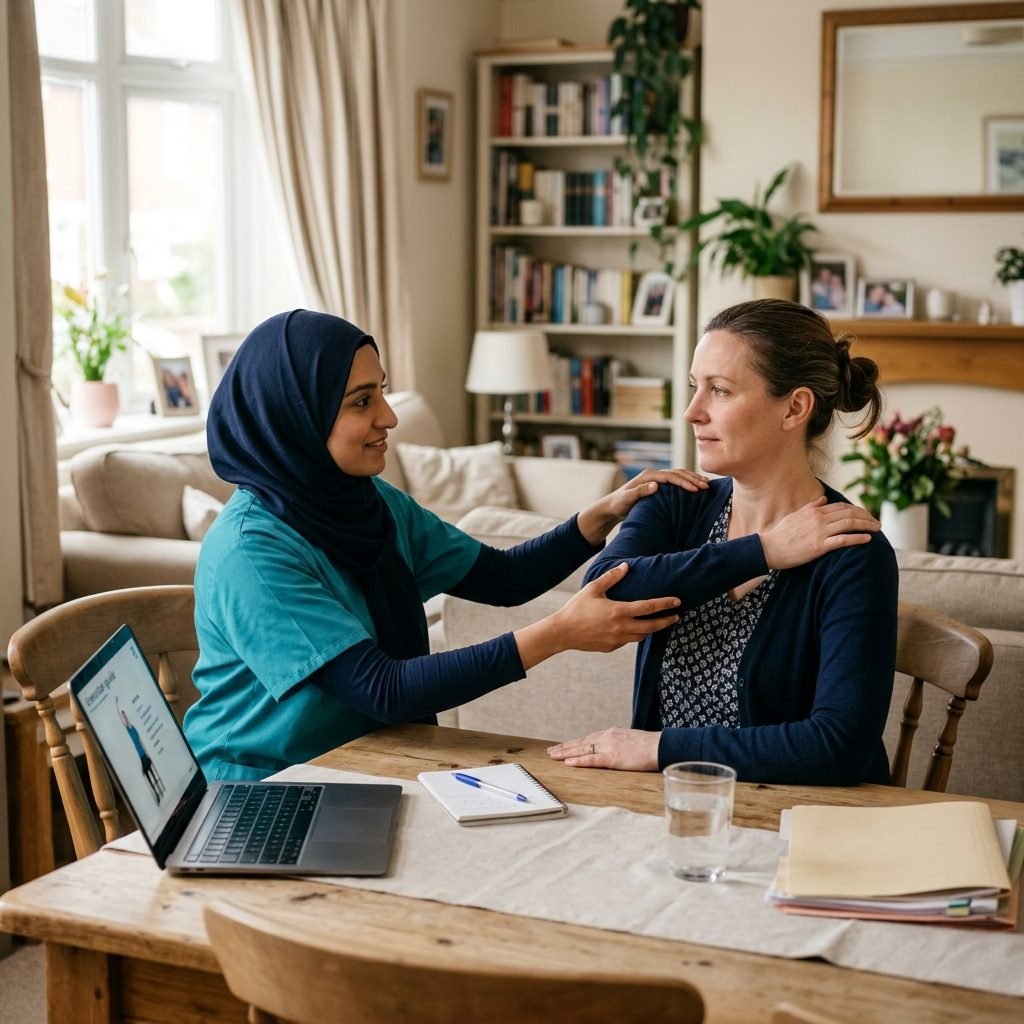
Female Physiotherapist
Licensed female therapists providing home care for women in Al Naeem.
Service Details ←