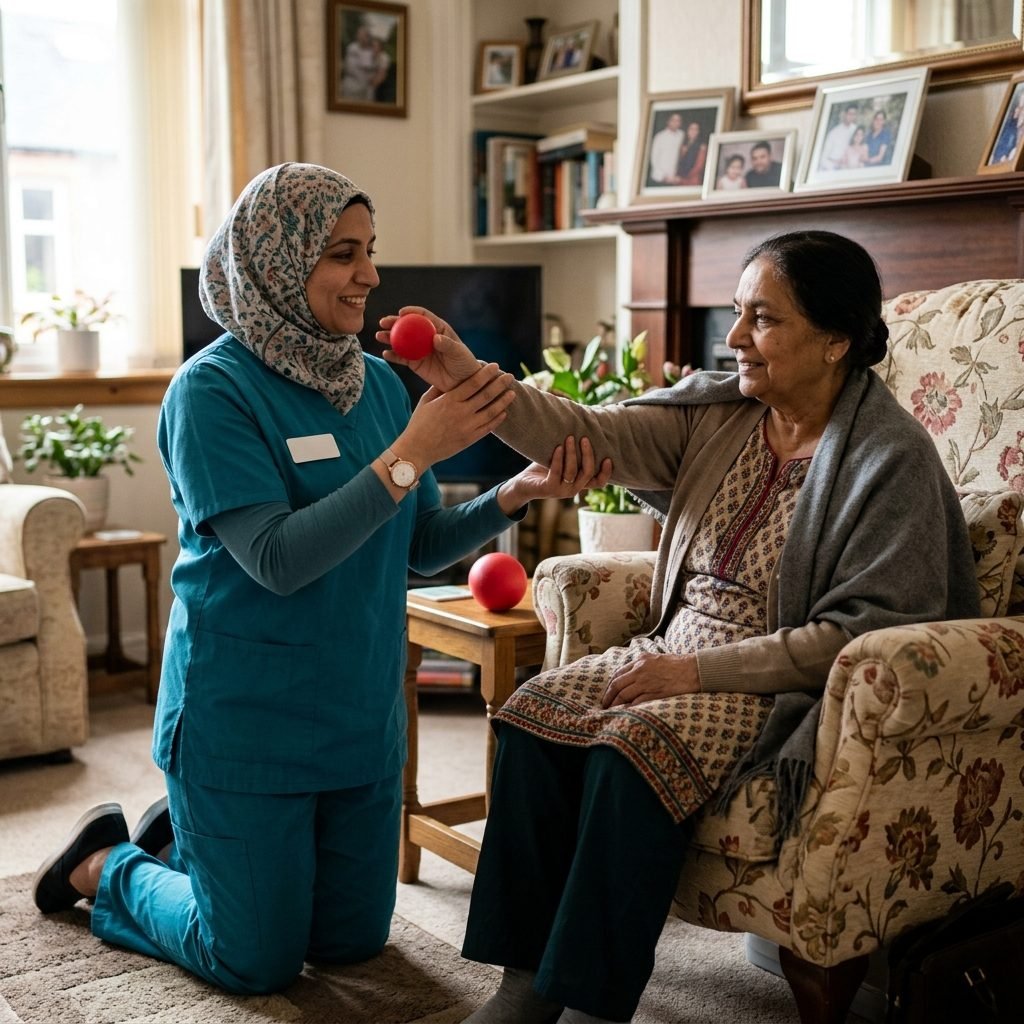
Having access to comprehensive, clinical physical therapy at home is crucial for maintaining rehabilitation progress, especially in busy neighborhoods. Al-Safa and Al Naeem districts in Jeddah present unique local mobility challenges due to high population density and traffic. At Bidaya Center, we deliver high-quality home physiotherapy and movement rehabilitation services directly to your doorstep, conforming to the clinical guidelines of the Saudi Commission for Health Specialties. We eliminate the stress of travel, traffic, and parking. We respect cultural privacy by providing certified male therapists for male patients and female therapists for female patients.
Our clinical approach in Al Naeem starts with a detailed physical and environmental safety assessment to eliminate fall hazards in the home. We bring all necessary portable, sterilized equipment to deliver a clinical standard of care comparable to external clinics. The therapist establishes a tailored milestone tracking plan to monitor muscle strength, balance, and joint range of motion (ROM) progression over time.
Why families in Al Naeem choose Bidaya for home physiotherapy
- ✅ Licensed male & female therapists — full privacy, in your own home in Al Naeem.
- ✅ Fully in-home visits across Al Naeem — no travel or traffic.
- ✅ A personalized rehab plan built after a thorough in-home assessment.
- ✅ Continuous follow-up and direct contact with your therapist throughout.
- ✅ Fast response — arrange your visit by a quick call or WhatsApp message.
We also serve nearby areas: Al Andalus · Al Basateen · Al Bawadi
* The treatment plan and expected outcomes are determined by a medical and functional assessment of each individual case.
What Home Neurological Physiotherapy Means for Al Naeem Residents
Neurological physiotherapy is a specialised branch of rehabilitation that addresses conditions arising from the central or peripheral nervous system, such as the aftermath of stroke, spinal cord injuries, and chronic brain and nerve disorders. Its core principle is that the brain can reorganise itself and build new functional pathways, a property known as neuroplasticity. This capacity is not stimulated by rest alone; it is driven by purposeful, structured, and repeated movement built on a careful assessment. When these sessions are delivered inside the patient's own home in Al Naeem, Jeddah, the training happens in the real environment the patient moves through every day, rather than in an abstract exercise room.
Al Naeem is an active residential district in northern Jeddah, dominated by villas and multi-storey buildings with raised entrances and internal corridors. These details are far from trivial in neurological rehabilitation: a patient recovering from a nerve injury needs to practise on the actual stairs they climb, the surfaces they walk on, and the transfers to and from their usual bed and chair. Traffic and Jeddah's humid heat make transporting a patient with poor balance or limited mobility a recurring burden that can interrupt continuity. Home care removes that burden and protects the regularity of sessions, which is the single most important factor in neurological outcomes.
At Bidaya Center, we provide licensed male and female therapists for neurological cases inside the home with full respect for privacy. Every plan is built on an individual clinical and functional assessment, with no promise of a guaranteed cure, because each neurological case follows a different course depending on the type of injury, its duration, and how the body responds.
Symptoms and Signs That Signal It Is Time to Start
Many families wait too long before seeking neurological rehabilitation, assuming improvement will arrive on its own, while an early and structured start often makes the difference in restoring function. Among the signs Al Naeem residents should not ignore:
- Weakness or heaviness on one side of the body, or difficulty moving an arm or leg after a stroke or brain injury.
- Clear disturbance in balance and walking, or repeated tripping and falling inside the home.
- Stiffness or spasticity in the muscles that limits range of motion or forces the limb into abnormal postures.
- Tremor, slowness of movement, or difficulty initiating a step and shifting between positions.
- Persistent numbness or tingling, or a loss of sensation that undermines confidence during movement.
- Difficulty with fine hand control, such as gripping utensils or fastening buttons.
- Rapid neurological fatigue that makes the simplest daily tasks exhausting.
Having one or more of these signs does not confirm a specific diagnosis, but it is enough reason to request a specialist assessment. Early evaluation helps determine whether the case is suitable for a home rehabilitation programme and helps prevent secondary complications such as joint stiffness, muscle wasting, and pressure sores.
Conditions and Groups That Benefit
Home neurological physiotherapy in Al Naeem serves a broad range of cases united by a disturbance in the nervous control of movement, including:
- Post-stroke patients experiencing one-sided weakness or disturbed balance and gait.
- People with partial spinal cord injuries who want to maximise remaining motor ability.
- Patients with multiple sclerosis and Parkinson's disease who need an ongoing programme to preserve movement and slow functional decline.
- Those recovering from traumatic brain injuries after accidents.
- Cases of peripheral neuropathy and Guillain-Barré syndrome in the recovery phase.
- People with muscle weakness of neurological origin or chronic balance disorders.
- Older adults in whom neurological problems overlap with general frailty and fear of falling.
Each of these groups needs a different approach; a Parkinson's patient's programme focuses on movement amplitude and stepping rhythm, while a post-stroke patient needs re-education of movement patterns on the affected side. There is no single protocol that fits everyone, and individual assessment is always the starting point.
Goals of the Rehabilitation Programme
The programme is framed around realistic functional goals drawn from the patient's daily needs inside their Al Naeem home, not around abstract numbers. The most prominent of these goals are:
- Improving voluntary motor control and reactivating neural pathways through purposeful repetition.
- Enhancing static and dynamic balance and reducing the risk of falls inside the home.
- Managing spasticity and muscle stiffness, preserving joint range, and preventing contractures.
- Strengthening supporting muscles and improving endurance during daily activities.
- Retraining walking and transfers, such as getting up from bed, sitting, and standing.
- Raising independence in essential activities such as washing, eating, and dressing.
- Educating the patient and family so that rehabilitation becomes part of the daily routine rather than an isolated event.
We emphasise that these goals are reviewed periodically and adjusted according to response, and that how far they are achieved depends on the nature and severity of the neurological injury and the patient's commitment, with no guarantee of a predetermined result.
Stages and Pathway of the Home Sessions
Home neurological rehabilitation in Al Naeem follows a structured pathway that begins with assessment and aims toward as much independence as possible:
- Initial assessment: a visit in which the therapist examines strength, sensation, balance, range of motion, and gait patterns, and reviews the home environment and any available medical reports.
- Plan setting: defining short and long-term goals with the patient and family, and selecting the exercises and techniques suited to the condition and the home's circumstances.
- Activation and control phase: exercises targeting the recovery of voluntary movement and neuromuscular control, with gradual progression in difficulty.
- Function and balance phase: transferring skills into real activities such as walking along the home corridor, moving between rooms, and using the stairs.
- Integration and independence phase: consolidating gains and building a home programme the patient performs with family support between sessions.
- Follow-up and re-assessment: periodic measurement of progress, adjustment of the plan, and setting the session frequency suited to each stage.
The length of each session and its weekly frequency are determined by the patient's condition and tolerance, and all of this takes place within the home to reduce strain and ensure continuity.
The Role of the Family and Caregiver
In neurological rehabilitation specifically, the family's role is pivotal, because the formal session hours are few compared with the rest of the day, and repetition outside the session is what cements motor learning. At Bidaya Center we make sure to train the Al Naeem caregiver in:
- Safe assistance with transfers and standing without overloading the helper's back or exhausting the patient.
- Supervising the prescribed home exercises and making simple corrections to technique between visits.
- Noticing warning signs such as increased spasticity, changes in sensation, or a sudden decline in movement.
- Organising the home environment to encourage safe movement rather than total dependence.
- Providing psychological support and encouraging the patient to participate without discouragement when progress is slow.
An aware and cooperative family multiplies the programme's effectiveness, and the therapist remains the bridge that carries practical knowledge to those who surround the patient every day.
Home Safety and Prevention Tips
A safe home environment is an integral part of neurological rehabilitation, and falls are among the greatest risks for neurological patients. We advise Al Naeem families of the following:
- Remove sliding rugs and scattered cables and secure anything in the corridors that could cause tripping.
- Provide adequate lighting, especially in corridors, on the stairs, and on the route to the bathroom at night.
- Install firm grab bars near the toilet and in the bathroom and use non-slip mats.
- Arrange daily-use items within easy reach to reduce risky movements.
- Choose closed, firm-soled shoes instead of open, slippery slippers inside the home.
- Ensure adequate hydration and account for Jeddah's warm climate to avoid fatigue during exercise.
- Never force the patient into movement beyond their capacity, and stick to the progression the therapist sets.
These simple measures reduce complications, preserve gains between sessions, and make the home a supportive environment for recovery rather than a source of risk.
Frequently Asked Questions (FAQ)
Is home neurological physiotherapy suitable for every case in Al Naeem?
It suits most medically stable neurological cases that are amenable to rehabilitation, but the decision is made after an individual clinical and functional assessment that determines how appropriate a home programme is for the patient's needs.
Is a female therapist available for female cases with privacy respected?
Yes, licensed male and female therapists are available, and the patient's or family's preference is accommodated while full privacy is maintained inside the home.
How many weekly sessions will I need?
The number is set according to the type and severity of the neurological injury and the patient's tolerance, and it is reviewed periodically as the condition progresses, so there is no fixed figure that suits everyone.
Is there a guarantee of restoring movement to how it was before?
We offer no guarantee of a specific result; neurological rehabilitation aims to improve function and independence as far as possible, and the extent depends on the nature of the case and adherence to the programme.
Does the home need special equipment before sessions start?
Usually not; the therapist relies on portable tools and on the home environment itself, and if any simple adjustment or assistive aid is needed, this is explained during the initial assessment.
To enquire or book a home visit in Al Naeem, Jeddah, contact Bidaya Center by phone or WhatsApp by clicking Call Now, and we will help you arrange the assessment appointment suited to your case.
Important Home Visit Details:
- ✓Setup: Please clear a 2x2m space in the room for safety.
- ✓Clothing: Wear loose, comfortable clothes for easy movement.
- ✓Therapist Parity: Male therapists for males, females for females.
- ✓Medical Reports: Keep your MRI or doctor reports ready for evaluation.
Rehabilitation & Services in Al Naeem
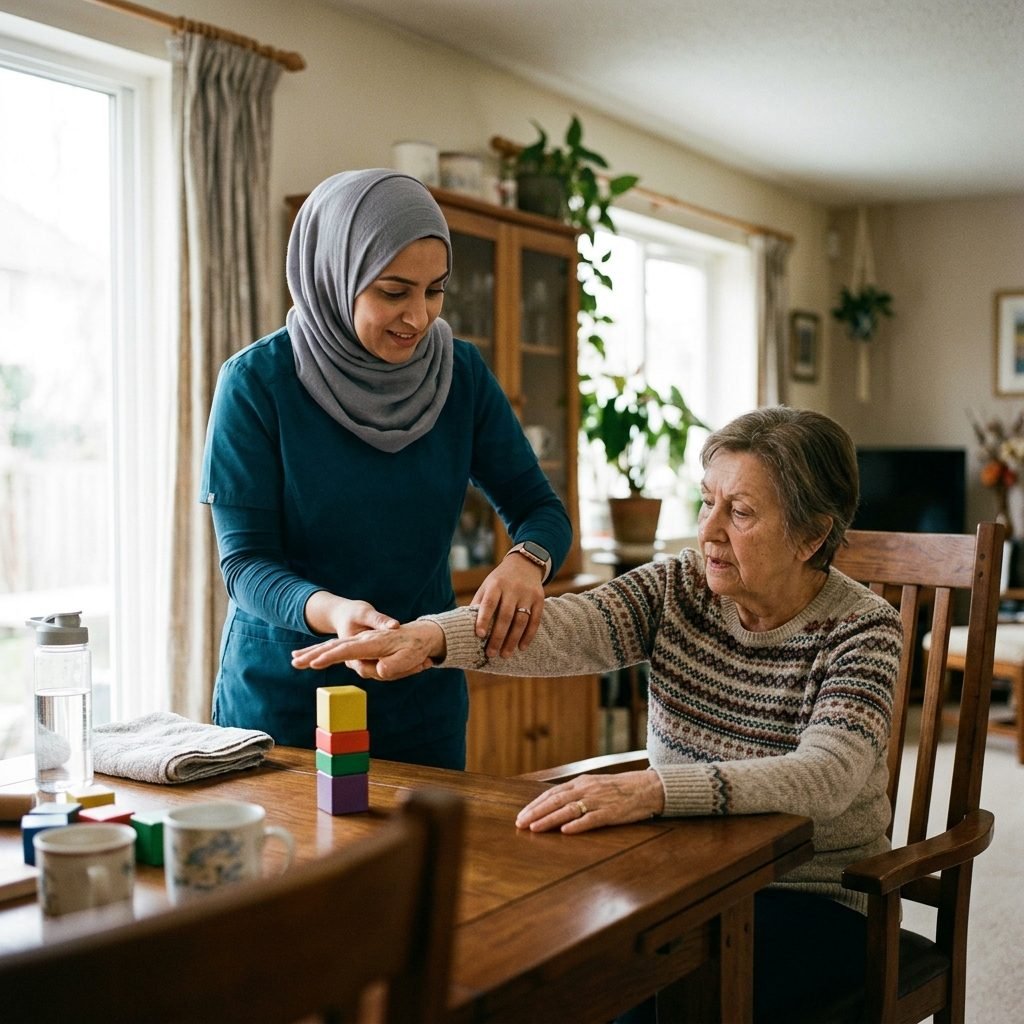
Stroke Rehabilitation
Advanced motor and neurological stroke recovery at home in Al Naeem.
Service Details ←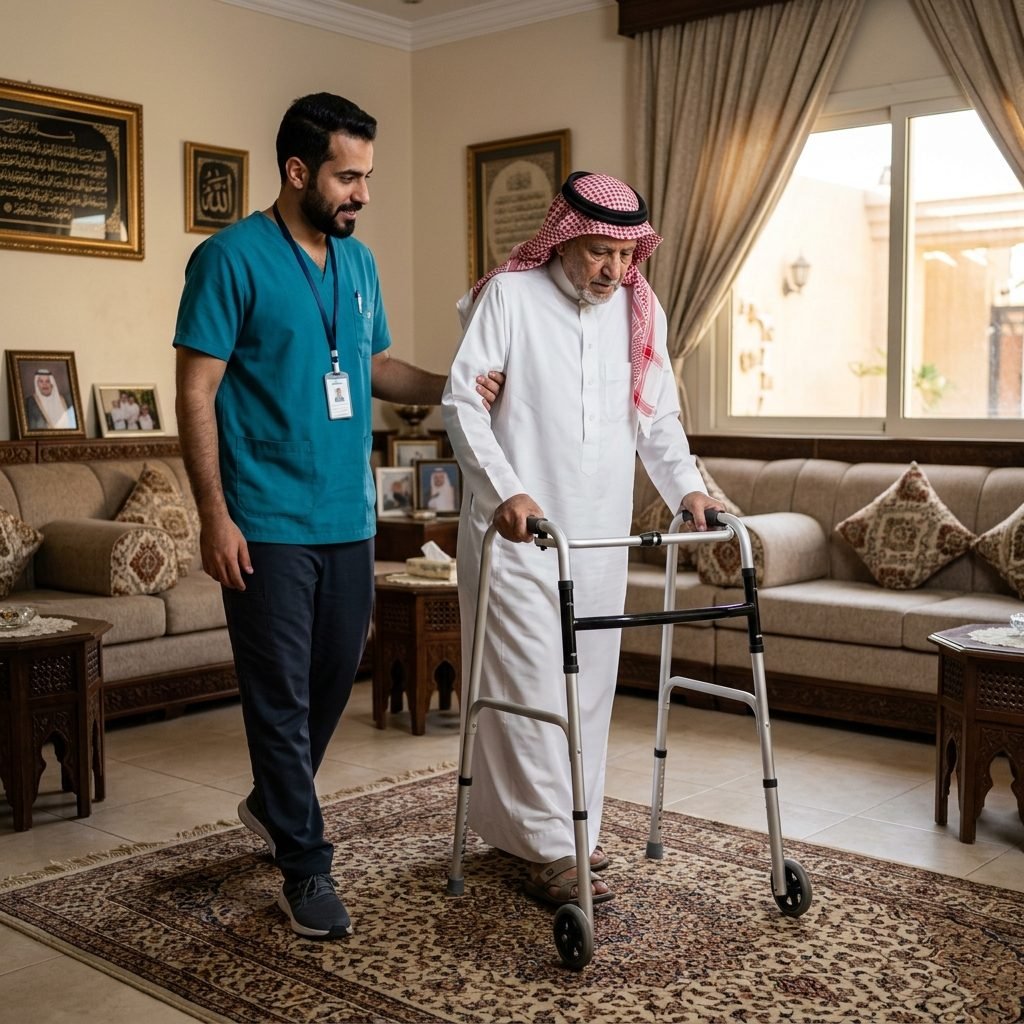
Geriatric Physical Therapy
Balance training, strengthening, and fall prevention for seniors in Al Naeem.
Service Details ←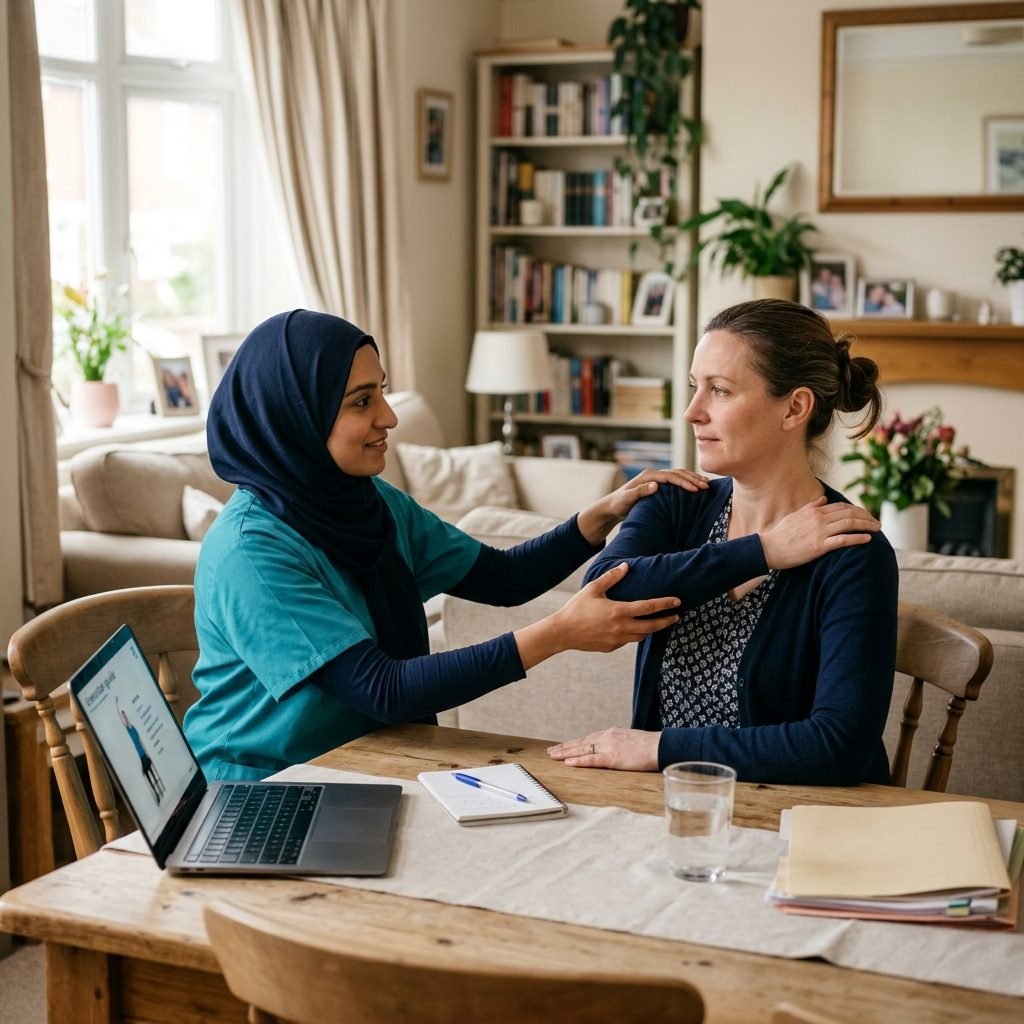
Female Physiotherapist
Licensed female therapists providing home care for women in Al Naeem.
Service Details ←